|
| Picture: JMEnternational |
After a week of truly gloomy news in the entertainment industry, which has seen the deaths of David Bowie and Alan Rickman and, this morning, an announcement that Dame Barbara Windsor will leave
EastEnders - for good!!! (I realise that this does sit at one end of the scale...) - it's time to allow regular sniping of the business of show to recommence.
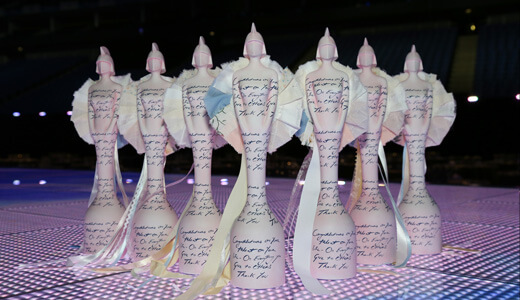
Pop culture is, we must acknowledge without question, what it is. Almost by definition, there is little room for the eclectic and the obscure, and in an ideal world, elitist interests too. The Brit Awards, for example, began as a patriotic nod to HRH The Queen in her silver jubilee year with the appropriately stuffy British sobriquet, the 'British Phonographic Institute Awards', a celebration of the nation's music industry.
Over time, and via disastrous Mick Fleetwood/Sam Fox presenting combos, Chumbawumba tipping ice buckets over ministers of the crown and Jarvis Cocker goofing up Michael Jackson's grandiosity, it has evolved into a giant, paid ticket-only beanfeast at the 02 Arena.
No harm in that: in the 1960s, the annual
NME Poll Winner's Party was
the must-attend celebration of pop. And, as with all good awards ceremonies, the Brits always feature plenty to get annoyed about. No-one has a monopoly of opinion on what makes good and what makes bad, and taste is 90% subjectivity an probably less than 10% objectivity. But there are times when these awards dos - and I'll come to the Oscars and BAFTAs in a moment - and the nominations therein are just plain baffling.
For many years, the Brits were, as a celebration of the British music industry, less about artistic endeavour and more about recognising the number of "units" shifted. Personally I loathe those industry awards evenings where a load of predominantly male salesmen in hired Moss Bros dinner suits quaff wine, smoke cigars and behave boorishly, and then get the chance to stand on the stage of a London hotel ballroom to receive a trophy from some regional BBC news presenter. That, though, is the sort of environment where record company accountants would best enjoy acknowledgement.
The Brits, though, should be the Oscars of British music, where creative excellence is rewarded, where artistic daring is lauded and, more importantly, rock, pop and all the other genres get to be celebrated for giving those of us who love our music a damn good time. So, what about this year's Brits, nominations for which were announced this week? What sign is there of it being a superb festival of the last 12 month's grooviest choons?
Let's start with one of the perennial clangers, Best British Female. For years, this would feature almost exclusively Kate Bush, Annie Lennox, Yazz, Sade and, possibly, Clodagh Rodgers, even when they hadn't been near a recording studio in centuries. This year's BFF includes a nomination for the definitely dead Amy Winehouse, purely, it would seem, for having appeared on the soundtrack of an admittedly breathtaking film about her ill-fated life.
Inevitably Adele features prominently this year, the living embodiment of both irresistible force and unstoppable object. Depressingly, I don't see there to be any other winner, and although it's good to see the likes of Florence Welch, Jess Glynne and Laura Marling, where are Ellie Goulding and Lianne La Havas?
The nods for British Male Solo Artist - Aphex Twin, Calvin Harris, James Bay, Jamie xx and Mark Ronson - just depress on account of the fact Britain is currently lacking any bloke making anything truly interesting. And this in the week that we lost one of its greatest exponents.
Blur lead the odds for Best British Group, but with the exception of Foals, the appearance of Coldplay and One Direction, for God's sake, are all too predictable. Would it have killed the Brits committee to have included Noel Gallagher and his High Flying Birds in one of these two categories? Johnny Marr? They are quite good, if you weren't aware...
The Best International Group category has traditionally been a platform for either U2 or Foo Fighters, or Foo Fighters and U2. I may be wrong, but in truly lean years I'm sure U2 have also appeared in the Best British Group category on account of Adam Clayton being born in Oxfordshire. This year the list includes Eagles of Death Metal. As noble as this entry is for representing rock'n'roll defiance (and I'm not going to tread on the sensitivities of those - including two friends - who were caught up in the bloodbath in Paris), surely EoDM could have received a special award? Are they
really one of the international groups of the year? Good, though, that the category also includes Alabama Shakes and Tame Impala.
I'm not going to go through every category, otherwise I will end up very angry indeed at the inclusion of Adele's suicidally dreary
Hello as single of the year and, worse, Sam Smith's truly abject Bond theme
Writing's On The Wall (yeah, I'll say...) for British Artist Video of the Year.
I know that, at 48, I have ascended to that life stage where I can legitimately be a curmudgeonly old fart, but the Brits just seem to lack a certain excitement, true pioneers. They were always meant to be a corporate event, but since getting the
Smash Hits treatment, The Brits should at least amp it up and celebrate the actually good things about the British music industry.
I'm not going to re-engage the argument that music was better in the 70s, because it was and it wasn't, and there is no shortage of adventurous, exciting, music coming through now, as there has always been and always will. But for a trade association representing a national music industry that, arguably, has had more impact around the world than any others (face facts America), it should reflect the still-burning furnace of British musical invention with a bit more than Coldplay in any category that will have them.
However, there are greater crimes being committed in this, the season of black tie showbiz piss-ups. This week we've seen the 2016 nominations for the Oscars and their slightly lesser (in the mind of the rest of the world...) British cousin, the BAFTAs.
Whereas the Brits seem
too populist and predictable, the film awards have, to some degree, been less so. I'm not so naive that I don't realise how film business politics plays a big part in nominations for the Oscars in particular, but there is something cringingly dismal that, yet again, diversity gets such a poor showing this year.
It should, of course, never be about tokenism, but were this last year's films so bereft of strong performances from black actors and women that the main categories this year shouldn't have a more diverse profile?
Creed,
Straight Outta Compton anyone...? No. This year's Academy Awards will be the whitest, straightest Oscars in living memory.
But it's not just ethnic or cultural diversity that have been badly served by the Oscars and, indeed, the BAFTAs. What about populism? Sure,
The Martian is a big, balls-out bucket o'popcorn blockbuster, and it's actually quite refreshing to see a film like
Mad Max: Fury Road get a look-in on gongs (though surely someone's having a laugh putting a post-apocalyptic Mad Max film up for an Oscar in the Make-up & Hair Styling category...).
But where are two of the year's biggest films -
SPECTRE and
Star Wars: The Force Awakens? It's possible that the latter failed to appear in time for consideration but, still, the lack of properly good, properly popular films - action, sci-fi or broad comedy - in these awards is a frustration as annually predictable as waking up on Christmas morning and not finding the keys to a Porsche under the tree.
Even with its flaws
SPECTRE was exceptionally entertaining, and the Bond franchise is continuing to show every other action series how to do it. Likewise
The Force Awakens, a staggeringly good romp and one that will appeal to sci-fi obsessives and regular film-goers with equal measure - damn good fun for a couple of hours on a Saturday night, with plenty of humour and pathos.
OK, neither might have, like, 'heavy, themes; neither might have the heft of human emotion stretched to its limits by survival in bear-infested forests or transgender acceptance, but does that make them any less worthy?
For the BAFTAs not to recognise either
SPECTRE or
The Force Awakens is even more shocking. As an awards ceremony that bigs up its Britishness (and you don't get more cut-him-open-and-he-bleeds-pure-tweed than Stephen Fry as co-host), and yet doesn't recognise two of the biggest commercial hits of the year, which were made on British soil, mostly, and which represent the very best of British acting
and production talent, is just embarrassing.
Did I mention daylight snobbery? Of course I didn't. That would be terribly naughty of me...