Showing posts with label Matt LeBlanc. Show all posts

Friday, 28 May 2021

We were on a break...

Picture: Warner Media

So much for the much-anticipated Friends reunion. It had been talked about for over a year, postponed because of The Thing that’s been screwing everything up, and finally went out yesterday, on Sky in the UK. Note the emphasis on “reunion”: this was certainly not a revival. In fact, at one hour and 40 minutes, I wasn’t entirely sure what the hell it was.

Certainly it was a bit of history - albeit confected history - since, as Jennifer Aniston remarked early on, it was only the second time since the show ended in 2004 that the magic sextet of, in no particular order, Aniston, Courtney Cox, Matthew Perry, Lisa Kudrow, David Schwimmer and Matt LeBlanc, had been together in the same room. Various combinations had met socially, but as the 100-minute special opened, with the cast members walking emotionally on to the original Warner Brothers set, it was clear that something unique was unfolding. Or, at least, should have been.

This was a celebration of an undoubted television phenomenon: a sitcom that ran for 236 episodes over 10 series; shown in 220 countries and dubbed into 18 languages; watched (apparently) more than 100 billion times across all platforms; the No.1 show for six straight seasons in the US, averaging 22 million viewers a week; and whose finale was watched by a US audience of 52 million (no stats for the rest of the world). And, of course, is still running, somewhere, in syndication. Television’s equivalent of Dark Side Of The Moon.

For those of us of a certain age, Friends was a show that, to a limited sense, reflected life in the 1990s and early 2000s. Not that we were all exclusively white New Yorkers with Cox’s cheekbones, Perry’s wit or the sexual prowess of LeBlanc’s character. But we bought into the Friends lifestyle: we descended upon cosy coffee shops like Central Perk and aspired to the SoHo apartment life. Pre-social media, we argued - in person - over who was our favourite Friend. We all had an opinion as to whether Phoebe was, actually, the star of the show, that Chandler and Joey should have had their own sitcom as TV’s greatest odd couple, that Monica was very annoying, that Ross was worse, and that Rachel was lovably ditzy, but Oh My God.

Now I think of it, there was much to celebrate about Friends, and this reunion should have done that. Instead we got a mish-mash. Bits jumped all over the place, themes were never fully fleshed out, and guest appearances either made no sense, or were squandered. From the Warners set reunion of just the six actors, we went to a bizarre outdoor interview set-up, in front of the famous title sequence fountain, in which the aggravating James Corden asked a couple of questions, before it moved on to the cast doing a read-through of a classic scene, or recorded interviews with creators David Crane and Marta Kauffman. Breathlessly we were then on to a meaningless segment in which Tom Selleck walked into the apartment set for all of a minute, or actor James Michael Tyler (Gunther) appeared via Zoom for a brief hello, or Maggie Wheeler (Janice) stopped by to do her nasal “Oh-my-God!” catchphrase.

It was all a bit of an unsatisfying mess, really. And, strangely, for such an anticipated event, we hardly got to hear from the principle cast members. Yes, the likeable Schwimmer told how he’d fancied Aniston for real during their first season (they chose to channel their unrequited interest into the on-off-on-off Ross/Rachel affair). Cox, as might have been expected, seeing as she was, in the very beginning, the only member of the gang to have a profile (courtesy of Bruce Springsteen’s slightly corny Dancing In The Dark video) came across more guarded. LeBlanc - so much better in real life than as a somewhat stiff Top Gear presenter (let’s forget the entirely forgettable Friends spinoff, Joey…) - came across as the Friend you’d actually want to befriend, and perhaps the least actorly of the group. He also reminds me now of an old schoolfriend (albeit somewhat…erm…‘well upholstered’), which might enhance his familiarity. Kudrow, too, as I’d suspected, seemed just nice and down to earth. 


Perhaps the biggest disappointment, the biggest challenge to expectation management, was Perry. As Chandler Bing he had the funniest lines and easily the finest comic timing, famously forcing entire scenes to be rewritten with his own, funnier contributions. Perry had the distinction of uttering the very final line in the finale, with Rachel suggesting to the group that they should get one last coffee, to which Chandler cracks “Sure. Where?”.  In the reunion Perry appeared emotionally stunted, not helped by having undergone dental surgery immediately before the recording, which rendered him with a grin that resembled Jack Nicholson’s Joker, prior to putting on the face paint. 

There were moments of the Chandler wit: in response to Kudrow pledging that they all stayed in touch (“Maybe not every day, but every time you text or call, someone will be there.”) to which Perry deadpans: “I don’t hear from anyone”. It’s easy to see him as the classic tragic clown, and he has been through the wars in real life (self-inflicted, it must be said), but for all his natural funnies, he also felt anxiety the most, gripped with fear at delivering those pin-sharp lines in front of a live studio audience. “To me, I felt like I was going to die if they didn't laugh,” he said. “It's not healthy, for sure, but I would sometimes say a line and they wouldn't laugh and I would sweat and just go into convulsions if I didn't get the laugh I was supposed to get. I would freak out.” Perry’s admission seemed to shock his castmates in what felt like the one true deviation from the slightly forced party atmosphere. 

There’s no doubt that Friends was the product of great writing and astute casting. “We saw a gazillion people,” Kauffman revealed. Bright said that David Schwimmer had even given up television and had returned to doing theatre in Chicago when they came calling. Cox was originally seen as Rachel, until she convinced the producers otherwise. Kudrow’s Phoebe arrived ready-baked, having played the character’s fictional twin sister Ursula first in Mad About You. LeBlanc had been jobbing as a minor teen heartthrob, but when he auditioned he had just $11 to his name. He spent his first pay packet on a hot dinner. He explained how his second audition was almost hampered by a drunken episode the night before, where he’d lamped himself on a friend’s toilet bowl, leaving him a gruesome bruise on his nose. The pratfall may have won him the role. Other characters weren’t so straightforward: once Aniston was identified as Rachel, the producers had the task of freeing her from a contract with another show, Muddling Through. She wanted Friends, but having been in “a graveyard of pilots”, she’d finally found a fixed job and had to plead to be released from it. “That show is not going to make you a star,” she reveals its producer telling her.


Of course, it did. Arguably Aniston became Friends’ biggest breakout star, a point the reunion deftly avoids, although in a compilation of guest stars, there’s an awkward flashback to Brad Pitt’s appearance (they were married for five years). As Kauffman recalls, the Friends actors’ fame was unprecedented, remembering once seeing them on the cover of every single magazine at an airport newsagent as she passed by. “No one was going through what we were going through, except for the other five,” Schwimmer says.

17 years after they went for that final coffee, it’s clear that there is a genuine bond between the six. But ultimately, you can’t help feeling the reunion was squandered. It’s hard to understand why it was entertained in this form to begin with. Yes, some of the clips and anecdotes were fun, but when you’ve probably seen all 236 episodes, multiple times probably, given the amount of global syndication since Friends ended, there was nothing new to say. Ultimately, this was an exercise in HBO Max - the US network - leveraging some of the $425 million it paid to secure exclusive rights to the show. The cast’s appearance fees for the reunion were said to be somewhere between $2.5 and $3 million each. I suppose good for them. Nice work if you can get it.

If there’s one saving grace it was that this reunion wasn’t a precursor to a revival. Sitcoms being reborn, like some bizarre Jurassic Park DNA project, rarely work well. The return of Will & Grace bombed, the various reincarnations of Roseanne haven’t fared any better, and the plan to revive Frasier (see my post Still listening?) has already met with casting headwinds. Perhaps, then HBO Max is actually on to something by buying up every episode of Friends, and hoping that those now in middle age will want to relive their younger, child-free days, or that kids might discover it for the first time. That, though, is unlikely. As comedically perfect as the gang of 1994-2004 were, they probably offer very little to today’s audiences. Six impossibly good looking white twentysomethings? Could they be any less relevant?

Tuesday, 11 February 2020

Why it might be time to give Top Gear another go

Picture: BBC

I’d hardly say I was a petrolhead, but there was a time when Top Gear was required bloke telly. In its classic line-up (a phrase akin to describing Genesis in terms of the Peter Gabriel era) - and some incarnations on from William Woollard’s inch-of-ankle-revealing, foot up on a bumper, explaining how camrods work - there is little doubt that the triumvirate of Jeremy Clarkson, James May and Richard Hammond successfully transcended oily-fingered motoring journalism to produce, until it started getting tired and predictably scripted, a genuinely entertaining and enjoyable hour of Sunday evening television. True, it relied on laddishness and barely one dimensional humour, but only the most prudish would deny that the chemistry between Clarkson, May and Hammond was real and one of those rare examples of presenters not only drawing the viewer into their world without too much self-indulgence, but also drawing the viewer into the exquisitely filmed pieces they produced.

Clarkson and producer Andy Wilman deserve the credit for that, transforming the original Thursday evening BBC2 ‘magazine’, with helpful items about sensible cars, into something by turns entertaining and aspirational. And then they ruined it. The ‘steak dinner’ incident that led to Clarkson’s departure in 2015, with May and Hammond (and Wilman) rapidly following him out the door, probably came at the right time. By then the jokes were getting old, the stunts corny, and the three-way chemistry starting to appear over-confected. Then they took the same formula to Amazon, where their The Grand Tour (managing to work the ‘TG’ initials into their new venture) felt equally as contrived, and rarely, if ever, worth the Prime Video subscription. Meanwhile, as you may recall, the BBC soldiered on, with a bloated Top Gear reboot presented by Chris Evans, with sundry others including Friends’ Matt Le Blanc and former Formula 1 boss Eddie Jordan, and then reinvented again with just Le Blanc flanked by motoring journalists Chris Harris and Rory Reid (who at least had some industry chops to draw on). And then I switched off. I’d seen it all, to be quite honest. The feature-length films to Africa, Vietnam, across the US and elsewhere in the Clarkson era were, even when veering into pubescent political incorrectness that wasn’t funny at all, brilliant television. Proper travel documentaries that just happened to have motoring as their foundation. But, towards the end of the C/C/H era, they’d run their course.

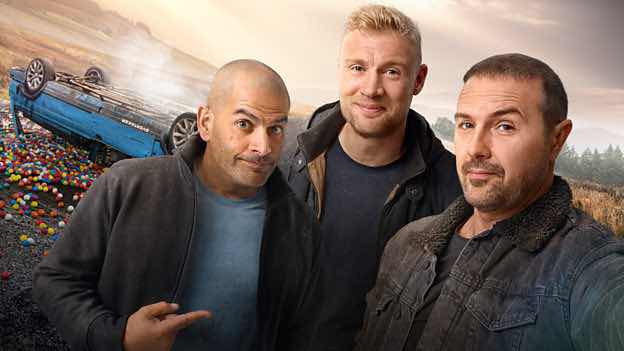
Fast forward, then, to 2020. Top Gear has not only survived further invention that rendered it of little interest, but as of its 29th series, later this year, it is being moved to BBC One. 43 years after the first edition on BBC Two (commencing a nine-episode series commissioned by the BBC’s Midlands organisation and presented by newsreader Angela Rippon and local news presenter Tom Coyne), a show that has been one of the BBC’s most biggest money and audience spinners, via overseas franchises, DVDs, branded bubble bath and all of that, is transferring to true primetime. Cynics - including yesterday’s Guardian - might conclude that this is as much to do with the BBC shoring up its audience numbers as it goes into the next round of discussions about its long-term future funded by the licence fee. It wouldn’t be the first BBC Two-BBC One transfer either: Line Of Duty, Peaky Blinders and Bake Off all made the transition to the bigger viewing potential of the ‘senior’ channel. It may, though, also be recognition of the fact that Top Gear has finally been brought back from the dead by the latest presenter line-up of comedian Paddy McGuinness, ex-cricketer Freddie Flintoff, and the aforementioned Harris. That may come as a surprise if you haven’t seen the latest series, which began in December: a comedian, an ex-cricketer and a motoring journalist doesn’t necessarily sound like the instant formula for reviving a long-standing, much loved but somewhat derided television franchise. But in the shows that I’ve seen, I’ve been warmed by the natural chemistry between the three disparate presenters. And while some of the content has been a little familiar to stunts and capers in the past (the recent race between a McLaren Speedtail and a RAF F-35 Lightning fighter jet copied verbatim the 2007 race between Hammond in a Bugatti Veyron and a RAF Typhoon), everything else has made for enjoyable Sunday evening viewing. Top Gear has zip once more. It is no longer trying too hard to be anything. No wonder it has been reaching viewing figures as high as 4.3 million (though still a way off the seven million peak the show achieved during the Clarkson era). That audience growth is crucial to the BBC One move. The new presenter line-up helped make Top Gear BBC Two’s highest-rated show in 2019, crucially placing it amongs the top four shows for 16-34-year-olds. That demographic is crucial for the BBC as it deals with the existential challenge of losing younger viewers to Netflix, Amazon, YouTube and other online platforms.

Maintaining those figures, with the expectation of taking them even higher, will be crucial for the Top Gear team and for BBC One management. It’s not known, yet, whether the new series will again be on a Sunday night, but scheduling will be critical. Top Gear is in a category of its own: Countryfile on a Sunday evening appeals to those (like me) in search of gentle, bucolic viewing, even with a factual base. A Sunday night drama will work differently again. So quite how three blokes - and there’s a clear emphasis here on blokes - larking around in and with cars remains to be seen where it would fit. That said, the renewed presenter chemistry is one the BBC will not want to mess with again.

Fans have generally rated the show as being “back to its best”, with the presenting line-up drawing most of this favour. Clearly it has proven to be a struggle to get it right since the golden trio left. “People often look at the past through the rose-tinted glass,” Chris Harris recently told the online newspaper Metro. “But if you go back to Top Gear 2000/2002 the chemistry wasn’t there [in the early reboot period], it took time to grow.” The editorial content, however, will also be crucial if the show is to retain its loyal fanbase, judging by some of the online backlash to the recent fighter jet rematch (“All been done before. No new ideas?”, was one remark on Twitter). McGuinness has, though, hit on why the BBC One move makes sense: "The beauty of it is that it's an entertainment show which the whole family can watch - we're not just doing straight car reviews every week,” he told BBC News. Maintaining that entertainment factor, as a factual show at heart, will be key. The show’s current executive producer, Alex Renton, has said that the show is now “less scripted” than in previous incarnations, relying more on the natural interaction between McGuinness, Flintoff and Harris. "I think it's well-known that in Matt [LeBlanc]'s day it was quite heavily scripted because of how we used to work, and now there's just the freedom,” Renton recently said. “They know each other better and the chemistry grows more and more. A huge amount of the backroom stuff is the same, we've had the same crew for years, but there's something about when Chris, Paddy and Freddie are on set together, and it just goes off."

"Top Gear might have miles on the clock,” Renton added, “but this trio has injected some va-va-voom. Their chemistry was immediate, their camaraderie warm." Be that as it may, they are still reliant on the editorial team keeping things fresh. "We like to be involved vaguely in the creative process so we know what's going on and we have some input," Harris told BBC News, "but actually, Top Gear is at its best when the producers spring something on you and we respond naturally to it. The more you know, the less realistic your reactions. So we're in that weird position of encouraging things to happen that we don't know about."

That also feeds the undoubted chemistry between the current trio of presenters. No wonder Charlotte Moore, Director of BBC Content, gushed at the announcement on Monday of the move to BBC One: "Freddie, Paddy and Chris have revitalised the hit series with their escapades and banter; and we couldn't have asked for a better response to their series so far and the impact it's had with young audiences." The challenge, now, is to keep that going whilst in the undoubted spotlight of a prime time slot on BBC One. At 43 years old, it’s time for Top Gear to grow up. A bit.

Saturday, 11 November 2017

50, not out


“At the eleventh hour of the eleventh day of the eleventh month, the guns fell silent”. 11 minutes - and 49 years - later the silence was broken at 26 Groveland Way, New Malden. I had arrived. Now, 12 months shy of the centenary of the Armistice that ended the war supposed to end all wars, I’m 50. Which is, apparently, the new 40, though I wasn’t particularly comfortable with that number, to be honest.

Still, as optimists and age-deniers will cheerfully tell you, it is just a number, that age is merely relative. Despite (probably) being a middle-aged man since my mid-20s, I don’t actually feel all that old. And while I’m hardly in tip-top condition, I’d like to think my outlook is quite youthful. Still, though, 50 is 50. Half a century. My fiftieth spin around the sun. Bloody hell.

My memory is hazy, which isn’t a great portent for later years. I recently met a pal for a coffee and we both realised that, post-40 (he’s 56) we can’t any more hold conversations about music, films and telly without reaching for our iPhones to fill in gaps about names and trivia. Our brains, we concluded, are like computers with gradually disintegrating hard drives, retaining stuff you never expected to keep, and selectively losing vital pieces of information deep in the cracks, never to be brought up again.

What early memories I do have start to become doubts. My earliest recollection is one I can’t authenticate: I think I watched the moon landings on our black and white TV, but seeing as I would have been just 20 months old when Neil Armstrong made his giant leap, I doubt my noggin - even when it comes to telly consumption - is that good. Thanks to repetitive screenings of that, or Geoff Hurst’s winning World Cup goal in ’66, you start to think that, like Forrest Gump, you may have actually been there, or at least, witnessed it.

At least I can attest to have been alive when Armstrong jumped off the bottom rung of the Eagle's step ladder. And alive, just, when The Beatles were inventing rock music, when British and French ingenuity produced the never-bettered marvel that was Concorde; alive in 1970s Britain (which seemed to be mostly grey) and the start of colour television; alive during the rise of Margaret Thatcher, for which I have never forgiven British voters, and alive when the Cold War was at both its most intriguing and its most frightening; alive for Bowie, disco and punk, Reagan and Gorbachev, the Troubles and terror in the Middle East, recessions and economic booms, the mobile phone and the Internet, 9/11, Brexit and Trump (for, both, I will not forgive their respective voters, either).

In these 50 years I’ve been schooled and taken the path of employment, first in journalism, latterly in corporate PR. I have lived abroad, in the Netherlands, California and Paris. I have interviewed pop stars, film stars and TV stars, driven around Moscow with Jon Bon Jovi, witnessed the disaster of all live TV interviews with Ozzy Osborne in Red Square, hung out with Hulk Hogan and got to be there on the day Sky TV launched and changed the global - yes, global - media landscape forever.

These are, though, just snapshots, and I certainly won’t trouble you with the finer details of childhood holidays in Wales, teenage snogs or the other minutiae of these last 49 summers. Because, although I seem to be naturally disposed to nostalgia, and 50 years is a bloody long time, I should be looking forward, not back. 


But indulge me one delve back in time: the day I was actually born - 11 November, 1967. The big news of that day in Britain was that investigators were trying find out what had made a British European Airways Comet airliner (the UK’s first home-grown passenger jet) explode over the Mediterranean; Bill Simpson of the radio soap opera Doctor Finlay’s Casebook had left his wife for Edward Fox’s ex; football league referees were threatening to boycott Millwall matches due to hooliganism; engineers at Leyland had developed the first jet-powered lorry, which would be on the road commercially by 1969; and a Lanarkshire toddler had swallowed her pet goldfish, but thanks to the administering of a glass of salted water, threw it up and returned it to its bowl. The big stories, as they appeared. 


In the wider world, the Vietnam War was hotting up, notably on the propaganda side, with the office of General William Westmoreland, the US commander in Vietnam, claiming that US action had successfully reduced the number of communist forces (a CIA operative would, in 1975, admit that this was, in fact false, and that the enemy strength had been double that claimed. On November 11, 1967, three American PoWs - held captive for four years - were released by the Viet Cong.

On the day that my family was welcoming its third child, British television - the industry which provided my father with employment - was still a somewhat rarified affair, comprising of just three channels (including BBC2, which became in the previous July Europe’s first channel to broadcast regularly in colour). That Saturday afternoon, BBC1 offered Grandstand (including ‘Fight of the Week’ which, I presume, was boxing, a preview of the afternoon’s football fixtures, horse racing, “moto-cross”, rugby and the footy results. Over on ITV there was World Of Sport with Eammon Andrews presenting a mix of “international hockey”, “international table tennis”, more horse racing, and the-then jewel in ITV’s sporting canon, wrestling). 

Early evening on BBC1 offered Dr. Who (opening episode of The Ice Warriors), Simon Dee’s Dee Time, Dixon Of Dock Green, the news read by Michael Aspel and The Val Doonican Show with guests Les Dawson and Wayne Newton. Next door on BBC2 that evening was a production of Wuthering Heights featuring Ian McShane as Heathcliff, followed by Dick Clement and Ian La Frenais’ sitcom Further Adventures Of Lucky Jim, starring John Le Mesurier. ITV’s Saturday evening line-up included Hughie Green’s talent show Opportunity Knocks!, Bob Monkouse’s legendary game show The Golden Shot, Man In A Suitcase - a detective series that I shamelessly borrowed the title from for my first regular magazine column, and after the news, The Des O’Connor Show. Quality.

That afternoon, and no doubt featured on Match Of The Day that night, Chelsea (then in their 1960s pomp and attracting the likes of Raquel Welch to Stamford Bridge) had beaten Sheffield Wednesday 3-0, with goals from John Hollins, Peter Osgood (‘The King of Stamford Bridge’) and John Boyle, in a side that also included Peter Bonetti, Eddie McCreadie, Marvin Hinton, Joe Kirkup, Ron ‘Chopper’ Harris, the mercurial Scottish winger Charlie Cooke, Tommy Baldwin and Joe Fascione, another Scot, albeit one with an Italian name (the first of many of Italian extraction to grace West London’s finest). I mention all of this for no other reason than I would become a Chelsea fan, and it’s pleasing to see that within a few hours of my arrival, they won a game. That may or may not have been an omen.

Just as Chelsea became one of my lifelong associations so, too, did music. On the day I popped out, the No.1 pop song in the UK was Baby, Now That I've Found You, the first single from the groundbreaking mixed-race British soul band, The Foundations, and which had benefitted from extensive airplay on the BBC’s new radio station, Radio 1, which had only been launched a couple of months before. Also in the Top 10 that week was the Bee Gees’ Massachusetts and the Troggs’ Love Is All Around, making its first assault on the ‘hit parade’ 27 years before Wet Wet Wet would make us suffer with their version. 


Over in the albums section that weekend, Sgt. Pepper’s Lonely Hearts Club Band continued be on top (that it was the birth of both the concept album and progressive rock fills me with deep pleasure). The Jimi Hendrix Experience were a few places lower with Are You Experienced?, another debut album and the one which put Hendrix firmly on the map, Let’s, though, gloss over the fact that people were also buying the Sound Of Music and Dr. Zhivago soundtracks as well as - in a worrying forward echo of Ed Sheeran today - two from The Dubliners. Thankfully there was more interesting stuff going on in the chart’s lower reaches, with Scott Walker’s Scott, John Mayall’s Crusade and Otis Redding and Carla Thomas’ King And Queen. However, this one week’s charts don’t really do 1967 justice. 

It was another year of music landmarks in what was already an extraordinary period of musical development, as early rock and roll started to evolve into pop and rock. 1967 saw the ‘Summer of Love’ and its peace, love and psychedelia, too, and both Sgt. Pepper and Magical Mystery Tour released that year, The Beatles seemed to be single-handedly transforming popular music, even laying the foundations for prog rock and concept-based albums. Elsewhere The Small Faces took a trip through Itchycoo Park, The Doors released their eponymous debut and Pink Floyd made their first appearance on record with The Piper At The Gates Of Dawn. Eric Clapton, Jack Bruce and Ginger Baker as Cream got heavy with Disraeli Gears, the Rolling Stones brought out Their Satanic Majesties Request, while The ‘Orrible ‘Oo released The Who Sell Out and The Velvet Underground (with Nico) gave us The Velvet Underground. Oh, and a certain David Bowie released his debut album, David Bowie, which largely sank without trace (though it does contain gems like Love You Till Tuesday and Silly Boy Blue).

Alright, so that’s the history lesson. Turning 50 means some reflection. I’m trying to avoid it. What’s done is done. Successes and failures, mistakes and misdemeanours, they’re all in the past. It’s time to face the future, but not without a thought of my age peers. Every year gives birth to people of note, but it’s always interesting to see who you’re keeping up with. Turning 50 with me this year are former deputy prime minister Nick Clegg, the Dutch prime minister Mark Rutte, Noel Gallagher, Paul Gascoigne, Matt LeBlanc, Pamela Anderson, Julia Roberts, Davina McCall, former Chelsea player 'Super' Dan Petrescu, the comedian Tim Vine, my rock star friend Steven Wilson, the Smashing Pumpkins' Billy Corgan, Letitia Dean - EastEnders' Sharon "Princess" Watts, the film director Judd Appatow, Will Ferrell, Jamie Foxx, Vin Diesel, Nicole Kidman and Sharleen Spiterri of Texas. Kurt Cobain and Philip Seymour Hoffman would have been 50. Given all of their achievements, I wonder how they’re facing up to 50?

As for me, I’m facing up to it “quite” well. Those around me will know why and because of whom. In fact my 50th birthday is a wonderful opportunity to draw a line under the previous half century, to forget the didn’t-happens and what-could-have-been and celebrate the what-happens-next, with family, friends and those closest to me. Bring it on, 50.

Monday, 24 April 2017

Why Top Gear is still Sunday night mind candy

Picture: BBC


When I departed British shores in 1999 the nation was still getting used to the idea of 'multi-channel television'. Until 1982, there had only been three terrestrial offerings, and with Sky launching in 1989, bringing with it five satellite stations, the choice extended only so far. Last October, however, when I returned to the UK, the number had spread into the 500s, with all manner of reality TV crap and a rotating curriculum of sharks, killer snakes, air crashes, Nazis and Alaskan truckers populating the myriad digital platforms on offer.

However, amongst all of that is the televisual comfort food that is the channel Dave. On any given evening I can now indulge several years of missed episodes of Mock The Week, QI and Have I Got News For You. Regardless of their place in the actual chronology, seeing such shows out of sequence is a baffling, but entertaining exercise in watching the ageing process, as hairlines recede and what's left goes progressively grey. No show, though, is as acute a exhibition of the ageing process than repeats on Dave of Top Gear - the Clarkson, May and Hammond years. As we all now agree, its 2002 reboot turned out to be a masterstroke, transforming a worthy-but-dull magazine show (which began 40 years ago last Saturday) into an infotainment format that borrowed heavily from TFI Friday's mix of banter and recurring gags in front of a studio audience.

Via Dave we can see many things: Jeremy Clarkson's expanding paunch and gradually shrinking "pubic" haircut, James May's blind ignorance of fashion, and Richard Hammond's almost slavish fashion victimhood. But mostly we can see what unique chemistry developed between the three of them. No matter how stereotypical public school-boorish you find Clarkson or how over-exaggerated both May's shirts and Hammond's mannerisms can be, rarely can you say that a presentation team can combine such a brilliant combination of humour, enthusiasm for the subject and a form of camaraderie.

Some of the Clarkson, May and Hammond filmed challenges - especially anything in Italy but also the specials from Vietnam, Africa, India and even the controversial Burma and Patagonia films - have been amongst the best factual television I've seen. Beautifully filmed, cleverly edited and, obviously, smartly written. And all bearing very little resemblance to the original Top Gear, with its public service dreariness about pushrods and fan belt timings.

So, when Clarkson's contretemps with a producer led to the trio leaving the BBC and setting up shop at Amazon, the BBC's task, in retaining the 'new' Top Gear format with a new presenting team, was always going to be a tall order. And thus it proved: realistically speaking, the relaunch - with Chris Evans, Matt Le Blanc, Eddy Jordan, motoring journalists Chris Harris and Rory Reid, and German racing driver Sabine Schmitz - was a let-down. No fault, perhaps, of their own, given the intense brand created by their predecessors, but the end execution looked as clumsy and forced as the previous incarnation had appeared relatively natural.

Picture: BBC

With Evans stepping down, and the show focusing on Le Blanc, Harris and Reid for the second series of the 'new-new' Top Gear - which came to a close last night - the BBC had clearly listened to the criticism. Well, mostly. Fan reaction over the course of the seven-show season has progressively warmed, with sentiment - if Twitter is anything to go by - suggesting that giving Le Blanc the proverbial Clarkson 'lead' role has "saved" Top Gear.

There is no doubt that Top Gear has unproved vastly over this second series, and Le Blanc has indeed been a major part of that, despite his American pronunciations of "Jag-wah" and "Nee-san". Like his Hollywood compatriot Jay Leno, Le Blanc is a bona fide petrolhead (sorry, "gearhead") who clearly put his stratospheric income from Friends to good use in owning a series of high-end motors over the years. Indeed, the common denominator between all three main presenters is their knowledge. Harris - who bafflingly continues to divide fans - is a clear expert, while Rory Reid - when he gets screen time... - shows a similarly engaging enthusiasm for the subject.

In the absence of Clarkson, May and Hammond, whose chemistry and individual personalities became quickly evident as their incarnation got going, Le Blanc, Harris and Reid are still somewhat disparate, but not far off. Individually, Reid's race around the Nürburgring with Schmitz, lapping supercars in a Volkswagen Golf, was wonderful, with Reid's boyish excitement palpable. Likewise, Harris's race against Le Blanc through the Middle East in a £2 million Bugatti Chiron was terrific fun, even it was just a variation on previous supercar challenges.

Picture: BBC


Thankfully there have also been some extremely entertaining and inventive features. Harris and Le Blanc's 'four seasons' challenge with a Lamborghini Huracán Spyder and a Porsche 911 Turbo S Cabriolet up in the Sierra Nevada mountains, ending in one of my favourite places - California's Mammoth Lakes - had just the right mix of Top Gear stupidity, risk and banter, combined with two beautiful-looking cars. Reid's giant arcade game, pitting a Renault Twingo GT against two similar-size city cars in an automotive version of PacMan, may have been a redux of Clarkson and May playing rugby with Kia hatchbacks, but it was nonetheless entertainingly exciting. This, at the end of the day, is what Top Gear viewers want.

Top Gear does, though, still have plenty of work to do. It's single biggest problem continues to be the studio segments, where the banter seems forced and celebrity appearances have also been particularly awkward. The previous Star In A Reasonably Priced Car format was tight and to the point, even with stars as huge as Tom Cruise and Cameron Diaz as guests. Now, the star is brought out for what seems like forever, supporting little more than a chat show format built around a timed lap in a not-so reasonably priced Toyota GT86.

David Tennant gushed like a luvvie throughout his appearance, while there was a sense of recycling in bringing back Ross Noble for no obvious reason and, last night, Jamiroquai's Jay Kay, who proved himself to be an even bigger cock than usual, with his dark glasses and nothing particular to say (apart from an encyclopedic knowledge of supercars).

At least, though, Le Blanc ended the 24th 'new' Top Gear series looking forward to a 25th, so seemingly the BBC is happy to continue with its lucrative merchandise-spinning asset. If anything, continued improvement to the format will reaffirm Top Gear as a car show, first, and a vehicular version of Last Of The Summer Wine a distant second (and which Clarkson, May and Hammond have almost removed the need for by taking their antics to Amazon with The Grand Tour).

What Top Gear's producers must take on board (and I can't that they haven't already) is that the previous presenting triumvirate was unique, a rare piece of onscreen combination that played on the individual personas of Clarkson's oafishness, May's fuddyness and Hammond's boyish charm. Le Blanc, Harris and Reid's personalities have yet to come to the fore, especially the latter, and they must be allowed to develop their own, more polished style. But on the evidence of these seven shows - even last night's, which was the weakest of the run, it's clear that Top Gear is putting behind it the egomaniacal mess of its Chris Evans-fronted relaunch. More importantly, this second series under new management has started to restore Top Gear to what it had become until that unfortunate incident involving an absent steak dinner - the perfect mind candy to wind down the weekend with on a Sunday afternoon. Or every weekday afternoon on Dave, if you're reading this in the future.

Picture: BBC

Thursday, 4 February 2016

How you doin? A star in a reasonably priced motoring show


We are told that the 'new' series of Top Gear will be a disaster, before it has even launched. If we read the Daily Mail - and I encourage you not to - we hear that it has lurched from one calamity to another.

First, the Compo, Clegg and Foggy of motoring journalism - Hammond, May and Clarkson - took themselves off to Amazon Prime in the wake of 'Steakgate', and will continue their middle-aged mirth, "bantz" and casual racism/sexism/nameyourismhere-based automotive entertainment online.

Chris Evans was then named as the eventual new presenter of the BBC's lucrative programme-come-brand, prompting inevitable hrmphing about his suitability..or his likeability...or his knowledgeability. Amid gleeful rumours of things not going to plan in preparing for the show's return this May, it was announced before Christmas that executive producer Lisa Clark - an Evans cohort from his Big Breakfast days - was leaving the show after only a few months.

Since then, we've seen possible co-presenter David Coulthard take up a job with Channel 4 for its F1 coverage, with German racing driver Sabine Schmitz and unknown auto hack Chris Harris being described as poor replacements for the chemistry that the previous terrible trio developed during 12 years of "old-new" Top Gear. And then to cap it all we had pictures of Evans heaving up his guts after a spin in an Audi R8 while filming in California for the new series, with the BBC-loving Mail providing overt wink-winking that this is not up to Top Gear bloke standards (which the paper should know about, as it has spent long enough stalking Clarkson's every move...).

For those who have been almost willing new Top Gear to fail, the publicity so far has been manna from heaven. So, today, the BBC pulled a mastestroke by announcing that the first 'official' co-presenter will be Matt LeBlanc - Friends' Joey. Having appeared on old-new TG a couple of times, LeBlanc had properly demonstrated his petrolhead credentials, not to mention his ability to not get all actorly and take himself too seriously (a quality that netted him a Golden Globe for playing himself in the brilliant Episodes).

The masterstroke, though, is not simply the appointment of a suitable personality: Top Gear is one of the BBC's most valuable properties, and its old-new form, built up a global audience of 350 milllion viewers, a quite extraordinary feat in modern broadcasting, and a viewership any TV show would go to great lengths to protect.

Twitter/Matt LeBlanc
Hiring LeBlanc makes very good sense. For a start, he's as likeable as himself as he is in character. But from a business point of view, it makes even more sense - despite Friends ending 12 years ago, it remains ever-present on TV around the world, and is regularly mainlined during wet weekends via box sets and 24/7 Netflix availability.

Friends was, for what it's worth, one of the greatest sitcoms ever. Whatever claptrap gets spouted about its lack of ethnic or social diversity, few comedies on TV have ever boasted the same rate of gags-per-minute, which make it a joy to watch over and over again. And in LeBlanc and his on-screen relationship with Matthew Perry, a pairing as good as any comic partnership I've seen.

Unless he stinks the place up, LeBlanc will pull in the international audience the BBC needs. Already, his appointment has made headline news worldwide, with it even becoming the second lead story on CNN, behind the latest on the Democrat presidential nominations.While the other presenters are yet to be formally announced, with LeBlanc the BBC can calm the nerves of those in its distribution chain, who've been eagerly waiting Top Gear to return, and may have been spooked by some of the turbulance the new show has already encountered.

Whatever view you took of Clarkson, May and Hammond's antics, there's no denying that they created a phenomenally successful show, and set the bar extremely high, especially for a weekly "magazine", to use old-fashioned BBC language. Broadcast in its home country on BBC2, and seemingly targeted at the middle-aged men the presenting trio clearly reflected, it still drew a strong female following, not to mention being one of the few reasons anyone under 30 watched television at all. That is a powerful combination.

Bringing in an actor like LeBlanc, whose appeal crosses almost all ages and demographics (there can't be many people on the planet who haven't seen an episode of Friends), elevates the proposition, but obviously with it, expectations. We shall find out in May whether that expectation will be met.