Monday, 26 April 2021

Postcard from the cuckoo's nest

Picture: Philips

In the midst of all this brouhaha over leaks and flat refurbishments, it's been easy to forget little Matt Hancock, the eager-to-please Secretary of State for Health & Social Care. In the last week or so he's been pushed out of the limelight by the psychodrama surrounding his boss, but that doesn’t mean the erstwhile minister has lost his boyishly obsequious zeal for saying - at any opportunity and usually when a camera is near - how NHS staff are the most amazing people on the planet.

In truth it’s one of the few areas that Hancock and I agree on. Actually, it’s one of the few things that I’ve had much cause for alignment on with any politician, especially over this last year, not being a great fan of the breed. It is, though, the common bond that had us all on our doorsteps, clapping on a Thursday night for those months of spring and summer last year until the custom fizzled out. We did it partly out of community solidarity, but it was more than an empty gesture. Some of us needed to feel good about the rapidly unravelling situation, as COVID-19 took hold, but it was also the realisation that it was carers and NHS workers in particular who were thrust onto the extremely attritional front line of the coronavirus. And while we may have felt ever so slightly smug, clapping with our neighbours, just as Boris Johnson was doing on the front step of 10 Downing Street, or Sir Keir Starmer was doing outside his Camden abode, it was also good PR for an institution that deserved it. 

Johnson, you could say, had more reason than most, especially as he was visibly in the first throes of COVID when he first took part in the Thursday clap. By the time the prime minister emerged from a very serious encounter with the virus, his appreciation for the NHS should have been enhanced beyond all recognition. That, of course, remains to be seen, given the derisory pay round that has been offered NHS staff. I, on the other hand, have gained my own renewed respect for the NHS frontline. As I write, I’m into my third week in a hospital as a patient. Three Saturdays ago, I had a podiatrist look at what I’d thought was just a stubborn-to-heal foot blister. Thankfully, she knew precisely what she was looking at, and promptly sent me off to A&E at Kingston Hospital, where I’ve been ever since. Evidently the blister had ulcerated and become seriously infected (a perennial risk for people with diabetes like me). The infection was so aggressive and invasive that it had entered the metatarsal, the so-called ‘Beckham Bone’. Three days later I was taken into surgery, where the formidable orthopaedic surgeon (one of the UK’s best, I’m told) worked on the problem at one end with sharp metal, while I relaxed to Coldplay at the other. Post-surgery, I was prepared for what would become a long, steady recovery process, one that has kept me in hospital (albeit in my own room, which is a touch) receiving round-the-clock antibiotics. The wound left by the surgery - a complex procedure to remove a nasty infection that had found its way into the cavities and micro pockets of the foot - is still healing. I’ll spare you the gorier aspects, but the surgery left me with a lot of dead tissue which needed removing to ensure healthy healing overall. At first, this was addressed by wearing a clever ‘vac’ device which, plumbed into the wound, sucked out the dead tissue and gaseous remnants of the infection. It was my ball and chain, requiring 24-hour use and minimal movement, with only a brief disconnection to take a daily shower. However, its progress was slow, which led to an uptick in treatment, and a therapy that is, quite frankly, remarkable: maggots.

There be maggots in there
While you regain your composure at the notion (I know, I had to at first), the premise is incredible: the wound is packed with a ‘tea bag’ containing around 200 larvae - 100 of each gender - who get to work on eating up all the waste. It sounds gruesome, and probably is if I had to watch it, but it’s painless (in fact, it’s completely unnoticeable, save for some discharge - I suppose they’ve got to get rid of ‘stuff’ just as we do). 

According to Swansea University, which cultivates the maggots for this purpose in South Wales, the technique has been used to treat wounds in various indigenous cultures for centuries. During World War One, soldiers’ wounds in the trenches were seen to heal much faster when maggots that had resulted from flies laying their eggs in open injuries got to work. Within the NHS it’s only been in use for the last ten years, but is now sworn by, with clinical trials demonstrating that the maggots are more effective than other treatments to remove wound debris, cleverly cleaning out troublesome hidden microbes that even the best surgeon’s knife can’t reach, and antibiotics can’t kill off.

I won’t dwell too much more on what’s going down there as, tediously but necessarily, it’s continuing for the time being, and I’m still mostly confined to bed, with the extent of travel limited to the toilet and the shower. My view is also somewhat restricted to an imperious sweep of Kingston-upon-Thames out of my 7th floor window (if I sit up and squint I can just about see the very occasional plane taking off from Heathrow). I live a 40-minute walk from here, but I may as well be on Mars with the Ingenuity mission, such is the slow “direction of travel” my stay has required. But I can’t complain, even if the boredom is mind-sapping. 

This has only been my second inpatient experience in 53 years on this planet. Some go their whole lives without seeing the inside of a hospital, save perhaps for the maternity unit where they entered the world. My stay, however, has been truly profound. Who knows what would have happened had I not been admitted to A&E three Saturdays ago, but I’m assuming it would have ended with losing a foot, or worse. That’s not a gloomy self-assessment, but a reflection of the grave tone the surgeon took in the days after she’d performed her magic. But, from the moment my girlfriend dropped me off at the front door, I entered an incredible system, a complex and dynamic clinical care machine that has had me surrounded, from the get-go, by a vast pit crew of doctors, nurses, surgeons, caterers, porters, cleaners and many more that I've never been exposed to. 

Throughout each day I've had fresh drugs plumbed in, my blood pressure, blood sugar and temperature checked at various times of day, my bloods extracted for analysis of infection markers, injections for blood thinners, tablets for this, tablets for that. When you add it all up, I have been the beneficiary of an enormous clinical and service resource. I’d hate to think what it has all cost. I can’t begin to imagine what the bill would have been if I’d been in the American healthcare system. I am living proof of what a burden Type 2 diabetes is on the health service. All of this because of a foot blister, ironically caused by a new pair of trainers bought to further enable the exercise regime that has been key to managing my condition. Of course, this has been a wake-up call: just as I’d thought that I had everything under control, with the three-monthly HbA1C checks showing excellent blood sugar management, the critical arbiter of maintaining my health. And, yet. I’ve had to drain an almighty resource, adding to the estimated £8 billion diabetes costs the NHS every year.

Picture: Philips

It’s not, though, just the cost that’s giving me a form of survivor’s guilt. It’s the people looking after me. And looking after me they are. Over the course of two weeks you become familiar with everyone, even with ever-changing 12-hour shifts of day teams and night teams. One even joked this morning “You still here?!”, which despite its relative inappropriateness, was the kind of levity I appreciate (especially as my now-tired joke with anyone who’ll listen is that if I remain here any longer I’m going to redecorate). Each and every one who has been looking after me has been a hero. God knows what they must think of my folly, after the year they’ve had. 

We all know how these people have been, literally, on the frontline of the pandemic. The roll call of casualties, drawn across the spectrum of NHS functions has been nothing short of appalling. In January, the Mirror newspaper reported that some 52,000 NHS staff were off sick with the coronavirus and that 850 healthcare workers in the UK were thought to have died from COVID-19 between March and December last year. The attrition rate was horrendous. Just as a war cemetery depicts a given battle, with captains and corporals lying alongside each other in the date order in which they were felled, the rollcall of NHS staff of every rank makes the organisation look like unwitting cannon fodder as the virus raged through corridors unabated. While the health service didn’t completely collapse under the strain of admissions at the pandemic’s peak - the feared premise for lockdown to begin with - it was close. What the people who’ve been looking after me have been through, I can't begin to imagine. Wards normally devoted to routine conditions were effectively turned into field hospitals. Staff were redeployed to cope, regardless of their area of specialist expertise. Doctors, surgeons and nurses of every level of experience and capability were retasked with working the wards just to cope. It’s almost hard to fully understand just how a health system that was struggling before COVID-19 has coped under it. 

So why did they allow themselves to succumb? Simple: dedication. The same dedication that has been treating me. There’s nothing altruistic about this. To a worker, the nurses and doctors have clocked on for their shifts because there’s been a job to do that they’ve been highly trained for. While my foot was under the knife, I had an enjoyable chat with the young doctor monitoring my vital signs. He told me how at the peak of battle, he was put on general clinical duties within the hospital, and rather than finding it a chore - even though it was - actually found it quite rewarding. He said that while he might have specialised in orthopaedic surgery, he was still a doctor, he still had invested in an education that could be reapplied. He wasn't alone: no matter what your area of expertise was, if you had a medical degree you were put to good use triaging the COVID-sick as they came in. 

My admiration was undimmed before, but having been in the NHS's midst now for a while my admiration has only been emboldened. The NHS must never be a political football. It must never be treated as a matter of convenient doctrine. It’s birth, on 5th July 1948, almost three years into the austerity of post-war Britain, instigated an institution like no other in the world. Yes, it may be flawed; yes, there will be inefficiencies as there will be in any public body of its size and scale. But what it delivers, the innovations that it relentlessly applies, and the supreme dedication that its chronically underpaid and, invariably, under-appreciated staff deliver is something to truly behold. 

When I’m eventually discharged I will continue for a while as an outpatient. At a time when there is much to gripe about in our country - our economy, our politicians, choose your target - we should never take for granted, nor fail to appreciate what the National Health Service represents: one of the best, if not the best things about Britain. 

Monday, 19 April 2021

Grotesque doesn’t even cover it


The other evening I happened across an episode of Dad’s Army, 'Is There Honey For Tea?', in which the Walmington-on-Sea Home Guard rally around Private Godfrey and his sisters Dolly and Cissy when their idyllic Cherry Tree Cottage comes under threat of demolition. The house is a perfect rose-decorated slice of bucolic English perfection which, Sergeant Wilson wistfully remarks is “just what we are fighting for”. Britain was a different place in 1975, when the episode first went out, beset by grey skies, strikes and British Leyland cars, an altogether different era to the somewhat confected view of tradition which, even as the set-up for comedy, that episode of Dad’s Army set out to convey. But it brought home a point. Tradition does count.

The timing of the episode going out was prescient. Tradition is under attack again from the announcement that England’s so-called ‘Big Six’ league clubs - Manchester United, Liverpool, Arsenal, Chelsea, Tottenham Hotspur and Manchester City - are to join a new and exclusive European Super League along with Real Madrid, Barcelona, Atlético Madrid, AC Milan, Internazionale and Juventus (notably, none of the likes of Bayern Munich, Ajax or PSG are involved). It’s been some time coming: the clubs are believed to have been in talks for some time about creating their own rival to the Champions League, but formal confirmation of the consortium has brought the morality of it all into acute focus.

Football supporters, commentators, the domestic leagues and politicians have all, quite rightly, condemned the plan. There have been murmurings of points deductions, international player bans and other sanctions for those clubs who take part. Overall, the move has been roasted, demonstrating the grotesque arrogance of football clubs in failing to understand the ethos of what supporting football is all about, and why fans are prepared to dip into their hard-earned to follow clubs at every level for sometimes perverse and random reasons. 

I make no secret of my patronage of Chelsea, one of the clubs who’ve signed up for this folly. And it’s not out of arriviste glory-hunting, either: I started visiting Stamford Bridge as a child, when the club was near bankrupt, flirting with the old Third Division, and crowds of just 7,000 were turning up to see warhorses like Micky Droy and Ron Harris kick lumps out of opponents. Liverpool were then the dominant English side - even Ipswich were in the ascendancy - and the sort of riches that surround Chelsea today weren’t even dancing on the wildest stages of our imagination. That’s not why went to the Bridge. It was our club, just as whichever berth you call your home club is yours. It is, of course, an added bonus if you have superstars to watch. Even better if your club gets to play the European elite - nothing gets the hackles up quite like watching a load of cynical Spaniards falling over a lot in front of you on a Wednesday evening. But to some extent, this is mere confection, fairy dust sprinkled on the more prosaic form that is the Beautiful Game.

"We have all spoken forever about the importance of the ‘pyramid’ - the dream, the aspiration of clubs developing, they fall, they get promoted,” former  Football Association and Manchester City chairman David Bernstein told Sky News this morning. “Clubs like Manchester City who, 20 years ago, were in the first division and playing Gillingham in a play-off final at Wembley, become what they are now. Leicester City now have punched above their weight. "So I think you are moving all that dream, that aspiration, and I think that's sad and very dangerous."

Football fans have expressed similar sentiment, especially supporters associations of the clubs embroiled in the breakaway. The Chelsea Supporters' Trust branded it “the ultimate betrayal" and a decision made “with no consideration for the loyal supporters, our history, our future or the future of football in this." One Liverpool group accused the club’s US-based owner, Fenway Sports Group, of appropriating a property that is "ours not theirs”, while another said it was withdrawing support to a club “which puts financial greed above integrity of the game.” The Manchester United Supporters Group posted a picture of the Grim Reaper kicking a football on its website, along with a statement opining that the new league “has no sporting merit and would seem to be motivated by greed,” adding that it had been created without any input from the grass roots of the club’s support. "These owners, irrespective of where they come from, seem to think football belongs to them; it doesn't it belongs to us - the supporters - irrespective of which team we support."

I’m not saying that Doncaster Rovers are any closer to playing Real Madrid in the Champions League, but why can’t they aspire to the Premier League and therefore a shot at a top four place? Unlikely that they would, but who is to decree that they can’t, simply because a self-appointed elite has elected to create a closed shop into which only they can play. And for those fans of clubs in this super league - do we really want to play the same 11 teams all the time, including six we meet at least twice a season in our home league? There’s no dodging the fact that competition for the Premier League title and for the Champions League itself is dominated by the same clubs season in, season out, but there’s still enough margin for variety that we can, for example, see West Ham challenging for a Top Four league finish this season, and thus a shot at the European elite next season at the expense of one of the so-called big six.

Tradition, of course, doesn’t even enter the equation. It’s all about cold hard cash. Larceny, actually. The big clubs and their owners have shown their true colours and a patent absence of any understanding of what they’re custodians of. By reducing European club competition to, essentially, an exhibition tournament, they are effectively turning the 12 teams into football’s version of the Harlem Globetrotters. I’m sure we’ll see all the tricks in the book, but it will soon get pretty boring watching them play the Washington Generals every time. European nights haven’t been made by predictability, but by the complete reverse. We still talk now of José Mourinho leading Porto to the Champions League title in 2004, or even further back, Brian Clough doing the same with Nottingham Forest, twice. 

What I bridle with the most is that these clubs believe, to begin with, themselves to be a self-appointed elite. Even thinking about my own club, Chelsea are where they are today thanks to Roman Abramovich's largesse. Do Arsenal or Tottenham have any right to see themselves as elite on their form this season? No, and frankly that statement extends back even further. Elsewhere, neither Liverpool or Manchester United have been exactly polished this term, ditto Barcelona and Real Madrid. The only thing that distinguishes these clubs is the wealth behind them.

What the proprietors have declared, in forming the super league, is their disdain for everyone else, and that frankly is the ugliest aspect of all this. I’m not going to pretend that football is a purely altruistic sport, where hard work and endeavour is the only measure of progress. Because clearly when you’re able to spend £70 million on a single player, whereas other clubs in your same domain struggle to spend that on a squad refresh, you’ve got a performance advantage (even if the litany of expensive flops proves that all that glitters isn’t always gold). Essentially, the breakaway clubs have given a massive ‘up yours’ to the rest of football. They have even doubled down on this by taking pre-emptive “protective steps” to legally prevent football authorities from taking sanctions out against the clubs, with measures talked of including players being banned from playing for their countries, one of the ultimate objectives they strive for.

Let me return to this thing about tradition. It’s a thorny subject. A procession of interviewees today have referred constantly to the role all football clubs, even the big ‘corporate’ behemoths, historically play in their communities, and that the big six are showing this contempt. They will all dispute that, going to great lengths to demonstrate their community programmes, from grass roots support to dispatching their first team to children’s wards at Christmas. But you can’t ignore that even the most historic clubs now looking to join the super league are living a world away from the traditions they come from. 


“He’s more machine than man,” Obi-Wan Kenobe tells Luke Skywalker about his former protege, Anakin in the 'first' Star Wars film. You could say that about the clubs involved in this venture.  “They pretend ‘You’ll Never Walk Alone’, the people’s club, the fans’ club,” railed Gary Neville yesterday about Liverpool. And he had this for the club he played for: “Manchester United, 100 years, born out of workers. And they are breaking away into a league without competition, that they can’t be relegated from? It is an absolute disgrace. We have to wrestle back power in this country from the clubs at the top of this league, and that includes my club.” His former manager Sir Alex Ferguson - who remains a director at the club - told Reuters: “Talk of a Super League is a move away from 70 years of European club football.”

You could take a step back, breathe, and conclude that football is in constant flux. That progress should be embraced. Even Private Godfrey concluded that if his cottage had to be destroyed for the war effort, so be it. We can easily descend into romanticism, but I think that risks missing the point. We support the clubs we follow - regardless of their status - because of something else, something intangible. Even we Chelsea fans, contrary to the jibes, are not glory hunters. We’ve endured bad times and frustrations. We even appreciate the good fortune we find ourselves in, to follow extravagantly financed teams staffed by exciting talent. But that doesn’t entitle the custodians of our clubs’ histories to ride roughshod over them and our patronage. 

You could even take the harder view that football has been a divided kingdom for a long time, of an elite and all the rest. In the grand scheme of things, does anything fundamentally change with this super league? Yes, pretty much the same clubs who vie each season for the knockout stages of the Champions League are involved in it, but there’s a fundamental here: there’s no reason why other clubs can’t also be in the mix, working their way up the pyramid. And that’s what we scream and shout for. Not some glorified showcase, a friendly tournament in all but name, and one designed purely to line the pockets of the proprietors, and do nothing for the humble supporter, many of whom will be now questioning where they put their disposable income when it comes to football.

Wednesday, 14 April 2021

Spoiler alert: I don’t want spoilers, thanks

Picture: BBC/World Productions

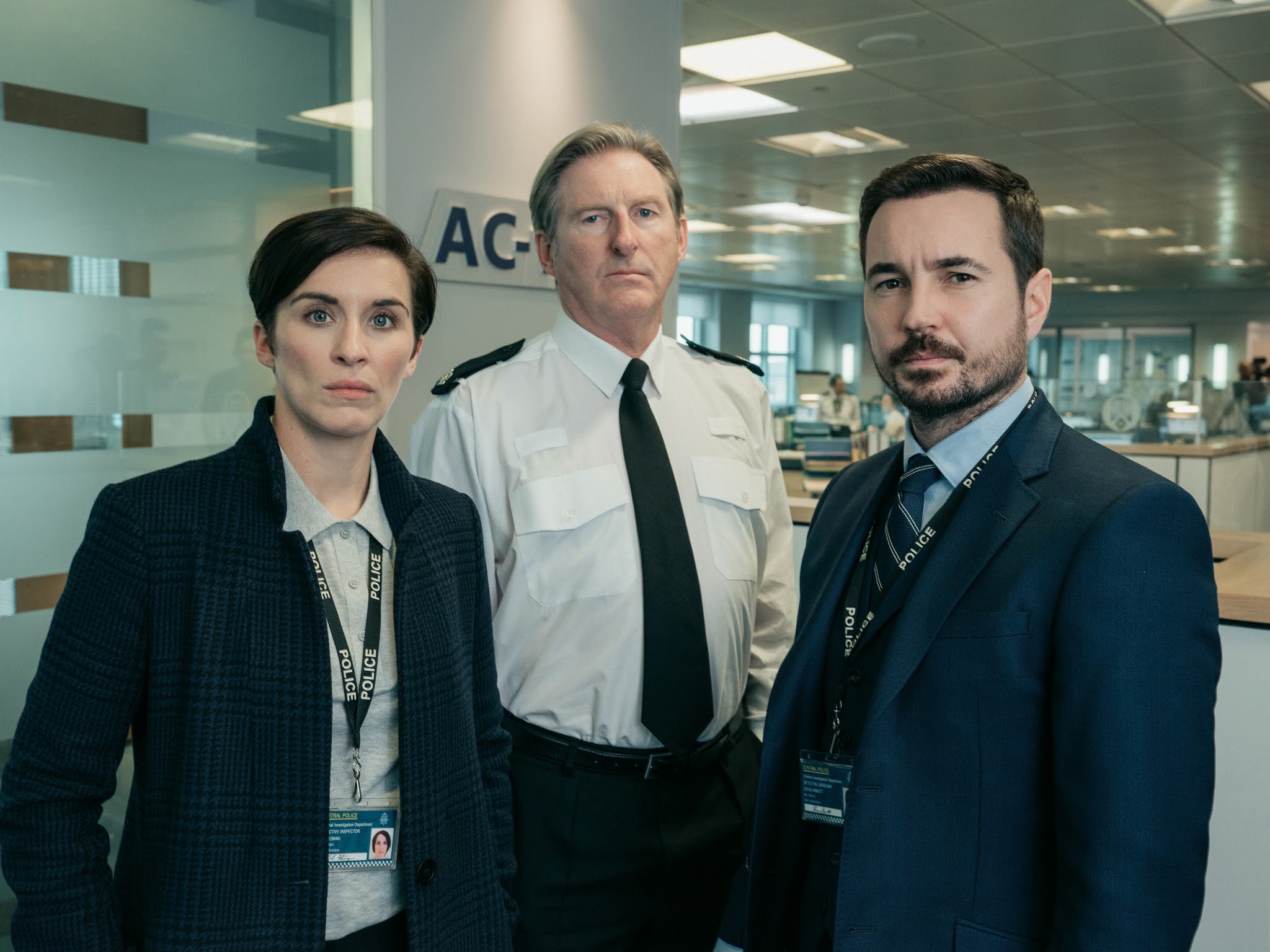
We have reached Hump Day, the figurative midpoint of the week. Once this would be the point of reflection that just two more working days remained before the weekend, but Wednesdays are now beset by another anxiety: it’s four days until the next instalment of Line Of Duty.

The series has been slow to get off the ground, a deliberate ploy by Jed Mercurio to hook viewers into a longer, seven-episode run, but in last Sunday’s fourth episode of Series 6, we had a proper LoD corker. In-prison murders, bent coppers everywhere, a set-piece gun battle that matched the bank heist in Heat for loudness, and a boo-the-villain moment between shadier-than-shady Deputy Chief Constable Andrea Wise and Ted Hastings. Here you can’t help weighing up whether Wise will be uncovered as a so-called ‘H’, or even if she’s bent at all. Given the number of corrupt senior officers in this constabulary, it feels like most executive ranks are working for the OCG. But for now we’ll have to make do with the figurative moustache-twirling from Wise as she makes knowing glances at a clearly exasperated Ted.                                                                                                                                                                   


Thankfully, now we know that Hastings isn’t the elusive fourth H. Actor Adrian Dunbar confirmed to Elizabeth Day's How To Fail podcast that it's definitely not him, to his relief. “I spent all this time playing this character and I always thought Ted had a sense of duty and a moral core," he explained, revealing that Jed Mercurio had told him that he wasn’t the show’s arch villain. Dunbar says that he’d have found it hard to accept Ted was a baddie: “Jed is aware of our audience and they know Ted has a sense of moral fortitude,” he told the podcast. “I am glad he came out of it with flying colours."


As Sunday’s viewers will have seen, nasty Wise is pensioning Hastings off and, in a beautiful play on corporate politics, merging AC-12 with two of the force’s other anti-corruption units. Given how much the OCG has got its fingers into City Police, you wonder if all these units are doing any good at all. This, then, coincides with the BBC’s latest tease, news that Episode 5 will feature hard-faced AC-3 boss Patricia Carmichael, who appeared to put herself in the frame to be an H in Series 5 when she was brought in to investigate Ted. She is another wonderful panto villain, and given that she presided over an interrogation infiltrated by a murdering junior, not entirely beyond suspicion, either.


Picture: Instagram/Line Of Duty

Twitter and all the rest is beside itself with speculation since the latest episode, which ended with one of Hastings’ trademark “Mother of God!” exclamations as he read a report DNA-linking Series 6 chief baddie DCI Jo Davidson with someone already known to him. Brilliantly, Mercurio left the identity hanging. A BBC website accidentally posted a picture of a big name to come into the cast this weekend, before quickly taking it down, sending the Internet into meltdown in speculation as to who it was. I don’t want to know. I don’t want spoilers, thank you. I want to play the game at home each Sunday night, knowing that it’ll be another seven days before more is revealed, and not until. This is the kind of suspense-generation you used to get with Doctor Who in the old days. Except here, the production values are in another league entirely. 


Crucially, it’s got the nation talking, when not frantically trying to book haircuts and pub garden tables. Mercurio is just an almighty tease, but the way he plays with the audience is almost psychotic. Conventional set-up would have the villain revealed in Episode 1 and the procedural performed before the big reveal at the end. But not with this show. Villains are suggested, rather than confirmed, OCG sleepers could lurk at every turn. The suspicious looks half the cast spend each episode giving each other are nothing compared with what we viewers are dishing out. Such is Mercurio’s mind that none of the cast are without doubts. For all the clear baddies (such as former teenage delinquent-turned rookie copper - inexplicably, given vetting techniques - Ryan Pilkington) you just know others are hiding in plain sight. The guessing game is half the fun, though not good for blood pressure, as you weigh up all the possibilities. Given how many senior officers in this force are at the very least suspect, Line Of Duty is very adept at recycling supporting characters that turn up like bad pennies in elevated positions. Thus you’ve had the inexplicably over-promoted div Ian Buckells, plus Arnott’s dodgy boss from Series 1 who is now the chief constable, and a number of ad hoc promotions from sergeants to inspectors. Clearly, City Police is where you can see your career advance. Makes you wonder why...


That, then, cruelly, is how it is. Mercurio might reveal more in Episode 5, or he may hold it back until 7. Such is his thinking, he won’t follow convention at all. Columbo was always predictable, in that you knew the dishevelled detective would crack the case in the final minutes with his “Oh, just one more thing...” disarmament of the chief suspect. Line Of Duty won’t do that. While it’s unlikely that Mercurio won’t abandon the moral core of the show that Dunbar talked of, and its more than likely that Steve Arnott and Kate Fleming will solve the whole thing and, possibly come to Ted’s rescue (because even Line Of Duty should uphold some conventions of television), there really is no guarantee that they will. Brilliant television by any stretch.

Tuesday, 6 April 2021

Unto the promised land...possibly

© Simon Poulter 2021

As day trips go, last Thursday's wasn't the most scenic. Nor was it the most productive. But it was liberating beyond all measure. The occasion was the briefest of visits to my official place of work, for the first time since I was actually employed to work there, exactly 12 months ago today. The reason for visiting was to finally collect my security badge, allowing me - when needs require it - to go into the office and work there. 

You see, I have a tactical need, every couple of weeks, to work somewhere other than the increasingly knackered sofa that has been my workplace exclusively for the last year. Day after day, e-mail after e-mail, Teams meeting after Teams meeting, I have sat on that sofa like some condemned breakfast TV presenter, with a make-do arrangement enhanced only by the acquisition of a hybrid coffee table with a pop-up desk element. It’s hardly been an adequate solution, and God knows what attrition has been caused to my spine, let alone to my general health (itself a topic of lengthier consideration another time). But it has worked. In fact, it has all worked.

In these last 12 months, I’ve contributed to my company’s quarterly financial results, two product launches, an advertising campaign launch and even an IPO. And all from that dilapidated settee (which, I swear, has sunk by a good inch from having my carcass weighing it down for the entire working week). It would be false, though, to pretend that liberation is fully in sight. A return to five-days-a-week office working may never happen. My company, wisely, has adopted a policy of continued work-from-home for most, and is certainly not encouraging a resumption of full occupation on the floors of its HQ. Generally, the mood music is clearly a discouragement of office working for now, sensibly, given that we’re not out of the woods yet. 

In his press conference yesterday, Boris Johnson was typically chipper, looking forward to supping a pint in a pub which, for some, is the sum total of their liberation ambition. For others, it’s hugging an elderly relative again, or even seeing a relative for the first time in months. I’m up for all of that, with the added goal of getting into the swimming pool again next Monday for the first time since December. But beyond that, I’m strangely covetous of anyone who’s been able to continue going to work during the lockdown. Indeed, it’s got to the point where I can’t watch Line Of Duty's Steve Arnott in the AC-12 office without thinking what a lucky git he is (even if the BBC's production team has notably socially distanced everyone). 

Picture: BBC

Last week’s briefest of excursions into Central London, visiting a place of work I’d only previously been in the once (and that was for my job interview), felt like a tantalising experience of freedom. I know we all eventually get to loathe the daily commute - and I know I probably will, once some semblance of full normality comes back - but my somewhat humdrum train journey last Thursday, with a short walk to the company's building, made me feel like Neil Armstrong stepping out of the Apollo 11 lander. More liberation was to come as, after collecting my badge, I bought lunch from the nearby Pret A Manger and sat in the mild midday sunshine, like every other office worker would do, before heading back to the Underground station for the journey home. I was only out of the house for a matter of four hours, but it left me near-giddy with satisfaction. 

Entire sitcoms, films even, have been made about commuting and office life, but on this one Thursday it had become an unrivalled and welcome novelty. I shouldn’t, though, get my hopes up too high. “This virus is going to be with us for the foreseeable future,” Professor Chris Whitty said, cheeringly, during yesterday’s Downing Street presser. And he’s right. The ‘direction of travel’ for some time has been that we may be wearing masks and socially distancing for a long time to come. The vaccine rollout has been remarkable - I’m looking forward to my second jab next Saturday - but for all the upbeat talk of economic life reopening again, we’re still a long way off 100% vaccinations, and other aspects of normality, like foreign travel. Boris, yesterday, defiantly maintained faith in his “roadmap”, adding that he saw nothing in the the present data that made the government think it would deviate from it. But that's not without gloomy predictions from SAGE experts which have cast doubt on any return to full normality by 21 June, with further evidence suggesting that any premature relaxation of the lockdown rules could spark a fourth wave of the virus.

Business has been mixed on where it stands on the return to normality and, in particular, office working. In February, Goldman Sachs CEO David Solomon called working from a home “an aberration” and vowed to correct it “as quickly as possible.” Others in the finance sector have echoed this sentiment, citing the need for collaboration that can only be achieved by sitting side by side in an office. Accounting firm PricewaterhouseCoopers is going in a hybrid direction, adopting a flexible approach that would enable its 22,000 staff in the UK to divide their time between office and home working once restrictions are lifted. Employees will also have better flexibility in choosing how their working days are structured, with the ability to choose start and end times, and even work more hours from Monday to Thursday so that they can knock off early on a Friday. Such revolution reflects the fact that many companies and their leaders have come to realise, over the course of this last year, just how much working culture resembled battery farming at times. For every CEO who wants to see staff back at their desks, there are plenty who see it fraught with risk, resigning themselves to the fact that the sight of desk-bound employees, sitting cheek-by-jowl has long expired.

You could even say that more forward-thinking executives have seen the light, concluding that WFH has worked for a year, and many employees have said that a commute that constitutes little more than bedroom-to-kitchen-to-home-office has been a boon to wellbeing, especially for people previously juggling their work travel with things like the school run. Not surprisingly, technology leaders have been most open to the continuation of remote working, despite being the most likely to preside over working cultures that benefit the most from face-to-face collaboration. Some, like Facebook’s Mark Zuckerberg, have even started talking up the possibilities of using virtual and augmented reality technologies. This, though, is reflective of the somewhat idealistic thinking in Silicon Valley. 

The reality, I suspect, is going to be somewhere between these poles: the liberation has only just begun, and even then, only slightly. What you and I might remember of going to work from before the pandemic may, yet, remain a distant memory. On the other hand, as organisations like mine discover that projects we’re working on might benefit from being able to shout across a desk at someone, we might start increasingly find ourselves swiping in and out of a formal workplace, sitting on an actual chair at an actual desk. From this end of the last 12 months, I know what I’m looking forward to.

Friday, 2 April 2021

A little bit more than a ’ot dog

I've put money in all your pockets. 

I've treated you well, even when you was out of order, right?! 

One lunchtime, not so long ago (actually, quite some time ago, in the days when there were things called offices) and when I had a job near London’s Tower Bridge, I left my desk to go for a stroll around the historic backstreets of Wapping. What began as a cathartic midday plod in the late summer sunshine soon became a literal walk down Memory Lane, as I mooched about streets I hadn’t visited in 30 years, not since the days when I had to visit the offices of The Sun and Sunday Times while working for Sky TV. 

Rupert Murdoch had, not long before I joined Sky, decamped his newspapers from Fleet Street to ‘Fortress Wapping’, a divisive move that changed British newspaper publishing forever, as the tycoon belligerently took on the print unions in an acrimonious and, at times, violent period of media history. Like much of Wapping, the area around News International’s site at the junction of Virginia and Pennington streets had once been staunch working class, populated by dockers and their families. Today, Murdoch's presence is long gone, with the newspaper industry undergoing further schism in the online age (with News International losing, along the way, the News Of The World, a victim of its own dubious practice).

Walking back to St. Katherine’s Dock, which my then-office overlooked, I ambled close to the river on Wapping High Street. Making a turn, I found myself in Scandrett Street, where I was confronted by a typical canyon of newish brick buildings, designed to resemble the warehouses that once lined the area, and now a testament to rampant gentrification. It was then that it struck me that this was precisely the vision that fictional mobster Harold Shand had had at the end of the 1970s when he had the idea to do something about the dilapidated streets of E1. 

This, then, is the basis of The Long Good Friday, one of the finest British films ever made, and which was released 40 years ago this week. “This is the decade in which London will become Europe's capital, having cleared away the out-dated,” Shand pronounces on the deck of his gleaming yacht, moored in front of the Tower of London, as he tries to convince an American mafia delegation to come in on his project to regenerate the East End. “We've got mile after mile or acre after acre of land for our future prosperity,” he continues. “No other city in the world has got, right at its centre, such an opportunity for profitable progress.” He was incredibly prophetic. After decades of post-war wrangling about what to do with the area, in the same year that The Long Good Friday was released, Michael Heseltine created the London Docklands Development Corporation. By the end of the 80s and the start of the 90s, Docklands itself was transformed. Post-Big Bang, the banks and their bankers moved east. Canary Wharf was built on the Isle of Dogs, and continues to grow to this day, with gleaming spire after gleaming spire springing up like cocktail sticks planted on a Cream Cracker. Today it might be quieter due to the lack of office workers, but it is no less a powerful symbol of the economic aspiration that stretches out of several boroughs spreading east down the Thames from Tower Bridge.


But back to Scandrett Street, which plays a notorious role in The Long Good Friday: as I stood there, staring at faux history clad in modernity, I felt a shiver of familiarity, despite having never been in that place before. Opposite the new developments was a wrought iron fence surrounding the garden of St. John’s Church. For East End authenticity, it could have been Albert Square itself, but something told me that I had seen that fence in some other context. Sometime later, reading up on the production of The Long Good Friday, I discovered what had been there before - at the end of that street (and now long gone, the result of modernistic development) was The Lion & Unicorn pub, the East End boozer blown up by - at the outset of the film - hoodlums on Good Friday.

The John Mackenzie-directed thriller remains one of the greatest British films ever made, but its use of London locations, in particular, made it so rich. It was also uncompromising. Appearing a year or so after the comedic Minder arrived on British TV screens, itself a distant descendent from The Sweeney, and around the same time that Only Fools And Horses made its debut, The Long Good Friday was an equally colourful depiction of shady London life, but with an infinitely deeper agenda. Barrie Keefe’s bristling story combined IRA terrorism, a mafia plot, a prototype yuppie (in Shand) before the term had ever been used, and was populated with a cast of cracking British talent. 

Bob Hoskins remains throughout a mesmerising, Napoleonic figure, with his boxer’s nose and street-smart belligerence, trying to understand who and why anyone would be trying to derail his grand vision, unaware that one of his gang has become embroiled in a dodgy deal with terrorists in Belfast, who exact their revenge on Shand’s empire in startling form. Shand’s quotes throughout the film are legend, especially the “I’ve put money in all your pockets!” near-soliloquy at the top of this post, but also his admonishment of the American mafiosi as they renege on their agreement inside The Savoy hotel: “What I’m looking for is someone who can contribute to what England has given to the world: culture, sophistication, genius. A little bit more than a ’ot dog, know what I mean?” he quips, with tongue not entirely in cheek. “I’m glad I found out in time just what a partnership with a pair of wankers like you would’ve been,” he thunders on, probably not grasping the fact that Americans wouldn’t know what sort of an insult that was.

Critics have tried to analyse The Long Good Friday, even attempting to make parallels to The Godfather, given both films’ levels of brutality and their central figures of gangsters trying to change their business models. Like Mario Puzo’s somewhat Shakespearian tragedy, quintessentially a New York tale, The Long Good Friday is pure London, as the list of filming locations pertains. Nothing has come close since, not Guy Ritchie’s geezerfests or anything in Danny Dyer’s canon. It works because London’s Docklands were bleak at the beginning of the 1980s and, even now, if you look closely, still are. It’s just that the converted warehouses that line the river, housing London’s new urban elite, have given it a respectable polish, the kind of aspiration that Shand himself had envisioned. Paul Barber (who played ‘Errol the Ponce’, mutilated in his kitchen by Shand henchman 'Razors'), this week likened Hoskins’ character to the principle character in Only Fools And Horses, in which he also appeared: “The thing that got me was Harold’s speech on the boat [at St. Katherine’s Dock],” Barber told The Guardian this week. “Think about it now: it has all happened. It was the Thatcher era and he was like the young Del Boy.”

“Nobody had done a movie like that as far as I can recollect,” Helen Mirren, who played Shand’s moll-like wife Victoria, also told The Guardian. “It broke ground,” she said, saying that she was blown away from the outset by Keefe’s script. “It was like a piece of literature, and movie scripts don’t tend to be like that. This one you read like a novel. With the exception that my female character was terrible – she was very, very dull.” That may have been the case - and I’m sure Mirren wouldn’t deny that Victoria serves as little more than window dressing to the piece - but the film is certainly novel-like, as Shand questions why things are going increasingly wrong with his grand plan. And, of course, it ends so brilliantly without conclusion: as Shand exits The Savoy for a rendezvous with Victoria, he jumps into his chauffeur-driven ride, only to see his wife being hauled off in the opposite direction under duress. As he realises the unfolding situation, a figure - Pierce Brosnan in his film debut - pops up in the front seat wielding a silenced pistol. Much like the final scene of The Sopranos, it’s up to you to decide what happens next. But whereas Tony Soprano’s fate is subtly ambiguous, the elongated closing sequence of The Long Good Friday, set to Francis Monkman’s driving score, sees Shand gazing out of the Jag’s window, seemingly accepting his fate.

It was, without doubt, the film that planted Hoskins in our consciousness. He’d made his breakthrough a couple of years before in the BBC’s adaptation of Dennis Potter's Pennies From Heaven, and he would sort of return to the Shand character five years later in Mona Lisa. In The Long Good Friday, Hoskins is the focal point of a fascinating essay about Britain at the beginning of the 1980s. Keefe has appeared to shy away from casting it as a great sociological snapshot, with director Mackenzie calling it just “a damned good gangster movie”. But 40 years on, as we address many contemporary issues about morality, race and even patriotism, The Long Good Friday holds up on so many levels, not the least being that it’s British film making at its very best.


Monday, 22 March 2021

Trust no one. Line Of Duty is back!

Picture: BBC

It’s the morning after the night before, when AC-12 - Ted Hastings, Kate Fleming and Steve Arnott, Britain’s favourite trio of coppers-investigating-bent-coppers - returned to our screens with the sixth series of Line Of Duty. For the most part, we weren’t disappointed (we being the 9.69 million viewers who tuned in - a whopping 44.5% of those watching telly between 9 and 10pm).

There was something of a slow-burn feel to the opener, a hallmark of both Breaking Bad and its spinoff Better Call Saul, lulling some critics into thinking it was off-par. It wasn't, but with seven episodes to fill in the series (rather than the usual six), creator Jed Mercurio appeared to be using the extra length to plant an array of seeds, with no idea of which might grow out and when. This is his gift - a panoply of potential plotlines with which to tease and antagonise. 

So, we were introduced to the season’s is-she/isn’t-she baddie, Kelly Macdonald’s DCI Joanne Davidson (billed in pre-publicity as “the most enigmatic adversary AC-12 has ever faced”). Like the previous is-she/isn't-she leads, DIs Lindsay Denton and Roz Huntley, Davidson is a mass of smouldering issues - a failing same sex relationship with a junior officer, paranoia, judging by the numerous heavy-duty locks on her front door, and potentially a link to a murdered journalist. Add to that, Hastings having to play things low-key after his final warning at the end of Series 5, Fleming’s home life in, apparently, tatters, and a bored Steve Arnott popping more Nurofen than is good for him as he continues to deal with being thrown down three flights of stairs in Series 4 by Balaclava Man. Oh, and an absolute blizzard of dizzying new acronyms, such as “We can keep it on the DL only if we have a CHIS on the MIT”, which may have been lifted directly from a Snoop Dogg lyric. “CHIS”, we were relieved to later learn on social media, means 'Covert Human Intelligence Source'. All of which sets us up…for what? Well, exactly. Mercurio has proven - with LoD and Bodyguard - as being a master of expect-the-unexpected, and much of the fun of, if you can call it fun, has been trying sift the red herrings from the ciphers that unlock each series over the course of its run. 

Like a more tortured version of a wet bank holiday afternoon’s game of Cluedo, LoD has become something of a national obsession. Social media yesterday was awash with comments of more or less the same ilk - “Why is it not yet 9pm?” (my own tweet). Family WhatsApp groups went quiet for an hour at 9pm and there was notable concern on Facebook when the preceding Top Gear ran two minutes over time.

Picture: BBC

Make no mistake, Line Of Duty has become event television. We sit there on the sofa arguing with ourselves, booing the baddies like pantomime barons, much as we did each Saturday night during The Masked Singer (look, I guessed Blob was Lenny Henry, almost from the beginning, but would the judges give in to the bleedin’ obvious? No.). Line Of Duty and The Masked Singer share in a television tradition that has been in danger of expiring in the era of box set binges: suspense. While we’ve all filled bored evenings (and afternoons and…er…even mornings…) during lockdown by ploughing through entire seasons of shows on Netflix and all the rest, with Line Of Duty the BBC is sticking to the traditions of cliffhanger Doctor Who endings. No, you will not be able to watch all seven episodes now on the iPlayer, and no, it will not be immediately available on DVD as a complete set. You will have to wait for the next episode, and the next one, and the next one after that. 

I’d like to think of another police procedural occupying the coveted 9pm slot to have caught the national imagination quite as this one has done since it made its debut in 2012, first on BBC2 before being promoted to the proverbial officer one rank higher, BBC1. Over that time we have sucked in by the twisting vortex of Mercurio’s mind, as plots have corkscrewed tantalisingly, each series testing our patience and, on occasion, our tolerance of credibility. That’s not to say there have been shark-jumping moments, just more of a tendency for Mercurio to lob in hand grenades of disruptive thinking that have seen pivotal series characters killed off as early as the opening episodes, while others quite consciously left hanging on to, quite honestly, mess with us. 

Like DI Matthew Cottan - delightfully afforded one of my favourite in-series nicknames of all time, ‘Dot’ - who survived three series as arch-villain ‘The Caddy’, embedded nefariously in AC-12 while remaining the principle conduit of terror and manipulation for the “OCG” (organised crime group - another of the myriad acronyms which add to the bandwidth-sapping plot lines). Or Denton, Keeley Hawes’ wonderfully sociopathic detective inspector whom, even up until her resurrection from prison and eventual death in her second series (at the pistol of Cottan), we never fully knew whether she was just misunderstood, if slightly loony, or truly in league with the dark side of ‘The City’, LoD’s fictional geography. Denton, it should be highlighted, is one of a number of prime examples of women being given equal and authentic screen time in the show. Without pandering to obvious wokeism, unbridled female characters have been a mainstay of Mercurio’s invention (including, it must be said, Hawes’ turn as the Home Secretary in his equally compelling Bodyguard). Thus, he’s also given us demented DI Huntley (Thandie Newton), devious lawyer Gill Biggelowe (another in league with the OCG), and in Series 5, the stone-faced Detective Chief Superintendent Patricia Carmichael (Anna Maxwell-Martin) and the new Deputy Chief Constable, Andrea Wise, all of whom could well reappear in this latest series in either protagonist or antagonist roles. It’s impossible to tell. 

In preparation for last night’s return, I recently gorged through the previous five seasons reminding myself of the threads, Ted Hastings’ zeitgeist-monstering catchphrases (“Mother of God!”, “sucking on diesel”, “bent coppers”, et al) and the somewhat byzantine connections between the police of this one particular city (believed to be in the Midlands) and the OCG. Perhaps because I’d only previously watched Line Of Duty in similar binges on long-haul flights, I’d not previously appreciated the parallels between it and The X-Files which, when it wasn’t doing ‘monster of the week’ episodes, had the recurring thread of a deep-state conspiracy (not entirely dissimilar to the QAnon cobblers) involving shadow governments and aliens. A little more plausibly LoD has featured corruption on a grand scale - and not just the old cliche of masonic handshakes to turn a blind eye to pub lock-ins and local councillors' parking tickets. It has involved largely unseen mobsters’ manipulation of police procedure to enable drug rings, prostitution and child abuse rackets, embedding corrupt officers throughout the Central Police constabulary, and usually in plot-changing positions. 

Picture: Instagram/Vicky McClure
Here we should mention ‘H’, the ruse that has been LoD’s X-Files-style undercurrent: Dot Cottan’s dying revelation of four finger taps cunningly suggested that H may not have been an individual, but four high-ranking coppers. With three now gone, we’re still left to wonder who the fourth is. Ted Hastings is not out of the clear (there have been subtle and not-so subtle suggestions that he might be an H, with actor Adrian Dunbar craftily pictured on social media audaciously wearing a Helly Hansen sweatshirt with its prominent double-H logo…). Towards the end of Series 5 we were fed snippets of doubt about Wise and Carmichael, with the latter’s assistant, Sergeant Tranter attempting to murder Gill Biggelowe in the didn’t-see-that-coming Fatal Attraction denouement in the season's final episode. That also concluded with Ryan Pilkington - recruited into gangster Tommy Hunter’s crime syndicate as a teenager - at his passing out parade at the police training college, teasingly setting up an Alien-style possibility of a spawn-of-the-devil introduction to come.

As amusing as some of this hokum might be, Line Of Duty’s return comes at an awkward time for policing in Britain. Even as the opening episode of Series 6 was going out last night, 12 officers were being injured - two seriously - and police vehicles set on fire in Bristol amid violent protests against the new Police And Crime Bill. The rioting comes soon after the tragic disappearance and murder of Sarah Everard, and the events of Clapham Common in the aftermath. I was in the midst of my Line Of Duty binge when the Everard case was playing out. Fiction began to blur into fact as I switched from the iPlayer to news bulletins revealing the grim outcome and distressing detail of a young woman’s alleged killer being a serving Metropolitan Police officer. All of a sudden, policing and police conduct - and the politics governing them - has come under greater scrutiny than ever before. I’m not being flippant in trying to conflate this with Line Of Duty’s return. It is, without any room for doubt, fiction, and somewhat stylised fiction too. It is no more a documentary about real investigations into police behaviour than The Crown is a factual profile of the royal family. But if it serves any moral purpose, beyond raising the nation’s blood pressure for an hour each Sunday night for the next seven weeks, it is to provide a timely reminder of the importance of trust and accountability in our public institutions.

Line Of Duty treads the finest of lines between escapism and reality. It’s clearly well researched, with Mercurio drawing on well placed sources to enrich his plots and dialogue. The police shooting of Jean Charles de Menezes and the murder of Jill Dando are believed to have been in the mix of inspiration. Where it goes after this latest run, however, is open to debate. The BBC is yet to commit to a seventh series. “I think as long as there’s an appetite from our audience for the show, we’ll keep going,” Dunbar told Graham Norton in January. “Why would we stop? Jed [Mercurio] has managed to keep the standard so high for so long, and people love the show. I hope it does go on.” Martin Compston (Arnott) recently told The Sun that the cast was aware of how big the show had become, but that they probably had one or two more series in them. “So you do start to become aware of the legacy around it - you want to be remembered as ‘one of the great shows’ and not be remembered for ‘a bad last series’. Mercurio himself recently told Jay Rayner’s Out To Lunch podcast that he hoped the show would continue: “I really want to carry on with Line of Duty,” he said. “I think that Season 6 proves that there is much more ground for us still to cover.” There are certainly plenty of lose ends to be tied up, and on the evidence of last night’s opener, new ones being created. Strap in, we’re not done yet. 

Monday, 8 March 2021

Bridge of sighs

Get ready for the COVID anniversaries, as they will be coming thick and fast over the next few weeks. My first of note lands this evening when Chelsea-v-Everton kicks off at Stamford Bridge. It was this very fixture, on this very date last year, that marked the last time I was sitting in my seat in the East Stand Upper Tier, at the very same venue, watching football "live" (i.e. not on an iPad or with fake crowd noise unhelpfully piped in by Sky Sports). 

The home side won handsomely, 4-0, in what turned out to be a miserable return to the Bridge for Everton manager Carlo Ancelotti (regulars to this blog will have endured, amid my rants-previous about Chelsea's biennial managerial schisms, how Ancelotti was dispatched by the club on the final day of the 2010-11 season at Everton's Goodison Park for leading the Blues to just second in the league...). But tonight, by some quirk of Premier League scheduling, it’s the same fixture on the same date at the same venue, albeit one devoid of supporters, prompting some reflection on the football year gone by. Because that win over Everton last year felt like the season had ended prematurely on a high. But as we walked out of Stamford Bridge, the weirdness that we’d all experienced that afternoon was just the start of things. Most startling was how, almost at a stroke, football dropped down the list of priorities and, to some extent, stayed there, though not immediately for everyone: three days after that Everton match, their rivals from across Stanley Park, Liverpool, hosted Atlético Madrid at Anfield in the Champions League. 

Four weeks later, the city of Liverpool experienced a sudden surge of coronavirus deaths, with 68 recorded across the Royal, Aintree and Broadgreen Hospitals between 7 and 9 April. The suspicion fell on a spike in COVID-19 infections following the Madrid game, which had been attended by 3,000 Spanish fans who'd flown in for it. Madrid was already succumbing to the virus by then, and had strict lockdown rules in place. A week later, 250,000 people descended on the Cheltenham Festival. “People were crammed six deep at the bars,” journalist Alan Tyers, who’d been covering the event for the Daily Telegraph, told The Guardian. “If you were going to design a virus dispersion hub, you could do worse than the indoor bits of a packed racecourse”, he said, as he recalled concourse bars packed with racegoers innocently enjoying some drunken revelry. Tyers’ comments appeared in a comprehensive, forensic examination of last year’s Cheltenham meeting which, combined with the Liverpool-Atlético game, were two notorious ‘superspreader’ events that took place just as the virus was taking a hold in the UK. By the final Cheltenham race on 13 March, The Guardian noted, there had been 2,263 confirmed cases of the coronavirus in Britain. That same day, the Premier League suspended all games. 

The government remained unchanged until the 16th, when Imperial College modelling predicted that the country’s death toll from COVID-19 could reach 500,000 if there wasn’t a major intervention. By the following Monday, Boris Johnson announced the first national lockdown. That same day 56-year-old decorator Geoff Bodman was put on a ventilator at a Cardiff hospital. The Guardian reported that it was ten days after he’d returned home from the Cheltenham Festival. Eight weeks in intensive care ensued, during which he had a stroke. “They should never have allowed [the festival] to go ahead,” Bodman told the paper. “But it would have cost millions to cancel.” Perhaps if they’d known then what we know now, with the UK death toll approaching 123,000 and over four million cases recorded, the organisers of these events might have thought differently. But, benefit of hindsight, and all that.

Picture: Facebook/Chelsea FC

I, for one, shudder at the thought of what I might have been exposed to at Stamford Bridge on this day a year ago, not least because I was soon identified as “clinically extremely vulnerable” to the virus, and technically, should have spent most of the last year shielding. I eventually caught it in November and experienced only a very mild dose, but it could have been worse. Much, much worse. That Sunday, in our section of the East Stand, we didn’t know quite what the protocol was. Old friends, who’d been there week-in, week-out for years, greeted each other awkwardly with elbow bumps rather than conventional handshakes. A large swathe of Row 19 in front of us was empty, the unmistakeable sign of regulars giving the game a swerve. Not that it made much difference to the result.

When the 28th season of the Premier League resumed in June, it was to a very muted return. Matches had to be played behind closed doors with only essential staff allowed inside grounds. Home and away teams are still kept apart before kick-off, with visiting sides invariably forced to use makeshift changing facilities in club car parks, rather than the traditional ‘Away’ dressing room. Match balls and corner flags have to ritually disinfected, and non-playing staff and substitutes were required to sit socially distanced and masked in the stands. Players mingling, hugging and generally mixing is still a moot point. Broadcasters have tried to compensate for the lack of crowds by adding crowd sound effects but it just isn't the same (the one consolation of watching with the sound effects off is that you hear every swearword from the touchline, forcing commentators to regularly have to apologise for pre-watershed expletives).

Football soldiered on under make-do circumstances. Games that went ahead in the first few weeks of the hastily resumed season were notably flat for home viewing, despite the bonanza of live coverage, with all Premier League games televised and 6pm weekday kick-offs (though the Friday, Saturday and Sunday evening kick-offs have eaten into time usually reserved for family entertainment). But despite this bounty of televised football, it would be hard to say that we’ve always had our money’s worth. Graeme Souness recently wrote in The Times that the absence of fans in stadia has had a statistical impact on matches. He noted that home advantage was no longer a factor, with one particular week, recording all five Wednesday night fixtures ending in away wins. We’re now on course for an away win record in the league. 

“People tend to forget that players are performers and entertainers and will all feel the impact to a degree, some by a lot and some by a little, without crowds to play in front of,” Souness wrote. “The vast majority of them enjoy the thrill of having a live audience there, so they are suffering without it.” As a player he recalled feeding off the atmosphere inside the stadium both home and away, especially the latter: “The more hostile it was, the more I thrived on it.” Aggression, Souness said, has been dampened, measured by the minimal number of player scuffles he’s seen during lockdown conditions. He also noted that the absence of baying crowds has also impacted referees’ brandishing of red cards and awarding penalties, though there is no evidence to back up such a claim.

Picture: Facebook/Chelsea FC

As forthright in print as he is in the Sky Sports studio, Souness concluded that Premier League football had, throughout the crisis, proved to be less of its traditional value, adding that it can sell itself for “astronomical figures” around the world “because it is deemed the most exciting, honest and entertaining,” but that has been missing. He cited VAR as a factor, and sort of has a point. Greater televisual scrutiny has, indeed, made VAR seem like a bureaucratic burden, with some decisions made using it no better than a referee giving or not giving a decision without it. I can only imagine what those interminable pauses in games would be like inside a stadium. 

Perhaps we will only find out on the last day of the league season, 23 May, when matches will be playable - in theory - in front of crowds for the first and final time, following the expected lifting of lockdown a week before. By then, Manchester City will have walked away with the league title, and it will be probably only the race for third and fourth place that will be of any consequence. For this Chelsea fan, tonight’s encounter with Everton will count greatly in that hunt for a Champions League place. If both teams approach it right, it’ll be - to use one of football’s many clichés - a ‘cup final’. And that’s just the sort of game that I would dearly love to be in my seat at Stamford Bridge to watch.  

Monday, 1 March 2021

Just another housebound Monday

© Simon Poulter 2021

And, so, another month rolls around, and another Monday, too. Like last Monday, and the 40-odd Mondays before that, I’m back on the sofa for another day of e-mail, instant messages and Teams meetings. At best, the most I’ll move is to the kitchen and back, for coffee, lunch, an afternoon bucket of tea, before, early evening, hopping on the exercise bike for half an hour of grunting at whatever early evening kick-off the Premier League has contrived to offer, and in a vague attempt at keeping the inevitable cardiovascular event at bay. For tomorrow, and the days after that, repeat as prescribed, at least until 12 April when, Boris promised us last week, my local swimming pool might reopen, if we all behave ourselves until then.

Despite Johnson presenting his 60-page ‘roadmap’ out of lockdown last Monday, we are still in it. We’re not exactly under house arrest, but even a quick dash to Caffé Nero feels like something from The Great Escape involving a vaulting horse and dislodged earth released surreptitiously down the trouser leg. As we enter the third month of the latest lockdown, and almost the anniversary of the first, reflecting on the routines of these last 12 dystopian months only leaves one longing for the traditions of working somewhere other than where you live. 

© Simon Poulter 2021
I miss being out and about early on a crisp spring morning; I miss the process of deciding what to wear to the office; I miss the vagaries of London commuting and the hour’s buffer between home and work life, work life and home, and a chance to listen to music or read a book; I miss that first Starbucks on the way into the office, and the prospect of a quick pint on the way home. I miss normality, and long for it to replace the new normality imposed upon us. But...

I started my current job on 6 April last year, so I have never known what office life is like at my new company. Apart from my interview, I’ve never even set foot in the building. What I will eventually encounter, fully, for the first time, remains to be seen: while we’ve all been away, my company has been adapting its office space to the new normal. Our CEO recently wrote an op-ed for The Times in which he asked whether the office of the future will ever be the same as it was before, a location around which productivity and collaboration is concentrated, rather than a collection of colleagues working together but meeting physically when required. He observed that 60% of employees’ time is spent on individual activities, while the remaining time is spent working in teams, activities that could still require an office, which by turn would not necessarily require the same amount of floor plan as pre-COVID. While not dismissing the idea of offices altogether, he mooted the idea that a single, Central London location where everyone hubbed together might not even be still valid, with a distributed, regional network of smaller properties possible to drive greater diversity, inclusion and even talent attraction. 

Wherever we work, and however we work, we still need to return to work in some form of how it was. The question is when, rather than if. Last week, Boris, speaking to a Network Rail conference (by video, natch) dismissed concerns that WFH would remain the new norm by gleefully predicting a return to mass commuting within a “few short months”. We would, he said, be “consumed once again” by our desire for social contact. Clearly, judging by the panicked look on the face of his health secretary and the deputy chief medical officer on Friday, ahead of a weekend of spring-like weather, we are already doing quite well in satisfying that desire without the virus being in anything like retreat. The prime minister is, however, clearly, walking a tightrope here (and not a zipline): he needs everyone to Stay Home. Save Lives. Protect The NHS.™, but also desperately needs the economy flowing again. City centres need the sandwich shops and pubs open again. But, perhaps equally as importantly, we need the release of normality to ease the mental health crisis looming of a nation confined to barracks. Just look at the full parks at the first sign of the mercury rising: it’s not civil disobedience (even if a few provocative camera angles in the Daily Mail shock-horror the world into thinking everyone is out giving a massive “up yours” to restrictions). Somewhere between illusion and reality lies the truth. 

The more I think of it, all of the ‘gates’ in Boris’s timetable seem eons away. Even next week’s ridiculous reopening of schools (why can’t they be allowed to stay closed until after Easter, or at least until teachers have all been vaccinated?). But while there will be a social tsunami of pub beer gardens overflowing just as soon as they can, working practices might not, despite Johnson’s conviction that “the British people will be consumed once again with their desire for the genuine face-to-face meeting that makes all the difference to the deal or whatever it is.” 

Once workers have been given a taste of flexible working, they won’t want to go back. When one of my former companies brought in mandatory three-days-a-week working from a designated ‘hub’, there was uproar, especially as desks were being deliberately limited (thus hinting at games of musical chairs first thing in the morning, with the losers ending up on the redundancy list). My last company went the other way - office spaces were there if you needed them, but there were no hard expectation to use them. That, though, was a Silicon Valley software company, a company steeped in digital technology, and obsessed with myriad online collaboration tools that actually became overwhelming to use. For me, personally, I still work best when I can walk over to someone’s desk, or stop them at the coffee machine, or poke my head around the door of their office, when I’ve got something to ask.

Picture: HSBC

I guess it depends on the business. Technology companies - especially those with a collaborative model - will be more adept at remote working via digital tools. Other industries won’t. Goldman Sachs’ chief executive David Soloman has branded remote working as an “aberration” and is urging his staff to come back to its offices as quickly as possible. Soloman actually saw more in common at his bank with tech companies, branding its work recently as an ”innovative, collaborative apprenticeship culture”. Working from home was not, he said “a new normal”, adding that he was “a big believer in personal connectivity”. Contrast that with HSBC, which last week said that it would be cutting its office space by 40%. But even that, though, might be at odds with the Canary Wharf estate where HSBC has it's corporate headquarters.

This morning, Canary Wharf's head of strategy, Howard Dawber, told Radio 4's Today programme that he expects the start of a return to the office as early as 29 March, with a 100% return by June when all of the ancillary services around the financial district, like pubs, restaurants and hairdressers, are allowed to open again. I'm not so sure: the area in Paddington where my office is located offers all that, but I don't see any sort of wholesale return from remote working. “We've got about five or six thousand staff working on the wharf at the moment,” Dawber said. “We expect over the next few months a gradual increase there - obviously the government's advice is still to work from home and I think everyone is sticking to that.” But he added: “Where the technology makes it possible to work from home, I think the processes and attitudes of businesses have caught up now to the point where I think it's going to be more socially acceptable to take the occasional day working from home.”

Dawber's point is that he expects working from home to return to an occasional choice - “one day a week or a couple of days a month” - adding that WFH has generated its own fatigue. “When the sun was shining and people were perhaps enjoying a more flexible environment, there was a sense it was going to be a short-term process and we would get through it and return to work.” But now, he says, people are missing the opportunity collaborate and socialise in person. That may be true, but WFH has worked, almost exclusively and the virus will still be out there when the Government's all-clear is eventually sounded. Companies will still, I suspect, have to convince their employees. 

For every one of us desperate to step outside the front door to work again, there are those who will not be comfortable until there is solid evidence that it is safe to do so. Working from home does, at least, provide that refuge. Even as the vaccine rollout makes progress, and the R number gradually comes down, the resistance in some parts of northern England presented on Friday by Professor Jonathan Van-Tam underlined the need for patience. There is still plenty of unknown ahead, too. The “direction of travel” might look promising, but variants of the virus keep showing up. Even though the mantra is that COVID-19 will be a disease that we eventually manage, like flu or measles, it’s not there yet, and we can’t truthfully say when that might occur.

Boris, in his comments last week, was typically effusive when predicting the return of vibrant city centres as people came back to working there. But this, it must be stressed, was no more than a prediction. Despite the Mail headlines, people have, generally, observed the stay-at-home message. In fact, the more you think of it, the more ‘normality’ has shifted. Just count the number of white delivery vans that pass your house on any given day, seven days of the week; how much has urban and suburban traffic increased due to home supermarket deliveries? Buses and trains are, now, only being used by those workers who have no alternative but going out to work, but even then, for the most part, public transport use is well down (despite those horror story scenes of Tube trains packed with construction workers crossing London).

I can easily imagine my local high street bouncing back. The supermarkets have rarely shown much difference throughout lockdown, but with the prevalence of coffee chains and independent cafes interspersed with charity shops, you can easily see these local economies bouncing back, supported by those hanging on to working from home. But what about city centres? Where my nominal office is, there’s a cluster of other corporate towers, all supported by the usual plethora of lunchtime takeaway outlets (and even trendy caravans serving artisan food). The large gym on the same site, plus swankier restaurants and an upmarket hotel would, presumably, all have been barren for the last year or so. Which of these enterprises will return to anything like they were before is hard to predict. Pre-COVID, central London was already slackening off on a Friday. One black cab driver once told me that he no longer bothered coming in on the final day of the working week, such was the shift to ‘casual Fridays’ where a more socially agreeable WFH practice was allowed by employees. So you can imagine what a hybrid model will be like.

Picture: Microsoft

For now, however, all this is academic. The government’s instruction to work from home “if you can” remains in place until at least 21 June, when it will be reviewed, and even then, offices are likely to be reconfigured to accommodate social distancing and the sort of hygiene rules that are now commonplace in supermarkets and garden centres. The sector to keep an eye open on will be the civil service. Once public workers are told to return to the office, the private sector might follow suit. It might depend on how well prepared they are and, equally, how well they’re listening to their employees. Incredibly, the pandemic has returned significant power to employees to depict not just where they work, but how they work.

However, as much as the attention on working culture over the last 11 months or so has been on WFH, Zoom calls, your colleagues’ book collection, cats video-bombing meetings and the ubiquitous battle cry of “You’re on mute!”, we shouldn’t get too far ahead of ourselves. Only 36% of working adults were working exclusively from home last week, according to the Office for National Statistics, and that level is still the highest since June last year, so clearly not everyone. That also needs to be tempered by the fact that 18% of workers aren’t going in because they’re on furlough, with a more alarming 22% of businesses saying that they had “paused” trading. Clearly there is going to be a shift as people return to work, but there’s some debate over just how intense that return will be. 

Before COVID, commuting in London was a litmus test for office occupancy: for most of August, those not on holiday could guarantee a seat on the train, but come September, and the great return, trains became packed again, and the customary British reserve (i.e. the passive-aggressiveness that emerges as entitled City traders and lawyers join the 07.57 to Waterloo - "could you move down please!"). With talk today of a hike in season ticket prices, and rail companies talking of great holes in their finances that might need to be mitigated by flexible arrangements that don’t rely on five-day commuting, we may have witnessed a subtle but significant shift in the way the entire nation goes to work. Not that anything is going to change for the next three months at least. I’m still stuck on the sofa. At least you  know where to find me.