Showing posts with label lockdown. Show all posts

Sunday, 27 June 2021

Queasy like Sunday morning

Not being equipped with the brain cells for it, I rarely stray into politics on either this blog or social media. Actually, my intellectual heft - or lack of it - doesn’t really come into it: such is the No Man’s Land of embittered trench warfare these days that it’s rarely worth the blood pressure spikes expressing an opinion on anything. But the matter of Matt Hancock’s office indiscretion has left me properly batey, and on many levels.

Firstly, I get it that someone’s private life should be just that, private, and it doesn’t matter what moralistic view you take on the now-former Health Secretary’s affair with Gina Coladangelo, essentially wrecking two families and destroying two marriages in the process. But, as has been frequently stated over the last 48 hours, in times of crisis, we look to leadership, especially when that leadership is setting the rules about what we can and cannot do. So when that same leadership breaks those rules - and flagrantly so - we’ve got a perfect right as villagers to come out shouting, brandishing our pitchforks in a bloodthirsty manner.

I’ve not lost a close relative to Covid-19, but my girlfriend has - her stepfather, who lived with her mother in Spain, enjoying their retirement in a warmer clime. When his death came, only two members of the extended family could fly out to the funeral (which we attended via Zoom). To date, my partner hasn’t been able to hug or even be in the same country as her widowed mother. These are the sacrifices we’ve all been forced to endure over the last 15 months. The same sacrifices that meant I had to stand on my own 91-year-old mother’s doorstep for months on end, waving at her from two metres like friends separated by the Berlin Wall. 

So forgive me for getting all preachy about it, but Hancock, in snogging his mistress in the office as if sneaking off from the Christmas party for hanky-panky over the photocopier, deserves no sympathy or given a bye on the basis that ‘humans are humans’. I get it. Times of crisis, and the proximity that comes from spending long working days together, followed by the “who fancies a quick drink over the road” will lead to office romances. It has happened to me and it may well have happened to you. The difference is that in my case, we were both single at the time and, secondly, not responsible for imposing the most stringent restrictions on social engagement since The Blitz. And therein lies the crux of our ire over Hancock, who was unable to keep it in his pants while telling every else to.

I’ve always found Hancock a politician - amongst many - who seemed rather too pleased with himself. When Theresa May appointed him Secretary of State for Digital, Culture, Media & Sport in 2018, he took it upon himself to demonstrate tech savviness by launching his own smartphone app. “Hi - I’m Matt Hancock and welcome to my app,” he trilled on the opening screen, before inviting users to enter an apparently un-needed tool to showcase what the politician was getting up to, in his professional life, of course. “A chance to find out what's going on, both in my role as MP for West Suffolk and as culture secretary, and most importantly it’s a chance for you to tell me what you think, and to engage with others on issues that matter to you.” Perhaps, now, we know too much.

Just a few months after being appointed to the culture brief, the 39-year-old Hancock was made health secretary, a role which, when May herself resigned, gave him the ambition for even higher office, unsuccessfully contending the Tory leadership that put in power Boris Johnson who, as we all know, has had a problem with marital fidelity all of his own. It could, then, be said that Hancock was in the right place at the wrong time when the pandemic erupted. And, as the many wartime analogies have compared, there are few rulebooks that can be followed in times of real national crisis. But if there’s one thing that has run through Hancock’s political career - and the app episode exemplified - it’s breathtaking hubris. 


On Friday, after The Sun had broken its front page story of Hancock’s “steamy clinch” with Ms. Coladangelo, the line being put out was that his priority was driving the rollout of the coronavirus vaccine and getting the country back to normality. This was the same line that Hancock brazenly used to deflect attention when Dominic Cummings’ explosive spleen-venting during the Commons Health Select Committee revealed accusations of “15 or 20 occasions” when “Hancock” (always just that) should have been sacked for failures in the early weeks of the crisis. When Cummings published the infamous WhatsApp screenshot of Johnson apparently calling his health secretary “fucking hopeless”, Hancock continued to style it out with his insistence that he has the country to save.

Even yesterday, in his resignation video, Hancock chose to spend more time alluding to the great work of the department he ran, than apologising to his wife for the humiliation he had caused her. Body language experts have noted how his lengthy tribute to the NHS seemed more to do with reinforcing his political credentials for a future comeback than acknowledgement of what he’d done. “There is still an air of arrogance in his words, though, as he tells us ‘This is why I’ve got to resign’,” said social behaviourist Judi James, pointing out that he appeared to be “steering us to what he sees as the sole problem in his behaviour, rather than addressing what the public might see as a matter of disapproval.”

There was something somewhat crooked about the way Hancock had, last year, set a seemingly impossible target of achieving 100,000 daily Covid-19 tests by the end of April, which he apparently did before the number plunged dramatically again soon after. It was one of the charges laid at Hancock during Cummings’ explosive testimony. “In my opinion he should’ve been fired for that thing alone, and that itself meant the whole of April was hugely disrupted by different parts of Whitehall fundamentally trying to operate in different ways completely, because Hancock wanted to be able to go on TV and say ‘look at me and my 100k target’.” The veracity of all of Cummings’ claims remain to be fully verified, but the accusations over PPE procurement, care homes and even, today in the Sunday Times, allegations that Hancock used his private e-mail account for official government business in breach of strict transparency rules, all start pointing to a “narcissistic and slippery health secretary”, as one source described him to the same newspaper’s Tim Shipman.

No doubt, as with all the political turbulence surrounding Boris Johnson’s government in recent weeks - notably his own travails involving wallpaper and his now-wife’s influence - much of this chatter about Hancock’s conduct will get brushed off by the spin machine as Westminster “rough-and-tumble”. It has, though, become far too easy to just dismiss sleaze as of interest only to the wonks who report on such stuff from within the SW1 bubble. Johnson himself was said to be reluctant to sack Hancock on Friday, and even in accepting his health secretary’s resignation yesterday he gave a glowing endorsement of the minister’s achievements, concluding: “Your contribution to public service is far from over,” depressingly hinting at some sort of return - the equivalent of saying “lay low for 12 months, son, we’ll come and get you when this is all over”. 

Johnson doesn’t do sackings, largely because he abhors being told what to do by the very press he, as a former journalist, was once a part of. Another theory is that Boris has assembled such a lightweight Cabinet that any changes are an admission of his own failure of leadership. With such anaemic opposition at the moment, Johnson can probably afford to let Hancock’s departure go without too much exposure, especially while he still has inadequates like Gavin Williamson, Priti Patel and Grant Shapps on his front bench to act as lightning conductors. The problem for Johnson is that each episode that he manages to brush off - as Hancock had done - as Westminster life erodes from within. The wisdom is that Johnson’s premiership is somewhat Teflon-coated because of the vaccine rollout, but there are signs of exasperation within his own party that the gaffes and own goals are, like coastal erosion, gradual and mostly invisible, but could prove problematic down the line. On Friday, Johnson was backing Hancock, saying that his health secretary had apologised and that the matter was then “closed”. Yesterday, however, that support started to disappear from within the cabinet and the parliamentary Conservative party, in a manner that didn’t even occur when Cummings himself scored an enormous reputational own goal for the coronavirus response by driving his family to Barnard Castle to ‘test his eyesight’.

Friday’s front-page splash by The Sun detailing Hancock’s extra-marital relationship with the now famous “Hands. Face. Arse.” CCTV image couldn’t have had worse - or better - timing, depending on your point of view. A story breaking like that on a Friday leaves the weekend open for it to deepen, and thus it did, with the Sunday papers today diving queasily into forensic detail of Hancock’s relationship with Coladangelo, not only examining the legalities of their encounters during lockdown, but even on just how long the relationship had been going no for, how she became a director on the Department of Health & Social Care’s board, how she was sponsored for a House of Commons security pass, and even the fact her brother’s company enjoys a lucrative contract as a supplier of services to the NHS. Coming on top of other allegations about Hancock’s matey network - fellow horse racing enthusiast Dido Harding being put in charge of the patchy £37 million Test & Trace programme, for example - it all points to a ministerial culture lacking rigour and due process. In his blog testimonies, Cummings has accused government departments of using such oversight to thwart efforts to secure things like PPE at speed. He hasn’t held back in his disdain for Hancock, either. This all might seem like more of that rough and tumble, but somewhere in the midst of the syrupy mire is a country starting to lose patience. Matt Hancock would do himself, and the country, a massive favour by disappearing from public view for a very long time. Perhaps apologising to his wife would be a start…

Monday, 8 March 2021

Bridge of sighs

Get ready for the COVID anniversaries, as they will be coming thick and fast over the next few weeks. My first of note lands this evening when Chelsea-v-Everton kicks off at Stamford Bridge. It was this very fixture, on this very date last year, that marked the last time I was sitting in my seat in the East Stand Upper Tier, at the very same venue, watching football "live" (i.e. not on an iPad or with fake crowd noise unhelpfully piped in by Sky Sports). 

The home side won handsomely, 4-0, in what turned out to be a miserable return to the Bridge for Everton manager Carlo Ancelotti (regulars to this blog will have endured, amid my rants-previous about Chelsea's biennial managerial schisms, how Ancelotti was dispatched by the club on the final day of the 2010-11 season at Everton's Goodison Park for leading the Blues to just second in the league...). But tonight, by some quirk of Premier League scheduling, it’s the same fixture on the same date at the same venue, albeit one devoid of supporters, prompting some reflection on the football year gone by. Because that win over Everton last year felt like the season had ended prematurely on a high. But as we walked out of Stamford Bridge, the weirdness that we’d all experienced that afternoon was just the start of things. Most startling was how, almost at a stroke, football dropped down the list of priorities and, to some extent, stayed there, though not immediately for everyone: three days after that Everton match, their rivals from across Stanley Park, Liverpool, hosted Atlético Madrid at Anfield in the Champions League. 

Four weeks later, the city of Liverpool experienced a sudden surge of coronavirus deaths, with 68 recorded across the Royal, Aintree and Broadgreen Hospitals between 7 and 9 April. The suspicion fell on a spike in COVID-19 infections following the Madrid game, which had been attended by 3,000 Spanish fans who'd flown in for it. Madrid was already succumbing to the virus by then, and had strict lockdown rules in place. A week later, 250,000 people descended on the Cheltenham Festival. “People were crammed six deep at the bars,” journalist Alan Tyers, who’d been covering the event for the Daily Telegraph, told The Guardian. “If you were going to design a virus dispersion hub, you could do worse than the indoor bits of a packed racecourse”, he said, as he recalled concourse bars packed with racegoers innocently enjoying some drunken revelry. Tyers’ comments appeared in a comprehensive, forensic examination of last year’s Cheltenham meeting which, combined with the Liverpool-Atlético game, were two notorious ‘superspreader’ events that took place just as the virus was taking a hold in the UK. By the final Cheltenham race on 13 March, The Guardian noted, there had been 2,263 confirmed cases of the coronavirus in Britain. That same day, the Premier League suspended all games. 

The government remained unchanged until the 16th, when Imperial College modelling predicted that the country’s death toll from COVID-19 could reach 500,000 if there wasn’t a major intervention. By the following Monday, Boris Johnson announced the first national lockdown. That same day 56-year-old decorator Geoff Bodman was put on a ventilator at a Cardiff hospital. The Guardian reported that it was ten days after he’d returned home from the Cheltenham Festival. Eight weeks in intensive care ensued, during which he had a stroke. “They should never have allowed [the festival] to go ahead,” Bodman told the paper. “But it would have cost millions to cancel.” Perhaps if they’d known then what we know now, with the UK death toll approaching 123,000 and over four million cases recorded, the organisers of these events might have thought differently. But, benefit of hindsight, and all that.

Picture: Facebook/Chelsea FC

I, for one, shudder at the thought of what I might have been exposed to at Stamford Bridge on this day a year ago, not least because I was soon identified as “clinically extremely vulnerable” to the virus, and technically, should have spent most of the last year shielding. I eventually caught it in November and experienced only a very mild dose, but it could have been worse. Much, much worse. That Sunday, in our section of the East Stand, we didn’t know quite what the protocol was. Old friends, who’d been there week-in, week-out for years, greeted each other awkwardly with elbow bumps rather than conventional handshakes. A large swathe of Row 19 in front of us was empty, the unmistakeable sign of regulars giving the game a swerve. Not that it made much difference to the result.

When the 28th season of the Premier League resumed in June, it was to a very muted return. Matches had to be played behind closed doors with only essential staff allowed inside grounds. Home and away teams are still kept apart before kick-off, with visiting sides invariably forced to use makeshift changing facilities in club car parks, rather than the traditional ‘Away’ dressing room. Match balls and corner flags have to ritually disinfected, and non-playing staff and substitutes were required to sit socially distanced and masked in the stands. Players mingling, hugging and generally mixing is still a moot point. Broadcasters have tried to compensate for the lack of crowds by adding crowd sound effects but it just isn't the same (the one consolation of watching with the sound effects off is that you hear every swearword from the touchline, forcing commentators to regularly have to apologise for pre-watershed expletives).

Football soldiered on under make-do circumstances. Games that went ahead in the first few weeks of the hastily resumed season were notably flat for home viewing, despite the bonanza of live coverage, with all Premier League games televised and 6pm weekday kick-offs (though the Friday, Saturday and Sunday evening kick-offs have eaten into time usually reserved for family entertainment). But despite this bounty of televised football, it would be hard to say that we’ve always had our money’s worth. Graeme Souness recently wrote in The Times that the absence of fans in stadia has had a statistical impact on matches. He noted that home advantage was no longer a factor, with one particular week, recording all five Wednesday night fixtures ending in away wins. We’re now on course for an away win record in the league. 

“People tend to forget that players are performers and entertainers and will all feel the impact to a degree, some by a lot and some by a little, without crowds to play in front of,” Souness wrote. “The vast majority of them enjoy the thrill of having a live audience there, so they are suffering without it.” As a player he recalled feeding off the atmosphere inside the stadium both home and away, especially the latter: “The more hostile it was, the more I thrived on it.” Aggression, Souness said, has been dampened, measured by the minimal number of player scuffles he’s seen during lockdown conditions. He also noted that the absence of baying crowds has also impacted referees’ brandishing of red cards and awarding penalties, though there is no evidence to back up such a claim.

Picture: Facebook/Chelsea FC

As forthright in print as he is in the Sky Sports studio, Souness concluded that Premier League football had, throughout the crisis, proved to be less of its traditional value, adding that it can sell itself for “astronomical figures” around the world “because it is deemed the most exciting, honest and entertaining,” but that has been missing. He cited VAR as a factor, and sort of has a point. Greater televisual scrutiny has, indeed, made VAR seem like a bureaucratic burden, with some decisions made using it no better than a referee giving or not giving a decision without it. I can only imagine what those interminable pauses in games would be like inside a stadium. 

Perhaps we will only find out on the last day of the league season, 23 May, when matches will be playable - in theory - in front of crowds for the first and final time, following the expected lifting of lockdown a week before. By then, Manchester City will have walked away with the league title, and it will be probably only the race for third and fourth place that will be of any consequence. For this Chelsea fan, tonight’s encounter with Everton will count greatly in that hunt for a Champions League place. If both teams approach it right, it’ll be - to use one of football’s many clichés - a ‘cup final’. And that’s just the sort of game that I would dearly love to be in my seat at Stamford Bridge to watch.  

Friday, 12 February 2021

Chicken wings to the crib? Not any more

The power of advertising, eh? As my household will attest, one of the few TV commercials to get me animated over the last year since I moved in has been the Just Eat ad featuring Snoop Dogg. Now, I'd never hitherto given much attention to either Snoop or his music or, for that matter, hip-hop, but here I have been, involuntarily rocking along to the rapper expounding on his preferred home deliveries, namely...ahem...“Chicken wings to the crib,” “Tacos to the chateau” and “Chocolate fondue right on cue,” although I don't know which of the home delivery companies would bring that last item to your door.

The ad has become something of an obsession, to the extent that my girlfriend has agreed to it being played at my funeral, whenever that might happen (on an as-yet compiled playlist that should include Bowie's Heroes and Blue Öyster Cult's (Don't Fear) The Reaper, FYI), with the ancillary instruction that everyone in the congregation joins in with the ad's strapline, “Did somebody say Just Eat?”.

But now word reaches me that the spot is no more, and Just Eat is casting its net for an ad agency to dish up a new campaign for the brand. According to the advertising trade magazine Campaign, Just Eat has put their account up for grabs, with the agencies TBWA\London, Bartle Bogle Hegarty and Adam & Eve/DDB all reportedly pitching for the business, along with incumbent McCann London, who came up with the Snoop Dogg ad. The commercial, which made its debut last summer, was named by Campaign as one of its ads of 2020. In its citation, the magazine wrote that it was “pure, silly fun”, and Snoop's remix of the Just Eat jingle - which also works in the words “oodles of noodles” - leaves the viewer unable to watch “without nodding their head and singing along”. Yep, guilty as charged. 

Moreover, the Doggfather campaign (and its Christmas sequel featuring an all-puppet cast), proved to be a beneficially perfect storm for Just Eat, which tapped into the 387% increase in UK home deliveries during 2020’s lockdowns. So, if the rumours are correct, and the company paid Dogg £5.3 million for his services, the company will have seen a major return on their investment. A shame, then, to see the campaign end. It was silly and fun, but also brilliantly executed. And hats off, too, to the Dogg Man himself for not taking himself too seriously.

Celebrities have, though, been taking the corporate coin to shill for advertisers for decades. In fact, one of the earliest examples was Mark Twain, in the early years of the 20th Century, promoting pens with his name on them. Most celebrity endorsements have been of the straightforward “Hi. I'm X, and I endorse this product” variety, but there has been a shift towards the less serious. The Cinzano commercials with Joan Collins and Leonard Rossiter in the 1970s come immediately to mind.

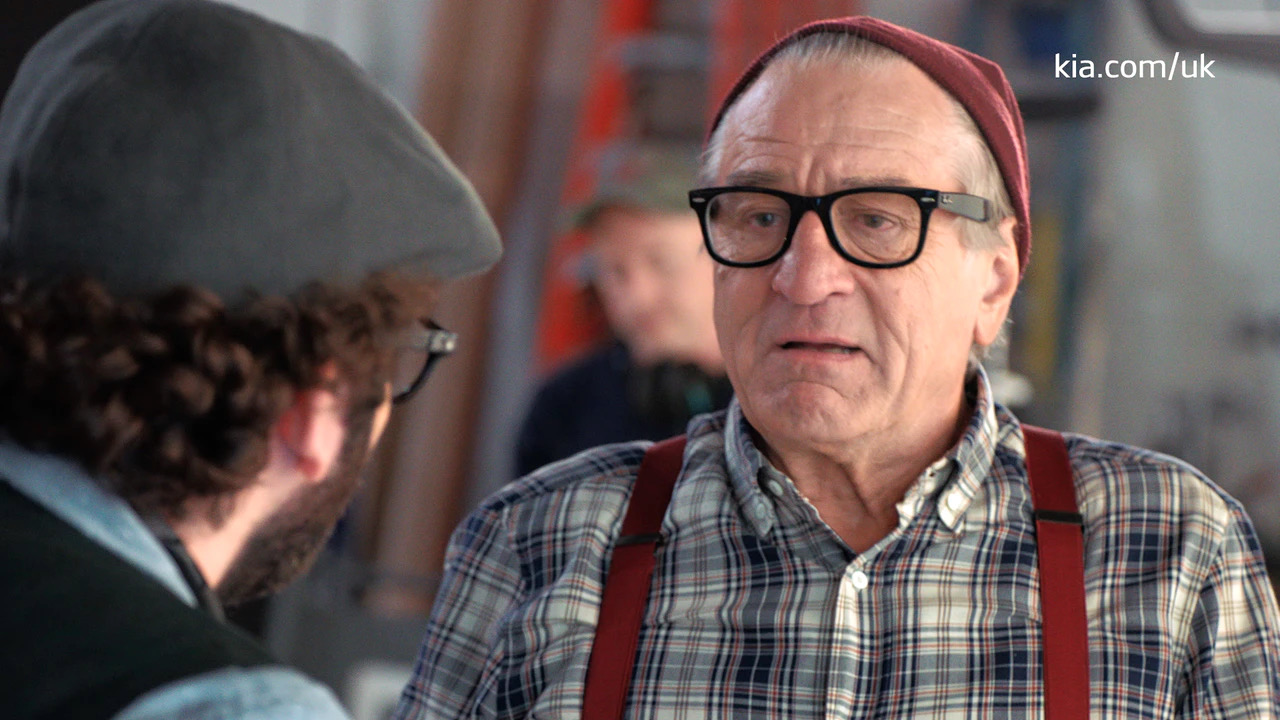
But of the plethora of stars sending themselves up in return for, presumably, a juicy cheque, arguably the most baffling are the appearances of Robert De Niro - perhaps the greatest film actor of his generation - flogging cars and baked goods for laughs. In the last year we’ve seen the 76-year-old appear as “a trendy version of De Niro” in an ad for South Korean motor manufacturer Kia and its somewhat uninspiring electric model, the Niro (geddit?). Campaign magazine was less impressed, running the headline “Turkey of the Week: Robert De Niro's star power is wasted in Kia's ads,” concluding that enlisting a heavyweight actor like De Niro resulted in “very little reward” for the Kia brand. 

However, film critics will draw attention to the fact that the star of Raging Bull, Mean Streets, Taxi Driver, Goodfellas and The Godfather Part 2 has veered towards more light-hearted roles in his latter years (you could say it began with Meet The Fockers in 2004), but for someone usually regarded as the ultimate Method actor, seeing him dressed in a beanie hat and braces for Kia’s commercial still took a lot of acceptance. Not, however, as deep as his ads for Warburtons, the 146-year-old family-run bakery based in Bolton, to where De Niro flew to shoot a commercial for the company’s bagels.

The construct, you might recall, is of De Niro, brazenly playing an amalgam of his various gangster characters, attempting to “discourage” Warburtons chairman Jonathan Warburton from selling their own brand bagels in favour of “Nu York” buns, with the executive believing that the screen legend is actually in his office pitching a new film. You’d be right to consider this a strong case of suspended disbelief.

Picture: Warburtons

While De Niro’s comedy ads - and especially those for Warburtons - have inevitably prompted social media wags to suspect that the actor clearly must have a heavy divorce bill on his hands (he and wife of 21 years, Grace Hightower, filed for separation in December 2018), ‘Bob’ has been fairly sanguine about the role. He told GQ that he decided to do the spots after seeing Sylvester Stallone do one for Warburtons: “Look, they asked me to do it and I met the guy, Warburton, and I thought it was funny. I saw Stallone do it and I thought at least he has a sense of humour about it and about himself. And I thought I can look at it two ways: should I think I should never have done that? I'm too good for that or something? And I said, ‘fuck it!’, I'll do it. Why not?" adding: “Don't hold it against me." 

Whatever it did or didn’t do for De Niro’s reputation, it certainly hasn’t harmed Warburtons. The ad helped the company reverse 2018 losses of more than £6 million and return it to a £11 million profit in 2019. Quite what luring De Niro to the Lancashire mill town to shoot the ad (Snoop Dogg's Just Eat spot was shot at his 'Dogg Pound' in Los Angeles) cost the company is still not known (it’s rumoured to be six figures), but the Warburtons board was able to award itself a handsome £15 million dividend on the back of their fortunes driven by the star’s turn in their ad. On top of that, there’s the sheer kudos of adding De Niro to a list of celebs that have already shilled for the bakers, including Stallone, Peter Kay and The Muppets. And, let’s face it, if people like me are still talking about it, and that’s the kind of brand power that many advertisers can only crave.

Monday, 8 February 2021

Who's Zooming who?

Without doubt the story of last week had nothing to do with COVID-19, for once, but was about a Zoom call that went viral. By Friday evening, everyone had heard of Jackie Weaver, the heroic chief officer of the Cheshire Association of Local Councils, who had presided over a meeting of Handforth Parish Council and ended up thwarting an attempted coup d'état. 

The chaotic session - which took place in December - found itself onto social media last week, and before you knew it, was being replayed every hour on Sky News and the BBC's rolling news channel, and even found itself on the world stage via CNN. Sitcom writers burst forth to say that the Handforth meeting was more comical than anything they could have devised. Even Reece Sheersmith, who created The League of Gentlemen and its hilariously surreal depiction of life in the fictional northern town of Royston Vasey, and on which you could easily have thought the stroppy burghers of Handforth were based. But, by yesterday, more tales had emerged of similarly dysfunctional public assemblies taking place on Zoom, which struck me as significant - not the fact that local administration is chaotic or being conducted online, but the prominence of the meeting platform itself: Zoom. 

In less than a decade Zoom has gone from a typical Silicon Valley startup to the de facto generic noun for online meetings, supplanting Skype and Apple’s FaceTime in the process - and pretty much in just this last year. To the chagrin of Microsoft and its Teams application and Cisco’s WebEx, everything is now “a Zoom call”. I had never heard of the platform until a couple of years ago, when the PR agency I was working with at my last company recommended that we switch to it from the company-mandated WebEx. It wasn’t entirely clear what the USP was, but it seemed more reliable as well as less rigid for participants at multiple companies and their own unique IT environments.

Picture: Zoom
It is clear, though, that throughout the last year of lockdown that the company founded by former Cisco engineering executive Eric Yuan (pictured right) in 2011 has come into its own. So much so that easily the smartest career move I’ve ever seen is that of a former colleague who joined Zoom last April as a international marketeer, just as the company's usage was going nuclear. 

By last spring, everyone and everything seemed to be taking place via Zoom. Even the business of government during the COVID-19 crisis, when Boris Johnson - confined to quarters by his own bout of the virus - was seen to hold a crucial meeting, during which the Zoom meeting ID was clearly visible. This prompted inevitable questions about the platform's security: to some, it came as a surprise that Her Majesty’s Government was, effectively, using the same app as families doing quiz nights and birthday drinks. This wasn’t the only occurrence of concerns about Zoom’s privacy, with the emergence of ‘Zoombombing’, whereby it was discovered that nefarious scrotes could hack into a Zoom meeting and bother it with explicit images. This was on top of more innocent Zoombombs when barely clothed flatmates accidentally walked through kitchens, along with children bouncing into meetings and cats leaping in front of webcams.

There is no doubt that Zoom, more than any other video communications platform before, has played an unprecedented role in creating a new and strange normality over the last year, taking the place of restaurants, pubs, living rooms and kitchen dining tables in enabling some form of social life, as well as keeping the business meeting culture going. It has played host to school lessons, church services, stag parties and blind dates. Even Britain’s Houses of Parliament have adopted a Zoom-based technology to facilitate business in the Commons, enabling up to 120 MPs to join any particular session while only 50 are allowed to be physically present in the chamber due to social distancing measures. Italy’s biggest ever mafia trial - the mass prosecution of 355 Calabrian ’NDrangheta suspects - is currently being conducted in a special courtroom in Lamezia Terme, with defendants in jails dotted across the country facing their accusers via Zoom.

Thanks to Zoom and its rivals we have all, in the last year, spent more time in strangers’ houses than ever before. I joined my current company in April and have only ever spent time with my new colleagues via laptop's webcam. And, yet, I know what my colleagues’ kitchens look like, their bedrooms even and what books they read (or purport to read, given the craze of artfully arranging bookshelves to showcase one’s literary tastes). We’ve even succumbed to insecurities about what we look like on Zoom: working from home used to mean rolling out of bed and sitting at the kitchen table in pyjamas and the first T-shirt that came to hand, until people realised that a meeting on Zoom placed dress code under even greater scrutiny than if you were actually in the office. 

This has led to fashion and beauty magazines running vacuous features about the perils of spending so much time on video calls. Ofcom has estimated that since the pandemic began we're spending 40% of our working weeks in online meetings. ‘Zoom face’ is, apparently, a thing, that we're now hyper-conscious of how we look down the barrel of a webcam, and that having it look up your nostrils and displaying the contents at the other end on a high-definition stream may not be the most attractive thing in the world. Scientists working for Unilever has even claimed that the blue light emitted by laptop screens is putting us at UV risk, and that five working days a week spent on video calls has the same impact on our skin as as 25 unprotected minutes in the midday sun. There are, too, more physical debilitations from the constant round of video conferences that now, as spines grow weary from being hunched over laptops on home furniture that wasn’t designed for nine-hour working days, and eyes that have become sore and tired from LED screens.

Our pain is Zoom’s gain. As the pandemic took hold last spring, daily downloads of the app increased by 30-times, year-on-year. Zoom became the United States’ most downloaded iPhone app for much of 2020. Recent figures put daily usage at some 350 million - up from just 10 million at Christmas 2019. Every financial quarter since the coronavirus emerged, the company has seen its quarterly revenue grow by enormous orders of magnitude as much, at one point, as 355% in a year. The explosion in use even appeared to catch the San Jose, California-based company by surprise, with its international head of partner marketing, Derek Pando, telling advertising industry magazine The Drum that it was, early on, like being in “a war room”. “We didn't know where it was going next and we didn't know how bad it was going to be. We were constantly trying to shift our resources to try to support people that were using and relying on Zoom,” he said.

The big shift for Zoom was its breakout from being just a rival to business communications apps like Webex and Skype. Until COVID-19 hit, most Zoom users were businesses and, even if home users had experience of using Zoom at work, it meant learning-as-you-go for families. Grannies, aunts, uncles and teenagers alike all had to quickly learn Zoom etiquette and dealing with Internet latency and not all talking at once. Everyone become their own television director, learning the simple art of framing to avoid the alarming sight of someone’s enormous, looming forehead. There was also the lesson - sometimes learned painfully - of knowing when to have the microphone on and when to have it off, not just to preserve bandwidth, but also to save fellow participants from the sound effects human bodies generate of their own volition.

Zoom has arguably been the technology success story of the pandemic. But as vaccine programmes start to take effect, questions are inevitably being raised as to how it will fare when things return to some form of normality (it's share price even took a hit when the Pfizer jab was announced in November). The company is hopeful that remote working will remain in place, continuing to prove a boon to corporate use. Certainly at this stage it’s still unclear just how and when business life will return to in-office working - even if it ever will. Office workers will, I’m sure, be eager to get back to their previous routines, even the arduous urban commutes. along with the social aspects of being in the same workspace as others. What’s not known, however, is just what measures companies will have to put in place, all the while COVID-19 is still out there, and 100% vaccination has not been achieved. One likelihood is that a hybrid model will be adopted. Home life, on the other hand, will be different. Hardly anyone you or I know is exactly happy about being barred from seeing loved ones and friends in the flesh, but with the virus showing signs of being countered by vaccines and lockdowns, and with the days already starting to grow longer, you get the sense that it won’t be long before we can step out from behind the webcam and see people in the flesh, even touch them.

Realistically, the biggest threat to Zoom’s future will be from the companies that it managed to eclipse in a record space of time. Microsoft, Cisco, Google and even Facebook have not stood still when it comes innovating their own video platforms, and will not have been best pleased by the ten-year-old upstart stealing their thunder. Microsoft, in particular, stands to benefit more than others, given the ubiquity of its Office software and packages like Word and Powerpoint, and the corporate licences that companies buy to provide employees with the complete suite, which also includes Teams. All of Zoom's rivals have added new features, such as background noise cancellation to make working from a crowded home that much less perilous. Teams even added ’Together Mode’, designed to give multiple users the sense of all sitting in the same environment, though in reality it makes a group of colleagues look more like participants in the opening title sequence of The Muppet Show. Time will tell, then, whether the innovation arms race in video conferencing will continue to be as vital, as the world gets back to normal. 

Other workplace collaboration tools with video calling, like Slack (which has just been acquired by Salesforce) are also gaining ground, and its likely that all the players in this market will have also reached peak usage over the last year, limiting further growth. Zoom will have heard these arguments before, and will argue that it already successfully penetrated a crowded market when it launched in 2011. It’s just that the coronavirus has given it an unprecedented bump.

Picture: Zoom

We may - thankfully - be soon seeing the back of quiz nights and laptop dinner parties, but in the business world there’s enough uncertainty about future working practices that it’s fair to say that Zoom and its rivals are here to stay. And until computing intelligence develops to such an advanced degree that software will be able to detect when a call participant is about to speak, we will still be hearing the words “You’re on mute!” for a long time to come.


Friday, 29 January 2021

The future is here, finally, and it bites

In a week in which the UK passed the grim milestone of 100,000 coronavirus deaths, pretty much all other bets are off. Least of which, any carping about being denied life's simpler pleasures. You could, I suppose, measure the COVID timeline in terms of what has been curtailed and when.Take, for example, No Time To Die, the new Bond film: originally scheduled for November 2019, then shunted by reshoots to February last year, it was then kiboshed altogether by the emerging pandemic. The latest date, we're told, is this October. 

But whereas the Bond producers will easily earn their investment back, the music industry has been faring less well. There’s been no shortage of releases over the last ten months - many recorded stoically in home studio lockdown - but it’s live performance that artists seem to make their money from these days. Which means that if you’ve got an ambitious album and tour concept, these last few months will have been frustrating. 

Take, then, Steven Wilson, whose sixth solo album, The Future Bites, is finally released today. When I first spoke to him about it, it was the autumn of 2019, and the album was, by then, mostly ‘in the can’, bar some final tweaks. The next Christmas, when we met, he was justifiably excited by the concept being developed for the album, which would roughly follow a theme of commenting on the trappings of modernity (including online shopping - ironically before it became such a lifeline), and the ambitious, multimedia approach that would accompany its release. And then the virus struck, pushing back, first, the album's release, and then an extravagant tour that would see him headline London’s O2 Arena. 

That, in itself, was a massive milestone in his solo career. Because, let’s face it, you don’t just get to play the O2 if you don’t have the chops - or the audience - to fill it. Sadly, rescheduling has forced the O2 gig to be cancelled altogether, but a new tour will commence in September that will see Wilson play major cities, including a date at the legendary Hammersmith Apollo. It is, though, heartbreaking, as The Future Bites represents, without doubt, Wilson’s most adventurous breakthrough to date - in a more-than 30-year career that has seen him responsible for more albums than I can actually count, what with his Porcupine Tree, Blackfield, No-Man and numerous, relentless other projects. That’s a big claim, I know, but hear me out.

First, though, the history lesson, because I realise that I’ve been prattling away about someone you may not have even heard of. Which is, Wilson admits with heavy reluctance, par for the course. As a piece in The Times today points out, he may well be the most successful British rock star who can go shopping at his local Waitrose without being asked to pose for a selfie. And, yet, I’ve witnessed punters camped outside Parisian theatres hoping for a glimpse of him, or standing en masse in restaurants to raise their wine glasses in adulation. 

Despite this, however, and despite his last album, To The Bone, reaching number three in the UK (kept off the top by two blokes named Ed Sheeran and Elvis Presley…), and despite even selling out the Royal Albert Hall three nights running on the album’s tour, Steven Wilson is still the rock star you’ve never heard of. Mainstream radio even gives him a giant swerve, which I find baffling. To The Bone represented a change of direction, not only with a new record company (Universal offshoot Caroline International) and better promotion (which even saw him appearing in an extended live interview on BBC Breakfast), but with a record that blatantly embraced Wilson’s love of 80s pop. There was even an ABBA-esque single, Permanating, which delightfully confounded the fans that had followed him from the era of his proto-prog band Porcupine Tree, which had sort of evolved from an at-home bedroom project and into one of the more sizeable touring forces of the 1990s and early 2000s. 

However, that P-word - “prog” - may well be the sprig of garlic that keeps radio programmers at bay. He is unashamed of his association with the form (the oft-told story of his upbringing is that his first two musical influences were the Floyd’s Dark Side Of The Moon and Donna Summer’s Love To Love You Baby, gifts exchanged by his parents, Maureen and Mike, one Christmas). As an adult, his professional sideline remixing albums for King Crimson and Yes has maintained further links to the genre. However, he has also produced multichannel versions of albums by Roxy Music, XTC, Ultravox and Tears For Fears, revealing more than just an ear for more expansive pop.

Which brings us, kind of, to The Future Bites. Before getting into its thematic concept, it is a markedly different album to much of what Wilson has been known for. But not all. While Porcupine Tree may have been born out of a teenage soup of long hair and Home Counties rock guitar, Wilson’s own interests were being spread across an eclectic range of styles, some of which manifested themselves in the No-Man group with long-term friend and collaborator Tim Bowness. On his adolescent bedroom wall in Hemel Hempstead there was a poster of Prince who, along with David Bowie, has been a constant figure in his musical DNA. While his professional music direction would take a somewhat avant-garde rock route, electronic music would always be in his listening palette. Which is why the first thing you notice about The Future Bites is just how unlike a rock album it is. Throughout, it delivers atmosphere over bombast, restrained drum machine beats over epic tom-tom crashes, and while Wilson has always been quite deft at melodic songwriting, melodicism drives the textures of all nine tracks.

What also drives them is the underlying theme: the modern world. Wilson is, like me, 53 (we were actually born a week apart), but don’t mistake that statement for some prematurely aged fellow railing at things. The theme is more a reflection on the Internet age and how online behaviour pervades every aspect of life, from our perception of news to our absorption of information, how we relate to culture and even our addiction to online consumerism. Such a premise could sound dystopian, I agree, but the narrative Wilson puts forward is wry and observational. And it blends seamlessly with a musical approach that surely - surely - must place him more than ever onto the mainstream radar. In this regard, one track stands out for its employment of one Elton Hercules John, arguably pop’s most extravagant consumer, who Wilson arranged - through a friend of a friend - to have intone a series of consumer durables for Personal Shopper, a pulsing EDM track that offers a delightfully cynical take on online impulse buying. “Buy for comfort, buy for kicks/Buy and buy until it makes you sick”, Wilson sings, before Sir Elt kicks in with a shopping list that includes sunglasses, teeth whitener and even - cheekily - deluxe edition box sets…of which I confess to being guilty of…

Purist fans might baulk at the apparent absence of guitars on the album (there are, in fact, plenty, it’s just that they’re not turned all the way up to 11), but you get a sense that in being more atmospheric - and electronic - Wilson has given himself more room to move within. Thus, King Ghost is lush and reflective. On the other hand, 12 Things I Forgot chimes in with a snappy line in acoustic guitar accompaniment to a beautiful, strident pop song about regretful reminiscence. 

Both, however, bring out the best in co-producer David Kosten (aka Faultline), whose own solo work as well as production for Bat For Lashes and Everything Everything has accentuated a gift for texture. There are shades here, too, and in the background, of some of the myriad influences that play on Wilson’s ear, perhaps, labelmate Tame Impala on the scintillating Man Of The People (which, add Neil Tennant, could give the Pet Shop Boys a serious run for their money) or, at a squint, the funk of Wilson’s teenage hero, Prince, on Self IQ.

I may, in this review, have given the impression that The Future Bites is some wild departure from Wilson’s usual fare, and it is indeed another tonal shift. Some of his hardcore fans might rankle at that, but anyone who’s been paying close attention to his career will have noticed that change has been constant. Some changes, he’ll admit, have been more subtle than others, but he has never accepted the view that he is beholden to any one form of music, even if that dreaded ‘P’ word follows him everywhere. 

If there is any sort of compromise, it’s on the closing song, Count Of Unease. It’s what I call a proper closing song. I used to have this theory that, when putting albums together, artists would always programme them so that the final track of the record provides a sunset, a touch of autumnal melancholy. As a teenager, I would hear that final track fading out and feel sad that the whole experience was over. I later found out that, in the pre-digital days, how a vinyl record was sequenced owed more to the physics of certain types of songs requiring more plastic to accommodate bass and rhythm. I still don’t understand the science, so I will gladly settle for the notion that the closing song is indeed a farewell. Count Of Unease is that song, and to bridge to my previous point, is eminent of both the electronica throughout The Future Bites, but also the aural clues that have been there in Wilson’s music, right from the beginning. For all Porcupine Tree’s flights of prog-meets-metal grandeur, there were also lighter-touch moments of atmos and grace. 

Here is just that. But, rather than representing closure, it sets Wilson up for the next record (work of which is, I gather, already in progress), and the first strokes on a blank canvas that remind those just coming to his music that there are no rules to hit. He will always do whatever he damn well likes, and is all the more interesting for it.


Monday, 18 January 2021

Bored! Bored! Bored! Bored! Bored!

Those of you of a certain age and dispensation will recall the final episode of The Young Ones, which finds the Scumbag College quartet in the garden, their finals over, and numbed with boredom. 

To break the slump, Ade Edmondson’s Vyvyan comes out of the back door, swinging a cricket bat and shouting “Bored! Bored! Bored! Bored! Bored!”, before cartoonishly battering Rik Mayall about the head, rhythmically accompanied by more shouts of “Bored!”. I know how he feels.

When Lockdown I occurred last March, Britain was on the cusp of an agreeable spring that became a glorious summer. The tedium of house arrest was, for me at least, kept at bay by - in no particular order - a new job, a garden, blue skies, the absence of commercial aircraft and the sound of birdsong. By the time Lockdown II arrived in October, Christmas was already in sight and there were things to do. The lifting on restrictions six weeks later enabled a partial return to the things that felt like freedom: sitting somewhere other than your home for a coffee; the simple pleasure of shopping; and, in my case in particular, a return to the discipline of swimming three or four times a week.

Lockdown III already feels different. Even after just two weeks. I’m not going to question its wisdom - perhaps we should never have come out of lockdown in December, given the state we are now in. But the weeks ahead are, I’ll readily admit, not looking good for mental wellbeing. When the highlight of my weekend is an arduous visit to the dentist, and a welcome opportunity to interact, in person, with someone I neither live with or work with, you know things are bleak. I’m now at a stage when I’m clinging to excursions to Waitrose and our local Italian deli, which sells salads and coffee at its front door, as opportunities to change the vista. Travel documentaries now provide release rather than an aspirational glimpse of places to go when this thing is over. I’ve now stopped reading the weekend holiday supplements, such is the cruelty of seeing pictures of idyllic beaches, swimming pools and even city centres we won't be able to visit for a second year running.

A few years ago I decided to have therapy. Now, before you start thinking that I’ve gone all 'Hollywood victim' with this, it was simply a measure I thought might be useful, rather than a response to any episode. I’d just moved to Paris, started a new job that later became an even more intense one, I’d split up with my then-girlfriend, and I was contemplating my ageing parents’ health. So, if Tony Soprano could confer with Dr. Melfi as a central part of his narrative, what harm would come to me in seeking a friendly ear? 

I’d be hard pushed to say, conclusively, that therapy ‘cured’ me of whatever I felt the need to talk about, but one thing came out of it that has stayed with me ever since: freedom. Early on, we discovered that seeing planes in the sky, presumably heading off somewhere, made me yearn for escape. Travel became my escape, and living in France and working for an international company meant that I was regularly fulfilling my wish. But, now I think of it, living in the heart of Paris and with a Métro station right outside the front door, I had one of the greatest cities in the world at my disposal.


In fact, on the return journey from those Saturday morning sessions near the famous Père Lachaise Cemetery, I would catch a bus that, vaguely, seemed to be going in a westerly direction back to the 6th arrondissement where I lived. Without anything in particular to do on a Saturday, those bus journeys through the districts north of the Seine were, of themselves, not spectacular, but at the same time, provided fascinating snapshots of Parisian street life and neighbourhoods going about their business, queuing for the boulangerie or discussing politics while waiting to buy the weekend cut of beef. 

There’s nothing, I suppose, that stops me doing that now, except that meandering bus journeys are out of the question during lockdown, meaning that a good long walk is all that’s left. It’s fine, especially when you interrupt it with a takeaway coffee at the midpoint, but a meagre ration nonetheless. I was deeply envious of Boris, last week, allegedly getting out on his bike for a seven-mile trip from Downing Street to the Olympic Park. Yes, I know that political conveniences dictate that he was breaching the spirit of what we’re all supposed to be observing, but I couldn’t help feeling somewhat approving. Assuming he rode the seven miles via surface streets, and didn’t have his Plod detail drop him off, he would have sailed through the City and the East End on his way to Stratford, riding through some of London’s most historic parts. It may not be the capital’s most salubrious district, but it would have been somewhere else. And that’s what I’m missing right now.


Sunday, 20 December 2020

It is what it is…I suppose…

It has just occurred to me - and quite why only now - that 2020 has been the most ridiculous soap opera ever. All we’ve lacked is the dead Bobby Ewing miraculously revived and taking a shower. We began this arch annus horribilis still scratching our heads as to how a comedy politician could have become prime minister, assembling a cabinet of apparent toadies hell-bent on “getting Brexit done” above all other priorities, as if one of Batman’s various nemeses had been installed and gathered together a cast of cartoon super villains to see out their agenda.

However, when the pandemic unfolded (or, in other words, we caught what the rest of the world had been getting since January and February), we entered into the new distraction with stoic uniformity. In an unusually warm, blue-skied spring, we stood on our doorsteps on a Thursday at 8pm, applauding essential workers in the ever-lightening evenings. We endured the first lockdown because it was the right thing to do and, if you were lucky enough to have a garden, “working from home” from a lawn chair with a cooling refreshment at your side wasn’t exactly a hardship. Some of us, however, had to shield or at least remain inside, denied any human contact due to a clinical vulnerability that even the scientists didn’t, then, fully understand, while hospitals started to fill up. But, still, we endured it. Then summer entered the final straight of August, and if we were able, we took off to Cornwall, or the Lakes, or anywhere where, again with agreeable weather, we could at least enjoy the placebo effect of taking a holiday somewhere.

However, 2020’s scriptwriters are of a fiendish creed. Just as we think Den and Angie are getting on again, the former turns up at the Queen Vic with divorce papers on December 25th. “Happy Christmas, Ange!”. Effectively, that’s what Boris Johnson did yesterday. Just three days before he’d been mocking Sir Keir Starmer’s seemingly grinchish call for Christmas to be cancelled, only for the prime minister to do it himself, anyway. I think only Liverpool won the Lack Of Christmas Spirit award by a higher margin, spanking Crystal Palace 7-0 yesterday. Those writing that script are having devilish fun. One minute it’s all talk of vaccines and “sunlit uplands”, and Boris is invoking Churchill [again] with his Dame Vera Lynn rhetoric, the next, we’re all contemplating what to do with the mountain of excess food bought for a lunch that will now be spent by small bubbles (and without the squeak, too). Not even 24’s Jack Bauer faced as many ridiculous changes of circumstance.

I’m not going to even pretend to have better knowledge of this virus than the experts. And I’m certainly not going to second-guess the wisdom of those bunkered in 10 Downing Street 24/7 trying to figure it all out. But there’s something fundamentally wrong. It’s called expectation management. I’ve learned, in my 32-year professional PR career, that managing your stakeholders’ expectations is the key. It’s not about keeping people happy, either. Just better informed and better prepared. Even in crisis situations, where situational fluidity is the enemy, you prepare for it. Or at least give the perception of doing so. Right now, the British government is giving the impression of being unprepared for anything. At risk of being simplistic, the feeling we all get is that the medical experts and scientists say one thing, and Bozza takes the populist view for fear of ruining everything. And, yet, in not taking unpleasant decisions soon enough, he’s done exactly that. How many people were still out shopping yesterday, believing that there were still a few more days until Christmas, only to get the newsflash on their phones that 16.4 million people in London, the south-east and eastern England would now be banned from mixing indoors for at least the next two weeks, as of a minute past midnight this morning? All this because of a ‘mutant variant’ of the coronavirus, VUI-2020/12/01 which, it is claimed, was first identified as long ago as September, and which has proven to be 70% more infectious than previous strains, even though it did not appear to cause higher death rates or be any more resistant to vaccines.

“When the virus changes its method of attack, we must change our method of defence,” Boris intoned from No.10 yesterday. “And as your prime minister, I sincerely believe there is no alternative open to me.” This from the man who, on Wednesday during Prime Minister’s Questions, made the comment to Starmer:  ”I wish he had the guts to just say what he really wants to do, which is to cancel the plans people have made and to cancel Christmas.” And, yet, that’s exactly what Johnson did yesterday. It’s not, either, the first U-turn he’s made like this. 

The narrative from the outset is that everyone is learning as they go, which is fair enough. To tap into Boris’s Churchill fantasies, we’re not in the same kind of conflict as an actual war. In 1940, Britain had the combination of resilience, the Royal Air Force, radar and an intelligence network - all the apparatus of conventional war - to keep the enemy at bay. Today, it’s the combined excellence of a medical, scientific and pharmaceutical community, in principle in concert with politicians and a civil service that should be able to draw on the best strategic and tactical wisdom to make informed decisions. Which makes you wonder why, when VUI-20/12/01 has been known about for weeks (and only last weekend was ringing very real alarm bells within the Department of Health & Social Care and, in particular, on Matt Hancock’s desk), it took a full week of everyone doing their Christmas preparations (as well as a House of Commons ding-dong which Boris chose, as per usual, to treat with typical flippancy), before the tough decision was made to bugger up Christmas for almost 30% of the English population, and severely restrict millions more?


I get it that the script for 2020 has been peppered with devilish twists and turns. I see councils - like Bromley’s - having to issue three different tiering instructions in the space of 10 days. I get the science: hospitals in London and the south-east are already filling up, and the entire premise for lockdown in the first place - protect the NHS from being overwhelmed - is getting close to prophecy becoming real, and it may well be that Boris has made the only decision he could have done. We’ll cope - we always do: we’ll change our plans, and we’ll put up with eating Pot Noodles on Christmas Day because it was too late to get an Ocado delivery in and Tesco Express round the corner had nothing better. And, yes, we’ll bunker at home watching crap TV, revelling in a Blitz spirit of “it is what is”. But that won’t help my near-91-year-old mother, whose Christmas is going to be a pretty basic affair (even if her stoicism, honed during her own very real wartime evacuation as a ten-year-old, is probably more robust than anyone else in the family). Because, with a little more expectation management, we could have planned ahead, rather than wait for the curtain to be brought down halfway through the performance. 

Wednesday, 9 December 2020

They think it’s all over. Well it still isn’t

Picture: AstraZeneca

Given that our current prime minister sees himself as Winston Churchill-incarnate, there’s a temptation to look upon yesterday’s 'V-Day' rollout of the coronavirus vaccine in the terms of the wartime leader’s famous quote in the autumn of 1942, when the tide of the Second World War appeared to turn: “This is not the end. It is not even the beginning of the end. But it is, perhaps, the end of the beginning.”

Boris and Matt Hancock, his perpetually perky propagandist health minister, might be seeing those “sunlit uplands” hoving closer into view, but - and sorry to rain on their parade - there is still a long road out of the pandemic. Fantastic as it is that yesterday saw the first vaccinations administered, and that by Christmas the NHS should have had four million doses available, but infection rates remain stubborn. Yesterday’s government figures recorded over 12,000 new national COVID-19 cases, almost 1,500 new hospital admissions and 616 new deaths - the equivalent of three Boeing 737s crashing catastrophically with all on board. Sorry to bring the mood music down.

Even if the excitement about the vaccine is entirely understandable - people are desperate for some semblance of normality - normality is clearly not on the agenda yet. Speaking today at a joint meeting of the House of Commons Science & Technology and Health & Social Care committees, England’s chief science officer, Sir Patrick Vallance, said: “The biggest risk we face now is that people think it’s all over. It isn't all over. We have a very important light at the end of the tunnel, but we’re a long way off. It’s not the time to relax things. If that happens we will have a big surge." His partner in crime, England’s chief medical officer, Professor Chris Whitty, added that, in general, the British public had responded well to the restrictions on life since March. “The altruism of the British public cannot be understated,” he said. “Because of that, many, many people have been saved.” But, he noted, some people will get bored of the restrictions.


That seems to be evident here in Tier 2 London, where there is a very real risk that a rise in virus cases in two-thirds of the capital’s boroughs could put it into Tier 3, just as the Christmas shopping season reaches its frenzy. One former Public Health England regional director, told The Guardian today that a decision on moving London up to Tier 3 was needed within the next 48 hours, otherwise it faced a “terrible situation”, with rising deaths ahead of Christmas. According to the Evening Standard eight east London boroughs have recorded more than 200 new cases a week per 100,000 of population in the week to last Thursday. Worryingly, my borough, Kingston-upon-Thames, has the ninth-highest infection rates in London, recording 202.8 per 100,000.

Graphic: The Times

My experience of being out and about in London in recent days is that most people are still observing the rules on social distancing and mask wearing, but it is still only ‘most’ people. On the Tube on Friday there were people openly ignoring the rules on masks. Likewise, in a department store we were in at the weekend. It’s not often that I’ll agree with a Conservative MP, but I’ll make an exception for Nickie Aiken, the MP for the Cities of London and Westminster, who told the Evening Standard: “Every single person who breaks the rules adds to the chances of [London] going into Tier 3. We have got to work together as one city to ensure our cafes, restaurants, shops and other businesses survive and also to protect lives.”

Ah, cafes and restaurants. Of all the commercial activities that have struggled the most during the pandemic’s economic haemorrhage, they remain the one statue of normality that we cling to, to the extent - and I speak from bitter experience - we’re prepared to turn blue-lipped to sit, COVID-compliantly, outside pubs. But even this break for freedom comes at a price. How many people, out of desperation to have a pint while sticking to the rules, are ordering a “substantial meal” (such as…er…a Scotch egg…) which they then leave untouched? 

It’s something that a Sheffield barman has, to his absolute credit, made a stand on. Last weekend, Will Dalrymple, tweeted pictures of wasted meals that had been abandoned by his pub’s customers who had “only wanted two Morettis each”. Pubs in Tier 2 can only remain open if they effectively operate as restaurants, offering something more than a packet of Pork Scratchings. Dalrymple complained in several tweets how people had ordered sandwiches, side salads and bowls of chips which ended up in the bin. He said that he saw the rationale behind the rules, but also saw the position they put pub staff in. While the practice of ordering food and not eating it wouldn’t harm a pub’s finances, the moral position about wasting food is just as serious: “With everything in the news about people relying on food banks and free school meals, this is utterly obscene,” he added. ”If you're desperate to go to/support a pub, go when you're hungry.” 

Picture: Twitter/@WJDalrymple

Depressingly, Dalrymple’s tweets drew out the trolls keen to point out that people are just looking for escape. “I completely understand people's frustration at the rules,” he wrote. “I'm as grateful for and welcoming to customers as I ever was. “However, hospitality workers have no choice but to enforce the rules. All these tweets are asking for is for co-operation.” 

What doesn’t help is the lack of clarity on what constitutes a substantial meal. Various government ministers have fudged the issue, while some pubs have even tried to circumnavigate the rules by agreeing to host local takeaways or, simply, boiling a kettle and serving up a Pot Noodle. The point here is that there needs to be a happy balance. Freedom - as we knew it before March - will return, but not for some time.

Wednesday, 2 December 2020

Return of football supporters is a kick in the ballots

© Simon Poulter 2019

It’s here. It’s actually here. The second of December, which means life in England returns to…well, not exactly normal. Since midnight, we’ve been placed into a revised system of tiers to keep us restricted without calling it a new lockdown. Non-essential shops, hairdressers and other businesses can reopen again. Tomorrow I will go for my first swim in four weeks, never really recalling the scientific wisdom of why I wasn’t allowed to go before, given that the local pool perfectly observed social distancing, disinfected the very ground you walked on and, while actually in the pool, engulfed you in wonderfully chlorinated water to keep COVID at bay.

Tonight, too, football will return. Well, I say ‘return’ but it’s never really been away, just the fans, the "12th player", as cliché-prone professionals have a habit of saying. After the initial halt caused by the pandemic, football returned in July - sans fans - and again in September after the briefest of summer breaks, again to empty stadia (albeit for an experiment at Brighton’s Amex Stadium with a friendly against Chelsea). Now, the football that was already back, is 'back', albeit in a limited form as grounds in England’s Tier 2 areas are opened up to up to a maximum of 2,000 supporters each. Grounds in Tier 1 areas will be allowed to host up to 4,000 spectators, which will be a boon to Truro City FC, Cowes Sports Football Club on the Isle of Wight (they play in the Wessex League Premier Division) and whatever professional clubs exist on the Scilly Isles. Not many, I suspect.

For the English Premier League, the return of people other than staff and club mascots is still only very partial. Essentially, the only clubs that can host fans are Arsenal, Brighton, Chelsea, Crystal Palace, Everton, Fulham, Liverpool, Southampton, Tottenham and West Ham. Aston Villa, Burnley, Leeds, Leicester, Manchesters City and United, Newcastle, Sheffield United, West Brom and Wolves will all have to soldier on in deserted grounds, unless the Tier 3 restrictions imposed on their host cities are revised. With the tiering system either enabling or denying all English league and Women’s Super League clubs from opening, it all feels a little piecemeal. There is, also, the argument that those clubs who can now bring fans in, will be at an unfair advantage to those who can not. Plenty of players have spoken throughout this weird period about how the lack of crowds to buzz off impacts their performance, and it was noticeable that when games did resume after the lockdown in empty grounds, the quality of the football was below par.

Picture: Twitter/@CAFofficial
From a financial point of view, allowing 2,000 fans in is hardly going to boost the coffers of clubs whose grounds hold ten or 20 times that number (even if Chelsea - who probably need the money the least - are charging a whopping £75 for balloted tickets in one of their stands). 

For precarious clubs like Charlton Athletic, who will be amongst the first to host fans under the new rules, tonight at The Valley, it could be helpful, but hardly a lifesaver. But, even if it's only 2,000 fans entering a 27,000-seat stadium (and with a large fanbase in Tier 3 Kent, who will not be allowed to travel in to south-east London), I suppose it's foot traffic through the turnstiles of some kind.

While I’d be the first to admit that not going to Stamford Bridge every other weekend for the last nine months has been a price worth paying for my health, the absence of 'live' football has left a gap in my life over the course of a third of last season and a third of this one. The thing is, there’s a difference between 42,000 people at the Bridge, and a number closer to the school assembly attendance of a large comprehensive. Watching games on television is fine - we do it for away games or for cup matches we’d prefer to watch from the comfort of our sofas - but there is no substitute for being in the stadium. It's the rituals and traditions you miss: the pre-match pint, the arguments over spurious offside decisions, and the vehement disagreement with callers to 606 while stuck in traffic on the way home.

For those who do get tickets to see their clubs under the new protocols, the experience will be a lot different to what they’re used to. Each club will impose a code of conduct, based on guidance from the Sports Grounds Safety Authority. Along with requiring fans to wear facemarks when entering and leaving grounds, and while moving around them, some are likely to put even more health and safety requirements in place. Tomorrow night’s Europa League tie between Arsenal and Rapid Vienna at the Emirates will carry a very strict ruling on alcohol (“only available when purchased with a substantial food item and when seated at a table”) and on physical contact: “Avoid hugs, high-fives, handshakes and any close contact with people who are not within your group.” 

Liverpool has already asked supporters to “act responsibly” when “celebrating or engaging in key moments of the match”, reminding supporters that “COVID-19 spreads more easily when people stand, sing and shout”. Anfield, it shouldn’t be forgotten, played host to the alleged 'superspreader' event in March when Liverpool played (and were beaten by) Atlético Madrid in the Champions League, a game played before a capacity crowd that included 3,000 fans who’d travelled from Spain, just as Spain’s own coronavirus rate was going through the roof. On the same day as 54,000 people packed into Anfield, not to mention the pubs and chip shops around the streets bordering on Stanley Park, the World Health Organization classified COVID-19 as a pandemic, expressing “deep concern” for “the alarming levels of spread and severity, and by the alarming levels of inaction.” The day before, Madrid had closed its schools as infection rates in the Spanish capital had gone through the roof.

© Simon Poulter 2019

My last visit to Stamford Bridge was a couple of days before the Liverpool-Atlético fixture, for Chelsea’s home league meeting with Everton. The gaps in our area of the East Stand were noticeable. In fact, the entire row below us was empty. Normally, when the dad and son who sit right in front leave ten minutes before the end you suddenly become aware of the cold wind. This time, we had it for the full 90 minutes. For those regulars who were there, there was awkwardness, as no one knew whether to shake hands (as is the custom) or bump elbows. No one, though, knew what was about to come, either.

For those lucky enough to win a balloted ticket under the new routine, the experience is certainly going to be odd. Tickets will be for carefully designated areas, the social distancing we’ve all grown used to over the last nine months will be applied, and fans will also have to adjust to sitting somewhere different. OK, minor inconveniences for the sake of getting to see live football again. But will people really respect the “respiratory etiquette”, as Ken Scott, head of inspectorate at the SGSA, described it to The Times yesterday? Shouting and singing would not be prohibited, he said, but it was important for fans to respect the people sitting around them. “I feel confident, however, that we will see supporters demonstrate that they can be trusted and surprise the doubting Thomases,” he said. We shall see. 

Monday, 28 September 2020

Dress-down Monday: what to wear when you're WFH


So, to bring you up to speed, we were first told by Boris to work from home “if we can”. Then it was “go back to work, if you can”. Now it’s back to the kitchen table/spare room/sofa once more, “if we can”. Blink, and you may have missed the middle instruction. I didn't, but then, the company I work for has very sensibly adopted a WFH strategy from the outset of the pandemic, and that's fine by me. In fact, throughout this coronavirus-riven last six months I have only worked from home. I've only set foot in my nominal place of work once, and that was for the interview that landed me the job in the first place. Since then, my office has been, initially, the kitchen table, and then, when my bony arse and the dining table chairs decided they were incompatible for the better part of nine hours a day, the front room took over. The sofa and a £5 IKEA coffee table (you know the ones - all white, 55x55cm, made entirely from MDF) became my workspace. The thing is, it has all just worked. What has been weird is that in six months I haven't worn anything resembling formal clothing once. In fact, if memory serves (and that's now getting hazy), the last time I wore my bespoke three-piece suit - bought for a wedding last year - was that job interview, save one family quiz night when I thought, "for a laugh", wearing it would make me - as co-host - look like a game show presenter. It didn't. 

Over the course of these six months I have also lost almost 20 kilos in weight, rendering most of my pre-lockdown work attire ridiculous. Shirts done up would make me look like an ex-con released after serving a very long sentence, and worn tieless, are now so capacious that to leave even one button undone exposes so much chest wig I'd resemble a yacht-dwelling Mediterranean arms dealer. Suits are now so oversized, shapeless and beyond salvage that I wouldn't even pass muster in a Talking Heads tribute act. All this is just as well as I haven't, really, been required to look like anything over the last half-year. On my daily round of Skype meetings, my colleagues have presented a variety of WFH dress styles, from those who - and fair play to them - wear a formal work shirt every day as it helps them get into part, to a multitude of T-shirts (including one today bearing the name of Metallica). All is fine. None of it leaves anyone thought less professional; the work gets done, we move on.

Now, I appreciate that all these descriptions are of the waist up, but if people are wearing their joggers or, in my case during the warmest months of the year, shorts, no-one cares, or should do. So let’s bring in here Ayesha Vardag, Britain’s self-styled “top divorce lawyer” and "the Diva of Divorce", according to TIME magazine, who has issued instructions to staff at her eponymous law firm on what to wear, presumably while physically in the office. In fact, Vardag - in a leaked e-mail reported in The Times and other newspapers - has driven down into some considerable specifics: 
“I don’t mind cravats, formal waistcoats,” she said, giving a nod to a form of modernity not seen since Bertie Wooster was living in fear of his Aunt Agatha. However, V-neck sweaters and “woolly vests” (i.e. the tank tops and sleeveless cardigans I am also prone to wearing when the weather turns cooler) are also out. I will admit to have worn a black V-neck under my suit for a number of years, ever since Gianluca Vialli brought Italian fashion to Chelsea in the mid-90s, though my appropriation of the style was more out of hiding my gut than trying to look like Luca… Anyway, “Super-tight trousers” are also on Vardag's verboten list, as are shoes with too pointy a toe. 

Pronouncing that lawyers should “look like a pro, not a pretty young thing”, Vardag also turned her attention to female members of staff, noting that women “can still of course be discreetly sexy and colourful and flamboyant at the same time according to your preference”. Women at the firm should “never be tacky or tarty and at the same time never be drab. It’s a delicate balance which most of you know instinctively. The naked look, with lots of flesh, is not OK.” To this Vardag added that she favoured “a Chanel/Dior/Armani look”, including “elegant” shoes, “not flip flops.” Well, duh. Woe betide anyone, either, who failed to maintain their hair, instructing that it “should always be squeaky clean and should at least appear natural”. “Brush your hair!!!,” the memo continued. “Check the mirror before you come out in the morning! Do not look as if you were dragged through a hedge backwards! Consider putting it up if it’s very long.” And for anyone who might be struggling in the Barnet department, Vardag offered her own help: “A chignon [no, me neither…] packs a lot of power punch. I can show you how to tie a scarf and set a chignon if you like. I’m that old.”


“It’s a Savile Row look we’re espousing,” Vardag's missive outlines. “Generally, double cuffs and cufflinks can transform the quality you project. Go for fewer items in your wardrobe, of quality.” In defence, Emma Gill, one of Vardags’ partners at the firm, told The Times that “as a top law firm, our clients demand high standards of professionalism and this is reflected in our dress code policy. While this is embraced by staff, the occasional reminder is in order to make sure we maintain our high standards.” Well, OK. While we’ve all be frothing about the long-term impact of the coronavirus on working practices - and whether we’ll ever return to the nine-to-five, Monday to Friday - little attention has actually been paid to the somewhat ludicrous proposition that mixed-pattern working could mean suits for some, three days a week, jogging bottoms and T-shirts on two days a week. Or not at all. In fact, no one really knows what will happen long term. The government and it’s Olympic-strength flip-flopping on everything might not help, either. 


Years ago, when I worked in the Netherlands, my then-company instigated a ‘dress-down Friday’ at its Amsterdam headquarters in the hope of instigating a more casual atmosphere for the final day of the working week. This, for some of my male Dutch colleagues of a certain age and background, meant wearing trousers in a variety of alarming hues (in fact, of a vibrancy even Michael Portillo in his railway journey documentaries, in which he wears ever-more shocking pastels, would reject for being ‘too much’). For others, it meant adopting the less adventurous American week-round office style, namely chinos and the ubiquitous button-down shirt. At my last company - a Silicon Valley-headquartered software business - de rigeur officewear consisted exclusively of jeans (the expensive-looking indigo kind, not the oil-stained, ragged-at-the-knee variety) for men matched with a double-cuff smart shirt and a blazer of some sort. Those wearing it thought they were edgy software sales types, but when everyone is dressed the same, it's no less a uniform than bankers all in pinstripes. 


This did serve to remind me of the French word for a suit: “costume”. Because that, in essence, is what all of these practices are. Whether you’re wearing a two-piece suit, blazer and jeans, or a tweed jacket with mustard-yellow jumbo cords, it is still nothing more than conformity. For that matter, we could all turn up dressed as Scott Tracy from Thunderbirds and it would matter very little. The fact remains that I actually look forward to the day when I can put on a smart suit and shirt, and lace up one of the pairs of formal shoes I’ve got gathering dust in a wardrobe. And I’m not in any way someone who likes to conform like that. I guess, though, it does come down to your personal style, but also the type of work you do. But it also depends on what your employer actually expects. Only 55% of workplaces have a dress code, according to the website Salary.com, and very few companies outline their expectations when onboarding new employees.


For many workers, it's trial and occasionally error. Many's the newbie who turns up on Day 1 wearing collar and tie or an expensive designer suit, only to discover they stand out amongst an office crowded by more casual business attire. When I worked in Silicon Valley I was told that wearing anything other than the local camouflage would stand me out as a 'suit'. So, jeans and whatever it was for two years. "If you work in law, regularly meet with executives, or otherwise hold a high-level position, you might be asked to come dressed 'business formal' or in 'boardroom attire'," advises lifestyle guru Jacqueline Curtis in a post on moneycrashers.com. "This is the highest level of professional dress". She recommends tailored suits in dark, neutral colours for men, a white shirt with a high-quality tie in "muted" neutral colours. "No novelty ties," she points out, instantly flagging the obscenities worn by The Fast Show's resident office "laugh", Colin Hunt. "Shoes should be closed-toe oxfords in brown or black, not loafers," she adds. So, what about my preferred brown suede numbers? Women are advised to follow a similar conservatism - skirt or trouser suits in neutral colours, closed-toe heels in similar non-startling hues.


Reading Curtis's advice, however, I recognise how few professions require such office attire these days. Even bank dealing rooms. The norm seems to be "business professional" which seems to sit somewhere between conservative and casual, and is more broadly open to interpretation. And then, if you're lucky, you'll work in an environment where it - mostly - really doesn't matter how you dress, as long as you don't cause offence or look like you've turned up in your decorating outfit. The bottom line, says Curtis, is to "err on the side of caution", especially when new in an organisation. Keep it “clean, tailored, and professional” is her advice. I suppose, then, the best guide is to simply understand your stakeholders, those you work with, those you work for and those you would, in normal times, encounter from outside your organisation. 


However, these aren't normal times. Your guess is as good as mine as to when they will be normal once again, by which time I'll have lost even more weight, and frankly will look ridiculous in anything I might have worn even six months ago. Which means taking out another mortgage on a new wardrobe that does fit, but let's cross that bridge when we come to it, eh? For now, I'll continue to dress appropriately, safe in the knowledge that the only people who can see what I wear below the waist Monday to Friday are my family, occasionally fellow customers at Waitrose during a lunchtime run, and the postman. Oh, and the cat, but her opinion really doesn't count.