Showing posts with label coronavirus. Show all posts

Sunday, 31 October 2021

It’s very nice to go trav'ling

© Simon Poulter 2021
The last time I set foot in another country - unless Scotland counts as one - was almost two years ago to the week: a cheeky trip to Palma for a dose of autumnal Majorcan sun. The trip also provided welcome respite from a mad 12 months in which I flew 52 times for a job that I ultimately walked away from. I hate to think what my carbon footprint was for the return on that time and professional investment. 

So, apart from our four days in Edinburgh in August, that’s been it for two years. No Air Miles Andy me - until this week, when I spent a few hours in Amsterdam to sort out some personal finance admin put on hold by COVID-19 travel restrictions. You see, while we’ve all been raving about WFH enabled by technology, some things still require face-to-face contact. In my case, a Dutch bank account requiring in-person attention because, even in the age of fintech, it couldn’t be sorted out over the phone. After 18 months, then, of being unable to do anything about it, I grabbed the opportunity of the current, potentially brief window in travel and burned off some of the Avios points accrued during my insane year of travel and popped over to the Dutch capital. As you do. 

Now, I know what you’re thinking: not very green flying to Amsterdam for just two appointments and then fly straight back again. Well, no it wasn’t, but it was also unavoidable. And, I like to think, unlike the hapless Manchester United squad who recently flew to an away fixture with Leicester City, a journey of 100 miles that could have just as easily been taken by train or coach (except, apparently, they wanted to avoid traffic on the motorway). I, too, could have driven to Amsterdam, or even taken the Eurostar, now the city has been added to its services from St. Pancras. But even with a relatively reasonable journey time of just under four hours each way, the logistics wouldn’t have worked without requiring an overnight stay, with more expense and unnecessary absence.

During that year of near-constant business travel I made frequent day trips to places like Paris, Munich, Madrid and Zurich, invariably taking advantage of London City Airport being only a short DLR ride away from Greenwich, where I was living at the time. The airport was built in the 1980s as part of London’s Docklands regeneration, transforming one of the old Royal Docks wharfs into a gateway for City bankers to jet off to Europe’s financial centres and return within the day. Like all airports, London City has been impacted by the dramatic turndown in air travel over the last year, but this week there was no shortage of young, thrusting types who have barely started shaving, wearing polished shoes and sharp suits, furiously tapping away at laptops as they prepared to fly off to meetings at the big accounting houses like E&Y and PWC. That said, you could hardly say that the airport was bustling at seven in the morning as it once would have been. Travel has understandably taken a back seat, and even though it is gradually being allowed to return - this latest half-term holiday has been the first opportunity for many families to take advantage of the relative easing of restrictions - it is still far from ‘frictionless’. 

Before the pandemic, my day trip to Amsterdam would have been almost as easy as catching a bus to go shopping at Westfield. But even just to visit the city for a few hours I had to go through a lot of rigmarole: first, a ‘fit to fly’ COVID test (£39 - ker-ching!) and pre-book a ‘Day 2’ PCR test for my return (£69 - ker-ching again!), upload my NHS COVID vaccination certification to the British Airways website, along with the fit-to-fly result, plus a completed health declaration form for the Dutch government and a Passenger Locator Form for the UK government. All of this so that someone could check that I’d completed the protocols. So far, no one has been in touch, £110 worth of testing later… 

I must admit, once I’d gone through the stress of securing all these tests and paperwork, the actual business of getting on the plane was quite easy. After satisfying BA that I complied with all requirements, my boarding pass was sent to my phone, allowing me to breeze through the electronic gates at the airport, and then on through the now considerably lighter-touch security screening than it used to be, thanks to the installation of advanced scanners that no longer require you to remove laptops, shoes and belts. Arrival at Amsterdam’s Schiphol Airport was just as easy, save for the fact that we Brits can no longer wave an EU passport through the ‘e-gates’, now we’re outside the Schengen Zone (a bit like the Twilight Zone only less fun). Once passport control was happy with my reasons for visiting, I was on my way for the 15-minute train ride to Centraal Station in the heart of the city. The return journey was a little more arduous as BA’s app and self-service check-in kiosks refused to give me my boarding pass. Evidently not all the paperwork uploaded for the outbound flight had been replicated for the home journey, requiring a torturous wait for the check-in desk to open. I suppose this is the price to pay for any kind of foreign travel at the moment and, possibly, for the foreseeable future.

Perhaps, though, we in the UK have been lulled into a false sense of security by the relative lack of health enforcement compared to elsewhere. The travel experience notwithstanding, my brief trip afforded an opportunity to see life outside the UK for the first time since the pandemic took over the world. Although the British media has kept pace with COVID-19 developments around the world, for most of us the intensity has been in our own back yard. Seeing another city, another country, another people and how they took to, for example, mask wearing, was fascinating, almost from the minute I exited the aircraft walking through the airport and then travelling on the transport system it was notably reassuring to see that masks were de rigueur. There was similar obedience in Edinburgh, come to think of it. Just not on London’s public transport network, where COVidiocy remains stubbornly high. That said, the Dutch haven’t been immune to the virus. In a country of just 17 million people there have been 2.12 million cases to date and an estimated 18,000 deaths, though many believe that number could be higher. While I was in Amsterdam news emerged that the Dutch government is considering reintroducing local restrictions amid some of the fastest rising infection rates in Europe, an increase that was “faster and sooner than expected,” according to the country’s health minister, Hugo De Jonge. 
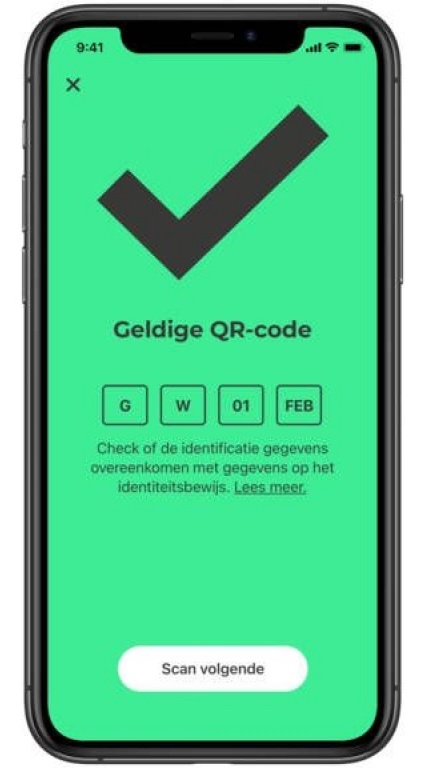
The Netherlands declared its own ‘freedom day’ at the end of September, ending all restrictions with the introduction of a smartphone app-based pass system, requiring proof of vaccination and a negative test to be shown before entering bars, restaurants, cinemas and other public venues. A month on, there wasn’t any noticeable skittishness in Amsterdam, and in restaurants and cafes customers of all ages and demographics dutifully showed their digital passes to gain entry. It was actually quite reassuring to see such apparent civil compliance. 

“After some early consternation, the majority of pragmatic Dutch accepted the [COVID app] pass as a means of resurrecting their social lives while shrugging off social distancing,” wrote the BBC’s Netherlands correspondent Anna Holligan this week on the BBC News website, in a feature in which the corporation’s journalists in Europe reported on the local approach to curbing the spread of the coronavirus. “When I've asked waiters or box-office workers if they want to see the QR code proving my vaccination the answers vary from ‘no, it’s okay, we trust you’ [which was my experience] to ‘we don't actually have the technology’,” Holligan added, pointing out that a recent study had found that around a third of Dutch cafes and restaurants are not scanning the local corona pass at all. 

My experience was mixed: one cafe made the pass voluntary, another asked to see mine, which I didn’t have, but did have both the NHS Travel Pass and another ‘health passport’ resulting from my expensive pre-flight test. Although not officially recognised abroad (though, since Friday, they should be now), the waitress who greeted me at one cafe in Leidseplein decided that she’d seen enough and had better things to do.

In France, the passe sanitaire has become part of daily life, and is essential to do anything, from entering a bar or cinema to getting on a train. COVidiocy, however, also varies across the continent. The BBC’s Hugh Schofield says that traditional French libertarianism has reared up in response to virus measures: “Of course there are people in France who object on principle to having to prove their credentials at every turn.” he wrote. “Every Saturday there are demonstrations in Paris and other cities, bringing together anti-vaxxers with libertarians and protesters against ’health discrimination’. Contrary to what some expected, though, these have not turned into a mass movement, and are dwindling in strength.” Schofield explained that implementation of the passe sanitaire has seen a rapid uptake of vaccinations, regarding it as the key to returning to some form of French social normality. More than 50 million French people have been totally vaccinated, including a large majority of those over the age of 12. Jabs have been incentivised further by an ending of free tests for the virus, meaning that for the passe sanitaire to allow entry to the bars and cafes that are central to French living, people have to show either proof of vaccination or a recent negative (and paid-for) test.

Compare all this with the United States, for many years my go-to choice for holidays. Next week the US opens up again to foreign visitors, but the Land of the Free won’t be quite as open as it once was. In New York, for example, proof of vaccination is required to get into hospitality settings, theatres, museums and other attractions. Masks aren’t required, but it is strongly advised by the city’s mayor. Chicago is different, with masks mandatory in all indoor spaces. In Los Angeles, proof of vaccination is required to enter bars and restaurants, and masks are even required for anyone over the age of two “in all indoor public settings, venues, gatherings, public and private businesses”, according to the local public health authority with rules covering all outdoor events and public transit. Masks are mandatory in Washington DC, and several states including Nevada, Hawaii and Oregon. Ultra-conservative Florida, perhaps not surprisingly, has gone in the opposite direction, with the state’s governor Ron DeSantis even threatening to fine businesses demanding proof of vaccination from customers. All thus in a country where only 57% of the national population has been vaccinated, although the rate of infection in the US is just 225 cases per million of population. Compare that to the UK’s 621 per million, in a country with 67% vaccination.

© Simon Poulter 2021

Back to my trip this week: perhaps the reality of life during COVID elsewhere were at their most stark at Schiphol Airport. In the 30-plus years that I’ve been travelling through it, it has always been a bustling hub, reflecting the historic internationalist Dutch outlook on trade and, therefore, world travel, but also the fact that it has always been a superior shopping experience. I used to joke that Schiphol was essentially a shopping mall with a runway, but last week, as I returned to its airside walkways in the late afternoon, I was shocked by how many shops were already closed for the day. Even some of the airport’s coffee bars - coffee being the lifeblood of Dutch existence - were closed. It was here that I saw for myself just how the pandemic has impacted travel. Like many other places, the Netherlands has suffered a sharp fall in tourists, with the national tourist board revealing that only seven million foreigners took up hotel accommodation in 2020, a drop of 13 million compared with 2019. Inbound tourism from traditional points of origin like the US and Asia decreased by 83%, but even numbers of tourists entering via the country’s open EU borders fell, with visitors from its southern neighbour Belgium dropping by 58%.

The statement-of-the-bleedin’-obvious conclusion from all this is that the pandemic has affected so many aspects of daily life that we used to take for granted. I won’t deny that the amount of business travel I used to endure was something of a privilege, but if one good thing comes out of this global crisis, it’s that digital communications really is a substitute for the expense and environmental impact of air travel in particular. But we can’t not travel at all. As the world debates climate change in Glasgow this week, aviation in particular will come under scrutiny again, especially given the fact that world leaders have all flown to Prestwick to talk about it. 

The world would be a worse place if we couldn’t move around it. Travel really does broaden the mind. We’ve missed having a week or two on a beach somewhere for the last two summers, the simplest of pleasures to provide escape from the mundanities of everyday life. Yes, there are plenty of beautiful places to explore here at home, but taking a plane somewhere should, also, be possible. For me, this week felt like a start.

Wednesday, 1 September 2021

Not working from home

Next week I will reach the landmark of having spent 35 years working in an office. Except, obviously, I haven’t. For the last 16 months – the entire time I have been employed by my company – I’ve been working from home. Like everyone else employed to work in an office.

Actually, my anniversary is something of a fraud. In my previous job I worked from home more than I did company premises (partly due to relentless business travel); in the previous company it was mandated that we had to work at a designated corporate site for at least three days a week (mainly, we suspected, so control-freak bigwigs could keep an eye on us); further back still, my job evolved while in-post from five-days-a-week in-office attendance to only going in when it made sense. That was just in the space of five years. 

For some, technology and different company cultures have made working from home nothing that special, but I appreciate that over the last year or so it has been brand new for many. My fiancĂ©e, for example, is a primary school teacher and at one point in the pandemic found herself going into school in the morning to teach key workers’ children in person, and then coming home at lunchtime to carry on lessons via Zoom. I think she actually liked it, but would be the first to admit that that classroom provides a tactile engagement you can’t replicate over webcam. 

Office workers, on the other hand, may have found the culture shift to ‘WFH’ a different matter entirely, to the extent that it has been a sub-narrative of the entire Covid drama. In essence, it has marked the nominal end of ‘9 to 5’ and complaints about Tube delays and overcrowded carriages as worklife became conducted in pyjamas and gym gear. City centres became apocalyptic wastelands, devoid of people and their cash being spent in sandwich shops, coffee bars, shirt shops and dry cleaners. Even Marks & Spencer has cut back on formal workwear, completely eradicating suits from some of its branches in favour of the ‘smart casual’ uniform of the blazer-and-chinos combo (ten years ago M&S was selling five million men’s suits a year. Last year it sold only two million).

WFH may have been a change for office workers who’d never before been facilitated to do it, but many people - freelancers, for example - have only ever worked from their kitchens and are quite happy with the arrangement. But, while I might be self-impressed by my own forthcoming gold carriage clock moment, ever since IT departments started handing out access via VPN (which, apparently, doesn’t have anything to do with underwear), working from home while still connected to the corporate environment has been pretty commonplace. I can go back 25 years to the first time I brought home a laptop and hooked up to my work e-mail using a very slow phone line. It was a revolution in my living room, at a stroke untethering me from the generational convention of ’going into the office’ and all that entails.

Picture: BBC

Covid unpicked that convention, and a working environment and its dynamics so brilliantly captured by Ricky Gervais in The Office and films like Horrible Bosses, The Devil Wears Prada and Office Space. I’d forgotten about most of all that the other day when I made a trial run to my own office - for the first time. It was partly out of curiosity to see what it looks like and partly out of desperation to escape the knackered sofa that has been my workplace since April last year, with me increasingly sinking into its un-upholstered depths. It was a Wednesday but could have been a Sunday, such was the lack of anyone else on my floor. In fairness, it was August and officially the office was still closed to all but essential attendance, but it served as a reminder that throughout the pandemic WFH has pretty much worked, and that enabling people to sit in their gym wear and have time to do the school run has not been to the detriment of productivity. 

Personally, I’m ready to return - to the impromptu coffee machine conversations, the sight of people other than the postman, to the commute and the lunchtime trek to Pret for a boxed salad eaten with a pointless - literally - bamboo fork. I’m ready to escape the Teams meeting regime and the view out of the living room window and the hedge beyond it, the cat and Sky News’ presenter rosta for company  And I am desperate to spend my working days sitting on a proper desk chair once more. 

It’s still anyone’s guess as to what occupancy will be like when our office opens next week, and here lies the new reality. There will be colleagues who have joined us since lockdown last week and who have never been in the office. Some younger employees, especially those who joined from university, will have never been in an office working environment at all, and have spent the last 18 months perched on beds in houseshares or sat opposite flatmates at dining tables. Office veterans like me will attest to the professional and social development benefits of being in a vibrant workplace, where decision making is quicker when you can just walk over to someone's desk. On the other hand, living just yards away from your laptop has improved work-life balance beyond all recognition. So hats off, then, to my employer’s very clear message that the notion of presence is over. In-office attendance will be largely down to a combination of personal choice, functional need and management expectations. Even the idea of a formal start and finish time has been relaxed, enabling those with childcare responsibilities to manage that before travelling in and again later in the day. 

Our formal reopening on Monday – two days before my supposed anniversary – will not be a wholesale return to the office life we may have known, but a dipping of toes in the water. Gone will be the expectation of everyone clocking on at 8.30, thus requiring hordes of deskbound staff to cram into the same Tube trains at exactly the same time. Gone will be the expectation that you even have to be in every day of the working week. In fact, it’s all about working out what’s best for you.

It won’t, however, be for everyone. A recent survey of American office workers by accountancy giant PwC found that WFH enthusiasm has risen throughout the pandemic, and that 41% of workers questioned in August wanted to remain at home full-time, a 12% increase from January. Even with July’s ‘Freedom Day’, Google mobility data - which tracks people’s location history - suggested that British workplace presence is just 40% of pre-pandemic figures (compared to 30% in the US and Germany).

Opinion in different business sectors appears divided over whether the return to the office should be made formal: technology giants like Apple, Amazon and Facebook have said that they would not expect employees back at their offices until January, while City firms in London have expressed a different view. Goldman Sachs’ chief executive, David Soloman has described WFH as an “aberration that we’re going to correct as soon as possible”, adding that it was “not a new normal”. Other financial services companies have adopted a hybrid approach, viewing the office as “collaborative spaces”, according to insurer Aviva, best used for creativity and innovation rather than rows of battery hens doing their e-mail. BT has said that WFH will not last forever, with the company’s HR director writing an official blog post yesterday stating that with the end of the school holidays it was time to return to the office: “Our offices will be the place our graduates and apprentices learn from more senior colleagues,” Alison Wilcox wrote, adding that BT’s sites also played a part in their “surrounding micro and local economies”.

The elephant in the Marie Celeste-like room, of course, is that COVID-19 hasn’t gone away. Employees at city locations will still need to commute, with public transport the prevailing choice. That means dealing with Covidiot anxiety, and the psychological stare-outs between the masked and the maskless on trains and buses. Office managers, too, will have made provisions by implementing polite conventions about wearing masks in lifts and providing socially-distanced desks. This might be mitigated by progressive policies not requiring mandatory in-office attendance, but as we head into the traditional cold and flu season, along with the start of the school term and an exponential increase in ’normality’, there’s nothing to stop the return to office life being thwarted by the Delta variant or other mutations. Some large corporate concerns have been understandably concerned about the legal risks of bringing people back to the office while the coronavirus is still on the lose, fearing the threat of legal challenges on health and safety grounds. 

There has also been evidence of in-office policies having some impact on loyalty. A survey of American workers revealed that 40% would consider changing companies if they had full-time office working imposed on them. Another thorny issue might be companies cutting pay for those who prefer to work from home full time - civil servants in the UK are facing the prospect of their London Weighting being removed, though this raises the argument that while the benefit hasn’t been necessary to cover the cost of commuting, someone has to pay for all that broadband and electricity that has been consumed by people working from home.

The months ahead, I suspect, will be more tentative than definitive. Time and personal confidence might be the determining factors as to whether a gradual return to the office is a trickle or a flood, or exactly how a hybrid approach manifests itself. While politicians push the idea of normality and freedom, it’s still too early to say exactly what “normal” is going to be. I had a taste of it last week with my day trip to an office, but despite the everyday regularity of sitting in front of a laptop, it was still an odd novelty, despite being a setting that I have known - mostly - my entire working life.

Monday, 9 August 2021

Masked anxiety

So there we had it: our first flights in over a year: to Edinburgh and back for a four-day break. The only ‘foreign’ holiday this year, as everywhere else was either booked or that plonker Grant Shapps has placed it on the red list, or the amber list, or the amber-plus list, or the oh-what's-the-point list. Or Iceland. And, yes, it wasn't lost on us that the train from London to Scotland would have been more environmentally friendly, but with exorbitant ticket prices for a family of four, plus a five-hour journey each way, we wanted to both maximise our budget and what little holiday we were actually able to get this time.

Edinburgh was, thanks for asking, very pleasant. So pleasant we got engaged there. Yes, I am now a fiancé. The things you do on holiday, eh? What was noticeable in the charming Scottish capital was, firstly, how relaxed it felt for a busy administrative city, and secondly, how well drilled everyone appeared to be under Ms. Sturgeon's jurisdiction. Call the Scots Nats upstarts if you will, but Covid-discipline was impeccably observed wherever you went, even by the vast majority of tourists. There really was precious little obvious civil disobedience when observing the still-enforced coronavirus etiquettes, both social distancing and mask wearing in shops, restaurants, on buses, and inside attractions. No one, from what I could tell, was abstaining on grounds of belligerence or twattery, and that made for a pleasantly anxiety-free time. Only the occasional tourist - who clearly hadn't received the memo - sauntered around indoor venues with their fizzogs fully on display.

You see, I’m a self-confessed zealot when it comes to observing the COVID rules. Despite having had two jabs and indeed a mild dose of the virus itself back in November, I’m diabetic and over 50, and bloody paranoid about catching this thing again (a possibility - even the double-jabbed health secretary Sajid Javid got it). 

I’ll admit that having a  compromised immune system is partly the result of my own misadventure, but I can’t help being 53. Basically it meant that the final leg of our journey back from Edinburgh, from London City Airport to home, was one tightly knotted ball of anxiety, as every carriage we entered on the DLR, the Tube and the SWR train was full of maskless Covidiots, looking back at my petrified eyes, peering over the top of my mask, as if to say “Yeah? What’s your problem?”.

To be somewhat fair, part of the problem is not necessarily ignorance but our dear Prime Minister. Ever since Boris declared 19 July “freedom day”, the wearing of face masks in England has been largely a matter of personal choice. How very doctrinal. This is despite warnings from the scientists - those people who, it would be decent to point out, know a thing or two - that easing rules on masks will reduce public protection. So with “personal choice” the most ambiguous health and safety stipulation you could make (I could jump out of a hot air balloon without a parachute or cut off my legs with a chainsaw - it’s all a matter of personal choice), it’s no surprise that anyone with an aversion to wearing masks, due to comfort, personal freedom or because being told to do something is not for them leads to people cramming onto our trains with their faces bare, breathing in and breathing out in crowded compartments with little concern for their own wellbeing and, more bluntly, mine.

This all stems from one of the few consistencies throughout the pandemic in the UK: inconsistency. And indecision. Boris Johnson appears so eager to please freedom-loving party acolytes that something as simple as mask wearing in environments where the virus can be passed with amusing ease can not be countenanced out of common sense, above anything else. It’s why London’s mayor, Sadiq Khan, has deemed that masks will remain mandatory when traveling on all Transport for London services, including the Underground, buses and trains. Not that he’s been able to enforce the rule, as our journey home the other night amply demonstrated.

“I’ve repeatedly made clear that the simplest and safest option would have been for the Government to retain the national requirement for face coverings on public transport,” Khan has said. “But ministers aren’t willing to do what’s right. I’m not prepared to stand by and put Londoners, and our city’s recovery, at risk.” He has since doubled down on that view, last week calling for mask wearing to be made legally enforceable with criminal prosecutions an ultimate sanction for failure to comply. Khan’s view is partly out of the hope that a bye-law on London’s transport network would partly reduce any further spread of COVID-19, but perhaps as importantly, it would increase the confidence of commuters like me in returning to the capital for work or pleasure, giving a much-needed boost to the economy. Sadiq Khan says that 86% of passengers do observe the mask etiquette, but that means that a sizeable 14% don’t, which is a problem as scientists have said repeatedly that masks only curb the spread of the disease if everyone wears them. I think we’ve lived long enough with the Covid numbers to know what risk that represents to public health. 

However, imposing such rules is still reliant on enforcement. Given the number of trains and buses operating in London, most of which now are driver-only (and in the case of the DLR, driverless), restoring guards as, effectively, enforcers, on the scale required would be problematic. Transport for London has some 400 enforcement officers already, but given the prevalence for some of London’s finer citizens to carry knives, you can understand the reluctance for confrontation. This places extra pressure on depleted police ranks to enforce what is at present little more than a polite request.

Picture: TfL

The challenge for Khan, however, isn’t just safety: TfL faces a budget deficit of as much as £500 million over the current financial year, having been severely impacted by the pandemic. As restrictions ease, Khan desperately needs people back on public transport. That said, there are already signs of private car usage increasing, and second-hand car sales have gone through the roof as people spend saved cash on used vehicles to get around in.

Back in Scotland - where Nicola Sturgeon has appeared to be one step ahead of Johnson throughout the last 18 months - the government intends to continue with the wearing of masks “unless exempt for special circumstances” until at least next year. “The law says you must wear a face covering in most indoor public places including public transport,” official guidance states. “The Scottish government recommends that face coverings should be worn when moving around when it is crowded. This is encouraged for busy outdoor events.”

In England, Boris has customarily faffed on the issue, conceding that “If it’s not mandated it probably won’t do any good” and that he “expected” people to carry on wearing face coverings in enclosed spaces, which is hardly an imposition. Here, in the midst of all this, is us and especially me, the paranoid. The trouble is that the issue is now at risk of getting bogged sown in politics. One scientist worries that this will mask the actual point about wearing a face covering to begin with: “We know wearing masks, particularly in crowded, poorly ventilated environments, has a big impact on the levels of transmission that can take place,” Professor Clifford Stott, who sits on the Scientific Pandemic Insights Group on Behaviours (Spi-B), told LBC last week. “But also I think [that] wearing a mask is also communicating to others about a sense of responsibility, and I think that’s a key issue in mask-wearing now, unfortunately. It’s become almost a little bit politicised whether one wears one or not, which is I think a shame.” Stott is firmly of the belief that masks have had a “big impact” on stopping transmission.

In truth, according to the Office for National Statistics, mask wearing in England hasn’t changed all that much in the last month since the legal requirement to wear them in enclosed spaces was dropped, with figures showing that 95% of people were still covering their face when leaving the house. Our public transport experience, however, suggested otherwise. Perhaps it’s an East London thing, as the majority of abstainers were on the DLR west from London City Airport, and then from Canning Town to Waterloo on the Jubilee Line. That degree of mask-free fellow passengers has done nothing to restore my confidence in getting out and about again. A shame after so many months cooped up at home (including three confined to the sofa following foot surgery). I’ve been desperate for freedom to return, but I won’t hide my anxiety at what I see as other people’s inconsideration and ability to comply with something as relatively simple as wearing a mask.

Perhaps, then, it’s just for me to deal with, but it does rub with me that my liberty can be curtailed by an inconsiderate few. Perhaps I should move to Scotland, where Sturgeon’s position - admittedly, not universally accepted - has at least been unambiguous. “It is my view that if a government believes measures like [face coverings] matter, and this government does, we should say so,” the Scottish First Minister has stressed. I won’t gloss over the fact that the overall numbers are falling, as vaccinations and so-called ‘herd immunity’ take effect. It’s true, too, that the R rate appears to be dipping, but with the school holidays in force, this may well be the ‘circuit break’ needed. 

Come the autumn, and the possible return of colds and flu as more and more companies open up their offices for the first time since March last year, the whole issue of travelling to work on public transport will come under the political and clinical microscope again. This, I’m sure, will put Boris’s chronic prevarication on the line.

Monday, 26 April 2021

Postcard from the cuckoo's nest

Picture: Philips

In the midst of all this brouhaha over leaks and flat refurbishments, it's been easy to forget little Matt Hancock, the eager-to-please Secretary of State for Health & Social Care. In the last week or so he's been pushed out of the limelight by the psychodrama surrounding his boss, but that doesn’t mean the erstwhile minister has lost his boyishly obsequious zeal for saying - at any opportunity and usually when a camera is near - how NHS staff are the most amazing people on the planet.

In truth it’s one of the few areas that Hancock and I agree on. Actually, it’s one of the few things that I’ve had much cause for alignment on with any politician, especially over this last year, not being a great fan of the breed. It is, though, the common bond that had us all on our doorsteps, clapping on a Thursday night for those months of spring and summer last year until the custom fizzled out. We did it partly out of community solidarity, but it was more than an empty gesture. Some of us needed to feel good about the rapidly unravelling situation, as COVID-19 took hold, but it was also the realisation that it was carers and NHS workers in particular who were thrust onto the extremely attritional front line of the coronavirus. And while we may have felt ever so slightly smug, clapping with our neighbours, just as Boris Johnson was doing on the front step of 10 Downing Street, or Sir Keir Starmer was doing outside his Camden abode, it was also good PR for an institution that deserved it. 

Johnson, you could say, had more reason than most, especially as he was visibly in the first throes of COVID when he first took part in the Thursday clap. By the time the prime minister emerged from a very serious encounter with the virus, his appreciation for the NHS should have been enhanced beyond all recognition. That, of course, remains to be seen, given the derisory pay round that has been offered NHS staff. I, on the other hand, have gained my own renewed respect for the NHS frontline. As I write, I’m into my third week in a hospital as a patient. Three Saturdays ago, I had a podiatrist look at what I’d thought was just a stubborn-to-heal foot blister. Thankfully, she knew precisely what she was looking at, and promptly sent me off to A&E at Kingston Hospital, where I’ve been ever since. Evidently the blister had ulcerated and become seriously infected (a perennial risk for people with diabetes like me). The infection was so aggressive and invasive that it had entered the metatarsal, the so-called ‘Beckham Bone’. Three days later I was taken into surgery, where the formidable orthopaedic surgeon (one of the UK’s best, I’m told) worked on the problem at one end with sharp metal, while I relaxed to Coldplay at the other. Post-surgery, I was prepared for what would become a long, steady recovery process, one that has kept me in hospital (albeit in my own room, which is a touch) receiving round-the-clock antibiotics. The wound left by the surgery - a complex procedure to remove a nasty infection that had found its way into the cavities and micro pockets of the foot - is still healing. I’ll spare you the gorier aspects, but the surgery left me with a lot of dead tissue which needed removing to ensure healthy healing overall. At first, this was addressed by wearing a clever ‘vac’ device which, plumbed into the wound, sucked out the dead tissue and gaseous remnants of the infection. It was my ball and chain, requiring 24-hour use and minimal movement, with only a brief disconnection to take a daily shower. However, its progress was slow, which led to an uptick in treatment, and a therapy that is, quite frankly, remarkable: maggots.

There be maggots in there
While you regain your composure at the notion (I know, I had to at first), the premise is incredible: the wound is packed with a ‘tea bag’ containing around 200 larvae - 100 of each gender - who get to work on eating up all the waste. It sounds gruesome, and probably is if I had to watch it, but it’s painless (in fact, it’s completely unnoticeable, save for some discharge - I suppose they’ve got to get rid of ‘stuff’ just as we do). 

According to Swansea University, which cultivates the maggots for this purpose in South Wales, the technique has been used to treat wounds in various indigenous cultures for centuries. During World War One, soldiers’ wounds in the trenches were seen to heal much faster when maggots that had resulted from flies laying their eggs in open injuries got to work. Within the NHS it’s only been in use for the last ten years, but is now sworn by, with clinical trials demonstrating that the maggots are more effective than other treatments to remove wound debris, cleverly cleaning out troublesome hidden microbes that even the best surgeon’s knife can’t reach, and antibiotics can’t kill off.

I won’t dwell too much more on what’s going down there as, tediously but necessarily, it’s continuing for the time being, and I’m still mostly confined to bed, with the extent of travel limited to the toilet and the shower. My view is also somewhat restricted to an imperious sweep of Kingston-upon-Thames out of my 7th floor window (if I sit up and squint I can just about see the very occasional plane taking off from Heathrow). I live a 40-minute walk from here, but I may as well be on Mars with the Ingenuity mission, such is the slow “direction of travel” my stay has required. But I can’t complain, even if the boredom is mind-sapping. 

This has only been my second inpatient experience in 53 years on this planet. Some go their whole lives without seeing the inside of a hospital, save perhaps for the maternity unit where they entered the world. My stay, however, has been truly profound. Who knows what would have happened had I not been admitted to A&E three Saturdays ago, but I’m assuming it would have ended with losing a foot, or worse. That’s not a gloomy self-assessment, but a reflection of the grave tone the surgeon took in the days after she’d performed her magic. But, from the moment my girlfriend dropped me off at the front door, I entered an incredible system, a complex and dynamic clinical care machine that has had me surrounded, from the get-go, by a vast pit crew of doctors, nurses, surgeons, caterers, porters, cleaners and many more that I've never been exposed to. 

Throughout each day I've had fresh drugs plumbed in, my blood pressure, blood sugar and temperature checked at various times of day, my bloods extracted for analysis of infection markers, injections for blood thinners, tablets for this, tablets for that. When you add it all up, I have been the beneficiary of an enormous clinical and service resource. I’d hate to think what it has all cost. I can’t begin to imagine what the bill would have been if I’d been in the American healthcare system. I am living proof of what a burden Type 2 diabetes is on the health service. All of this because of a foot blister, ironically caused by a new pair of trainers bought to further enable the exercise regime that has been key to managing my condition. Of course, this has been a wake-up call: just as I’d thought that I had everything under control, with the three-monthly HbA1C checks showing excellent blood sugar management, the critical arbiter of maintaining my health. And, yet. I’ve had to drain an almighty resource, adding to the estimated £8 billion diabetes costs the NHS every year.

Picture: Philips

It’s not, though, just the cost that’s giving me a form of survivor’s guilt. It’s the people looking after me. And looking after me they are. Over the course of two weeks you become familiar with everyone, even with ever-changing 12-hour shifts of day teams and night teams. One even joked this morning “You still here?!”, which despite its relative inappropriateness, was the kind of levity I appreciate (especially as my now-tired joke with anyone who’ll listen is that if I remain here any longer I’m going to redecorate). Each and every one who has been looking after me has been a hero. God knows what they must think of my folly, after the year they’ve had. 

We all know how these people have been, literally, on the frontline of the pandemic. The roll call of casualties, drawn across the spectrum of NHS functions has been nothing short of appalling. In January, the Mirror newspaper reported that some 52,000 NHS staff were off sick with the coronavirus and that 850 healthcare workers in the UK were thought to have died from COVID-19 between March and December last year. The attrition rate was horrendous. Just as a war cemetery depicts a given battle, with captains and corporals lying alongside each other in the date order in which they were felled, the rollcall of NHS staff of every rank makes the organisation look like unwitting cannon fodder as the virus raged through corridors unabated. While the health service didn’t completely collapse under the strain of admissions at the pandemic’s peak - the feared premise for lockdown to begin with - it was close. What the people who’ve been looking after me have been through, I can't begin to imagine. Wards normally devoted to routine conditions were effectively turned into field hospitals. Staff were redeployed to cope, regardless of their area of specialist expertise. Doctors, surgeons and nurses of every level of experience and capability were retasked with working the wards just to cope. It’s almost hard to fully understand just how a health system that was struggling before COVID-19 has coped under it. 

So why did they allow themselves to succumb? Simple: dedication. The same dedication that has been treating me. There’s nothing altruistic about this. To a worker, the nurses and doctors have clocked on for their shifts because there’s been a job to do that they’ve been highly trained for. While my foot was under the knife, I had an enjoyable chat with the young doctor monitoring my vital signs. He told me how at the peak of battle, he was put on general clinical duties within the hospital, and rather than finding it a chore - even though it was - actually found it quite rewarding. He said that while he might have specialised in orthopaedic surgery, he was still a doctor, he still had invested in an education that could be reapplied. He wasn't alone: no matter what your area of expertise was, if you had a medical degree you were put to good use triaging the COVID-sick as they came in. 

My admiration was undimmed before, but having been in the NHS's midst now for a while my admiration has only been emboldened. The NHS must never be a political football. It must never be treated as a matter of convenient doctrine. It’s birth, on 5th July 1948, almost three years into the austerity of post-war Britain, instigated an institution like no other in the world. Yes, it may be flawed; yes, there will be inefficiencies as there will be in any public body of its size and scale. But what it delivers, the innovations that it relentlessly applies, and the supreme dedication that its chronically underpaid and, invariably, under-appreciated staff deliver is something to truly behold. 

When I’m eventually discharged I will continue for a while as an outpatient. At a time when there is much to gripe about in our country - our economy, our politicians, choose your target - we should never take for granted, nor fail to appreciate what the National Health Service represents: one of the best, if not the best things about Britain. 

Monday, 8 March 2021

Bridge of sighs

Get ready for the COVID anniversaries, as they will be coming thick and fast over the next few weeks. My first of note lands this evening when Chelsea-v-Everton kicks off at Stamford Bridge. It was this very fixture, on this very date last year, that marked the last time I was sitting in my seat in the East Stand Upper Tier, at the very same venue, watching football "live" (i.e. not on an iPad or with fake crowd noise unhelpfully piped in by Sky Sports). 

The home side won handsomely, 4-0, in what turned out to be a miserable return to the Bridge for Everton manager Carlo Ancelotti (regulars to this blog will have endured, amid my rants-previous about Chelsea's biennial managerial schisms, how Ancelotti was dispatched by the club on the final day of the 2010-11 season at Everton's Goodison Park for leading the Blues to just second in the league...). But tonight, by some quirk of Premier League scheduling, it’s the same fixture on the same date at the same venue, albeit one devoid of supporters, prompting some reflection on the football year gone by. Because that win over Everton last year felt like the season had ended prematurely on a high. But as we walked out of Stamford Bridge, the weirdness that we’d all experienced that afternoon was just the start of things. Most startling was how, almost at a stroke, football dropped down the list of priorities and, to some extent, stayed there, though not immediately for everyone: three days after that Everton match, their rivals from across Stanley Park, Liverpool, hosted AtlĂ©tico Madrid at Anfield in the Champions League. 

Four weeks later, the city of Liverpool experienced a sudden surge of coronavirus deaths, with 68 recorded across the Royal, Aintree and Broadgreen Hospitals between 7 and 9 April. The suspicion fell on a spike in COVID-19 infections following the Madrid game, which had been attended by 3,000 Spanish fans who'd flown in for it. Madrid was already succumbing to the virus by then, and had strict lockdown rules in place. A week later, 250,000 people descended on the Cheltenham Festival. “People were crammed six deep at the bars,” journalist Alan Tyers, who’d been covering the event for the Daily Telegraph, told The Guardian. “If you were going to design a virus dispersion hub, you could do worse than the indoor bits of a packed racecourse”, he said, as he recalled concourse bars packed with racegoers innocently enjoying some drunken revelry. Tyers’ comments appeared in a comprehensive, forensic examination of last year’s Cheltenham meeting which, combined with the Liverpool-AtlĂ©tico game, were two notorious ‘superspreader’ events that took place just as the virus was taking a hold in the UK. By the final Cheltenham race on 13 March, The Guardian noted, there had been 2,263 confirmed cases of the coronavirus in Britain. That same day, the Premier League suspended all games. 

The government remained unchanged until the 16th, when Imperial College modelling predicted that the country’s death toll from COVID-19 could reach 500,000 if there wasn’t a major intervention. By the following Monday, Boris Johnson announced the first national lockdown. That same day 56-year-old decorator Geoff Bodman was put on a ventilator at a Cardiff hospital. The Guardian reported that it was ten days after he’d returned home from the Cheltenham Festival. Eight weeks in intensive care ensued, during which he had a stroke. “They should never have allowed [the festival] to go ahead,” Bodman told the paper. “But it would have cost millions to cancel.” Perhaps if they’d known then what we know now, with the UK death toll approaching 123,000 and over four million cases recorded, the organisers of these events might have thought differently. But, benefit of hindsight, and all that.

Picture: Facebook/Chelsea FC

I, for one, shudder at the thought of what I might have been exposed to at Stamford Bridge on this day a year ago, not least because I was soon identified as “clinically extremely vulnerable” to the virus, and technically, should have spent most of the last year shielding. I eventually caught it in November and experienced only a very mild dose, but it could have been worse. Much, much worse. That Sunday, in our section of the East Stand, we didn’t know quite what the protocol was. Old friends, who’d been there week-in, week-out for years, greeted each other awkwardly with elbow bumps rather than conventional handshakes. A large swathe of Row 19 in front of us was empty, the unmistakeable sign of regulars giving the game a swerve. Not that it made much difference to the result.

When the 28th season of the Premier League resumed in June, it was to a very muted return. Matches had to be played behind closed doors with only essential staff allowed inside grounds. Home and away teams are still kept apart before kick-off, with visiting sides invariably forced to use makeshift changing facilities in club car parks, rather than the traditional ‘Away’ dressing room. Match balls and corner flags have to ritually disinfected, and non-playing staff and substitutes were required to sit socially distanced and masked in the stands. Players mingling, hugging and generally mixing is still a moot point. Broadcasters have tried to compensate for the lack of crowds by adding crowd sound effects but it just isn't the same (the one consolation of watching with the sound effects off is that you hear every swearword from the touchline, forcing commentators to regularly have to apologise for pre-watershed expletives).

Football soldiered on under make-do circumstances. Games that went ahead in the first few weeks of the hastily resumed season were notably flat for home viewing, despite the bonanza of live coverage, with all Premier League games televised and 6pm weekday kick-offs (though the Friday, Saturday and Sunday evening kick-offs have eaten into time usually reserved for family entertainment). But despite this bounty of televised football, it would be hard to say that we’ve always had our money’s worth. Graeme Souness recently wrote in The Times that the absence of fans in stadia has had a statistical impact on matches. He noted that home advantage was no longer a factor, with one particular week, recording all five Wednesday night fixtures ending in away wins. We’re now on course for an away win record in the league. 

“People tend to forget that players are performers and entertainers and will all feel the impact to a degree, some by a lot and some by a little, without crowds to play in front of,” Souness wrote. “The vast majority of them enjoy the thrill of having a live audience there, so they are suffering without it.” As a player he recalled feeding off the atmosphere inside the stadium both home and away, especially the latter: “The more hostile it was, the more I thrived on it.” Aggression, Souness said, has been dampened, measured by the minimal number of player scuffles he’s seen during lockdown conditions. He also noted that the absence of baying crowds has also impacted referees’ brandishing of red cards and awarding penalties, though there is no evidence to back up such a claim.

Picture: Facebook/Chelsea FC

As forthright in print as he is in the Sky Sports studio, Souness concluded that Premier League football had, throughout the crisis, proved to be less of its traditional value, adding that it can sell itself for “astronomical figures” around the world “because it is deemed the most exciting, honest and entertaining,” but that has been missing. He cited VAR as a factor, and sort of has a point. Greater televisual scrutiny has, indeed, made VAR seem like a bureaucratic burden, with some decisions made using it no better than a referee giving or not giving a decision without it. I can only imagine what those interminable pauses in games would be like inside a stadium. 

Perhaps we will only find out on the last day of the league season, 23 May, when matches will be playable - in theory - in front of crowds for the first and final time, following the expected lifting of lockdown a week before. By then, Manchester City will have walked away with the league title, and it will be probably only the race for third and fourth place that will be of any consequence. For this Chelsea fan, tonight’s encounter with Everton will count greatly in that hunt for a Champions League place. If both teams approach it right, it’ll be - to use one of football’s many clichĂ©s - a ‘cup final’. And that’s just the sort of game that I would dearly love to be in my seat at Stamford Bridge to watch.  

Tuesday, 2 February 2021

Tomorrow was a good day, thanks to Captain Tom

Picture: The Captain Tom Foundation

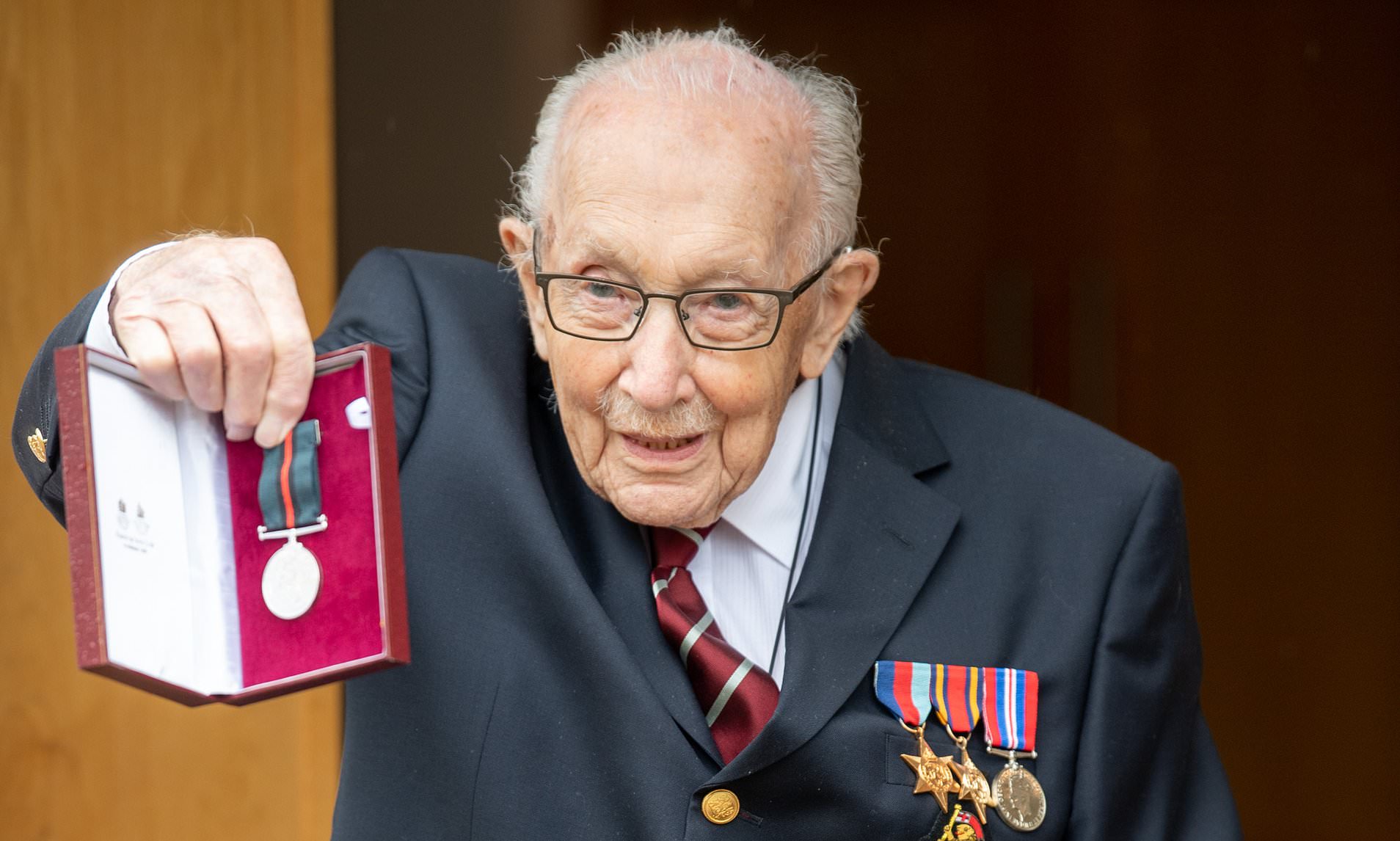
In a year when, for a few months at least, we clapped for the heroes on the front line of the coronavirus, an unlikely hero - an actual war hero, in fact - emerged. Captain Sir Tom Moore was that quintessential British national treasure: in his 100th year, the plucky former Royal Armoured Corps officer, who'd seen Second World War service in Burma and India, and whose previous own brush with fame was a 1983 appearance on Blankety Blank, turned the humble idea of celebrating his centenary by walking 100 laps of his garden for charity into an emblem of the nation's fight against COVID-19. But instead of remaining just a quirky "and finally..." item on News At Ten, his modest plan to raise £1000 by the time of his 100th birthday became more than £32 million (closer to £40 million if you take tax benefits into account). A phenomenon was born.

For those of us who've struggled to get off the sofa during lockdown, seeing this sweet little widower, hunched over his walking frame as he padded up and down outside his Bedfordshire home, was a genuine inspiration. Last April, in early spring warmth, he became a beacon of hope, too, not just for the fundraising but also for his endearing personality and seemingly ever-ready ability to deliver a pearl of wisdom on demand. "Tomorrow will be a good day" became his catchphrase, but also a note of positivity in an otherwise depressing landscape of lockdowns and an absence of hope in the short term. 

Too right that he was rewarded with a knighthood. Too right that the RAF's Battle Of Britain Flight flew a Hurricane and Spitfire over his home to mark his 100th birthday (a moment that, soppily, still brings a lump to my throat in the footage of the centenarian, wrapped in a blanket and sat in a wheelchair, waving at the planes as their Merlin engines roared throatily overhead). "I'm one of the few people here who've seen Hurricanes and Spitfires flying past in anger," he said at the time. "Fortunately today they're all flying peacefully."

News on Sunday that Captain Tom was being treated for COVID-19 following a bout of pneumonia was met universally with the grim expectation that there wouldn't be a good outcome. Today that inevitability came to fruition. Thomas Moore, born on 30 April, 1920, in Keighley, Yorkshire, passed away. His daughters, Hannah Ingram-Moore and Lucy Teixeira, called the final year of his life as "nothing short of remarkable". "He was rejuvenated and experienced things he'd only ever dreamed of," the sisters' statement added. That, presumably, would have included having a Number 1 hit single (with Michael Ball - a charity recording of You'll Never Walk Alone), writing (or co-writing) an autobiography, and even getting into the Guinness Book of Records for the money his walk raised. 

For the birthday that actually started it all, Tom received more than 140,000 cards, so many in fact that a dedicated sorting office was set up at his grandson's school. In December he became the oldest person to appear on the cover of GQ as one of its 2020 Men Of The Year. "Not only was he the oldest person ever to grace our cover, he was one of the most gracious," editor Dylan Jones said tonight. "He was a hero, a genuine old-fashioned hero, and I feel blessed that we were in his orbit, albeit for a very brief time." 

The tributes that have been paid have gone rightfully beyond the normal platitudes of condolence. The ceremony, last July at Windsor Castle, to confer his knighthood by the Queen - a mere six years Moore's junior - put another smile on the nation's face, an occasion Buckingham Palace acknowledged in its statement: "Her Majesty very much enjoyed meeting Captain Sir Tom and his family at Windsor last year. Her thoughts, and those of the royal family, are with them, recognising the inspiration he provided for the whole nation and others across the world." Tonight's comments from Downing Street added to this further: "Captain Sir Tom Moore was a hero in the truest sense of the word," said Prime Minister Boris Johnson. "In the dark days of the Second World War he fought for freedom and in the face of this country's deepest post-war crisis he united us all, he cheered us all up, and he embodied the triumph of the human spirit. He became not just a national inspiration but a beacon of hope for the world."

In tributes to other figures, that might sound hyperbolic but in the short space of time that Captain Tom was in our consciousness, he managed to transcend the mounting misery of the virus. His fundraising for the NHS even attracted well-wishers from all over the world, who flooded his home with cards and donations. He also stood for something old fashioned, traditional, unsurprising in an individual of his generation. But he was more than just a novelty, no flash-in-the-pan media event like Brenda from Bristol. In a matter of weeks he was elevated from humble war veteran, doing his bit, to the status afforded to Sir David Attenborough. His fame may have been fleeting - spanning just the nine months or so to today - but his memory will last long after the virus that ended his remarkable life has been brought under control.

"I am still very proud of our country. There is nowhere like ours," he once said. Tonight, his country is proud of him. Rest in peace, Captain Sir Tom Moore. And thank you. You were the one bright spot in this last year of so much gloom.


Wednesday, 27 January 2021

No words. Just a number.

A little old blog like this is hardly going to make much impact on the way things are going with the coronavirus in the UK, but it's difficult not to pass comment on yesterday's grim milestone of the nation passing 100,000 deaths. 

In March, with fatalities already emerging around the world, Sir Patrick Vallance, the UK's chief scientific adviser, said the following: "If we can get this down to 20,000 [deaths] and below, that is a good outcome in terms of where we would hope to get to with this outbreak." 

Ten months on, we've reached five times that number, and are currently witnessing a rolling daily average of 1200 deaths within 28 days of a positive test. While Vallance's counterpart Professor Chris Whitty offered some respite yesterday, revealing that the death rate was flattening, the UK is still experiencing the equivalent attrition of ten medium-sized airliners crashing with all on board every single day.

I'll admit, the virus has filled me with crippling fear from the outset, ever since I discovered - ironically around the same time as it reached British shores - that I was extremely clinically vulnerable to it. My own brush with COVID in November was mild, but could have easily gone another way. A piece in The Times today picks out a handful of disparate victims. It includes a 21-year-old care home worker with no known underlying health conditions; a 25-year-old, healthy GP surgery administrator; a fit, 6ft 5in hospital worker aged 52; and so on. There's little denying that some 97% of all virus deaths have occurred within people with such underlying problems, but there is also a frightening rate of death amongst the young and the healthy, complicating the view that COVID-19 only affects the old, those from ethnic minorities or those with so-called co-morbidities. In other words, any one of us.

My clinical vulnerability led me, last week, to have a vaccination, for which I am truly grateful. My near-91-year-old mother had hers a few days before, for which I am even more grateful. My partner, a primary school teacher, still required to go into work every day, has to wait in the queue like everyone else under the age of 50. You can't help feeling that vast sections of the population are simply ticking timebombs. The vaccination programme, however, is not the point I have quarrel with. Frankly, it's been amazing that we've gone from 0-60 as it is in getting the vaccines developed and administered to almost seven million people in Britain, given that it was only at the end of December 2019 that the coronavirus was identified as a potential danger to global life. Throughout the pandemic, a vaccine was seen as the exit path out of the crisis, and once it is administered to everyone, there's no scientific reason to think that it won't be. But that's of little comfort to the bereaved families of the 100,000 victims COVID-19 has cut down in this country.

However, when the public enquiry comes - and come it surely will - serious questions need to be asked of how the Government handled the outbreak. Lessons must be learned and implemented. It's no use Boris Johnson apologising and saying that he did everything that could have been done: because political decisions were made which, without any doubt in my mind, enabled the virus to spread. Why, for example, are we only now talking about borders being shut and strict quarantine rules being put in place, when last March our airports were operating as normal, with passengers arriving at Heathrow from any hotspot in the world, getting on the Tube and heading off into the community? Why was Track & Trace such an unmitigated disaster? Why was the distribution of PPE so badly handled? Why were care homes treated as fodder for the virus to reap its worse through patients discharged from hospitals? Why were schools not closed when they could have been? And just what impact did the Prime Minister's tolerance of Dominic Cummings' Barnard Castle jaunt have on public attitudes to following the rules? 

The UK now stands with countries of significantly higher populations - like the United States, India and Brazil - as having one of the world's highest death rates from the coronavirus. When the pandemic broke out in places like Spain, Italy and France we all drew breath sharply and hoped that it wouldn't happen here. Well, it has, and now the UK has Europe's highest death rate. An island. 

It's not so much an issue about politics versus expertise. You can take the COVID-sceptics' view that the likes of Witty and Vallance are doom-mongers, but they are also just doing their job, to the best of their ability, in providing objective medical and scientific facts. Political decision-making has been clearly behind every intransigent delay in putting critical measures in place. Whether it's Johnson's perennial need to appease his backbenchers, or simply his own desire to be a people pleaser, there are fundamental flaws in his character which have played their part in the UK's response to the pandemic. 

I don't envy anyone in government right now - genuinely. The oft-repeated statement that we're facing the greatest crisis since the Second World War is fully justified. But what got the UK through those six years was a mixture of human resilience, application and a collective spirit. When I've seen people refusing to wear masks, or holding christening parties, or any of the other breaches of lockdown rules, I see more than just examples of miscreants needing to be told to "put that light out", but a societal failing that requires greater enforcement. And that has needed tougher decisions made sooner rather than later. Because, at risk of appearing selfish, I have no desire to go out of this world in the same way as 100,000 of my fellow citizens have done, and I certainly don't wish it on any of the people I love. 

Sunday, 20 December 2020

It is what it is…I suppose…

It has just occurred to me - and quite why only now - that 2020 has been the most ridiculous soap opera ever. All we’ve lacked is the dead Bobby Ewing miraculously revived and taking a shower. We began this arch annus horribilis still scratching our heads as to how a comedy politician could have become prime minister, assembling a cabinet of apparent toadies hell-bent on “getting Brexit done” above all other priorities, as if one of Batman’s various nemeses had been installed and gathered together a cast of cartoon super villains to see out their agenda.

However, when the pandemic unfolded (or, in other words, we caught what the rest of the world had been getting since January and February), we entered into the new distraction with stoic uniformity. In an unusually warm, blue-skied spring, we stood on our doorsteps on a Thursday at 8pm, applauding essential workers in the ever-lightening evenings. We endured the first lockdown because it was the right thing to do and, if you were lucky enough to have a garden, “working from home” from a lawn chair with a cooling refreshment at your side wasn’t exactly a hardship. Some of us, however, had to shield or at least remain inside, denied any human contact due to a clinical vulnerability that even the scientists didn’t, then, fully understand, while hospitals started to fill up. But, still, we endured it. Then summer entered the final straight of August, and if we were able, we took off to Cornwall, or the Lakes, or anywhere where, again with agreeable weather, we could at least enjoy the placebo effect of taking a holiday somewhere.

However, 2020’s scriptwriters are of a fiendish creed. Just as we think Den and Angie are getting on again, the former turns up at the Queen Vic with divorce papers on December 25th. “Happy Christmas, Ange!”. Effectively, that’s what Boris Johnson did yesterday. Just three days before he’d been mocking Sir Keir Starmer’s seemingly grinchish call for Christmas to be cancelled, only for the prime minister to do it himself, anyway. I think only Liverpool won the Lack Of Christmas Spirit award by a higher margin, spanking Crystal Palace 7-0 yesterday. Those writing that script are having devilish fun. One minute it’s all talk of vaccines and “sunlit uplands”, and Boris is invoking Churchill [again] with his Dame Vera Lynn rhetoric, the next, we’re all contemplating what to do with the mountain of excess food bought for a lunch that will now be spent by small bubbles (and without the squeak, too). Not even 24’s Jack Bauer faced as many ridiculous changes of circumstance.

I’m not going to even pretend to have better knowledge of this virus than the experts. And I’m certainly not going to second-guess the wisdom of those bunkered in 10 Downing Street 24/7 trying to figure it all out. But there’s something fundamentally wrong. It’s called expectation management. I’ve learned, in my 32-year professional PR career, that managing your stakeholders’ expectations is the key. It’s not about keeping people happy, either. Just better informed and better prepared. Even in crisis situations, where situational fluidity is the enemy, you prepare for it. Or at least give the perception of doing so. Right now, the British government is giving the impression of being unprepared for anything. At risk of being simplistic, the feeling we all get is that the medical experts and scientists say one thing, and Bozza takes the populist view for fear of ruining everything. And, yet, in not taking unpleasant decisions soon enough, he’s done exactly that. How many people were still out shopping yesterday, believing that there were still a few more days until Christmas, only to get the newsflash on their phones that 16.4 million people in London, the south-east and eastern England would now be banned from mixing indoors for at least the next two weeks, as of a minute past midnight this morning? All this because of a ‘mutant variant’ of the coronavirus, VUI-2020/12/01 which, it is claimed, was first identified as long ago as September, and which has proven to be 70% more infectious than previous strains, even though it did not appear to cause higher death rates or be any more resistant to vaccines.

“When the virus changes its method of attack, we must change our method of defence,” Boris intoned from No.10 yesterday. “And as your prime minister, I sincerely believe there is no alternative open to me.” This from the man who, on Wednesday during Prime Minister’s Questions, made the comment to Starmer:  ”I wish he had the guts to just say what he really wants to do, which is to cancel the plans people have made and to cancel Christmas.” And, yet, that’s exactly what Johnson did yesterday. It’s not, either, the first U-turn he’s made like this. 

The narrative from the outset is that everyone is learning as they go, which is fair enough. To tap into Boris’s Churchill fantasies, we’re not in the same kind of conflict as an actual war. In 1940, Britain had the combination of resilience, the Royal Air Force, radar and an intelligence network - all the apparatus of conventional war - to keep the enemy at bay. Today, it’s the combined excellence of a medical, scientific and pharmaceutical community, in principle in concert with politicians and a civil service that should be able to draw on the best strategic and tactical wisdom to make informed decisions. Which makes you wonder why, when VUI-20/12/01 has been known about for weeks (and only last weekend was ringing very real alarm bells within the Department of Health & Social Care and, in particular, on Matt Hancock’s desk), it took a full week of everyone doing their Christmas preparations (as well as a House of Commons ding-dong which Boris chose, as per usual, to treat with typical flippancy), before the tough decision was made to bugger up Christmas for almost 30% of the English population, and severely restrict millions more?


I get it that the script for 2020 has been peppered with devilish twists and turns. I see councils - like Bromley’s - having to issue three different tiering instructions in the space of 10 days. I get the science: hospitals in London and the south-east are already filling up, and the entire premise for lockdown in the first place - protect the NHS from being overwhelmed - is getting close to prophecy becoming real, and it may well be that Boris has made the only decision he could have done. We’ll cope - we always do: we’ll change our plans, and we’ll put up with eating Pot Noodles on Christmas Day because it was too late to get an Ocado delivery in and Tesco Express round the corner had nothing better. And, yes, we’ll bunker at home watching crap TV, revelling in a Blitz spirit of “it is what is”. But that won’t help my near-91-year-old mother, whose Christmas is going to be a pretty basic affair (even if her stoicism, honed during her own very real wartime evacuation as a ten-year-old, is probably more robust than anyone else in the family). Because, with a little more expectation management, we could have planned ahead, rather than wait for the curtain to be brought down halfway through the performance. 

Wednesday, 9 December 2020

They think it’s all over. Well it still isn’t

Picture: AstraZeneca

Given that our current prime minister sees himself as Winston Churchill-incarnate, there’s a temptation to look upon yesterday’s 'V-Day' rollout of the coronavirus vaccine in the terms of the wartime leader’s famous quote in the autumn of 1942, when the tide of the Second World War appeared to turn: “This is not the end. It is not even the beginning of the end. But it is, perhaps, the end of the beginning.”

Boris and Matt Hancock, his perpetually perky propagandist health minister, might be seeing those “sunlit uplands” hoving closer into view, but - and sorry to rain on their parade - there is still a long road out of the pandemic. Fantastic as it is that yesterday saw the first vaccinations administered, and that by Christmas the NHS should have had four million doses available, but infection rates remain stubborn. Yesterday’s government figures recorded over 12,000 new national COVID-19 cases, almost 1,500 new hospital admissions and 616 new deaths - the equivalent of three Boeing 737s crashing catastrophically with all on board. Sorry to bring the mood music down.

Even if the excitement about the vaccine is entirely understandable - people are desperate for some semblance of normality - normality is clearly not on the agenda yet. Speaking today at a joint meeting of the House of Commons Science & Technology and Health & Social Care committees, England’s chief science officer, Sir Patrick Vallance, said: “The biggest risk we face now is that people think it’s all over. It isn't all over. We have a very important light at the end of the tunnel, but we’re a long way off. It’s not the time to relax things. If that happens we will have a big surge." His partner in crime, England’s chief medical officer, Professor Chris Whitty, added that, in general, the British public had responded well to the restrictions on life since March. “The altruism of the British public cannot be understated,” he said. “Because of that, many, many people have been saved.” But, he noted, some people will get bored of the restrictions.


That seems to be evident here in Tier 2 London, where there is a very real risk that a rise in virus cases in two-thirds of the capital’s boroughs could put it into Tier 3, just as the Christmas shopping season reaches its frenzy. One former Public Health England regional director, told The Guardian today that a decision on moving London up to Tier 3 was needed within the next 48 hours, otherwise it faced a “terrible situation”, with rising deaths ahead of Christmas. According to the Evening Standard eight east London boroughs have recorded more than 200 new cases a week per 100,000 of population in the week to last Thursday. Worryingly, my borough, Kingston-upon-Thames, has the ninth-highest infection rates in London, recording 202.8 per 100,000.

Graphic: The Times

My experience of being out and about in London in recent days is that most people are still observing the rules on social distancing and mask wearing, but it is still only ‘most’ people. On the Tube on Friday there were people openly ignoring the rules on masks. Likewise, in a department store we were in at the weekend. It’s not often that I’ll agree with a Conservative MP, but I’ll make an exception for Nickie Aiken, the MP for the Cities of London and Westminster, who told the Evening Standard: “Every single person who breaks the rules adds to the chances of [London] going into Tier 3. We have got to work together as one city to ensure our cafes, restaurants, shops and other businesses survive and also to protect lives.”

Ah, cafes and restaurants. Of all the commercial activities that have struggled the most during the pandemic’s economic haemorrhage, they remain the one statue of normality that we cling to, to the extent - and I speak from bitter experience - we’re prepared to turn blue-lipped to sit, COVID-compliantly, outside pubs. But even this break for freedom comes at a price. How many people, out of desperation to have a pint while sticking to the rules, are ordering a “substantial meal” (such as…er…a Scotch egg…) which they then leave untouched? 

It’s something that a Sheffield barman has, to his absolute credit, made a stand on. Last weekend, Will Dalrymple, tweeted pictures of wasted meals that had been abandoned by his pub’s customers who had “only wanted two Morettis each”. Pubs in Tier 2 can only remain open if they effectively operate as restaurants, offering something more than a packet of Pork Scratchings. Dalrymple complained in several tweets how people had ordered sandwiches, side salads and bowls of chips which ended up in the bin. He said that he saw the rationale behind the rules, but also saw the position they put pub staff in. While the practice of ordering food and not eating it wouldn’t harm a pub’s finances, the moral position about wasting food is just as serious: “With everything in the news about people relying on food banks and free school meals, this is utterly obscene,” he added. ”If you're desperate to go to/support a pub, go when you're hungry.” 

Picture: Twitter/@WJDalrymple

Depressingly, Dalrymple’s tweets drew out the trolls keen to point out that people are just looking for escape. “I completely understand people's frustration at the rules,” he wrote. “I'm as grateful for and welcoming to customers as I ever was. “However, hospitality workers have no choice but to enforce the rules. All these tweets are asking for is for co-operation.” 

What doesn’t help is the lack of clarity on what constitutes a substantial meal. Various government ministers have fudged the issue, while some pubs have even tried to circumnavigate the rules by agreeing to host local takeaways or, simply, boiling a kettle and serving up a Pot Noodle. The point here is that there needs to be a happy balance. Freedom - as we knew it before March - will return, but not for some time.