Showing posts with label WFH. Show all posts

Wednesday, 27 September 2023

WFH WTF

Readers of the London Evening Standard will have been presented this week with what appears to be the newspaper’s single-handed attempt to get Londoners back into the office.

“Remote working is killing London. Get back to the office”, the paper thundered with an editorial by Dylan Jones, the editor. In it he recounted now-familiar stories of parts of the city apparently deserted on Mondays and Fridays, of company bosses complaining of empty (and expensive premises), and everyone from restaurants to dry cleaners noting that trade was still down as a result.

“Come Friday, it’s like a bomb has dropped, with deserted streets around Moorgate, empty shops in Broadgate, the surrounding restaurants all starved of trade. And it has got to stop,” Jones opined. “Remote working is killing London. It’s killing trade, killing commerce, and killing the city’s ability to properly get back to work.”

“Speak to any shopkeeper, retailer, or news-seller, or anyone in the hospitality industry, and they will tell you the same,” he continued. “London feels like it is on its way back: commuter patterns are up, West End footfall is up, and tourists are beginning to feel as ubiquitous as they were pre-Covid. But there is still a bewildering lack of urgency among employers regarding full time in-office working. Many companies still only expect their staff to come to work three days a week - usually Tuesday, Wednesday and Thursday - making a mockery of the working week.”

We are, of course, talking about the post-pandemic reality (although, with Covid-19 very much on the march again, it’s debatable just how ‘post-‘ things really are). But there is also the view that if there was one good thing to come out of the disease it’s the adoption of more flexible working arrangements for those who can make use of them. It is, though, somewhat arrogantly London-centric to assume that everyone works in an office. But equally, it’s hard to fully get an objective picture of just how our cities are performing in these changed times. 

For the last four months I’ve been working on a fixed-term contract for an industry association whose headquarters is located in the City of London. I’ve been absolutely loving going into the office as often as makes sense. That, though, is the key: ‘as often as makes sense’. Go back 35 years to when I joined Sky TV, then based in the West End, and I was in the office Monday to Friday, and wearing a suit and tie every day. Indeed less than ten years ago I was going into the Paris HQ of the telecoms company I was working for every single day without giving much thought to it (largely as I was living just a handful of Métro stops away and could even walk there if the mood took me).

The Internet age changed everything. The first time I had both my own work-supplied mobile phone and laptop was in the mid-1990s, where remote connectivity was more useful for business trips with the PR agency I was working for at the time. Dial-up access, at home or in a hotel room, was a faff and frankly more novelty than necessity. But over the next couple of decades remote working progressed from something you could do if necessary (for example instead of taking a sick day, or when you needed to be at home for a plumber) to the mandated instruction it was during lockdown. 

I started at my last company a month into the first lockdown in the UK and didn’t see the inside of its headquarters until August the following year. Even the ‘Great Return’ of 2021 seemed tentative. It took months before the so-called ‘TWAT’ syndrome became a thing (people only coming into the office on Tuesdays, Wednesdays and Thursdays). Those who went in on Mondays or Fridays were either contrarians trying to make a point, or the socially awkward, preferring the peace and quiet.

If the Standard’s campaign this week is to be believed, TWATs are still a thing. There’s no doubt that my place of work is quieter on Mondays and quieter still on Fridays , which calls into question the financial logic of renting large commercial office spaces in central London on days like that. But on Tuesdays, increasing through Wednesdays until Thursdays when it is packed, the place is genuinely buzzing with bodies. Desks need to be booked in advance and heaven help anyone needing a meeting room without reserving one first.

Along with the Victorian Pencil, Jacob Rees-Mogg, and his absurd pass-agg campaign to get civil servants back into Whitehall post-Covid (when he held the hilariously oxymoronic post of Minister for Brexit Opportunities and Government Efficiency), the most vocal proponents of returning to five-days-a-week in-office working have been the CEOs of large commercial banks. On my own evidence, working in the City, the pubs and bars I walk past appear to be well populated by laddish banker bros quaffing pints at various times of their stressed out days. “Coming together fosters better collaboration and teamwork, enabling us to better serve our clients,” Andrea Rossi, CEO of the City fund M&G told the Evening Standard. Banks have been the most belligerent on this issue, but in-person attendance in other sectors has suffered. “Of course I would prefer to see people, have them in the office,” top advertising industry executive Sir Martin Sorrell, CEO of S4 Capital said this week. “It helps in terms of one-to-one creativity”.

Maybe the City of London, where I am currently based, is not reflective of the rest of the capital, or indeed the country. But I certainly haven’t noticed much of the reported deadening of commuter traffic into London on Mondays and Fridays. The Evening Standard kicked off its campaign this week by reporting new travel data which showed that the capital’s three main commuter railway networks – South Western, Southeastern and Thameslink – are carrying 22 million fewer passengers each month than four years ago. “We are not seeing the level of people commuting five days a week that we saw pre-Covid,” Angie Doll, chief executive at GoVia Thameslink Railway, said. “We are seeing people commute on a Tuesday, Wednesday and Thursday – and that pattern is absolutely set now. I can’t see that changing again.”

This doesn’t exactly stack up in my own experience: travelling at peak-time from south-west London, even on Mondays and Fridays you’re lucky to get a seat on the 0740 to Waterloo, and on every other day of the working week you’re packed in like sardines. Of course, train strikes make the decision on whether to work at home or not a lot more simpler for those who are able to use the option. 

South Western, one of the largest carriers of commuters from the outer suburbs and southern shires, noted to the Standard that its passenger demographic meant that more were likely to be in senior professional jobs where they could work from home should they choose to (and, I would hazard a guess, have the sort of salaries that put them further outside of London), are more likely to work in senior positions or belong to the managerial classes than other train companies. In other words, they are more likely to have the ability and authority to work from home.

“We have not given up on the weekly commute,” SWR’s customer and commercial director Peter Williams told the Standard. “But commuters are telling us that their travel patterns are fixed in the short term. But there are nuances. Younger people show more willingness to get into the office. It’s important for them to build their profile — and to socialise after work. There are also some employers who hope that at some point they’re able to coax their colleagues into the office more frequently. But with the cost of living pressures, they don’t feel that now is the right time to be insisting on that.”

Which brings us to the notion of ‘hybrid’ working. As someone who has been looking for a permanent job since March, I’ve noticed the amount of hybrid work being advertised. In fact, at one company I interviewed with, its Cambridge office was there largely for collaborative needs when required, and even those who lived locally worked from home on more days of the week than they came in.

Workplace flexibility is clearly here to stay. Many with children or caring responsibilities have found it a boon, as have those whose salaries haven’t kept up with the cost of commuting (not just the price of a return ticket, once you add in the coffees, Pret lunches and all the other ancillary costs that come from leaving the house each morning).

Personally, I love going into the office of my current employer. The work itself is so much more rewarding when you have colleagues to bounce ideas off. Waiting for an e-mail reply or a WhatsApp response is just not the same as walking across to someone’s desk and asking them something. According to research by the Office Group, some 83% of workers would prefer working from some form of company premises than working remotely full-time. 

For me, it’s partly the social interaction but also - oddly - the commute itself. For the lengthiest leg of my journey by Tube from Wimbledon into the City I get a seat for its duration with which to read or listen to podcasts. The overall travel time of an hour each way creates a buffer between home and work life. And even if parts of the commute involve dealing with other people, their headphone noise, phone conversations and sniffing, it’s still a marked improvement on not seeing anyone at all throughout the day during lockdown. 

During the pandemic I had commute envy. My wife, a teacher, was going out every day to teach the children of key workers, which made me deeply envious of her ability to get in the car and drive even just a couple of miles down the road, seeing things other than the hedge outside our living room that was my vista for 18 months. Now, I emerge from Cannon Street station to be confronted with early morning life - people heading in to their offices, going for breakfast, grabbing coffee, being out there.

I don’t have a home office or even a desk at home, so going into company premises provides me with somewhere proper to sit at, a large monitor, hot and cold running tea/coffee/WiFi/toilets and, most importantly, people, as opposed to an over-attentive cat. When lockdown first imposed WFH on the much of the workforce, there were younger members of my then-team perched on beds in flat shares or kitchen tables at their parents’ houses. I felt sorry for them, missing out on the shared office experience that I’d had from the very start of my career. 

While it is nice to go in on a Friday when the place is virtually deserted, being amongst and around busy people making whatever contribution they make to corporate life is without substitute. It’s something those younger workers have lost out on profoundly, and will continue to so if they’re still not going in regularly or even at all. Productivity is, let’s face facts, not what it is when you’re at home.

There are other disadvantages to working from home. Firstly, it’s making us fat. Or fatter. A survey conducted by the fitness app MyFitnessPal has found that Brits consume nearly 800 more calories and take 3,500 fewer steps when they work from home - a not surprising set of statistics, based on my own personal experience. 

Mental health has also taken a battering, especially for those who live alone or with vulnerabilities. In its 2022 New Future of Work Report, Microsoft revealed that, while working remotely can improve job satisfaction, it can also lead to social isolation, guilt and overcompensation. At first, there were countless articles about baking banana bread and going for a spin on the Peleton whenever the opportunity arose, but the reality was that many home workers found themselves working even longer hours. As many as 80% have reported their mental health suffering as a result of being tied to laptops all day long, with human interaction facilitated exclusively by home broadband. 

WFH has also dampened spontaneity. Research by the reservation app Ambi found that 30% of working age adults felt that the pandemic killed off having fun, and that spirit has yet to return. It said that 40% of home workers in the UK found that not being in the office all week has made them boring - either not agreeing to ad hoc drinks after work with colleagues or even getting too comfy to want to go out with their own friends.

The Teams meeting experience...

I would agree with both: on multi-window ‘virtual’ meetings, with an array of colleagues resembling the opening titles of The Brady Bunch, it’s a fair bet that some will be distracted by their mobile phones, or e-mail, social media, web browsing or some other form of partial disengagement. We’ve all done it. We all still do it.

I recognise that mine is a metropolitan view. I can’t speak for those in the regions who might be holding on to working from home for other reasons. But as a general statement, over the 37 years of my professional life, I’ve always only benefitted from being in an office. Perhaps I’ve been lucky: perhaps, working in busy, buzzy newsrooms and for the last couple of decades press offices in corporate headquarters, I’ve been able to enjoy the banter, the exchanges of ideas, the arguments and disagreements, occasional bollockings and even more occasional praise that come with face-to-face working. I couldn’t go back to being perched on my sofa, peering into a laptop camera, all the time. It was a novelty once, but it’s not and never will be where I do my best work. And that is largely down to the fact that my kind of work thrives in a social and sociable environment.

Monday, 8 May 2023

Alright for some...

And so another bank holiday comes around - the second of three this month - which means yet another four-day week for those who nominally work 9 to 5, to use a patently anachronistic term. For some, however, today means the start of a three-day week. No, we haven’t suddenly returned to the industrial chaos of the 1970s, but the progressive shortening of the working week - for some - and intended to make life sweeter for those who benefit from a bit more free time. Alright for some, then, and of no benefit to those who earn by the hour...

In many workplaces, a relaxation of the five-day grindstone has been happening in one form or another for a number of years. When I moved to Amsterdam in 1999 the company I joined had established a ‘Dress Down Friday’, which basically meant male Dutch executives exchanged their dull grey suits and ties for button-down Oxford shirts and those ridiculous red (or orange) spongebag trousers popular amongst Faragists. From one perspective it marked a truncation of the working week, but the reality was that in many other parts of industry, it had always been common for men - and it was always men - to slip off to an 18-hole meeting room for an afternoon of essential “networking”, while those of us non-golfist drones from Sector 7G carried on the toil.

To some extent, and in some professions, the idea of a working ‘week’ has long been amorphous. In all the years I’ve worked in corporate communications, mobile phones and e-mail have meant 24/7 connectivity. News and crises rarely respect the conventions of a weekend. The creep of working from home - a digitally-enabled capability available long before Covid came along - has, though, changed the patterns of working days previously dictated to my office hours and commuting. 

When we emerged from lockdowns we started to witness the emergence of the ‘TWAT’ - people who only went into the office on Tuesdays, Wednesdays and Thursdays. This resulted in pubs and bars near offices thronging on the third of those three days, in the way that Friday nights used to be. But not for all. Even with the World Health Organisation last week declaring the Covid “global health emergency” officially over, 44% of the UK’s workforce is still classed as WFH for all or part of the time, according to the Office for National Statistics. 

The move from office desk to kitchen table has been a boon for many, liberating them from the relentless slog, frustrations and expense of commuting. A godsend, in particular, for family life, especially those with childcare responsibilities. However, it has also been a boon for the leisure sector. Golf courses have seen a notable increase in weekday afternoon usage. A Stanford University study in the US last August found that, with the use of mobile phone geolocation data near 3,400 golf courses, there were almost 300% more people at 4pm on a Wednesday afternoon than three years before. Data in this country has also suggested a more leisurely approach to working hours: contactless payments company SumUp reported that midweek spending on hair and beauty treatments grew last year by 5% - and notably 10% higher in Liverpool, for reasons not explained. Gyms have also reported being busier during the middle of the day, rather than at the traditional peak times of early evenings and weekends.

So does this suggest The Great Shirk at work?  Not necessarily. There is no doubt that companies are taking a more relaxed approach to working hours - something that was impossible to police, realistically, during lockdown (despite dystopian talk of firms installing keystroke-tracking software on corporate laptops to see monitor home working productivity).

As, currently, a man of enforced leisure, thanks to being made redundant at the end of March, it’s been noticeable in many of the discussions I’ve had with potential employers that the topic of work-life-balance is high on their list of selling points. At my last company I was contracted to work between 8.30am and 5.30pm Monday to Thursday, with an hour off on Friday afternoons, but such was the nature of what I did that I rarely worked those hours - sometimes less, sometimes considerably more. I had a boss who took the progressive view that the most important thing was for the work to get done, and done to everyone’s satisfaction. When you’re responsible for the reputation of a Eur 44 billion company, you can’t afford to be slack. But there was an acknowledgement that we weren’t in a workhouse.

Picture: Microsoft

If anything, working without being conditioned by ‘office hours’ has made people more efficient in how they structure their working day. That, though, hasn’t stopped some companies becoming increasingly insistent on returning to in-office attendance, with chief executives like Amazon’s Andy Jassy stating that in-person working enhances engagement. Others, like Salesforce’s Marc Benioff, have complained that performance and productivity has not been the same since before the pandemic due to WFH.

Some have taken drastic action: insurance giant Aviva’s CEO Amanda Blanc has made getting staff back into the office part of her senior managers’ bonuses (a less pass-ag version of that Victorian pencil, Jacob Rees-Mogg, and his one-man crusade when Cabinet Office minister, leaving official notes on desks inscribed: “Sorry you were out when I visited. I look forward to seeing you in the office very soon. With every good wish, Rt Hon Jacob Rees-Mogg MP”). Blanc’s approach may have worked - with most employees back in Aviva’s offices for at least part of the week.

Other businesses have taken a more incentivised approach. PwC has been luring staff back to the office with one-off £1,000 bonuses, while others have introduced Silicon Valley-style perks like free food and snacks. There is also evidence that more companies are urging a return to in-office working for at least part of the week to get collaboration and engagement going. Some bosses have even expressed the view that home working can harm career development. I can see that: I joined my last company at the start of the 2020 lockdown, and didn’t see the inside of the office until August 2021. It would not be until last year before people were returning in significant numbers, which meant that my internal network development was done through virtual means - e-mail and video calls, mainly, when they could be scheduled. 

It does, of course, depend on what industry you’re in. Bank CEOs have, in particular, been the most vocal about encouraging - or instructing - staff back into the offices (at Canary Wharf, the eastern annexe to the City of London, commuter traffic has returned to pre-pandemic levels). In other sectors, however, WFH continues, albeit in many places as a “hybrid” model, a somewhat loose concept in which there’s no prescription as to when you come into the office. One company I recently interviewed with adopted a “flexible-hybrid working model” at the beginning of last year, applying what it said was lessons learned from remote working during the pandemic, while impressing upon its employees the need for collaboration through both co-location and remote working. “We’ve better understood the benefits that remote working can bring - improved work/life balance, less time spent commuting, greater inclusivity and involvement” for its people, its head of HR has said, calling out the benefit of giving staff more focused time free from distractions.

But with the pandemic well behind us, many companies are still trying to work out the best approach. It has meant a complete rethink of property portfolios, with corporates downsizing office space and moving to smaller headquarters, leveraging the cost efficiencies that come from discarding gargantuan corporate citadels. For many, though, its providing a more ‘optional’ approach to providing venues for collaboration when it is needed, and enabling solitude when that is best for concentration.

Picture: WeWork

However, some companies appear to be ripping up the rule books of the working week altogether. Another benefit of the pandemic, and the somewhat apocryphal ‘Great Resign’ (as people supposedly reassessed their lives), is that companies have had to rethink how they attract and retain talent. In the tech industry it was the offer of free snacks and lunches to keep engineers tied to their coding stations, and all those other Silicon Valley cliches of playrooms and ‘fun’ distractions to take the edge of the intensity of software development. 

The latest thing is the four-day week. With the summer approaching (as indicated by the relentless rain), employers are introducing significantly shorter Fridays, with some cancelling afternoon working altogether. “Pressure for a four-day week has been building and it’s resulting in companies looking at different ways of doing business,” Joe Ryle, director of the 4 Day Week Campaign, recently told The Times. ‘Summer hours’, he said, were being applied as a means of raising morale (probably essential with pay rises in short supply amid the cost of living crisis). “Seasonal hours give companies the opportunity to experiment with shorter working hours in a much smaller time period so workers can adjust and get used to it,” Ryle added.

According to The Times, L’Oréal allows staff to knock-off at 3pm on a Friday, with full half-days available at brands like Cadbury and Nike. It’s not new, though: Kellogg’s have been offering summer hours for 20 years, saying that they believe it allows staff to “recharge and unwind”, benefitting mental and physical wellbeing, as well as productivity and motivation.

Have we, then, become entitled since being given “permission” to work in our trackies from sofas, with no requirement to endure overcrowded, expensive trains, transport strikes and congested streets? Possibly, but there’s no denying that almost instantly Covid transformed the accepted norms of working (it would be horrendously arrogant to lump into that statement the key workers who went into their workplaces throughout lockdown or, simply because of the nature of their jobs, had no choice to work from home).

Certainly, the world of work has changed out of all recognition to that in which I started out in 37 years ago. WFH for me has been a convenience, but not my preference. I actually like getting out of the house for the day, and work infinitely better when in a traditional environment. During lockdowns I even experienced commute envy as my wife, a primary school teacher, was going out every day. Even if her commute only lasted 15 minutes, she was getting to see more than the hedge outside our front window that was my vista while I perched on the sofa doing Teams meetings. But I don’t share the more draconian views of WFH-sceptic CEOs.

That said, at this stage of my unemployment, I’d be happy to have any job, regardless of its mandated hours or where it is conducted. And if any employers are reading this, I’ve managed to make it to the midst of middle age without yet swinging a golf stick in anger. And have no intention of doing so, either.

Sunday, 31 October 2021

It’s very nice to go trav'ling

© Simon Poulter 2021
The last time I set foot in another country - unless Scotland counts as one - was almost two years ago to the week: a cheeky trip to Palma for a dose of autumnal Majorcan sun. The trip also provided welcome respite from a mad 12 months in which I flew 52 times for a job that I ultimately walked away from. I hate to think what my carbon footprint was for the return on that time and professional investment. 

So, apart from our four days in Edinburgh in August, that’s been it for two years. No Air Miles Andy me - until this week, when I spent a few hours in Amsterdam to sort out some personal finance admin put on hold by COVID-19 travel restrictions. You see, while we’ve all been raving about WFH enabled by technology, some things still require face-to-face contact. In my case, a Dutch bank account requiring in-person attention because, even in the age of fintech, it couldn’t be sorted out over the phone. After 18 months, then, of being unable to do anything about it, I grabbed the opportunity of the current, potentially brief window in travel and burned off some of the Avios points accrued during my insane year of travel and popped over to the Dutch capital. As you do. 

Now, I know what you’re thinking: not very green flying to Amsterdam for just two appointments and then fly straight back again. Well, no it wasn’t, but it was also unavoidable. And, I like to think, unlike the hapless Manchester United squad who recently flew to an away fixture with Leicester City, a journey of 100 miles that could have just as easily been taken by train or coach (except, apparently, they wanted to avoid traffic on the motorway). I, too, could have driven to Amsterdam, or even taken the Eurostar, now the city has been added to its services from St. Pancras. But even with a relatively reasonable journey time of just under four hours each way, the logistics wouldn’t have worked without requiring an overnight stay, with more expense and unnecessary absence.

During that year of near-constant business travel I made frequent day trips to places like Paris, Munich, Madrid and Zurich, invariably taking advantage of London City Airport being only a short DLR ride away from Greenwich, where I was living at the time. The airport was built in the 1980s as part of London’s Docklands regeneration, transforming one of the old Royal Docks wharfs into a gateway for City bankers to jet off to Europe’s financial centres and return within the day. Like all airports, London City has been impacted by the dramatic turndown in air travel over the last year, but this week there was no shortage of young, thrusting types who have barely started shaving, wearing polished shoes and sharp suits, furiously tapping away at laptops as they prepared to fly off to meetings at the big accounting houses like E&Y and PWC. That said, you could hardly say that the airport was bustling at seven in the morning as it once would have been. Travel has understandably taken a back seat, and even though it is gradually being allowed to return - this latest half-term holiday has been the first opportunity for many families to take advantage of the relative easing of restrictions - it is still far from ‘frictionless’. 

Before the pandemic, my day trip to Amsterdam would have been almost as easy as catching a bus to go shopping at Westfield. But even just to visit the city for a few hours I had to go through a lot of rigmarole: first, a ‘fit to fly’ COVID test (£39 - ker-ching!) and pre-book a ‘Day 2’ PCR test for my return (£69 - ker-ching again!), upload my NHS COVID vaccination certification to the British Airways website, along with the fit-to-fly result, plus a completed health declaration form for the Dutch government and a Passenger Locator Form for the UK government. All of this so that someone could check that I’d completed the protocols. So far, no one has been in touch, £110 worth of testing later… 

I must admit, once I’d gone through the stress of securing all these tests and paperwork, the actual business of getting on the plane was quite easy. After satisfying BA that I complied with all requirements, my boarding pass was sent to my phone, allowing me to breeze through the electronic gates at the airport, and then on through the now considerably lighter-touch security screening than it used to be, thanks to the installation of advanced scanners that no longer require you to remove laptops, shoes and belts. Arrival at Amsterdam’s Schiphol Airport was just as easy, save for the fact that we Brits can no longer wave an EU passport through the ‘e-gates’, now we’re outside the Schengen Zone (a bit like the Twilight Zone only less fun). Once passport control was happy with my reasons for visiting, I was on my way for the 15-minute train ride to Centraal Station in the heart of the city. The return journey was a little more arduous as BA’s app and self-service check-in kiosks refused to give me my boarding pass. Evidently not all the paperwork uploaded for the outbound flight had been replicated for the home journey, requiring a torturous wait for the check-in desk to open. I suppose this is the price to pay for any kind of foreign travel at the moment and, possibly, for the foreseeable future.

Perhaps, though, we in the UK have been lulled into a false sense of security by the relative lack of health enforcement compared to elsewhere. The travel experience notwithstanding, my brief trip afforded an opportunity to see life outside the UK for the first time since the pandemic took over the world. Although the British media has kept pace with COVID-19 developments around the world, for most of us the intensity has been in our own back yard. Seeing another city, another country, another people and how they took to, for example, mask wearing, was fascinating, almost from the minute I exited the aircraft walking through the airport and then travelling on the transport system it was notably reassuring to see that masks were de rigueur. There was similar obedience in Edinburgh, come to think of it. Just not on London’s public transport network, where COVidiocy remains stubbornly high. That said, the Dutch haven’t been immune to the virus. In a country of just 17 million people there have been 2.12 million cases to date and an estimated 18,000 deaths, though many believe that number could be higher. While I was in Amsterdam news emerged that the Dutch government is considering reintroducing local restrictions amid some of the fastest rising infection rates in Europe, an increase that was “faster and sooner than expected,” according to the country’s health minister, Hugo De Jonge. 

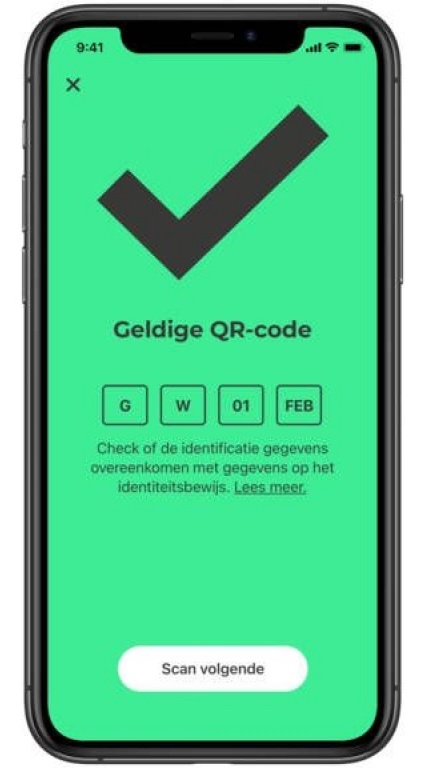
The Netherlands declared its own ‘freedom day’ at the end of September, ending all restrictions with the introduction of a smartphone app-based pass system, requiring proof of vaccination and a negative test to be shown before entering bars, restaurants, cinemas and other public venues. A month on, there wasn’t any noticeable skittishness in Amsterdam, and in restaurants and cafes customers of all ages and demographics dutifully showed their digital passes to gain entry. It was actually quite reassuring to see such apparent civil compliance. 

“After some early consternation, the majority of pragmatic Dutch accepted the [COVID app] pass as a means of resurrecting their social lives while shrugging off social distancing,” wrote the BBC’s Netherlands correspondent Anna Holligan this week on the BBC News website, in a feature in which the corporation’s journalists in Europe reported on the local approach to curbing the spread of the coronavirus. “When I've asked waiters or box-office workers if they want to see the QR code proving my vaccination the answers vary from ‘no, it’s okay, we trust you’ [which was my experience] to ‘we don't actually have the technology’,” Holligan added, pointing out that a recent study had found that around a third of Dutch cafes and restaurants are not scanning the local corona pass at all. 

My experience was mixed: one cafe made the pass voluntary, another asked to see mine, which I didn’t have, but did have both the NHS Travel Pass and another ‘health passport’ resulting from my expensive pre-flight test. Although not officially recognised abroad (though, since Friday, they should be now), the waitress who greeted me at one cafe in Leidseplein decided that she’d seen enough and had better things to do.

In France, the passe sanitaire has become part of daily life, and is essential to do anything, from entering a bar or cinema to getting on a train. COVidiocy, however, also varies across the continent. The BBC’s Hugh Schofield says that traditional French libertarianism has reared up in response to virus measures: “Of course there are people in France who object on principle to having to prove their credentials at every turn.” he wrote. “Every Saturday there are demonstrations in Paris and other cities, bringing together anti-vaxxers with libertarians and protesters against ’health discrimination’. Contrary to what some expected, though, these have not turned into a mass movement, and are dwindling in strength.” Schofield explained that implementation of the passe sanitaire has seen a rapid uptake of vaccinations, regarding it as the key to returning to some form of French social normality. More than 50 million French people have been totally vaccinated, including a large majority of those over the age of 12. Jabs have been incentivised further by an ending of free tests for the virus, meaning that for the passe sanitaire to allow entry to the bars and cafes that are central to French living, people have to show either proof of vaccination or a recent negative (and paid-for) test.

Compare all this with the United States, for many years my go-to choice for holidays. Next week the US opens up again to foreign visitors, but the Land of the Free won’t be quite as open as it once was. In New York, for example, proof of vaccination is required to get into hospitality settings, theatres, museums and other attractions. Masks aren’t required, but it is strongly advised by the city’s mayor. Chicago is different, with masks mandatory in all indoor spaces. In Los Angeles, proof of vaccination is required to enter bars and restaurants, and masks are even required for anyone over the age of two “in all indoor public settings, venues, gatherings, public and private businesses”, according to the local public health authority with rules covering all outdoor events and public transit. Masks are mandatory in Washington DC, and several states including Nevada, Hawaii and Oregon. Ultra-conservative Florida, perhaps not surprisingly, has gone in the opposite direction, with the state’s governor Ron DeSantis even threatening to fine businesses demanding proof of vaccination from customers. All thus in a country where only 57% of the national population has been vaccinated, although the rate of infection in the US is just 225 cases per million of population. Compare that to the UK’s 621 per million, in a country with 67% vaccination.

© Simon Poulter 2021

Back to my trip this week: perhaps the reality of life during COVID elsewhere were at their most stark at Schiphol Airport. In the 30-plus years that I’ve been travelling through it, it has always been a bustling hub, reflecting the historic internationalist Dutch outlook on trade and, therefore, world travel, but also the fact that it has always been a superior shopping experience. I used to joke that Schiphol was essentially a shopping mall with a runway, but last week, as I returned to its airside walkways in the late afternoon, I was shocked by how many shops were already closed for the day. Even some of the airport’s coffee bars - coffee being the lifeblood of Dutch existence - were closed. It was here that I saw for myself just how the pandemic has impacted travel. Like many other places, the Netherlands has suffered a sharp fall in tourists, with the national tourist board revealing that only seven million foreigners took up hotel accommodation in 2020, a drop of 13 million compared with 2019. Inbound tourism from traditional points of origin like the US and Asia decreased by 83%, but even numbers of tourists entering via the country’s open EU borders fell, with visitors from its southern neighbour Belgium dropping by 58%.

The statement-of-the-bleedin’-obvious conclusion from all this is that the pandemic has affected so many aspects of daily life that we used to take for granted. I won’t deny that the amount of business travel I used to endure was something of a privilege, but if one good thing comes out of this global crisis, it’s that digital communications really is a substitute for the expense and environmental impact of air travel in particular. But we can’t not travel at all. As the world debates climate change in Glasgow this week, aviation in particular will come under scrutiny again, especially given the fact that world leaders have all flown to Prestwick to talk about it. 

The world would be a worse place if we couldn’t move around it. Travel really does broaden the mind. We’ve missed having a week or two on a beach somewhere for the last two summers, the simplest of pleasures to provide escape from the mundanities of everyday life. Yes, there are plenty of beautiful places to explore here at home, but taking a plane somewhere should, also, be possible. For me, this week felt like a start.

Wednesday, 1 September 2021

Not working from home

Next week I will reach the landmark of having spent 35 years working in an office. Except, obviously, I haven’t. For the last 16 months – the entire time I have been employed by my company – I’ve been working from home. Like everyone else employed to work in an office.

Actually, my anniversary is something of a fraud. In my previous job I worked from home more than I did company premises (partly due to relentless business travel); in the previous company it was mandated that we had to work at a designated corporate site for at least three days a week (mainly, we suspected, so control-freak bigwigs could keep an eye on us); further back still, my job evolved while in-post from five-days-a-week in-office attendance to only going in when it made sense. That was just in the space of five years. 

For some, technology and different company cultures have made working from home nothing that special, but I appreciate that over the last year or so it has been brand new for many. My fiancée, for example, is a primary school teacher and at one point in the pandemic found herself going into school in the morning to teach key workers’ children in person, and then coming home at lunchtime to carry on lessons via Zoom. I think she actually liked it, but would be the first to admit that that classroom provides a tactile engagement you can’t replicate over webcam. 

Office workers, on the other hand, may have found the culture shift to ‘WFH’ a different matter entirely, to the extent that it has been a sub-narrative of the entire Covid drama. In essence, it has marked the nominal end of ‘9 to 5’ and complaints about Tube delays and overcrowded carriages as worklife became conducted in pyjamas and gym gear. City centres became apocalyptic wastelands, devoid of people and their cash being spent in sandwich shops, coffee bars, shirt shops and dry cleaners. Even Marks & Spencer has cut back on formal workwear, completely eradicating suits from some of its branches in favour of the ‘smart casual’ uniform of the blazer-and-chinos combo (ten years ago M&S was selling five million men’s suits a year. Last year it sold only two million).

WFH may have been a change for office workers who’d never before been facilitated to do it, but many people - freelancers, for example - have only ever worked from their kitchens and are quite happy with the arrangement. But, while I might be self-impressed by my own forthcoming gold carriage clock moment, ever since IT departments started handing out access via VPN (which, apparently, doesn’t have anything to do with underwear), working from home while still connected to the corporate environment has been pretty commonplace. I can go back 25 years to the first time I brought home a laptop and hooked up to my work e-mail using a very slow phone line. It was a revolution in my living room, at a stroke untethering me from the generational convention of ’going into the office’ and all that entails.

Picture: BBC

Covid unpicked that convention, and a working environment and its dynamics so brilliantly captured by Ricky Gervais in The Office and films like Horrible Bosses, The Devil Wears Prada and Office Space. I’d forgotten about most of all that the other day when I made a trial run to my own office - for the first time. It was partly out of curiosity to see what it looks like and partly out of desperation to escape the knackered sofa that has been my workplace since April last year, with me increasingly sinking into its un-upholstered depths. It was a Wednesday but could have been a Sunday, such was the lack of anyone else on my floor. In fairness, it was August and officially the office was still closed to all but essential attendance, but it served as a reminder that throughout the pandemic WFH has pretty much worked, and that enabling people to sit in their gym wear and have time to do the school run has not been to the detriment of productivity. 

Personally, I’m ready to return - to the impromptu coffee machine conversations, the sight of people other than the postman, to the commute and the lunchtime trek to Pret for a boxed salad eaten with a pointless - literally - bamboo fork. I’m ready to escape the Teams meeting regime and the view out of the living room window and the hedge beyond it, the cat and Sky News’ presenter rosta for company  And I am desperate to spend my working days sitting on a proper desk chair once more. 

It’s still anyone’s guess as to what occupancy will be like when our office opens next week, and here lies the new reality. There will be colleagues who have joined us since lockdown last week and who have never been in the office. Some younger employees, especially those who joined from university, will have never been in an office working environment at all, and have spent the last 18 months perched on beds in houseshares or sat opposite flatmates at dining tables. Office veterans like me will attest to the professional and social development benefits of being in a vibrant workplace, where decision making is quicker when you can just walk over to someone's desk. On the other hand, living just yards away from your laptop has improved work-life balance beyond all recognition. So hats off, then, to my employer’s very clear message that the notion of presence is over. In-office attendance will be largely down to a combination of personal choice, functional need and management expectations. Even the idea of a formal start and finish time has been relaxed, enabling those with childcare responsibilities to manage that before travelling in and again later in the day. 

Our formal reopening on Monday – two days before my supposed anniversary – will not be a wholesale return to the office life we may have known, but a dipping of toes in the water. Gone will be the expectation of everyone clocking on at 8.30, thus requiring hordes of deskbound staff to cram into the same Tube trains at exactly the same time. Gone will be the expectation that you even have to be in every day of the working week. In fact, it’s all about working out what’s best for you.

It won’t, however, be for everyone. A recent survey of American office workers by accountancy giant PwC found that WFH enthusiasm has risen throughout the pandemic, and that 41% of workers questioned in August wanted to remain at home full-time, a 12% increase from January. Even with July’s ‘Freedom Day’, Google mobility data - which tracks people’s location history - suggested that British workplace presence is just 40% of pre-pandemic figures (compared to 30% in the US and Germany).

Opinion in different business sectors appears divided over whether the return to the office should be made formal: technology giants like Apple, Amazon and Facebook have said that they would not expect employees back at their offices until January, while City firms in London have expressed a different view. Goldman Sachs’ chief executive, David Soloman has described WFH as an “aberration that we’re going to correct as soon as possible”, adding that it was “not a new normal”. Other financial services companies have adopted a hybrid approach, viewing the office as “collaborative spaces”, according to insurer Aviva, best used for creativity and innovation rather than rows of battery hens doing their e-mail. BT has said that WFH will not last forever, with the company’s HR director writing an official blog post yesterday stating that with the end of the school holidays it was time to return to the office: “Our offices will be the place our graduates and apprentices learn from more senior colleagues,” Alison Wilcox wrote, adding that BT’s sites also played a part in their “surrounding micro and local economies”.

The elephant in the Marie Celeste-like room, of course, is that COVID-19 hasn’t gone away. Employees at city locations will still need to commute, with public transport the prevailing choice. That means dealing with Covidiot anxiety, and the psychological stare-outs between the masked and the maskless on trains and buses. Office managers, too, will have made provisions by implementing polite conventions about wearing masks in lifts and providing socially-distanced desks. This might be mitigated by progressive policies not requiring mandatory in-office attendance, but as we head into the traditional cold and flu season, along with the start of the school term and an exponential increase in ’normality’, there’s nothing to stop the return to office life being thwarted by the Delta variant or other mutations. Some large corporate concerns have been understandably concerned about the legal risks of bringing people back to the office while the coronavirus is still on the lose, fearing the threat of legal challenges on health and safety grounds. 

There has also been evidence of in-office policies having some impact on loyalty. A survey of American workers revealed that 40% would consider changing companies if they had full-time office working imposed on them. Another thorny issue might be companies cutting pay for those who prefer to work from home full time - civil servants in the UK are facing the prospect of their London Weighting being removed, though this raises the argument that while the benefit hasn’t been necessary to cover the cost of commuting, someone has to pay for all that broadband and electricity that has been consumed by people working from home.

The months ahead, I suspect, will be more tentative than definitive. Time and personal confidence might be the determining factors as to whether a gradual return to the office is a trickle or a flood, or exactly how a hybrid approach manifests itself. While politicians push the idea of normality and freedom, it’s still too early to say exactly what “normal” is going to be. I had a taste of it last week with my day trip to an office, but despite the everyday regularity of sitting in front of a laptop, it was still an odd novelty, despite being a setting that I have known - mostly - my entire working life.