Showing posts with label Scotland. Show all posts

Sunday, 31 October 2021

It’s very nice to go trav'ling

© Simon Poulter 2021
The last time I set foot in another country - unless Scotland counts as one - was almost two years ago to the week: a cheeky trip to Palma for a dose of autumnal Majorcan sun. The trip also provided welcome respite from a mad 12 months in which I flew 52 times for a job that I ultimately walked away from. I hate to think what my carbon footprint was for the return on that time and professional investment. 

So, apart from our four days in Edinburgh in August, that’s been it for two years. No Air Miles Andy me - until this week, when I spent a few hours in Amsterdam to sort out some personal finance admin put on hold by COVID-19 travel restrictions. You see, while we’ve all been raving about WFH enabled by technology, some things still require face-to-face contact. In my case, a Dutch bank account requiring in-person attention because, even in the age of fintech, it couldn’t be sorted out over the phone. After 18 months, then, of being unable to do anything about it, I grabbed the opportunity of the current, potentially brief window in travel and burned off some of the Avios points accrued during my insane year of travel and popped over to the Dutch capital. As you do. 

Now, I know what you’re thinking: not very green flying to Amsterdam for just two appointments and then fly straight back again. Well, no it wasn’t, but it was also unavoidable. And, I like to think, unlike the hapless Manchester United squad who recently flew to an away fixture with Leicester City, a journey of 100 miles that could have just as easily been taken by train or coach (except, apparently, they wanted to avoid traffic on the motorway). I, too, could have driven to Amsterdam, or even taken the Eurostar, now the city has been added to its services from St. Pancras. But even with a relatively reasonable journey time of just under four hours each way, the logistics wouldn’t have worked without requiring an overnight stay, with more expense and unnecessary absence.

During that year of near-constant business travel I made frequent day trips to places like Paris, Munich, Madrid and Zurich, invariably taking advantage of London City Airport being only a short DLR ride away from Greenwich, where I was living at the time. The airport was built in the 1980s as part of London’s Docklands regeneration, transforming one of the old Royal Docks wharfs into a gateway for City bankers to jet off to Europe’s financial centres and return within the day. Like all airports, London City has been impacted by the dramatic turndown in air travel over the last year, but this week there was no shortage of young, thrusting types who have barely started shaving, wearing polished shoes and sharp suits, furiously tapping away at laptops as they prepared to fly off to meetings at the big accounting houses like E&Y and PWC. That said, you could hardly say that the airport was bustling at seven in the morning as it once would have been. Travel has understandably taken a back seat, and even though it is gradually being allowed to return - this latest half-term holiday has been the first opportunity for many families to take advantage of the relative easing of restrictions - it is still far from ‘frictionless’. 

Before the pandemic, my day trip to Amsterdam would have been almost as easy as catching a bus to go shopping at Westfield. But even just to visit the city for a few hours I had to go through a lot of rigmarole: first, a ‘fit to fly’ COVID test (£39 - ker-ching!) and pre-book a ‘Day 2’ PCR test for my return (£69 - ker-ching again!), upload my NHS COVID vaccination certification to the British Airways website, along with the fit-to-fly result, plus a completed health declaration form for the Dutch government and a Passenger Locator Form for the UK government. All of this so that someone could check that I’d completed the protocols. So far, no one has been in touch, £110 worth of testing later… 

I must admit, once I’d gone through the stress of securing all these tests and paperwork, the actual business of getting on the plane was quite easy. After satisfying BA that I complied with all requirements, my boarding pass was sent to my phone, allowing me to breeze through the electronic gates at the airport, and then on through the now considerably lighter-touch security screening than it used to be, thanks to the installation of advanced scanners that no longer require you to remove laptops, shoes and belts. Arrival at Amsterdam’s Schiphol Airport was just as easy, save for the fact that we Brits can no longer wave an EU passport through the ‘e-gates’, now we’re outside the Schengen Zone (a bit like the Twilight Zone only less fun). Once passport control was happy with my reasons for visiting, I was on my way for the 15-minute train ride to Centraal Station in the heart of the city. The return journey was a little more arduous as BA’s app and self-service check-in kiosks refused to give me my boarding pass. Evidently not all the paperwork uploaded for the outbound flight had been replicated for the home journey, requiring a torturous wait for the check-in desk to open. I suppose this is the price to pay for any kind of foreign travel at the moment and, possibly, for the foreseeable future.

Perhaps, though, we in the UK have been lulled into a false sense of security by the relative lack of health enforcement compared to elsewhere. The travel experience notwithstanding, my brief trip afforded an opportunity to see life outside the UK for the first time since the pandemic took over the world. Although the British media has kept pace with COVID-19 developments around the world, for most of us the intensity has been in our own back yard. Seeing another city, another country, another people and how they took to, for example, mask wearing, was fascinating, almost from the minute I exited the aircraft walking through the airport and then travelling on the transport system it was notably reassuring to see that masks were de rigueur. There was similar obedience in Edinburgh, come to think of it. Just not on London’s public transport network, where COVidiocy remains stubbornly high. That said, the Dutch haven’t been immune to the virus. In a country of just 17 million people there have been 2.12 million cases to date and an estimated 18,000 deaths, though many believe that number could be higher. While I was in Amsterdam news emerged that the Dutch government is considering reintroducing local restrictions amid some of the fastest rising infection rates in Europe, an increase that was “faster and sooner than expected,” according to the country’s health minister, Hugo De Jonge. 
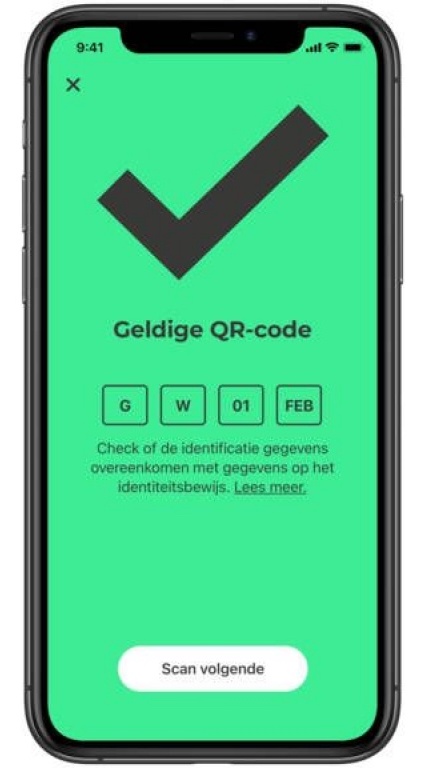
The Netherlands declared its own ‘freedom day’ at the end of September, ending all restrictions with the introduction of a smartphone app-based pass system, requiring proof of vaccination and a negative test to be shown before entering bars, restaurants, cinemas and other public venues. A month on, there wasn’t any noticeable skittishness in Amsterdam, and in restaurants and cafes customers of all ages and demographics dutifully showed their digital passes to gain entry. It was actually quite reassuring to see such apparent civil compliance. 

“After some early consternation, the majority of pragmatic Dutch accepted the [COVID app] pass as a means of resurrecting their social lives while shrugging off social distancing,” wrote the BBC’s Netherlands correspondent Anna Holligan this week on the BBC News website, in a feature in which the corporation’s journalists in Europe reported on the local approach to curbing the spread of the coronavirus. “When I've asked waiters or box-office workers if they want to see the QR code proving my vaccination the answers vary from ‘no, it’s okay, we trust you’ [which was my experience] to ‘we don't actually have the technology’,” Holligan added, pointing out that a recent study had found that around a third of Dutch cafes and restaurants are not scanning the local corona pass at all. 

My experience was mixed: one cafe made the pass voluntary, another asked to see mine, which I didn’t have, but did have both the NHS Travel Pass and another ‘health passport’ resulting from my expensive pre-flight test. Although not officially recognised abroad (though, since Friday, they should be now), the waitress who greeted me at one cafe in Leidseplein decided that she’d seen enough and had better things to do.

In France, the passe sanitaire has become part of daily life, and is essential to do anything, from entering a bar or cinema to getting on a train. COVidiocy, however, also varies across the continent. The BBC’s Hugh Schofield says that traditional French libertarianism has reared up in response to virus measures: “Of course there are people in France who object on principle to having to prove their credentials at every turn.” he wrote. “Every Saturday there are demonstrations in Paris and other cities, bringing together anti-vaxxers with libertarians and protesters against ’health discrimination’. Contrary to what some expected, though, these have not turned into a mass movement, and are dwindling in strength.” Schofield explained that implementation of the passe sanitaire has seen a rapid uptake of vaccinations, regarding it as the key to returning to some form of French social normality. More than 50 million French people have been totally vaccinated, including a large majority of those over the age of 12. Jabs have been incentivised further by an ending of free tests for the virus, meaning that for the passe sanitaire to allow entry to the bars and cafes that are central to French living, people have to show either proof of vaccination or a recent negative (and paid-for) test.

Compare all this with the United States, for many years my go-to choice for holidays. Next week the US opens up again to foreign visitors, but the Land of the Free won’t be quite as open as it once was. In New York, for example, proof of vaccination is required to get into hospitality settings, theatres, museums and other attractions. Masks aren’t required, but it is strongly advised by the city’s mayor. Chicago is different, with masks mandatory in all indoor spaces. In Los Angeles, proof of vaccination is required to enter bars and restaurants, and masks are even required for anyone over the age of two “in all indoor public settings, venues, gatherings, public and private businesses”, according to the local public health authority with rules covering all outdoor events and public transit. Masks are mandatory in Washington DC, and several states including Nevada, Hawaii and Oregon. Ultra-conservative Florida, perhaps not surprisingly, has gone in the opposite direction, with the state’s governor Ron DeSantis even threatening to fine businesses demanding proof of vaccination from customers. All thus in a country where only 57% of the national population has been vaccinated, although the rate of infection in the US is just 225 cases per million of population. Compare that to the UK’s 621 per million, in a country with 67% vaccination.

© Simon Poulter 2021

Back to my trip this week: perhaps the reality of life during COVID elsewhere were at their most stark at Schiphol Airport. In the 30-plus years that I’ve been travelling through it, it has always been a bustling hub, reflecting the historic internationalist Dutch outlook on trade and, therefore, world travel, but also the fact that it has always been a superior shopping experience. I used to joke that Schiphol was essentially a shopping mall with a runway, but last week, as I returned to its airside walkways in the late afternoon, I was shocked by how many shops were already closed for the day. Even some of the airport’s coffee bars - coffee being the lifeblood of Dutch existence - were closed. It was here that I saw for myself just how the pandemic has impacted travel. Like many other places, the Netherlands has suffered a sharp fall in tourists, with the national tourist board revealing that only seven million foreigners took up hotel accommodation in 2020, a drop of 13 million compared with 2019. Inbound tourism from traditional points of origin like the US and Asia decreased by 83%, but even numbers of tourists entering via the country’s open EU borders fell, with visitors from its southern neighbour Belgium dropping by 58%.

The statement-of-the-bleedin’-obvious conclusion from all this is that the pandemic has affected so many aspects of daily life that we used to take for granted. I won’t deny that the amount of business travel I used to endure was something of a privilege, but if one good thing comes out of this global crisis, it’s that digital communications really is a substitute for the expense and environmental impact of air travel in particular. But we can’t not travel at all. As the world debates climate change in Glasgow this week, aviation in particular will come under scrutiny again, especially given the fact that world leaders have all flown to Prestwick to talk about it. 

The world would be a worse place if we couldn’t move around it. Travel really does broaden the mind. We’ve missed having a week or two on a beach somewhere for the last two summers, the simplest of pleasures to provide escape from the mundanities of everyday life. Yes, there are plenty of beautiful places to explore here at home, but taking a plane somewhere should, also, be possible. For me, this week felt like a start.

Monday, 9 August 2021

Masked anxiety

So there we had it: our first flights in over a year: to Edinburgh and back for a four-day break. The only ‘foreign’ holiday this year, as everywhere else was either booked or that plonker Grant Shapps has placed it on the red list, or the amber list, or the amber-plus list, or the oh-what's-the-point list. Or Iceland. And, yes, it wasn't lost on us that the train from London to Scotland would have been more environmentally friendly, but with exorbitant ticket prices for a family of four, plus a five-hour journey each way, we wanted to both maximise our budget and what little holiday we were actually able to get this time.

Edinburgh was, thanks for asking, very pleasant. So pleasant we got engaged there. Yes, I am now a fiancé. The things you do on holiday, eh? What was noticeable in the charming Scottish capital was, firstly, how relaxed it felt for a busy administrative city, and secondly, how well drilled everyone appeared to be under Ms. Sturgeon's jurisdiction. Call the Scots Nats upstarts if you will, but Covid-discipline was impeccably observed wherever you went, even by the vast majority of tourists. There really was precious little obvious civil disobedience when observing the still-enforced coronavirus etiquettes, both social distancing and mask wearing in shops, restaurants, on buses, and inside attractions. No one, from what I could tell, was abstaining on grounds of belligerence or twattery, and that made for a pleasantly anxiety-free time. Only the occasional tourist - who clearly hadn't received the memo - sauntered around indoor venues with their fizzogs fully on display.

You see, I’m a self-confessed zealot when it comes to observing the COVID rules. Despite having had two jabs and indeed a mild dose of the virus itself back in November, I’m diabetic and over 50, and bloody paranoid about catching this thing again (a possibility - even the double-jabbed health secretary Sajid Javid got it). 

I’ll admit that having a  compromised immune system is partly the result of my own misadventure, but I can’t help being 53. Basically it meant that the final leg of our journey back from Edinburgh, from London City Airport to home, was one tightly knotted ball of anxiety, as every carriage we entered on the DLR, the Tube and the SWR train was full of maskless Covidiots, looking back at my petrified eyes, peering over the top of my mask, as if to say “Yeah? What’s your problem?”.

To be somewhat fair, part of the problem is not necessarily ignorance but our dear Prime Minister. Ever since Boris declared 19 July “freedom day”, the wearing of face masks in England has been largely a matter of personal choice. How very doctrinal. This is despite warnings from the scientists - those people who, it would be decent to point out, know a thing or two - that easing rules on masks will reduce public protection. So with “personal choice” the most ambiguous health and safety stipulation you could make (I could jump out of a hot air balloon without a parachute or cut off my legs with a chainsaw - it’s all a matter of personal choice), it’s no surprise that anyone with an aversion to wearing masks, due to comfort, personal freedom or because being told to do something is not for them leads to people cramming onto our trains with their faces bare, breathing in and breathing out in crowded compartments with little concern for their own wellbeing and, more bluntly, mine.

This all stems from one of the few consistencies throughout the pandemic in the UK: inconsistency. And indecision. Boris Johnson appears so eager to please freedom-loving party acolytes that something as simple as mask wearing in environments where the virus can be passed with amusing ease can not be countenanced out of common sense, above anything else. It’s why London’s mayor, Sadiq Khan, has deemed that masks will remain mandatory when traveling on all Transport for London services, including the Underground, buses and trains. Not that he’s been able to enforce the rule, as our journey home the other night amply demonstrated.

“I’ve repeatedly made clear that the simplest and safest option would have been for the Government to retain the national requirement for face coverings on public transport,” Khan has said. “But ministers aren’t willing to do what’s right. I’m not prepared to stand by and put Londoners, and our city’s recovery, at risk.” He has since doubled down on that view, last week calling for mask wearing to be made legally enforceable with criminal prosecutions an ultimate sanction for failure to comply. Khan’s view is partly out of the hope that a bye-law on London’s transport network would partly reduce any further spread of COVID-19, but perhaps as importantly, it would increase the confidence of commuters like me in returning to the capital for work or pleasure, giving a much-needed boost to the economy. Sadiq Khan says that 86% of passengers do observe the mask etiquette, but that means that a sizeable 14% don’t, which is a problem as scientists have said repeatedly that masks only curb the spread of the disease if everyone wears them. I think we’ve lived long enough with the Covid numbers to know what risk that represents to public health. 

However, imposing such rules is still reliant on enforcement. Given the number of trains and buses operating in London, most of which now are driver-only (and in the case of the DLR, driverless), restoring guards as, effectively, enforcers, on the scale required would be problematic. Transport for London has some 400 enforcement officers already, but given the prevalence for some of London’s finer citizens to carry knives, you can understand the reluctance for confrontation. This places extra pressure on depleted police ranks to enforce what is at present little more than a polite request.

Picture: TfL

The challenge for Khan, however, isn’t just safety: TfL faces a budget deficit of as much as £500 million over the current financial year, having been severely impacted by the pandemic. As restrictions ease, Khan desperately needs people back on public transport. That said, there are already signs of private car usage increasing, and second-hand car sales have gone through the roof as people spend saved cash on used vehicles to get around in.

Back in Scotland - where Nicola Sturgeon has appeared to be one step ahead of Johnson throughout the last 18 months - the government intends to continue with the wearing of masks “unless exempt for special circumstances” until at least next year. “The law says you must wear a face covering in most indoor public places including public transport,” official guidance states. “The Scottish government recommends that face coverings should be worn when moving around when it is crowded. This is encouraged for busy outdoor events.”

In England, Boris has customarily faffed on the issue, conceding that “If it’s not mandated it probably won’t do any good” and that he “expected” people to carry on wearing face coverings in enclosed spaces, which is hardly an imposition. Here, in the midst of all this, is us and especially me, the paranoid. The trouble is that the issue is now at risk of getting bogged sown in politics. One scientist worries that this will mask the actual point about wearing a face covering to begin with: “We know wearing masks, particularly in crowded, poorly ventilated environments, has a big impact on the levels of transmission that can take place,” Professor Clifford Stott, who sits on the Scientific Pandemic Insights Group on Behaviours (Spi-B), told LBC last week. “But also I think [that] wearing a mask is also communicating to others about a sense of responsibility, and I think that’s a key issue in mask-wearing now, unfortunately. It’s become almost a little bit politicised whether one wears one or not, which is I think a shame.” Stott is firmly of the belief that masks have had a “big impact” on stopping transmission.

In truth, according to the Office for National Statistics, mask wearing in England hasn’t changed all that much in the last month since the legal requirement to wear them in enclosed spaces was dropped, with figures showing that 95% of people were still covering their face when leaving the house. Our public transport experience, however, suggested otherwise. Perhaps it’s an East London thing, as the majority of abstainers were on the DLR west from London City Airport, and then from Canning Town to Waterloo on the Jubilee Line. That degree of mask-free fellow passengers has done nothing to restore my confidence in getting out and about again. A shame after so many months cooped up at home (including three confined to the sofa following foot surgery). I’ve been desperate for freedom to return, but I won’t hide my anxiety at what I see as other people’s inconsideration and ability to comply with something as relatively simple as wearing a mask.

Perhaps, then, it’s just for me to deal with, but it does rub with me that my liberty can be curtailed by an inconsiderate few. Perhaps I should move to Scotland, where Sturgeon’s position - admittedly, not universally accepted - has at least been unambiguous. “It is my view that if a government believes measures like [face coverings] matter, and this government does, we should say so,” the Scottish First Minister has stressed. I won’t gloss over the fact that the overall numbers are falling, as vaccinations and so-called ‘herd immunity’ take effect. It’s true, too, that the R rate appears to be dipping, but with the school holidays in force, this may well be the ‘circuit break’ needed. 

Come the autumn, and the possible return of colds and flu as more and more companies open up their offices for the first time since March last year, the whole issue of travelling to work on public transport will come under the political and clinical microscope again. This, I’m sure, will put Boris’s chronic prevarication on the line.

Wednesday, 17 June 2020

Scots missed: The Blue Nile's High

These are sulphurous times. You don’t need me to tell you that, of course. Just turn on the news and see Neanderthals making up for the lack of a summer football tournament abroad to bring their particular brand of knuckle-dragging nationalist mayhem to Westminster. Then there is the relentless death march of the 'other' virus, plus rancour over gender politics and myriad other social disagreements chewing up life still (mostly) in lockdown. Never has there been a greater need of a soothing balm like The Blue Nile.

“The Blue who?”, you ask. Tinseltown In The Rain or The Downtown Lights? No? A shame, then. OK, the Scottish trio’s reputation was hardly strengthened by a somewhat indolent output of just four albums in 21 years. But in that quartet there was more than enough to justify the critical acclaim from, admittedly, a cognoscenti that included music luminaries and musos alike who fell in love with their somnolent mood music. 

In each of those albums - A Walk Across The Rooftops, Hats, Peace At Last and 2004’s High - The Blue Nile set a benchmark for an unashamed romanticism, channeled through ruminatory songs laid over beds of synths blended with singer Paul Buchanan’s sonorous voice (invariably described as “haunting”). Theirs was vibe music that went boldly against the brashness of rock and pop throughout the course of the decades their output spanned. Despite an apparently fractious denouement, the band have been progressively re-releasing their catalogue with audiophile remasters befitting a band whose first album was issued on a label owned by Linn, the high-end hi-fi people. That brought The Blue Nile to the attention of Peter Gabriel, himself no sonic slouch and one of many big names to champion their cause (Gabriel would go on to involve Buchanan in his OVO album and show for the Millennium Dome's opening in 2000). High is therefore the last of the reissues, available both as a double-CD package containing four new songs (Wasted, I, Big Town and Here Come The Bluebirds) plus extended remixes of The Days Of Our Lives and She Saw The World (two of the album's standouts), and for the first time on vinyl (and in the super-duper 180g format, too). 

Although I've always hated the American term "adult oriented rock", High's adult orientation veers more towards the wistfulness of reaching a certain age. I suppose another way of saying this, is that - from my perspective as a 52-year-old man - much of the imagery is reflective of the things someone of my age pays attention to: weather and the state of things, for example. Like it's predecessors, High carries a gentle melancholy. For some reason, I've often associated this with The Blue Nile's inherent Scottishness. I know it's not wet and grey the whole time in Scotland, but the sparsity of the band's music invokes a palette of cool sonics. Some might find this dull. I, personally, have always found it refreshing. Coming eight years after its predecessor, High hardly moved the band's oeuvre onwards, but then that was never going to be an issue, such was the standard that they'd set on their previous outings. The music remained luscious, Buchanan's voice remained...er...haunting, but there was a subtle change in lyrical tone as songs tackled the world-weary topics such as the passing of time and the passage of relationships. 

This reflection might be borne from the fact that Buchanan was laid low by an ME-like illness for a couple of years between High and Peace At Last, but may even be the result of tensions between him and bandmates Robert Bell and P.J. Moore which made the album's gestation somewhat fractious. That turbulence could have manifested itself in the shear size of the task Buchanan, Bell and Moore had in whittling down "hundreds" of songs, according to the singer, that were candidates for High before settling on the nine committed to record. Nothing - or at least, very little - is left to waste. All nine tracks land and land well.

The fractiousness that coloured the recording of High can be seen as the part of the fuel that made it. Clearly, from a musical and lyrical point of view, there was much pondering going on. Buchanan himself has admitted as much, describing High as "stoic" and "to some extent a record about ourselves", implying that the band had reached their limit. "We showed up, we went into the room and worked, and whatever drift had set in we were loyal to each other and we knew we had to form the wagons into a circle," he told The Quietus in 2013. The subsequent album tour was made in the late spring of 2006 without Moore, even reducing The Blue Nile billing to "Paul Buchanan sings the songs of The Blue Nile", albeit with Bell on board (who remains to this day featured on The Blue Nile's reissues website, along with Buchanan). 

To this day there has been no definitive word on whether the group exists or not, though the renewed commercial activity with the reissues has lit a faint fire of hope about new material. Perhaps, though, we must be resigned the fact that sometimes a candle simply blows out in its own time. We can bemoan The Beatles' mere decade as a functioning pop group, or the seven years between Jimi Hendrix's US Army discharge and his death, but those brief windows gave us so much. The Blue Nile, in a way, can be viewed similarly: four albums, four gems. That'll do.

Saturday, 25 June 2016

Woke up this morning with 'dem post-referendum blues

"Good luck," said the simple coverline on today's edition of Libération, the left-leaning French newspaper. This wouldn't have been so acerbic (one Twitter wag claimed that France "was now trolling the UK") had it not been accompanied by a full page image of a Union Flag-waving Boris Johnson dangling clown-like from a zip wire. Magnifique.

This, ladies and gentlemen, is the man who aspires to be the next prime minister of Britain, whose de facto leadership of the Leave campaign in the EU referendum was largely to facilitate his ambition of being the next tenant of 10 Downing Street. Not much, mind, about the future of the UK's prosperity but - hey! - what's in a detail?

Of course, the picture of BoJo, taken of the former London mayor during the 2012 Olympics, could easily be excused as a good old piece of self-depreciating British fun. I'm always told by foreign friends that they love the English sense of humour. I wonder what has become of that now?

Make no mistake, as Leavers echo Margaret Thatcher's borrowing of St. Francis of Assisi's poem (you know - discord/harmony, error/truth, doubt/faith, despair/unity, etc...), the seismic outcome of Thursday's referendum has done more to spread discord than it may have sought to repel. Because if you boil down its intentions, and the intentions of those who voted, to their bare bones, two truths emerge.

The first is that the referendum was, to begin with, an act of appeasement by David Cameron to the Tory party's ever-present Eurosceptic schism, which was then seized upon by Johnson as his chance to go for No.10. Quite what he would be qualified for when he gets in there remains to be seen, but if nothing else, his reputation for buffoonery doesn't bode well for Britain's reputation abroad (though no doubt he will find a kindred spirit in a certain prospective US presidential candidate with equally manic blond hair).

The trouble is that, post-referendum, Britain is anything but amusing. The last thing it needs is a Ken Dodd figure with a mad bouffant to tickle our funny bones into feeling better about the future. Now BoJo has achieved his aim of being Britain's prime minister-elect under the banner of "taking back control", I wonder what he actually has in mind to achieve that?

What is his plan for stabilising the markets that saw millions of pounds wiped off British pension funds during yesterday's financial freefall? What will be the strategy for addressing the balance sheet, and access to borrowing now that credit rating agencies are beginning to downgrade the UK?

How does he plan to mitigate the inevitable decision of Airbus to move the skilled manufacturing of aircraft wings from Lancashire to sites in the EU, where exporting for final assembly in Hamburg and Toulouse will be easier?

What about Nissan, which employs 7000 people in Sunderland and exports to all over Europe and even back to its native Japan? How will they be persuaded that a UK with more restricted access to European trade will be worth investing in? Same with other Japanese car manufacturers, Toyota and Honda, who together with Nissan, have restored the British automotive industry to the extent that in 2014 the UK exceeded France for car manufacturing for the first time ever.

The second truth is that the referendum, David Cameron's gamble on direct democracy, can at least be cited as the British people having their say. 33 million votes - a turnout of around 75% - is impressive (by comparison, the 2015 general election saw just 66% of those eligible voting). And it is clear that the demographic divide between Leave and Remain speaks volumes: that working class people in the north of England and those over 65 expressed their frustration at austerity,  economic malaise and the influence of the metropolitan elite - and, of course, immigration - by voting Leave; and that 70% of those under 25 voted Remain, along with Scotland and London, who have somewhat different allegiances to the European ideal.

Understandably, people on both sides of Remain and Leave are calling for the UK to move on. The Leavers say that the 48% who voted to remain must accept the decision. But look at it another way: the margin between Out and In was just a million votes. A technical majority, yes, but it indicates just how divided the UK is now.

Even if the referendum can be pared down to the competition between two Old Etonians for control of the upper sixth common room, it would be impossible to ignore the extent of British sentiment - for and against - which has been expressed by the referendum. But it's this that makes the actual campaigns so disingenuous. Facts would have been helpful, and I mean actual facts, not spun half-truths and outright lies. Like the £350 million claim, which UKIP's Nigel Farage has admitted was "a mistake". Not that Farage has exactly been blameless - his entire narrative has been one of peddling fear and paranoia, underpinned by grotesque jingoism.

Reuters
His 'breaking point' poster was not only a low point for the Brexit debate, it was a low point for British politics, and a tacit encouragement of the racism becoming ever more prevalent (increasing stories of people of various ethnic and national backgrounds being abused on buses, trains and in high streets - chilling echoes of the American segregation era and 1930s Germany).

Even if one of the central points of the Leave campaign was to free Britain of the overbearing bureaucratic nature of the EU machine, the bid to escape it unleashed an unpleasant tone to the Leave narrative. The soft version of this has been the pro-Leave, Middle England-representing newspapers, The Sun, Daily Mail and Daily Express, peddling (and swallowing) jingoistic references to Spitfires, green fields, Elgar and pints of ale, as if "taking back control" means restoring Britain to some anachronistic ideal.  

Everyone has their right to an opinion, but we've been left with a Britain less "great" as fractured and angry. And still somewhat at the mercy of Farage, a politician who makes Boris Johnson look credible, and whose first comment after the result came in yesterday morning was to crassly declare a bloodless victory, "without having to fight, without a single bullet being fired". Tell that to Jo Cox's children.

Farage can, easily be depicted as the bogeyman of the referendum, and while he might appear to invoke popular support, he has so far failed on several occasions to be elected to any major political institution other than the European Parliament, which he loathes. Johnson might be a clown, but Farage is a joke, flip-flopping on everything, from his own party leadership (resigning after the General Election, having failed to be elected for the seat of Thanet South, only to be reinstated almost immediately) to the actual outcome of the referendum itself. For him to declare yesterday morning that the result was a victory for "ordinary people" and "decent people" both underlined his opportunism and his insensitivity. Were the near-half of all voters not ordinary and indecent then? Probably, in UKIP's eyes, given the affiliations of some of their number with the dehumanisation narrative of the extreme far right.

That said, if those who voted Leave on Thursday truly believe the campaign's Trumpist rhetoric about  taking back their country and making Britain great again, they should now wonder what they've reacquired. On top of the financial and business instability, the political landscape is about to grow ever more fractious.

Just 150,000 Tory party members will choose the next British prime minister, as opposed to the 33 million voters who took part in the actual referendum that led to David Cameron's resignation.

So much for his message that the country had just taken part in perhaps the biggest democratic history in its history and that "We should be proud of the fact that in these islands we trust the people for these big decisions."

Maybe, but what will it mean? What will be the impact of Scotland choosing, decisively, to exit the United Kingdom and re-attach itself to the EU? What will happen to the peace process in Northern Ireland if republicans agitate - and succeed - in securing a referendum on unification with Ireland? How will Wales respond, given that it is already conflicted over whether EU subsidies have been of any help, as the principality's industrial base has been eroded by declines in mining and the steel industry.

The British are famous for their stiff upper lips and stoicism. The sentiment on social media, at least, is, in some places, one of resignation and 'let's just get on with it, shall we?'. Wales and Ireland play each other this afternoon in Euro 2016 so, after a 72-hour hiatus from the football, our summer opiate will provide some relief from the doom, gloom and division of the last couple of days. But after today, after tomorrow, after next week, next month, reality will sink in.


The Tories will tear themselves apart, as usual, as they elect a new prime minister, without anyone else in the country having a say. And the Labour party will do much the same, as it implodes over Jeremy "lukewarm" Corbyn's dismal performance in the Remain campaign, his thinly-veiled euroscepticism diluting any opportunity to convince Labour voters of what they actually stand to lose by voting with their hearts rather than their heads.

Libération's front page gesture may have been in some jest, but the reality is that Great Britain - or what's left of it as a result of the referendum - will need more than just luck in the future. And the hard work begins now. I never thought I'd ever find myself invoking Thatcher, but the job now for whomever runs the country next will indeed be to bring harmony to discord, repair errors with truth, replace doubt with faith, and resolve despair with unity. If there is any left.