Showing posts with label Bruce Springsteen. Show all posts

Saturday, 8 January 2022

Fascination: the enduring legacy of David Bowie

We’re barely eight days into 2022 and I’m already blogging about David Bowie. Sue me. But with today being what would have been The Dame’s 75th birthday, and Monday the sixth anniversary of his death, the propensity for Bowie to still surprise and provide compelling cultural fascination shows little signs of abating.

Just this week Variety revealed that the Bowie estate has sold his entire publishing catalogue - more than 400 songs (including 111 singles and 26 studio albums) - to Warner Chappell Music, the Warner entertainment conglomerate’s music publishing division - for figure estimated to be “upwards of $250 million” (it hasn’t been officially disclosed). The deal drives on the current boom in rock’s biggest names monetising their recordings, following Bruce Springsteen selling his catalogue to Sony for an eye-watering $550 million, and Bob Dylan’s similar agreement with Universal for an equally colossal $400 million.

With the Bowie deal WCM has got its hands on some of the most revered albums of the rock era, encompassing Bowie’s studio output from 1968 right up to Blackstar, released just two days before his death. It also includes both the less well received Tin Machine releases and the ‘lost’ album Toy, which was released in full yesterday as a three-disc package (a single-disc version appeared in November as part of the Brilliant Adventure box set). 

“All of us at Warner Chappell are immensely proud that the David Bowie estate has chosen us to be the caretakers of one of the most groundbreaking, influential, and enduring catalogues in music history,” WCM’s CEO Guy Moot said in a statement. “These are not only extraordinary songs, but milestones that have changed the course of modern music forever. Bowie’s vision and creative genius drove him to push the envelope, lyrically and musically - writing songs that challenged convention, changed the conversation, and have become part of the canon of global culture.”. 

For its part, a representative of the Bowie estate hailed Warner as “capable hands” adding: “We are sure they will cherish [the catalogue] and take care of it with the greatest level of dignity.” That, though, comes with some risk. The entertainment industry has a history of precious bodies of work transferring to corporate ownership with mixed critical results. Disney’s assumption of the Star Wars brand, expanding its universe with myriad spinoffs is still to win over the audience beyond the established fanbase of George Lucas’s 1977 creation. Likewise, there are concerns that Amazon’s acquisition of MGM, and with it the James Bond films, will see the imperious cinema property diluted into a similar sprawl as the Star Wars and Marvel franchises.

What might, to some, be surprising about the Bowie deal is that he was, in life, very particular about his work, maintaining tight control over it. Curiously, what isn’t included in the agreement with WCM is the ‘first’ album titled David Bowie, the record released in 1967 which appeared on Decca’s Deram imprint. That album firmly reflected his then-interest in theatrical, Anthony Newley-style whimsy, rather than either the prevailing beat pop of the early ’60s or the emerging progressive sound that manifested itself that year most profoundly with The Beatles’ Sgt. Pepper’s Lonely Hearts Club Band

One of the songs recorded for Deram was The Laughing Gnome, a still-divisive song amongst fans, with purists refusing to accept it is a ‘true’ Bowie song. They prefer to regard it as a childish novelty beloved of Ed ‘Stewpot’ Stewart’s Junior Choice, along with The Runaway Train, Ernie (The Fastest Milkman In The West) and Tubby The Tuba. That, though, simply defines it by association. It is something of a novelty, for sure, but deserves its place in the total Bowie canon, something I know that rock star Steven Wilson wouldn’t disagree with. In his forthcoming autobiography Wilson claims that receiving the 1973 reissue of The Laughing Gnome for his sixth birthday inadvertently planted the seed of his own Bowie fandom. I would agree, especially as Wilson and I received a copy each for our respective birthdays, courtesy of my parents (we were born a week apart, were neighbours and childhood best friends). You can read more about this in March when Steven Wilson: Limited Edition Of One is published by Little Brown.

Part of what Wilson and I absorbed about Bowie, subliminally at first, was his breathless, relentless, restless search for something new, something different, something else. That’s what Warner Music has bought into. Not one of those 26 album is a replication. Not even the Tin Machine entries lack something adventurous. Amongst the many valid superlatives used to describe Bowie’s career, “visionary” crops up again and again, along with a profound sense of individualism. “He spent his whole life trying to empower people, and I think that’s what he would have continued to do,” the V&A’s Geoff Marsh told Dylan Jones for a posthumous gathering of Bowie’s friends, recounted in September in The Times. “He once said in an interview that ‘I’m doing this for me’, i.e. he was doing what he was doing because that’s precisely what he wanted to do. And he spent his entire life encouraging other people, especially the young, to do the same.”

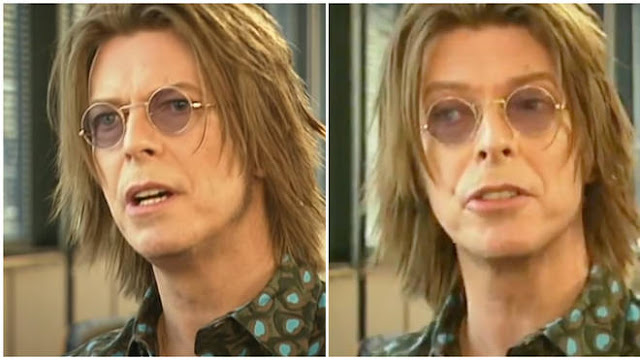
Bowie was, of course, rightly lauded for “pushing the envelope”, to reuse that horrendous cliche. WCM’s Moot is correct in describing Bowie as inspiring those “not only in music, but across all the arts, fashion, and media”. To that add technology: in 1999 Jeremy Paxman interviewed Bowie for the BBC’s Newsnight, asking him about digital technology. “The potential of what the Internet is going to do to society - both good and bad - is unimaginable,” Bowie told a visibly sceptical Paxo, who responded: “It’s just a tool though isn’t it?” “No,” Bowie replied, with wry disdain, “it’s an alien life form [laughs]. Is there life on Mars? Yes, it’s just landed here.” He then continued, presciently: “I don’t think we’ve even seen the tip of the iceberg. I think we’re actually on the cusp of something exhilarating and terrifying. The actual context and state of content is going to be so different to anything we envisage at the moment. Where the interplay between the user and the provider will be so in simpatico it’s going to crush our ideas of what mediums are all about.  It’s happening in every form. That grey space in the middle is what the 21st century is going to be about.”

Picture: BBC Newsnight

The year before, Bowie launched his own Internet service, BowieNet. It was, at the time, ground-breaking: for a monthly fee, members got their own davidbowie.com email address as well as  exclusive access to audio and video recordings. They could also participate in chat rooms, which Bowie himself often popped up in. At the time most other stars’ websites were pretty dry affairs, but not Bowie. It was, one user recalled, the first attempt to create an Internet community around an artist. He even used it to crowd-source ideas for new music, with the track What's Really Happening? later appearing on the Hours album. 1995’s Outside drew on a bespoke software application called Verbasizer, into which Bowie typed in different sentence which were then randomly selected and turned into the source of new songs. Four years later Bowie participated in Netaid, a streamed concert that drew an online audience of more than two million, then a record. His enthusiasm for his own online venture waned as the 21st century dawned, and Bowie’s much publicised health issues in 2004 saw him effectively withdraw from public life.

This week’s Warner deal is not, though, the first time that Bowie’s music has been monetised. In the mid-1990s a scheme was devised by his financial manager to sell asset-backed securities, nicknamed ‘Bowie bonds’, which paid out a share in future royalties for 10 years. Another deal, with EMI, saw Bowie sell bonds on the back of royalties from the albums he’d released between 1969 and 1990, but the venture suffered from the music industry downturn in the early 2000s. Even that was something Bowie had predicted in 2002, when he told the New York Times that music would become “like running water or electricity”. He’d foreseen the rise of streaming, with the meagre returns for artists we now know about, and its impact on physical media sales.

All of these exercises serve as a reminder that pop music is rarely as altruistic as either art or ‘just’ an entertainment medium. Business, as The Beatles found to their cost, often gets in the way. But while the Bowie estate’s deal with Warner Music is another chapter in the posthumous commercialisation of his career (which has generated a steady stream of box sets and special editions over the last few years), it shouldn’t do anything to fundamentally change either the Bowie legacy, or this fan’s fascination with it. 

There will also be plenty more to come from it, too, in the weeks and months ahead: later this month the 2022 Sundance Festival is expected to premiere a new Bowie film by Brett Morgan (whose credits include The Rolling Stones’ Crossfire Hurricane and Kurt Cobain: Montage of Heck) which pulls together previously unseen live performance recordings, with Bowie’s longtime producer Tony Visconti providing music direction. And then, next month, we will celebrate the 50th anniversary of Ziggy Stardust & The Spiders From Mars making their live debut, at a long-defunct pub which once sat less than three miles from the house I was born in. Kismet, again. 2022 promises to be another busy year in the enduring legacy of the late David Robert Jones from Brixton - and me and my wallet can’t wait. 


Saturday, 16 October 2021

I don't want to change the world but I am looking for New England

Picture: Massachusetts Office Of Travel & Tourism

The news this week that the United States will finally open itself up to fully vaccinated travellers from the UK and Europe from 8 November means that, were I able to, I could return to the one country I’ve visited more than any other over the last three decades.

In fact, I’ve lost count of how often I’ve crossed the Atlantic since my maiden trip, to the West Coast in 1992. Since then I’ve been back countless times for work and pleasure, and even lived in Silicon Valley for a couple of years. California has been my main destination but I’ve progressively seen New York whenever I’ve been able to, and more recently have had a series of holidays in Florida, a state I’d hitherto avoided in the mistaken belief that it was just a giant theme park. 

In fact I can proudly boast to have visited 22 of the 50 states in the Union (eight alone on my 2,400-mile drive along Route 66). That, though, does leave 28 as-yet untouched. Some offer little appeal: the barren northern states, mainly, including both Dakotas, Nebraska (despite its Springsteen connection), Wyoming and Idaho. Basically, anywhere with nuclear missile silos. But there are still plenty of places with virgin appeal to me (and that’s not a plug for Mr. Branson’s airline to offer me carriage). Hawaii is one, largely out of the curiosity of seeing an American state that’s closer to Asia than its parent nation, and to experience a “tropical Pacific paradise™” with all the trappings and conveniences of the economy it is anchored to (drive-throughs, chain motels and all the other tropes that have made the US such an effortless destination).

Massachusetts State House, Boston
Picture: Tim Grafft/MOTT

But if there’s one place I really should visit, it’s New England, that collection of states so named by the British explorer John Smith in 1616 after he’d scoped out what is now Massachusetts. Four years later the Pilgrims arrived in Plymouth, unimaginatively named after the Devon city from which they’d come, and promptly started settling there. What I have seen of Massachusetts (and I’ll admit, Murder She Wrote is my principle source) does look remarkably like parts of south Devon, so perhaps some forgiveness can be afforded the colonials for their lack of invention when naming their new home, but it would be just the start of a trail of colonies spreading west that will forever be connected to England by name, with place names like Portsmouth, Bristol, Bath, Andover, Manchester and Newbury just in New England alone.

Sadly, the opening up of US travel next month means that arguably the primary reason to visit New England - its “fall” autumnal colours - will be ending, but that doesn’t mean that Massachusetts, Connecticut, Vermont, New Hampshire (yep, another shocker for originality), Maine and the micro-state of Rhode Island are not attractive at any other time of year. Like it’s namesake, New England has become a byword for rustic charm, a cliche I know, especially as it’s a much a region of modern America as anywhere else. There is also more to it than leafy photo opportunities, seafood restaurants and villages that look like they were created just to provide backdrops for ‘country cottage’ furniture catalogues. 

For a country often mocked (usually by us Brits) for lacking history - well, any history created before its indigenous people were so rudely displaced by Europeans… - New England boasts some of the most interesting historic attractions in America. No surprise as, arguably, the nation’s birthplace. Boston is the birthplace of American independence and at one point the country’s biggest city. It is, however, arguably one of America’s most attractive ‘pick’n’mix’ regions to explore by road, that great American tradition.

Critics of American culture might argue that dating back to ‘just’ 1492 doesn’t give it any right to history, but New England provides more than most, whether the tourist is looking to savour the Ivy League college towns, walk in Mark Twain’s footsteps, or explore dramatic, windswept beaches and coves that bear more than an uncanny resemblance to those in the South Hams of Devon. And, yes, there’s a Dartmouth, too.

Picture: Tim Grafft/MOTT

I suppose it’s this perceived lack of modernity that is the attraction, though this is a relative term. It’s far from a picturesque backwater. Boston, for example, is one of America’s most vibrant financial services centres, while the region is home to high tech industries, major defence contractors and healthcare corporations, contributing to a GDP of more than $1 trillion for New England as a whole.

Like everywhere else in the comprehensively curated United States, New England has plenty to offer the tourist, be it Boston’s harbour and the location of that teacup-rattling contretemps that launched the Revolution, but also all the fascinating nods to the Europe that uprising was meant to free itself from.

But perhaps the other appeal is that it seems to offer a gentler version of the United States. I’m sure it’s no different to anywhere else I’ve been in the country, which means I’ve probably succumbed to intoxicating marketing. If, though, that simply means that the appeal is a tree-lined, more liberal part of America, full of cosy guest houses and smalltown country grocery stores selling local produce, that will do me just fine.

Tuesday, 19 January 2021

This tweet is no longer available


It was no less a political analyst than Bruce Springsteen who called it in 2016: “The trouble at the moment is you have Donald Trump, who is talking about rigged elections,” he told Channel 4 News, prophetically before the-then presidential candidate returned to his obsession with rigged elections four years later. Springsteen goes on in the interview to predict that Trump would lose. He clearly got that wrong, but it was his next statement that struck home then as it does now with even more purchase: "He's such a flagrant, toxic narcissist that he wants to take down the entire democratic system with him if he goes."

“Toxic narcissist.” Two words that perfectly capture the man who became the 45th President of the United States, and when he did, subjected us to four years of unrelenting madness. You can decide for yourself whether this was real insanity or a form of eccentricity, but madness it has mostly resembled from the get-go, from the all-caps rants via Twitter to the endless revolving door of firings and hirings of cabinet secretaries and key staffers, plus the fanbase-bating dog whistles towards targets as varied as Mexico, Europe, China and even the UK’s “Muslim problem”. 

To his defenders, he’s been a breath of fresh air. “Drain the swamp,” he promised, as he took on Washington’s institutional culture and the mainstream “fake news” media (i.e. any outlet who didn’t sycophantically provide ra-ra for him). Week in, week out, day in, day out, the  “Me! Me! Me!”  tweets and self-regarding speeches have been endless. Quite what Trump actually achieved over these last four years in office is, actually, hard to ascertain. Jobs - at least until the pandemic - are up, they say. The economy - at least until the pandemic - is up, they say. The populist view is that America never had it so good, they say. History will judge.

Picture: Channel 4 News
Later in his Channel 4 interview, Springsteen added the following to his appraisal by saying how Trump was so unreflective: “He simply has no sense of decency, no sense of responsibility about him. The words that he’s been using over the past several weeks really are an attack on the entire democratic process. I think it’s very dangerous. He does have a lot of people’s ears, and I don’t think he’s going to go quietly, gently into the good night, I think he’s going to make as big a mess as he can, and I don’t know what that’s going to mean, but we’ll find out shortly.” 
Well, fast forward four years, and we are where we are. Tomorrow Trump will leave the White House, board Marine One and chopper out to Andrews Air Force Base. From there he’ll fly to his own Camelot, Mar-a-Lago, the sprawling but surprisingly modest golf resort in Florida that will presumably be the bunker in which he plots his next move. It's anyone's guess as to what that will be, even if we can optimistically hope for a period of quiet reflection out of the spotlight. Donald Trump, we have seen over these last four years, doesn’t do quiet reflection.

What he does leave behind is a ruptured America, scarred by the events on Capitol Hill and fearful for what might happen now. And well they might be, when you see scenes of heavily armed militiamen, like the 'Boogaloo Boys' roaming city streets with a staggering belligerence. This is not Mogadishu or the lawless reaches of Afghanistan, Syria or Iraq. No, we're talking about streets in the world’s biggest economy and its most powerful democracy. In fact, right now, there are more American soldiers in their nation’s capital city than currently in Afghanistan, Syria and Iraq combined. That might be overblown precaution, but then it’s clear that the attack on the Capitol had been strongly hinted at beforehand by chatter on the Dark Web, so a chastened law enforcement establishment will not want to make the same mistake again before tomorrow’s inauguration.


The scenes outside and inside the Capitol on 6 January filled me with genuine sadness. I’ve spent more time in the United States as a visitor than any other country, spending annual holidays and long weekends there, visiting for work and even living there for two years. In fact, I was at home in California during 9/11, the last time the country felt genuinely afraid, but which rallied in the ashes of the World Trade Center, the Pentagon and a field in Somerset County, Pennsylvania. 9/11 showed America at its most resilient. Trump has shone a light on America at its most divided. 

He was always going to be an unconventional president, but that, going back four years, would have been a polite way of calling it. Twitter comes in for a lot of attention, but then, rightly so. It’s been his medium of choice. Rather than use conventional presidential mouthpieces, the 140 character limit (later raised to 280) provided unbridled access to his audience. At first it was even amusing: the actual Donald Trump (emphasised by the @realDonaldTrump handle) tweeting, not a team of millennial social media hotshots with Harvard degrees. No, the prez himself, from his very own iPhone, and often at a time of day when many assumed he was sat on the Shanks Vitreous, performing his morning ablutions as he ripped into individual opponents, institutions and topics that raised his ire. This daily, diarrheic river would drive the narrative of the next 48 months or so.


But, even if you regard this as eccentricity or, merely, an unconventional leader at work, another view emerges that goes beyond egomaniacal craziness. Eight months after he was sworn in,
Rolling Stone’s Matt Taibbi wrote an excoriating profile, questioning whether he was, in fact, really all there. It was fascinating and frightening. Taibbi’s conclusion was that President Trump had become a very difficult personality to Donald J. Trump, celebrity property developer and reality show host. Irrationality, Taibbi argued, was, on some level, working for him. Until last November’s election result, the daily madness just became par for the course, the Twitter rants more tiresome, the firings and hirings monotonous, and even the brain farts about foreign targets (e.g. “Rocketman” Kim Jong-Un) sinister bluster. Somewhere along the way, however, we’ve gone from a Johnny Rotten figure saying “Boo!” for shock effect, to the apparent marshal of an insurrection. Trump’s leadership since the election has looked more like that of a cult chief, desperate even, with his “stolen election” rhetoric, blatant untruths and conspiracy theories, and even the hectoring of Georgia’s Secretary of State by phone. 

6 January seemed to be the final act. In hindsight, that rally in front of the White House now resembles an effective call to arms, Trump's very own Agincourt speech. The loud post-election grumbling about votes and other apparent injustices - the repeat cycle of 2016's theme - escalated to the point that Trump was now the leader of a fully mobilised militant cult. His  tacit endorsement of the extreme component of the audience assembled on Pennsylvania Avenue, fuelled by Rudy Giuliani’s call for “combat”, lit the blue touch paper. The crowd that stormed the Capitol had more than a wild staring eyed nature about their zeal. One pony-tailed backwoods type who leered into a television camera even resembled Dennis Hopper’s whacked-out photographer in Apocalypse Now (“Hey, man, you don't talk to the Colonel. You listen to him. The man's enlarged my mind. He's a poet warrior in the classic sense.”). Trump as Colonel Kurtz? It's not that ridiculous.

The Capitol insurrection might not yet be the final act: the 20,000 National Guard troops, augmented by Secret Service special forces and a beleaguered police, are still expecting more, and even worse. Trump's final day in office is unfolding, and with it the potential for further mayhem, not least of which, the pardoning of hundreds - something in the president's gift - that could even include the president himself. Even this adds further to the exhaustion we’ve all been suffering from. I actually stopped following Trump on Twitter a while ago, as it was actually affecting my mental health. But now, in theory, it’s over. 

Whether you think Joe Biden will be a good president or not, we can’t have anything worse. Regardless of your politics, America was, mostly, doing fine until Trump came along. To return to the punk theme, that musical movement came along, briefly made some noise, shook the tree a little, and then things returned to normal. Trump as America's first punk president? Not so wild an idea. But instead of presenting a refreshing alternative, he's left a legacy of division, drawing out demons that have always been there, but thankfully had been kept hidden. Brexit had a similar effect here, and comparisons between what happened in Washington and the murder of MP Jo Cox shouldn’t go unnoticed.

The way forward, however, is now partly in Biden's hands, and partly in the hands of a Republican Party that made a Faustian pact with Trump to acquire power. Even if the Congressional impeachment vote last week showed a resilient latent support for Trump within his own party, the sentiment more broadly is that he’s a spent force, and a toxic one, too. If an impeachment trial in the Senate does render him unfit for any further public office, thus denying Trump a tilt at the 2024 vote, the party will have to move on and reflect. Right-wing fanaticism, however, didn’t end in April 1945 with a self-applied bullet in the Führerbunker. Acolytes of that particular strain have festered ever since, as Arnold Schwarzenegger's impassioned video the other week drew necessary comparison to.

Like it or not, Trump hasn’t gone for good. Even if he does choose to spend his time now trying to fix his ailing business empire or just playing a lot of golf, the Senate impeachment trial will keep him and his cult firmly in the spotlight. The madness is not quite over. Perhaps, though, America will be given the chance to heal, and return to the kind of political discourse led by intelligent reason, and not the ravings of a glorified bar room braggart, a Homer Simpson character perched on a stool in Moe's Tavern, giving forth his views on anything that enters his noggin.

Thursday, 31 December 2020

That was the year that wasn't - my albums of 2020

2020. Where do you begin? No amount of pop froth can compensate for these 12 months just gone, which began with disturbing news of a flu-like virus in China and ended in dystopian misery with mutant strains, the economy in tatters, and families denied the basic tradition of being together at Christmas. I’d like to say that music has been the soothing tincture that eased the stresses and strains of COVID-dodging over this last year, but so many aspects of consuming and enjoying it have been curtailed in the process, whether it was concert going or the simple pleasure of record shop browsing. Even Record Store Day was different, postponed twice and then manifested as three ‘drops’ in as many months that were closer in form to booking an Ocado slot at the beginning of lockdown than buying music. All this doesn’t, either, take into account the releases and tours that were cancelled or postponed. 

However, that gloomy assessment belies the fact that there was, as in any ‘normal’ year, plenty of new material to enjoy, a lot of it recorded defiantly, stoically, resourcefully in home studios and bedrooms, as virtual house arrest both focused creativity as well as a well-I-may-as-well-do-something work ethic. By the same token, as we took to engaging our families and colleagues alike via FaceTime, Zoom and Teams, musicians - denied live audiences - switched to home performances. Probably the ultimate example of this was the Global Citizen One World: Together At Home telethon in April, which even managed to pull together the Rolling Stones in their respective living rooms for a virtual gig which, given the technical complexities of playing instruments in time via Internet connections, worked surprisingly well. 

Invention was everywhere, as those at every strata of the pop music economy eked out livings through webcams, some effectively singing for their suppers via Facebook, like Peter Bruntnell gigging from his front room in Devon, while Duran Duran’s John Taylor and Pink Floyd alumn Guy Pratt gave masterclasses in bass playing via YouTube. Arguably, Tim Burgess won the zeitgeist stakes, as his Lockdown Listening Parties on Twitter became the must-join musical commune, in lieu of gatherings like Glastonbury. 

You could, however be easily fooled into thinking that 2020 was a year without light, but that wouldn’t be entirely right. Even with the relentless nature of home imprisonment, self-isolation, distancing, shielding, quarantine and all the other curtailments of social normality, music has been a constant. Rarely has there not been something new or re-released to grace the turntable or CD player, which means that there’s still plenty to pack into this year’s list of the best listens. So here goes:

Reissues

I’m opening with the heritage trail because there’s been no shortage of archived albums repackaged and reissued, especially with audiophile temptations like 180g vinyl and, increasingly, coloured vinyl to make them that much more alluring to magpies like me. Thus, Coldplay celebrated the 20th anniversary of still their best album, Parachutes, with a yellow (geddit?) edition. There were reissues of live recordings, too - one of my weaknesses - in particular, Peter Gabriel putting out four of his engrossing performance albums with new sonics and higher-definition vinyl, while Pink Floyd polished up their Delicate Sound Of Thunder double live album with additional tracks and a very noticeable upgrade to the audio. An honourable mention should be made, here, for The Blue Nile, who completed their programme of remastering and reissuing their four studio albums with 2004’s High, nicely tarted up and with four extra tracks. David Bowie posthumously commenced the process of releasing live albums from his underrated 1990s tours, demonstrating further what an untouchable music god he always was. I won’t dwell more here as January is shaping up to be Bowie Month on this blog. Likewise, the Rolling Stones’ deluxe edition of Goats Head Soup proved what a worthy follow-up to Exile On Main Street it was, despite forever being in its shadow. And the fact that one of the package options came with a double live album was an absolute bonus, albeit one which came with the now expected Stones premium. 

However, the accolade for Reissue Of The Year goes by a very long chalk to Tom Petty’s Wildflowers & All The Rest, a lovingly-curated collection that includes his “incomplete” Wildflowers album, the tracks he’d originally wanted to include as a double-disc release, live versions and acoustic home demos that are like listening to a whole new album in their own right (the All The Rest elements). Put together by Petty’s widow, daughters and various associates, it’s a heartwarming tribute as much as a platform to reassess one of rock’s most understated figures.

New albums

10 - Bob Dylan: Rough And Rowdy Ways

An unexpected entry in this year’s albums list for the simple fact that I’ve never been that much of a fan of His Bobness. That might sound like sacrilege to some, and incredulous to others, but somehow Dylan’s deification has always passed me by. So what brought me to the 79-year-old’s latest release was, largely, a classic case of FOMO. Acts in their late 70s - no matter what their provenance - are not expected to turn in anything other than novelties, especially when that provenance is, by reputation, some of the most influential records of the rock and pop era. But being the sucker that I am to mob mentality, the universal acclaim that Rough And Rowdy Ways met from the music press (and, readers, this is never always the byword for the right opinion) led me to an album that affectionately captured an America that may no longer exist, but to many of us, who still hold an affection for the place, think it does. Thus, Dylan has written a love letter to the music of his upbringing, with hints of jazz, a splash of blues and a heartland appeal captured by a lyrical depth that, I now realise, few beyond him have ever been capable of, let alone at this stage of their careers.

9 - The 1975: Notes On A Conditional Form

If my previous entry indicated my susceptibility to mob opinion, then The 1975's fourth album merely compounds my weakness for being gradually ground down into acceptance of something. In fact, in this list is a reflection of my changing domestic life in 2020, having moved in with my partner and her teenage daughters, and then being slowly drawn into their world. Thus, I’ve succumbed in recent months to Gogglebox (my God, the show we schedule our entire Fridays around, which has proven to be the perfect tonic to this year’s nonsense), MasterChef, Bakeoff and even Selling Sunset and Tiger King. And the 1975, a band one of the teens speaks of nothing else (though her Christmas vinyl list did include Led Zeppelin II and Sgt. Pepper’s Lonely Hearts Club Band. She has just turned 16…). Whether it’s from a form of Stockholm Syndrome or something else, the brainwashing has worked. And the nice thing is, The 1975 strike me as old heads on relatively new shoulders. By that I mean that they are, as their name suggests, rooted in rock tradition, but as Notes On A Conditional Form explains, capable of breadth and depth, progressiveness and polished production. Musically you’ll find nods to Americana sitting side-by-side with lush strings, textures of the kind you’ll find U2 producing at their finest along with soulful 80s pop.

8 - Elvis Costello: Hey Clockface

My musical journey has always felt intertwined with Costello’s: as one of the vanguards of the New Wave, he was part of my real time introduction to music, as I reached double figures in the late 1970s. The problem with him, however, has been keeping up. Hey Clockface is, by my count, his 33rd release, and another roll of the personnel dice, having released 2010’s National Ransom under his own name, 2013’s fine Wise Up Ghost was recorded with The Roots, and 2018’s equally enjoyable Look Now brought Costello back together with The Imposters, the band only one member shy of the original Attractions. This year’s solo effort was, much like the previous 32 albums, a melange of whatever styles took his fancy. Some might find it a little scattergun (Daily Telegraph critic Neil McCormick called it, lovingly, a “hot mess”), but that’s its charm. And, hey, you don’t have to like every Quality Street in the box. This apparent rambling free spirit may be down to Costello surviving cancer before embarking on a tour that was subsequently abandoned part-way through due to COVID, confining him to home studio sessions in Vancouver and work on material recorded before the lockdown in studios as disparate as Helsinki, Paris and New York. This might also suggest a restlessness of approaches, and it’s certainly fair to say that Hey Clockface leaps about, stylewise, with punk-like anger alongside Broadway swing, ambient swashes amid jazz, and several stops in between. This might sound dilettante, but it has never bothered those who appreciate Bowie, who to the very end collected disparate styles and musical fashions like a rag and bone man collects junk. One of the reasons it works with Costello is that, regardless of the genre they’re attached to, his lyrics provide the continuity. The same pen that produced such rich words as those on Oliver’s Army, Watching The Detectives and (I Don’t Want To) Go To Chelsea is still on spleen-venting form, with highlights like the partially-spoken Revolution #49, No Flag and even the delightful piano ballad Byline.

7 - Kylie Minogue: DISCO

When I revealed, in a post about The Crown, that I was raving about DISCO (and, as memory recalls, even the new single from Steps), those around me started wondering if I was feeling all that well. After all, Kylie is, was and always has been pure pop, from her Stock Aitken Waterman arrival as the category’s tiniest princess (she is short - I once came close to treading on her in a nightclub, before realising the towering figure of Michael Hutchence glaring over me…) to the present day. She has never strayed far from the glitterball, and with this album she doesn’t so much embrace disco as cling to the sparkling orb like Miley Cyrus astride that wrecking ball. And, yes, it’s unashamed. Cast yourself (or, if you’re too young, your mind’s eye) back to a mid-70s episode of Top Of The Pops, and performances of Stayin’ Alive, Love Train, Never Can Say Goodbye or Disco Inferno, and you’ve landed yourself in the heart of what it says on the tin. Yes, it’s clichéd, but who cares? It’s done with authentic revelry and an earnest celebration - make that the emphasis - of the disco genre, which always was a lot more than the lazy trope trio of “flares, chest wigs and gold medallions”, and more about the combination of intricate jazz-funk rhythms blended with soul music and good times. So you’ll find all of that here. Why? Because Kylie, like most others in this list, wanted to enjoy themselves in lockdown. Just like Sophie Ellis-Bextor’s Kitchen Disco, another online hit this year, Kylie embraced the mini disco revival of late by channelling it in her home studio. “It’s difficult even for me to explain,” she said when the album came out. “But even grown-ups need some pure pop fun.” And, so, on DISCO’s 12 songs she hammers home the point with track after track of flagrant, boob tube-wearing, hot pants-clad, blister-inducing heels worth of disco fever. If I said there wasn’t a standout like Can’t Get You Out Of My Head, I’d sound penurious, because they’re all good. Not that good, but not far from, and when you add them all up, you end up with a smile on your face, the likes of which have been in short supply this year. Even if you never move from your favourite armchair to listen to DISCO, let alone actually cutting a rug to it, it’s a pure, unadulterated joy.

6 - Paloma Faith: Infinite Things

Right, so what I was saying just now about Kylie - well, in your face fashion! I’ve had the same epiphany with Paloma Faith. And, I hear what you’re saying, I shouldn’t. Well, I am. In fact I’ve never had much quarrel before with Will Hodgkinson, the Marc Bolan-lookalike rock critic of The Times, who recently branded Faith’s Infinite Things “the same old boring Radio 2 fare”. On this, he’s just plain wrong. While it would never be judged in the same league of critical acclaim as Pet Sounds, Hunky Dory or What’s Going On, Faith's uplifting, infectious pop is a room-filling delight from start to finish. What’s even more remarkable is that it is another product of lockdown, Faith having taught herself how to engineer the record from home, working remotely with a variety of producers and co-songwriters including Ed Harcourt. My gateway to the album came via the promotional route: a big and brassy performance of Gold on Jonathan Ross’s chat show back in November that was infectious enough to pre-order the record for…er…’my other half’, and we, sorry, she wasn’t disappointed when we cranked up the entire thing one Sunday morning. There’s a point I’m trying to make here: musical taste is mostly bollocks. Just because you don’t, personally, like something, doesn’t make it bad. I’ve never been a fan of hip-hop, and won’t be so dumb as to make patronising remarks about it, but that doesn’t make it artistically bad. Especially if hip-hop’s your thing. But I digress. Here, across a dizzying combination of writers and producers, Faith has sat as the spider in a web of her own, pulling together ballsy songs which convey some of her own, noted personal dilemmas through a canvas of genuine soul. Clearly, her vocals are the shining beacon throughout, but the rest - the writing and the arrangement - are never bit part players. “Radio 2 fare” it may be, but it’s an album of radio-friendly tracks that you would have little issue with making the soundtrack of your day…especially if you spend it on the inside looking out at the gloomy goings on in British streets over the last year.

5 - Paul McCartney: McCartney III

There’s a danger that McCartney - like Dylan, a year older - gets on a list like this by legend default. Macca has, it should be said, produced some dodgy songs in his post-Fab career, but this should be read as individual tracks rather than entire albums. Even We All Stand Together has its whimsical value. The trouble is usually venerated acts of the classic rock era still trying to be cool (and the less said of McCartney this week being photographed sporting a 'man bun', the better). McCartney is, it must be said, somewhat beyond criticism, given his contribution to arguably the greatest pop band that ever was. But not even being a Beatle gets you a free pass. Thus, the common argument is that none of The Beatles had a 100% record as solo artists, not even John Lennon, though George Harrison came closest. And as for Ringo…well, bless him. But back to Sir Thumbs Aloft. If you’ve not been keeping up, McCartney III is clearly not his third solo album, but an attempt to reconnect with the simplicity of his 1970 post-Beatles debut (McCartney - recently re-released) and 1980’s McCartney II, which followed his split from Wings. Though III isn’t the result of any similar departure, it shares with both numerical predecessors the arch application of McCartney’s trademark songwriting ease. It’s the craft that sets him apart from just about anyone else in the last 60 years, an accolade that boggles the mind when you think about it. And then the fact that, at 78, he’s still restless enough in “Rockdown” (as the cover sticker reads) to go into his home studio and, by himself and playing every instrument, record an album as mostly good as III is, further testament to that unbelievable talent. I say “mostly” as it has its iffy moments, but to dwell on those would be mean-spirited when the overall product is such a load of Macca fun. And even if he was recording just for his own pleasure, there’s nothing self indulgent. In fact, the indulgence is all ours, as we revel in songs as good as Seize The Day, Deep Down and The Kiss Of Venus. There is also Deep Deep Feeling which, in six decades of writing, is as nailed-on McCartney as you could hope to find without being derivative of anything you’ve heard before. McCartney has never shied away from his silly side, his aforementioned collaboration with The Frog Chorus being the strongest case in point, but even when he’s at his most whimsical - and ever so slightly cheesily so - there is a purity to his writing and delivery of that writing that manifests itself so perfectly in terms of melody, rhythm and engagement. And McCartney III has it all.

4 - Paul Weller: On Sunset

Speaking of Pauls, Mr. Weller. While you might question my sanity for placing him in the same bracket at Kylie or Paloma Faith, in a year that needed the feelgood factor, On Sunset shipped it by the truckload. Weller’s 15th solo studio album continued an output that has averaged one every two or three years since his 1992 self-titled solo debut. Much, I suspect has to do with a restless spirit that appears to charge Weller’s creativity, and also leads to trying something else each time. On Sunset marks another change of course, veering from the folky vibe of 2018's True Meanings, to a decidedly sunny, open-topped outing. Again, unwittingly perfect for the time. It’s an excursion into the blue skies and easy living of 1970s Los Angeles: effortlessly cool, intriguing by turns, melodically pleasing and incongruously soulful for an album crafted in deepest Surrey. While Weller guarded that this wasn’t his “West Coast record”, an affection for California comes readily through, from the woozy funk of the seven-minute opener, Mirror Ball, with its nods to the Isleys' Summer Breeze. It’s there in the wistful thoughts of Old Father Tyme and other stabs of nostalgia. On Sunset even draws on the organ talents of former fellow Style Councillor Mick Talbot, who appears on Baptiste and Village. Earth Beat, while we’re at it, swings like the Council’s Speak Like A Child, with the giddiness of pristine ’80s pop wrapped in modern sonics. Nor is Weller afraid of casting a wide net into his pool of historic reference, calling on Slade’s Jim Lea to provide a rakish violin to Equanimity, one of several Beatley tracks which include the acoustic guitar-driven melancholic beauty, Rockets. It might be tempting to think that On Sunset points to the 62-year-old Weller winding down his career, but with Album 16 already on the sketch pad, he’s showing no signs of a 28-year solo career ending any time soon. Even if, for me, On Sunset is an absolute career high. Maybe, even his best to date.

3 - Tim Bowness: Late Night Laments

By the end of August, we had started to feel freedom again. The sulphurous months since March were over, and we could get out and enjoy life again, albeit while still wearing a facemark. Some of us even got away for a change of scene, in our case, the Isle of Wight, a relatively short hop down the A3 and across the Solent. Up until that point my daily vista had been mostly the view out of our living room window, which isn’t much - mostly hedge. A week’s holiday, with sun and without need for a passport was both fortunate and much needed. Further balm arrived in August in the form of Late Night Laments, Tim Bowness’s collection of nine songs evoking the intimacy - the claustrophobia, even - of late night, atmospheric music consumption via headphones. In the process, Bowness - one of the UK’s most respected singer-songwriters, even if not that well known - delivered an album of timely reflection. While written before The Thing became a thing, it bore some prescience to the events that unfolded as the spring wore on. Bowness even worried that some of the themes it covered, such as hate crime, generational division and social exclusion, wouldn’t be relevant in the midst of the pandemic, but at its release, he realised just how Late Night Laments tapped into the dystopian gloom. That, though, doesn’t make it gloomily dystopian, however. But it is an album of reflective, stripped back consideration, written from the perspective of an individual, late at night, enclosed in a living room, listening to noirish music of the kind John Barry did so well for the Bond and Harry Palmer films. With contributions from Porcupine Tree’s Colin Edwin and Richard Barbieri, as well as production work by Bowness’s good friend and long-term collaborator Steven Wilson, Late Night Laments taps into my own love of textured, less raucous music, drawing valid parallels with the brooding of The Blue Nile, Talk Talk and even Prefab Sprout. Significantly, for me, it recalls the wooziness of One World, one of my favourite John Martyn albums, and its eight-minute Small Hours, which had hitherto been my go-to source for late night listening. With this new work by Bowness, I found a successor.

2 - Bruce Springsteen & The E Street Band: Letter To You

Another album recorded just in time is one made as they used to be - effectively as a live performance and over five days. Letter To You came together at the end of 2019 at The Boss’s Colts Neck ranch, a twenty-minute drive the Jersey Shore so steeped in Springsteen mythology, and reunited him with the E Street Band for their first collaboration since 2014’s High Hopes. That’s not a particularly wide gap, but then such is Springsteen’s industry that it was his fourth release in eight years, having made the wonderful Western Stars as a solo artist, along with writing his Born To Run autobiography, and the unexpectedly extended Springsteen On Broadway residency that ran for five shows a week from October 2017 until December 2018. That Letter To You was completed in a week might suggest a man in a hurry but, unlike the 14 complicated months he took to make the Born To Run album in 1975, this one came with ease. Perhaps because it was one that he didn’t overthink. Instead, with a combination of new songs and a few that had been left on the shelf for decades, Springsteen and his trusted posse rattled through the album’s 12 songs. The immediacy of them, too, is not necessarily the record’s appeal: while dealing with personal themes like ageing, the album addresses itself with the joy and liveliness that is so much part of any Springsteen live show. There’s a contentment to the 71-year-old’s songs, but also celebration, such as the brassy Ghosts and its acknowledgement of the simple pleasures of being in the company of the E Street Band itself. Even when addressing mortality on I’ll See You In My Dreams, there is an uplift to even a song about friends who’ve passed on, lifted even further by a stirring guitar solo. Some have argued that Letter To You is Springsteen’s best album. That for me is like picking a favourite child, but it’s certainly up there. And it is certainly at the very top of all the music that has brightened up this shitshow of a year.

2020 Album Of The Year - Doves: The Universal Want

Of the events that stood out in 2019, the one that stood out the most was seeing Doves headline the Teenage Cancer Trust show at the Royal Albert Hall. While it didn’t hint at a new album from the Cheshire trio, it certainly whetted the appetite, a desire sated more than a year later when, after an 11-year recording hiatus, brothers Jez and Andy Williams and vocalist Jimi Goodwin released The Universal Want. Now, absence does make the heart grow fonder, it’s true, but then a gap will only increase expectation levels and, so, the risk of disappointment. Thankfully, nothing would be the case. The Universal Want was just the Doves album I wanted, building brilliantly on its predecessors - Lost Souls, The Last Broadcast, Some Cities and Kingdom Of Rust. All contained a compelling cocktail of industrial energy, club roots and even jazz, coated in a somewhat northern bleakness, much the result of Goodwin’s languorous vocals, Andy Williams’ crisp rhythms and his brother’s jangling, reverb-dripping guitars. The Universal Want, recorded following freewheeling writing sessions in the Peak District, and healthily infused with new avenues of exploration developed during the band’s extended break, is, according to the trio, a “shapeshifting album”, tapping into influences as disparate as Bowie and 1970s soul. With more years under their belts, Goodwin and the Williams bring reflection to the deal, looking back wistfully over the acid house era with the title track, personal tragedies on Broken Eyes, and time’s own passage on Cathedrals Of The Mind. But rather than presenting a bleak picture, there’s a libertarian freshness from the outset, with opener Carousels, and its allusions to seaside amusements and a more innocent time, underpinned by a sampled loop of the late Nigerian drummer Tony Allen. Indeed, Allen’s rhythms provided something of a starting point for the album itself with the Afrobeat-flavoured Mother Silverlake amongst the first songs to emerge from the jams up on t'moors. I Will Not Hide - not the statement on the band’s absence that it might suggest - adds a brightness, with an uplifting poppiness, a carefree simplicity and a notable absence of the guitars of previous Doves songs, and more sonic experimentation in its canvas as a whole. Thinking back for this post, I realised that there are probably few other bands whose albums I’ve listened to as often and as comprehensively as Doves’. Remarkable, really, when you consider they’d only released four until this year. Not wishing to dwell on it, but let’s face it, 2020 has been ugly, and one we’re all happy to see the last of. I have plenty to feel happily rid of. But this album, like so much else over the last 12 months unexpected at their outset, has been a glorious highlight. And my undisputed Album Of The Year.

Friday, 23 October 2020

Letter From America: The Boss is back

What did you do during lockdown (and by that I mean the first lockdown…)? Did you discover the joys of Zoom? Were you sucked into a weekly online quiz with your extended family? Did you acquire a new hobby? Eat yourself into a Jabba The Hut-sized mound? Finally make use of that yoga mat you’d bought but never used? Or, perhaps you did a Captain Tom, and walked yourself into the record books and the nation’s hearts. 

If you’re a musician, lockdown has possibly been a boon to creativity, if only to compensate for tours not going ahead. Look at Paul McCartney - he recorded McCartney III, out in December, on his own at his studio in Sussex, handling all the instruments himself. And I bet it’ll be a corker.

Though this took place last November (a sweeter, disease-free time, right?), Bruce Springsteen’s approach to housebound boredom is to invite your mates round and, in a week, put together a new album. Not that those mates are anyone: they’re called the E-Street Band. And the album is Letter To You

Recorded over five days at The Boss’s home in Colts Neck, New Jersey, a twenty-minute drive from Asbury Park and the real Jersey Shore so steeped in Springsteen history, the album, in his own words, “turned out to be one of the greatest recording experiences I’ve ever had.” That might sound hyperbolic, but Springsteen says there’s a “emotional nature” to the album that he loves, a point that comes across in the Apple TV making-of film about the album. It shows the camaraderie of a group - trusted sidekick Stevie Van Zandt, Patti Scialfa (Mrs. Springsteen), Nils Lofgren, Roy Bittan, Max Weinberg, Garry Tallent, Charlie Giordano and Jake Clemons (the ‘Big Man’, Clarence’s sax-playing nephew) - crafting an album, a band Springsteen says in the film informs how he writes, inspiring him to “write big”. 

Back in the spring of 1974, Springsteen and the band started work on the Born To Run album, labouring over the next 14 months - six of which on the title track alone - to create scale, something akin to the Spector ‘wall of sound’. It was an angry, frustrating time for all concerned, but ultimately, the exhaustive process produced a perennial classic. In sharp contrast, Letter To You took a fraction of the time to make, but the result is, it has to be said, equally impressive. That said, some songs on the album took an awful long time to reach a record: the epic If I Was A Priest was originally written for the Greetings From Asbury Park, N.J. album, Springsteen’s debut almost 50 years ago. Dusted off and finally recorded in the November session last year, it’s as fresh as anything more freshly minted, even for a song which treads somewhat on religious sensitivities by imagining Jesus walking through the Wild West. Significantly, it has an important place in Springsteen lore, being one of the songs he played for Columbia Records executives at their first meeting in May 1972, prompting label boss John Hammond to hope that every song on the artist’s debut LP would be like it. 

Another resurrected from the 1970s is Janey Needs A Shooter (which Warren Zevon purloined with The Boss’s permission for his 1980 song Jeannie Needs A Shooter), while Songs For Orphans also dates back to the Greetings era, and has only previously been heard in public before at a single show 2005 Devils And Dust tour. “It's wonderful how the older songs fit so well into this album, Van Zandt told Forbes recently. “It's remarkable really. That, Janey Needs A Shooter and Songs For Orphans are all from the early '70s. To have something fit so well 50 years later - oh my God, I swear we have completely redefined chronological time, I'm telling you! I think rock and roll has changed science. Seventy is the new 40.”

Picture: Bruce Springsteen, 2020/Danny Clinch

Springsteen is now 71, but as if proof that age is just a number, Letter To You arrives in what feels like a period of unblinking industriousness. Like his near-contemporary Neil Young (or even, come to think of it, his somewhat British equivalent Paul Weller), there has been little sign of slowing down as he reaches his more senior years. Letter To You is his fourth in eight years, his second since 2014’s High Hopes with the E-Street band fully on board, and comes just a year after the wonderful Western Stars. All this, the Born To Run autobiography, and that extended run of Springsteen On Broadway, his New York residency that ran for five shows a week from October 2017 until December. The following year. Much like his legendary, near-four hour concerts, Springsteen has never done things by halves.

“I’m at a point in my playing life and artistic life where I’ve never felt as vital,” he recently told the New York Times. “My band is at its best, and we have so much accumulated knowledge and craft about what we do that this was a time in my life where I said, ‘I want to use that as much as I can.’” The product of this is an album recorded live and without need for endless overdubs, but also an album of undeniable energy, power and subtle texture in tremendous balance and, somehow, an inherent sense of love and camaraderie. Missing, of course, from this are the late Danny Federici and Clemons Snr, though their spirits - as witnessed frequently in the Apple TV documentary, are never far from any of the band’s hearts, least of whom, Springsteen himself. The band’s closeness undoubtedly was the fuel that drove the making of Letter To You.


“I had cut a song on the record called Janey Needs A Shooter earlier on for a one-off for Record Store Day,” Springsteen recently told America’s National Public Radio. “But when I listened back to it, it was the closest thing the band had ever sounded to Darkness On The Edge of Town. You know, that was because we all played together and sang at one time, and because we relied only on the instrumentation of the band and no overdubs. So I said, well, I'd be interested in making a record where we return to the template of Darkness On The Edge of Town. And so, consequently, I made no demos of the songs. I simply recorded them on my acoustic guitar into my iPhone, waited until the band got here, played in the songs on an acoustic guitar and then we went and performed the music.” 

“I knew I wanted to make a record with the band,” Springsteen added in his New York Times interview. “I knew I wanted it to be the pure instrumentation of the band: two keyboards, the guitars, the bass, drums and saxophone, and I didn’t want anything else. I didn’t want to demo or have preconceptions of the music, so I didn’t touch the songs until I taught them to the band. The approach is confirmed by Van Zandt, who told Forbes: “I kept emphasising if [Springsteen and the E-Street Band] do make another record - and it was really not clear if we ever would - but I said, 'If we do, let's go back to the old way’, which we had done on three records, Darkness On The Edge Of Town, The River and Born In The USA, where Bruce walks in with an acoustic guitar, plays his songs and everybody has a chance to give their input.”


The result is a classic Springsteen album, neither melancholy or overtly upbeat, but a continuation of the reflective mood he’s been in since the autobiographical period of his book and Broadway show. Along with the songs written in another time, there are nostalgic hat-tips to the past, such as the stonking Last Man Standing, which pays tribute to his teenage band, The Castiles, of which - he reveals in the Apple TV film - he is now the only surviving member. There is similar thought for mortality and absent friends on I’ll See You In My Dreams. While the dynamics of Letter To You may not vary from expectations of what a Bruce Springsteen/E-Street Band album should offer, there is so much more to enjoy that just the comfort food of familiarity. The understated opener, One Minute You're Here is as tender as the title track that follows it, or as prototypical as Ghosts, perhaps serving the simple purpose of being a celebration of what it is to be in this brotherhood of musicians.

Rock bands are, in general, uneven communities. Invariably riven by ego, creative tension and mismatched personalities, they are often held together by artistic tension alone. Bruce Springsteen has, at his disposal, an unique family, even when he dips into the E-Street collective on his 'pure' solo albums. Together they produce something no other entity in rock music is capable of. As hackneyed as it is to say, they are truly more than the sum of their parts. Letter To You, with its raw simplicity, its power and energy is an album to savour, for sure, but also one to just enjoy for what it is. And it may well be one of the best that Bruce Springsteen and his gang have ever produced.

Tuesday, 28 July 2020

End of the Q

On 8 September, 1986, I started my first proper, grown-up job after secondary school. It required moving from London to the quaint Shropshire town of Ludlow to join the staff of a soon-to-be-launched magazine, LM. Leaving home at 18, just as my school contemporaries were doing the same, but heading off to university instead, I became a staff writer on a publication aiming to tap into the so-called men’s lifestyle market, drawing on the apparent mid-80s young male obsession with music, fashion and culture.

The difference, however, between us and, say Face or i-D magazine - the-then big two - was that they were embedded in Soho, while we were trying to compete from a cattle market town in the middle of nowhere, backed by a publisher best known for computer games magazines for teenage boys. Worse was to come, however. A month after I arrived in Ludlow, EMAP - the stable responsible for the mighty Smash Hits - launched Q, the self-styled ‘Modern guide to music and more’. Founded by Mark Ellen and David Hepworth, who’d been responsible for turning ‘ver Hits’ and Just Seventeen into two of the best-selling magazines on Planet Earth (I’m not kidding - at one point Smash Hits was shipping more than four million copies a fortnight), Q instantly established itself as the magazine to aspire to.

For a start, it had advertising. Major advertising. The sort of advertising that publishers courted more than any other - lucrative, big-spending brands like Coca-Cola and TDK (this still being the nascent years of the Compact Disc). Secondly, Ellen and Hepworth - by now, stalwarts of British music journalism (they were the 'muso' Whistle Test presenters who anchored Bob Geldof’s sweary bit during Live Aid) - had credibility in the music industry. Not that my magazine didn’t: it had drawn writers from the pages of Melody Maker, She and My Guy, plus this former Boots the Chemist part-time shelf-filler and school magazine writer (i.e. 'inexpensive') and was aiming itself at a 17-plus demographic. We had plenty of music, from the Psychedelic Furs and Frankie Goes To Hollywood to Level 42 (my first big-name, Top 40 interview, y’all), but steered consciously into non-music topics, such as an entire issue focused on The Big Scary Thing of its day, HIV/AIDS.

Q, on the other hand, had a different brief. For a start, it was an out-and-out music magazine aimed at the older consumer (CD-buying types in - gasp! - their 30s who, yes, may have been into Dire Straits, but because of the CD, were repurchasing their record collections to experience them with pristine digital sound™). For many of Q's readers, it was about reconnecting with the artists of their teenage years. Hence Q’s first issue featuring Paul McCartney on its cover and an interview with Bob Dylan, with Rod Stewart, Paul Simon, Elton John and Genesis following on the fronts of the next two issues. We might look back upon this now as the emergence of Dad Rock, but as Hepworth himself pointed out in a recent eulogy in the New Statesman to the child he co-parented, Q was as much a reflection of the growing acceptance that the classic rock era was, in fact OK. Not that Q - which publishes its final edition today - was ever going to be a shrine to the hoary and the old. Over 414 issues and 34 years, it evolved into something more than a platform for wistful nostalgia, pushing into a more eclectic reflection of contemporary music, whatever labels that might draw.

Wrapped up in our own launch over at LM, we were, perhaps, somewhat market-ignorant as to what was going on in the very music press we’d all grown up on. Melody Maker, the NME et al had become, at times, a little outré for their own good, like bolshy students from ultra-middle class backgrounds just trying to be edgy. Q did it differently. If it interviewed Mick Jagger - an achievement in itself - it would do so with both reverence but also the gentle, impish fun Ellen and Hepworth had honed at Smash Hits. The writers they drew on - also EMAP regulars - bought into the philosophy. One of the magazine’s greatest features became the monthly Who The Hell Does XXX Think He/She Is? interview written by the genius that was Tom Hibbert. With each issue he’d meet - and ever-so gently rib - contemporary cultural figures of the '80s and early '90s such as Jeffrey Archer, Samantha Fox, Jeremy Beadle or Kate Bush (whom, along with Ringo Starr and Boy George wouldn’t take too fondly to Hibbert’s profiling). He even got Ronnie Biggs and Jimmy Savile, the latter clearly before the world knew better.

Ultimately, though, Q readers wanted to read about music. They were musically literate and, unlike the readership of Q’s junior sibling/forebear Smash Hits, looking for more than what colour a pop star’s socks were (though don’t mock it - such ephemera, alongside song lyrics, was absolutely core to the Hits’ phenomenal success). The core Q audience wanted to read about new albums from The Who or Ray Davies as much as hear them wax on about Won’t Get Fooled Again or Waterloo Sunset. They wanted to read about Tom Petty and Bruce Springsteen, but also about Hüsker Dü and the Beastie Boys. Pink Floyd going out on tour again mattered as much to them as some whipper-snappers from Ireland coming along with an album called The Joshua Tree. Yeah, whatever did happen to U2?

Humour was one of the key ingredients Ellen and Hepworth imported from Smash Hits. As someone who has, in recent years, spent an inordinate amount of time in their company at recordings of their Word In Your Ear podcast (itself salvaged from the now-defunct magazine The Word), I know what gentle fun they are responsible for. Pop music and pop culture in general is, to them, a thing of bemusement more than intense Guardian-style navel gazing. Thus, the Hits' comedy tagging that bestowed David Bowie with ‘The Dame’ moniker and McCartney as ‘Mr Fab Macca Whacky Thumbs Aloft’ found its way into Q. Such japery very often served to let the air out of the pomposity that rock music often attaches itself to. In his New Statesman piece, Hepworth recalled the unbridled joy at some of Q’s caption writing: “The picture of Led Zeppelin in full flight with Robert Plant howling into the microphone was headlined ‘The Hoarse Foreman Of The Apocalypse’. Of course it was. The one celebrating the unlikely pairing of Toyah [Wilcox] and Robert Fripp, ‘Mr Chalk Loves Mrs Cheese’. Couldn't be anything else.” Plant, for one, would have liked that. The Fripp/Wilcox view possibly less so.

The reason that Q always did well, though, was that it hired the very best music writers. As an aspiring schoolboy hack in the early 1980s, I looked up to the clique of music journalists whose bylines appeared consistently in the NME, Melody Maker or Sounds. Many found their way into Q, like Danny Kelly (now a colossus of sports radio, but editor of the NME when it ran my first ever live review). Later on, Q added extraordinarily entertaining writers like Andrew Collins and Stewart Maconie. Their appointment coincided with that glorious Britpop period, when it became OK to like guitar music again, as Oasis, Blur, Pulp and the like strode the world with a British swagger not seen in a generation. It would, though, still take a while before Q stalwarts like Eric Clapton, Sting, Springsteen and The Beatles disappeared from its covers to accommodate the new breed: The Stone Roses appeared on the front of Q46 in July 1990 (before subsequent editions falling back to the Stones, the Floyd and McCartney), with Suede the next cover stars of their time in February 1993. Q, though, has never since tried to be hipper than you, daddio. In latter years it has found space for Lady Gaga, Ed Sheehan and Jake Bugg, as much as maintaining a healthy recurrence of the Wellers and Gallaghers of this world. And while, under more recent editorship, it has sought to become less dependent on the tried and tested, and even delved into murkier waters than Q readers of my vintage might have found comfortable, it has never tried to be pretentious. As a good music magazine should be, it has always presented new acts and old equally as points of genuine editorial interest.

Strangely, though, it hasn’t been changing musical tastes and listening habits that has done for Q: it’s been - like half the economy - COVID-19. “The pandemic did for us and there was nothing more to it than that,” wrote Ted Kessler, the magazine’s final editor. German conglomerate Bauer, its latest owner, had evidently tried to sell the title, but in these times of waining interest in print media overall, Q has, from today’s final edition, gone the way of so many others. The long-term decline of print journalism is one thing, but so, too, is the future of music journalism. British music journalism came of age in the 1970s, when the NME, Melody Maker, Sounds and others moved the rock era on, embraced punk and New Wave, and then espoused the varieties of pop in the '80s. Sure, it became politicised by the Thatcher era, but then pop became politicised in the Cool Britannia era when Tony Blair hosted Noel G at No.10. Politics was, however, never core to the music press, even when movements like Red Wedge were trying to engage a disaffected youth. The fact remains that the youth today have found other things to obsess over, and it's not quite what direction the 1975 will take with their next album.

Gratuitous plug for a mate of mine who finally made it into Q in 2018
The demise of Q is, then, also a reflection of the demise of music journalism as a must-have in people’s lives. This is where the relevance of a monthly print magazine like Q is questioned. Even though it has, for some time, been readily available as an iPad edition, digital consumption is dropping off. Sadly, the traditions of print journalism - certainly the traditions that inspired me to sit down at a typewriter at the age of 15 - are ebbing away. The attrition is slow, but it is there.

Q, however, appears to have fallen victim to the accountants’ scourge, as publishers continue to find ways to offload venerable, traditional properties that might still have an audience, but not the kind of paying audience they once had (Q sold more than 200,000 copies a month at its peak, it’s circulation in more recent times just above 40,000). "Frankly, [Q] was never really built for the tappety-tappety world of digital," wrote Hepworth in his New Statesman piece. "When somebody put on a record by Aphex Twin, chief proof reader and leading Dylan scholar John Bauldie would look over his glasses and shout, ‘Will somebody get that fax?’ in gleeful emulation of a disapproving adult. That was the magazine’s secret sauce. Nobody was trying to be hipper than thou or younger than they were, and nobody was trying to pretend they liked things that they didn’t." And that was, indeed its charm. It was written for me by people like me. They knew what they liked, but weren’t afraid of reading about something they didn’t know they would like.

It’s here I should mention the reviews section of Q. As entertaining as the features always were, the reviews - actually, the thing that got me interested in music journalism as a career in the first place - were always well considered, evenly scored and mostly respectful. A ’three’, while clearly not a ‘five’, was still not a bad result. But while that remained Q’s constant, over 414 editions, other tides were shifting. The bottom line, then, is that its original brief could never be adapted to changing tastes.

Even after the McCartneys and Claptons had been swapped for the U2s and the Radioheads, and then the latter for increasingly more contemporary names, contemporary sources of information about music had changed, too. The sad aspect of this is that under its last editor, Ted Kessler, Q had moved so far away from its ‘old fart’ origins, that it was providing - for those who were interested - a still indispensable digest of what was on-the-money-sharp in music land. This wasn’t what Q was launched for, but it had evolved over 34 years into something that still represented the very best of music journalism. To quote Joni Mitchell - once as core Q demographic-interest as you could find - “Don't it always seem to go/That you don't know what you've got ’til it's gone.”