Showing posts with label Paul Weller. Show all posts

Wednesday, 13 October 2021

Slowburn

Peter Gabriel at Real World Studios
Picture: Peter Gabriel/Arnold Newman

There is no statute on how frequently musicians should release new material, either to satisfy their own creativity, stay relevant or just to pay the bills. Paul Weller’s Fat Pop (Volume 1), released back in May, was his fourth album in as many years. As I wrote at the time, you could hardly call that a purple patch, as over three decades he’s produced a prolific 16 solo releases, roughly one new album every two years.

So whisper it quietly, but at the other extreme of this creativity, Peter Gabriel is working on a new solo album. The shocker here is that his last full collection of new material was, Up, released in 2002. That was only followed by his Scratch My Back project of cover songs set to orchestral arrangements, and the New Blood reworking of his own older songs, again with orchestral backing. That, a couple of compilations, one or two soundtrack contributions and the largely forgettable 2016 single I’m Amazing with Sting (mainly to promote their double-header tour), has been it. For those who follow Gabriel closely, the absence of any new work for the better part of 20 years has been accepted as simply part and parcel of his glacially slow recording process, combined with dilettante interests in the myriad causes that activate him. 

No-one could ever accuse Gabriel of not upholding the less-is-more approach. His seven studio albums released over 44 years are all as distinct as each other, never derivative and always inventive. It’s just that you wish an artist as creatively vivid as Gabriel would step it up a bit. Work on that last album, Up, began some seven years before it appeared, and its predecessor, Us, came out in 1992, though there were soundtrack projects and the Millennium Dome show Ovo, in the middle of that. 

So now Gabriel has apparently told the Italian magazine SPECCHIO that a brand spanking new album is “happening” and that “it's closer than you think", confirming that he’d been working with his usual coterie of musicians over the last few weeks in the studio on “at least” 17 new songs. That said, it’s safe to assume the album will not be out before 2022, making it exactly 20 years since Up. Thankfully the 71-year-old Gabriel is regarded as that much of fixture in the rock firmament that few would ask “Peter, who?” when said release finally dropped. You wouldn’t, either, want to pre-empt it: you’d hope that with a gestation period as epically long as this next one has had, it would be expected that the wait is worth it.

Back in May - not long after the latest Weller album appeared - I blogged about the 35th anniversary of Gabriel’s seminal pop album So being released, noting that it was a commercial peak for a musician who, despite being an early devotee of The Beatles and Otis Redding, has always been seen as being on the fringes of the mainstream. Until So came along, with its slew of hits like Sledgehammer, Don’t Give Up (with Kate Bush), Big Time and In Your Eyes, Gabriel had been a well regarded but sporadic commercial success. Tracks like Solsbury Hill and Games Without Frontiers were moderate chart hits, but singles were not really his thing until So, ironically at the same time as his former band, Genesis, commenced their period of imperial MTV rotation in the mid-80s (and were it not for a bout of COVID-19 in the camp, I would have been seeing them for one last time this week at the O2 Arena...). 

Gabriel even seemed to enjoy his fame, but it often became seen as a platform for his non-musical interests, especially human rights and environmental causes. I’ve never had a problem with Gabriel pursuing those interests, but as with so many of his generation, it’s the music that drives the appeal, and always has done. So news of new material - finally - is by parts pleasing and anxiety-inducing. You hope it will be good (and given the body of Gabriel’s work over 54 years as a recording artist, it should be), but just like the Bond film No Time To Die’s protracted delays, you hope that the established standard is maintained. My guess is that Gabriel will deliver something customarily intriguing and intelligent. And you can certainly bet that it won’t be like anything any of his peers have continued to produce. 

Thursday, 22 July 2021

Fountain of youth: Gary Crowley's lost ’80s continue

An unwritten convention in music appreciation circles is that the 1980s are to be maligned. Probably something to do with Thatcherism, yuppies, conspicuous consumption and hair. I generalise horrendously, of course, but somewhere in the mix, in music terms at least, the ’80s remain perceived as weak by comparison with the foundational ’60s, or the inspirational early ’70s and that decade’s raucous end, and the #madforit ’90s (during which any band with a guitar dipped its toes into those previous decades for reference ) that came after the party balloons in between had been swept up. 

It’s an issue that mildly sticks in the craw of Gary Crowley, an undoubted ‘face’ of the 1980s, who’d gone from fronting the reception desk at the NME to fronting his own show on London’s Capital Radio and the early Channel 4 music magazine Ear Say while barely out of his teens. 

“It was an exciting time,” Gary says now. For all of its reputation for confected frivolity, the early ’80s had a surprising edge to it: “I mean, half of those artists were all punks anyway,” he adds. “One of the positive things about punk was this kind of have-a-go, DIY attitude that continued into the ’80s.” Many bands had progressed from art colleges and the punk scene, but rather than simply continue with the Angry Young Man schtick, they put on designer suits, scooped up handfuls of hair gel, and brought the punk philosophy to soul music. “Just look at old episodes of Top Of The Pops from the time,” says Gary. “You’d have Dexys [Midnight Runners], and Adam And The Ants and The Jam. Of course, you’d still get novelties like your Joe Dolces and There’s No One Quite Like Grandma popping up every now and then, but it was mostly an exciting time.” 

The dancefloor, in particular, was where some of that punk energy migrated to. “From Orange Juice to The Pale Fountains to Animal Nightlife - everybody started talking about the soul music they grew up with,” recalls Gary.  “Along with the excitement in soul you had the beginnings of what became rap, as well. I mean, The Adventures Of Grandmaster Flash On The Wheels of Steel in 1981 and Planet Rock by Afrika Bambaataa. It was just like, ‘Wow! Where is this going?’”. 

Crowley’s excitement was galvanised by the much-respected Tony Hale, then head of music at Capital. “He was the guy who gave me this chance. He said, ‘Listen, I want you to play what you want to play. I can promise that there won’t be any sort of restrictions’. And thankfully he really was a man to his word as well.” 

“I was never a musical snob,” Crowley reflects. “I mean, obviously I love punk and I loved new wave as a kid. But I was never an expert on soul or dance music. That was more of my sister’s kind of thing, really. But I would hear that stuff when she was playing it with her mates in the bedroom, so there was an awareness. Fast-forward to ’81, ’82, and I’d be buying Philadelphia or Motown compilation albums, just discovering that stuff for the first time.” Hip-hop was still an unknown. At a Camden Palace DJ gig on his 19th birthday, Crowley introduced ‘PAs’ from The Higsons (fronted by, no less, Charlie Higson of The Fast Show fame), Culture Club, Bananarama, Steve Strange and Spandau Ballet. When he played Planet Rock the crowd didn’t get it. “I played it on the radio show a couple of times but for most people it seemed to go over their heads. I thought it sounded great in the club, absolutely fantastic.”

It’s an approach to playing music on the radio that Crowley has never shied away from. His Wednesday night ‘People’s Choice’ slot on Capital would tie-up household phone lines as teenagers like me camped on (as one did in those days) to the only phone in the house, trying to get on a panel of listeners judging the week’s best new releases. I never did get through, but once I’d decided that music journalism would be my career, the 17-year-old me managed to secure an interview with Gary that I’d use to show potential employers what I was capable of. That led to him introducing me to the NME’s Mat Snow, who commissioned me to write some live reviews. 

My original approach was the same sort of chutzpah that Crowley himself had employed at a similar age, when he ran into Joe Strummer on the street and got himself invited to a Clash tour rehearsal (along with a gaggle of Lisson Grove schoolmates). That same MO landed him an interview with Paul Weller in 1977 for his fanzine, breathlessly contacting the Weller residence in Woking from a West London phone box, to be put through to the Modfather by his mother Ann. On leaving school Gary landed a job at Decca Records before moving to Carnaby Street and the NME, where he was put on reception duties after the previous receptionist - one Danny Baker - got promoted to a writing position. 

This was the time of punk, and that spirit was still in the air when the still-teenage Crowley broke into radio, embarking on a 40-year broadcasting career that continues today with his Saturday evening pleasurefest on BBC Radio London. There he enjoys much the same freedom afforded him at Capital and GLR [London’s BBC local radio station which took a proudly independent approach to music], unrestrained by playlists and algorithm-dictated scheduling.

Now an infuriatingly youthful 59, Crowley remains the effervescent music enthusiast he’s been throughout his adult life, and highly knowledgeable, too. His mental record library is as deep as his anecdotal archive of stories from myriad encounters with musical heroes like Paul McCartney (a supposed 20-minute TV interview was once extended to 40 - “He likes you,” explained a Macca aid).

Having been in the front row of the music scene in the early ’80,  Gary is perfectly placed to launch a second volume of Gary Crowley’s Lost ’80s, a sumptuous, 65-track, four-CD box set featuring a 32-page book with Crowley’s own notes detailing the frankly incredible track listing he compiled. A 21-track, clear vinyl, 180g double-LP is also available. Most ’80s compilations will be a predictable parade of the usual suspects but Crowley discovered a formula, with 2019’s Volume 1, to tread the path less followed. Relative obscurities from Wham!, Depeche Mode, Prefab Sprout, Spandau Ballet, Culture Club and Bananarama sat alongside truly lost acts like The Suede Crocodiles and Strawberry Switchblade. Volume 2 is equally stuffed with the familiar and the unfamiliar, such as the opening track of Disc 1, The Style Council’s instrumental Mick’s Up from their Introducing... EP. “Expect a selection of not only the bigger names, with some of their ‘lost’ gems, but also a raft of lesser-known artists,” says Gary. “Many of the latter came nowhere near the mainstream but most certainly - in my honest opinion - deserve another chance to shine under the spotlight.” 

So, along with staples of the 1980s’ first half, like Altered Images, Madness, Swing Out Sister, The Blow Monkeys, Elvis Costello, The Undertones and Nick Heyward (albeit with delightfully lesser-known examples of their work) - there are, again, ‘lost’ entries that made their impact on Gary at the time, like Pressure Point, Polecats, Stephen ’Tin Tin’ Duffy and Funkapolitan. There’s also a healthy nod to the early ’80s cod jazz-soul movement (which seemed to provide a Soho soundtrack that culminated in the flawed, but still cherished film adaption of Colin MacInnes’ coming-of-age novel Absolute Beginners) with Working Week, Marine Girls, Dee C. Lee, Sade and the very mighty Animal Nightlife.

“When I was compiling Volume 1, one of the things that really stood out for me was the influence of the ’60s and ’70s,” Gary recalls. “Whether it was George Michael or Paul Weller, or Mick Head from The Pale Fountains, they were aspiring to be Burt Bacharach or [the Small Faces’] Steve Marriott and Ronnie Lane.” Volume 1, he adds, somewhat suggested its follow-up: “I must be honest and say as soon as I delivered the track listing for the first compilation I already had a selection in mind for a sequel.” That first package came out of a similar compilation of punk and New Wave music he put together with his Soho Radio pal Jim Lahat. “I said to Demon Records - almost before the finished copies of GC’s Punk & New Wave were delivered - I’ve got a great idea for another box set: the music that I was playing on the radio show or a lot of the bands that were appearing on Ear Say.”  

“In a way,” he adds, “it’s trying to reclaim the ’80s, and take the decade away from that easy, lazy, naff version with the poodle hair. I hate slagging off bands, and you know what? If it works for somebody, fine. Not everything was my cup of tea back then - Nik Kershaw and Howard Jones were never my ’80s. The ’80s that I was into was this eclectic group of bands, like The Style Council, Everything But The Girl, The Pale Fountains and Grandmaster Flash. That period,” he stresses, “was my ’80s”.

Gary recognises that the decade can be compartmentalised into the period before and after Live Aid: “It did get a little naff in that middle part. I’ve said before, in a reverent way, that Live Aid had a little to do with that. Because with a lot of those sort of bands, those artists, the hair got bigger, the shoulder pads got wider, and they all started looking like Princess Diana - and started hanging out with her as well!” he quips. 

Even now, in the mind’s eye, the second half of the ’80s seems dominated by the rock chumocracy’s Prince’s Trust gigs and their Armani suits, and a somewhat slicker brand of music and pop star image. Again, a horrendous generalisation, but Gary says the period still had much going for it. “I think the mid-’80s did start to sound a little bit homogenised, but thankfully in ’87 and ’88 an edge started to come back.”

“It got good again towards the end of the ’80s, with Guns N’ Roses, The Happy Mondays and so on. A very important band for me at that time was The Wonder Staff. I always remember going to see them just after they’d signed to Polydor but hadn’t yet released anything. I was like, ‘Oh my God! This is amazing!’. They had this energy in the club that night. It was like a punk gig. Miles Hunt was a great front man. That was an exciting time, especially to be on air at GLR. It’s certainly an idea for another compilation...” he adds. Knowing Gary, he’s probably already put together the track listing. Someone at Demon Records should be getting a phone call any time soon.

Gary Crowley’s Lost ’80s Volume 2 is released on Friday 23 July.

Friday, 14 May 2021

Toppermost of the poppermost: Paul Weller’s Fat Pop

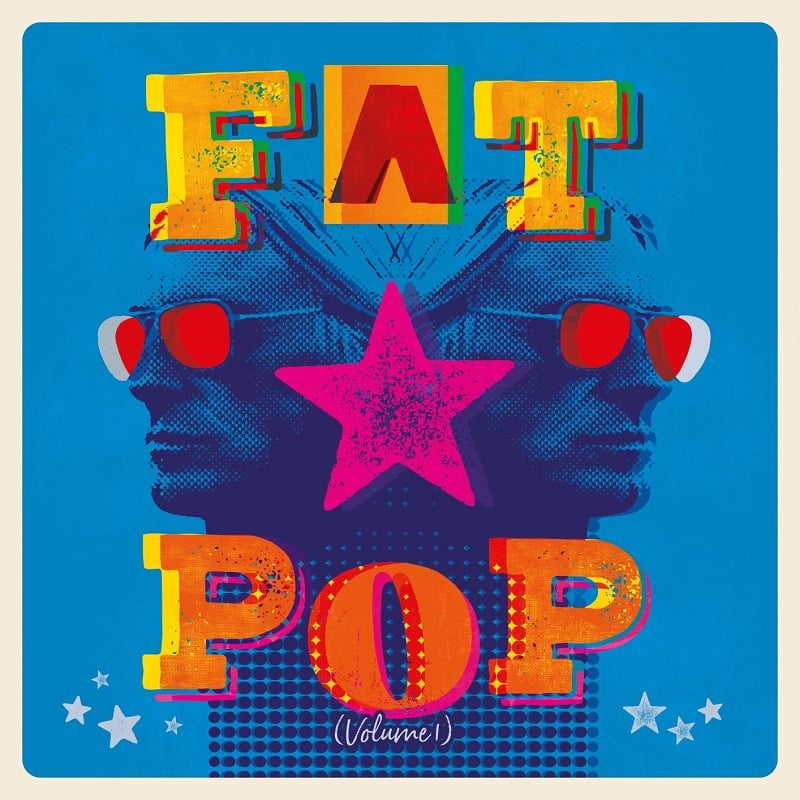
Another year, another Paul Weller album. That might sound wan-with-care but is anything but. For today sees the arrival of Fat Pop (Volume 1), the Woking Wonder’s fourth album in as many years (and 16th solo release in 29 years) and you have to wonder how he does it. 

I could, easily, just rewrite my intro from just last July, when On Sunset, Album 15, came out: “It's actually become boring to talk about Paul Weller’s rich vein of form. Because, for a purple patch, it's been going on a mighty long time.” But I won’t. We can all cite musicians into their fifth decade of productivity churning out poor quality albums featuring lazy retreads, standards, ropey covers or half-baked collaborations with their chums, which they end up hawking on The One Show. Even so-called legends. Weller, on the other hand, continues to churn out records with the same rapidity as Nissan produces Qashqais in Sunderland, but without any breach whatsoever in standards. In fact, I can’t think of any one of his 16 studio albums as a solo artist that you could ask, timidly, “Was that wise, Paul?”

That Fat Pop (Volume 1) is an album of 12 songs is also testament to the restless creative soul that Paul Weller is. No sooner had he got On Sunset saved on the hard drive, he already had the basis of “four or five” new songs stored on his phone. With lockdown enforced, and his beloved touring off the cards for the foreseeable future, he took himself off to his Black Barn studio in Surrey to work on the basics of the new album on his own, gradually bringing in regular cohorts like guitarist Steve Cradock and bass player Andy Crofts to overlay their parts, effectively by e-mail. 

“It was a bit weird not being together,” says Weller, “but at least it kept the wheels rolling. I’d have gone potty otherwise.” By the time lockdown restrictions were easing last summer he was able to get everyone together at Black Barn to finish recording. This wasn’t, however, an exercise in T-crossing and I-dotting, but an opportunity to truly coalesce the concept that had emerged of a dozen “fat” pop songs. Such was their “strength and immediacy” that, at one point, there was the idea of progressively releasing each track as individual singles before putting out the album. The idea was eventually dropped due to practicalities but, says Weller, “I quite liked the idea and every song does stand up as a single, I think.”

Picture: Sandra Vijandi
On paper, it’s hard to know what to expect from that premise, but as you listen you quickly become accustomed to the abruptness of each track. Fat Pop? Fat-free more like: there’s no filler here. Each three-minute entry has a vibrancy, every one delivering a statement of Weller’s restless creativity, of his disparate tastes and application of it. It’s a veritable compendium of pop music, whatever that is (frankly, whatever you want it to be). It fizzes and scampers over stabs of pop, nu-funk and old soul, flitting from the Ian Dury-like synth punk of Cosmic Fringes to the summery, hand-clapping ease of the title track - Weller’s personal favourite on the album - which is reminiscent of Long Hot Summer, but refreshed with a Westway-flavoured dub beat. 

On Shades Of Blue - the single Weller premiered on The Jonathan Ross Show (with daughter Leah on backing vocals, spookily recreating the beauty of her mother, Dee C. Lee’s voice) - he mines his gift for concise, English soul. Its choppy piano and joyous chorus harks back to The Kinks and Small Faces - even the press release describes it as: “A classic three-minute English pop kitchen sink drama”, co-written with his daughter. It is probably one of my favourite of all the tracks he's produced during this run of albums.

Another gem is Testify, one of the tracks recorded in full and live at Black Barn and featuring the legendary Andy Fairweather Low. It’s a bright, boppy beat of a tune, possessing just the right amount of power to fit the album’s pop remit without straying into classic rock. “We had actually done it live two or three years ago,” says Weller, “but while I loved the groove I never really got a grip on the song.” Then, just before lockdown, he played a charity gig in Guildford, performing some Stax songs with Fairweather Low and they just gelled. “Our voices sound so good together and he’s such a lovely fellow, so I sent him the backing track. As soon as lockdown was lifted he came down to the studio for the afternoon. We cut it live and that was it.”

On Moving Canvas, a song about Iggy Pop, Weller gets choppy with a riffy stomper that he predicts will be a great track live, especially with the middle eight offering all sorts of potential for extended guitar and Hammond organ wigouts that would extend the song way beyond the album version’s run time of just under 180 seconds. The album’s final two tracks, which perfectly underscore the importance of good programming when doing a track listing, also bring out the gift Weller has for understated emotion. For a man so often depicted - still - as the stony-faced angry young mod of his Jam days, he has always been able to apply layers of texture to his songs. 

Picture: Universal Music

In Better Times is the perfect example. With its dreamscape chorus, it is Weller addressing anyone going through personal trauma: “It’s me talking to a young person who is going through something, addiction or mental health pressure, or whatever, and just saying ‘it’ll be alright’. Just get through this bit and there’ll be better times to come, you’ll look back and you’ll see it differently”. It is beautifully weighted.

As is the track that ends the album, Still Glides The Stream, a collaboration between Weller and Steve Cradock with a soaring chorus, orchestral strings and brass and a vague resemblance in the verse to the Stones’ Ruby Tuesday. Evolving initially via an e-mail back-and-forth between the two musicians, it evolved into an unintended, but still-heartfelt tribute to the unsung heroes of the last year. “In my mind, I was thinking about our road sweeper who’s a lovely fellow,” says Weller. “I started thinking that there’s so many people in this country who form the infrastructure of it and without whom we’d be fucked. But they’re looked down upon, not really noticed. So I was imagining their story.” It concludes an album conceived in lockdown, partially recorded out of it, and then released as we emerge from another, blinking into the daylight, slowly and gradually. 

There have been so many new releases recently made in much the same way, and perhaps with the same effect of providing the bright, sunny hope of normality and life returning. Paul Weller, canny lad that he has, has brilliantly tapped into that need, producing an album not of lengthy, chin-scratching complex noodling, but brisk, direct songs that put a smile on your face. Isn’t that what pop music should be about? 

Thursday, 13 May 2021

Lost and found: Matt Deighton Overshadowed


As a onetime pop scribe, I’d like to think that I know my music. But - and I know it’s not a point of competition - all too often I discover just how inadequate my musical knowledge actually is. A work WhatsApp group, for example, regularly offers up listening recommendations to which I stare at blankly, despite containing things I probably should already be aware of. Friends frequently float suggestions hitherto missed that, when I dip in, turn out to be masterpieces. Even my 16-year-old stepdaughter - who should have her finger on the contemporary pulse - is familiar with stuff even older than me that I’ve escaped, to my shame. Reassuringly, I found resonance recently with the writer Andrew Collins, who posted an essay on how he was a very late convert to Bruce Springsteen. I felt vindicated (my Damascene moment only came in 2002 with The Rising in the emotional wake of 9/11). Even so, it’s quite galling to think that your so-called expansive record collection isn’t all that expansive, after all. 

I do, though, have a predilection towards the lost and under-recognised. My oldest friend, technically, is now a highly successful musician who sells out the Royal Albert Hall for several nights running, and yet when I mention his name, people go “Who?”. Likewise, I have long championed John Martyn, but it’s still such an effort to bring civilians up to speed on who he was, what he did and just why he remains arguably the most important part of my listening universe. There are others, like Peter Bruntnell, whom I was introduced to one Saturday night at a Kentish Town basement gig, only for him to a) turn out to be one of Britain’s finest singer-songwriters, b) his albums are now indispensable and c) he went to my junior and secondary schools, a few years ahead, his mum knows my mum, and that makes him cool. Which, indirectly, brings me to Matt Deighton.

© Simon Poulter
I could, lazily, dismiss having him absent in my life until relatively recently as a result of me living abroad for 17 years; but while that excuse might cut it when declaring ignorance of, say, not having seen I’m A Celebrity until I returned to these shores, I’m almost embarrassed at having had to get up to speed with Deighton. But, then, an invite to see him play at London’s 229 club in 2017, accompanied by Squeeze’s Chris Difford (and supported by the legend that is Dr. Robert), proved epiphanous. In the venue’s stripped back environment it was a demonstration of British songwriting at its finest. I say that, not out of misplaced patriotism, but as a statement of the compositional integrity with which Deighton had wowed people since emerging in the early 90s with funksters Mother Earth, even replacing Noel Gallagher in Oasis before veering into a masterful series of albums that tapped into the same roots as my hero Martyn. In the months after that 229 gig I hoovered up Deighton’s back catalogue, desperate to make up for lost time. Later that year I saw him again, fronting The Family Silver with drummer Steve White and bassist Damon Minchella, a power trio capturing the best of the soulful rock that had populated their respective band outlets (The Style Council and Paul Weller in White’s case, Ocean Colour Scene in Minchella’s). It was another one of those small venue shared experiences: intimate audience, buzzing on top musicianship and groove. And for me, another pillar in my understanding of what Deighton was all about.

That insight now goes a long way to explain why Overshadowed, a documentary about Deighton premiering tomorrow night on Sky Arts, features so many peers enthusing about him. Included in Kevin Lee Brown's film are Weller, White, Difford, Minchella, Marti Pellow, the acclaimed Kathryn Williams, vocalists Linda Lewis and Carleen Anderson, and legendary British folk-rocker Bill Fay, who was an important source of inspiration to Deighton in the wake of Mother Earth coming to an end. Brown’s emotional - and at times wroughtly so - film isn’t, however, just a parade of musos lining up to pay tribute, but an engrossing study of another one of those lost causes of mine, peeling back the layers to explain, almost forensically, why he's the deserved recipient of so much warm endorsement. 

It is clearly, unmistakenly, down to songcraft and musicianship. Pellow cites Deighton’s “gift for melody and structure”, while Weller himself highlights how Deighton can create orchestra out of an apparently simple guitar chord. Minchella goes further by calling out Deighton’s core strength: “He just has this way of writing songs which represent him as a human being.” Some songwriters are gifted in creating a vibe, some have a knack with melody while with others its technical ability. But there are so few who have the instinct to pull it all together. McCartney might be the obvious example, or perhaps Neil Finn (both are melodically blessed). Overshadowed, rightfully, puts Deighton in the same bracket, digging into his alt-folk solo albums, like Villager, You Are The Healer, The Common Good, Wake Up The Moths, Kids Steal Feelings and Doubtless Dauntless. They are being re-released progressively over the coming months, with a five-LP bundle going on sale in August, as well as in high-resolution digital formats. ‘Sumptuous’ doesn’t fully cover the musical experience of what awaits the uninitiated.

2003’s highly acclaimed Moths has just been re-released as a remastered package, marking in the process an unhappier element of Deighton’s story, which Overshadowed doesn’t shy away from, either. The album’s cover image, featuring Deighton curled up asleep, indicates - he admits now - the “black dog” of bipolarism that has shadowed him, and appeared to be behind a lengthy recording hiatus after Moths came out. In the film, he says of the album that he “wasn’t well” when he made it. Dark thoughts were entertained. Music became his saviour: “Some people bury their heads under a duvet,” he says. “Others get out a guitar and write about it.” This might go some way to explain Chris Difford’s comments in the film about his friend: “I think Matt can work with anyone, really. Whether people can work with Matt is a different thing. You’ve got to be very patient and you’ve got to be open and understanding as to where he’s coming from.”

Deighton wouldn’t be the first person to channel depression into his art (“Where would some of the greatest creativity be without it?” reflects Steve White). Music is both his saviour and his rail. For some, the depths of emotion can be all consuming (there’s no shortage of ‘divorce albums’ out there), reminding me of a comment Beverley Martyn - former wife of John - once made, that so much emotion left him via his songs that there was nothing left for her. Thankfully, though, Deighton refuses to be defined by his mental health, even if, as he reveals in Overshadowed, it can creep up on him when he least expects. 

It’s a brutally honest revelation, in an equally candid portrait of a musician who should not be regarded as enigmatic or cult-like. This is no Searching For Sugarman, a ‘fancy that’ study of a tragic figure, but quite the opposite. If anything, it’s a joyous celebration of music, musicianship, songcraft and talent deserving of a bigger audience beyond the cognoscenti. Now, where have I made that statement before?

Overshadowed premieres on Sky Arts at 9pm on Friday, 14 May


Thursday, 31 December 2020

That was the year that wasn't - my albums of 2020

2020. Where do you begin? No amount of pop froth can compensate for these 12 months just gone, which began with disturbing news of a flu-like virus in China and ended in dystopian misery with mutant strains, the economy in tatters, and families denied the basic tradition of being together at Christmas. I’d like to say that music has been the soothing tincture that eased the stresses and strains of COVID-dodging over this last year, but so many aspects of consuming and enjoying it have been curtailed in the process, whether it was concert going or the simple pleasure of record shop browsing. Even Record Store Day was different, postponed twice and then manifested as three ‘drops’ in as many months that were closer in form to booking an Ocado slot at the beginning of lockdown than buying music. All this doesn’t, either, take into account the releases and tours that were cancelled or postponed. 

However, that gloomy assessment belies the fact that there was, as in any ‘normal’ year, plenty of new material to enjoy, a lot of it recorded defiantly, stoically, resourcefully in home studios and bedrooms, as virtual house arrest both focused creativity as well as a well-I-may-as-well-do-something work ethic. By the same token, as we took to engaging our families and colleagues alike via FaceTime, Zoom and Teams, musicians - denied live audiences - switched to home performances. Probably the ultimate example of this was the Global Citizen One World: Together At Home telethon in April, which even managed to pull together the Rolling Stones in their respective living rooms for a virtual gig which, given the technical complexities of playing instruments in time via Internet connections, worked surprisingly well. 

Invention was everywhere, as those at every strata of the pop music economy eked out livings through webcams, some effectively singing for their suppers via Facebook, like Peter Bruntnell gigging from his front room in Devon, while Duran Duran’s John Taylor and Pink Floyd alumn Guy Pratt gave masterclasses in bass playing via YouTube. Arguably, Tim Burgess won the zeitgeist stakes, as his Lockdown Listening Parties on Twitter became the must-join musical commune, in lieu of gatherings like Glastonbury. 

You could, however be easily fooled into thinking that 2020 was a year without light, but that wouldn’t be entirely right. Even with the relentless nature of home imprisonment, self-isolation, distancing, shielding, quarantine and all the other curtailments of social normality, music has been a constant. Rarely has there not been something new or re-released to grace the turntable or CD player, which means that there’s still plenty to pack into this year’s list of the best listens. So here goes:

Reissues

I’m opening with the heritage trail because there’s been no shortage of archived albums repackaged and reissued, especially with audiophile temptations like 180g vinyl and, increasingly, coloured vinyl to make them that much more alluring to magpies like me. Thus, Coldplay celebrated the 20th anniversary of still their best album, Parachutes, with a yellow (geddit?) edition. There were reissues of live recordings, too - one of my weaknesses - in particular, Peter Gabriel putting out four of his engrossing performance albums with new sonics and higher-definition vinyl, while Pink Floyd polished up their Delicate Sound Of Thunder double live album with additional tracks and a very noticeable upgrade to the audio. An honourable mention should be made, here, for The Blue Nile, who completed their programme of remastering and reissuing their four studio albums with 2004’s High, nicely tarted up and with four extra tracks. David Bowie posthumously commenced the process of releasing live albums from his underrated 1990s tours, demonstrating further what an untouchable music god he always was. I won’t dwell more here as January is shaping up to be Bowie Month on this blog. Likewise, the Rolling Stones’ deluxe edition of Goats Head Soup proved what a worthy follow-up to Exile On Main Street it was, despite forever being in its shadow. And the fact that one of the package options came with a double live album was an absolute bonus, albeit one which came with the now expected Stones premium. 

However, the accolade for Reissue Of The Year goes by a very long chalk to Tom Petty’s Wildflowers & All The Rest, a lovingly-curated collection that includes his “incomplete” Wildflowers album, the tracks he’d originally wanted to include as a double-disc release, live versions and acoustic home demos that are like listening to a whole new album in their own right (the All The Rest elements). Put together by Petty’s widow, daughters and various associates, it’s a heartwarming tribute as much as a platform to reassess one of rock’s most understated figures.

New albums

10 - Bob Dylan: Rough And Rowdy Ways

An unexpected entry in this year’s albums list for the simple fact that I’ve never been that much of a fan of His Bobness. That might sound like sacrilege to some, and incredulous to others, but somehow Dylan’s deification has always passed me by. So what brought me to the 79-year-old’s latest release was, largely, a classic case of FOMO. Acts in their late 70s - no matter what their provenance - are not expected to turn in anything other than novelties, especially when that provenance is, by reputation, some of the most influential records of the rock and pop era. But being the sucker that I am to mob mentality, the universal acclaim that Rough And Rowdy Ways met from the music press (and, readers, this is never always the byword for the right opinion) led me to an album that affectionately captured an America that may no longer exist, but to many of us, who still hold an affection for the place, think it does. Thus, Dylan has written a love letter to the music of his upbringing, with hints of jazz, a splash of blues and a heartland appeal captured by a lyrical depth that, I now realise, few beyond him have ever been capable of, let alone at this stage of their careers.

9 - The 1975: Notes On A Conditional Form

If my previous entry indicated my susceptibility to mob opinion, then The 1975's fourth album merely compounds my weakness for being gradually ground down into acceptance of something. In fact, in this list is a reflection of my changing domestic life in 2020, having moved in with my partner and her teenage daughters, and then being slowly drawn into their world. Thus, I’ve succumbed in recent months to Gogglebox (my God, the show we schedule our entire Fridays around, which has proven to be the perfect tonic to this year’s nonsense), MasterChef, Bakeoff and even Selling Sunset and Tiger King. And the 1975, a band one of the teens speaks of nothing else (though her Christmas vinyl list did include Led Zeppelin II and Sgt. Pepper’s Lonely Hearts Club Band. She has just turned 16…). Whether it’s from a form of Stockholm Syndrome or something else, the brainwashing has worked. And the nice thing is, The 1975 strike me as old heads on relatively new shoulders. By that I mean that they are, as their name suggests, rooted in rock tradition, but as Notes On A Conditional Form explains, capable of breadth and depth, progressiveness and polished production. Musically you’ll find nods to Americana sitting side-by-side with lush strings, textures of the kind you’ll find U2 producing at their finest along with soulful 80s pop.

8 - Elvis Costello: Hey Clockface

My musical journey has always felt intertwined with Costello’s: as one of the vanguards of the New Wave, he was part of my real time introduction to music, as I reached double figures in the late 1970s. The problem with him, however, has been keeping up. Hey Clockface is, by my count, his 33rd release, and another roll of the personnel dice, having released 2010’s National Ransom under his own name, 2013’s fine Wise Up Ghost was recorded with The Roots, and 2018’s equally enjoyable Look Now brought Costello back together with The Imposters, the band only one member shy of the original Attractions. This year’s solo effort was, much like the previous 32 albums, a melange of whatever styles took his fancy. Some might find it a little scattergun (Daily Telegraph critic Neil McCormick called it, lovingly, a “hot mess”), but that’s its charm. And, hey, you don’t have to like every Quality Street in the box. This apparent rambling free spirit may be down to Costello surviving cancer before embarking on a tour that was subsequently abandoned part-way through due to COVID, confining him to home studio sessions in Vancouver and work on material recorded before the lockdown in studios as disparate as Helsinki, Paris and New York. This might also suggest a restlessness of approaches, and it’s certainly fair to say that Hey Clockface leaps about, stylewise, with punk-like anger alongside Broadway swing, ambient swashes amid jazz, and several stops in between. This might sound dilettante, but it has never bothered those who appreciate Bowie, who to the very end collected disparate styles and musical fashions like a rag and bone man collects junk. One of the reasons it works with Costello is that, regardless of the genre they’re attached to, his lyrics provide the continuity. The same pen that produced such rich words as those on Oliver’s Army, Watching The Detectives and (I Don’t Want To) Go To Chelsea is still on spleen-venting form, with highlights like the partially-spoken Revolution #49, No Flag and even the delightful piano ballad Byline.

7 - Kylie Minogue: DISCO

When I revealed, in a post about The Crown, that I was raving about DISCO (and, as memory recalls, even the new single from Steps), those around me started wondering if I was feeling all that well. After all, Kylie is, was and always has been pure pop, from her Stock Aitken Waterman arrival as the category’s tiniest princess (she is short - I once came close to treading on her in a nightclub, before realising the towering figure of Michael Hutchence glaring over me…) to the present day. She has never strayed far from the glitterball, and with this album she doesn’t so much embrace disco as cling to the sparkling orb like Miley Cyrus astride that wrecking ball. And, yes, it’s unashamed. Cast yourself (or, if you’re too young, your mind’s eye) back to a mid-70s episode of Top Of The Pops, and performances of Stayin’ Alive, Love Train, Never Can Say Goodbye or Disco Inferno, and you’ve landed yourself in the heart of what it says on the tin. Yes, it’s clichéd, but who cares? It’s done with authentic revelry and an earnest celebration - make that the emphasis - of the disco genre, which always was a lot more than the lazy trope trio of “flares, chest wigs and gold medallions”, and more about the combination of intricate jazz-funk rhythms blended with soul music and good times. So you’ll find all of that here. Why? Because Kylie, like most others in this list, wanted to enjoy themselves in lockdown. Just like Sophie Ellis-Bextor’s Kitchen Disco, another online hit this year, Kylie embraced the mini disco revival of late by channelling it in her home studio. “It’s difficult even for me to explain,” she said when the album came out. “But even grown-ups need some pure pop fun.” And, so, on DISCO’s 12 songs she hammers home the point with track after track of flagrant, boob tube-wearing, hot pants-clad, blister-inducing heels worth of disco fever. If I said there wasn’t a standout like Can’t Get You Out Of My Head, I’d sound penurious, because they’re all good. Not that good, but not far from, and when you add them all up, you end up with a smile on your face, the likes of which have been in short supply this year. Even if you never move from your favourite armchair to listen to DISCO, let alone actually cutting a rug to it, it’s a pure, unadulterated joy.

6 - Paloma Faith: Infinite Things

Right, so what I was saying just now about Kylie - well, in your face fashion! I’ve had the same epiphany with Paloma Faith. And, I hear what you’re saying, I shouldn’t. Well, I am. In fact I’ve never had much quarrel before with Will Hodgkinson, the Marc Bolan-lookalike rock critic of The Times, who recently branded Faith’s Infinite Things “the same old boring Radio 2 fare”. On this, he’s just plain wrong. While it would never be judged in the same league of critical acclaim as Pet Sounds, Hunky Dory or What’s Going On, Faith's uplifting, infectious pop is a room-filling delight from start to finish. What’s even more remarkable is that it is another product of lockdown, Faith having taught herself how to engineer the record from home, working remotely with a variety of producers and co-songwriters including Ed Harcourt. My gateway to the album came via the promotional route: a big and brassy performance of Gold on Jonathan Ross’s chat show back in November that was infectious enough to pre-order the record for…er…’my other half’, and we, sorry, she wasn’t disappointed when we cranked up the entire thing one Sunday morning. There’s a point I’m trying to make here: musical taste is mostly bollocks. Just because you don’t, personally, like something, doesn’t make it bad. I’ve never been a fan of hip-hop, and won’t be so dumb as to make patronising remarks about it, but that doesn’t make it artistically bad. Especially if hip-hop’s your thing. But I digress. Here, across a dizzying combination of writers and producers, Faith has sat as the spider in a web of her own, pulling together ballsy songs which convey some of her own, noted personal dilemmas through a canvas of genuine soul. Clearly, her vocals are the shining beacon throughout, but the rest - the writing and the arrangement - are never bit part players. “Radio 2 fare” it may be, but it’s an album of radio-friendly tracks that you would have little issue with making the soundtrack of your day…especially if you spend it on the inside looking out at the gloomy goings on in British streets over the last year.

5 - Paul McCartney: McCartney III

There’s a danger that McCartney - like Dylan, a year older - gets on a list like this by legend default. Macca has, it should be said, produced some dodgy songs in his post-Fab career, but this should be read as individual tracks rather than entire albums. Even We All Stand Together has its whimsical value. The trouble is usually venerated acts of the classic rock era still trying to be cool (and the less said of McCartney this week being photographed sporting a 'man bun', the better). McCartney is, it must be said, somewhat beyond criticism, given his contribution to arguably the greatest pop band that ever was. But not even being a Beatle gets you a free pass. Thus, the common argument is that none of The Beatles had a 100% record as solo artists, not even John Lennon, though George Harrison came closest. And as for Ringo…well, bless him. But back to Sir Thumbs Aloft. If you’ve not been keeping up, McCartney III is clearly not his third solo album, but an attempt to reconnect with the simplicity of his 1970 post-Beatles debut (McCartney - recently re-released) and 1980’s McCartney II, which followed his split from Wings. Though III isn’t the result of any similar departure, it shares with both numerical predecessors the arch application of McCartney’s trademark songwriting ease. It’s the craft that sets him apart from just about anyone else in the last 60 years, an accolade that boggles the mind when you think about it. And then the fact that, at 78, he’s still restless enough in “Rockdown” (as the cover sticker reads) to go into his home studio and, by himself and playing every instrument, record an album as mostly good as III is, further testament to that unbelievable talent. I say “mostly” as it has its iffy moments, but to dwell on those would be mean-spirited when the overall product is such a load of Macca fun. And even if he was recording just for his own pleasure, there’s nothing self indulgent. In fact, the indulgence is all ours, as we revel in songs as good as Seize The Day, Deep Down and The Kiss Of Venus. There is also Deep Deep Feeling which, in six decades of writing, is as nailed-on McCartney as you could hope to find without being derivative of anything you’ve heard before. McCartney has never shied away from his silly side, his aforementioned collaboration with The Frog Chorus being the strongest case in point, but even when he’s at his most whimsical - and ever so slightly cheesily so - there is a purity to his writing and delivery of that writing that manifests itself so perfectly in terms of melody, rhythm and engagement. And McCartney III has it all.

4 - Paul Weller: On Sunset

Speaking of Pauls, Mr. Weller. While you might question my sanity for placing him in the same bracket at Kylie or Paloma Faith, in a year that needed the feelgood factor, On Sunset shipped it by the truckload. Weller’s 15th solo studio album continued an output that has averaged one every two or three years since his 1992 self-titled solo debut. Much, I suspect has to do with a restless spirit that appears to charge Weller’s creativity, and also leads to trying something else each time. On Sunset marks another change of course, veering from the folky vibe of 2018's True Meanings, to a decidedly sunny, open-topped outing. Again, unwittingly perfect for the time. It’s an excursion into the blue skies and easy living of 1970s Los Angeles: effortlessly cool, intriguing by turns, melodically pleasing and incongruously soulful for an album crafted in deepest Surrey. While Weller guarded that this wasn’t his “West Coast record”, an affection for California comes readily through, from the woozy funk of the seven-minute opener, Mirror Ball, with its nods to the Isleys' Summer Breeze. It’s there in the wistful thoughts of Old Father Tyme and other stabs of nostalgia. On Sunset even draws on the organ talents of former fellow Style Councillor Mick Talbot, who appears on Baptiste and Village. Earth Beat, while we’re at it, swings like the Council’s Speak Like A Child, with the giddiness of pristine ’80s pop wrapped in modern sonics. Nor is Weller afraid of casting a wide net into his pool of historic reference, calling on Slade’s Jim Lea to provide a rakish violin to Equanimity, one of several Beatley tracks which include the acoustic guitar-driven melancholic beauty, Rockets. It might be tempting to think that On Sunset points to the 62-year-old Weller winding down his career, but with Album 16 already on the sketch pad, he’s showing no signs of a 28-year solo career ending any time soon. Even if, for me, On Sunset is an absolute career high. Maybe, even his best to date.

3 - Tim Bowness: Late Night Laments

By the end of August, we had started to feel freedom again. The sulphurous months since March were over, and we could get out and enjoy life again, albeit while still wearing a facemark. Some of us even got away for a change of scene, in our case, the Isle of Wight, a relatively short hop down the A3 and across the Solent. Up until that point my daily vista had been mostly the view out of our living room window, which isn’t much - mostly hedge. A week’s holiday, with sun and without need for a passport was both fortunate and much needed. Further balm arrived in August in the form of Late Night Laments, Tim Bowness’s collection of nine songs evoking the intimacy - the claustrophobia, even - of late night, atmospheric music consumption via headphones. In the process, Bowness - one of the UK’s most respected singer-songwriters, even if not that well known - delivered an album of timely reflection. While written before The Thing became a thing, it bore some prescience to the events that unfolded as the spring wore on. Bowness even worried that some of the themes it covered, such as hate crime, generational division and social exclusion, wouldn’t be relevant in the midst of the pandemic, but at its release, he realised just how Late Night Laments tapped into the dystopian gloom. That, though, doesn’t make it gloomily dystopian, however. But it is an album of reflective, stripped back consideration, written from the perspective of an individual, late at night, enclosed in a living room, listening to noirish music of the kind John Barry did so well for the Bond and Harry Palmer films. With contributions from Porcupine Tree’s Colin Edwin and Richard Barbieri, as well as production work by Bowness’s good friend and long-term collaborator Steven Wilson, Late Night Laments taps into my own love of textured, less raucous music, drawing valid parallels with the brooding of The Blue Nile, Talk Talk and even Prefab Sprout. Significantly, for me, it recalls the wooziness of One World, one of my favourite John Martyn albums, and its eight-minute Small Hours, which had hitherto been my go-to source for late night listening. With this new work by Bowness, I found a successor.

2 - Bruce Springsteen & The E Street Band: Letter To You

Another album recorded just in time is one made as they used to be - effectively as a live performance and over five days. Letter To You came together at the end of 2019 at The Boss’s Colts Neck ranch, a twenty-minute drive the Jersey Shore so steeped in Springsteen mythology, and reunited him with the E Street Band for their first collaboration since 2014’s High Hopes. That’s not a particularly wide gap, but then such is Springsteen’s industry that it was his fourth release in eight years, having made the wonderful Western Stars as a solo artist, along with writing his Born To Run autobiography, and the unexpectedly extended Springsteen On Broadway residency that ran for five shows a week from October 2017 until December 2018. That Letter To You was completed in a week might suggest a man in a hurry but, unlike the 14 complicated months he took to make the Born To Run album in 1975, this one came with ease. Perhaps because it was one that he didn’t overthink. Instead, with a combination of new songs and a few that had been left on the shelf for decades, Springsteen and his trusted posse rattled through the album’s 12 songs. The immediacy of them, too, is not necessarily the record’s appeal: while dealing with personal themes like ageing, the album addresses itself with the joy and liveliness that is so much part of any Springsteen live show. There’s a contentment to the 71-year-old’s songs, but also celebration, such as the brassy Ghosts and its acknowledgement of the simple pleasures of being in the company of the E Street Band itself. Even when addressing mortality on I’ll See You In My Dreams, there is an uplift to even a song about friends who’ve passed on, lifted even further by a stirring guitar solo. Some have argued that Letter To You is Springsteen’s best album. That for me is like picking a favourite child, but it’s certainly up there. And it is certainly at the very top of all the music that has brightened up this shitshow of a year.

2020 Album Of The Year - Doves: The Universal Want

Of the events that stood out in 2019, the one that stood out the most was seeing Doves headline the Teenage Cancer Trust show at the Royal Albert Hall. While it didn’t hint at a new album from the Cheshire trio, it certainly whetted the appetite, a desire sated more than a year later when, after an 11-year recording hiatus, brothers Jez and Andy Williams and vocalist Jimi Goodwin released The Universal Want. Now, absence does make the heart grow fonder, it’s true, but then a gap will only increase expectation levels and, so, the risk of disappointment. Thankfully, nothing would be the case. The Universal Want was just the Doves album I wanted, building brilliantly on its predecessors - Lost Souls, The Last Broadcast, Some Cities and Kingdom Of Rust. All contained a compelling cocktail of industrial energy, club roots and even jazz, coated in a somewhat northern bleakness, much the result of Goodwin’s languorous vocals, Andy Williams’ crisp rhythms and his brother’s jangling, reverb-dripping guitars. The Universal Want, recorded following freewheeling writing sessions in the Peak District, and healthily infused with new avenues of exploration developed during the band’s extended break, is, according to the trio, a “shapeshifting album”, tapping into influences as disparate as Bowie and 1970s soul. With more years under their belts, Goodwin and the Williams bring reflection to the deal, looking back wistfully over the acid house era with the title track, personal tragedies on Broken Eyes, and time’s own passage on Cathedrals Of The Mind. But rather than presenting a bleak picture, there’s a libertarian freshness from the outset, with opener Carousels, and its allusions to seaside amusements and a more innocent time, underpinned by a sampled loop of the late Nigerian drummer Tony Allen. Indeed, Allen’s rhythms provided something of a starting point for the album itself with the Afrobeat-flavoured Mother Silverlake amongst the first songs to emerge from the jams up on t'moors. I Will Not Hide - not the statement on the band’s absence that it might suggest - adds a brightness, with an uplifting poppiness, a carefree simplicity and a notable absence of the guitars of previous Doves songs, and more sonic experimentation in its canvas as a whole. Thinking back for this post, I realised that there are probably few other bands whose albums I’ve listened to as often and as comprehensively as Doves’. Remarkable, really, when you consider they’d only released four until this year. Not wishing to dwell on it, but let’s face it, 2020 has been ugly, and one we’re all happy to see the last of. I have plenty to feel happily rid of. But this album, like so much else over the last 12 months unexpected at their outset, has been a glorious highlight. And my undisputed Album Of The Year.

Wednesday, 5 August 2020

The rebirth of cool: the Absolute Beginners soundtrack

In my actual timeline, I am a child of the 1960s. In my self-mythology, I’m a child of the rock-pop era. There is some legitimacy to this claim: I was, after all, born in November 1967, three months after the Summer Of Love and two weeks after Hendrix recorded Little Wing. My childhood was spent in the 1970s, which meant attending the Thursday night ritual of Top Of The Pops, and bopping along to Mud, The Rubettes, Smokie, and being ever-so slightly freaked out by Alvin Stardust clad in full leather, pointing at the camera with a gloved hand bearing a large jewelled ring on the index finger.

It was only later on in the 1970s that I discovered what is now referred to as “classic rock”. This meant that my musical upbringing - until I ‘accidentally’ discovered Pink Floyd’s Wish You Were Here album (well, taped it off my brother’s copy) - was shaped by the Top 40 tunes of the decade as a whole, which meant putting up with Peters & Lee’s Welcome Home and ABBA, and becoming mildly interested in the punky chops of Blondie, The Jam and The Police around the time I started secondary school.

By no fault other than the year I was born in, I turned 13 in 1980, which meant that the 80s were my coming of age, music-wise. This was the decade that began with the Floyd’s Another Brick In The Wall at No.1 and ended with a Top 10 that included Jason Donovan, Soul II Soul, Jive Bunny, Madonna, De La Soul and New Kids On The Block. Make of that what you will. My read is that you probably can’t generalise any one era: the 50s might have given us rock and roll, the 60s the golden age of pop (or pop-rock if you prefer), the 70s rock, punk and disco, and so on, but really we’re in broad sweeping statements here.

Recent trundles about the South Coast, listening to the type of "classic hit" radio stations Peter Kay captures so brilliantly with 'Forever FM' in Car Share, reminded me that the 80s were no different. Sure, there was plenty of cheese, but no different then than now or, indeed, any era you pick. The difference, though, between the 80s and now is that - and I’m going to go full card-carrying, cardigan-wearing old fart here - there was some musical integrity, then, about Top 40 pop. You know, real instruments and no Autotune, unlike the software-infested durge coming out of the station we had on the car last week on the Isle of Wight.

So, then, a statement of the bleeding obvious: there’s something for everyone in every decade, and no one has the right to call snobbery over anyone else’s. Rant over, the reason this comes to mind is the reissue this week (and rediscovery in my vinyl collection) of an album that, in one particular way, captured a specific aspect of the 80s. Last week I blogged about the demise of Q magazine and my involvement in the launch of a near-rival in 1986, looking to break into the ‘men’s lifestyle’ market, which was being fuelled by Soho, The Face and i-D magazines, and the convergence of style, fashion and music of the early 1980s. So the reappearance of the Absolute Beginners soundtrack album has randomly evoked a phase of my musical education when the 1980s tapped into the 1950s, and jazz made an unexpected appearance. We had, of course, Sade, whose Diamond Life became a period cliché due to its association with ‘yuppie’ wine bars (though it’s true - you couldn’t avoid the record if you visited such establishments). Plus there were pseudo jazz acts like Carmel, Matt Bianco and Swing Out Sister, along with Everything But The Girl’s Eden album and even The Style Council, with their cod-jazz leanings on their debut, Café Bleu. All of it was, though, eminently cool.

Julien Temple’s 1986 screen musical adaptation of Colin McInnes’s 1950s-set, coming-of-age novel Absolute Beginners just seemed ripe for the time. It was brash, it was bold, it was colourful, it was invariably overblown - and many critics just didn’t like it - but it was, for all its many faults, relentlessly cool. Not quite the commercial and critical dud it has since been painted to be, Absolute Beginners had a certain charm - in particular, its soundtrack. Temple drafted in jazz great Gil Evans to oversee it, and in between pieces of Evans-arranged incidental music, it captured a eclectic, but jazz-themed mix from the likes of Sade, Ray Davies (in a particularly amusing skit as a put-down dad pleading for a “Quiet Life”), Patsy Kensit (on-the-money 80s casting as the film’s love interest) with her band at the time, Eighth Wonder, and even a stormy instrumental by Jerry Dammers of The Specials to accompany the film’s riot scene (a statement on the 1950s Notting Hill race riots). Paul Weller - who’d already written his own paean to the McInnes book with The Jam’s song of the same name - got on the soundtrack with The Style Council’s bouncy Have You Ever Had It Blue.


The standout contribution (inevitably, given my pronounced leanings), however, came from David Bowie. The Dame was at something of a career plateau when Temple invited him to ham it up as vampiric advertising executive Vendice Partners - himself a skit on Soho’s then-status as 80s London’s adland epicentre, replete with an intentionally fake American accent. When the film was released, Bowie was several months on from his barnstorming appearance at Live Aid, a performance in which he’d appeared with a brand new backing band (including Thomas Dolby), having discarded - as he often did - the group he’d worked with on the Let’s Dance album and its subsequent Serious Moonlight tour. Temple’s Absolute Beginners was already in production when Live Aid came around, and Bowie’s theme song for it was recorded at Abbey Road just a month before the self-style “global jukebox” was staged.

Like Queen and other acts who were given a career lift by the charity concert, Bowie’s appearance in Absolute Beginners, and his musical contribution to it, went further in cementing his legend status, but not in any obvious leap or bound. You could argue that he'd left behind artistically interesting, complex music, and that Let’s Dance had sent him fully commercial (with the mid-80s Tonight and Never Let Me Down albums widely considered creative lows). But with Temple’s film, Bowie looked like he was just having fun. As Partners, he camped it up for England, but it was the title song - all eight minutes of it, in its full version - that stood out as, arguably, one of the great entries in the entire Bowie catalogue, and certainly of that period of his career. When I saw him at Wembley a year after the film ca out, on the much-derided Glass Spider Tour (regrettably, my only experience of Bowie live), it was Absolute Beginners’ energy that made the biggest mark of the night. I could wax on further about Bowie here, but as much as we (well, I) still mourn his loss, it’s memories of his involvement in this film - both the comic acting and the impassioned theme song (not to mention another gem on the soundtrack, his cover of the old Dean Martin standard, Volare), that added another chapter - no, paragraph - to the already expansive Bowie story, and to the magic of why few bend a knee to The Dame as much as I still do.


The Absolute Beginners soundtrack, then, snapshots two eras: the 50s the film portrays, and the mid-80s in pop. Just as Live Aid, it’s near-contemporary, captured the crossover between the generations (those of the classic rock era like Paul McCartney, Led Zeppelin, Bowie, The Who, Queen, etc, and those from the more immediate present - Madonna, Duran Duran, Phil Collins, Spandau Ballet, George Michael), Absolute Beginners sliced into a momentary phase of the 1980s, when Soho cappuccinos, Bass Weejun loafers and wearing pastel V-necks over the shoulders - essentially the entire Paul Weller vibe at the time - provided a jazz-infused, politically-minded (anti-Thatcher, Red Wedge et al) interlude to the decade that brought us puffball skirts and red braces-wearing, Bret Easton Ellis-inspired bankers with far too much gel in their hair. But above all, in just the first eight minutes of side one, it brought out a recording by David Bowie that combined so much of his undoubted talent - drama, excitement, luscious chord changes and an impassioned vocal, plus a Bowie trademark that often goes unrecognised: a honking saxophone.

Saturday, 4 July 2020

Sunset boulevard - Paul Weller’s West Coast album


You know, it's actually become boring to talk about Paul Weller’s rich vein of form. Because, for a purple patch, it's been going on a mighty long time. His 15th solo studio album, On Sunset, continues an output that has averaged an album every two or three years since his self-titled solo debut, incredibly, 28 years ago. It's a rate that puts most of his contemporaries - even an Elvis Costello - to shame. Much, I suspect, has to do with the restless spirit that has always charged Weller’s creativity, not just in having something to say, but also a yearning to try something new each time, dipping a quill into the different shades of ink from which the now 62-year-old has drawn his influences.

On Sunset marks another change of course, veering from the reflective, folky vibe of 2018's pastoral True Meanings, to a decidedly sunny, open-topped outing. As the title might allude, it’s an excursion into the blue skies and free'n'easy living of 1970s Los Angeles: effortlessly cool, intriguing by turns, melodically pleasing and incongruously soulful for an album crafted in deepest Surrey (Weller’s work-from-home location, Black Barn Studios in the village of Ripley - Eric Clapton's birthplace).

“Everybody likes a good tune, regardless how it’s dressed up,” Weller told GQ’s Dylan Jones recently. “Luckily, melody comes relatively easy to me – it’s a very natural part of the writing process. You’re often trying to find new ways of saying the same thing, but I can always rely on melody to see me through.” And thus it proves, with 10 tracks (15 if you buy the ‘deluxe edition’) of joyous songcraft, most making authentic nods to the '70s soul and R&B influences that, like the more orthodox mod traces of The Who and Small Faces, have fed Weller’s musical subconscious.

Perhaps, most surprising, is the unabashed West Coast association. The likes of Down In A Tube Station At Midnight and Stanley Road may have given the wrong impression of a narrow, Anglo-centric scope, but a visit last year to his son in Los Angeles brought about a reawakening to the City of Angels. “I stayed at this funny little hotel just off the Strip [Sunset Boulevard],” Weller told Jones, “and while I’ve been to LA a lot, I hadn’t spent any time on the Strip for years and so it all came rushing back – the Sunset Marquis, the Rainbow... I couldn’t believe how quickly everything had gone. I love the West Coast: not the psychedelic Grateful Dead but The Beach Boys, especially the later period. Be warned, though, this isn’t my West Coast record.” That’s as maybe, but from the cover art to the title, and from the title track’s strings, lusciously arranged by Game Of Thrones composer Hannah Peel (and with an ebbing seashore sound effect in the outro), to it’s references to palm trees, the warm breeze and drinks “in the Whiskey” [A-Go-Go] (with an unashamed touch of George Harrison’s My Sweet Lord in the intro), it’s as West Coast as Steely Dan’s Hey Nineteen. And that’s no bad thing.

It might be corny to suggest, but the warmth I know, love and, frankly, miss about California - the endless days of sultry sunshine and freshening winds blowing off the Pacific - is present throughout this record. Written and recorded before the lockdown, it nevertheless exudes freedom. The kind of freedom you get from cruising through the Santa Monica Mountains in a vintage '70s Pontiac convertible, as Weller appears to be doing in the album’s artwork. It’s there in the woozy funk of the album’s seven-minute opener Mirror Ball, with its nods to the Isleys' Summer Breeze. It’s there in the wistful thoughts of Old Father Tyme, which presciently - pre-COVID - makes the statement: “In this time of confusion, hang on to what is real. Hail the love around us, see how deep it feels.”

The contemplative frame of mind that Weller has attached to his work of late is patently age related. Though not obvious, the death of his father John - who’d managed his son’s career from the beginning (instilling in him the relentless work ethic) - might still bear presence. Certainly he is not afraid of his past, both in re-signing to Polydor, the label Weller Sr. helped sign The Jam to in 1977, but also in drawing on the organ talents of former fellow Style Councillor Mick Talbot, who appears on Baptiste and Village. Earth Beat, while we’re at it, swings like the Council’s Speak Like A Child, with the giddiness of pristine ’80s pop wrapped in modern sonics. Nor is he afraid of casting out widely into his vast pool of historic reference, calling on Slade’s Jim Lea to provide a rakish violin to Equanimity, one of several Beatley tracks which include the acoustic guitar-driven melancholic beauty, Rockets (featuring some pristine bass work by Andy Crofts).

Picture: Lee Cogswell

Looking back over the last fourteen Weller solo albums, it’s hard to truly find any which waste your time. In fact, looking at the bigger picture, most conform to an unbelievably high standard. He’ll probably hate this, but I don’t think Paul Weller ever gets enough credit. Some, lazily, still think of him as the angry young man, of Red Wedge, of Town Called Malice or ‘A’ Bomb In Wardour Street. Others go to the Paris Match posing of The Style Council. All of which were a long Weller time ago. “You’ve got to keep your tools sharp,” he told GQ. “The world is full of people who made great records and then tailed off, but maybe I care more now because I wasn’t as good as they were when I started. With me it’s probably worked in reverse, but there are still some great performers who are doing great work. The things Robert Plant has been doing have been really, really good; I’ve seen Macca and The Stones play live recently and both were absolutely brilliant.”

Frankly, he should be held in the same reverence. It might be tempting to think that On Sunset points to a career winding down, but with Album 16 already on the sketch pad, Paul Weller is showing no signs of his 28-year purple patch ending any time soon. Even if, for me, On Sunset is an absolute career high. Maybe, even his best to date.

Tuesday, 9 July 2019

Modz rool: Paul Weller at Greenwich Music Time

Picture: Simon Poulter © 2019
When your career has produced a current total of 26 original albums (14 as a solo artist, six each with The Jam and The Style Council), and you are Paul Weller, you’ve got a certain licence to do whatever the hell you want to. You could, for example, turn your gigs into a two-hour jukebox of hits and send your exclusively middle-aged punters home satisfied, blissfully karaoked-out with sore throats from reliving their youth club days singing along to The Eton Rifles, Going Underground or Beat Surrender. Or you could play to the political climate and revive the prescient Walls Come Tumbling Down, a song as relevant and needed today as it was during the era in which it was conceived.

But, if you are Paul Weller, you’re 61, you’ve been in bands since you were 14, recording since you were 19, and you have produced 26 studio albums, there’s nothing stopping you opening your set at an outdoor summer's evening show with I’m Where I Should Be, a low-key, somewhat obscure track off 2015’s Saturn’s Pattern. Because you can. And he did.

It's hard to truly tell whether the choice of opening song was Weller's little joke, simply as it's hard to tell if Weller ever does joke. I think he does, and the stony face cracked a number of times during Sunday night's closing show of the six-night Greenwich Music Time festival, delightfully staged in the stunning grounds of the Old Naval College next to the Thames (one of London's busiest filming locations, with episodes of The Queen shot there amid the pristine period surroundings). If the opening number caught the audience off guard, My Ever Changing Moods up next restored the crowd to the familiar.

Now, about the crowd. Unsurprisingly, for an act in the public eye for over 40 years, the crowd is default middle-aged. Dadwear is in copious evidence, along with a high propensity of close-cropped balding pates which, when queuing behind, makes you wonder whether you're standing behind a London cab driver you've ridden in and had to put up with his views on, well, everything. Then there are the Weller uberfans, replete in Ben Sherman and Fred Perry shirts, some sporting feather cuts (one even going the full distance with a magnificent mane of grey hair and a camelhair jacket that the Modfather himself would surely approve of. Or laugh at. Again, I'm not really sure).

Over the course of 27 songs, Weller and his band - which included trusted lieutenants Steve Craddock on guitar and Andy Crofts on bass, augmented on occasion by the brass section of Weller protégés The Stone Foundation (who'd opened for their mentor) - covered a wider gamut of the canon that perhaps many in the audience, especially those who'd come in costume, were expecting. There were the brusque, R'n'B rockers like Woo Sé Mama from 2017's A Kind Revolution and Peacock Suit from Heavy Soul, the fourth in Weller's extraordinary - and continuing - purple patch of solo outings, as well as the reminders of his soulfulness: the sublime Broken Stones appearing in the encore, along with an old live favourite, Curtis Mayfield's Move On Up. Earlier in the set, Weller brought out Leah, his daughter with Dee C Lee, to duet on You Do Something To Me, another perennial of the tender side to his songwriting (which also includes A Kind Revolution's standout, The Cranes Are Back - which I would have loved to have heard reproduced live). There was another surprise appearance with former Style Council compadre Mick Talbot coming out to tickle the ivories on Shout To The Top! A pity Merton's finest couldn't have stayed for more.

When The Style Council split, somewhat ignominiously, in 1989 when their record company blocked the release of their fifth and final album, Weller found himself at a crossroads. It was to be the making of him as a national music treasure. Despite having fronted two of the most successful and intrinsically British bands of the 1980s, his first solo album, Paul Weller set him on a path that would result in the 13 albums of rich variety that have followed, and which were heavily drawn from in Greenwich. Above The Clouds drifted dreamily under the partially leaden sky next to the Thames, while Into Tomorrow reminded of the Britpop template that Weller laid the foundation of. Wild Wood provided an early would-be cigarette-lighters-aloft moment, casting grey-haired memories back to the second solo album that really underlined the creativity that had pent up during Weller's brief sabbatical. Later in the set, that album's Can You Heal Us (Holy Man) provided an energetic example  of an album that contained such stompers as Sunflower, Foot Of The Mountain and Shadow Of The Sun, all of which would have been welcome in Greenwich.

Picture: Simon Poulter © 2019

Weller is nothing if not a prolific songwriter, and the number of albums recorded masks the shere scale of songs he's committed to tape: Mermaids and Brushed from Heavy Soul are performed as a brace, and even Strange Museum - co-written with Talbot - is resurrected from the debut solo album. There was even the rare moment of Weller fluffery, with Have You Ever Had It Blue throwing back to the Bass Weejun-wearing, carefree side of The Style Council and that period of mod revivalism that coincided with all things Soho and The Face magazine that occurred when Julien Temple decided to make a film out of Colin MacInnes' nod to 1950s teenage life in London, Absolute Beginners. Looking back, it was all rather naff, but I loved it at the time.

Weller is, and always has been intrinsically cool, and that's why the association with an era of supposed jazz-cool, revived in the mid-80s with the The Style Council's Cafe Bleu album (with sleevenotes from the legendary 'Cappuccino Kid', itself a nod to Bar Italia and that Soho scene), along with Sade and even Everything But The Girl's Eden album, was something of an affectation. After all, that's what mod culture has always been about, as opposed to rock's somewhat obsessive adherence to its earnest blues roots. Whatever culture Weller was hoping to channel in his younger self, manifests itself now, in his early 60s, as simply extraordinarily good songs. Earnestly performed, perhaps, but an encore that includes the soul classic Broken Stones, The Jam's Start!, the Mayfield cover and Town Called Malice, there is an unlikely communion with the 5,000-strong congregation, sitting in this quintessentially British environment. Apart from the more nailed-on devotees, who'd been able to recall the words to Jam songs like Precious and Man In The Corner Shop, the crowd on this Sunday evening in South-East London had been somewhat subdued, perhaps by a somewhat chillier climate than expected, forcing Weller at one point to enquire of his crowd if it was enjoying itself. Of course it was. This was a master at work. Why wouldn't they?