Showing posts with label Peter Bruntnell. Show all posts

Friday, 11 June 2021

Return of the secret singer-songwriter

I don’t know when Peter Bruntnell decided upon Journey To The Sun as the title of his latest album, but it was with some irony, given that none of us are going anywhere right now, in search of sunshine or anything else. Then again, the Kingston-upon-Thames-raised “secret singer-songwriter” now lives in Devon, which I associate with glorious childhood journeys down the A303 for Whitsun half term, dodging torrents of rain on Dartmoor, of course, but also enjoying the splendours of the South Hams and the West Country sunsets streaming in through my aunt and uncle’s Plymouth living room window. 

Bruntnell is, it would appear, something of an intentional enigma. Read any review of his 11 albums to date (including his last, King Of Madrid - my album of 2019) and you’ll see the same phrases repeated: that he is lauded by the music press (Rolling Stone branded him the best-kept secret in “England”), has been endorsed by R.E.M.’s Peter Buck and Richmond Fontaine’s Willy Vlautin (“my favourite singer in the world”), is criminally underappreciated, and so on. It truly is baffling. But, as I noted in my recent review of the Matt Deighton Overshadowed documentary, there is an echelon of, mainly, singer-songwriters who just seem unable to edge - or be led - over the threshold of mainstream recognition, and the widespread success that comes with it.

So, materially, what makes Bruntnell so compelling, and why should you pay him attention? There are plenty of singer-songwriters, of course, and no shortage of guitar strummers - from Ed Sheeran-wannabes earnestly busking outside the local shopping precinct, to those with Neil Young/Nick Drake/John Martyn aspirations in every kind of venue (normally), from pubs up to arenas. Plus, if you dive down the myriad rabbit holes of sub-genres, the label ‘Americana’ will dish up no end of alt-country variants. Given the apparent need to slap a label on everything, it’s here that Bruntnell will probably get filed, but just because his songs might be acoustic guitar-based, with the occasional slither of pedal steel, it shouldn’t automatically mark him out for one genre or another. Indeed, Journey To The Sun, he says, draws on wider influences, including Brian Wilson’s arrangements and even Brian Eno’s ambient work. Other musicians called Brian may have played a part.

That, though, only outlines the form. What about the music itself? Like Deighton, Bruntnell’s is a mix of acoustic-tinged balladry and wry rock songs. To quote, unfortunately, Donny and Marie Osmond, a little bit country, a little bit rock and roll. I don’t mean to be flippant. But this brings us to “Pete’s Basement Studio” at Bruntnell’s Devon bolthole, where Journey To The Sun was recorded. Like so many new albums Where Are We Now? has listened to in recent months, it was produced in lockdown, but while the enforced work-from-home that every musician has been required to adopt has often been influenced by the pandemic, it was always Bruntnell’s intention to work on a solo album during this period. It just happened to coincide with a pandemic. “That meant more acoustic guitar, and I bought a bouzouki in March last year, which really was a catalyst for quite a few songs being written in a very short timeframe,” he recently told Sean Hannam’s Say It With Garage Flowers blog. “Oh, and I got a drum machine and a new synthesiser, too.”


A synth? A bouzouki? On an album by a noted exponent of Americana? Well, yes. Because while the music business does love a label, Journey To The Sun lends itself to a more experimental direction. There is still the luscious, acoustic guitar balladeering that Bruntnell found such strength in on King Of Madrid, but there are also eccentric stabs of electronica, a drum machine and even that staple of prog rock, the Mellotron. While the overall tone might still be plaid-shirted, there is - for all the additional layers - a stripped-back feel, something he does admit was influenced by the vibe of the times without being directly informed by it.

Like so many of these WFH productions, digital technology meant Bruntnell wasn’t working entirely on his own, with several of the tracks featuring New England-based keyboardist Peter Linnane, while Bruntnell’s longtime lyricist collaborator Bill Ritchie contributes words to five of the songs. But, for the most part, this is a largely Bruntnell effort, with the vast majority of instruments played by himself. This is apparent from the outset with the mournful Dandelion, written on the aforementioned Greek mandolin, with the addition of rudimentary piano skills, giving the song a sparse and haunting folkiness. Lucifer Morning Star - performed entirely by Bruntnell - is brighter, made so by a combination of 12-string guitar and subtle synths giving it a sunny dimension. Runaway Car rocks along with the kind of energy that will make it an instant live highlight. It is precisely the sort of expressive, guitar-driven song American television shows love (as we’re still working our way through 15 years’ worth of Greys Anatomy, with its dizzying panoply of singer-songwriters on the soundtrack, I’m amazed its producers haven’t come knocking on Bruntnell’s door…).

Picture: Simon Poulter

The jangliness of Journey To The Sun is occasionally broken up by clear references to Eno, specifically his album Another Green World, finding itself in the intro of You’d Make A Great Widow (a typical piece of macabre Bruntnell humour, resulting from a chance remark by Mrs. B), as well as the instrumentals The Antwerp Effect and Moon Committee. They provide undistracting interludes between the folkier songs, such as Heart Of Straw and a beautiful interpretation of the much-covered Scottish traditional Wild Mountain Thyme - here blessed with a wonderful arrangement, featuring an electric 12-string superbly channelling Jerry Cole’s lead on The Beach Boys’ Sloop John B (fun fact: I have it on good authority that Bruntnell performed this very song at a junior school concert when he was a lad). That same shimmering guitar finds its way, with uplifting effect, onto the reflective closing piece, Mutha, which examines time’s passing with a sense of hope. The hope we probably all want right now.

Mine, amongst many other things, is that Journey To The Sun earns Peter Bruntnell greater recognition. It’s not, to be fair, an album of anthems, or chart hits, or daytime radio blockbusters. Not that everything in popular music should be. It is, though, delightful, earnest and wonderful listening, particularly repeatedly, drawing out Bruntnell’s intimate vocal style and drawing on his exquisite arrangements and self production. Will it be the album that breaks him to a wider audience? Will it end his status as the “secret singer-songwriter”? As I wrote about its predecessor, I wish it would. Because some secrets really are best out in the open for everyone to enjoy.

Journey To The Sun is out now on Domestico Records and can be ordered from here.

Thursday, 13 May 2021

Lost and found: Matt Deighton Overshadowed


As a onetime pop scribe, I’d like to think that I know my music. But - and I know it’s not a point of competition - all too often I discover just how inadequate my musical knowledge actually is. A work WhatsApp group, for example, regularly offers up listening recommendations to which I stare at blankly, despite containing things I probably should already be aware of. Friends frequently float suggestions hitherto missed that, when I dip in, turn out to be masterpieces. Even my 16-year-old stepdaughter - who should have her finger on the contemporary pulse - is familiar with stuff even older than me that I’ve escaped, to my shame. Reassuringly, I found resonance recently with the writer Andrew Collins, who posted an essay on how he was a very late convert to Bruce Springsteen. I felt vindicated (my Damascene moment only came in 2002 with The Rising in the emotional wake of 9/11). Even so, it’s quite galling to think that your so-called expansive record collection isn’t all that expansive, after all. 

I do, though, have a predilection towards the lost and under-recognised. My oldest friend, technically, is now a highly successful musician who sells out the Royal Albert Hall for several nights running, and yet when I mention his name, people go “Who?”. Likewise, I have long championed John Martyn, but it’s still such an effort to bring civilians up to speed on who he was, what he did and just why he remains arguably the most important part of my listening universe. There are others, like Peter Bruntnell, whom I was introduced to one Saturday night at a Kentish Town basement gig, only for him to a) turn out to be one of Britain’s finest singer-songwriters, b) his albums are now indispensable and c) he went to my junior and secondary schools, a few years ahead, his mum knows my mum, and that makes him cool. Which, indirectly, brings me to Matt Deighton.

© Simon Poulter
I could, lazily, dismiss having him absent in my life until relatively recently as a result of me living abroad for 17 years; but while that excuse might cut it when declaring ignorance of, say, not having seen I’m A Celebrity until I returned to these shores, I’m almost embarrassed at having had to get up to speed with Deighton. But, then, an invite to see him play at London’s 229 club in 2017, accompanied by Squeeze’s Chris Difford (and supported by the legend that is Dr. Robert), proved epiphanous. In the venue’s stripped back environment it was a demonstration of British songwriting at its finest. I say that, not out of misplaced patriotism, but as a statement of the compositional integrity with which Deighton had wowed people since emerging in the early 90s with funksters Mother Earth, even replacing Noel Gallagher in Oasis before veering into a masterful series of albums that tapped into the same roots as my hero Martyn. In the months after that 229 gig I hoovered up Deighton’s back catalogue, desperate to make up for lost time. Later that year I saw him again, fronting The Family Silver with drummer Steve White and bassist Damon Minchella, a power trio capturing the best of the soulful rock that had populated their respective band outlets (The Style Council and Paul Weller in White’s case, Ocean Colour Scene in Minchella’s). It was another one of those small venue shared experiences: intimate audience, buzzing on top musicianship and groove. And for me, another pillar in my understanding of what Deighton was all about.

That insight now goes a long way to explain why Overshadowed, a documentary about Deighton premiering tomorrow night on Sky Arts, features so many peers enthusing about him. Included in Kevin Lee Brown's film are Weller, White, Difford, Minchella, Marti Pellow, the acclaimed Kathryn Williams, vocalists Linda Lewis and Carleen Anderson, and legendary British folk-rocker Bill Fay, who was an important source of inspiration to Deighton in the wake of Mother Earth coming to an end. Brown’s emotional - and at times wroughtly so - film isn’t, however, just a parade of musos lining up to pay tribute, but an engrossing study of another one of those lost causes of mine, peeling back the layers to explain, almost forensically, why he's the deserved recipient of so much warm endorsement. 

It is clearly, unmistakenly, down to songcraft and musicianship. Pellow cites Deighton’s “gift for melody and structure”, while Weller himself highlights how Deighton can create orchestra out of an apparently simple guitar chord. Minchella goes further by calling out Deighton’s core strength: “He just has this way of writing songs which represent him as a human being.” Some songwriters are gifted in creating a vibe, some have a knack with melody while with others its technical ability. But there are so few who have the instinct to pull it all together. McCartney might be the obvious example, or perhaps Neil Finn (both are melodically blessed). Overshadowed, rightfully, puts Deighton in the same bracket, digging into his alt-folk solo albums, like Villager, You Are The Healer, The Common Good, Wake Up The Moths, Kids Steal Feelings and Doubtless Dauntless. They are being re-released progressively over the coming months, with a five-LP bundle going on sale in August, as well as in high-resolution digital formats. ‘Sumptuous’ doesn’t fully cover the musical experience of what awaits the uninitiated.

2003’s highly acclaimed Moths has just been re-released as a remastered package, marking in the process an unhappier element of Deighton’s story, which Overshadowed doesn’t shy away from, either. The album’s cover image, featuring Deighton curled up asleep, indicates - he admits now - the “black dog” of bipolarism that has shadowed him, and appeared to be behind a lengthy recording hiatus after Moths came out. In the film, he says of the album that he “wasn’t well” when he made it. Dark thoughts were entertained. Music became his saviour: “Some people bury their heads under a duvet,” he says. “Others get out a guitar and write about it.” This might go some way to explain Chris Difford’s comments in the film about his friend: “I think Matt can work with anyone, really. Whether people can work with Matt is a different thing. You’ve got to be very patient and you’ve got to be open and understanding as to where he’s coming from.”

Deighton wouldn’t be the first person to channel depression into his art (“Where would some of the greatest creativity be without it?” reflects Steve White). Music is both his saviour and his rail. For some, the depths of emotion can be all consuming (there’s no shortage of ‘divorce albums’ out there), reminding me of a comment Beverley Martyn - former wife of John - once made, that so much emotion left him via his songs that there was nothing left for her. Thankfully, though, Deighton refuses to be defined by his mental health, even if, as he reveals in Overshadowed, it can creep up on him when he least expects. 

It’s a brutally honest revelation, in an equally candid portrait of a musician who should not be regarded as enigmatic or cult-like. This is no Searching For Sugarman, a ‘fancy that’ study of a tragic figure, but quite the opposite. If anything, it’s a joyous celebration of music, musicianship, songcraft and talent deserving of a bigger audience beyond the cognoscenti. Now, where have I made that statement before?

Overshadowed premieres on Sky Arts at 9pm on Friday, 14 May


Saturday, 26 September 2020

It's the vinyl countdown - Record Store Day is with us again

Picture: Creekside Vinyl
To some of us, buying records - and I mean the round, mainly black objects with a hole in the middle - is more than the fetish those who remain indifferent to physical music ownership might think it is. Each to their own. For everyone who maintains that Spain can't be beaten for a holiday (remember them?) another will insist on Greece. For Nike see Adidas. You get my point.

Music's digitisation, first with the CD and, latterly, streaming services, has undoubtedly set free consumption, and facilitated it into our busy, mobile, portable lives. However, it also abandoned the pleasures of opening a brand new record, removing it from the sleeve while still studying the artwork and liner notes, and then sitting down to listen. Well, at least, that's my justification. It's also why I'm one of those happy to be ensnared by Record Store Day, the normally annual vinyl-buying splurge designed to help out independent music dealers as they compete with the few remaining record chains, the Amazons of this world, the supermarket checkout impulse-buy points-of-sale, and streaming.

COVID-19 has forced RSD to this year postpone the regular April fixture into three smaller 'drops' - the first in August, a second today and the third next month. August's drop met with no shortage of custom, with record shops reporting brisk in-store business and the now-familiar queues forming at sunrise by punters keen to bag special releases and the odd rarity. It is, at the end of the day, a purely indulgent, self-serving frenzy, but the punters get something unique and the shops do a decent bit of business. Those that get it right, of course.

One emporium local to me, which didn't open physically on the day (unlike plenty who did), decided to do its RSD trading entirely online, with a clunky system by which you registered interest in a release in advance and then waited on the day for an e-mail at 6pm to say you could then go online and buy it. When this didn't work at the time when everything was supposed to be up and running everyone went to the shop's website and promptly crashed it, rendering Record Store Day a frustrating Saturday evening hitting 'refresh' a lot. For  RSD read RSI. Now, I appreciate that the shop in question may have stayed shut out of consideration for its staff, but it's the kind of experience that doesn't do well for customer loyalty. And makes me wish I'd been queuing up at the crack of dawn to spend my money somewhere that managed to get it right.


Perseverance, however, paid off in the end. Stupid or not, we got what we wanted from retailers who had got their e-commerce acts together: releases as disparate as The The's latest RSD-only single (a regular occurrence, but you wish Matt Johnson would do a new album, rather than these one-offs...) and a compilation of Memphis soul obscurities, the obligatory release from The Dame (BowieNowChanges) and a vinyl reissue of Peter Bruntnell's sublime Normal For Bridgwater. Happy days. Today's drop will be a little more modest (just 89 releases as opposed to August’s 345), but that may not be the point: whether you’re interested in a Two-Tone 40th anniversary compilation, Paul McCartney’s debut solo album, The Yardbirds classic Roger The Engineer or even Britney Spears’ Oops! …I Did It Again, it's sometimes worth taking a punt on RSD, buying something you've either never heard before, or haven't owned since you had it as a crudely taped copy back in the day. That’s half the fun of record curation in middle age.

“The real thing, the real joy, is in the tactile relationship, between you and the artist,” says Simon Tyler, who runs the splendid Creekside Vinyl in Faversham, Kent. He points to the physical object itself: “This square piece of cardboard with a 12-inch round record slipped inside," he says, “It's a magical object.” Not surprisingly, Simon says that the magic begins with the record shop itself, a point I wholeheartedly agree with. The imposition of lockdown on in-store retailing severely curtailed the pleasure of browsing and discovering something you didn't even know you wanted. Or in the case of shops like Simon’s, a natter with a friendly and knowledgeable proprietor. 

“Firstly,” he says, “you hear the shop as you walk along the street. The strain of music drifting out of the double doors turns your head. ‘What’s that? Is it? Oh God, yes! I haven’t heard THAT for years!’.” Once inside, the tactile experience draws you in further. “You see row upon row of albums calling to you like a siren,” Simon says, describing his own shop’s experience, in a calming corner of Kent's oldest and quaintest market town. “You walk across the threshold and let your fingers browse across the top of the records. You see familiar pictures and faces, and new images that offer a strange fascination. They tease you; they reveal and yet conceal the secrets within.”

Picture: Creekside Vinyl
Simon’s view is obviously biased, owing to running a generously stocked shop full of vinyl records, but he’s spot on. Some people can enter a fashion boutique and feel tempted to buy the place up; record shops, for me, hold the same appeal, such is my interest in buying something new or something worth hearing anew.

There is, as Simon says, a magical experience to opening up a freshly-bought record, but to me it is more about the listening experience. That, I recognise, sounds like I've swallowed the music industry's Kool-Aid and gone back for seconds. Records are, though, magical objects, which may go to explain figures from the BPI, the UK's recording industry body, earlier this year which revealed that many people who buy LPs never actually get round to playing them (and not just those like me who acquire too many and then struggle to find time to listening to them). 

Moreover, the BPI found that as many as a fifth doesn't even have anything to play their vinyl on. This reflects strangely in light of vinyl enjoying sales growth for 12 consecutive years in the UK, now accounting for one in every eight albums bought as a physical format. 

Over 4.3 million vinyl LPs were sold in the UK last year, a 4% increase on 2018. In the United States, vinyl sales have just surpassed sales of CDs for the first time since the 1980s, accounting for $232 million of music sales in the first six months of this year, as opposed to just under $130 million for CDs, according to the Recording Industry Association of America. That, the RIAA has revealed, is a 4% increase for LPs and a 48% decrease for the shiny silver discs. This might also reflect the times we’re in, but despite my love of vinyl I’ve still continued to buy CDs that I might want to play in the car. However, seeing as lockdown and all of that has meant I’ve hardly used my car since March, my listening has been largely done at home over the last six months. 

However, while all this love for vinyl is admirable, it can’t be ignored that physical sales continue to drop, and the pandemic isn’t helping. Industry figures have shown that overall physical music sales continue to drop exponentially as streaming has grown, both for ‘free’, ad-supported services as well as premium subscriptions. That, at the end of the day, is not good news for the artists themselves, who get a lesser cut of the action than they do with physical sales. For the so-called ‘heritage acts’, like Fleetwood Mac, who’ve re-released back catalogue material on vinyl to relatively healthy receipts, physical sales might offset lower income from streaming. For those in middling industry positions, now also denied the opportunity to play live - which, these days, is what makes them money, the virus has hit them hard.

Picture: Creekside Vinyl
Record Store Day, at least, will provide a momentary fillip for the artists who take part - even if their releases aren’t even taken out of the shrink wrap, a phenomenon identified by the BPI in its All About The Music yearbook. “A proportion of people are buying vinyl because they’re a superfan,” said Rob Crutchley, the book’s author, when it came out in April. “Even if they don’t actually have a turntable they’re still keen to support the artist and have the artefact itself."

"There is still a strong core of fans who also value the opportunity to acquire, own or gift recorded music on physical format,” Cruchley added, pointing to the custom of artists using Record Store Day to give fans something unique. “Sometimes it can be because they’re catalogue titles that are being re-pressed in a new edition - maybe a run on a different coloured vinyl - other times it might be a new title that has a limited press on a certain format.” 

This, then, points to the irrationality of consumerism overall. I’ll be the first to ’fess up - mainly to my partner - at buying albums that already exist in my collection. In some cases, it’s for new sonic experiences - remastered, refreshed editions on 180g vinyl that have improved upon recordings made many years ago and now benefit from modern studio and reproduction techniques. Or they’re albums bought on CD early in the day, often when the new digital discs were effectively crude transfers from analogue recordings. In some cases, they’re albums I’ve only ever heard on cassette tape, furtively 'borrowed' from my brother and recorded while my dad was out at work. 

“The joy of records is in the experience,” says Simon Tyler. “That joy is deeply personal, and long may it continue.”  Record buying is, then, one of the cycles of life. There is little real justification for buying an album again “because it sounds better”, but the same applies to replacing that VHS copy of The Godfather, with the DVD, then the Blu-ray Disc and ultimately the 4K Blu-ray version to play on your super-duper new flatscreen TV. And I know you wouldn’t buy a new copy of a classic book because it’s been given a new cover, but there’s a difference. There really is.


Tuesday, 31 December 2019

2019 Albums Of The Year

© Simon Poulter 2019

2019. Quite literally, to paraphrase Mike Smash, 12 months which began on January 1st and come to an end today. As every year, one with plenty of ups and downs, arrivals and departures (not the least of which my dad, who left this world in August, just a few months after his 90th birthday, and the job I left barely two weeks after we'd said our final farewells to him). A year of change and personal reflection, then, while the world around us raged (in the UK, at least), pretty much from start to finish about Brexit. There was more lunacy from Trump, an angry Swedish teenager kicked up dust about climate change, Greggs launched a vegetarian sausage roll, and the British royal family found themselves up to their eyes in car accidents, fraternal discord, media bating and media avoidance.

As ever, music has been a constant soundtrack, and there has been no shortage of it - both live (Doves at the Albert Hall, Paul Weller in Greenwich, Richard Hawley in a church, Kaiser Chiefs in a sweaty old nightclub, a bizarre evening with Roy Harper, the mighty Second Sons in a Raynes Park pub) and on record. So, here goes with my albums of 2019, a list of ten that took some narrowing down to a line-up that has brought pleasure to my ears in a year of mixed blessings personally (happy and sad) and professionally, a year made all the more better by the following:

Album Of The Year 2019 - King Of Madrid by Peter Bruntnell


I was a slow convert to Bruntnell, which is another way of saying I’d missed out on an extensive body if work dating back to 1995, including albums like the acclaimed Normal For Bridgwater. And then, a couple of years ago, a friend of mine invited me up to Tufnell Park to see Bruntnell and his ‘full’ band squeezed onto a basement stage, and after a brilliant set of wry, Americana-tinged jangly guitar pop, I was sold. Only later did I discover that Bruntnell grew up near me and went to my junior and secondary schools, five years ahead of me. Only later still did I discover that his mum knows my my mum. While all of that are, ultimately, nice coincidences, it’s the music, man, that draws me to his brilliance. King Of Madrid, his tenth album in 24 years, encapsulates all that I admire, as well as all that frustrates me about him: from the opener, Broken Wing, Bruntnell expounds on the state of Britain from various perspectives via a collection of ten songs, co-scripted with Canadian writing partner Bill Ritchie. It’s understandable that Bruntnell should get earmarked as an Americana artist, or even 'alt-country', but the likes of National Museum and even the gently lilting title track lend more to the great roots of American guitar music, from Wilco to Tom Petty (with a noted nod to Beatle-esque melodicism, as on Dinosaur). It’s pithy, it’s invigorating, and it hasn’t been out of my car’s CD player since it was released in May. So what is it that frustrates me about Peter Bruntnell? Well, he’s another of my lost causes. Like my childhood friend Steven Wilson (more below on him...), Bruntnell is another local connection to my origins who I’ve come to discover writes and records my kind of music. And yet he is known largely to a cognoscenti of musos. Both Wilson and Bruntnell deserve far greater status than they currently occupy. Wilson is starting to get there, with a new record company (Caroline, part of the Universal Music Group) getting him ever greater exposure, driving ever greater attention including a forthcoming mega-arena tour. Bruntnell, on the other hand, remains resigned to something akin to a cult following, especially in the United States where he tours frequently. It’s a shame, but on the evidence of King Of Madrid he deserves to be better known and better heard. Much, much better. An outstanding album from an outstanding artist.

2. WHO - The Who

It's impossible for the surviving legends of '60s pop - Macca, the Stones, Ray Davies, et al - to maintain their brilliance six decades on without resorting to repetition, self-reference and nodding winks. If you’re Jagger & Co, you have the wealth of classic blues to retread or simply reapply their patent DNA to; Paul McCartney has done well, with his recent efforts, not to overdo the knowing fabness, even to the extent of being quite cool still; and Davies, rather than pursuing a confected version of his particular place in Britpop's original geolocation, has followed his instincts down the path of Americana with his most recent albums. Others from the era - Neil Young springs immediately to mind - continue to show the generation inspired by their era what longevity is about. Paul Weller shows no signs of slowing up, and if he did, he’d be shamed by The Who, who’s surviving members, Roger Daltrey and Pete Townshend shipped their 12th studio album, WHO in December. The band's first new album in 13 years, it took a decidedly nostalgic path, reflecting on where the 'Orrible 'Oo's surviving members have found themselves looking back, accepting their lack of relevance but also their place in cultural history (exemplified by the album's Peter Blake cover art). This might sound wistful, both lyrically and sonically, but for the most part, it is a wonderfully energetic record, not reliant too much on atypical Who flourishes, but with just enough guitar crashes from Pete Townshend and vocal gymnastics from Roger Daltrey to remind of what took you to the band to begin with. Daltrey himself rates WHO as one amongst their strongest ("our best album since Quadrophenia in 1973") and he's not at all far wrong. Townshend himself is still a fantastic writer, with the majority of WHO's strong songs being good enough to let the sappy I'll Be Back pass without further comment. Who knows if it'll be their last, but if it is, there would be no finer finale.

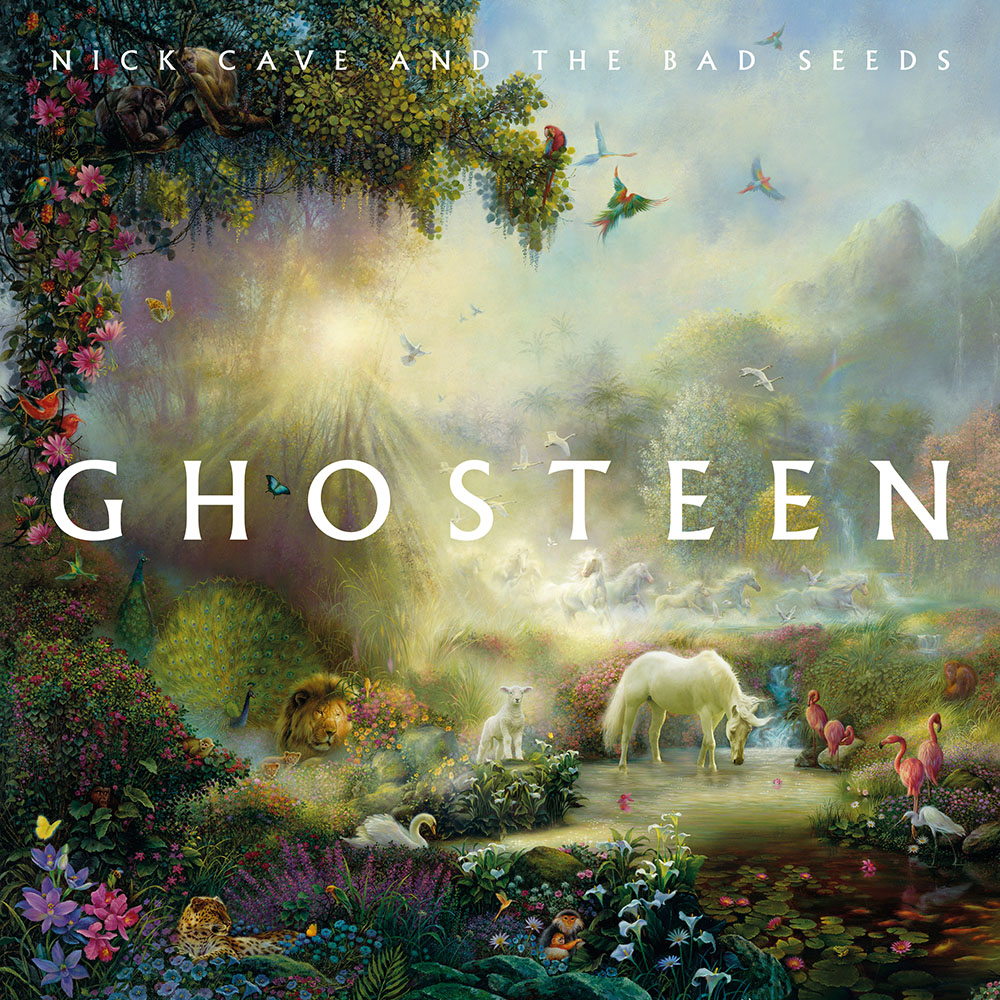
3. Ghosteen - Nick Cave & The Bad Seeds

Like many artists who've earned near-unconditional adoration throughout their careers, especially those who might be described as being of the left field, it took a punt on Ghosteen for me to be finally won over to the Antipodean with the distinct baritone. But here was an album, seeped in the grief of Cave's teenage son's accidental death in 2015, which appeared a month after my own dad's funeral, which provided a welcome, if moving accompaniment to my journeys around the M25 between south-east and south-west London. Ghosteen's catharsis comes in the form of ethereal landscapes, literally fog-like keyboard beds and sombre piano that underlay Cave's distinct vocals. There's rarely any reason to question who the songs are about, but there's no overt wailing either. If it was intended to be Cave's processing of his son's death, it is never self-indulgent. It is, however, breathtakingly beautiful.

4. Giants Of All Sizes - Elbow

Elbow's eighth album is, according to the band, anything but cuddly, contrary to the somewhat avuncular profile of its frontman, Guy Garvey. Don't, however, take that to mean it's a gloomfest - Giants Of All Sizes is still very much an Elbow album, replete with Garvey's cocoa-warm voice bound to a band experimenting with sounds and instrumentation without going too far - but contained within that experimentation is a darker tonality. From the off,  opener Dexter & Sinister and its disjointed time signatures and non-sequitur breaks addressing a number of things on Garvey's mind, from Brexit to bereavement (including the death of his father) and, in his own words, "the general sense of disaffection you see all-around at the moment". Musically, some might find Giants musically narrow, with a very similar range across its nine songs and a notable lack of a One Day Like This anthem, but this lack of width makes for a better album. It is one that places itself in the company of the more melodic reaches of prog rock (Garvey is a fan), which doesn't mean endless organ solos, but a rich variety of tone and layers, rhythms and storytelling. Like Cave's Ghosteen, Elbow's Giants Of All Sizes also addresses grief and loss, but with what I call "balanced grace", looks for light in the darkness by placing arrivals in the proper perspectively. Some reviewers have (quite rightly) claimed it to be Elbow's best yet and, on reflection, it probably is - brilliantly intriguing, musically, and obliquely reflective, lyrically. One I listened to on repeat for most of the Saturday afternoon after it was released, hearing something new each time, pulling it closer like a warm blanket on a cold, wet October afternoon, a comfort no Pumpkin Spice Latte from Starbucks will ever fulfil.

5. Kiwanuka - Michael Kiwanuka

A late entry in my albums of the year, on account of it being given to me for Christmas by my 18-year-old university student step-daughter, bought with her own money. What a wise young woman she is...and, notably, properly plugged in to what makes me tick, musically. I'm not, however, normally given over to hyperbole. I've habitually given anything a mighty swerve that's been raved about by the cool brigade. So, when Kiwanuka was received in November by The Guardian as "one of the greatest albums of the decade" I was naturally deflected. I'd heard, from reviews of Michael Kiwanuka's first two albums that here we had a musically literate, experimental lab scientist, a soulful Heston Blumenthal making clever musical cocktails, much like the last fusion hero to come along, Thundercat. As smart as all that was, Kiwanuka is way more rewarding. Through subtle textures, rather than brash pronouncements, it serves up reflective soul of the kind Otis Redding rarely got credit for, but with elements of gospel, orchestral grandeur and even shades of Hendrix. There have been plenty of soul pretenders over the decades, including those trying to do soul with a twist. This, finally, delivers all that. Sublime. And thanks Ella x.

6. Further - Richard Hawley

The same friend who introduced me to Peter Bruntnell was on a roll, then, having previously introduced me to Sheffield's pre-eminent crooner, Richard Hawley. A Sunday morning free stream of Hawley's Standing At The Sky's Edge, courtesy of The Observer, introduced me to an album of distortion-drenched psychedelic epics that I listened to exclusively for what seemed like weeks. Two weeks after the Bataclan attack in Paris, where I was living at the time, Hawley's gentle humour and mellifluous songs were, that night, just what Paris needed. A musical arm around the shoulder. Soothing reassurance. With this year's release Further, Hawley returned to the mellifluousness of his earlier, countrified releases, dreamily shimmering with songs like Emilina Says, Galley Girl and My Little Treasures, and the Beatle-esque Doors. Four years after those terrible events in Paris, and in a world more politically febrile than ever, Hawley's songs and engaging lyrics have been a soothing balm in troubled times, and none more so than on this album.

7. Western Stars - Bruce Springsteen

The Boss has been in a reflective mood of late. In the five years between Western Stars and his previous studio album, he released his excellent autobiography, Born To Run, and ran his one-man Springsteen On Broadway for more than a year. All of this became part of a narrative of reflection as Springsteen neared the end of his 60s, recalling in his work the blue collar New Jersey upbringing, the thunderclaps of seeing Elvis and The Beatles' debuts on The Ed Sullivan Show, and his own journey to become America's most earnest rock star. Western Stars, Springsteen's 19th studio album casts a winsome gaze over the cowboy culture of Roy Rogers and the early 1950s television the young Bruce Frederick Joseph Springsteen was exposed, framing further the America Springsteen has, in one way, shape or another, eulogised throughout his career, but seen now through the prism of it’s most dramatic, some might even say disturbing schism in several generations. Springsteen has been telling his own American Story since Born To Run "sprung from cages out on Highway 9", but in Western Stars he places his America in a context of the deserts and vast scrublands west of the Mississippi for the challenges they present now, and while this may be a reflection on his own, perhaps surprising struggles with mental health, the 'home on the range' expression on Western Stars provides an outlet for the desire for mental freedom as much as traditional American expressions of the frontier spirit.

8. The New Adventures Of...PP Arnold - PP Arnold

There are plenty of artists of a certain vintage whom you could call tardy for the distances that open up between recordings. Peter Gabriel comes straight to mind, for the dilettantism that sends him off in multiple directions without bringing him back to what he does best (his last album of original new songs was Up in 2002 - almost 18 years ago). Patricia Ann Cole - professionally known as PP Arnold - might have a greater claim. In the '60s she became part of the musical fabric: haling from LA's troubled Watts district, she joined Ike and Tina Turner's soul review as an Ikette before remaining in London after a tour with the Rolling Stones, establishing a solo career there that led to work with the Small Faces and other luminaries of late '60s swinging London. Around this time she recorded her standout hits, The First Cut Is the Deepest and Angel of the Morning, and the albums The First Lady Of Immediate in 1967 and Kafunta in 1968. A third album, The Turning Tide was recorded around the turn of that decade, with Barry Gibb and Eric Clapton producing, but it was never finished and the recordings lay dormant until 2017, when Arnold resurrected and released the album. The intervening years hadn't exactly rendered Arnold idle - as a singer-for-hire she worked with people like Clapton and Roger Waters, but the voice that enchanted so many with The First Cut Is The Deepest held a lasting fascination with Paul Weller and his guitarist (and Ocean Colour Scene co-founder) Steve Craddock, who offered Arnold a bunch of their songs. The New Adventures Of... PP Arnold is the product of that offering, produced by Craddock, it showcases the 72-year-old Arnold has still possessing a voice of some beauty, via a mix of the Weller/Craddock material, as well as engaging covers of Sandy Denny's I'm A Dreamer and Mike Nesmith's Different Drum. Coming more than 50 years since she last committed her amazing voice to original material, you can only wonder what we've missed out on in the intervening years.

9. Warm/Warmer - Jeff Tweedy

Wilco crept up on me as a band I should like. Again, put off by hype, there seemed to be just too much gushing about them. And then I came across their Star Wars album in 2015 and, a decade-and-a-half since their Yankee Foxtrot breakthrough, I was kicking myself at what I'd missed. Earlier this year I was kicking myself at having completely missed the release of frontman Jeff Tweedy's 2018 solo album Warm, so when the record was re-released as a double package with the subsequent Warmer I was determined not to make the same mistake again. Recorded together in the same Chicago session, these twin albums find Tweedy in a soothingly laid-back frame of mind, both lyrically and musically. The albums' titles give this away. With Wilco themselves also releasing this year Ode To Joy (see below), there has been a generous doling out of comfort food from Tweedy and his cohorts (which include son Spencer on drums of these two solo releases), applying his wry turn of phrase on tracks like Evergreen and Ten Sentences with his gently abrasive country-folk melodies and a voice that always reminds me of Eels' Mark Everett - slightly gravelly and delightfully claustrophobic without being weird. Warmer's highlight is the sign-of-the-times commentary of Family Ghost, a striking commentary on the divisions of Trump's America and the dangerous empowerment of the right by news outlets like Fox News. Comparing Tweedy with Bruce Springsteen, as some critics have attempted, is a redundant task, but there are more clear parallels between the two than you might at first realise. There is, of course, the liberal earnestness, and you'd even go as saying that they operate in different spheres of the same alt-folk universe. Warm/Warmer, however, prove that even with such deliberately understated material, released more for the fun of Record Store Day than any serious tilt at the charts, that Tweedy is a performer and writer of gifted proportions. And, thankfully, there's a lot more left in him to come.

10. Echo In The Canyon OST

One of my favourite eras of the pop age is the period towards the end of the 1960s and early 1970s when the wooded canyons north of Los Angeles effectively constituted a large commune of bed-hopping, dope-smoking hippies making love and sweet music at the same time. The definitive written guide to this era - and its principle characters - can be found in Barney Hoskyns' brilliant (if lengthily titled) Hotel California: Singer-Songwriters & Cocaine Cowboys In The L.A. Canyons. Hoskyns' book recounts the music and the inter-personal relationships of people like Joni Mitchell, Crosby Stills Nash & Young, The Eagles, James Taylor, Jackson Browne and the record executive David Geffen, as they indulged high in the Hollywood hills during the daytime and played hard in the clubs of Sunset Boulevard in the nights. It was the musical premise of this period that caught my attention when the documentary Echo In The Canyon came out in the US in late 2018, focusing on the extraordinary creativity that came out of LA's Laurel Canyon as folk music met pop and the green shoots of rock with bands like The Byrds, Buffalo Springfield, and The Mamas and the Papas, drawing on the The Beatles, partly, to create a Californian sound of its own. Drawn into this world were some of the figures covered in Hoskyns' book, but also the likes of Eric Clapton (as his meteoric career pinballed from one band to another, one style to another) as well as younger entrants to the scene, like the aforementioned Browne and Tom Petty. Andrew Slater's Echo In The Canyon delves into the figures that made the Canyon scene, with Bob's son Jakob Dylan fronting the documentary (which I've now managed to see on DVD). Inevitably, such a rich musical subject matter as this produces a fantastic soundtrack, centred around Dylan, and featuring recordings from many of those who feature in the film, including Josh Homme, Norah Jones, Fiona Apple, Clapton and Stephen Stills, and Beck, who covers Goin' Back, the Goffin/King song written for Dusty Springfield (and a regular feature in Peter Bruntnell's live sets). It's a celebration of songwriting craft at its best, but a craft that matured delightfully in a particular window in time.

Worthy of mention

  • Lost Girls - Bat For Lashes: Welcome return from Natasha Khan, AKA Bat For Lashes, with something of a concept album about a gang of biker women roaming a dystopian Los Angeles. I've probably not done the concept justice here, but the record is exquisite.
  • Free - Iggy Pop: Trailed by the delightfully kitsch (and radio-friendly) single James Bond, the Iggster's 18th studio album finds the so-called "Godfather of Punk" in contemplative mood (well, at 72 he had to start calming down sooner or later) as he considers life after the big tours have started to come to an end. With half its tracks written by LA-based guitar wizz Sarah Lipstate, others including one whose lyrics were written by Lou Reed in 1970 and another drawing on the Dylan Thomas poem Do Not Go Gentle Into That Good Night, it's a calmer Pop record than we've become used to, and with a somewhat improvised feel to it, too. None of which is a bad thing, either.  
  • Threads - Sheryl Crow: billed as Crow's final album (she decided that it was no longer worth competing in the age of single-track listens via streaming sites), Threads pairs Crow with a variety of partners from the legend end of rock's executive lounge, with a combination of covers and original songs. And it is mostly fabulous. Collaborations with Willie Nelson, Bonnie Raitt and Mavis Staples are sublime, although we could have done without the cover of George Harrison’s Beware Of Darkness featuring Sting and Brandi Carlisle. As an exercise in the application of professional friendships, Threads can’t be faulted, but it is at its best when Crow’s natural songwriting ability around with rock-blues roots comes to the fore and you don’t, actually, care all that much who she’s working with on the track.
  • Ode To Joy - Wilco: I've already waxed on above about Jeff Tweedy's twin contribution to the 2018/2019 album story, but at risk of presenting him as a greedy sod, he also managed to get the band together this year to produce Ode To Joy, which it is. It's a somewhat gentle album, but since I would probably, now, rate a Wilco album that was essentially 12 tracks of nails and screws being thrown into a bowl, I've got plenty of bandwidth for an album from them that doesn't tread expected routes. You could even look upon it as a romantic album. There, I said it.
  • Anima - Thom Yorke/Flowers At The Scene - Tim Bowness/Love You To Bits - No-Man: I've lumped together my final three new albums at risk of annoying the artists involved. No, they're not identical, but there are behavioural patterns behind those who've made them. Thom Yorke's Anima (a somewhat hoity-toity reference to Carl Jung) is a darkly layered collection of electronic music that, on my first listen while driving around the M25, left me underwhelmed. And slightly unfit to drive on account of its somnambulant dangers. Subsequent listens improved my appreciation considerably, especially tracks like the opener Traffic and the stunning The Axe. Truly a master at work. As is Tim Bowness, the Cheshire musician known perhaps best for his work with Steven Wilson in No-Man (see next), but who has worked with a range of musicians to produce brilliant albums seeped in ambience and depth that, thankfully, defy any definitive labelling. His latest, Flowers At The Scene brought him together with guests like 10cc's Kevin Godley, XTC's Andy Partridge, Peter Hammill and, as co-producer, that man Wilson again, like his compadre's own move towards greater mainstream accessibility, draws together bold strands of pop, soundscapes and confessional lyrics to create one of the year's most engaging records. Which brings us to No-Man's Love You To Bits. Long before Wilson was shifting significant critical acclaim with Porcupine Tree, he and Bowness were, starting in 1987, experimenting with whatever took their fancy with No-Man, first finding attention with their Flowermouth album in 1994 (featuring Robert Fripp, no less) and presenting to the world a showcase for their own hugely eclectic musical tastes - dance music, ambient music, acoustic, electronic. Love You To Bits is Bowness and Wilson's first full album together as No-Man since 2008, and dives headfirst into their mutual love of synth pop. Taking the quintessentially prog approach of spanning the album over, essentially, two tracks - Love You To Bits (Bits 1-5) and Love You To Pieces (Pieces 1-5), Bowness and Wilson resurrected an idea that had been around for a decade or two, of an album that nodded to their love of bands like New Order and Talk Talk, rich in synths and drum machines and the sort of electronic dance music - there, I've said it - that were a core part of their music consumption in the early 1990s. The cover image, of a glitter ball tees up the opening phase of the Love You To Bits side, proper 4-4 disco stomp that, actually goes beyond just guilty pleasure territory, but is genuinely infectious, as is the rest of the album, which, over its two sides, explores the breakup of a relationship from the perspectives of its two principals. The second side opens on a jazzier note - no surprise given its use of Wilson's touring keyboard player, Adam Holtzman, the last ivory tinkler to work for Miles Davis, but spreads out over its five sections into a wonderful stew of trance-like club music. For those who've followed Wilson's career in particular, and who have (wrongly) formed the view that he is a standard-bearer for prog rock, you must remember that the two albums that sparked his interest to begin with were Pink Floyd's The Dark Side Of The Moon (a Christmas present from his mother to his father) and Donna Summer's Love To Love You Baby (a Christmas present from his father to his mother). Both would shape the career of an extraordinary, if still criminally under-rated artist, a description he easily shares with Bowness. 

Back For More


  • Abbey Road - The Beatles: Re-released with all the bumper package options to celebrate its 50th anniversary, the basic album alone is worth a re-listen, let alone all the outtakes and curiosities that come with the 'super deluxe edition'. Of course, Abbey Road depicts The Fabs'  last hurrah (yes, yes, I know all about Let It Be...) but also a now-mature rock band seemingly comfortable in its skin and, at times, its own company. Doesn't matter how many copies you own, this is a retread worth every penny.
  • London Calling - The Clash: Another anniversary waltz, but even if you bought the 30th anniversary edition, adding another ten years hence, with the accompanying storybook package, is worth your hard-earned for, quite frankly, the best album of the punk era, largely because it wasn't punk at all.
  • VH1 Storytellers - David Bowie: Since The Dame's death in 2016 there has been a steady industry of releasing luxurious packages of his cannon, from the complete sequence of studio and live albums to the recent box of his early development. The VH1 Storytellers album originally came out in 2009, ten years after Bowie had actually appeared in VH1's live performance Storytellers series. Dipping into Bowie's career, as far back as Life On Mars, right up to material for the under-appreciated Hours album, the somewhat stripped back sample of the man's work actually serves to highlight just how good he was. Understatement, right?
  • Let It Bleed - Rolling Stones: Yes, another nice bone to throw the Stones' pension pots, but why not? Let It Bleed found the Stones at their louche best, with stonkers like Gimme Shelter, Midnight Rambler and You Can't Always Get What You Want standing out, even despite close-run gems like Country Honk and Monkey Man. Another 50th anniversary release, with all the trimmings that entails in the heritage market, it's one of those Stones albums you simply go out and buy again, and listen as if new.
  • Mark Hollis - Mark Hollis: Talk Talk frontman Hollis' death in February this year took the wind out of many's sails, not least of which mine. What compounded that emotion was that Hollis's work was as sparse as the songs he often recorded. And none more so than this, his only solo album, released in 1998 (and again in 2003 as an LP only), but still often forgotten, or even dismissed as being unlistenable due to its achingly hushed material, of the kind cynics might say could only have been heard of by mountain rescue dogs. This new vinyl re-release addresses many of the snarks and even complaints about the sonic dullness of the original, being slightly brightened up in the studio and released as a posthumous curiosity for those who loved all Hollis did with Talk Talk and, even with its obvious limitations, would find interest in now.

Monday, 10 June 2019

Get me to the church on time!

© Simon Poulter 2019
As I was compelled to mention in my recent post about Sarah-Jane Morris's John Martyn project, I hold a fascination - some might say obsession - for the meagre musical connections of the south-west London suburbs in which I grew up. This partly stems from the discovery that Martyn himself was born only a thirty minute walk from the New Malden house where I later sprang to life, a revelation akin to discovering royal blood in my veins.

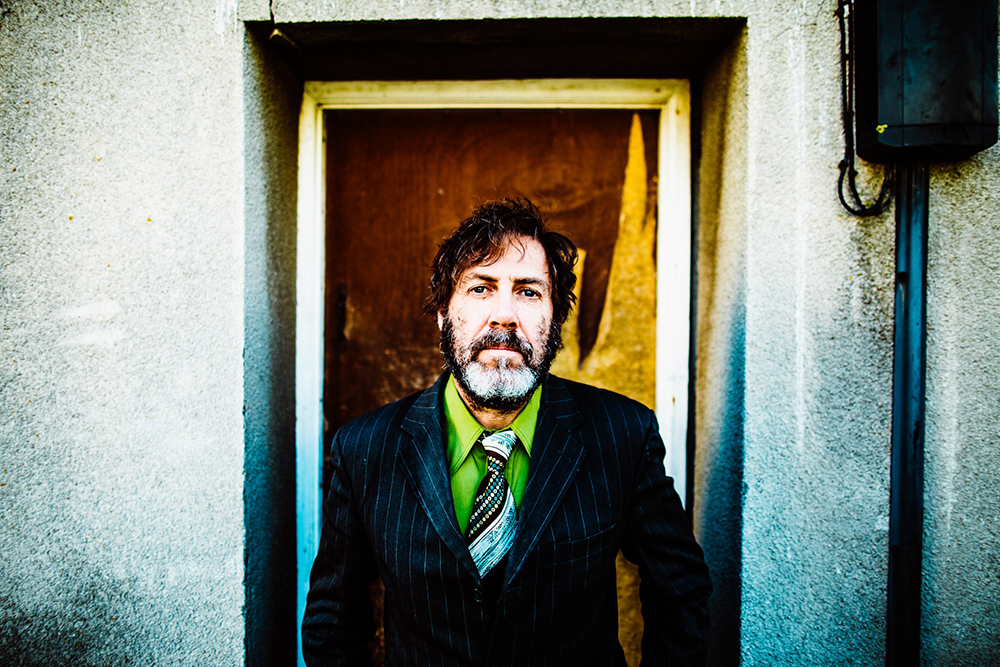
That discovery gave no indication that there would be more intersections to come. The first - and clearly foremost - came when I met my other half and learned that she not only lived in New Malden (in a house more or less backing on to that in which my grandfather and his siblings were born), but also worked at my first junior school. Bizarrely, too, she grew up in south-east London, where I currently base myself. Then came the revelation that my local Greenwich MP, Matthew Pennycook, also hails from the area and even went to my secondary school, some years behind me, before going up to Oxford (a rare event for Beverley Boys, I can assure you). The next connection in this uncanny sequence, however, was another musical one: via an intimate basement gig one Saturday night in Tufnell Park, over there in that North London, my mate Sean introduced me to the music of singer-songwriter Peter Bruntnell. And, guess what? I discovered that Bruntnell was at Beverley too, albeit a few years ahead of me.


Readers, I will not bore you further (and again) with the other remarkable collection of rock connections to my home area (Clapton, Page, Beck, et al), because Bruntnell is one of two pressing local musical matters to address here. Once described by Rolling Stone, no less, as "one of England's best kept musical secrets", demonstrating customary American understanding of the United Kingdom construct, Bruntnell has, since 1995, delivered a stunning canon of Americana-tinged, bittersweet brilliance. And he's now added to it with a sumptuous new album, King Of Madrid. Incredibly, it's his 13th, which means that the previous 12 have probably passed under your radar over the last 25 years since he released his debut. But if that is so, then you will have missed out on a body of work redolent of one of my favourite periods of musical history, when the canyons of Los Angeles were a vital source of earnest musicianship and hippy ideals, and produced the likes of Jackson Brown, the Eagles, the Flying Burrito Brothers, Gram Parsons and more.

King Of Madrid continues in that rich Americana vein and should, with the right visibility elevate Bruntnell to an entirely different altitude, possessing the kind of hooks, lyrical richness, lusciously strummable guitar work and Bruntnell's gently urgent vocals that wouldn’t be out of place on anything emanating from Laurel Canyon in the late '60s. I’d even go as far as comparing Bruntnell with Tom Petty and Bruce Springsteen, perhaps not for their denim earnestness, but more for the subtlety of lyrical observation attached to his rooted music. On this release, Bruntnell targets the utter mess Britain is right now, peaking with National Library taking shots at the legacy left behind by David Cameron (including soundbites from the former prime minister), while Memory Hood, London Hood and the album's title track, take clever potshots at the febrile state of the nation.

We stay in the KT postcodes, sort of, and add a very strong touch of Sheffield for the next musical revelation, also brought to me by the aforementioned Sean, whose appreciation of Americana goes unmatched. One spring Sunday morning, seven years ago, Sean sent me a link to a free stream of Richard Hawley's then new album, Standing At The Sky's Edge. Hawley had, like Bruntnell, hitherto passed me by, despite his early Britpop work in the Longpigs and later collaborations with fellow Sheffielder Jarvis Cocker. And yet here, on this particular lazy Sunday morning, lying in bed in my apartment in Paris, I became engulfed completely by Hawley's collection of songs about three families living in Skye Edge, a housing estate in Sheffield's Park Hill district, one of many Hawley has embraced in song. Sky's Edge subsequently turned out to be a new direction, leaving behind the gentle country croons of its predecessors and instead embracing a reverb and distortion-drenched set of psychedelic epics. I listened to nothing else for what seemed like weeks after hearing it. Two weeks after the awful Bataclan attack in Paris, Hawley was the first gig I went to, itself an emotional rollercoaster for everyone inside the Alhambra theatre, barely a fifteen-minute walk away from the terrorist atrocity in November 2015. Hawley's gentle humour and mellifluous songs were, that night, just what Paris needed. A musical arm around the shoulder. Soothing reassurance.

And so it is with a gentler context that the bequiffed and typically double denim-clad Hawley comes to a church in Kingston-upon-Thames, New Malden's 'parent' town, to launch his delicious new record, Further. Noting the "Holy! Holy! Holy!" banner behind him on the apse wall of St. John The Baptist Church (a change of venue from the All Saints Church, which was recently - and surreally - the location of a gig by Jack Bauer himself, Keifer Sutherland), Hawley is soon riffing in his dry South Yorkshire humour, suggesting "Hawley! Hawley! Hawley" as a more suitable slogan.

Even with one semi-accidental F-bomb, he is never disrespectful of the environment, making ample use of the ecclesiastic ambience to enhance the acoustic guitar work of Hawley and his ever-present sidekick Shez Sheridan, as they make their way through an eight-song set that includes new music such as the Beatle-esque Doors, the dreamily shimmering Emilina Says, Galley Girl and its tale of highwayman derring-do, and the utterly winsome My Little Treasures, a song which took Hawley 12 years to write, about two of his late father's drinking buddies. From previous albums Hawley and Sheridan combine wonderfully to produce all-acoustic versions of Sky's Edge and even the glitterball romance of Tonight The Streets Are Ours, returning after the briefest of discreet beer breaks to end with the absolutely mellifluent For Your Lover Give Some Time from the Truelove's Gutter album, a song that, via its bittersweet lyrics, shines the spotlight on Hawley's delicious barrtione.

The set is short and sweet, a promotional opportunity for Kingston's fine emporium Banquet Records as much as a Richard Hawley Gig, but in the church setting, before a largely white middle aged and middle class congregation - Kingston captured in its essence - Hawley wraps yet another soothing arm around the shoulder. The last time was in the tragic aftermath of Paris, almost four years ago. This time, we're in the innocent, perennially untroubling London suburbs, in a residential parish church. The circumstances and location couldn't be more contrasting.