It occurred to me this morning that COVID-19 is just the pandemic Britain needs. I don't mean this flippantly, of course - 40,000 people have now died of this thing here, after all. No, what I mean is that if any country was attuned to social distancing, it's us. We're an island nation, for starters, and when taking the famous British reserve into account, probably more comfortable keeping a measured space between each other as anyone.
The reason this only occurred to me today is that I ventured out for a doctor's appointment, wearing a face mask, and I don't think I've ever felt so self-conscious. It was hard enough wearing it and sunglasses, with the latter steaming up as I pegged it down the road to a last-minute appointment that had opened up suddenly, like a coveted Ocado delivery slot. I must have looked like Griffin in HG Wells' The Invisible Man. Actually, I did. Thankfully, I was not alone.
On the rare occasions I have ventured out into my local high street during the lockdown I've been struck by the number of others wearing face masks. New Malden has a sizeable Korean community, so pre-coronavirus, someone wearing a mask wasn't all that unusual a sight, given the cultural popularity of facial coverings among Asian nations, dating back to the 1918 Spanish Flu pandemic. But whereas we might have once looked upon our Korean neighbours with the wry smile once worn while watching Clive James's Sunday night observations of life in Asia, the bandit look is fast becoming de rigueur. In fact, it's conceivable that for the forseeable future, this is how we'll be looking at most people we encounter. From next Monday it will be compulsory to wear face coverings when travelling on public transport and for all staff and outpatients visiting hospitals. Wearing a mask might, too, become a condition of entry to shops as they start to reopen from next week.
Slowly but surely, Britain is losing its chin - literally. The lower halves of our faces are retreating behind a layer of cloth as the price to be paid for venturing into the community again. Soon, we will be recognisable only by our eyes, eyebrows and whatever state our newly-bouffant hair is in. Throw on the Wayfarers, as I did this morning, and we're almost in the realm of The Who's Tommy - "...put in your earplugs, put on your eyeshades - you know where to put the cork". However, despite health secretary Matt Hancock's claim that COVID-19 itself is "in retreat", it is not. New infections and deaths in the UK may have come down considerably, but as it stands, there is neither a cure or a vaccine, and people are still dying, which in my view means that it's still out there.
There are two issues with this: firstly, there is still no consensus amongst experts as to whether face masks, of the kind most people have managed to acquire privately, do any good. A German study has suggested that the mandatory wearing of masks has coincided with a drop in infections, but there is still some doubt as to a direct link. The coronavirus is a tricky bugger and unlike any other when looked at from a micro-biological point of view, which means that all the masks and anti-bac gels in the world won't do a damn thing unless social distancing continues to be rigidly applied. Although the medical and scientific community does agree that masks - even if just fashioned crudely from your once-favourite tour T-shirt - do offer some protection (to you and to others), it's still only limited.
They might stop virus-laden droplets from spreading out into the 'cone' of dispersal after you cough or sneeze but, apparently, they're not so good at preventing the tiny particles from getting in from other people. Then there's the false sense of security they might give: even masked up, the high street this morning was full of foreboding - some wearing masks, some not, some observing two metres' social distance, some not. One man I encountered, almost immediately after I left the surgery, came out of a newsagent coughing copiously, albeit into his mask, which must have been pleasant for him. He certainly showed no sign of concern that he was right in front of me and others as he went.
Masks are, therefore, not shields. I may not fully understand the epidemiology at work here, and I may also live in one of the London boroughs with the lowest number of coronavirus cases of all, but I still view the world outside my front window as being a hostile one that could kill me. My mask, this morning, would have only offered a limited amount of protection. So what's the alternative? Are we now only to venture into exposed environments wearing hazmat suits? Well, it's a thought. Ever since I was told to stay home or stay alert, whichever government doctrine was in force at the time, I have consistently looked at 'outside' as a danger, as if Chernobyl had moved in across the road, and anyone out there was suddenly glowing like the kids in those Ready Brek ads in the 1970s.
The message from government is, increasingly, give up your fears. The economy is on its knees and won't return unless we get out into the great unknown and start putting ourselves at risk. "Some risk," the experts might say, but still a risk. No doubt soon we'll be told that the risk is no more than that associated with crossing the road, though with the number of idiots using the lockdown to speed up and down suburban backstreets, that's not such the low-risk experience it once was. Others will say that the face mask is a small price to pay for freedom, but think of what - and who - it cuts off. My elderly mother, who has been losing her hearing, struggles at best to hear what you say to her, let alone from two metres away. Not being able to read my lips will cut her off further.
But, as I opened this post suggesting, perhaps the country being forced to look like The Lone Ranger for the foreseeable future will not be so bad. Maybe we'll just get used to it. Maybe, until this thing gets beaten, we'll just have to get used to walking around with only half our facial identity visible. Some, I'm sure will like that. Others, like me, will have to accept it as simply essential.
Views expressed do not necessarily reflect those of any organisation with which the author is associated professionally.
Showing posts with label The Who. Show all posts
Tuesday, 9 June 2020
Tuesday, 31 December 2019
2019 Albums Of The Year
![]() |
| © Simon Poulter 2019 |
2019. Quite literally, to paraphrase Mike Smash, 12 months which began on January 1st and come to an end today. As every year, one with plenty of ups and downs, arrivals and departures (not the least of which my dad, who left this world in August, just a few months after his 90th birthday, and the job I left barely two weeks after we'd said our final farewells to him). A year of change and personal reflection, then, while the world around us raged (in the UK, at least), pretty much from start to finish about Brexit. There was more lunacy from Trump, an angry Swedish teenager kicked up dust about climate change, Greggs launched a vegetarian sausage roll, and the British royal family found themselves up to their eyes in car accidents, fraternal discord, media bating and media avoidance.
As ever, music has been a constant soundtrack, and there has been no shortage of it - both live (Doves at the Albert Hall, Paul Weller in Greenwich, Richard Hawley in a church, Kaiser Chiefs in a sweaty old nightclub, a bizarre evening with Roy Harper, the mighty Second Sons in a Raynes Park pub) and on record. So, here goes with my albums of 2019, a list of ten that took some narrowing down to a line-up that has brought pleasure to my ears in a year of mixed blessings personally (happy and sad) and professionally, a year made all the more better by the following:
Album Of The Year 2019 - King Of Madrid by Peter Bruntnell
I was a slow convert to Bruntnell, which is another way of saying I’d missed out on an extensive body if work dating back to 1995, including albums like the acclaimed Normal For Bridgwater. And then, a couple of years ago, a friend of mine invited me up to Tufnell Park to see Bruntnell and his ‘full’ band squeezed onto a basement stage, and after a brilliant set of wry, Americana-tinged jangly guitar pop, I was sold. Only later did I discover that Bruntnell grew up near me and went to my junior and secondary schools, five years ahead of me. Only later still did I discover that his mum knows my my mum. While all of that are, ultimately, nice coincidences, it’s the music, man, that draws me to his brilliance. King Of Madrid, his tenth album in 24 years, encapsulates all that I admire, as well as all that frustrates me about him: from the opener, Broken Wing, Bruntnell expounds on the state of Britain from various perspectives via a collection of ten songs, co-scripted with Canadian writing partner Bill Ritchie. It’s understandable that Bruntnell should get earmarked as an Americana artist, or even 'alt-country', but the likes of National Museum and even the gently lilting title track lend more to the great roots of American guitar music, from Wilco to Tom Petty (with a noted nod to Beatle-esque melodicism, as on Dinosaur). It’s pithy, it’s invigorating, and it hasn’t been out of my car’s CD player since it was released in May. So what is it that frustrates me about Peter Bruntnell? Well, he’s another of my lost causes. Like my childhood friend Steven Wilson (more below on him...), Bruntnell is another local connection to my origins who I’ve come to discover writes and records my kind of music. And yet he is known largely to a cognoscenti of musos. Both Wilson and Bruntnell deserve far greater status than they currently occupy. Wilson is starting to get there, with a new record company (Caroline, part of the Universal Music Group) getting him ever greater exposure, driving ever greater attention including a forthcoming mega-arena tour. Bruntnell, on the other hand, remains resigned to something akin to a cult following, especially in the United States where he tours frequently. It’s a shame, but on the evidence of King Of Madrid he deserves to be better known and better heard. Much, much better. An outstanding album from an outstanding artist.
2. WHO - The Who
It's impossible for the surviving legends of '60s pop - Macca, the Stones, Ray Davies, et al - to maintain their brilliance six decades on without resorting to repetition, self-reference and nodding winks. If you’re Jagger & Co, you have the wealth of classic blues to retread or simply reapply their patent DNA to; Paul McCartney has done well, with his recent efforts, not to overdo the knowing fabness, even to the extent of being quite cool still; and Davies, rather than pursuing a confected version of his particular place in Britpop's original geolocation, has followed his instincts down the path of Americana with his most recent albums. Others from the era - Neil Young springs immediately to mind - continue to show the generation inspired by their era what longevity is about. Paul Weller shows no signs of slowing up, and if he did, he’d be shamed by The Who, who’s surviving members, Roger Daltrey and Pete Townshend shipped their 12th studio album, WHO in December. The band's first new album in 13 years, it took a decidedly nostalgic path, reflecting on where the 'Orrible 'Oo's surviving members have found themselves looking back, accepting their lack of relevance but also their place in cultural history (exemplified by the album's Peter Blake cover art). This might sound wistful, both lyrically and sonically, but for the most part, it is a wonderfully energetic record, not reliant too much on atypical Who flourishes, but with just enough guitar crashes from Pete Townshend and vocal gymnastics from Roger Daltrey to remind of what took you to the band to begin with. Daltrey himself rates WHO as one amongst their strongest ("our best album since Quadrophenia in 1973") and he's not at all far wrong. Townshend himself is still a fantastic writer, with the majority of WHO's strong songs being good enough to let the sappy I'll Be Back pass without further comment. Who knows if it'll be their last, but if it is, there would be no finer finale.3. Ghosteen - Nick Cave & The Bad Seeds
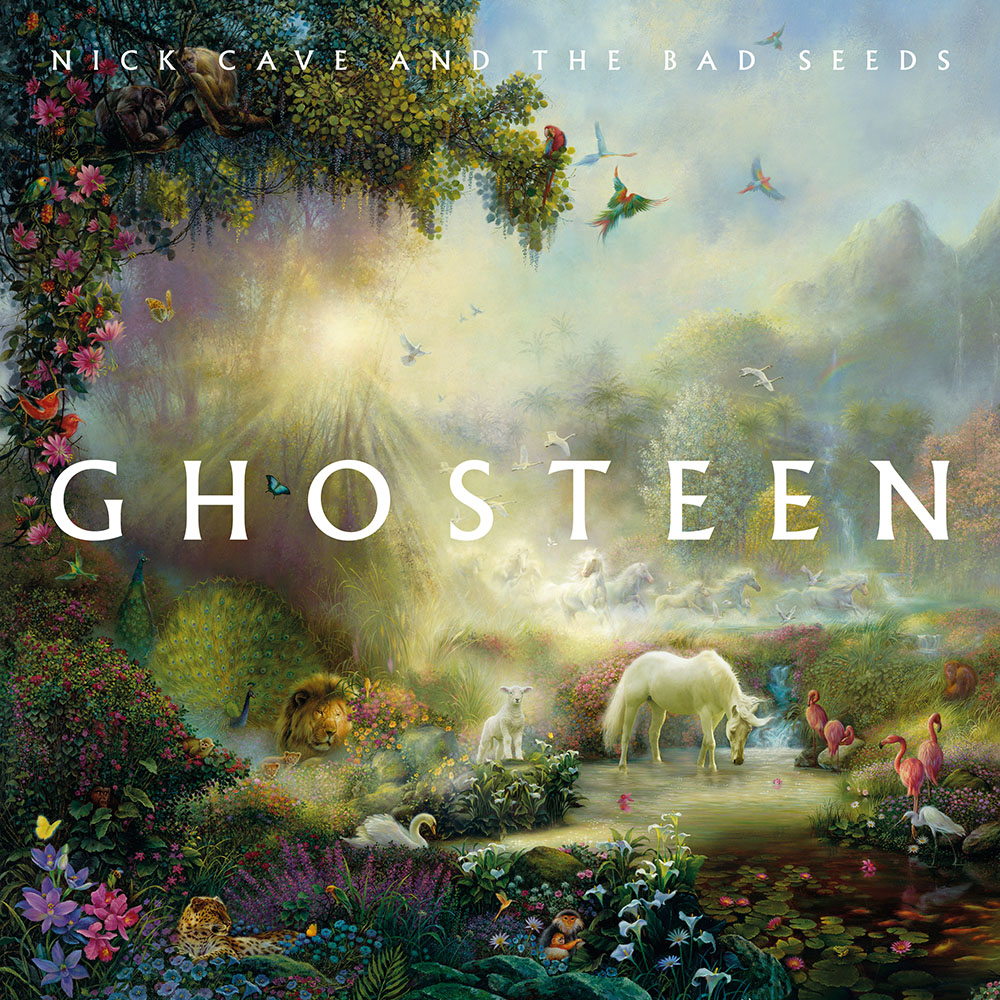
Like many artists who've earned near-unconditional adoration throughout their careers, especially those who might be described as being of the left field, it took a punt on Ghosteen for me to be finally won over to the Antipodean with the distinct baritone. But here was an album, seeped in the grief of Cave's teenage son's accidental death in 2015, which appeared a month after my own dad's funeral, which provided a welcome, if moving accompaniment to my journeys around the M25 between south-east and south-west London. Ghosteen's catharsis comes in the form of ethereal landscapes, literally fog-like keyboard beds and sombre piano that underlay Cave's distinct vocals. There's rarely any reason to question who the songs are about, but there's no overt wailing either. If it was intended to be Cave's processing of his son's death, it is never self-indulgent. It is, however, breathtakingly beautiful.4. Giants Of All Sizes - Elbow
Elbow's eighth album is, according to the band, anything but cuddly, contrary to the somewhat avuncular profile of its frontman, Guy Garvey. Don't, however, take that to mean it's a gloomfest - Giants Of All Sizes is still very much an Elbow album, replete with Garvey's cocoa-warm voice bound to a band experimenting with sounds and instrumentation without going too far - but contained within that experimentation is a darker tonality. From the off, opener Dexter & Sinister and its disjointed time signatures and non-sequitur breaks addressing a number of things on Garvey's mind, from Brexit to bereavement (including the death of his father) and, in his own words, "the general sense of disaffection you see all-around at the moment". Musically, some might find Giants musically narrow, with a very similar range across its nine songs and a notable lack of a One Day Like This anthem, but this lack of width makes for a better album. It is one that places itself in the company of the more melodic reaches of prog rock (Garvey is a fan), which doesn't mean endless organ solos, but a rich variety of tone and layers, rhythms and storytelling. Like Cave's Ghosteen, Elbow's Giants Of All Sizes also addresses grief and loss, but with what I call "balanced grace", looks for light in the darkness by placing arrivals in the proper perspectively. Some reviewers have (quite rightly) claimed it to be Elbow's best yet and, on reflection, it probably is - brilliantly intriguing, musically, and obliquely reflective, lyrically. One I listened to on repeat for most of the Saturday afternoon after it was released, hearing something new each time, pulling it closer like a warm blanket on a cold, wet October afternoon, a comfort no Pumpkin Spice Latte from Starbucks will ever fulfil.5. Kiwanuka - Michael Kiwanuka
A late entry in my albums of the year, on account of it being given to me for Christmas by my 18-year-old university student step-daughter, bought with her own money. What a wise young woman she is...and, notably, properly plugged in to what makes me tick, musically. I'm not, however, normally given over to hyperbole. I've habitually given anything a mighty swerve that's been raved about by the cool brigade. So, when Kiwanuka was received in November by The Guardian as "one of the greatest albums of the decade" I was naturally deflected. I'd heard, from reviews of Michael Kiwanuka's first two albums that here we had a musically literate, experimental lab scientist, a soulful Heston Blumenthal making clever musical cocktails, much like the last fusion hero to come along, Thundercat. As smart as all that was, Kiwanuka is way more rewarding. Through subtle textures, rather than brash pronouncements, it serves up reflective soul of the kind Otis Redding rarely got credit for, but with elements of gospel, orchestral grandeur and even shades of Hendrix. There have been plenty of soul pretenders over the decades, including those trying to do soul with a twist. This, finally, delivers all that. Sublime. And thanks Ella x.6. Further - Richard Hawley
The same friend who introduced me to Peter Bruntnell was on a roll, then, having previously introduced me to Sheffield's pre-eminent crooner, Richard Hawley. A Sunday morning free stream of Hawley's Standing At The Sky's Edge, courtesy of The Observer, introduced me to an album of distortion-drenched psychedelic epics that I listened to exclusively for what seemed like weeks. Two weeks after the Bataclan attack in Paris, where I was living at the time, Hawley's gentle humour and mellifluous songs were, that night, just what Paris needed. A musical arm around the shoulder. Soothing reassurance. With this year's release Further, Hawley returned to the mellifluousness of his earlier, countrified releases, dreamily shimmering with songs like Emilina Says, Galley Girl and My Little Treasures, and the Beatle-esque Doors. Four years after those terrible events in Paris, and in a world more politically febrile than ever, Hawley's songs and engaging lyrics have been a soothing balm in troubled times, and none more so than on this album.7. Western Stars - Bruce Springsteen
The Boss has been in a reflective mood of late. In the five years between Western Stars and his previous studio album, he released his excellent autobiography, Born To Run, and ran his one-man Springsteen On Broadway for more than a year. All of this became part of a narrative of reflection as Springsteen neared the end of his 60s, recalling in his work the blue collar New Jersey upbringing, the thunderclaps of seeing Elvis and The Beatles' debuts on The Ed Sullivan Show, and his own journey to become America's most earnest rock star. Western Stars, Springsteen's 19th studio album casts a winsome gaze over the cowboy culture of Roy Rogers and the early 1950s television the young Bruce Frederick Joseph Springsteen was exposed, framing further the America Springsteen has, in one way, shape or another, eulogised throughout his career, but seen now through the prism of it’s most dramatic, some might even say disturbing schism in several generations. Springsteen has been telling his own American Story since Born To Run "sprung from cages out on Highway 9", but in Western Stars he places his America in a context of the deserts and vast scrublands west of the Mississippi for the challenges they present now, and while this may be a reflection on his own, perhaps surprising struggles with mental health, the 'home on the range' expression on Western Stars provides an outlet for the desire for mental freedom as much as traditional American expressions of the frontier spirit.8. The New Adventures Of...PP Arnold - PP Arnold
There are plenty of artists of a certain vintage whom you could call tardy for the distances that open up between recordings. Peter Gabriel comes straight to mind, for the dilettantism that sends him off in multiple directions without bringing him back to what he does best (his last album of original new songs was Up in 2002 - almost 18 years ago). Patricia Ann Cole - professionally known as PP Arnold - might have a greater claim. In the '60s she became part of the musical fabric: haling from LA's troubled Watts district, she joined Ike and Tina Turner's soul review as an Ikette before remaining in London after a tour with the Rolling Stones, establishing a solo career there that led to work with the Small Faces and other luminaries of late '60s swinging London. Around this time she recorded her standout hits, The First Cut Is the Deepest and Angel of the Morning, and the albums The First Lady Of Immediate in 1967 and Kafunta in 1968. A third album, The Turning Tide was recorded around the turn of that decade, with Barry Gibb and Eric Clapton producing, but it was never finished and the recordings lay dormant until 2017, when Arnold resurrected and released the album. The intervening years hadn't exactly rendered Arnold idle - as a singer-for-hire she worked with people like Clapton and Roger Waters, but the voice that enchanted so many with The First Cut Is The Deepest held a lasting fascination with Paul Weller and his guitarist (and Ocean Colour Scene co-founder) Steve Craddock, who offered Arnold a bunch of their songs. The New Adventures Of... PP Arnold is the product of that offering, produced by Craddock, it showcases the 72-year-old Arnold has still possessing a voice of some beauty, via a mix of the Weller/Craddock material, as well as engaging covers of Sandy Denny's I'm A Dreamer and Mike Nesmith's Different Drum. Coming more than 50 years since she last committed her amazing voice to original material, you can only wonder what we've missed out on in the intervening years.9. Warm/Warmer - Jeff Tweedy
Wilco crept up on me as a band I should like. Again, put off by hype, there seemed to be just too much gushing about them. And then I came across their Star Wars album in 2015 and, a decade-and-a-half since their Yankee Foxtrot breakthrough, I was kicking myself at what I'd missed. Earlier this year I was kicking myself at having completely missed the release of frontman Jeff Tweedy's 2018 solo album Warm, so when the record was re-released as a double package with the subsequent Warmer I was determined not to make the same mistake again. Recorded together in the same Chicago session, these twin albums find Tweedy in a soothingly laid-back frame of mind, both lyrically and musically. The albums' titles give this away. With Wilco themselves also releasing this year Ode To Joy (see below), there has been a generous doling out of comfort food from Tweedy and his cohorts (which include son Spencer on drums of these two solo releases), applying his wry turn of phrase on tracks like Evergreen and Ten Sentences with his gently abrasive country-folk melodies and a voice that always reminds me of Eels' Mark Everett - slightly gravelly and delightfully claustrophobic without being weird. Warmer's highlight is the sign-of-the-times commentary of Family Ghost, a striking commentary on the divisions of Trump's America and the dangerous empowerment of the right by news outlets like Fox News. Comparing Tweedy with Bruce Springsteen, as some critics have attempted, is a redundant task, but there are more clear parallels between the two than you might at first realise. There is, of course, the liberal earnestness, and you'd even go as saying that they operate in different spheres of the same alt-folk universe. Warm/Warmer, however, prove that even with such deliberately understated material, released more for the fun of Record Store Day than any serious tilt at the charts, that Tweedy is a performer and writer of gifted proportions. And, thankfully, there's a lot more left in him to come.10. Echo In The Canyon OST
One of my favourite eras of the pop age is the period towards the end of the 1960s and early 1970s when the wooded canyons north of Los Angeles effectively constituted a large commune of bed-hopping, dope-smoking hippies making love and sweet music at the same time. The definitive written guide to this era - and its principle characters - can be found in Barney Hoskyns' brilliant (if lengthily titled) Hotel California: Singer-Songwriters & Cocaine Cowboys In The L.A. Canyons. Hoskyns' book recounts the music and the inter-personal relationships of people like Joni Mitchell, Crosby Stills Nash & Young, The Eagles, James Taylor, Jackson Browne and the record executive David Geffen, as they indulged high in the Hollywood hills during the daytime and played hard in the clubs of Sunset Boulevard in the nights. It was the musical premise of this period that caught my attention when the documentary Echo In The Canyon came out in the US in late 2018, focusing on the extraordinary creativity that came out of LA's Laurel Canyon as folk music met pop and the green shoots of rock with bands like The Byrds, Buffalo Springfield, and The Mamas and the Papas, drawing on the The Beatles, partly, to create a Californian sound of its own. Drawn into this world were some of the figures covered in Hoskyns' book, but also the likes of Eric Clapton (as his meteoric career pinballed from one band to another, one style to another) as well as younger entrants to the scene, like the aforementioned Browne and Tom Petty. Andrew Slater's Echo In The Canyon delves into the figures that made the Canyon scene, with Bob's son Jakob Dylan fronting the documentary (which I've now managed to see on DVD). Inevitably, such a rich musical subject matter as this produces a fantastic soundtrack, centred around Dylan, and featuring recordings from many of those who feature in the film, including Josh Homme, Norah Jones, Fiona Apple, Clapton and Stephen Stills, and Beck, who covers Goin' Back, the Goffin/King song written for Dusty Springfield (and a regular feature in Peter Bruntnell's live sets). It's a celebration of songwriting craft at its best, but a craft that matured delightfully in a particular window in time.
Worthy of mention
- Lost Girls - Bat For Lashes: Welcome return from Natasha Khan, AKA Bat For Lashes, with something of a concept album about a gang of biker women roaming a dystopian Los Angeles. I've probably not done the concept justice here, but the record is exquisite.
- Free - Iggy Pop: Trailed by the delightfully kitsch (and radio-friendly) single James Bond, the Iggster's 18th studio album finds the so-called "Godfather of Punk" in contemplative mood (well, at 72 he had to start calming down sooner or later) as he considers life after the big tours have started to come to an end. With half its tracks written by LA-based guitar wizz Sarah Lipstate, others including one whose lyrics were written by Lou Reed in 1970 and another drawing on the Dylan Thomas poem Do Not Go Gentle Into That Good Night, it's a calmer Pop record than we've become used to, and with a somewhat improvised feel to it, too. None of which is a bad thing, either.
- Threads - Sheryl Crow: billed as Crow's final album (she decided that it was no longer worth competing in the age of single-track listens via streaming sites), Threads pairs Crow with a variety of partners from the legend end of rock's executive lounge, with a combination of covers and original songs. And it is mostly fabulous. Collaborations with Willie Nelson, Bonnie Raitt and Mavis Staples are sublime, although we could have done without the cover of George Harrison’s Beware Of Darkness featuring Sting and Brandi Carlisle. As an exercise in the application of professional friendships, Threads can’t be faulted, but it is at its best when Crow’s natural songwriting ability around with rock-blues roots comes to the fore and you don’t, actually, care all that much who she’s working with on the track.
- Ode To Joy - Wilco: I've already waxed on above about Jeff Tweedy's twin contribution to the 2018/2019 album story, but at risk of presenting him as a greedy sod, he also managed to get the band together this year to produce Ode To Joy, which it is. It's a somewhat gentle album, but since I would probably, now, rate a Wilco album that was essentially 12 tracks of nails and screws being thrown into a bowl, I've got plenty of bandwidth for an album from them that doesn't tread expected routes. You could even look upon it as a romantic album. There, I said it.
- Anima - Thom Yorke/Flowers At The Scene - Tim Bowness/Love You To Bits - No-Man: I've lumped together my final three new albums at risk of annoying the artists involved. No, they're not identical, but there are behavioural patterns behind those who've made them. Thom Yorke's Anima (a somewhat hoity-toity reference to Carl Jung) is a darkly layered collection of electronic music that, on my first listen while driving around the M25, left me underwhelmed. And slightly unfit to drive on account of its somnambulant dangers. Subsequent listens improved my appreciation considerably, especially tracks like the opener Traffic and the stunning The Axe. Truly a master at work. As is Tim Bowness, the Cheshire musician known perhaps best for his work with Steven Wilson in No-Man (see next), but who has worked with a range of musicians to produce brilliant albums seeped in ambience and depth that, thankfully, defy any definitive labelling. His latest, Flowers At The Scene brought him together with guests like 10cc's Kevin Godley, XTC's Andy Partridge, Peter Hammill and, as co-producer, that man Wilson again, like his compadre's own move towards greater mainstream accessibility, draws together bold strands of pop, soundscapes and confessional lyrics to create one of the year's most engaging records. Which brings us to No-Man's Love You To Bits. Long before Wilson was shifting significant critical acclaim with Porcupine Tree, he and Bowness were, starting in 1987, experimenting with whatever took their fancy with No-Man, first finding attention with their Flowermouth album in 1994 (featuring Robert Fripp, no less) and presenting to the world a showcase for their own hugely eclectic musical tastes - dance music, ambient music, acoustic, electronic. Love You To Bits is Bowness and Wilson's first full album together as No-Man since 2008, and dives headfirst into their mutual love of synth pop. Taking the quintessentially prog approach of spanning the album over, essentially, two tracks - Love You To Bits (Bits 1-5) and Love You To Pieces (Pieces 1-5), Bowness and Wilson resurrected an idea that had been around for a decade or two, of an album that nodded to their love of bands like New Order and Talk Talk, rich in synths and drum machines and the sort of electronic dance music - there, I've said it - that were a core part of their music consumption in the early 1990s. The cover image, of a glitter ball tees up the opening phase of the Love You To Bits side, proper 4-4 disco stomp that, actually goes beyond just guilty pleasure territory, but is genuinely infectious, as is the rest of the album, which, over its two sides, explores the breakup of a relationship from the perspectives of its two principals. The second side opens on a jazzier note - no surprise given its use of Wilson's touring keyboard player, Adam Holtzman, the last ivory tinkler to work for Miles Davis, but spreads out over its five sections into a wonderful stew of trance-like club music. For those who've followed Wilson's career in particular, and who have (wrongly) formed the view that he is a standard-bearer for prog rock, you must remember that the two albums that sparked his interest to begin with were Pink Floyd's The Dark Side Of The Moon (a Christmas present from his mother to his father) and Donna Summer's Love To Love You Baby (a Christmas present from his father to his mother). Both would shape the career of an extraordinary, if still criminally under-rated artist, a description he easily shares with Bowness.
Back For More
- Abbey Road - The Beatles: Re-released with all the bumper package options to celebrate its 50th anniversary, the basic album alone is worth a re-listen, let alone all the outtakes and curiosities that come with the 'super deluxe edition'. Of course, Abbey Road depicts The Fabs' last hurrah (yes, yes, I know all about Let It Be...) but also a now-mature rock band seemingly comfortable in its skin and, at times, its own company. Doesn't matter how many copies you own, this is a retread worth every penny.
- London Calling - The Clash: Another anniversary waltz, but even if you bought the 30th anniversary edition, adding another ten years hence, with the accompanying storybook package, is worth your hard-earned for, quite frankly, the best album of the punk era, largely because it wasn't punk at all.
- VH1 Storytellers - David Bowie: Since The Dame's death in 2016 there has been a steady industry of releasing luxurious packages of his cannon, from the complete sequence of studio and live albums to the recent box of his early development. The VH1 Storytellers album originally came out in 2009, ten years after Bowie had actually appeared in VH1's live performance Storytellers series. Dipping into Bowie's career, as far back as Life On Mars, right up to material for the under-appreciated Hours album, the somewhat stripped back sample of the man's work actually serves to highlight just how good he was. Understatement, right?
- Let It Bleed - Rolling Stones: Yes, another nice bone to throw the Stones' pension pots, but why not? Let It Bleed found the Stones at their louche best, with stonkers like Gimme Shelter, Midnight Rambler and You Can't Always Get What You Want standing out, even despite close-run gems like Country Honk and Monkey Man. Another 50th anniversary release, with all the trimmings that entails in the heritage market, it's one of those Stones albums you simply go out and buy again, and listen as if new.
- Mark Hollis - Mark Hollis: Talk Talk frontman Hollis' death in February this year took the wind out of many's sails, not least of which mine. What compounded that emotion was that Hollis's work was as sparse as the songs he often recorded. And none more so than this, his only solo album, released in 1998 (and again in 2003 as an LP only), but still often forgotten, or even dismissed as being unlistenable due to its achingly hushed material, of the kind cynics might say could only have been heard of by mountain rescue dogs. This new vinyl re-release addresses many of the snarks and even complaints about the sonic dullness of the original, being slightly brightened up in the studio and released as a posthumous curiosity for those who loved all Hollis did with Talk Talk and, even with its obvious limitations, would find interest in now.
Monday, 3 October 2016
We're getting the band back together
One of pop's near certaintities is that as soon as a band splits or a member leaves, they will spend the rest of their days answering questions about a reunion. Even now, 46 years after The Beatles broke up, 36 years after John Lennon was murdered and 15 years after George Harrison passed away, Paul McCartney still - I don't hesitate to expect - gets asked if he'll ever reform the band with just Ringo. After all, their contemporaries The Who managed to lose both Keith Moon and John Entwhistle and still carried on, so why not the surviving Fabs?
Pink Floyd effectively came to an operational end when Roger Waters accrimoniously walked away after original Wall tour, threatening to take the band's name with him. David Gilmour, Rick Wright and Nick Mason soldiered on, but the Floyd really had run its course creatively. That, though, hasn't stopped Gilmour playing their songs on his solo tours (which, until his death from cancer in 2008, included Wright on keyboards). To some, this is milking the canon, but to others it's keeping the flame alive. There would, no doubt, be a combination of the two should Led Zeppelin ever reform. That, however, is currently unlikely. Robert Plant maintains a somewhat icy distance from overtures from both Jimmy Page and promoters offering lucrative sums to get getting Zeppelin back on the road. "I'm not part of a jukebox," Plant frostily declared to Rolling Stone in 2014, preferring to stick to his own course, which has, for the last few years, involved touring with his Sensational Shape Shifters band, playing some Zeppelin songs, albeit with a world music twist.
Unless there's unfinished business - and there rarely is - the only reason for these old bands to reform would be to fleece mugs like me out of their hard-earned. And here, one must absorb the fact that we're no longer just talking about rock's pioneers getting back together. The '90s are catching up, too. The Spice Girls (and I clearly don't need to point out that this is not in the same oeuvre as the mighty Led Zeppelin...) have returned to the studio, though minus Sporty and Posh, and thus wish to be known as "Spice Girls GEM" (Geri, Emma and Mel - geddit?). "There's a lot to be said for bowing out on a high note," Mel Chisholm has said, and she is probably the only Spice Girl who could actually hit a high note. At least she regognises, to borrow from ABC, that was then and this is now. They had their moment, why try and recreate it?
Which brings me to Oasis. Last night's premiere of Supersonic, the warts-and-all documentary about the band that arguably were Britpop, provided a platform for Liam Gallagher to opine that his band (the one that effectively broke up via a basket of fruit being flung across a Paris dressing room, leading to Noel describing the incident as "a plum from a plum") should reform - and should never have split to begin with.
"If it happens tomorrow, I'm ready, my bags are packed. If it happens in a year, I'm still ready, if it happens in 10 years, I'm still ready," he told Sky News, but adding that he would not be begging Noel to make it happen. "There'll be no cap in the hand and no banjo, you know what I mean? If it happens, it happens, if it doesn't, it fucking doesn't, we move on."
Given that the brothers G have engaged in fraternal skirmishes via the media (and, in the case of Liam, Twitter) since the 2009 split, with the barbs as cruel and as harsh as they are, actually, quite funny (the junior Gallagher has taken to calling the elder "Potato" in tweets), it would be hard to imagine them coming together. Noel was notably absent from the twin Supersonic premieres in London and Manchester, despite being a co-executive producer with his brother. "He won't be here," explained Liam acidly. "He's in one of his really, really, really, big houses, probably eating tofu, while having a fucking face peel. Ain't that right, man of the people?".
Beneath the acrimony, there might be a glimmer of brotherly love, but not much. "For someone to ruin my Oasis career to further his own, we have got to get past that a little bit," he told Sky. In a wildly entertaining interview in the October issue of Q, Gallagher went further: "If the guy doesn't want me back in our band then I don't want to either. I don't want to be in a band with someone who doesn't want me."
The conundrum, then, is what if Oasis did reform? Arguably, their albums since Be Here Now in 1996 delivered ever-decreasing rates of return on originality and, it should be said, quality. Noel's High Flying Birds project has produced two very good albums, whereas Liam's Beedy Eye outfit patently didn't. Shortly before their split there was something of a return to form by Oasis with Dig Out Your Soul, but the truth of the matter was that they were constantly retreading old ground. Definitely Maybe and What's The Story, Morning Glory? were genuinely era-defining: the whole schtick of a band of Mancunian scallies fronted by two cocky, lary and amusing brothers (you can find a guide to some of Liam's greatest pearls on my former blog), playing simple, self-written guitar-songs was a tremendous reminder that, as Simon Cowell and his evil empire pervaded the charts, Britain could still produce memorable headlining guitar bands.
But is any of this enough to warrant a reunion? Seeing the Stone Roses three years ago at the quaint Le Cigale theatre in Paris was a reminder of the good and the bad of revisting the bands who made your younger self. While it was fun to pogo amongst an audience of similarly adidas-clad fortysomething Brits, nothing could recreate the energy of the Roses the first time around.
The danger of an Oasis reforming would be the same. There would have to be something new. Something good. Very good, in fact. Noel and, surprisingly perhaps, Liam are both good songwriters, but if - and this is an epic, planet-sized 'if' - they were persuaded to get back together, it couldn't be to become a latterday Status Quo. Noel gave ample demonstration of his ability to find a new writing voice for both his High Flying Birds albums, but any return by Oasis would have to tap into what they were good at in their '90s prime, and radically jettison all that diminished their musical credibility in the albums that followed.
Supersonic, a collection of home movies, live footage archive and new interviews, will resurrect that original period, charting the brothers' rapid rise from Burnage council house to the landmark Knebworth show in 1996. Directed by Mat Whitecross, who was responsibe for the Ian Dury documentary Sex & Drugs & Rock And Roll, Supersonic is also backed by the production talent behind the Senna and Amy biopics, including Asif Kapadia who directed both (here as an executive producer). As with those productions, the audience gets to make its own mind up about the underlying characters of the Gallaghers itself, rather than ensure a narrative about the wider contemporary context of Britpop, Cool Brittania or the pre-Iraq Blair era. The film picks at the fraternal chemstry, and the wild early days of Oasis fuelled by booze and drugs and a rock'n'roll hedonism not seen since the period of music history they've been accused of copying so faithfully.
Being released in this, the week I've returned to Britain, having left in 1999, Supersonic revives memories of a period when the country appeared to be enjoying itself, with a hitherto creatively moribund music industry dusting off the verve - if you can excuse the pun - that made it a world leader in the mid-60s. The irony was that Oasis were the Stones to Blur's Beatles, despite their obvious obsession with the Fab Four. The emphasis here is on "were". While neither Gallagher has given an outright refusal to get the band back together, they're a long distance apart for now. And maybe, that's the way it should be left.
Friday, 15 July 2016
Blowin' a fuse: Bruce Springsteen at the AccorHotels Arena, Paris
Somebody recently asked me an impossible question: "what's your favourite gig of all time?". I was stumped. And for a number of reasons, too. I've been to many, many concerts over the last 36 years, some for fun, some for work, and in that time I've seen the stellar, the obscure, the legendary, the unfashionable, the overhyped and the just plain brilliant.
I've seen the Rolling Stones four times, and The Who and Prince twice; in seeing Robert Plant (twice in the space of a month) and Paul McCartney just the once I have at least experienced some linkage to two of the greatest bands of all time. Sadly, though, I only saw Bowie once, and that was on the awful Glass Spider Tour. Thank God for the live recordings.
My brief career as a music journalist began with the first and, possibly, last review of a Phil Collins gig in the NME. I was at the legendary Madstock festival which, so the apocryphal tale goes, was measured on the Richter Scale, such was the mass pogo triggered by Madness playing Baggy Trousers. At the same gig I finally got to see Ian Dury & The Blockheads, a long-held ambition and richly rewarded, and I also saw Morrissey get booed, which was harsh but funny. I've also enjoyed some of the most brilliant evenings of live music at the Montreux Jazz Festival, often ending up sitting next to the same performers at the remarkably informal Harry's Bar across the road (an encounter with Grace Jones unnerves me still - she was just so damned nice).
Gig-going has been intrinsic to my life here in Paris over the last five and a half years: it reunited me with my childhood friend Steven Wilson, having last seen him in 1974, and now a bona fide rock star, playing Le Bataclan; the city's smaller, intimate venues have brought me into close proximity with Johnny Marr, the Stone Roses, Paul Weller, Richard Hawley, The Church, Popa Chubby, Seasick Steve and the Kaiser Chiefs - to name a few, and not a bad haul either; and, perhaps most poignant of all, I was privileged to be at the emotional return to Paris by the Eagles Of Death Metal in February.
Still, though, there are plenty of gigs I regret missing out on, as well as plenty of gigs I regret going to at all (The Wedding Present at a sticky-floored college refectory comes to mind). On top of this, I really have no desire to attend any outdoor festivals, unless they're within a half mile of a Tube station and have paved footpaths. And I can very easily pass on the overhyped festival of Trench Foot, chlamydia and corporate hypocrisy that is Glastonbury, preferring to watch from my sofa with all the comfort, convenience and proximity to a fridge that implies.
| © Simon Poulter 2016 |
However, nothing upon nothing compares on any scale to Bruce Springsteen. I've now seen him twice, and both occasions in Paris, too. Quite why it has taken me to just the last five years, living here, before seeing one of the greatest live acts in music history is hard to fathom, but I have no time for regrets, as these two concerts - Wednesday night at the AccorHotels Arena and three years ago at the Stade De France - will answer, unequivocally, that question I was asked.
2016 has been a year which has forced us to rethink our notions of mortality when it comes to our music icons. It's nothing new: for as long as rock stars have been dying prematurely - Hendrix, Joplin, Presley, Lennon...take your pick - we've reluctantly accepted that some candles burn brightly for only the shortest of time. With Bowie et al this year we've started coming to terms with the realisation that the heroes of the rock era are dwindling, along with the music that propelled them to hero status in the first place.
Springsteen, however, continues to defy rock's waning. At 66 he's as energetic, engaging and as downright brilliant as any legend past or present. What he takes from his audiences he gives back in spades. The frequent trips throughout the show into the crowd might be viewed as schtick, but Springsteen never overplays it. He is for his people, and of his people. It's an unbreakable bond.
| © Simon Poulter 2016 |
The Stones and The Who, to some extent, might still come close, and though both still excellent entertainment, the former are now something of a high-end vaudeville act and the latter are largely now trading off heritage as they consciously wind down their touring career. Springsteen, on the other hand, is still producing albums of some vitality. They may not be as ground breaking as Born To Run, Nebraska or The River which, in its entirety, forms the main act of this latest tour, but it is patently clear that The Boss has lost none of his unique ability to tell a story. Or to do so live.
Because that is what sits at the very core of the Springsteen brand. Whatever the scale of his epic, three-hour shows, or of the superlative bombast of his and the E-Street Band's sound, Springsteen at his best is the blue collar barfly, regaling you over a brew with a story about the mundanities of life. Not even Dylan can romanticise about crossing county lines, screen doors slamming and steaming engine blocks and still be as authentic or as heartworn. You may be looking at a multimillionaire rock star, but you are also looking at working class New Jersey. You are still listening to songs forged in 1950s imagery of girls in their finery at the Saturday night dance, of unrequited love affairs, marriages and the dawning of dissatisfaction and claustrophobic relationships.
Sitting in an arena just a stone's throw from the French government offices of Bercy may have been an incongruity from the 'real' America Springsteen evokes, but somehow, amongst 16,000 rapturous [mostly] French people, we were in that bar, that autoshop, that high school dance hall. To get there, though, you must allow yourself to penetrate the stagecraft of the E-Street Band - Steve Van Zandt's endearingly entertaining hamming; Nils Lofgren's guitar virtuosity; Roy Bittan's delicate touch on piano; the 65-year-old Max Weinberg's breathless, virtually uninterrupted drumming; and Jake Clemons' deft sax playing, keeping his uncle, Clarence's flame alive. Cut through that and you listen to Springsteen's words and music, in that order, absorbing and contributing to the energy of the band and of the crowd, and the overwhelming sense of being a part of something that, even 41 years since his breakthrough, is still growing.
| © Simon Poulter 2016 |
While this magical show was devoted to The River album, it opened with an obscurity, Iceman, recorded in 1977 for the The Darkness On The Edge Of Town sessions and then forgotten about. It eventually surfaced on the absorbing Tracks box set. Tonight was, evidently, the first time Springsteen and his band had played it on this tour, and it - followed by Lucky Town - worked brilliantly in getting everyone's eye in, like tennis players 'knocking up' before a match.
These were, however, just a prelude. The main premise of the evening and the entire tour is The River. Springsteen's albums are never conceptual as such, but they are certainly reflective of the times. The River, released in October 1980, held a mirror up to an America in recession, on the cusp of electing an archly-conservative president a month later, and still bearing scars of Vietnam in its heartlands, in need of both togetherness and contemplation alone. As a result, Springsteen deliberately sequenced the 20-track double album to offer shade and light, with tracks as bold and as classically Spectorish as The Ties That Bind interspersed with more frivolous material like Sherry Darling and the hit Hungry Heart (during which Springsteen conducts a full-on stage dive in this show), the pathos of Point Blank leading to the hoedown gaiety of Cadillac Ranch (complete with Patti Scialfa stand-in Soozie Tyrell going full "yee-hah!" with a fiddle solo).
But where, on the original album, The River could be accused of being a little uneven, 36 years on, with an E-Street Band as finely tuned as the smoothest-running German car engine you could imagine, there is a power to all of the album's songs in the live setting, even the quiet numbers, like Drive All Night, engineered by Weinberg's simple slowbeat, building to a compelling crescendo.
As The River's stories unfold, so does your appreciation of the palette Springsteen applied to the album's storytelling. You end up with no other conclusion that you have heard a unique canon of songs, performed by a unique collection of musicians. Yes, it may be Springsteen's music, but he never lets it be forgotten that Springsteen and the E-Street Band - a genuine band of brothers (several of them postponed personal music projects to jump on The River Tour, jumping at the opportunity to tour again for a last time before Springsteen concentrates on solo projects) - are one and the same.
| © Simon Poulter 2016 |
Anyone dropping off will have been woken back to full consciousness by Ramrod, the explosive rocker which, on Monday night, literally blew a fuse at the Paris venue. Tonight, no such worries, as it took the show into The River's fourth and final side, in old vinyl terms, a side with two of the album's many nods to automotive iconography, concluding with Wreck On The Highway.
By this stage, however, the only wrecks are us - sweaty but carefree. Springsteen and his band have no intention of stopping, or even basking in the glory of having breathlessly played through an entire 83-minute album from start to finish. Almost without pause we're into the mighty Badlands, opening what turns out to be almost another hour of extra music, and is quickly followed by a cover of Patti Smith's Because The Night, which Springsteen originally wrote before handing it over to Smith.
The hits tumbled out - The Rising (inspired by 9/11 and as poignant in France now as it would be looking across to New York City from Springsteen's New Jersey home), the ironically patriotic Born In The USA, an outstanding Born To Run, Dancing In The Dark and then Tenth Avenue Freeze-Out, replete with dutiful on-screen tributes to the "the big man", the late Clarence Clemons, and original E-Street keyboard player Danny Federici, who died three years before the sax giant in 2008.
This second, hit-sprayed part ends with Shout, the Isleys' party favourite (some might think of Lulu, others, simply, "Toga!!!"), which ensures that all but the dullest, smartphone-hogging dullard (the Jeff Lynne-lookalike perched on the steps in front of me, for example) is on their feet and having, simply, the best of times.
And it is. If I never see another concert again I can and will have the satisfaction of experiencing something profound, something untouchable, akin to the Dutch notion of "total football", albeit with a travelling band of musicians who perform and behave more like a family than jobbing artists. What binds it all, of course, is Springsteen's songwriting. And thus, it is celebrated, fittingly, by the man himself, reappearing after his comrades have disappeared, with an acoustic guitar and a harmonica, strumming the opening chords of Thunder Road.
"The screen door slams, Mary's dress waves, like a vision she dances across the porch as the radio plays Roy Orbison singing for the lonely," he sings. We are enraptured: all of the joy, all of the emotion, all of the fist-pumping energy of the previous three hours condensed into this most beautiful of ballads.
"Well, I got this guitar and I learned how to make it talk". Damn right he did.
| © Simon Poulter 2016 |
Sunday, 10 April 2016
1971: the year it all began
Ask anyone who knows their Elvis C from their Elvis P and you will never reach any consensus on when pop music was at its most vibrant.
For every proponent of 1954 (the year Presley invented rock and roll by recording That's Alright Mama at Sun Studios), there will be another to champion 1964 (the year Beatlemania exploded in America). The Beatles also have a claim on 1966, the year they released Revolver, which included Tomorrow Never Knows, the track that for so many reasons probably changed the course of music more than any other.
Move on to 1977 and the arrival of punk, 1982 and Thriller, The Smiths' This Charming Man and New Order's Blue Monday a year later, Nirvana's Smells Like Teen Spirit in '92, Britpop in '95 - I could go on, but we'll never, ever, reach any conclusion. But if there is one year which, simply because of the volume of milestone releases, is inescapably more significant than most others it's 1971.
Music journalist, Smash Hits co-founder and former Whistle Test presenter David Hepworth came to this conclusion four years ago when, having previously noted how much of an annus mirabilis (in his words) it had been, he compiled a 121-track Spotify playlist from the albums released that year (also published in this blog post).
It is likely that you and I will beg to differ on just how much these were landmark songs, or even whether those making were any bigger than anyone since, but when you look at the compilation - below - of albums released in 1971, it's inescapable that this year in particular witnessed momentum unlike any other in pop history.
I may have been four years old at the time (though I believe I was already in possession of my first album, Songs From Chigley And Trumpton), but almost half a century on, it would be hard not to regard Led Zeppelin IV as one of the most important rock albums of all time, or Hunky Dory as the album that created David Bowie, the songwriting from S to F of Who's Next, What's Going On's social commentary, McCartney and Lennon's solo albums breaking out of The Beatles' shadow, Carole King's landmark Tapestry (which she'll be performing in full this summer in London), and even Stevie Marriott and Pete Frampton defining the live album for years to come with Humble Pie's ear wax bothering Rockin' The Filmore.
In his excellent new book, 1971: Never A Dull Moment, Hepworth has returned to chronologically explore 12-months that bore “more influential albums than any year before or since”. From the outset, he states the case that 1971 wasn't just an extraordinary year for releases, but effectively the start of the rock era. Of course, it wasn't exactly Year Zero: rock had emerged when Chuck Berry cranked up his Gibson for the first time, and was then followed by The Beatles, the Stones, The Kinks, The Who, the Beach Boys and myriad others blurring and stretching the boundaries of pop and rock in the 60s. But Hepworth's argument - which is bang on the money - was that '71 established the longevity with which these artists would endure, in many cases long after their peak, and in some cases as we push on into the new millennium, long after they've left us.
Starting from New Year's Eve 1970, when Paul McCartney effectively wound up the Fabs, Hepworth writes that the next day would herald "the busiest, most creative, most innovative, most interesting and longest-resounding year of that era". To support his argument, he doesn't just trawl the albums and the stories behind them, but provides context, too - the political and economic environments of the early 1970s, the cultural emancipation that teenagers enjoyed in the 60s that endured into the 70s as owning records became as affordable a hobby as creating bubblegum cards had been in childhood.
There was, also, the attraction of the form itself - the gatefold sleeves, the Hipgnosis and Roger Dean artwork - but more importantly, the lack of other distractions which inhibits attention to the long-form recording today. In 1971, youths didn't have iPhones and iTunes, PlayStations or even their own TV sets. Immersing oneself in two sides of a 43-minute album (or four if it was a prog act's latest overblown double) was an escape from the grey skies and prevailing austerity outside if you were in Britain, or the horrors of being at war in Vietnam if you were American.
Even if, now, you might consider the 23 minutes of Echoes that consumed the entire second half of Floyd's Echoes, or the eight-minute duration of Zeppelin's Stairway To Heaven, grossly over-indulgent or patronisingly "of their time" on the part of the bands, it would be churlish in the extreme to dismiss their virtuosity, and that, Hepworth suggests, underpins the richness of what appeared in 1971. This was was the year, he asserts, that the rock era truly began. But it was also the year when pure creativity and raw talent, before many of these artists ascended into superstardom, and then descended into drug-addled mediocrity later in the decade.
Hepworth notes how this was a time when bands were able to do more or less what they wanted to, artistically, but they did so on the back of paying their dues. More or less every one of these landmark albums was a product of artists who performed relentlessly, using gigs in provincial ballrooms and university refectories to hone material before committing it to the studio, before going out on tour again with the new album and developing even more material for the next recording - which might even appear in the same year.
Old heads like me will have an inbuilt interest in Hepworth's tome, even though, at 48, I've clearly come to the releases of 1971 retrospectively. But as the owner of a good 90% of the albums listed above, I've come to them as modern classics, as vital to my cultural development as reading 1984, The Catcher In The Rye, On The Road or Hamlet.
I may have come to Bowie via Ashes To Ashes, but it proved to be essential to go back to the very beginning to see how he progressed from Hunky Dory through Ziggy and all the other guises to reach the 1980s. As a Beatle fan, I was compelled to find out what happened next, and with Lennon being tragically taken from us in 1980, listening to Imagine, released nine years before, became part of the mourning process. I was introduced to Genesis via Follow You, Follow Me, a love song, but was intrigued by Nursery Cryme and the frankly dark goings on in The Musical Box. You could even argue that with so many hip-hop artists sampling Bonzo's drums on When The Levee Breaks (recorded in a toilet at Headley Grange for its unique acoustics), 1971's tail has stretched long into the subsequent decades.
In 2011, on the 40th anniversary release of 1971's Aqualung by Jethro Tull, my friend and contemporary Steven Wilson - who had just remixed the album - told Classic Rock magazine that he thought that by '71 the record industry had finally recognised that rock music was an art form. "There seems to be something leading up to 1971," Wilson said, "which is when record labels started to get interested. That's usually when scenes start to die, but I think you can see 1971 as the zenith of creative expression for experimental music. The records were still very ambitious after that, but there's something about the spirit of '71 that was special."
In chronicling, month-by-month, the major albums released in 1971, Hepworth doesn't just present a giant coincidence, but perhaps by coincidence, the year's progress tells a story (as Hepworth relays) that began with The Beatles breaking up and ended with Don McClean's American Pie telling a tale of loss of innocence.
1971 was, then, a year of profound confluence, a year in which the album, itself, found its place as one of the most important artistic mediums, alongside books and cinema; in which the groundwork done by Pet Sounds and Sgt. Pepper created the album artist as a thing in its own right. It was the year in which the music business began tapping into rock music for the next decade or two, at least, as its great money spinner.
So, if you have any interest in what happened along the way, then you'll want to know what fired the starting gun. Hepworth expertly dusts the trigger for prints with 1971: Never A Dull Moment, compiling a fascinating, entertaining and revealing examination of rock music's genetic structure from the events of the year which, arguably, brought it all together.
For every proponent of 1954 (the year Presley invented rock and roll by recording That's Alright Mama at Sun Studios), there will be another to champion 1964 (the year Beatlemania exploded in America). The Beatles also have a claim on 1966, the year they released Revolver, which included Tomorrow Never Knows, the track that for so many reasons probably changed the course of music more than any other.
Move on to 1977 and the arrival of punk, 1982 and Thriller, The Smiths' This Charming Man and New Order's Blue Monday a year later, Nirvana's Smells Like Teen Spirit in '92, Britpop in '95 - I could go on, but we'll never, ever, reach any conclusion. But if there is one year which, simply because of the volume of milestone releases, is inescapably more significant than most others it's 1971.
Music journalist, Smash Hits co-founder and former Whistle Test presenter David Hepworth came to this conclusion four years ago when, having previously noted how much of an annus mirabilis (in his words) it had been, he compiled a 121-track Spotify playlist from the albums released that year (also published in this blog post).
It is likely that you and I will beg to differ on just how much these were landmark songs, or even whether those making were any bigger than anyone since, but when you look at the compilation - below - of albums released in 1971, it's inescapable that this year in particular witnessed momentum unlike any other in pop history.
- Led Zeppelin - IV
- David Bowie - Hunky Dory
- The Who - Who's Next
- Marvin Gaye - What's Going On
- T-Rex - Electric Warrior
- The Rolling Stones - Sticky Fingers
- Carole King - Tapestry
- Paul McCartney - Ram
- John Lennon - Imagine
- Elton John - Madman Across The Water
- Rod Stewart - Every Picture Tells A Story
- Faces - A Nod Is As Good As A Wink...To A Blind Horse
- The Doors - LA Woman
- Joni Mitchell - Blue
- Stevie Wonder - Where I'm Coming From
- Genesis - Nursery Cryme
- Pink Floyd - Meddle
- Jethro Tull - Aqualung
- Emerson, Lake & Palmer - Tarkus
- King Crimson - Islands
- Nick Drake - Bryter Later
- John Martyn - Bless The Weather
- James Taylor - Mud Slide Slim And The Blue Horizon
- Rory Gallagher - Rory Gallagher
- Humble Pie - Rockin' The Filmore
- ZZ Top - ZZ Top's First Album
- Yes - The Yes Album
- Earth, Wind & Fire - Earth, Wind & Fire
- Crosby, Stills, Nash & Young - 4 Way Street
- Don McLean - American Pie
I may have been four years old at the time (though I believe I was already in possession of my first album, Songs From Chigley And Trumpton), but almost half a century on, it would be hard not to regard Led Zeppelin IV as one of the most important rock albums of all time, or Hunky Dory as the album that created David Bowie, the songwriting from S to F of Who's Next, What's Going On's social commentary, McCartney and Lennon's solo albums breaking out of The Beatles' shadow, Carole King's landmark Tapestry (which she'll be performing in full this summer in London), and even Stevie Marriott and Pete Frampton defining the live album for years to come with Humble Pie's ear wax bothering Rockin' The Filmore.
In his excellent new book, 1971: Never A Dull Moment, Hepworth has returned to chronologically explore 12-months that bore “more influential albums than any year before or since”. From the outset, he states the case that 1971 wasn't just an extraordinary year for releases, but effectively the start of the rock era. Of course, it wasn't exactly Year Zero: rock had emerged when Chuck Berry cranked up his Gibson for the first time, and was then followed by The Beatles, the Stones, The Kinks, The Who, the Beach Boys and myriad others blurring and stretching the boundaries of pop and rock in the 60s. But Hepworth's argument - which is bang on the money - was that '71 established the longevity with which these artists would endure, in many cases long after their peak, and in some cases as we push on into the new millennium, long after they've left us.
Starting from New Year's Eve 1970, when Paul McCartney effectively wound up the Fabs, Hepworth writes that the next day would herald "the busiest, most creative, most innovative, most interesting and longest-resounding year of that era". To support his argument, he doesn't just trawl the albums and the stories behind them, but provides context, too - the political and economic environments of the early 1970s, the cultural emancipation that teenagers enjoyed in the 60s that endured into the 70s as owning records became as affordable a hobby as creating bubblegum cards had been in childhood.
There was, also, the attraction of the form itself - the gatefold sleeves, the Hipgnosis and Roger Dean artwork - but more importantly, the lack of other distractions which inhibits attention to the long-form recording today. In 1971, youths didn't have iPhones and iTunes, PlayStations or even their own TV sets. Immersing oneself in two sides of a 43-minute album (or four if it was a prog act's latest overblown double) was an escape from the grey skies and prevailing austerity outside if you were in Britain, or the horrors of being at war in Vietnam if you were American.
Even if, now, you might consider the 23 minutes of Echoes that consumed the entire second half of Floyd's Echoes, or the eight-minute duration of Zeppelin's Stairway To Heaven, grossly over-indulgent or patronisingly "of their time" on the part of the bands, it would be churlish in the extreme to dismiss their virtuosity, and that, Hepworth suggests, underpins the richness of what appeared in 1971. This was was the year, he asserts, that the rock era truly began. But it was also the year when pure creativity and raw talent, before many of these artists ascended into superstardom, and then descended into drug-addled mediocrity later in the decade.
Hepworth notes how this was a time when bands were able to do more or less what they wanted to, artistically, but they did so on the back of paying their dues. More or less every one of these landmark albums was a product of artists who performed relentlessly, using gigs in provincial ballrooms and university refectories to hone material before committing it to the studio, before going out on tour again with the new album and developing even more material for the next recording - which might even appear in the same year.
Old heads like me will have an inbuilt interest in Hepworth's tome, even though, at 48, I've clearly come to the releases of 1971 retrospectively. But as the owner of a good 90% of the albums listed above, I've come to them as modern classics, as vital to my cultural development as reading 1984, The Catcher In The Rye, On The Road or Hamlet.
I may have come to Bowie via Ashes To Ashes, but it proved to be essential to go back to the very beginning to see how he progressed from Hunky Dory through Ziggy and all the other guises to reach the 1980s. As a Beatle fan, I was compelled to find out what happened next, and with Lennon being tragically taken from us in 1980, listening to Imagine, released nine years before, became part of the mourning process. I was introduced to Genesis via Follow You, Follow Me, a love song, but was intrigued by Nursery Cryme and the frankly dark goings on in The Musical Box. You could even argue that with so many hip-hop artists sampling Bonzo's drums on When The Levee Breaks (recorded in a toilet at Headley Grange for its unique acoustics), 1971's tail has stretched long into the subsequent decades.
In 2011, on the 40th anniversary release of 1971's Aqualung by Jethro Tull, my friend and contemporary Steven Wilson - who had just remixed the album - told Classic Rock magazine that he thought that by '71 the record industry had finally recognised that rock music was an art form. "There seems to be something leading up to 1971," Wilson said, "which is when record labels started to get interested. That's usually when scenes start to die, but I think you can see 1971 as the zenith of creative expression for experimental music. The records were still very ambitious after that, but there's something about the spirit of '71 that was special."
In chronicling, month-by-month, the major albums released in 1971, Hepworth doesn't just present a giant coincidence, but perhaps by coincidence, the year's progress tells a story (as Hepworth relays) that began with The Beatles breaking up and ended with Don McClean's American Pie telling a tale of loss of innocence.
1971 was, then, a year of profound confluence, a year in which the album, itself, found its place as one of the most important artistic mediums, alongside books and cinema; in which the groundwork done by Pet Sounds and Sgt. Pepper created the album artist as a thing in its own right. It was the year in which the music business began tapping into rock music for the next decade or two, at least, as its great money spinner.
So, if you have any interest in what happened along the way, then you'll want to know what fired the starting gun. Hepworth expertly dusts the trigger for prints with 1971: Never A Dull Moment, compiling a fascinating, entertaining and revealing examination of rock music's genetic structure from the events of the year which, arguably, brought it all together.
Subscribe to:
Posts (Atom)