Showing posts with label Nick Drake. Show all posts

Friday, 11 June 2021

Return of the secret singer-songwriter

I don’t know when Peter Bruntnell decided upon Journey To The Sun as the title of his latest album, but it was with some irony, given that none of us are going anywhere right now, in search of sunshine or anything else. Then again, the Kingston-upon-Thames-raised “secret singer-songwriter” now lives in Devon, which I associate with glorious childhood journeys down the A303 for Whitsun half term, dodging torrents of rain on Dartmoor, of course, but also enjoying the splendours of the South Hams and the West Country sunsets streaming in through my aunt and uncle’s Plymouth living room window. 

Bruntnell is, it would appear, something of an intentional enigma. Read any review of his 11 albums to date (including his last, King Of Madrid - my album of 2019) and you’ll see the same phrases repeated: that he is lauded by the music press (Rolling Stone branded him the best-kept secret in “England”), has been endorsed by R.E.M.’s Peter Buck and Richmond Fontaine’s Willy Vlautin (“my favourite singer in the world”), is criminally underappreciated, and so on. It truly is baffling. But, as I noted in my recent review of the Matt Deighton Overshadowed documentary, there is an echelon of, mainly, singer-songwriters who just seem unable to edge - or be led - over the threshold of mainstream recognition, and the widespread success that comes with it.

So, materially, what makes Bruntnell so compelling, and why should you pay him attention? There are plenty of singer-songwriters, of course, and no shortage of guitar strummers - from Ed Sheeran-wannabes earnestly busking outside the local shopping precinct, to those with Neil Young/Nick Drake/John Martyn aspirations in every kind of venue (normally), from pubs up to arenas. Plus, if you dive down the myriad rabbit holes of sub-genres, the label ‘Americana’ will dish up no end of alt-country variants. Given the apparent need to slap a label on everything, it’s here that Bruntnell will probably get filed, but just because his songs might be acoustic guitar-based, with the occasional slither of pedal steel, it shouldn’t automatically mark him out for one genre or another. Indeed, Journey To The Sun, he says, draws on wider influences, including Brian Wilson’s arrangements and even Brian Eno’s ambient work. Other musicians called Brian may have played a part.

That, though, only outlines the form. What about the music itself? Like Deighton, Bruntnell’s is a mix of acoustic-tinged balladry and wry rock songs. To quote, unfortunately, Donny and Marie Osmond, a little bit country, a little bit rock and roll. I don’t mean to be flippant. But this brings us to “Pete’s Basement Studio” at Bruntnell’s Devon bolthole, where Journey To The Sun was recorded. Like so many new albums Where Are We Now? has listened to in recent months, it was produced in lockdown, but while the enforced work-from-home that every musician has been required to adopt has often been influenced by the pandemic, it was always Bruntnell’s intention to work on a solo album during this period. It just happened to coincide with a pandemic. “That meant more acoustic guitar, and I bought a bouzouki in March last year, which really was a catalyst for quite a few songs being written in a very short timeframe,” he recently told Sean Hannam’s Say It With Garage Flowers blog. “Oh, and I got a drum machine and a new synthesiser, too.”
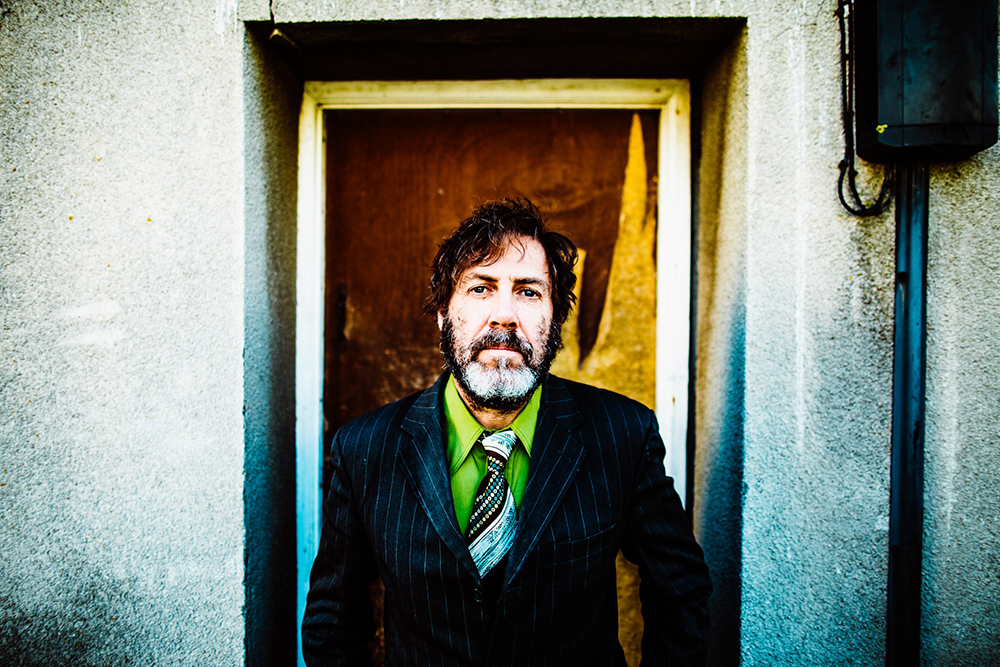

A synth? A bouzouki? On an album by a noted exponent of Americana? Well, yes. Because while the music business does love a label, Journey To The Sun lends itself to a more experimental direction. There is still the luscious, acoustic guitar balladeering that Bruntnell found such strength in on King Of Madrid, but there are also eccentric stabs of electronica, a drum machine and even that staple of prog rock, the Mellotron. While the overall tone might still be plaid-shirted, there is - for all the additional layers - a stripped-back feel, something he does admit was influenced by the vibe of the times without being directly informed by it.

Like so many of these WFH productions, digital technology meant Bruntnell wasn’t working entirely on his own, with several of the tracks featuring New England-based keyboardist Peter Linnane, while Bruntnell’s longtime lyricist collaborator Bill Ritchie contributes words to five of the songs. But, for the most part, this is a largely Bruntnell effort, with the vast majority of instruments played by himself. This is apparent from the outset with the mournful Dandelion, written on the aforementioned Greek mandolin, with the addition of rudimentary piano skills, giving the song a sparse and haunting folkiness. Lucifer Morning Star - performed entirely by Bruntnell - is brighter, made so by a combination of 12-string guitar and subtle synths giving it a sunny dimension. Runaway Car rocks along with the kind of energy that will make it an instant live highlight. It is precisely the sort of expressive, guitar-driven song American television shows love (as we’re still working our way through 15 years’ worth of Greys Anatomy, with its dizzying panoply of singer-songwriters on the soundtrack, I’m amazed its producers haven’t come knocking on Bruntnell’s door…).

Picture: Simon Poulter

The jangliness of Journey To The Sun is occasionally broken up by clear references to Eno, specifically his album Another Green World, finding itself in the intro of You’d Make A Great Widow (a typical piece of macabre Bruntnell humour, resulting from a chance remark by Mrs. B), as well as the instrumentals The Antwerp Effect and Moon Committee. They provide undistracting interludes between the folkier songs, such as Heart Of Straw and a beautiful interpretation of the much-covered Scottish traditional Wild Mountain Thyme - here blessed with a wonderful arrangement, featuring an electric 12-string superbly channelling Jerry Cole’s lead on The Beach Boys’ Sloop John B (fun fact: I have it on good authority that Bruntnell performed this very song at a junior school concert when he was a lad). That same shimmering guitar finds its way, with uplifting effect, onto the reflective closing piece, Mutha, which examines time’s passing with a sense of hope. The hope we probably all want right now.

Mine, amongst many other things, is that Journey To The Sun earns Peter Bruntnell greater recognition. It’s not, to be fair, an album of anthems, or chart hits, or daytime radio blockbusters. Not that everything in popular music should be. It is, though, delightful, earnest and wonderful listening, particularly repeatedly, drawing out Bruntnell’s intimate vocal style and drawing on his exquisite arrangements and self production. Will it be the album that breaks him to a wider audience? Will it end his status as the “secret singer-songwriter”? As I wrote about its predecessor, I wish it would. Because some secrets really are best out in the open for everyone to enjoy.

Journey To The Sun is out now on Domestico Records and can be ordered from here.

Wednesday, 22 May 2019

Johnny Boy would have loved it - Sarah Jane Morris' sweet little mysteries

There is an inherent danger to covering the work of a unique artist: there’s good reason, too, why few successfully (or even at all) carry off imprints of music by, say, Bowie or Queen without sounding like a bad Wednesday night in a suburban karaoke club. For fans (and purist fans in particular) of the original performer, the notion of any form of emulation is fraught: too close a copy and you dismiss it as "so what?"; too outré and you creep close to sacrilege.

Riskier still is if the covers are of a deceased legend like John Martyn. Even his own myriad reinterpretations of his greatest songs didn’t always land well, although that was part of his unpredictable appeal - regularly reworking material to suit his mood, be it acoustic, electric, funked-up, reggae-infused, jazz-influenced, or whatever.

His gargantuan, 17-CD posthumous Island Years box set served testament to this, with its plethora of alternate studio takes and live versions which showcased Martyn's restless reinvention - many the result of what touring approach he was taking at the time (i.e. on his own, with mucker Danny Thompson, or with jazz and rock band backing). So step forward bravely, Sarah Jane Morris and her album project Sweet Little Mystery, which brings her incredible contralto voice together with regular guitar collaborator Tony Rémy, along with Tim Cansfield (acoustic guitar), Henry Thomas (bass) and Martyn Barker (drums), to reinvent some of Martyn's songs in a respectful but rarely (if at all) emulatory way. She is not the first to do this, of course: such is Martyn's appeal that plenty have done so before, most famously Eric Clapton's version of May You Never on 1977's Slowhand album that probably - and sadly - did more for Martyn's bank balance than many of his own albums. In 2011, two years after his death, the lovingly-curated compilation Johnny Boy Would Love This produced an eclectic array of tributes from committed fans like Beth Orton, David Gray, The Cure's Robert Smith, Beck, Lisa Hannigan, Paolo Nutini, Snow Patrol, Bombay Bicycle Club, Morcheeba, fellow folkie Judie Tzuke and Martyn's oft-collaborator and pal Phil Collins.

So what does Morris bring to the table? A huge amount, actually. Martyn was labelled many things during his career, largely because he dabbled in many things, but jazz seems to be one of the roots to his canon. Indeed, having started out in the folk clubs of Glasgow, before migrating to London and clubs like 'Les Cousins' (which artists like Martyn, Ralph McTell and others mistakenly thought was named after a bloke called Les Cousins...) he discovered saxophonist Pharaoh Sanders' album Karma, turning him onto modern jazz. From here on in Martyn worked on textures, especially with his voice. "There's a space between words and music and my voice lives right there," he once explained. The album Solid Air, now revered as the godfather of chillout music, and its follow-up One World, could easily have been regarded as jazz, even through the weed-wooze that they conjured. Which is where, kind of, Morris comes in, with a voice that, in her 60th year, is richly reminscent of Nina Simone or Sarah Vaughan. Married to Rémy, Cansfield and Thomas's guitar and bass work, and Barker's understated drumming, it produces corking versions of my Martyn favourites, like Couldn't Love You More, Sweet Little Mystery and I Don't Want To Know.

Picture: Juliet Matthews

In a live performance at London's Purcell Room to launch the album, Morris and band even put in a rollicking version of Solid Air. Given that this song, a paean to Nick Drake, is, in its original form, as stoner-friendly a piece of music as you will find, the brisk and lively application here is refreshingly inventive. Johnny Boy would certainly have loved it. Closer - but not too close - to the original was One World, easily my personal Martyn pick, with its poignant "To take our place in one world, to make our peace in one world" stepping closer to the original, while Fairytale Lullaby (which recently turned up in a particularly bucolic edition of Countryfile) ambled closer still to its foundation, with its now somewhat outdated proto-folk, Arran sweater-wearing, finger-in-ear lyrics about goblins, elves, pixies and "the magic dancing wood". Taken out of that era and the folk club context, Morris delivers it with a playful earnestness.

The entire Sweet Little Mystery project is clearly a work of heartfelt love for Martyn's music by Morris, and in a stage show directed by the comedian and activist Mark Thomas, there are video inserts featuring interviews with Eddi Reader (with whom Martyn collaborated on a TV performance of the southern blues classic He's Got All The Whisky), fellow Glaswegian and cohort Jim McKnight, and Martyn's sister, Julie Ann. Indeed, these three interviews underscored my fascination with the big man himself: Martyn was born on September 11, 1948 in Beechcroft Avenue in New Malden - a 30-minute walk from the house where I was born. As a young boy (then Iain David McGeachy), his light opera-singing parents divorced, with his father taking the five-year-old John to Glasgow, while his mother remained in the Kingston-upon-Thames area. Now, considering that no one famous ever seemed to hail from my neck of the woods, the discovery that my musical hero John Martyn was born a mile or so from where I came into being 19 years later was a revelation. In interviews - few and far between, it must be said - Martyn would skip between broad Glaswegian (increasingly slurred as life's excesses took their later toll) and a more southern English accent. There are videos of him on YouTube performing in the 1970s with what could be considered a Mockney voice. So to see his two worlds collide in these interviews - the obviously Scottish McKnight and Reader, and Martyn's Kingston-raised "little sister" - provides a delightful set of interludes that also reveal the "grace and danger" that not only titled one of his most acclaimed albums (and a band his nephews play in today), but was his trademark.

Few Martyn tributes have ever abstained from referencing his occasionally appalling, substance-driven behaviour. Indeed, the consensus has always been that his 'danger' and self-destructive nature lead inevitably to his untimely demise at the age of 60, ten years ago this year. But I've always chosen to dwell on his grace, the sometimes impossibly, hauntingly beautiful songs like Go Down Easy and Head And Heart that led his first wife, Beverley Kutner, to remark that he put so much emotion into his music that there was rarely anything left for anyone else. Sarah Jane Morris's Sweet Little Mystery captures much of that emotion but, rather than focusing on the sometimes mawkish nature of his music's beauty, brings it to animated life. If only the same could be done for Martyn himself.

Sunday, 10 April 2016

1971: the year it all began

Ask anyone who knows their Elvis C from their Elvis P and you will never reach any consensus on when pop music was at its most vibrant.

For every proponent of 1954 (the year Presley invented rock and roll by recording That's Alright Mama at Sun Studios), there will be another to champion 1964 (the year Beatlemania exploded in America). The Beatles also have a claim on 1966, the year they released Revolver, which included Tomorrow Never Knows, the track that for so many reasons probably changed the course of music more than any other.

Move on to 1977 and the arrival of punk, 1982 and Thriller, The Smiths' This Charming Man and New Order's Blue Monday a year later, Nirvana's Smells Like Teen Spirit in '92, Britpop in '95 - I could go on, but we'll never, ever, reach any conclusion. But if there is one year which, simply because of the volume of milestone releases, is inescapably more significant than most others it's 1971.

Music journalist, Smash Hits co-founder and former Whistle Test presenter David Hepworth came to this conclusion four years ago when, having previously noted how much of an annus mirabilis (in his words) it had been, he compiled a 121-track Spotify playlist from the albums released that year (also published in this blog post).

It is likely that you and I will beg to differ on just how much these were landmark songs, or even whether those making were any bigger than anyone since, but when you look at the compilation - below - of albums released in 1971, it's inescapable that this year in particular witnessed momentum unlike any other in pop history.
  • Led Zeppelin - IV
  • David Bowie - Hunky Dory
  • The Who - Who's Next
  • Marvin Gaye - What's Going On
  • T-Rex - Electric Warrior
  • The Rolling Stones - Sticky Fingers
  • Carole King - Tapestry
  • Paul McCartney - Ram
  • John Lennon - Imagine
  • Elton John - Madman Across The Water
  • Rod Stewart - Every Picture Tells A Story
  • Faces - A Nod Is As Good As A Wink...To A Blind Horse
  • The Doors - LA Woman
  • Joni Mitchell - Blue
  • Stevie Wonder - Where I'm Coming From
  • Genesis - Nursery Cryme
  • Pink Floyd - Meddle
  • Jethro Tull - Aqualung
  • Emerson, Lake & Palmer - Tarkus
  • King Crimson - Islands
  • Nick Drake - Bryter Later
  • John Martyn - Bless The Weather
  • James Taylor - Mud Slide Slim And The Blue Horizon
  • Rory Gallagher - Rory Gallagher
  • Humble Pie - Rockin' The Filmore
  • ZZ Top - ZZ Top's First Album
  • Yes - The Yes Album
  • Earth, Wind & Fire - Earth, Wind & Fire
  • Crosby, Stills, Nash & Young - 4 Way Street
  • Don McLean - American Pie

I may have been four years old at the time (though I believe I was already in possession of my first album, Songs From Chigley And Trumpton), but almost half a century on, it would be hard not to regard Led Zeppelin IV as one of the most important rock albums of all time, or Hunky Dory as the album that created David Bowie, the songwriting from S to F of Who's NextWhat's Going On's social commentary, McCartney and Lennon's solo albums breaking out of The Beatles' shadow, Carole King's landmark Tapestry (which she'll be performing in full this summer in London), and even Stevie Marriott and Pete Frampton defining the live album for years to come with Humble Pie's ear wax bothering Rockin' The Filmore.

In his excellent new book, 1971: Never A Dull Moment, Hepworth has returned to chronologically explore 12-months that bore “more influential albums than any year before or since”. From the outset, he states the case that 1971 wasn't just an extraordinary year for releases, but effectively the start of the rock era. Of course, it wasn't exactly Year Zero: rock had emerged when Chuck Berry cranked up his Gibson for the first time, and was then followed by The Beatles, the Stones, The Kinks, The Who, the Beach Boys and myriad others blurring and stretching the boundaries of pop and rock in the 60s. But Hepworth's argument - which is bang on the money - was that '71 established the longevity with which these artists would endure, in many cases long after their peak, and in some cases as we push on into the new millennium, long after they've left us.

Starting from New Year's Eve 1970, when Paul McCartney effectively wound up the Fabs, Hepworth writes that the next day would herald "the busiest, most creative, most innovative, most interesting and longest-resounding year of that era". To support his argument, he doesn't just trawl the albums and the stories behind them, but provides context, too - the political and economic environments of the early 1970s, the cultural emancipation that teenagers enjoyed in the 60s that endured into the 70s as owning records became as affordable a hobby as creating bubblegum cards had been in childhood.

There was, also, the attraction of the form itself - the gatefold sleeves, the Hipgnosis and Roger Dean artwork - but more importantly, the lack of other distractions which inhibits attention to the long-form recording today. In 1971, youths didn't have iPhones and iTunes, PlayStations or even their own TV sets. Immersing oneself in two sides of a 43-minute album (or four if it was a prog act's latest overblown double) was an escape from the grey skies and prevailing austerity outside if you were in Britain, or the horrors of being at war in Vietnam if you were American.

Even if, now, you might consider the 23 minutes of Echoes that consumed the entire second half of Floyd's Echoes, or the eight-minute duration of Zeppelin's Stairway To Heaven, grossly over-indulgent or patronisingly "of their time" on the part of the bands, it would be churlish in the extreme to dismiss their virtuosity, and that, Hepworth suggests, underpins the richness of what appeared in 1971. This was was the year, he asserts, that the rock era truly began. But it was also the year when pure creativity and raw talent, before many of these artists ascended into superstardom, and then descended into drug-addled mediocrity later in the decade.

Hepworth notes how this was a time when bands were able to do more or less what they wanted to, artistically, but they did so on the back of paying their dues. More or less every one of these landmark albums was a product of artists who performed relentlessly, using gigs in provincial ballrooms and university refectories to hone material before committing it to the studio, before going out on tour again with the new album and developing even more material for the next recording - which might even appear in the same year.

Old heads like me will have an inbuilt interest in Hepworth's tome, even though, at 48, I've clearly come to the releases of 1971 retrospectively. But as the owner of a good 90% of the albums listed above, I've come to them as modern classics, as vital to my cultural development as reading 1984, The Catcher In The Rye, On The Road or Hamlet.

I may have come to Bowie via Ashes To Ashes, but it proved to be essential to go back to the very beginning to see how he progressed from Hunky Dory through Ziggy and all the other guises to reach the 1980s. As a Beatle fan, I was compelled to find out what happened next, and with Lennon being tragically taken from us in 1980, listening to Imagine, released nine years before, became part of the mourning process. I was introduced to Genesis via Follow You, Follow Me, a love song, but was intrigued by Nursery Cryme and the frankly dark goings on in The Musical Box. You could even argue that with so many hip-hop artists sampling Bonzo's drums on When The Levee Breaks (recorded in a toilet at Headley Grange for its unique acoustics), 1971's tail has stretched long into the subsequent decades.

In 2011, on the 40th anniversary release of 1971's Aqualung by Jethro Tull, my friend and contemporary Steven Wilson - who had just remixed the album - told Classic Rock magazine that he thought that by '71 the record industry had finally recognised that rock music was an art form. "There seems to be something leading up to 1971," Wilson said, "which is when record labels started to get interested. That's usually when scenes start to die, but I think you can see 1971 as the zenith of creative expression for experimental music. The records were still very ambitious after that, but there's something about the spirit of '71 that was special."

In chronicling, month-by-month, the major albums released in 1971, Hepworth doesn't just present a giant coincidence, but perhaps by coincidence, the year's progress tells a story (as Hepworth relays) that began with The Beatles breaking up and ended with Don McClean's American Pie telling a tale of loss of innocence.

1971 was, then, a year of profound confluence, a year in which the album, itself, found its place as one of the most important artistic mediums, alongside books and cinema; in which the groundwork done by Pet Sounds and Sgt. Pepper created the album artist as a thing in its own right. It was the year in which the music business began tapping into rock music for the next decade or two, at least, as its great money spinner.

So, if you have any interest in what happened along the way, then you'll want to know what fired the starting gun. Hepworth expertly dusts the trigger for prints with 1971: Never A Dull Moment, compiling a fascinating, entertaining and revealing examination of rock music's genetic structure from the events of the year which, arguably, brought it all together.