Showing posts with label Beach Boys. Show all posts

Friday, 11 June 2021

Return of the secret singer-songwriter

I don’t know when Peter Bruntnell decided upon Journey To The Sun as the title of his latest album, but it was with some irony, given that none of us are going anywhere right now, in search of sunshine or anything else. Then again, the Kingston-upon-Thames-raised “secret singer-songwriter” now lives in Devon, which I associate with glorious childhood journeys down the A303 for Whitsun half term, dodging torrents of rain on Dartmoor, of course, but also enjoying the splendours of the South Hams and the West Country sunsets streaming in through my aunt and uncle’s Plymouth living room window. 

Bruntnell is, it would appear, something of an intentional enigma. Read any review of his 11 albums to date (including his last, King Of Madrid - my album of 2019) and you’ll see the same phrases repeated: that he is lauded by the music press (Rolling Stone branded him the best-kept secret in “England”), has been endorsed by R.E.M.’s Peter Buck and Richmond Fontaine’s Willy Vlautin (“my favourite singer in the world”), is criminally underappreciated, and so on. It truly is baffling. But, as I noted in my recent review of the Matt Deighton Overshadowed documentary, there is an echelon of, mainly, singer-songwriters who just seem unable to edge - or be led - over the threshold of mainstream recognition, and the widespread success that comes with it.

So, materially, what makes Bruntnell so compelling, and why should you pay him attention? There are plenty of singer-songwriters, of course, and no shortage of guitar strummers - from Ed Sheeran-wannabes earnestly busking outside the local shopping precinct, to those with Neil Young/Nick Drake/John Martyn aspirations in every kind of venue (normally), from pubs up to arenas. Plus, if you dive down the myriad rabbit holes of sub-genres, the label ‘Americana’ will dish up no end of alt-country variants. Given the apparent need to slap a label on everything, it’s here that Bruntnell will probably get filed, but just because his songs might be acoustic guitar-based, with the occasional slither of pedal steel, it shouldn’t automatically mark him out for one genre or another. Indeed, Journey To The Sun, he says, draws on wider influences, including Brian Wilson’s arrangements and even Brian Eno’s ambient work. Other musicians called Brian may have played a part.

That, though, only outlines the form. What about the music itself? Like Deighton, Bruntnell’s is a mix of acoustic-tinged balladry and wry rock songs. To quote, unfortunately, Donny and Marie Osmond, a little bit country, a little bit rock and roll. I don’t mean to be flippant. But this brings us to “Pete’s Basement Studio” at Bruntnell’s Devon bolthole, where Journey To The Sun was recorded. Like so many new albums Where Are We Now? has listened to in recent months, it was produced in lockdown, but while the enforced work-from-home that every musician has been required to adopt has often been influenced by the pandemic, it was always Bruntnell’s intention to work on a solo album during this period. It just happened to coincide with a pandemic. “That meant more acoustic guitar, and I bought a bouzouki in March last year, which really was a catalyst for quite a few songs being written in a very short timeframe,” he recently told Sean Hannam’s Say It With Garage Flowers blog. “Oh, and I got a drum machine and a new synthesiser, too.”
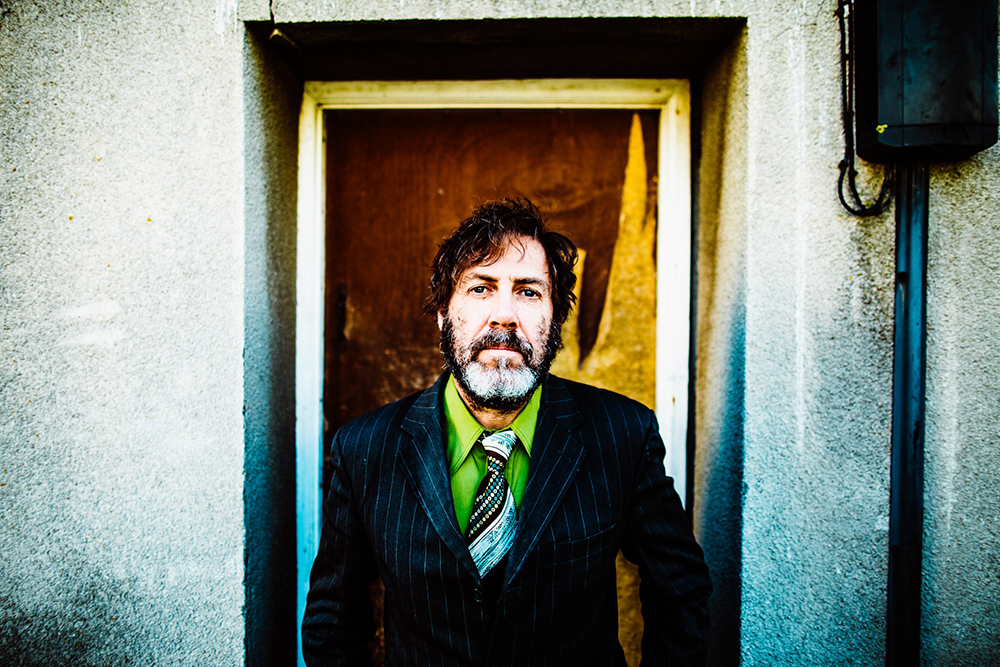

A synth? A bouzouki? On an album by a noted exponent of Americana? Well, yes. Because while the music business does love a label, Journey To The Sun lends itself to a more experimental direction. There is still the luscious, acoustic guitar balladeering that Bruntnell found such strength in on King Of Madrid, but there are also eccentric stabs of electronica, a drum machine and even that staple of prog rock, the Mellotron. While the overall tone might still be plaid-shirted, there is - for all the additional layers - a stripped-back feel, something he does admit was influenced by the vibe of the times without being directly informed by it.

Like so many of these WFH productions, digital technology meant Bruntnell wasn’t working entirely on his own, with several of the tracks featuring New England-based keyboardist Peter Linnane, while Bruntnell’s longtime lyricist collaborator Bill Ritchie contributes words to five of the songs. But, for the most part, this is a largely Bruntnell effort, with the vast majority of instruments played by himself. This is apparent from the outset with the mournful Dandelion, written on the aforementioned Greek mandolin, with the addition of rudimentary piano skills, giving the song a sparse and haunting folkiness. Lucifer Morning Star - performed entirely by Bruntnell - is brighter, made so by a combination of 12-string guitar and subtle synths giving it a sunny dimension. Runaway Car rocks along with the kind of energy that will make it an instant live highlight. It is precisely the sort of expressive, guitar-driven song American television shows love (as we’re still working our way through 15 years’ worth of Greys Anatomy, with its dizzying panoply of singer-songwriters on the soundtrack, I’m amazed its producers haven’t come knocking on Bruntnell’s door…).

Picture: Simon Poulter

The jangliness of Journey To The Sun is occasionally broken up by clear references to Eno, specifically his album Another Green World, finding itself in the intro of You’d Make A Great Widow (a typical piece of macabre Bruntnell humour, resulting from a chance remark by Mrs. B), as well as the instrumentals The Antwerp Effect and Moon Committee. They provide undistracting interludes between the folkier songs, such as Heart Of Straw and a beautiful interpretation of the much-covered Scottish traditional Wild Mountain Thyme - here blessed with a wonderful arrangement, featuring an electric 12-string superbly channelling Jerry Cole’s lead on The Beach Boys’ Sloop John B (fun fact: I have it on good authority that Bruntnell performed this very song at a junior school concert when he was a lad). That same shimmering guitar finds its way, with uplifting effect, onto the reflective closing piece, Mutha, which examines time’s passing with a sense of hope. The hope we probably all want right now.

Mine, amongst many other things, is that Journey To The Sun earns Peter Bruntnell greater recognition. It’s not, to be fair, an album of anthems, or chart hits, or daytime radio blockbusters. Not that everything in popular music should be. It is, though, delightful, earnest and wonderful listening, particularly repeatedly, drawing out Bruntnell’s intimate vocal style and drawing on his exquisite arrangements and self production. Will it be the album that breaks him to a wider audience? Will it end his status as the “secret singer-songwriter”? As I wrote about its predecessor, I wish it would. Because some secrets really are best out in the open for everyone to enjoy.

Journey To The Sun is out now on Domestico Records and can be ordered from here.

Friday, 5 August 2016

Tomorrow never knew - The Beatles' Revolver turns 50

2016 will go down as the year that began with the death of a rock icon whom people actually believed held the universe together, and that the subsequent procession of celebrity departures, along with enormous political upheavals, has been down to his untimely demise. Those with their heads less buried in the clouds will just put this down to unfortunate circumstance. However, with 2016 being exactly 50 years on from 1966, there is an ornate sense of the circular going on, that somehow we're completing a cycle.

Because '66 was the year which, culturally, launched everything. And it was all thanks to four records: Bob Dylan's Blonde On Blonde, The Beach Boys' Pet Sounds, Blues Breakers with John Mayall and Eric Clapton, and The Beatles' Revolver.

Five decades on, this quartet - released within three months of each other - remain landmarks in the evolution of popular music: Dylan's for the dexterity of its writing, Blues Breakers for introducing the overdriven, amplified guitar that would shape rock music forever (see my post Breaking blues - the buddhas of suburbia from a couple of weeks ago), and Pet Sounds and Revolver - often seen as direct rivals - for taking pop music, pop music composition, pop music recording techniques and the manifestation of conceptual thinking in pop music to a totally different level.

The Beatles were in total awe of The Beach Boys, but Brian Wilson's masterpiece, released in May 1966, was itself something of a response to their own Rubber Soul, released the year before. While their next album wouldn't be an intentional tit-for-tat response, it was clear that with Revolver - along with Blonde On Blonde and Pet Sounds - mainstream pop was emerging into something else. The Elvis-inspired, stage-driven rock and roll that had breathed life into pop and which fuelled The Beatles at the Cavern and on the Reeperbahn had served its purpose. It was now about storytelling, about songcraft and expanding what was possible, and in The Beatles' case, turning the studio into an instrument in its own right.

Revolver was released 50 years ago today and has been quite rightly feted as pop's Great Leap Forward™. But quite why requires some examination: sequentially sandwiched in the Fab canon between Rubber Soul and the even greater opus of Sgt. Pepper's Lonely Hearts Club Band, John Lennon and George Harrison both saw Revolver as Part 2 of a cycle that began with Rubber Soul. Lennon, typically more colourfully, branded Rubber Soul as "the pot album", but Revolver "the acid album", a clearly tongue in cheek reference to the creative stimuli applied in both.

Revolver was, however, far from simply a trip. Emboldened by their move away from trite Merseybeat on its predecessor, Revolver evolved John Lennon, Paul McCartney and George Harrison further as songwriters. And here is where it draws its greatest gasp. Incredibly, we're only talking three years after their debut album, Please Please Me, but Revolver brought maturity, a premature world-weariness, even. McCartney was already contemplating middle age (he'd turned 24 that June) and a life of semi-retirement dressed in tweed and a cloth cap; Lennon - genuinely horrified by the reaction to his 'bigger than Jesus' quip - looked to the studio as a means of escaping the frustrations of live performance (namely the screaming teens who drowned out their music) and somewhat replaced the raw energy of gigging that he'd enjoyed in the early days with the energy of writing without limits. George Martin played an enormous role here in indulging Lennon's whims, knowing full well that Lennon was a huge fan of The Goon Show, of whom Martin had worked on comedy albums with Peter Sellers, and whichnreflected The Goons' own unparalleled "theatre of the mind" inventivenes.

14 songs was a lot for an album in the mid-60s, when bands were churning them out every nine months or so before embarking on tours. But across these songs - some of The Beatles' very best - Revolver established a new role for what a pop band could talk about. On Taxman they took swipes at Harold Wilson's Labour government (one of Harrison's three contributions which reflected his own coming-of-age as a writer), explored Catholic themes with Eleanor Rigby and gave McCartney a platform to expand his musical palette - his whimsy on Here, There And Everywhere, the intentionally childishness of Yellow Submarine ("it's a children's song," he explained at the time) and his sunny disposition (in contrast to Lennon's cynicism) with Good Day Sunshine.

Revolver was unafraid to shoot in different directions - the Motown funk of Got To Get You Into My Life (a track, believe it or not, once covered by Joe Pesci sounding a lot like Neil Sedaka...), the West Coast jangle of Dr. Robert, the anti-pop of I'm Not Sleeping, the rockiness of She Said She Said, and the experimentation with Indian spiritualism on Love You To, creating narratives and soundscapes with sound effects and double-tracking techniques of the kind that progressive rock would build upon in the decade that followed. Actually, it's no great shock to discover that Revolver and Pink Floyd's Dark Side Of The Moon were recorded in the same Abbey Road studio, albeit six years apart. Perhaps, then, much of the genetic code in the Floyd's early work, and indeed others, like David Bowie, can be found buried like a time capsule in one song on Revolver, the one that ends the album: Tomorrow Never Knows.

If Revolver as a whole marked a turning point in the trajectory of rock music, Tomorrow Never Knows is the hinge. What had begun as a droning, single-chord song called Mark 1 - strummed by Lennon on an acoustic guitar for George Martin's approval - became one of the most acclaimed album tracks in music history, for its tripiness ("Turn off your mind, relax and float downstream - it is not dying") - which was more a reflection of Lennon's interest in meditation than references to LSD - and its sonic innovation. Using barely new studio equipment, loops of various noises, tracking, compression and a host of other techniques, Tomorrow Never Knows - named after yet another one of Ringo Starr's malapropisms - took listeners into a completely new world, one that beat-obsessed pop was probably not ready for. Lines like "Lay down all thoughts, surrender to the void – it is shining." and "That you may see the meaning of within – it is being" were from another universe by comparison to "I wanna hold your hand" and "She loves you - Yeah! Yeah! Yeah!". But, to make the point again, it is truly incredible to think of how far The Beatles had travelled between these two sets of lyrics, and how music was taken along with it.

Revolver is, for many Beatles fans, their favourite, though trying to judge them all is a rabbit hole worth avoiding. There will always be merits to the breadth of Pepper, of gems like Julia, Dear Prudence and While My Guitar Gently Weeps on 'the white album', of the closure of Abbey Road and the blueprint for bluesy '70s album rock that was Let It Be (especially if you hear it in its original 'naked' state.

But Revolver remains my favourite for both what it was and what it did. Today, 50 years on, I can listen back to it - as someone who grew up long after The Beatles had disbanded (I was born the year after it was released) - and identify the source code of music I have cherished ever since I became musically of age. It really is that Biblical.