Showing posts with label John Martyn. Show all posts

Friday, 11 June 2021

Return of the secret singer-songwriter

I don’t know when Peter Bruntnell decided upon Journey To The Sun as the title of his latest album, but it was with some irony, given that none of us are going anywhere right now, in search of sunshine or anything else. Then again, the Kingston-upon-Thames-raised “secret singer-songwriter” now lives in Devon, which I associate with glorious childhood journeys down the A303 for Whitsun half term, dodging torrents of rain on Dartmoor, of course, but also enjoying the splendours of the South Hams and the West Country sunsets streaming in through my aunt and uncle’s Plymouth living room window. 

Bruntnell is, it would appear, something of an intentional enigma. Read any review of his 11 albums to date (including his last, King Of Madrid - my album of 2019) and you’ll see the same phrases repeated: that he is lauded by the music press (Rolling Stone branded him the best-kept secret in “England”), has been endorsed by R.E.M.’s Peter Buck and Richmond Fontaine’s Willy Vlautin (“my favourite singer in the world”), is criminally underappreciated, and so on. It truly is baffling. But, as I noted in my recent review of the Matt Deighton Overshadowed documentary, there is an echelon of, mainly, singer-songwriters who just seem unable to edge - or be led - over the threshold of mainstream recognition, and the widespread success that comes with it.

So, materially, what makes Bruntnell so compelling, and why should you pay him attention? There are plenty of singer-songwriters, of course, and no shortage of guitar strummers - from Ed Sheeran-wannabes earnestly busking outside the local shopping precinct, to those with Neil Young/Nick Drake/John Martyn aspirations in every kind of venue (normally), from pubs up to arenas. Plus, if you dive down the myriad rabbit holes of sub-genres, the label ‘Americana’ will dish up no end of alt-country variants. Given the apparent need to slap a label on everything, it’s here that Bruntnell will probably get filed, but just because his songs might be acoustic guitar-based, with the occasional slither of pedal steel, it shouldn’t automatically mark him out for one genre or another. Indeed, Journey To The Sun, he says, draws on wider influences, including Brian Wilson’s arrangements and even Brian Eno’s ambient work. Other musicians called Brian may have played a part.

That, though, only outlines the form. What about the music itself? Like Deighton, Bruntnell’s is a mix of acoustic-tinged balladry and wry rock songs. To quote, unfortunately, Donny and Marie Osmond, a little bit country, a little bit rock and roll. I don’t mean to be flippant. But this brings us to “Pete’s Basement Studio” at Bruntnell’s Devon bolthole, where Journey To The Sun was recorded. Like so many new albums Where Are We Now? has listened to in recent months, it was produced in lockdown, but while the enforced work-from-home that every musician has been required to adopt has often been influenced by the pandemic, it was always Bruntnell’s intention to work on a solo album during this period. It just happened to coincide with a pandemic. “That meant more acoustic guitar, and I bought a bouzouki in March last year, which really was a catalyst for quite a few songs being written in a very short timeframe,” he recently told Sean Hannam’s Say It With Garage Flowers blog. “Oh, and I got a drum machine and a new synthesiser, too.”
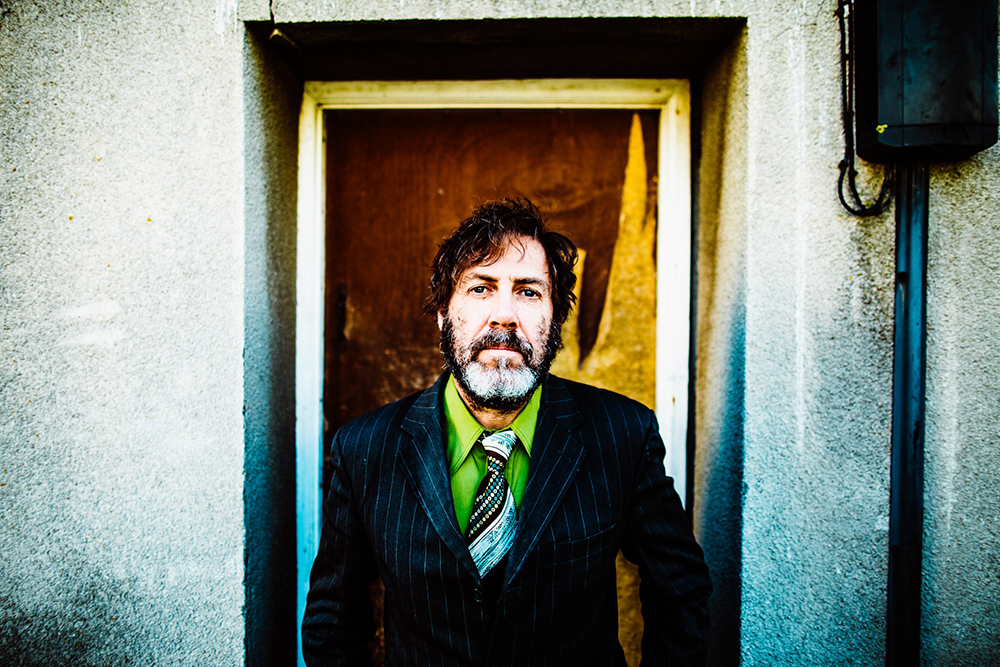

A synth? A bouzouki? On an album by a noted exponent of Americana? Well, yes. Because while the music business does love a label, Journey To The Sun lends itself to a more experimental direction. There is still the luscious, acoustic guitar balladeering that Bruntnell found such strength in on King Of Madrid, but there are also eccentric stabs of electronica, a drum machine and even that staple of prog rock, the Mellotron. While the overall tone might still be plaid-shirted, there is - for all the additional layers - a stripped-back feel, something he does admit was influenced by the vibe of the times without being directly informed by it.

Like so many of these WFH productions, digital technology meant Bruntnell wasn’t working entirely on his own, with several of the tracks featuring New England-based keyboardist Peter Linnane, while Bruntnell’s longtime lyricist collaborator Bill Ritchie contributes words to five of the songs. But, for the most part, this is a largely Bruntnell effort, with the vast majority of instruments played by himself. This is apparent from the outset with the mournful Dandelion, written on the aforementioned Greek mandolin, with the addition of rudimentary piano skills, giving the song a sparse and haunting folkiness. Lucifer Morning Star - performed entirely by Bruntnell - is brighter, made so by a combination of 12-string guitar and subtle synths giving it a sunny dimension. Runaway Car rocks along with the kind of energy that will make it an instant live highlight. It is precisely the sort of expressive, guitar-driven song American television shows love (as we’re still working our way through 15 years’ worth of Greys Anatomy, with its dizzying panoply of singer-songwriters on the soundtrack, I’m amazed its producers haven’t come knocking on Bruntnell’s door…).

Picture: Simon Poulter

The jangliness of Journey To The Sun is occasionally broken up by clear references to Eno, specifically his album Another Green World, finding itself in the intro of You’d Make A Great Widow (a typical piece of macabre Bruntnell humour, resulting from a chance remark by Mrs. B), as well as the instrumentals The Antwerp Effect and Moon Committee. They provide undistracting interludes between the folkier songs, such as Heart Of Straw and a beautiful interpretation of the much-covered Scottish traditional Wild Mountain Thyme - here blessed with a wonderful arrangement, featuring an electric 12-string superbly channelling Jerry Cole’s lead on The Beach Boys’ Sloop John B (fun fact: I have it on good authority that Bruntnell performed this very song at a junior school concert when he was a lad). That same shimmering guitar finds its way, with uplifting effect, onto the reflective closing piece, Mutha, which examines time’s passing with a sense of hope. The hope we probably all want right now.

Mine, amongst many other things, is that Journey To The Sun earns Peter Bruntnell greater recognition. It’s not, to be fair, an album of anthems, or chart hits, or daytime radio blockbusters. Not that everything in popular music should be. It is, though, delightful, earnest and wonderful listening, particularly repeatedly, drawing out Bruntnell’s intimate vocal style and drawing on his exquisite arrangements and self production. Will it be the album that breaks him to a wider audience? Will it end his status as the “secret singer-songwriter”? As I wrote about its predecessor, I wish it would. Because some secrets really are best out in the open for everyone to enjoy.

Journey To The Sun is out now on Domestico Records and can be ordered from here.

Thursday, 13 May 2021

Lost and found: Matt Deighton Overshadowed


As a onetime pop scribe, I’d like to think that I know my music. But - and I know it’s not a point of competition - all too often I discover just how inadequate my musical knowledge actually is. A work WhatsApp group, for example, regularly offers up listening recommendations to which I stare at blankly, despite containing things I probably should already be aware of. Friends frequently float suggestions hitherto missed that, when I dip in, turn out to be masterpieces. Even my 16-year-old stepdaughter - who should have her finger on the contemporary pulse - is familiar with stuff even older than me that I’ve escaped, to my shame. Reassuringly, I found resonance recently with the writer Andrew Collins, who posted an essay on how he was a very late convert to Bruce Springsteen. I felt vindicated (my Damascene moment only came in 2002 with The Rising in the emotional wake of 9/11). Even so, it’s quite galling to think that your so-called expansive record collection isn’t all that expansive, after all. 

I do, though, have a predilection towards the lost and under-recognised. My oldest friend, technically, is now a highly successful musician who sells out the Royal Albert Hall for several nights running, and yet when I mention his name, people go “Who?”. Likewise, I have long championed John Martyn, but it’s still such an effort to bring civilians up to speed on who he was, what he did and just why he remains arguably the most important part of my listening universe. There are others, like Peter Bruntnell, whom I was introduced to one Saturday night at a Kentish Town basement gig, only for him to a) turn out to be one of Britain’s finest singer-songwriters, b) his albums are now indispensable and c) he went to my junior and secondary schools, a few years ahead, his mum knows my mum, and that makes him cool. Which, indirectly, brings me to Matt Deighton.

© Simon Poulter
I could, lazily, dismiss having him absent in my life until relatively recently as a result of me living abroad for 17 years; but while that excuse might cut it when declaring ignorance of, say, not having seen I’m A Celebrity until I returned to these shores, I’m almost embarrassed at having had to get up to speed with Deighton. But, then, an invite to see him play at London’s 229 club in 2017, accompanied by Squeeze’s Chris Difford (and supported by the legend that is Dr. Robert), proved epiphanous. In the venue’s stripped back environment it was a demonstration of British songwriting at its finest. I say that, not out of misplaced patriotism, but as a statement of the compositional integrity with which Deighton had wowed people since emerging in the early 90s with funksters Mother Earth, even replacing Noel Gallagher in Oasis before veering into a masterful series of albums that tapped into the same roots as my hero Martyn. In the months after that 229 gig I hoovered up Deighton’s back catalogue, desperate to make up for lost time. Later that year I saw him again, fronting The Family Silver with drummer Steve White and bassist Damon Minchella, a power trio capturing the best of the soulful rock that had populated their respective band outlets (The Style Council and Paul Weller in White’s case, Ocean Colour Scene in Minchella’s). It was another one of those small venue shared experiences: intimate audience, buzzing on top musicianship and groove. And for me, another pillar in my understanding of what Deighton was all about.

That insight now goes a long way to explain why Overshadowed, a documentary about Deighton premiering tomorrow night on Sky Arts, features so many peers enthusing about him. Included in Kevin Lee Brown's film are Weller, White, Difford, Minchella, Marti Pellow, the acclaimed Kathryn Williams, vocalists Linda Lewis and Carleen Anderson, and legendary British folk-rocker Bill Fay, who was an important source of inspiration to Deighton in the wake of Mother Earth coming to an end. Brown’s emotional - and at times wroughtly so - film isn’t, however, just a parade of musos lining up to pay tribute, but an engrossing study of another one of those lost causes of mine, peeling back the layers to explain, almost forensically, why he's the deserved recipient of so much warm endorsement. 

It is clearly, unmistakenly, down to songcraft and musicianship. Pellow cites Deighton’s “gift for melody and structure”, while Weller himself highlights how Deighton can create orchestra out of an apparently simple guitar chord. Minchella goes further by calling out Deighton’s core strength: “He just has this way of writing songs which represent him as a human being.” Some songwriters are gifted in creating a vibe, some have a knack with melody while with others its technical ability. But there are so few who have the instinct to pull it all together. McCartney might be the obvious example, or perhaps Neil Finn (both are melodically blessed). Overshadowed, rightfully, puts Deighton in the same bracket, digging into his alt-folk solo albums, like Villager, You Are The Healer, The Common Good, Wake Up The Moths, Kids Steal Feelings and Doubtless Dauntless. They are being re-released progressively over the coming months, with a five-LP bundle going on sale in August, as well as in high-resolution digital formats. ‘Sumptuous’ doesn’t fully cover the musical experience of what awaits the uninitiated.

2003’s highly acclaimed Moths has just been re-released as a remastered package, marking in the process an unhappier element of Deighton’s story, which Overshadowed doesn’t shy away from, either. The album’s cover image, featuring Deighton curled up asleep, indicates - he admits now - the “black dog” of bipolarism that has shadowed him, and appeared to be behind a lengthy recording hiatus after Moths came out. In the film, he says of the album that he “wasn’t well” when he made it. Dark thoughts were entertained. Music became his saviour: “Some people bury their heads under a duvet,” he says. “Others get out a guitar and write about it.” This might go some way to explain Chris Difford’s comments in the film about his friend: “I think Matt can work with anyone, really. Whether people can work with Matt is a different thing. You’ve got to be very patient and you’ve got to be open and understanding as to where he’s coming from.”

Deighton wouldn’t be the first person to channel depression into his art (“Where would some of the greatest creativity be without it?” reflects Steve White). Music is both his saviour and his rail. For some, the depths of emotion can be all consuming (there’s no shortage of ‘divorce albums’ out there), reminding me of a comment Beverley Martyn - former wife of John - once made, that so much emotion left him via his songs that there was nothing left for her. Thankfully, though, Deighton refuses to be defined by his mental health, even if, as he reveals in Overshadowed, it can creep up on him when he least expects. 

It’s a brutally honest revelation, in an equally candid portrait of a musician who should not be regarded as enigmatic or cult-like. This is no Searching For Sugarman, a ‘fancy that’ study of a tragic figure, but quite the opposite. If anything, it’s a joyous celebration of music, musicianship, songcraft and talent deserving of a bigger audience beyond the cognoscenti. Now, where have I made that statement before?

Overshadowed premieres on Sky Arts at 9pm on Friday, 14 May


Friday, 28 August 2020

2020: the antidote

Back in June I waxed somewhat lyrically about the re-release of The Blue Nile’s fourth and final album, High, and how Messrs Buchanan, Bell and Moore’s mellifluence was the perfect antidote to these sulphurous times. Well, guess what? Those times are still with us, and the need for a soothing balm is as acute now as it has ever been. Step forward, then, Tim Bowness.

One of the UK’s much-respected but not universally-known singer-songwriters, his collaborations with - full disclosure - my friend Steven Wilson date back to the late 80s and the formation of ‘no-man’, an outfit once described by no less an organ as the Melody Maker as "conceivably the most important English group since The Smiths”. Over the last 33 years, the Bowness/Wilson partnership has generated seven critically acclaimed albums, including their most recent, the “disco epic” Love You To Bits. When not in each other’s professional company, the pair have focused on solo interests - Wilson, with the equally revered Porcupine Tree and latterly, albums on his own, with Bowness working prolifically on five solo albums of his own (including his last, the highly rated Flowers At The Scene, which included contributions from Wilson, XTC’s Andy Partridge and 10cc’s Kevin Godley) and a plethora of collaboration projects. But now comes his sixth, Late Night Laments, which pretty much does what it says on the tin - a soothing collection of nine songs (14 on a limited edition CD with extras) which evoke the intimate, even claustrophobic state of late night, headphone-wearing consumption of atmospheric music. That description, though, probably doesn’t do Bowness any favours: Late Night Laments is no ambient gloomfest, but certainly does provide a timely reflection of where we find ourselves today.

“50% was written in late 2019 and 50% was written in early 2020,” says Tim of a creative process that went right up until the first signs that something more than just a flu outbreak was going on. “From the very first tiny newspaper article on the new coronavirus, I was aware of what was happening,” Tim recalls. “It was no surprise to see it go from a small piece on page 20 to taking up the first 20 pages of the paper by late February.”

Notably, the album was formally finished on the day lockdown was announced in the UK. Some of what it covers was certainly prescient. “My main worry was that some of the themes - hate crimes, generational divides, terrorism, social exclusion, etc - would be irrelevant in the face of the virus. As it turned out, a lot of the subject matter seems more current now.” Perhaps inadvertently, Bowness realises that he’d tapped into the emerging reality. “On one of my last listens through [in preparation for release], I became so absorbed in the experience that when the album finished I had to gradually re-remember that ‘lockdown’ and ‘the virus’ were real things. The music (or my exhaustion) had made me forget what was happening in the outside world and for a few moments the all-too depressing reality we’re living through seemed like far-fetched fragments from a bad dream.”

The result is an album of reflective, stripped back consideration, written from the perspective of an individual, late at night, enclosed in the almost claustrophobic intimacy of a living room, the outside world shut out by headphones, the music channeled from source to ear by the shortest of routes. The cover art, by longtime artwork partner Jarrod Gosling, almost says it all. “The artwork does provide a good insight into the album, I think,” says Tim. “There is a sense that the music is quite beautiful and comforting, while the lyrics represent a harsh dose of reality. I imagined the album as being like someone trying to immerse themselves in their own special world of favourite books, favourite albums, familiar furniture, while in the background the constant hum of global news is serving to puncture that state of grace.”

Bowness’s own ingestion of culture played some role in that, with songs like Darkline evoking the music of 60s spy thrillers. No surprise: “Late last year, I went through a phase of reading le Carre books,” Tim reveals. “Although they’re sometimes dismissed as genre thrillers, they’re actually well-written and frequently emotional pieces of work. There’s a real sense of sadness in his writing and a great depiction of how small lives can be sacrificed to the supposedly greater good of national politics or religion." Added to that is his love of 60s spy films and the scores of people like John Barry in the Bond and Harry Palmer series.

Late Night Laments is certainly a tonal shift from Bowness's last outing, no-man’s Love You To Bits, with its themes of relationships-lost framed by a clubland-infused electronica. “I think it was a necessary shift in direction,” Tim says about his latest direction. “What I do is often a reaction to what I’ve done previously, so albums can be a continuation of the most recent work or a complete rejection of it. In this case, the songs emerged totally spontaneously and were very different from the dynamic Love You To Bits and the eclectic Flowers At The Scene. I didn’t intend to write a late night ‘headphones album’, it was what naturally came out.”

One Last Call was the first track out of the bag - and closes the album (“The beginning became the end”), and concerns itself with idealogical terrorism, albeit written ambiguously as also a love song. Between these two points, it sets the sonic template for the entire album, all atmospheres, subtle bass motifs and Bowness’s own emotive, intimate vocals. “I didn’t intend to write a late night ‘headphones album’,” he says. “It was what naturally came out. Once I’d written One Last Call, the album title, album direction and album cover came to me pretty much immediately.”

The themes bubbled up as he went. The album’s opener, Northern Rain covers something I can closely relate to, the progressive demise of someone with dementia, but while this might sound depressing, the song is, in Tim’s own words, more about “coming to terms with ever-shifting change and being replaced.” I’m Better Now takes a nihilistic view on hate crime, seen through the eyes of a perpetrator, and examined through the prism of society’s increasing division, especially the polarities that politics here and in the US have been tainted with in recent years. “I wanted to present an extremist view and an extreme act in a way that ‘almost’ made it appear normal. The banality of evil,” says Tim. Elsewhere, We Caught The Light, written in the early hours of New Year’s Day, tapped into a “strange sense of foreboding” Bowness had that 2020 “was going to be significant and not in a good way”. “We caught the light,” he sings over a gentle melody, “but missed the signs”. Makes you pity those journalists who’ll be compiling the end-of-year retrospectives in December.

To make the album Bowness tapped into his expansive network to call on the talents of people like co-producer Brian Hulse, whose drum machine programming plays a constant part in the album’s sensuous textures, as well as Steven Wilson to mix the project. The joy throughout is that everything is perfectly weighted. Nothing - not the vocal or the instrument - is ever overplayed, with contributions by Porcupine Tree bassist Colin Edwin and former Japan keyboard player Richard Barbieri (who has long featured in both Bowness and Wilson’s work) adding subtlety, rather than obvious virtuosity. A case in point is the delightfully slowburn Darkline (inspired by a typically black-humoured Warren Zevon comment during his final days), on which Barbieri contributes a muted scream of a synth solo that just works in the piece.

If One Last Call, the first song written for the album provides its “emotional template”, according to Bowness, it’s impossible not to draw reference to the aforementioned Blue Nile, with whom many positive similarities can be drawn. Perhaps this is no coincidence, given the involvement of The Blue Nile’s recording engineer Calum Malcolm. “I’m a huge Blue Nile fan, and have followed the band’s work since the beginning,” says Tim. “I particularly love how they manage to humanise imaginative electronic soundscapes. My voice is totally unlike Paul Buchanan’s, but there’s no doubt that the feel of and the textures in The Blue Nile’s music have an influence on what I do since the beginning of my music making.” Another reference is Peter Gabriel - himself a huge part of The Blue Nile’s source code - and it’s with some pride that Bowness, a longstanding Gabriel fan, is now signed to his Real World organisation in a publishing deal. “I greatly admire the label and studio and have long been a fan of Peter’s, so it’s a lovely association. Hopefully there will be creative and career repercussions as well.”

Late Night Laments is, then, a fantastic addition to Bowness’s canon and, he says, the unpredictable nature of the directions he takes each time could lead him anywhere (“As many of my albums are a reaction to what I’ve just completed, you can expect a full-on K-Pop extravaganza or a detour into Noise Metal!”, he says, maybe jokingly). But there is no rush. This is an album that will get plenty of play, especially throughout the remainder of this particular shit show of a year. It does indeed recall the ambient brooding of The Blue Nile, but also Talk Talk and Prefab Sprout. Significantly, though, it also recalls the wooziness of One World, one of my favourite John Martin albums. That closes with the eight-minute Small Hours, a lot of Echoplex and the sound of geese recorded on a tape recorder taking flight from a nearby lake, amongst other ambient sounds. Previously it had been my go-to source for late night listening. With this new work by Bowness, I’ve found a successor.

Monday, 10 June 2019

Get me to the church on time!

© Simon Poulter 2019
As I was compelled to mention in my recent post about Sarah-Jane Morris's John Martyn project, I hold a fascination - some might say obsession - for the meagre musical connections of the south-west London suburbs in which I grew up. This partly stems from the discovery that Martyn himself was born only a thirty minute walk from the New Malden house where I later sprang to life, a revelation akin to discovering royal blood in my veins.

That discovery gave no indication that there would be more intersections to come. The first - and clearly foremost - came when I met my other half and learned that she not only lived in New Malden (in a house more or less backing on to that in which my grandfather and his siblings were born), but also worked at my first junior school. Bizarrely, too, she grew up in south-east London, where I currently base myself. Then came the revelation that my local Greenwich MP, Matthew Pennycook, also hails from the area and even went to my secondary school, some years behind me, before going up to Oxford (a rare event for Beverley Boys, I can assure you). The next connection in this uncanny sequence, however, was another musical one: via an intimate basement gig one Saturday night in Tufnell Park, over there in that North London, my mate Sean introduced me to the music of singer-songwriter Peter Bruntnell. And, guess what? I discovered that Bruntnell was at Beverley too, albeit a few years ahead of me.


Readers, I will not bore you further (and again) with the other remarkable collection of rock connections to my home area (Clapton, Page, Beck, et al), because Bruntnell is one of two pressing local musical matters to address here. Once described by Rolling Stone, no less, as "one of England's best kept musical secrets", demonstrating customary American understanding of the United Kingdom construct, Bruntnell has, since 1995, delivered a stunning canon of Americana-tinged, bittersweet brilliance. And he's now added to it with a sumptuous new album, King Of Madrid. Incredibly, it's his 13th, which means that the previous 12 have probably passed under your radar over the last 25 years since he released his debut. But if that is so, then you will have missed out on a body of work redolent of one of my favourite periods of musical history, when the canyons of Los Angeles were a vital source of earnest musicianship and hippy ideals, and produced the likes of Jackson Brown, the Eagles, the Flying Burrito Brothers, Gram Parsons and more.

King Of Madrid continues in that rich Americana vein and should, with the right visibility elevate Bruntnell to an entirely different altitude, possessing the kind of hooks, lyrical richness, lusciously strummable guitar work and Bruntnell's gently urgent vocals that wouldn’t be out of place on anything emanating from Laurel Canyon in the late '60s. I’d even go as far as comparing Bruntnell with Tom Petty and Bruce Springsteen, perhaps not for their denim earnestness, but more for the subtlety of lyrical observation attached to his rooted music. On this release, Bruntnell targets the utter mess Britain is right now, peaking with National Library taking shots at the legacy left behind by David Cameron (including soundbites from the former prime minister), while Memory Hood, London Hood and the album's title track, take clever potshots at the febrile state of the nation.

We stay in the KT postcodes, sort of, and add a very strong touch of Sheffield for the next musical revelation, also brought to me by the aforementioned Sean, whose appreciation of Americana goes unmatched. One spring Sunday morning, seven years ago, Sean sent me a link to a free stream of Richard Hawley's then new album, Standing At The Sky's Edge. Hawley had, like Bruntnell, hitherto passed me by, despite his early Britpop work in the Longpigs and later collaborations with fellow Sheffielder Jarvis Cocker. And yet here, on this particular lazy Sunday morning, lying in bed in my apartment in Paris, I became engulfed completely by Hawley's collection of songs about three families living in Skye Edge, a housing estate in Sheffield's Park Hill district, one of many Hawley has embraced in song. Sky's Edge subsequently turned out to be a new direction, leaving behind the gentle country croons of its predecessors and instead embracing a reverb and distortion-drenched set of psychedelic epics. I listened to nothing else for what seemed like weeks after hearing it. Two weeks after the awful Bataclan attack in Paris, Hawley was the first gig I went to, itself an emotional rollercoaster for everyone inside the Alhambra theatre, barely a fifteen-minute walk away from the terrorist atrocity in November 2015. Hawley's gentle humour and mellifluous songs were, that night, just what Paris needed. A musical arm around the shoulder. Soothing reassurance.

And so it is with a gentler context that the bequiffed and typically double denim-clad Hawley comes to a church in Kingston-upon-Thames, New Malden's 'parent' town, to launch his delicious new record, Further. Noting the "Holy! Holy! Holy!" banner behind him on the apse wall of St. John The Baptist Church (a change of venue from the All Saints Church, which was recently - and surreally - the location of a gig by Jack Bauer himself, Keifer Sutherland), Hawley is soon riffing in his dry South Yorkshire humour, suggesting "Hawley! Hawley! Hawley" as a more suitable slogan.

Even with one semi-accidental F-bomb, he is never disrespectful of the environment, making ample use of the ecclesiastic ambience to enhance the acoustic guitar work of Hawley and his ever-present sidekick Shez Sheridan, as they make their way through an eight-song set that includes new music such as the Beatle-esque Doors, the dreamily shimmering Emilina Says, Galley Girl and its tale of highwayman derring-do, and the utterly winsome My Little Treasures, a song which took Hawley 12 years to write, about two of his late father's drinking buddies. From previous albums Hawley and Sheridan combine wonderfully to produce all-acoustic versions of Sky's Edge and even the glitterball romance of Tonight The Streets Are Ours, returning after the briefest of discreet beer breaks to end with the absolutely mellifluent For Your Lover Give Some Time from the Truelove's Gutter album, a song that, via its bittersweet lyrics, shines the spotlight on Hawley's delicious barrtione.

The set is short and sweet, a promotional opportunity for Kingston's fine emporium Banquet Records as much as a Richard Hawley Gig, but in the church setting, before a largely white middle aged and middle class congregation - Kingston captured in its essence - Hawley wraps yet another soothing arm around the shoulder. The last time was in the tragic aftermath of Paris, almost four years ago. This time, we're in the innocent, perennially untroubling London suburbs, in a residential parish church. The circumstances and location couldn't be more contrasting.

Wednesday, 22 May 2019

Johnny Boy would have loved it - Sarah Jane Morris' sweet little mysteries

There is an inherent danger to covering the work of a unique artist: there’s good reason, too, why few successfully (or even at all) carry off imprints of music by, say, Bowie or Queen without sounding like a bad Wednesday night in a suburban karaoke club. For fans (and purist fans in particular) of the original performer, the notion of any form of emulation is fraught: too close a copy and you dismiss it as "so what?"; too outré and you creep close to sacrilege.

Riskier still is if the covers are of a deceased legend like John Martyn. Even his own myriad reinterpretations of his greatest songs didn’t always land well, although that was part of his unpredictable appeal - regularly reworking material to suit his mood, be it acoustic, electric, funked-up, reggae-infused, jazz-influenced, or whatever.

His gargantuan, 17-CD posthumous Island Years box set served testament to this, with its plethora of alternate studio takes and live versions which showcased Martyn's restless reinvention - many the result of what touring approach he was taking at the time (i.e. on his own, with mucker Danny Thompson, or with jazz and rock band backing). So step forward bravely, Sarah Jane Morris and her album project Sweet Little Mystery, which brings her incredible contralto voice together with regular guitar collaborator Tony Rémy, along with Tim Cansfield (acoustic guitar), Henry Thomas (bass) and Martyn Barker (drums), to reinvent some of Martyn's songs in a respectful but rarely (if at all) emulatory way. She is not the first to do this, of course: such is Martyn's appeal that plenty have done so before, most famously Eric Clapton's version of May You Never on 1977's Slowhand album that probably - and sadly - did more for Martyn's bank balance than many of his own albums. In 2011, two years after his death, the lovingly-curated compilation Johnny Boy Would Love This produced an eclectic array of tributes from committed fans like Beth Orton, David Gray, The Cure's Robert Smith, Beck, Lisa Hannigan, Paolo Nutini, Snow Patrol, Bombay Bicycle Club, Morcheeba, fellow folkie Judie Tzuke and Martyn's oft-collaborator and pal Phil Collins.

So what does Morris bring to the table? A huge amount, actually. Martyn was labelled many things during his career, largely because he dabbled in many things, but jazz seems to be one of the roots to his canon. Indeed, having started out in the folk clubs of Glasgow, before migrating to London and clubs like 'Les Cousins' (which artists like Martyn, Ralph McTell and others mistakenly thought was named after a bloke called Les Cousins...) he discovered saxophonist Pharaoh Sanders' album Karma, turning him onto modern jazz. From here on in Martyn worked on textures, especially with his voice. "There's a space between words and music and my voice lives right there," he once explained. The album Solid Air, now revered as the godfather of chillout music, and its follow-up One World, could easily have been regarded as jazz, even through the weed-wooze that they conjured. Which is where, kind of, Morris comes in, with a voice that, in her 60th year, is richly reminscent of Nina Simone or Sarah Vaughan. Married to Rémy, Cansfield and Thomas's guitar and bass work, and Barker's understated drumming, it produces corking versions of my Martyn favourites, like Couldn't Love You More, Sweet Little Mystery and I Don't Want To Know.

Picture: Juliet Matthews

In a live performance at London's Purcell Room to launch the album, Morris and band even put in a rollicking version of Solid Air. Given that this song, a paean to Nick Drake, is, in its original form, as stoner-friendly a piece of music as you will find, the brisk and lively application here is refreshingly inventive. Johnny Boy would certainly have loved it. Closer - but not too close - to the original was One World, easily my personal Martyn pick, with its poignant "To take our place in one world, to make our peace in one world" stepping closer to the original, while Fairytale Lullaby (which recently turned up in a particularly bucolic edition of Countryfile) ambled closer still to its foundation, with its now somewhat outdated proto-folk, Arran sweater-wearing, finger-in-ear lyrics about goblins, elves, pixies and "the magic dancing wood". Taken out of that era and the folk club context, Morris delivers it with a playful earnestness.

The entire Sweet Little Mystery project is clearly a work of heartfelt love for Martyn's music by Morris, and in a stage show directed by the comedian and activist Mark Thomas, there are video inserts featuring interviews with Eddi Reader (with whom Martyn collaborated on a TV performance of the southern blues classic He's Got All The Whisky), fellow Glaswegian and cohort Jim McKnight, and Martyn's sister, Julie Ann. Indeed, these three interviews underscored my fascination with the big man himself: Martyn was born on September 11, 1948 in Beechcroft Avenue in New Malden - a 30-minute walk from the house where I was born. As a young boy (then Iain David McGeachy), his light opera-singing parents divorced, with his father taking the five-year-old John to Glasgow, while his mother remained in the Kingston-upon-Thames area. Now, considering that no one famous ever seemed to hail from my neck of the woods, the discovery that my musical hero John Martyn was born a mile or so from where I came into being 19 years later was a revelation. In interviews - few and far between, it must be said - Martyn would skip between broad Glaswegian (increasingly slurred as life's excesses took their later toll) and a more southern English accent. There are videos of him on YouTube performing in the 1970s with what could be considered a Mockney voice. So to see his two worlds collide in these interviews - the obviously Scottish McKnight and Reader, and Martyn's Kingston-raised "little sister" - provides a delightful set of interludes that also reveal the "grace and danger" that not only titled one of his most acclaimed albums (and a band his nephews play in today), but was his trademark.

Few Martyn tributes have ever abstained from referencing his occasionally appalling, substance-driven behaviour. Indeed, the consensus has always been that his 'danger' and self-destructive nature lead inevitably to his untimely demise at the age of 60, ten years ago this year. But I've always chosen to dwell on his grace, the sometimes impossibly, hauntingly beautiful songs like Go Down Easy and Head And Heart that led his first wife, Beverley Kutner, to remark that he put so much emotion into his music that there was rarely anything left for anyone else. Sarah Jane Morris's Sweet Little Mystery captures much of that emotion but, rather than focusing on the sometimes mawkish nature of his music's beauty, brings it to animated life. If only the same could be done for Martyn himself.

Tuesday, 29 January 2019

Grace and Danger: John Martyn - ten years gone


If ever there was a combination of contrasting words which perfectly encapsulated someone it's "Grace And Danger", the title of John Martyn’s 1980 ‘divorce album’. For, as it transpired as his career unfolded up until his death at the age of 60, ten years ago today, he was grace and danger epitomised: writer of songs of an almost ethereal beauty and yet capable of the most preposterous damage to himself and those around him.

Much is made of Martyn’s self-destructive predilections, principally drink and other substances, and to look back pictorially over his musical career - a journey that progresses from beautiful, tousle-haired, slightly buck-toothed 20-year-old to grizzled, great bear of a man, performing from a wheelchair, the result of having his lower right leg amputated as the result of a burst cyst - is to watch an at-times agonising evolution. Pity, however, is the last thing Martyn would want or have expected.

He was, at times, as blasé about his condition as those things that led to it. This might sound reckless but to say it was belies the complexities that Martyn surrounded himself in, indulged and even encouraged. And that’s if you’d even heard of him. My frustration with Martyn has always been his lack of fame: despite being feted by the likes of Eric Clapton (whose cover of May You Never, Martyn’s lullaby to his son, was a useful royalties earner) and his great friend Phil Collins, amongst other A-listers, Martyn sometimes seemed to welcome obscurity, an aspect that confounds as much as it frustrates those who’d wish, now, posthumously, he were more than just “acclaimed singer-songwriter, John Martyn”.

It’s too easy to dwell on Martyn’s weaponised dysfunction as a means of labelling him, but he truly encapsulated grace and danger. Perhaps turning a blind eye to the danger, I choose to focus on the grace, and for this he remains, resolutely, my musical hero. I can’t think of an artist who, over 44 years and 22 studio albums and over 30 live and compilations, produced such a prodigious, exquisite canon of work that could both pick you up and bring you down when you are sad, as well as envelope you in a warmth much like his own lyric to Go Down Easy, “You curl around me, like a fern in the Spring”. He was also a master of reinvention and experimentation: coming out of, first, the Scottish folk scene and then, by way of the legendary London folkie hangout Les Cousins (referred to by many, phonetically, as “Lez Cuzzans”, as if run by a bloke called Leslie, as opposed to the more exotic French name it actually bore…), Martyn emerged from his first, somewhat Arran-sweater-and-fingers-in-ear folk albums, to explore the realms of jazz, reggae, rock, funk and even trip-hop. And just when you thought you knew one of his albums, along would come another live release or compilation with completely new arrangements of familiar songs, each as invigorating as the original, and often dependent on whether they were recorded as a full electric band, or a solo acoustic set, or one of many tours with his longtime sparring partner - sometimes literally - Danny Thompson.

In my first encounter with John Martyn’s music I had no idea how much it would become a predominating soundtrack in my life, more than any other artist (including Bowie). Nor would that first encounter reveal the small personal connection I had with Martyn. The encounter came one Wednesday evening in the early 1980s when Gary Crowley had Phil Collins on as a guest on his Capital Radio show. Collins requested Sweet Little Mystery, a song from the Grace And Danger album, on which they had both worked. There is something of a bittersweet irony about this fact: their collaboration came at a time when both were going through painful divorces. With his first marriage irretrievable, Collins started working at home in Shalford, Surrey, on the demos that would eventually launch him as a solo superstar. Martyn, going through a very painful divorce to Beverley Martyn (with whom he is co-credited on the 1970 albums Stormbringer! and The Road To Ruin), came down to stay and work on songs with for what became Grace And Danger. “I’d turned my master bedroom into a studio,” recalls Collins, “and there was a phone on the floor. We both took it in turns to call our relative partners. There’d be all kind of shouting matches going on. It was very creative, because Face Value came out of that.” “We were both going through the same emotional trauma,” Martyn told Q magazine. “There was vast amounts of going down the potting shed together and weeping. I’d phone Beverley and it would be ‘aaargh’, then it would be Phil’s turn. We were both making ourselves terribly miserable, and then playing and singing about it.”

Such was the raw nature of many of the tracks on Grace And Danger that Island Records supremo Chris Blackwell was reluctant to release it. In fact, it would be almost a year late when it eventually appeared ("I freaked,” said Martyn in 1981. “Please get it out! I don't give a damn how sad it makes you feel. It's what I'm about: direct communication of emotion.”). Many will say that Grace And Danger was Martyn’s last great album. It was certainly his last for Island. What followed in the 1980s were a procession of records that took Martyn further away from his folk origins. His next album, Glorious Fool, saw Collins take on production work, and there was a notable shift towards a more mainstream pop-rock sound (for which Collins has frequently been blamed, wrongly). Clapton was drafted in to guest on one track, a reciprocation for his May You Never cover. Perhaps the next run of albums - Well Kept Secret (1982), Sapphire (1984), Piece by Piece (1986), The Apprentice (1990) and Cooltide (1991) didn’t do Martyn as much justice as his more feted releases, Solid Air (1973), One World (1977) and Grace And Danger. And while there was a tendency towards 80s over-production - more synthesisers and less of the acoustic-guitar-and-Echoplex-wooziness of his 70s releases - the essence of John Martyn’s music remained throughout. Sometimes it’s better to listen to some of the many live recordings from this era to hear his soul, not to mention his gift for rearrangements that could transform any element in his body of work, to the extent that you might now own myriad versions of the same song, and yet consider them different pieces altogether.

But to return to that midweek appearance on Capital Radio by Phil Collins, his choice of Sweet Little Mystery led to my ‘discovery’ of Martyn himself, and that tiny personal connection I had. Not being old enough to have heard Martyn’s seminal 70s work, I started buying his albums in, perhaps, the agreed order - Solid Air, then One World, then Grace And Danger. And then, in 1992, a curious compilation came out, Couldn’t Love You More, featuring reworked versions of some of his best songs, like One World, Head And Heart, Could've Been Me and Man In The Station. In hindsight, the album has been slated for revisions that rendered some songs a bit too AoR. But with contributions from, again, Collins and Clapton, plus David Gilmour, it’s a lovely piece of work. It was around the time of Couldn’t Love You More’s release that I made a startling discovery: Martyn had been born, Ian David McGheachy, on 11 September 1948 in my home town, the London/Surrey suburb of New Malden. Growing up, nothing famous happened to or in New Malden, with the exception of Jimmy Tarbuck living in the posh bit, Crackerjack's Jan Francis being spotted now and again in Boots, and a backdrop of one of the town's twin 60s office blocks appearing as a backdrop to Bless This House. And yet, briefly, someone who was fast becoming a musical hero of mine was actually born there! Nothing would knock this from the top of my pile of things I’m most proud of, not even discovering that Bowie launched the Ziggy Stardust tour at The Toby Jug pub in nearby Tolworth, or that Clapton himself went to school in neighbouring Surbiton and signed his contract to join The Yardbirds in a New Malden boozer.

When Martyn’s parents - light opera singers - separated, the-then five-year-old Iain moved to Glasgow with his father. To all intents and purposes, he became Scottish, but once McGeachy became Martyn, he would flit for the rest of his life between Glaswegian and somewhat Mockney accents with impressive ease. In Glasgow the teenage Martyn developed a love of folk music, acquiring an insane talent for the acoustic guitar, and eventually falling under the influence of local folk musician Hamish Imlach. Iain gradually became John, as the prodigious youngster evolved his craft. “John Martyn” was adopted as a stage name, an adaptation of the Martin guitar company (whose acoustic instruments would become intertwined with Martyn’s signature sound in the mid-70s). “Iain David McGeachy” had been deemed too Scottish, so something more neutral was needed: “In those days there was no traditional scene as such,” Martyn told biographer John Neil Munro for his terrific book Some People Are Crazy: The John Martyn Story. “You had to be American-sounding. I was more influenced by American music than Scottish music, so the name Martyn was [friend and later agent, Sandy Glennon’s] idea - it had to have the ‘y’ in it , to sound posh.”


That, then, was the start of a career that would baffle as many as it would enlighten. Martyn’s back catalogue from the early days is worth listening to, if only to hear the folkiness gradually disappear. By the time Solid Air came along, with its title track, a paean to troubled friend Nick Drake, defining Martyn’s ethereal, weed-influenced sound, as well as uniting him with lifelong mucker and bass player Danny Thompson, Martyn was already moving into a more progressive sound. Over the years I’ve devoured Martyn’s work with every studio album he released, and every compilation and box set, some like the epic Island Years box set requiring help to bring home, such was the copious amount of material it contained. I make no exaggeration when I say that if the house burned, this - and my own Martin D35 guitar - would be the only two possessions I’d leap from the bedroom window clutching. Listening to the Island box - remember, he was only on the label for a decade or so - is like repainting the Forth Road Bridge: when you eventually reach the end you’ve got to start at the beginning again. It is that lavish, and that stuffed with live recordings and alternative takes that are the very essence of record collection curation.

There is so, so much more I could write about John Martyn in this post - good and bad - but I and you would be here all week. In some respects, I simply implore anyone who is either unfamiliar or unaware of him to go and spend an evening on Spotify. Or, better still, go and actually buy his records. His death, on January 29, 2009 was sad but, perhaps, not unexpected, even though he’d only turned 60 the previous September. Unlike the ’27 Club’ - Hendrix, Joplin, Cobain, Winehouse, et al - Martin had survived into late middle age against the odds. He’d imbibed forbidden substances copiously, worked his way into drunken brawls and escaped worse, and been appalling to the women in his life. He’d changed from angelic-voiced youth to a wheelchair-bound amputee. The cyst that had burst was, possibly, caused by Martyn having stood heavily on that particular leg on stage over the years. In that there is a bitter irony: an artist sometimes criminally overlooked and under-appreciated, whose final album - which was finished by others after his death - was Willing To Work, the ethic that ran through the 44 years of his recording and performing career, one which never saw him soar to the wealth of so many of his musical acolytes and collaborators.

Somewhere on the Internet you can hear a recording of an extraordinary piece of radio from the day John Martyn died. Danny Baker, then doing a daytime show on BBC Radio London, had just come in to the station when he was told the news. “I almost turned around and went back home,” he said when he went on air, breathless and decidedly downbeat. “This news has knocked me for a loop,” he intoned before commencing a couple of hours of playing only Martyn’s music, while reflecting on the huge influence he’d had on him. It’s extraordinary because Baker was being delightfully self-indulgent. But probably only he could get away with an improvised two-hour show featuring music from just one artist, one who could hardly be thought of as mass market, either. And yet the reverence of the broadcast matched that you’d reserve for the Queen’s passing, or a national treasure of unblemished significance.

I’d hate John Martyn to be remembered for being niche, but that’s just my own frustration that a man whose music has embellished my life like no one else’s wasn’t better known, or more successful. Yes, he was, perhaps, a muso’s musician, someone that former NME journalists like Baker can wax endlessly on, while others with their heads firmly in the clouds of broad popular music wouldn’t know him from a hole in the ground. Martyn’s music touches me today, and the happy coincidence of him being the New Malden brother I never had is nothing more than that, a happy coincidence.

But I’ll leave you with this one thought, of many more that I could commit to the keyboard: shortly before his death, Martyn received an OBE in the 2009 New Year’s Honours list. It would have bemused as much as anything. But 12 months before, the BBC gave Martyn a lifetime achievement award at the BBC Radio 2 Folk Awards, with the gong handed to him by his great friend Phil Collins. “Folk” just doesn’t do his musical canon justice, but in its award citation, the BBC described his “heartfelt performances have either suggested or fully demonstrated an idiosyncratic genius.” I’d say that nailed John Martyn perfectly. RIP.

Sunday, 14 October 2018

Haters gonna hate


There are people I know who will never abide Phil Collins. Like, really hate the man. I've never been entirely sure what he’s done to deserve it, personally or otherwise. After all, he’s a perfectly affable bloke (though three wives - including the last, with whom he’s back again - might disagree...). But, the fact that Phil Collins is one of only three artists to have had sold more than 100 million albums as both band member and solo artist (the other two being Paul McCartney and Michael Jackson) would suggest, by definition, some degree of popularity. However, there are those who'll just never get along with him. Haters clearly are gonna hate. And this post just ain’t for them.

Collins himself readily accepts that he’s not to everyone's liking. Always a king of self-depreciation, he acknowledges in his highly entertaining - and characteristically frank - 2016 autobiography, Not Dead Yet that his ubiquity in the 1980s and '90s clearly led to familiarity breeding contempt. And he was everywhere: his own solo career taking off in 1981; fronting Genesis as it became a MTV-friendly, Van Halen-rivalling pop-rock monster in sharp contrast to their prog rock origins; singing, drumming and producing collaborations with the post-Led Zeppelin Robert Plant, ABBA's Frida, Paul McCartney, Adam Ant (yes, really), his great friend John Martyn, Earth Wind & Fire's Philip Bailey and many, many more. He even managed to play Live Aid twice, including a drumming set with Zeppelin that, in hindsight, appeared to have not been a great idea.

By the early 1990s Collins was as much a symbol of the age as bankers in red braces had been in the decade before. No coincidence, perhaps, that Patrick Bateman, the psychopath protagonist of Bret Easton Ellis' American Psycho is a fan, pontificating at length on Collins' career in the 1980s ("I thought it was quite funny," Collins has said of the book's film adaptation, "although I don’t know if it was meant to be. I don’t think [Bateman] being a psychopath and liking my music is linked – my music was just omnipresent in that era."). In some respects, Collins was the 1980s, or at least the musical embodiment of the decade. It began in January 1981 with a hissing drum machine and a simple, three-chord hum from a Prophet 5 keyboard. In The Air Tonight was and remains a remarkable song, on a par as an era keynote with Ultravox's Vienna, which was released on the same day. Both songs have mood and gloom (as well as a shared use of the Roland CR-78 drum machine), with one capturing the irreparable collapse of a marriage, the other, a fleeting affair. Only one, however, has that epic drum fill. It appears almost three-quarters of the way in (Collins' US record company had insisted that 'live' drums were added from the outset of the American single release) and, with its legendary 'gated reverb', set the tone for drums on pop records for the decade. Even today, In The Air Tonight is referenced to and even sampled by hip-hop artists. And how much more 1980s can you get than the song appearing in the first ever episode of Miami Vice (in a key scene in which Sonny Crockett's black Ferrari cruises down, appropriately, Miami's Collins Avenue)? The singer himself even landed a starring role in a later episode, playing the crooked game show host 'Phil The Shill'. The '80s, then, belonged to Phil Collins, but it wasn't just his music that became omnipresent, he did too, hobnobbing with Hollywood, picking up Emmy after Grammy after Oscar, and seemingly serving as Eric Clapton’s wingman, all slicked back hair and Versace shirts.

Success can be a strange mistress. Collins' fanbase, up until In The Air Tonight and the Face Value album it was recorded for, had hitherto been constructed exclusively of followers of Genesis who, until they'd had a hit with Follow You, Follow Me in 1978, had largely been long-haired men in army surplus greatcoats listening intensely. A hit attracted women to their concerts, as well as a wider American audience they'd previously only skimmed. With the album Duke and its short, punchy singles Turn It On Again and the Collins-written Misunderstanding (itself a nod to Toto's Hold The Line), the band's trajectory elevated. This ascent had not been without its cost - Collins' first marriage collapsed in the wake of relentless touring, although this led to the catharsis of bedroom-recorded demos that would later become the album Face Value, launching the solo career, launching Brand Collins.

The arc of this career is charted by Plays Well With Others, a four-disc box set which runs from his earliest recording, as a member of Flaming Youth, a constructed boy band that produced the one concept album Ark II in 1969, through side projects like the brilliant jazz-fusion band Brand X, work with Rod Argent and being loaned out by Genesis to work on Brian Eno's Another Green World (reciprocity for Eno contributing noises to the band's The Lamb Lies Down On Broadway album), and then the period when you couldn't turn on the radio without hearing something Collins had been involved in. One common thread throughout the last 40 years has been Collins' friendship with the late John Martyn, a relationship forged in the dissolving of their respective first marriages, writing together at Collins' cottage on the Surrey/Sussex borders, occasionally breaking off for bitter phone calls with estranged partners, before returning to work...or drink. For me, the various collaborations with Martyn are amongst the most enduring on Plays Well With Others: from Sweet Little Mystery from Martyn's Grace And Danger album to Could've Been Me and Suzanne from the trip-hop influenced And, and the posthumous Can't Turn Back The Years from the big man's final recording, Willing To Work. There was a genuine warmth to their relationship that comes across like no other in this collection.

Elsewhere, there are inclusions that might come as a surprise if you'd missed them first time around, such as Adam Ant's Puss 'N' Boots, Howard Jones' No One Is To Blame and Tears For Fears' Woman In Chains, on which all Collins provides his precise, melodic drumming, a signature feature to Band Aid's Do They Know It's Christmas?, also included. There is also the inclusion of Peter Gabriel's Intruder, a dark song about home invasion made darker by its thumping, cymbal-less drumming (Gabriel had instructed Collins to play without the punctuation of cymbals) in which that gated reverb made its debut, thanks to some experimentation by Collins and engineer Hugh Padgham. Consider this the source of the Nile.

Change can sit uncomfortably with music fans. Just look at how people reacted to Dylan when he went electric. Those who'd followed Genesis from the Gabriel-fronted era of epic, complicated songs like The Return Of The Giant Hogweed and the 23-minute Supper's Ready, struggled with both Collins' commercial success as a solo artist, as well as the nature of his solo music. When Genesis included Earth Wind & Fire's Phenix Horns brass section on the Abacab album, die hards were up in arms, and continued to blame Collins as the band increasingly went down the pop route (despite Mike Rutherford and Tony Banks being equally compliant in the direction). Collins' own argument has always been that people change: "You don't read the same books or wear the same clothes you did years ago," he would say, "so why should I expected to do the same music as I did back then [in his early Genesis era]. Here, though, is where my loyalty began to be tested. His solo albums, up until 1990's But Seriously were mostly brilliant, if - as in the case of No Jacket Required - of their time. But beyond that, not so much for me. Too much repetition, even the impression of a lack of effort (an unfair comment, but perceptions and all that). Collins' soundtrack to Disney's Tarzan, was a high point, if you like that sort of thing (and, again, you don't have to) which, like Elton John's The Lion King work, was perfect for the Disney genre. But, by this point, a duality emerged, two Phil Collins: the gifted, inventive drummer, and the Hollywood star.

For the former, Plays Well With Others offers plenty of examples of the gift, even on the all-star live charity performances, such as backing George Harrison, Clapton et al on the live version of While My Guitar Gently Weeps, singing and Ringo-drumming on Golden Slumbers, and the ultimate Beatle collaboration, drumming on Paul McCartney's Angry. However, the selection of charity gig supergroup work also includes The Bee Gees' You Win Again and, at The Party At The Palace, Annie Lennox's Why, Bryan Adams' Everything You Do and Joe Cocker's With A Little Help From My Friends, all of which seem little more than namedropping, even if they're simply examples of Collins fulfilling his teenage ambition to become just a jobbing drummer. More curious is There'll Be Some Changes Made with Tony Bennett, and Stormy Weather with Quincy Jones, examples of Collins' switch to big band jazz in the late 1990s, which included an acclaimed set at the Montreux Jazz Festival. There, just a few kilometres down the shore of Lake Geneva from his then-home, Collins did at least appear to drumming for fun, and the inclusion on Plays Well With Others of the staple Pick Up The Pieces and the Brand X track And So To F demonstrates what he did best before various physical ailments robbed him of his considerable ability on the skins.


Thus it's somewhat difficult to conclude who Plays Well With Others is aimed at or what it is trying to achieve, beyond providing a chronology of a near-50 year recording and performing career. There are curiosities that fans of one persuasion might find intriguing, such as Savannah Woman by the late Tommy Bolin or Al Di Meola's fusion-lite Island Dreamer; and there are somewhat stubborn attempts at proving Collins' unrecognised hipness, such as Lil' Kim's In The Air Tonight cover and a disappointing version of If Leaving Me Is Easy by The Isley Brothers.

As this post will hopefully convey, I've been an unashamed Collins fan for the last 40 years, when I bought the Genesis album ...And Then There Were Three, which opened up their back catalogue as well as his associations as a drummer and singer. Through him I became a huge fan of John Martyn - probably my favourite solo artist of all time (not hindered by the fact he was born in the same town as me), and cultivated curiosity in other artists and, even, genres. There's no doubting that Collins became a force majeure in the '80s and '90s and while his output was mostly impressive, Plays Well With Others highlights where quality control could have been applied on both the who and the what. To say Plays Well With Others is a mixed bag is an understatement but, going back to the Not Dead Yet book, it's very clear that the selection of tracks - good and bad - is a very personal statement. Perhaps he's demanding credibility, perhaps he's highlighting authenticity (which he has no need to do, to be honest). Perhaps he's reminding us that, before he 'went Hollywood', he was just a Chiswick schoolboy, child actor and fan of soul, R'n'B and beat music.

Ultimately, perhaps, this 59-track compilation serves as a settlement to the arguments some put forward about Phil Collins: clearly a good bloke, often under-appreciated as a truly talented drummer (up there with Moon and Bonham, both of whom he came close to posthumously replacing), and undoubtedly heartfelt as a songwriter and a singer, but whose work ethic led to overexposure, which in turn bred the kind of vitriol flung at him even now. You can't turn back the years, as he sung with John Martyn, but there are times when even I as a fan would have preferred Collins to have said no, rather than yes. At least, then, Plays Well With Others provides the argumentation for that dialogue. Perhaps that was its intent.

Friday, 14 September 2018

Paul Weller's meaning of life

A few - no, make it several - albums ago, journalists were writing about the purple patch Paul Weller was going through, as if the venerable mod god was spewing out material due the affliction of some terrible, terminal disorder, and that he had things to say before his Bass Weejun clogs were popped. Thankfully, nothing of the sort was going on, but that hasn't stopped the extraordinary production line that has delivered 14 studio albums over the last 26 years.

And they keep coming, with today's release of True Meanings. After the delicious, summery soul of last year's A Kind Revolution, Weller turns reflectively autumnal with perhaps his most intimate album to date.

It's impossible, too, not to cite the Modfather turning 60 in May as the trigger, if not the root, of this mellower, bucolic collection of acoustic guitar-dominated songs. This is nothing new: go back Wild Wood or even earlier to The Jam's sublime English Rose and you'll find plenty of proof that Weller hasn't always been about angry stomps. The Cranes Are Back on his last outing is probably the loveliest song he's ever committed to tape. It's just that Weller himself has drifted from style-to-style with each passing album, either deliberately (or accidentally) determining each one according to the mood he's in. Comparisons with the equally prolific Neil Young aren't unwarranted.

Here, on True Meanings, his choice of collaborators plays a part: The Zombies' Rod Argent playing Hammond organ on the deeply thoughtful The Soul Searchers and the single Movin' On, and Noel Gallagher can be found elsewhere on the album; John Martyn's partner in crime Danny Thompson on Come Along (as well as Thompson's Pentangle bandmate Martin Carthy), another reflective number recalling a long-forgotten one-night stand. On three songs Weller calls in the lyric-writing skills of Scottish folkie Erland Cooper, while on The Soul Searchers Conor O'Brien of Dublin's Villagers lends a pen to the reflection. Tracks like GlideMayfly and Old Castles present wistful glances in the rear-view mirror, while Bowie - written in tribute to the late star - acts as a medium to ponder on change. All this builds to the wonderful closing track, White Horses, a song deep in thought and not without a nod to Nick Drake in the process.

After the long hot summer we've had in the UK, the gentler, seasonal tone of True Meanings provides blessed relief. It may not be the most adventurous album in Weller's canon, but that doesn't matter. There is still more going on with these 14 tracks than in most, if not anyone else, in Weller's peer group. Others of his New Wave era may labour over new material or, simply, not bother at all, but the music seems to come out effortlessly from Weller, with soul, with heart, with top-of-its-game instrumentation and arrangements. At this rate, we should be expecting the next one any time soon.

Thursday, 19 July 2018

Thinking out of the box

Even if sales of physical music formats continue to decline - this year, for the first time, overtaken by subscriptions to streaming services - record companies show no signs of letting up in releasing pricey box sets aimed at, well, the likes of me. 

Amongst the lucrative trips down Memory Lane dangled before us so far this year, we've had packages from the likes of Bruce Springsteen (The Album Collection Vol 2 1987-1996 - a snip at £160 on Amazon right now) and the Rolling Stones' Studio Albums - Vinyl Collection: 1971 - 2016 - 'only' £370... As to whether any of this represents true value for money is a matter of personal opinion. Roxy Music's eponymous debut was re-issued in February as a four-disc 'super deluxe edition', which included a 5.1 surround sound remix by my friend Steven Wilson, and priced at £120. The bulk of that cost, I suspect, was the lavish coffee table book that came in the package. More fool me, you might say.

However, these things continue to appeal through a combination of clever marketing and consumers of a certain age susceptible to that marketing. In some cases, they're worth it: musos are drawn to higher quality vinyl formats, like 180g heavyweight and half-speed releases (delivering a superior experience than when previously purchased on vinyl, cassette or early CDs); completists will view box sets of multiple albums as an opportunity to own a comprehensive package of already-owned albums, even better if live recordings and other content are thrown in too.

This has been the principle behind re-issue programs by Led Zeppelin and David Bowie, the former's reissues being personally curated by Jimmy Page and usually including something to justify the cost. In the case of Bowie, the sets Five Years (1969-1973)Who Can I Be Now? (1974-1976) and A New Career In A New Town (1977-1982) have been largely excellent value, chronicling arguably Bowie's richest period of studio creativity, along with live albums providing fascinating snapshots of the artist in varying stages of performance craft. Only a major mastering error with Heroes in the last box set, resulting in Parlophone having to replace copies of the legendary album, put a dampener on the package, which revolved around Bowie's Berlin period.

Now, Parlophone have announced the next release in the posthumous program of Bowie box sets:  Loving The Alien (1983-1988). Released on 12 October with both CD and vinyl options, the package covers arguably the weakest period of Bowie's career, but one which might invite new consideration. Let's Dance is sometimes seen as his last great album from the period between the 70s and 80s, chiefly due to the hit singles it generated, but its follow-ups, Tonight and the ironically titled Never Let Me Down (and its disappointing supporting Glass Spider tour) were never received with much enthusiasm. That said, the new package will contain a "brand new production" of Never Let Me Down, featuring new instrumentation by guitarist Reeves Gabrels and bassist Tim Lefebvre (part of the New York jazz collective who played on Bowie's final album, Blackstar).

Elsewhere, the 11-disc CD box and 15-disc vinyl package will include newly remastered versions of Let's Dance, the original Never Let Me Down, the previously unreleased live albums of the Serious Moonlight and Glass Spider tours, Dance, a collection of original remixes, and an album of rarities, B-sides and soundtrack music, RE:CALL 4. Both CD and vinyl packages will include an accompanying book featuring rarely seen and previously unpublished photos by photographers such as Herb Ritts and Denis O’Regan, as well as notes and comments from contributors like producer/guitarist Nile Rodgers and producer Hugh Padgham.


In general, the Bowie reissue packages have represented excellent value for money. With all, they've engendered the reappraisal of albums that have often been exalted unconditionally...with most coming out as even better than first encountered.

Bowie's death in 2016 quite rightly shocked and saddened a large swathe of music fans, a sudden event as enigmatic in some ways as the musician was in his creative life. Tom Petty's death last year was equally as sudden, and while never considered in the same realm of musical ‘art’ as Bowie, his demise at 66 brought the curtain down on a career as prolific as the British icon.

That is the core premise of An American Treasure, a 60-track collection of previously unreleased Tom Petty & The Heartbreakers material that will be released on September 28. The four-CD box set (along with a cutdown two-CD version) has been compiled by Petty‘s family and former collaborators, and will feature studio recordings, live versions of familiar songs, and alternate versions of other album tracks, selected from Petty’s particularly voluminous outputting the 80s and 90s.

While live versions of hits like I Won’t Back Down and Into The Great Wide Open will anchor interest from more casual buyers, it’s the richness of writing across the previously hidden Petty canon that will make An American Treasure so attractive, complementing affinity with his better known songs with a broad dip into the American heartland that he melodically captured via a fusion of pop, rock, guitar-jangle and country - Florida’s Springsteen if you will.

For Phil Collins, however, such exaltation will probably always go wanting. Some simply loathe him,  a sentiment I've never truly understood about one of the most gifted drummers of his generation. It doesn't take genius to work out that animosity towards him was built in the late 1980s and pre-Britpop '90s when he was, frankly, everywhere. As he explains in his brutally honest autobiography Not Dead Yet, he sort of stumbled into a solo career, but ended up becoming one of only three artists to have sold more than 100 million albums as a solo artist and member of a group (the others being Michael Jackson and Paul McCartney). By his own admission, he became ubiquitous, a familiarity that bred the contempt, especially from the likes of the music press.

But despite the over-exposure, Collins' total career deserves the reappraisal afforded by Plays Well With Others, a four-CD box set also released on 28 September that pulls together a long and surprisingly broad history of collaborations and contributions. Although, oddly, the compilation includes a few of Collins' own solo and Genesis tracks, there is a far more interesting variety over the four discs.

One of the least appreciated aspects of Collins' career is the amount of session work he did, reflected on Plays Well with cuts such as Argent's I Can't Remember, But Yes, Brian Eno's Over Fire Island (Collins was 'loaned out' to Eno as a reciprocation for the keyboard wizard's work on Genesis' The Lamb Lies Down On Broadway), John Cale's Pablo Picasso, Robert Fripp's North Star and Robert Plant's Pledge Pin. Also included is Intruder, the opening track from Peter Gabriel's third solo album, and which, effectively, invented the 1980s with its distinct "gated reverb" drum sound - famously applied in the legendary fill on In The Air Tonight - and created by Collins, engineer Hugh Padgham and producer Steve Lillywhite after Gabriel requested that drummers on the record did without cymbals.

One of Collins' abiding professional and personal relationships was with my music hero John Martyn.   The pair's respective divorces - and their booze-sozzled mutual support - were the inspiration for Collins' Face Value and Martyn's Grace And Danger albums, and the latter's Sweet Little Mystery (featuring backing vocals from Collins), Could've Been Me, Ways To CrySuzanne and posthumous release Can't Turn Back The Years are all included. Pleasing to see Martyn so prominent, and I hope this mainstream exposure leads people to his back catalogue (much as Collins' work with Martyn led me to discover him for myself).

Despite his history as a prog rock drummer, as well as his love of jazz and jazz fusion (both represented in the package), Collins' 1980s pop ubiquity is also reflected - and sometimes surprisingly so. Everyone remembers him drumming on Band Aid's Do They Know It's Christmas?, but what about Adam Ant's Puss 'N' Boots, Tears For Fears' Woman In Chains and Howard Jones' No One Is To Blame, excellent hits all? Other collaborations, including work with Eric Clapton, David Crosby, Chaka Khan, ABBA's Anni-Frid 'Frida' Lyngstad and Earth, Wind & Fire's Philip Bailey are also faithfully reflected in the package, along with live tracks from the various big name charity concerts Collins became a regular participant in, pre- and post-Live Aid.

In all likelihood, Collins will never catch a break from the too-cool-for-school brigade. This is despite his drumming prowess, first developed as a young boy and which, until physical impairment caused him to stop, should be regarded positively regardless of people's tastes and opinions about Collins the pop star. For that matter, an artist whose career spans everything from progressive rock to jazz workouts with Quincy Jones, deserves the recognition afforded bigger luminaries. It's just unlikely that he'll ever get it.