Sunday, 11 June 2017

Tribal extinction - the demise of the rock star

There is a widely-held belief that rock stardom ended a long time ago, even if the prefix "rock star" continues to be applied liberally, from questionable media descriptions of anyone who can hold a guitar (er..."rock star Ed Sheeran") to politicians ("rock star French president, Emmanuel Macron") and even business people (Branson, Jobs, et al).

For those of us of a generation, the term "rock star" still conjures a certain image. Indeed, simply Google the term and a generic picture appears that conforms perfectly to the stereotype. But, says David Hepworth in his tremendous new book, Uncommon People: The Rise And Fall Of The Rock Stars, the rock star as a concept has grown diluted.

"There are still people who dress like rock stars," he writes, "and do their best to act as they think rock stars would have acted in an earlier time, much as there are people who strap on replica holsters and re-enact the gunfight at the O.K. Corral." But, he says, in essence, the time of the rock star has now gone.

Plenty of acts still trade legitimately under the luminous rock star moniker - the Stones, The Who, Neil Young, take your pick. U2 and Coldplay retain the bombast, even if Bono and Chris Martin have become more irritants than icons. But there is definitely a case that proper rock stardom has gone the way of the dinosaur, leaded petrol and daytime telly closing down after the lunchtime news. Indeed, the original form of the species has been reduced to rare glimpses such as last weekend, amid the joyous rebuttal of extremism that was Manchester's One Love concert, Liam Gallagher - resplendent in a £400 orange coat, hands customarily behind his back, declaring "Tonight, I'm a rock'n'roll star" with requisite aura and swagger.

In Uncommon People, a follow-up of sorts to last year's equally good 1971 - Never a Dull Moment: Rock's Golden Year (featured on this blog here), Hepworth traces an anthropological arc from rock stardom's primordial root - when Little Richard's Tutti Frutti brought sexual innuendo to the previously anodyne 'hit parade' in the 1950s - to its nominal extinction at the hands of the Internet, around the time of Kurt Cobain's death.

"I wanted to write something about rock stars as a tribe," explains Hepworth, whose long career in music journalism encompasses the NME and Smash Hits, launching the magazines Q, Empire, Mojo, The Word and others, as well as co-fronting the BBC's Whistle Test with frequent partner-in-crime Mark Ellen. "This tribe came along in the mid-'50s and by the mid-'90s had passed away. That meant I could write the story of their rise and fall." Moreover, he says, there was a new angle to explore: "I've always been just as interested in the personal side of it as the musical side, and it struck me that nobody had taken that approach."

That approach is an incredibly well researched piece of work, presenting - almost like forensic evidence for a murder trial - 40 examples from as many years of what contributed to the arc. Hepworth refreshingly avoids some of the well-trodden tales and subjects in favour of more insightful examinations of what contributed to stars' rise to rock stardom (the influence of Hank Marvin, for example, often forgotten as the inspiration for many of our Stratocaster-wielding stage gods) and in some cases unpicking what they finally became, such as Elvis Presley.

When I were a lad, the aspiration to be a rock star was fulfilled quite easily by a tennis racquet and a full-length mirror. You appropriated the attitude, struck a pose and you were done: you'd become whoever it was you'd just seen on Top Of The Pops, doing, apparently, much the same thing. Those who took it to the next stage - applying actual musical talent, amongst other ingredients - wound up as cultural icons, "uncommon people", as Hepworth writes in the book, "...from the masses who got to the top without the help of education, training, family ties, money or other conventional ladders."

Now, Hepworth says, "The game has changed". Rock stars emerged when there was a cultism about rock music, either owning it or seeing it being performed. Today, the competition for attention is myriad, and for all the self-importance we musos still apply to the form, it - and its practitioners - are no longer kings of the hill. That Kurt Cobain came to be viewed as the last rock star might have more to do with his suicide coming in the same timeframe as the Internet's arrival. "The technology revolution was pretty significant," says Hepworth. "I don't think there will be anything quite like rock and roll again because now we've got so many choices. People formed all those groups because they were bored. Nobody's bored any more. Just distracted."

© Simon Poulter 2017
On top of that, the Internet has also impacted what we see of those stars: during a recent recording of a Word In Your Ear podcast, the terrific online discussion shows fronted by Hepworth and Ellen, an audience member pointed out that there is just less mystique surrounding pop stars, thanks to social media enabling them to share everything in minute, unfettered detail. The old days, when access was controlled by a fearsome record company press officer and photography would be just an official 10x8 black and white handout, have long gone.

Hepworth agrees: "The music papers were part of the star maker machinery. It was a business driven by hunches and personal preferences. Now it's a business driven by data. I know which I preferred...".   On top of that, Hepworth adds, rock stardom has lost its impact. "It used to be enormous fun to go and meet Keith Richards and find out what he had to say. Nowadays I can't believe anybody's really interested. It's years since anybody said to me, 'Have you seem what so-and-so said in Q?'. Nowadays they just say it themselves on social media."

"The point of [this] book," Hepworth adds, "is that rock stars didn't have to be anything. The only thing they had to be was stars." So what, then, does Hepworth himself consider to be the model rock star? "I'd have to say Bruce Springsteen. He tells the entire story of rock and roll on stage every night and gives you a glimpse of what he got from The Beatles, the Stones, The Who, Bob Dylan and everything else. I like that about him."


Friday, 2 June 2017

Anger management: Roger Waters' Is This The Life We Really Want?

We've seen it coming for more than forty years. Roger Waters has never been the happiest of souls, even when he was in Pink Floyd. He has often said that the success of The Dark Side Of The Moon marked the beginning of the end of the band, though it was a slow demise. But with their subsequent albums, Wish You Were Here, Animals and The Wall, and the virtual Waters solo album The Final Cut, his lyrics became increasingly dour, ranging from the mere cynical tone of Have A Cigar? and its satire on the music industry, to the unshackled anger about war on the Final Cut and its references to the Falklands and the Second World War that painfully robbed the infant Waters of his father.

In the solo albums since, his thematic palette has swung from melancholic reflection to outright anger, while musically rarely disappearing from the chords, tempos and song structures that manifested themselves most strongly on The Wall. But while that might be considered laziness, the familiarity actually binds Waters' de facto solo work. His first album, the much under-rated Pros And Cons Of Hitchiking contained some of his best writing, as well as drawing out some of Eric Clapton's most lucid guitar work in a period of his life when lucidity wasn't particularly forthcoming. But as Waters worked through his next releases, Radio K.A.O.S. and Amused To Death, the melancholy seemed to be taken over by a bleaker, more dystopian world view. And, in the 25-year period since that last rock album and today's release of Is This The Life We Really Want?, Waters has appeared to grown even angrier.

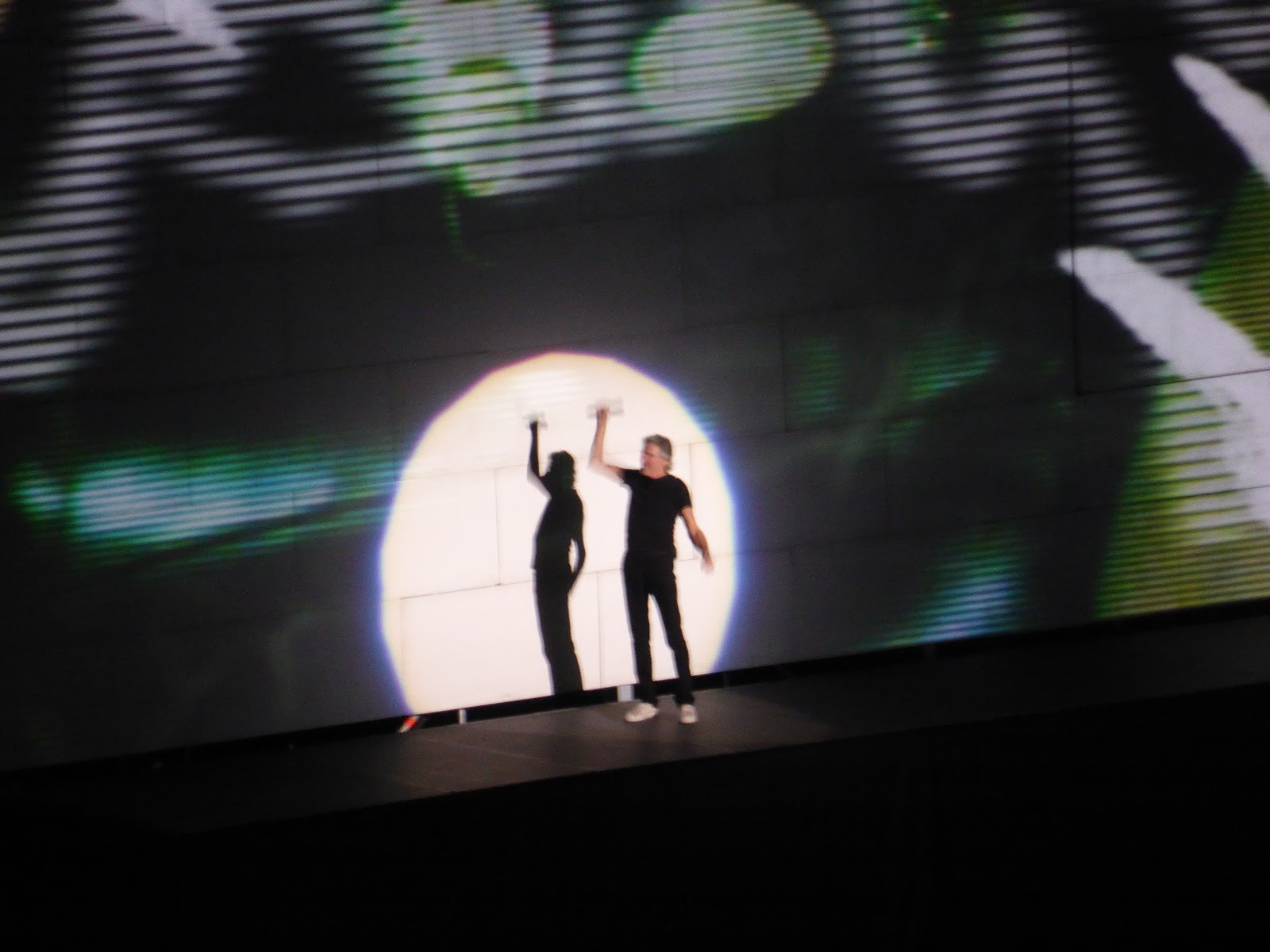
His epic tour of a new production of The Wall added additional targets to those the original album aimed at, including Waters' increasingly vociferous position on Israel and Palestine, on top of more familiar themes of corporate greed and state brutality. Some might say that Waters has simply become a gnarly individual in his 70s, but to be honest, he has always been so (and it shouldn't be lost that the father he so often has lamented, Eric Fletcher Waters, was a diehard Communist and conscientious objector before a change of heart saw him commissioned into the Royal Fusiliers, eventually losing his life in the Battle for Anzio).

That, then, should always be remembered as the source of Waters' pain, and his inspiration. But on Is This The Life his targets have been reset, with one Donald J. Trump drawing the most fire. This won't come as any great surprise - on tour last October and before the US election, Waters performed Floyd's Pigs (Three Different Ones) in Mexico City with projections of Trump combined with the word "pendejo" ("stupid"). Here, Waters goes further, Much further. And that is both the strength and the flaw of the album.

Musically there is nothing on Is This The Life to surprise if you've listened to Waters' past output. I don't mean that in an ill-tempered way, but there is tremendous familiarity: the guitars and string arrangements of Déjà Vu bear striking similarity to cues that ran through The Pros And Cons Of Hitchiking, and its intro also harks strongly back to Animals' Pigs On The Wing Part 1, though these might be mere background to the song's vituperative narrative about the state of the world. The Last Refugee doesn't cheer things any further, casting grey-skied reflection on, presumably, the tragic death of Kurdish toddler Alan Kurdi, washed up on a Turkish beach last year. In its restraint, The Last Refugee is, in fact, quite powerful, and this reminds one that Waters - for all his inner anger is also earnest in the way he approaches such subjects. Whatever your view is of wealthy rock stars railing for causes, Waters is always totally heartfelt and, as his Facebook spats over Israel have shown, unapologetic.

© Simon Poulter 2017

The ghost of Pink Floyd re-emerges on Picture That, and not just in the staccato bassline borrowed from One Of These Days or the slide guitar so effectively used by David Gilmour on numerous Floyd songs, but in the very pointed use of the phrase "Wish You Were Here" in an arcing piece about drone strikes and the distances between those they affect and those who pull the trigger.

By Broken Bones the mood hasn't lifted much, and Waters continues to drive home his frustrations at a world and its apparent need to persist with war. But it's on the album's title song that Waters gets to the nub of what ails him. Drawing on producer Nigel Godrich's subtle touches with Radiohead, Waters lays directly into Trump ("...every time a nincompoop becomes the president...") and the unsettled world climate his election has coincided with. Bird In A Gale also bears more of Godrich's textural influence, matching it to Waters' love of putting delays on key words for emphasis, as well as drawing on samples of radio broadcasts (remember the channel-tuning intro at the beginning of Wish You Were Here?).

However, this song is where Waters' lyric writing comes under scrutiny: as someone who once described his own lines to Floyd's Breathe as "a bit Lower Sixth", it would be fair to say that Waters has written better lines than appear on Is This The Life. Some come across as too simplistic for their own good, while others appear half-arsed. With that in mind, Smell The Roses is the album's most disappointing track, with words that could easily have been scribbled out on the back of a physics exercise book, and a soundscape that even includes samples of dogs barking (yes, again, heard before on Animals), as well as the very Floydian 'boogie' that had the band themselves heavily criticised for its somewhat pointless album of improvised outtakes, The Endless River.

That, though, can be considered the weak point of the album, but there are, thankfully, many high points to compensate. The Most Beautiful Girl, with is casual downbeat, reminiscent of Mick Woodmansey's Five Years intro and tapped out by seasoned session drummer Joey Waronker, is a high point, while Wait For Me and Oceans Apart - even if bearing strong resemblance to the more contemplative moments of The Wall (such as Mother) and Pros And Cons - both present the essence of Waters' ability to create mood without screaming.

There will be those who will feel that, after 25 years since Waters' last rock record, Is This The Life could have offered greater variety. But that, I suspect, is not what Waters' fans would want. There will always be those who want, effectively, another Pink Floyd album, and musically that desire is fulfilled to some degree with this album. That said, Waters - arguably from the moment he became the Floyd's creative core - has largely used the music as a canvas on which to paint the things he believes in and wants off his chest. And at 73, he is doing that once with an album which, warts-and-all, does so honestly, passionately and sincerely. And is all the better for it.

Friday, 5 May 2017

Augmenting reality - Beatie Wolfe's Raw Space

There was a time, in my deep, dark and ever-so-slightly dank past when I regularly attended the launch of a new album. Over on-trend bottled beers and record company vol-au-vents, scribes would be entertained by the artist or artists in question, followed by an opportunity to mix and mingle, invariably accompanied by a ferocious record company press officer doing their level best to prevent any awkward questions (you know, about drug busts, tour "larks" and inter-band creative differences).

So today I enjoyed a somewhat circular return to this world with my 'attendance' of an album launch with a difference - a very big difference, in fact - which could easily be described as truly post-modern. Beatie Wolfe, the London-born singer-songwriter who, with her first two albums built a very credible reputation for both her melodic dexterity and use of digital art in combination, today launched her record Raw Space with an event that combined a novel convergence of digital and physical music with an augmented reality experience.

Wolfe and Nokia Bell Labs, the storied research institution now owned by my Finnish employer, hosted a vinyl playback of the album from an anechoic chamber (essentially a sound-absorbing room), combined with 360-degree augmented reality content and streamed over YouTube. Now, if this sounds like just a promotional gimmick (and in my day I experienced some intensely wacky stunts...) there was technological merit to the exercise: Wolfe says that she wanted to challenge the current streaming experience, which audiophiles, particularly, will concur might be convenient but from a listening point of view, quite flat. Noting that streamed music is "somewhat compressed both sonically and creatively", Wolfe wanted to celebrate the album form - "its artwork, arc, narrative, music", the things that still count for those of us queuing at dawn the other Saturday to get our grubbies on Record Store Day releases.

Picture: Beatie Wolfe/Instagram

It's not the first time Bell Labs has collaborated with the art world - over the 50 years of its E.A.T. (Experiments in Art and Technology) initiative it has worked with the likes of John Cage and Andy Warhol. Today's Bell Labs president, Marcus Weldon, says this latest meeting of music and science is particularly novel. "This collaboration with Beatie looks at the intersection of art and tech in a truly inspired way," he says. "I couldn't think of a better project or artistic collaborator to champion the next phase of this defining exploration of the human possibilities of technology."

It's fair to say that musicians have enjoyed a mixed relationship with technology. There has been, of course, the tacit acceptance of commercial streaming services as distribution platforms, even if the vast majority would still prefer you to buy their albums in a physical form. My friend Steven Wilson famously drove a car repeatedly over an MP3 player in his Insurgentes documentary, part in protest at the sound quality of compressed music and part in protest over the download culture killing off the art of the long-form album. Peter Gabriel - a pioneer of studio innovations and whose father was an inventor and engineer - has warmly embraced digital audio with a considerable emphasis on promoting higher sound quality formats like lossless compression, while at the same time re-releasing his albums on audiophile-grade half-speed vinyl. And, yes, you can hear the difference.

In Wolfe's case, it's been about melding music, technology and art, something she's been doing from the very beginning of her recording career. Her 2013 debut Eight was the first album released as a hologram (it required an iPhone and a projection accessory to play it), while its 2015 follow-up Montagu Square (respectfully named after the onetime abode of John and Yoko where it was recorded) was made available on NFC-enabled business cards. That, Wolfe explained to Wired magazine, was "a synthesis of music and history", something you could say today's event -given its marriage of the resurgent vinyl album with the emerging canvass of virtual and augmented reality - was a vigorous example of.

As for the album itself, Raw Space embraces all of the ingredients I enjoy in the current generation of guitar-based singer-songwriters, in particular The Magic Numbers' Michele Stodart: a strong influence of Americana, brooding without being morose, romantic without being soppy, upbeat without being over-poppy. Songs range from the refined West Village coffee shop soul-bearing of The Man Who and the deliciously drawling Pure Being, to the countrified warmth of Gimme Some Love and the rootsy vibe of Broken Bird. For a big, ballsy rocker like Oh Darling there is the contrasting intimacy of As You, while the piano-and-strings ballad How Can I brings out the rich timbre of Wolfe's voice, as well as the pleasing balance of her writing - neither overwrought or underwrought.

There is a pleasing resonance to Raw Space but not so familiar as to be predictable. Far from it. It's launch, however, opened up a very different realm, one which I'm pretty certain we haven't heard the last of. Just when you think you've seen it all, someone like Beatie Wolfe comes along at opens up a completely new dimension. More power to her.

Monday, 24 April 2017

Why Top Gear is still Sunday night mind candy

Picture: BBC


When I departed British shores in 1999 the nation was still getting used to the idea of 'multi-channel television'. Until 1982, there had only been three terrestrial offerings, and with Sky launching in 1989, bringing with it five satellite stations, the choice extended only so far. Last October, however, when I returned to the UK, the number had spread into the 500s, with all manner of reality TV crap and a rotating curriculum of sharks, killer snakes, air crashes, Nazis and Alaskan truckers populating the myriad digital platforms on offer.

However, amongst all of that is the televisual comfort food that is the channel Dave. On any given evening I can now indulge several years of missed episodes of Mock The Week, QI and Have I Got News For You. Regardless of their place in the actual chronology, seeing such shows out of sequence is a baffling, but entertaining exercise in watching the ageing process, as hairlines recede and what's left goes progressively grey. No show, though, is as acute a exhibition of the ageing process than repeats on Dave of Top Gear - the Clarkson, May and Hammond years. As we all now agree, its 2002 reboot turned out to be a masterstroke, transforming a worthy-but-dull magazine show (which began 40 years ago last Saturday) into an infotainment format that borrowed heavily from TFI Friday's mix of banter and recurring gags in front of a studio audience.

Via Dave we can see many things: Jeremy Clarkson's expanding paunch and gradually shrinking "pubic" haircut, James May's blind ignorance of fashion, and Richard Hammond's almost slavish fashion victimhood. But mostly we can see what unique chemistry developed between the three of them. No matter how stereotypical public school-boorish you find Clarkson or how over-exaggerated both May's shirts and Hammond's mannerisms can be, rarely can you say that a presentation team can combine such a brilliant combination of humour, enthusiasm for the subject and a form of camaraderie.

Some of the Clarkson, May and Hammond filmed challenges - especially anything in Italy but also the specials from Vietnam, Africa, India and even the controversial Burma and Patagonia films - have been amongst the best factual television I've seen. Beautifully filmed, cleverly edited and, obviously, smartly written. And all bearing very little resemblance to the original Top Gear, with its public service dreariness about pushrods and fan belt timings.

So, when Clarkson's contretemps with a producer led to the trio leaving the BBC and setting up shop at Amazon, the BBC's task, in retaining the 'new' Top Gear format with a new presenting team, was always going to be a tall order. And thus it proved: realistically speaking, the relaunch - with Chris Evans, Matt Le Blanc, Eddy Jordan, motoring journalists Chris Harris and Rory Reid, and German racing driver Sabine Schmitz - was a let-down. No fault, perhaps, of their own, given the intense brand created by their predecessors, but the end execution looked as clumsy and forced as the previous incarnation had appeared relatively natural.

Picture: BBC

With Evans stepping down, and the show focusing on Le Blanc, Harris and Reid for the second series of the 'new-new' Top Gear - which came to a close last night - the BBC had clearly listened to the criticism. Well, mostly. Fan reaction over the course of the seven-show season has progressively warmed, with sentiment - if Twitter is anything to go by - suggesting that giving Le Blanc the proverbial Clarkson 'lead' role has "saved" Top Gear.

There is no doubt that Top Gear has unproved vastly over this second series, and Le Blanc has indeed been a major part of that, despite his American pronunciations of "Jag-wah" and "Nee-san". Like his Hollywood compatriot Jay Leno, Le Blanc is a bona fide petrolhead (sorry, "gearhead") who clearly put his stratospheric income from Friends to good use in owning a series of high-end motors over the years. Indeed, the common denominator between all three main presenters is their knowledge. Harris - who bafflingly continues to divide fans - is a clear expert, while Rory Reid - when he gets screen time... - shows a similarly engaging enthusiasm for the subject.

In the absence of Clarkson, May and Hammond, whose chemistry and individual personalities became quickly evident as their incarnation got going, Le Blanc, Harris and Reid are still somewhat disparate, but not far off. Individually, Reid's race around the Nürburgring with Schmitz, lapping supercars in a Volkswagen Golf, was wonderful, with Reid's boyish excitement palpable. Likewise, Harris's race against Le Blanc through the Middle East in a £2 million Bugatti Chiron was terrific fun, even it was just a variation on previous supercar challenges.

Picture: BBC


Thankfully there have also been some extremely entertaining and inventive features. Harris and Le Blanc's 'four seasons' challenge with a Lamborghini Huracán Spyder and a Porsche 911 Turbo S Cabriolet up in the Sierra Nevada mountains, ending in one of my favourite places - California's Mammoth Lakes - had just the right mix of Top Gear stupidity, risk and banter, combined with two beautiful-looking cars. Reid's giant arcade game, pitting a Renault Twingo GT against two similar-size city cars in an automotive version of PacMan, may have been a redux of Clarkson and May playing rugby with Kia hatchbacks, but it was nonetheless entertainingly exciting. This, at the end of the day, is what Top Gear viewers want.

Top Gear does, though, still have plenty of work to do. It's single biggest problem continues to be the studio segments, where the banter seems forced and celebrity appearances have also been particularly awkward. The previous Star In A Reasonably Priced Car format was tight and to the point, even with stars as huge as Tom Cruise and Cameron Diaz as guests. Now, the star is brought out for what seems like forever, supporting little more than a chat show format built around a timed lap in a not-so reasonably priced Toyota GT86.

David Tennant gushed like a luvvie throughout his appearance, while there was a sense of recycling in bringing back Ross Noble for no obvious reason and, last night, Jamiroquai's Jay Kay, who proved himself to be an even bigger cock than usual, with his dark glasses and nothing particular to say (apart from an encyclopedic knowledge of supercars).

At least, though, Le Blanc ended the 24th 'new' Top Gear series looking forward to a 25th, so seemingly the BBC is happy to continue with its lucrative merchandise-spinning asset. If anything, continued improvement to the format will reaffirm Top Gear as a car show, first, and a vehicular version of Last Of The Summer Wine a distant second (and which Clarkson, May and Hammond have almost removed the need for by taking their antics to Amazon with The Grand Tour).

What Top Gear's producers must take on board (and I can't that they haven't already) is that the previous presenting triumvirate was unique, a rare piece of onscreen combination that played on the individual personas of Clarkson's oafishness, May's fuddyness and Hammond's boyish charm. Le Blanc, Harris and Reid's personalities have yet to come to the fore, especially the latter, and they must be allowed to develop their own, more polished style. But on the evidence of these seven shows - even last night's, which was the weakest of the run, it's clear that Top Gear is putting behind it the egomaniacal mess of its Chris Evans-fronted relaunch. More importantly, this second series under new management has started to restore Top Gear to what it had become until that unfortunate incident involving an absent steak dinner - the perfect mind candy to wind down the weekend with on a Sunday afternoon. Or every weekday afternoon on Dave, if you're reading this in the future.

Picture: BBC

Saturday, 22 April 2017

I love the smell of vinyl in the morning: Record Store Day 2017


There are tales, already, of desperation. Of men - and I'm fairly confident that we're talking exclusively men - camped out on high street pavements at Stupid O'Clock, desperate to be first through the door on this, the tenth annual Record Store Day.

For those unfamiliar with the concept, this is when the most serious of record collectors pile into music shops in the hunt for limited edition vinyl releases put out just for the day, and all part of an initiative to get people shopping for actual music in such independent outlets.

It brings the die-hards out early: my local shop, Greenwich's excellent Casbah Records, had the first punters lining up a full FIVE hours before opening at 10.30am, while Brighton's Resident Music had its queue form at 3am for an 8am opening time. There is a limit, and three in the morning goes way beyond it...

There is, of course, a huge degree of trainspotting about it all (and I don't mean heroin peddling). Most of the music will have been available before, and the profile of many queuing suggest that they might spend the rest of their Saturday at the end of a Clapham Junction platform with notebook, pencil and a pair of binoculars. But all that notwithstanding, Record Store Day is, actually, a bit of fun.

While it will attract the arch music nerds as well as the prospectors looking to grab swag to resell on eBay, there are also plenty who simply enjoy the tactile pleasure of rifling through record racks in a slightly musty-smelling shop in the hope of finding something unique to take home and, you know, play. These, then, are the whom Record Store Day is for. It's easy, in this cynical, corporate world, to assume that the whole thing is a cunning wheeze designed to ink money for the record companies and their artists, but there is a knowing awareness amongst those waiting to get into their local emporia that it's all about the love of music.

It's why I can guarantee that High Fidelity and This Is Spinal Tap will be cultural references for many in today's Record Store Day queues. They'll know all about record shop demagogues and Jazz Odyssey because they understand that music ownership at this level is a subculture, rather than just the acquisition of listening material with which to wallpaper the day.


The rarity factor is important but, I think, so too is the satisfaction of curiosity. There are those of us who have plenty of versions of Pink Floyd's Interstellar Overdrive already, but a previously unreleased recording, on a single-sided single, wouldn't go amiss. It doesn't, actually, matter what you're in the queue for, whether a demo version of The Smiths' The Boy With The Thorn In His Side or a pink vinyl reissue of Aqua's Barbie Girl (no, me neither...). Tastes and interests are disparate: earwigging on conversations this morning outside Casbah I was reassured by the enormous diversity of ambitions - reassured because it meant that I was more likely to get what I wanted. The fascinating and compelling part of Record Store Day is that it brings out every taste, all sharing a common love of music as well as the tactile appreciation of physical music ownership.

© Simon Poulter 2017
As for me, I was about as successful as I could have hoped for: Bowie's Cracked Actor live album, The Who's Quadrophenia on parka-green vinyl, a few Prince singles, the first new The The music for 15 years and an Elbow cover of one of their older tracks. And, yes, that 'new' copy of Interstellar Overdrive.

For old heads like me, Record Store Day has been an encouragement to return to their vinyl libraries, to enjoy the tactile experience of youth in opening up gatefold sleeves and placing needles on grooves, rather than the somewhat impassive process of clicking a mouse. But younger consumers - even teenagers - are also playing a part in the revival of vinyl that saw more than 3.2 million vinyl albums sold in the UK last year, and now account for 15% of the industry’s income from physical formats.

Having been a part of the industrial push for all-things digital back in the 1990s, it might sound strange to be returning to the record deck. But there's a place for all formats - the convenience of digital and the tactile enjoyment and perceivable aural warmth of vinyl. Younger consumers, however, are also appreciating that there is something more that comes from vinyl, that it is not just some on-trend meme they need to sign up for. They're also discovering classics like Fleetwood Mac's Rumours (last year's best selling vinyl release) or The Dark Side Of The Moon for the first time. Healthily, that means they're discovering - through vinyl - that music was once more than a pick-and-mix stream of songs recorded by someone who has won a television talent show. The industry will never see the likes of 1975 (the year, not the band...) when 92 million vinyl LPs were sold in the UK, but for this old head, just knowing that vinyl side of  music consumption is in relatively rude health is a thoroughly pleasing thing.

Friday, 21 April 2017

Home on the range: Ray Davies' Americana

It is somewhat ironic that the first new album from Ray Davies since being made a knight of the British realm should commence with the line "I wanna make my home where the buffalo roam". Because for all the wannabe Yankeeism of his contemporaries in the 1960s, Davies and The Kinks remained resolute beacons of England.

Waterloo Sunset is, simply, the most beautiful song ever written about London and a standout entry in a ten-year period of intense creativity in which Davies became England's pop laureate, with wry and often strongly satirical tunes about English life, like Sunny Afternoon, Autumn Almanac, Dead End Street, Dedicated Follower Of Fashion and David Watts, and the oft-overlooked album, The Kinks Are The Village Green Preservation Society. But within these masterful snapshots of Cool Britannia before the term had ever been coined lie clues as to why Sir Kink has turned his attention to the Land of Opportunity with Americana, his fifth solo album and the first for ten years.

Though, like most of those who made their bones in the '60s pop boom, Davies launched his career under the influence of American rock and roll, Americana - in which he is backed by rootsy Minnesotans, The Jayhawks - takes him on a somewhat sentimental journey through the cultural memes of the You Ess of A. This might sound like tired cliché, and you might be fearing wide-eyed tales of truck stops and roadside diners, but there is a genuinely journalistic, travelogue nature about the 15 tracks on this album, all entirely in keeping with Davies at his storytelling best back in the day.

The narrative is part-observational, part-reflection: Americana, the title track and opener, looks back upon childhood, and Saturday morning Wild West picture shows in North London when "My baby brother and me in the land of the free" would dream of being home on the range but "On that silver screen, 'cos since I was a teen you know I had this dream". This is in the same vein of nostalgia as Ballroom Dancing, his ironic take on Saturday nights out in Muswell Hill, but with a wistful pace slowed delightfully by the countrified backing.

Davies has had an odd relationship with America. At the height of the British invasion The Kinks were denied permits to tour the US by the American Federation of Musicians (the ban has never been properly explained, though a reputation for on- and off-stage antics has been hinted at, even though The Kinks were no worse than anyone else and certainly better than what followed in the '70s...). And then, of course, there was the more recent episode, in January 2004, when Davies was shot in the leg while chasing thieves in New Orleans who'd snatched the his then-girlfriend's handbag. An incident like that might colour one's opinion of a country. But, then, America - even America today - has been an aspiration for so many.

And so, on tracks like The Deal, and its Randy Newman-like view of Los Angeles, or Message From The Road and The Great Highway, Davies performs sketches of America, past and present, from the urban canyons to the open desert roads, touching occasionally on the American dream - more from the pursuit of it, rather than its attraction. Again, these themes have all been covered in some depth before, but with Davies you get a lyric that, though invariably quite simple, is incredibly evocative. And whereas many a non-American musician has tackled these themes in both homage and in parody, Davies does so purely from the viewpoint of wry observation, as if adding semi-sung narration to musical documentaries.

I'd be lying if I said this was Davies' best work, but there is much to endear on Americana, simply because it is Ray Davies (and also for coming with cover art photography that makes buying the two-disc vinyl version worth every penny). That might be a perilous statement to make - no one has a right to greatness just because they have been in their past - but the work here is genuine and fascinating at the same time. And that's good enough for me.

Sunday, 12 March 2017

A Bridge too far?


Ever since André Villas-Boas was, apparently, set the impossible task of transforming from within a Chelsea dominated by its then José Mourinho spine of Čech, Terry, Lampard and Drogba, there's been a never-ceasing murmur about who would blink first in the battle of wills between the club and, in particular, its "Captain, Leader, Legend".

The conventional wisdom has been that John Terry - while beloved unconditionally by Chelsea fans - has been on an exit path ever since he turned 30, six years ago. That he hasn't left - and even had a resurgence, some managers later, under Mourinho - has only served his status as 'Mr. Chelsea'. But the reality has been, despite the mutual Mourinho-Terry dependency, that the defender's effectiveness has started to show its age.

Tomorrow night Chelsea's record breaking, medal-hoovering skipper will no doubt start in the FA Cup quarter-final at home to Manchester United. It's a tie rooted in so many histories, the most prominent being Mourinho's as, now, the United manager, but also the long memories we Chelsea fans all have of the humiliation by United in the 1994 FA Cup Final (never mention David Elleray's name around these parts...) and that night in Moscow when a slippery sod rendered Terry in tears and United the European Champions.

The sad truth is that if Chelsea lose, it could be the last competitive game we see Terry play at Stamford Bridge. And even if Chelsea go through to the semi-final and beyond, Terry's place in any starting line-up will be in doubt. To his absolute credit, Terry has accepted that this season his club captaincy has been more a job of seniority and moral support, dressing room continuity for Antonio Conte. There haven't been any complaints in the press about playing time, while his posts on Instagram have been of a dutiful player training relentlessly. "In the nicest way I hope I don’t get back in because it means we are carrying on winning matches," Terry told the Evening Standard in November. Last week Conte declared that Terry was important to him this season "because he's the captain and he's working very well on the pitch and helping me a lot in the changing room, transferring the right message".

The Italian is well aware of Terry's Chelsea legacy, but most Chelsea fans will, equally, be aware that the old soldier can't go on forever - even if, much like Monty Python's Black Knight of Holy Grail fame, he believes he can. This season's Premier League form with a largely Terry-free line-up has provided Chelsea fans with a convenient reason to not miss Terry. We might love the old slugger, of course, but with David Luiz's growing maturity, Cesar Azpiliqueta's quiet confidence, Gary Cahill finally looking not totally lost without JT at his side, and Kurt Zouma slowly working his way back from injury, no one has felt that Terry could offer anything more than being a figurehead with a penchant for taking a boot to the face when it is needed.

Still, though, the 36-year-old Terry believes he has a couple more seasons in him in the top flight before he hangs up his boots, much like his close friend Frank Lampard who has only just retired at 38. West Bromwich Albion and Bournemouth are believed to be interested in taking him on, Stoke are also rumoured to be keen, and having previously said, out of loyalty, he wouldn't play for a rival Premier League club, these are likely to be his options, should he not accept a coaching or ambassadorial role at Chelsea.

It would be a tough acceptance for Chelsea fans, but no more than seeing any beloved player in another team's shirt. There maybe a few more blue rings on the Terry treestump than when Chelsea sold on the much loved Juan Mata to United, even Nigel Spackman to Liverpool, many years ago when money was tight, but Terry deserves what he can get, even if at a rival, as much as Chelsea clearly need to complete the process begun this season of weaning itself of a club player since he was 14. It can be done, it probably needs to be done if, for once, we allow head to overrule heart.

Saturday, 11 March 2017

Always a woman - Laura Marling's Semper Femina

Sometimes it just works this way: Yesterday, I was celebrating the 30th anniversary of The Joshua Tree, today I'm listening to an album in part inspired by a trip into the same part of California's Mojave Desert; two days ago the world was celebrating International Women's Day. And now Laura Marling has released an album all about womanhood, Semper Femina. It's a title which, for those not schooled in Latin (such as myself, who clearly had to look it up), means "always a woman", and reflects an exploration of Marling's own femininity as well as those of women in general.

But, first, the music. I first came to Marling without knowing that she was regarded as part of the 'new posh folk' movement (Mumford & Sons and Noah & The Whale - of whom she dated the former's Marcus Mumford and the latter's Charlie Fink). My interest was piqued purely by comparisons with John Martyn - an unusual reference point for anyone in her then-early twenties - but as much for her acoustic guitar skills as any other more hackneyed aspect. It was a welcome and valid comparison all the same.

Inevitably, when you mention 'folk' and 'female' in the same sentence, the Joni Mitchell comparisons flood in, but I'd never really consider Marling in this context with her Mercury Prize-nominated debut Alas, I Cannot Swim, or much of its four successors. But on Semper Femina - perhaps due to her relocation to Los Angeles and absorption of the slightly way-out Californian way of life - there is a distinct note of Mitchell's stylistic breadth.

Working with Blake Mills - whose past production credits include Alabama Shakes along with guitar sessions for Paulo Nutini, Carlene Carter, Dixie Chicks and Lana Del Rey, amongst many others - Marling adds new textures to her brush strokes. While never straying far from a core of introspective singer-songwriting, there is a pleasing variety on this, her sixth album. From the opening track Soothing and its pulsing, trip-hop rimshot beat, to the more frenetic Next Time, which obliquely addresses the denouement of sexually ambiguous relationship trauma, ending with "I don’t want to be the kind, Struck by fear to run and hide." The Valley takes a similar turn, a very pretty song that again makes reference to an unspecified and unsuccessful friendship (I know she stayed in town last night, Didn’t get in touch. I know she has my number right, She can’t face seeing us".

But despite alluding throughout to romantic and interpersonal upheavals, this is not a melancholy trawl through the foul rag-and-bone shop of the heart. There is a pleasing serenity to tracks like Always This Way and Don't Pass Me By, and the album ends with Nothing, Not Nearly with the lines: "We've not got long, you know, To bask in the afterglow, Once it's gone it's gone, Love waits for no one" followed by the sound effects of a garden and birdsong.

The womanhood theme rides throughout, with Nouel containing the refrain "semper femina" - a Greek classical reference which Marling first entertained as a tattoo at the age of 21. Nouel is about an LA artist, and celebrates her being both "fickle" and "unchangeable". If anything, it's a celebration of womanhood, of free spirits. And coupled to the honey-coated warmth of Marling's vocal, it is a notable high point on a album of many other hight points, an album by turns accessible, deep, engrossing and soothing. And fabulous.

Thursday, 9 March 2017

Desert songs - The Joshua Tree turns 30

30 years ago I'd not yet set foot in America, let alone visited California or the Mojave Desert where a certain type of tree grows in the apparently waterless terrain. But even though it would be another five years before I would feel Western sunshine on my face for the first time, one album had already put me there: U2's The Joshua Tree.

Released 30 years ago today it took the Dublin band over the threshold of superstardom. Hit singles like Pride (In The Name Of Love), Sunday Bloody Sunday and New Year's Day, plus the critically acclaimed albums Boy, October and War, had already established their credibility, placing them on the fringes of daytime mainstream without brushing them out of the evening radio shows where the not-yet-huge could consider themselves cool.

Two things happened before The Joshua Tree became U2's turning point: firstly it's predecessor, the Brian Eno/Daniel Lanois-produced Under A Blood Red Sky, had netted them hits in Pride and the melancholy The Unforgettable Fire. And then the following year, on 13 July, 1985, the-then still-young band became one of the standout turns at Live Aid. This was due in part to U2 challenging Queen for the liveliest set of all the acts at either Wembley or in Philadelphia. Having torn through Sunday Bloody Sunday and then an extended version of Bad, Bono hammed things up by beckoning British teenager Melanie Hills to join him on stage (a Springsteen-esque gag he'd pulled before), shortly followed by her sister Elaine. At the singer's behest, bouncers attempt to pluck the girls from the crowd, but with Harvey Goldsmith's strict 20-minute limit on each bands' sets ticking away, Bono himself dived into the crowd to assist. A third girl, the 15-year-old Kal Khalique - there principally to see Wham - was also pulled from the throng. She's the one Bono ended up slow-dancing with. It was all gloriously hammy, and not entirely spontaneous ("I don't like the distance between performer and audience. So I'm looking for a symbol of the day, something I can hold onto", Bono would later say) but it carved an eternal mark in the collective memory of Live Aid, not least of which, because it occurred during a set that U2 had scheduled (via clever negotiation) just as the vast US audience was joining Bob Geldof's "global jukebox". It was a masterstroke.

Fast forward, then, to 6 March, 1987. I was in the control room of Studio 5 at Tyne-Tees Television in Newcastle, invited there by the show's producers on the day Jools Holland returned from suspension for saying a naughty word during a live teatime promo. Paula Yates (I think it was) spoke to camera to introduce a world exclusive - the first ever playout of the first single from a new U2 album. The screen faded to black and a quiet but distinct Adam Clayton bassline started to pulse. From the darkened screens in an utterly hushed, pindrop-silent room, Bono emerged, his hair slicked back into a pony tail, wearing a leather waistcoat with a guitar strung across his back. "See the stone set in your eyes," he semi-breathed, "See the thorn twist in your side. I wait...for you.".

We were hearing With Or Without You for the first time. It's a moment I clearly won't ever forget. Like so many bands, I'd not disliked U2 previously but I'd never been all that fervent about them, either. Tonally, too, With Or Without You didn't sound all that different from The Unforgettable Fire, their last single, but there was a notable flavour of Americana (then not really a term) about it. The following Monday The Joshua Tree was released, and it all started to come together.

They say you should never judge a book by its cover, but Dutch photographer Anton Corbijn's cover photography for U2's fifth studio album set the tone. There, in a black and white strip taking up a third of the cover space were Larry Mullen Jr, Clayton, The Edge and Bono, squeezed into the left-hand half of a frame, with grey desert occupying the other half. There was more of this sparse, monochrome photography on the inner sleeve and back cover, all shot in the vast Joshua Tree National Park near Palm Springs in California, and all with the band looking less like the punk-inspired New Wave rockers from Dublin that they once were, and more like members of a native American nation. "When I see the people we were back then," The Edge has written in a forthcoming personal photo diary of the Corbijn shoot, "I see a bunch of pilgrims on a journey towards some kind of creative home. I think that really does capture the spirit of the band at that time."


Corbijn's cover art was perfectly in keeping with the music within. Produced by Eno and Lanois (who'd most recently been responsible for Peter Gabriel's breakthrough So), it managed to encompass the signature U2 sound - Edge's instantly recognisable delayed guitar, Clayton's thudding bass, Mullen's crisp drums, and Bono's breathy vocal style - in a simpler, more stripped down sound, one which somehow evoked the desert landscape on the album sleeve. The desert theme became instantly obvious with the opening track, Where The Streets Have No Name, a compelling, scaling song that, according to Eno, had been tortuous to record ("...a ridiculous saga" he tells the latest edition of Mojo, "I estimate that 40 per cent of the time was spent on that one song. It became a kind of weird obsession."

As the album opened up further, it was clear that the Irish quartet were deliberately exploring the badlands of the Americas. Just as Bruce Springsteen had successfully evoked New Jersey and the industrial north-east, The Joshua Tree was doing the same for the barren south-west, with Red Hill Mining Town and even One Tree Hill (a tribute to a U2 roadie who'd died in a motorbike accident the previous year), drawing on the searing heat and dust of the West. Bullet The Blue Sky, while set in South America, sort of followed the album's unspoken theme of America's influence (it had been inspired during U2's involvement in the Amnesty International 'Conspiracy Of Hope' tour of Central and South America).

30 years on, The Joshua Tree is, perhaps, more legend than milestone. But for the 19-year-old me, it opened up a fascination with American music that I hadn't yet fully appreciated. I could recognise references to the blues (later to flourish on The Joshua Tree tour, with their BB King collaboration, When Love Comes To Town) and the various Lanois-influenced clips of Americana that dot the album. What is certain is that it launched U2 into the upper echelons of global achievement, with Time magazine featuring them on a cover with the splash "Rock's Hottest Ticket". Crucially, The Joshua Tree - with its American themes - established them in the country of its inspiration, becoming their first ever No.1 album in the US just three weeks after its release.

Some will argue that Achtung Baby, the Berlin-recorded studio follow-up, was a better album, written deliberately to confound the belief that U2 had, via The Joshua Tree and it's live release Rattle And Hum, become an Irish version of The Eagles. But, perhaps, with Americana as a genre taking more subtle strides to appropriate the American heartland, U2's first commercial colossus can be appraised afresh. A piece by Tim Sommer in The Observer last Sunday made a somewhat valid point that U2's unashamed appropriation of a blend of authentic genres was "the most basic thievery", but no more than a Led Zeppelin had done beforehand. However, Sommer wrote, "the sheer weight of U2’s personality and charismatic energy" allowed them to get away with it. "In their hands, it doesn’t feel like plagiarism, but like a redistribution of deserving and lesser-known art to the masses." Surely, though, isn't this what everyone has always done? From rock and roll to Chicago house music, someone's always taken from someone else and turned it into something different.

This spring and summer we'll get a chance to make our own minds up with U2 retreading The Joshua Tree in a 30th anniversary tour of, first, the US and then Europe, playing the album - as is the vogue - in its entirety. On 2 June the band will issue an anniversary edition of the record itself, including in the obligatory super deluxe package a live recording from the 1987 tour's Madison Square Gardens show, B-sides from the album's singles and new remixes from Daniel Lanois, Steve Lillywhite and others, along with an 84-page hardback book of unseen personal photography shot by The Edge during the Corbijn cover art photo sessions out in the desert.

Obviously it's a package aimed squarely at people like me and my vintage, but as someone who believes that U2 peaked in the contrasting period of The Joshua Tree and Achtung Baby, and began to lose their appeal with the bombast, gimmicks and pontification that followed (not to mention the violation of that free iTunes album...) I will happily take the journey back three decades, get some desert sand on my feet again, and remind myself of what it was like to dream about America long before I got the chance to experience it for real.

Saturday, 4 March 2017

Decompression

© Simon Poulter 2017

What is it about being beside the Mediterranean in March, enjoying a shot of early spring sunshine while nibbling away at an agreeable glass of local vino tinto, that feels simultaneously decadent and undeniably relaxing? Whatever it is, it was a significant part of my Friday, and just what the doctor ordered. For the first time in what seemed weeks, there were no meetings or conference calls, no e-mails marked 'Important' with "URGENT" stamped in the subject line, just in case the red exclamation mark didn't work.

Like Punxsutawney Phil I emerged yesterday morning from my burrow, after weeks of preparing for and then attending Mobile World Congress, to suck in some sea air and soak up the Catalan vibe. It was a decompression day, one when I could sleep in and then, once self-levered out of my pit, saunter down to the hotel restaurant for a Barça breakfast of kings (noticeably comprised of sausages, some more sausages, several sausages and a Montserrat Caballe-sized hill of scrambled eggs. It is possible, however, that I subconsciously, but quite belligerently, missed the fresh fruit and yoghurt buffet...).

Either way, stuffed on a large quantity of artery clogging porcine goodness, and before I'd had the chance to ask what "cardiologist" was in Spanish (cardiólogo, Google later advises me), I set off to blow away cobwebs accrued over the last few weeks slaving over a steaming laptop and the last few days spent in a large metal shed with a corporate lanyard around my neck.

The not-so guilty pleasure of coming to Barcelona at the end of each February for a trade show is that, if you're lucky, you can catch your first reviving blast of Vitamin D. It's not always easy, as you find yourself sucked into a cycle of airport → taxi → hotel → taxi → event → taxi → hotel → taxi → event → taxi → airport, but if you're smart, and don't have anything or anyone to rush home to, you'll stay down here in this most engaging of Mediterranean cities for an extra couple of days to unwind.

© Simon Poulter 2017
And thus so yesterday proved: what started out as a gentle stroll from my hotel next to the vast Diagonal Mar shopping mall, became an engaging walk along the three-mile beachfront down to the preposterous sail-shaped W hotel with its pretentious staff and equally pretentious restaurants (so typical of the brand), before curling back into the Barceloneta district and the marina, with its vast - and I mean aircraft carrier-sized, Russian-owned (apparently) yachts.

This all might sound like a route march, but one of the eminent joys of Barcelona is going on foot and stopping as often as you want and not feeling under any pressure to be doing anything. At all. Somewhere in the midst of all this "vigorous" exercise I managed to squeeze in a latte, a sizeable vessel of Rioja and a light selection of tapas, not that this was any kind of novelty as I seemed to have existed almost exclusively on tapas as my evening meal over the last seven days.

The idea of tapas being a bar snack has almost been abandoned in Barcelona, as restaurants have based their entire menus around the cuisine. From shaved ham and croquettes, through to octopus and salted vegetables of every hue, no single eaterie seems to offer the same dishes, with the only common denominator being the red wines and cold cervezas that, even at the wet and blustery tail end of winter, trickle down a treat.

© Simon Poulter 2017
Until evening, this particular Friday was blessed with fine weather, which meant that there was no excuse to be indoors for anything. And so, after lunch (tapas) in the Barceloneta district - the marina on one side, the beach on the other, it was back walking again, moving up into the city centre where, by mid-afternoon, the British stag and hen weekends were already luridly spilling out all over La Rambla already, a calamity-in-waiting of ill-fitting T-shirts bearing legends like "Dave's Stag Do - Barcelona Or Bust" or "Susie's Final Weekend Of Freedom". There are times when you can really be embarrassed to be a Brit abroad.But who cares, each to their own.

My Friday had begun without agenda and so continued that way. By the time I'd reached the north end of La Rambla, and the sprawling Plaça de Catalunya - heavily armed police conspicuously standing guard, a sad fixture now in European tourist spots from Paris to Milan - it was time to stop and download a cold beer and take it all in. According to an app on my phone I'd walked just over six miles since leaving my hotel mid-morning. As evening bore down, it was time to refuel again. At the suggestion of my friend Mary, meat was the recommended option. Not a great surprise, I grant you, given the amount of vegetarian-unfriendly dishes I've consumed this last week, but it was, I was promised, going to be a meat feast untold.

And so we ended up in the somewhat unassuming La Vermuterie, appropriately just off Carrer de Londres, where we were offered an 800g pile of cooked cow, preceded - natch - by the prerequisite tapas selection. I'm not a huge meat eater (note the lack of a comma there) so the idea of a Flintstones-sized plate of flesh and bone wasn't all that appealing. But - man alive! - what turned up was remarkable. For a restaurant that looked more like a local Starbucks (at the table next to us sat a man with a Macbook consuming the WiFi, as you would find most of the day in any coffee outlet), this was exquisite fare. Such was the quantity, I won't be eating anything today. Or this week. And possibly not until April.

© Simon Poulter 2017