Showing posts with label 1966. Show all posts

Monday, 18 June 2018

World Cup fever? I'll put off going to the garden centre for now...

Press Association

Normally, in the run-up to a World Cup, I'd be in the throes of schoolboy giddiness. Wall charts obsessively studied, calendars blocked with every fixture, no matter what time the kick-off, and the sun and fresh air dutifully advised that, for the following few weeks, we'd be spending very little time together. But, until last Friday, the FIFA World Cup 2018 had generated little more than a "whatevs" from me. This was largely due to it being the FIFA World Cup, with all connotations of rum doings and brown envelopes, and secondly, because it was the World Cup in Russia, a country with hardly a great recent record of 'world in motion' inclusiveness.

But, then, Friday night came around and with it Portugal versus Spain (or, what has subsequently been revised to Ronaldo versus Spain), and all seemed to be right in the world. Since then we've seen Iceland hold out for a 1-1 draw with the mighty Argentina, replete with a Lionel Messi penalty miss, the Swiss holding Brazil and, even more stunningly, Mexico beating reigning world champions Germany. For those who couldn't care less about football or the World Cup, these results in just the opening weekend will mean little or matter less. But to some of us, they mean something, and this time, have momentarily obscured whatever it was that bred indifference on the run in.

That, though, is just football nerd talk. Tonight the reason 'most' of us in England watch the World Cup - England - means that working days are cut short, pubs are unusually full for a Monday, London taxis will be displaying the Cross of St. George without too much suggestion of distasteful nationalism, and even those who might otherwise show no interest at all in football, will be tuning in. For a brief moment, England's opening Group G match, against Tunisia, will create excitement, even hope. And an awful lot of cliches. There is some belief that Gareth Southgate, the England manager, is bringing a refreshing approach to the so-called "impossible job"; there is some latent belief that the England team's relative youthfulness will make a difference, not just tonight against Tunisia but all the way through into the knock-out stages. The truth is, we just don't know. No one does. As I often quote Danny Baker, "football is chaos".

With England today, as ever, we have to put prospects into context and balance. Yes, the squad is made up of Premier League players, and many drawn from Top Six teams. That surely counts for something. But our hubris at having a national side based around players from the most lucrative and watched domestic league in the world has led to too many false dawns before. England may well have been where association football began, and may, too, be where we've produced some high quality footballers ever since, but the thing we've never been able to grasp is that other countries have either produced better players, or have produced players that instinctively know how to win things - prettily or less so. Yes, England have suffered from poor refereeing decisions and have been unlucky in penalty shootouts, but those are the breaks. And penalties, whether regarded as a test of skill or not, are still just lotteries.

And, then, there's still 1966. To put England's one and only World Cup win into context, it was 52 years ago, just 21 years after the end of World War 2 (21 years ago to today, Labour won a general election landslide, the Princess of Wales died in a Paris car crash, Oasis released Be Here Now and Elton John was knighted. And these events all seem like yesterday). The point is that, apart from moments of joy in Italy in 1990 and the European Championships of 1996, England have been - like most participants in these competitions - a distinctly average team. Realistically, we've lacked true game changers, like France's Zidane in his day or Portugal's Ronaldo, still today. Yes, England have had and still have big-name, big-wage stars, but their profiles, wage packets and expensive choice of exotic car have rarely matched their delivery on the world stage, the international football pitch. That's not because they're bad players, or they've played for bad managers. They just haven't been as good as their opposition, and in some cases - South Africa in 2010 (including the worst game of football I've ever watched, England's 0-0 draw with Algeria) and that 2-1 defeat to Iceland in France two years ago - absolutely moribund.

But let's reflect a little. England are in this World Cup. Luminaries like Italy and The Netherlands are not. Each time England qualify for a tournament, they have done so on merit and at the cost of other equally worthy contenders. Tonight's opponents, Tunisia, may not exactly be a world beating force, but they qualified out of the African group - no easy task - and, despite not winning a World Cup fixture in 40 years, will be out to frustrate England. Southgate's youngsters will disregard them at their peril. Group G - which includes Belgium and Panama - is not going to be easy, but at risk of trotting out the 'there are no easy games' trope, there are...er...no easy games at the World Cup. Why should there be? True, some teams seem to be more likely to proceed than others, but as this weekend's opening games have proven, there are no rules as to who performs and who performs well.

So, strap in, order the pizza, take the phone off the hook and crack open the first beer. We've been there before, we'll be there again. Enjoy the ride, whether successful or a disappointment. This is still the World Cup, even with the slightly bitter taste of how it ended up being staged in Russia, even with England's history of failure and frustration. Someone has to win, someone had to lose. It wouldn't be football if it was pre-ordained.

Friday, 5 August 2016

Tomorrow never knew - The Beatles' Revolver turns 50

2016 will go down as the year that began with the death of a rock icon whom people actually believed held the universe together, and that the subsequent procession of celebrity departures, along with enormous political upheavals, has been down to his untimely demise. Those with their heads less buried in the clouds will just put this down to unfortunate circumstance. However, with 2016 being exactly 50 years on from 1966, there is an ornate sense of the circular going on, that somehow we're completing a cycle.

Because '66 was the year which, culturally, launched everything. And it was all thanks to four records: Bob Dylan's Blonde On Blonde, The Beach Boys' Pet Sounds, Blues Breakers with John Mayall and Eric Clapton, and The Beatles' Revolver.

Five decades on, this quartet - released within three months of each other - remain landmarks in the evolution of popular music: Dylan's for the dexterity of its writing, Blues Breakers for introducing the overdriven, amplified guitar that would shape rock music forever (see my post Breaking blues - the buddhas of suburbia from a couple of weeks ago), and Pet Sounds and Revolver - often seen as direct rivals - for taking pop music, pop music composition, pop music recording techniques and the manifestation of conceptual thinking in pop music to a totally different level.

The Beatles were in total awe of The Beach Boys, but Brian Wilson's masterpiece, released in May 1966, was itself something of a response to their own Rubber Soul, released the year before. While their next album wouldn't be an intentional tit-for-tat response, it was clear that with Revolver - along with Blonde On Blonde and Pet Sounds - mainstream pop was emerging into something else. The Elvis-inspired, stage-driven rock and roll that had breathed life into pop and which fuelled The Beatles at the Cavern and on the Reeperbahn had served its purpose. It was now about storytelling, about songcraft and expanding what was possible, and in The Beatles' case, turning the studio into an instrument in its own right.

Revolver was released 50 years ago today and has been quite rightly feted as pop's Great Leap Forward™. But quite why requires some examination: sequentially sandwiched in the Fab canon between Rubber Soul and the even greater opus of Sgt. Pepper's Lonely Hearts Club Band, John Lennon and George Harrison both saw Revolver as Part 2 of a cycle that began with Rubber Soul. Lennon, typically more colourfully, branded Rubber Soul as "the pot album", but Revolver "the acid album", a clearly tongue in cheek reference to the creative stimuli applied in both.

Revolver was, however, far from simply a trip. Emboldened by their move away from trite Merseybeat on its predecessor, Revolver evolved John Lennon, Paul McCartney and George Harrison further as songwriters. And here is where it draws its greatest gasp. Incredibly, we're only talking three years after their debut album, Please Please Me, but Revolver brought maturity, a premature world-weariness, even. McCartney was already contemplating middle age (he'd turned 24 that June) and a life of semi-retirement dressed in tweed and a cloth cap; Lennon - genuinely horrified by the reaction to his 'bigger than Jesus' quip - looked to the studio as a means of escaping the frustrations of live performance (namely the screaming teens who drowned out their music) and somewhat replaced the raw energy of gigging that he'd enjoyed in the early days with the energy of writing without limits. George Martin played an enormous role here in indulging Lennon's whims, knowing full well that Lennon was a huge fan of The Goon Show, of whom Martin had worked on comedy albums with Peter Sellers, and whichnreflected The Goons' own unparalleled "theatre of the mind" inventivenes.

14 songs was a lot for an album in the mid-60s, when bands were churning them out every nine months or so before embarking on tours. But across these songs - some of The Beatles' very best - Revolver established a new role for what a pop band could talk about. On Taxman they took swipes at Harold Wilson's Labour government (one of Harrison's three contributions which reflected his own coming-of-age as a writer), explored Catholic themes with Eleanor Rigby and gave McCartney a platform to expand his musical palette - his whimsy on Here, There And Everywhere, the intentionally childishness of Yellow Submarine ("it's a children's song," he explained at the time) and his sunny disposition (in contrast to Lennon's cynicism) with Good Day Sunshine.

Revolver was unafraid to shoot in different directions - the Motown funk of Got To Get You Into My Life (a track, believe it or not, once covered by Joe Pesci sounding a lot like Neil Sedaka...), the West Coast jangle of Dr. Robert, the anti-pop of I'm Not Sleeping, the rockiness of She Said She Said, and the experimentation with Indian spiritualism on Love You To, creating narratives and soundscapes with sound effects and double-tracking techniques of the kind that progressive rock would build upon in the decade that followed. Actually, it's no great shock to discover that Revolver and Pink Floyd's Dark Side Of The Moon were recorded in the same Abbey Road studio, albeit six years apart. Perhaps, then, much of the genetic code in the Floyd's early work, and indeed others, like David Bowie, can be found buried like a time capsule in one song on Revolver, the one that ends the album: Tomorrow Never Knows.

If Revolver as a whole marked a turning point in the trajectory of rock music, Tomorrow Never Knows is the hinge. What had begun as a droning, single-chord song called Mark 1 - strummed by Lennon on an acoustic guitar for George Martin's approval - became one of the most acclaimed album tracks in music history, for its tripiness ("Turn off your mind, relax and float downstream - it is not dying") - which was more a reflection of Lennon's interest in meditation than references to LSD - and its sonic innovation. Using barely new studio equipment, loops of various noises, tracking, compression and a host of other techniques, Tomorrow Never Knows - named after yet another one of Ringo Starr's malapropisms - took listeners into a completely new world, one that beat-obsessed pop was probably not ready for. Lines like "Lay down all thoughts, surrender to the void – it is shining." and "That you may see the meaning of within – it is being" were from another universe by comparison to "I wanna hold your hand" and "She loves you - Yeah! Yeah! Yeah!". But, to make the point again, it is truly incredible to think of how far The Beatles had travelled between these two sets of lyrics, and how music was taken along with it.

Revolver is, for many Beatles fans, their favourite, though trying to judge them all is a rabbit hole worth avoiding. There will always be merits to the breadth of Pepper, of gems like Julia, Dear Prudence and While My Guitar Gently Weeps on 'the white album', of the closure of Abbey Road and the blueprint for bluesy '70s album rock that was Let It Be (especially if you hear it in its original 'naked' state.

But Revolver remains my favourite for both what it was and what it did. Today, 50 years on, I can listen back to it - as someone who grew up long after The Beatles had disbanded (I was born the year after it was released) - and identify the source code of music I have cherished ever since I became musically of age. It really is that Biblical.

Thursday, 21 July 2016

Play it, Sam, for old times' sake

It is just a calendric coincidence that a new England manager should be appointed less than two weeks before the 50th anniversary of England's one and only World Cup triumph. Roy Hodgson's resignation after yet another ignominious English exit from a major tournament came only a month ago, and with the 2018 World Cup qualifying campaign starting soon, the Football Association has had to get a new man in place as quickly as possible.

As always when England goes through this brutal ritual a rich assortment of names is bandied about, from the plain fanciful to the unsparingly mundane. England, however, is not alone in such perpetual upheaval: just look around any of the world's national football associations and you'll see the same periodic disembowelling, the range of choices - even in Italy, France and the Netherlands, three of the world's traditional powerhouses of tournament football - it is usually pretty contentious, as the decision making prevaricates over which ex-pro or current club manager should get the job.

It is, of course, about making a choice on a role which acts as a touchpoint for national sensitivities, national pride even. But rarely in these countries do the choices stray beyond national borders. England, however, crossed that rubicon long ago, with the "marquee" appointments of Sven-Göran Eriksson and Fabio Capello, as the-then latest attempts to find the formula to improve England's dismal record. At the time of their appointments no one really questioned either manager's pedigrees, but after their respective departures there was a collective "was that really worth it?". With both men the FA stood accused of hiring 'glamourous' Eurocrats, managers who'd enjoyed reasonable success at equally glamourous European clubs, but wouldn't necessarily 'get' the expectation of England fans. Hope, though, was held high that their breadth of experience, coaching internationally, represented the missing ingredient to address England's stubborn failure to deliver more than a couple of semi-final appearances in the 50 years since Bobby Moore was famously held aloft by his teammates, clutching the Jules Rimet Trophy.


Since Hodgson resigned many have called for the FA to once again up their ambition by hiring someone of a Mourinho or Guardiola pedigree - unrealistic as that would be. So consider this: Eriksson took over from the flimsy Kevin Keegan (whose win ratio was just 38% from 18 games in charge) and reached three consecutive quarter finals. Capello took over from Steve McClaren, whose win ratio was 50%, also from 18 games, and failed to qualify for Euro 2008 before overseeing England depart the 2010 World Cup at the first knockout stage, being crushed 4-1 by Germany, and also putting in one of the worst games of football I've ever seen, a 0-0 draw with Algeria in the group stages. Of course, so they say, you can make statistics prove anything, but when you look at England's history since 1966 there is no pattern of success. Indeed Alf Ramsey, who managed England to that single World Cup trophy in 1966, took England to third place in the 1968 European Championships, a quarter final of the next World Cup, and then failed to qualify for both the 1972 Euros and the 1974 World Cup.

In Hodgson, England clearly went for a hybrid: an Englishman (tick) who'd managed so-called elite European clubs (tick) who would be somewhat plain vanilla when it came to fan expectations (tick). And still he oversaw England's early departure from two tournaments, despite having delivered consistently successful qualifying efforts for both. The only real conclusion we can draw from this is that there is no secret solution to managing England. Over 50 years, the FA has tried everything and everyone: Joe Mercer, Don Revie, Ron Greenwood, Bobby Robson, Graham Taylor, Terry Venables, Glenn Hoddle, Howard Wilkinson (ad interim), Keegan, Peter Taylor (also ad interim), Eriksson, McClaren, Capello, Stuart Pearce (for one game) and Hodgson, all with a similar topography of tournament qualification and performance records.

The England job isn't so much of a poisoned chalice as a supersized, Las Vegas-style mojito of toxicity. It will consume the appointee, turn their hair grey and after the mandatory media honeymoon, lay them open to vilification on a brutal scale. And, yet, that doesn't stop people thinking it's the job for them. In recent weeks we’ve even seen Arsène Wenger give an apparently "why not?" response to the idea of applying for the job, while Jürgen Klinsmann was said to be “intrigued”. For the rest, the list of runners and riders have included usual suspects like Harry Redknapp and Alan Pardew, plus Eddie Howe, Hoddle (again) and Steve Bruce - all as English as a sausage sandwich dripping in HP Sauce.

Wenger may have a mostly creditable club record on his side, and would have been an interesting appointment, but realistically he wouldn't have been available for another year, keen to see out the remaining 12 months of his Arsenal contract, when the FA needs someone available straight away to prepare for the qualifier with Slovenia in September. It's hard to have seen the FA trying to buy out his contract and risk a political rift with the Gunners. Klinsmann’s five years as USA coach saw the team rise in prominence but play utterly dull football - not a qualification for the England job; Redknapp may be a top bloke, a renown survivalist, wheeler-dealer and favourite of London cab drivers, but his history as a football manager has never been all that stellar, one season at Spurs and several narrow escapes notwithstanding; Pardew talks the talk but has yet to really prove he can deliver consistently; and Bruce might represent the image of grit and industriousness that England fans identify with, but could he conclusively transform the “overpaid”, “over-indulged” and “mollycoddled” players - to quote from Danny Baker’s legendary Twitter rant after the Iceland defeat - drawn from clubs managed by Mourinho, Guardiola, Klopp, Pocchetino, Ranieri, Wenger, Conte, et al, with such a diversity of footballing philosophies to go with them?

The answer, quite simply, is that we don’t know - and haven't known for 50 years - what the silver bullet is. So what, really, are the qualities required? More or less all of the names put in the England frame this time are seasoned managers, who know how to pick teams, organise and motivate them. In principle any one of them could hold the as-yet undiscovered key to make English players, most of whom play in the most revered and lucrative football league in the world, successful at international level. But, as we always seem to discover, promise and potential are rarely realised.


So step forward Sam Allardyce, who has been named by the FA as the successful candidate, having been the clear front runner over the last few days. His appointment does carry an odd parallel to the recent coronation of Theresa May as Prime Minister. Sorry to drag politics into this - we’ve all had enough of it this summer, I know - but May fitted the bill of what the Tories needed in a leader: a no-nonsense, unflashy pragmatist with a strong work ethic. Allardyce, the Dudley-born, 61-year-old former uncompromising defender, offers England the same. His totally unwarranted reputation for one-dimensional football and, simply, not being glamorous enough has divided opinions amongst some fans, but my argument is that Allardyce is EXACTLY what England needs right now.

He may not be the long-term solution (not that anyone ever is) but he does a good line in containment, having never suffered relegation at any of the Premier League clubs he’s managed. Now, I know that avoiding relegation is not the same as winning the title (I refer you to Chelsea last season…), and that the ability to stoically stave off disaster is the most British attribute of all, but Allardyce does have other things going for him, especially his approach to mindset management.

Following this summer’s sojourn to France, mentality may be England’s biggest challenge, as Danny Baker so eloquently pointed out. Allardyce has no time for egos, is an exceptionally good organiser and has the innate ability to fine-tune tactics to suit each occasion - a marked contrast to Hodgson’s intransigent lack of tinkering and dull, possession-based football which may have cost England so dear last month.

These are forensic examinations of Allardyce’s qualities, and the FA board responsible for hiring him will have, one supposes, done its due diligence by considering them in depth. There is clear risk, however: for all his English bulldog chops, Allardyce is completely untested as a manager on the international stage (having never coached a club in European competition). But could that even be to his and England’s advantage?

Is it so much of a prerequisite that England take on foreign teams from a position of trying to match them technically? What if England went out and played English football, the kind that adorns parks on a Sunday morning? It may not be pretty, it may not even be elegant, but if the defeat to Iceland demonstrated anything, it’s that winning football can’t just be measured in terms of salaries and expensive cars, but in the ability to get stuck in and do the job. And, simply, win.

Sam Allardyce might just be the manager to deliver that. Until the next one comes along, of course.

Tuesday, 28 June 2016

Quelle surprise


I'm sure a good psycho-analysis expert can explain that common theme in people's dreams, when they're running to escape something and but can't seem able to get ahead of it. As a child I used to have a dream in which I was being chased down by an object which resembled a giant kneecap, much like that enormous round boulder that tumbled after Indiana Jones (or, in the form of Homer Simpson, down the stairs after Bart).

The only reason I bring this up is that I currently have the same sense of weak-legged uselessness by the current state of the world, especially the encroaching political and social divisions in my home country and in the US, where the needs of certain individuals to satisfy their ambitions are running roughshod over decency and respect.

But in a somewhat lesser ranking, global importance-wise, I also feel frustrated by yet another woeful England performance at an international football tournament. The ignominy of England going out of Euro 2016 to Iceland compounds a four-day period in which the UK chose to leave the EU, it's prime minister resigned (and in the process triggered a contest amongst people like the gormless Jeremy Hunt who have precious little to offer the post other than "that job looks a lark, I might give it a go”), and Her Majesty's Opposition began collapsing faster than a house of cards in a tornado thanks to a well-meaning and well-principled but lukewarm leader. But enough of all that. The less pressing, but more acutely annoying boil du jour in need of lancing is that of England (the football team, not the increasingly isolated corner of the former Great Britain).

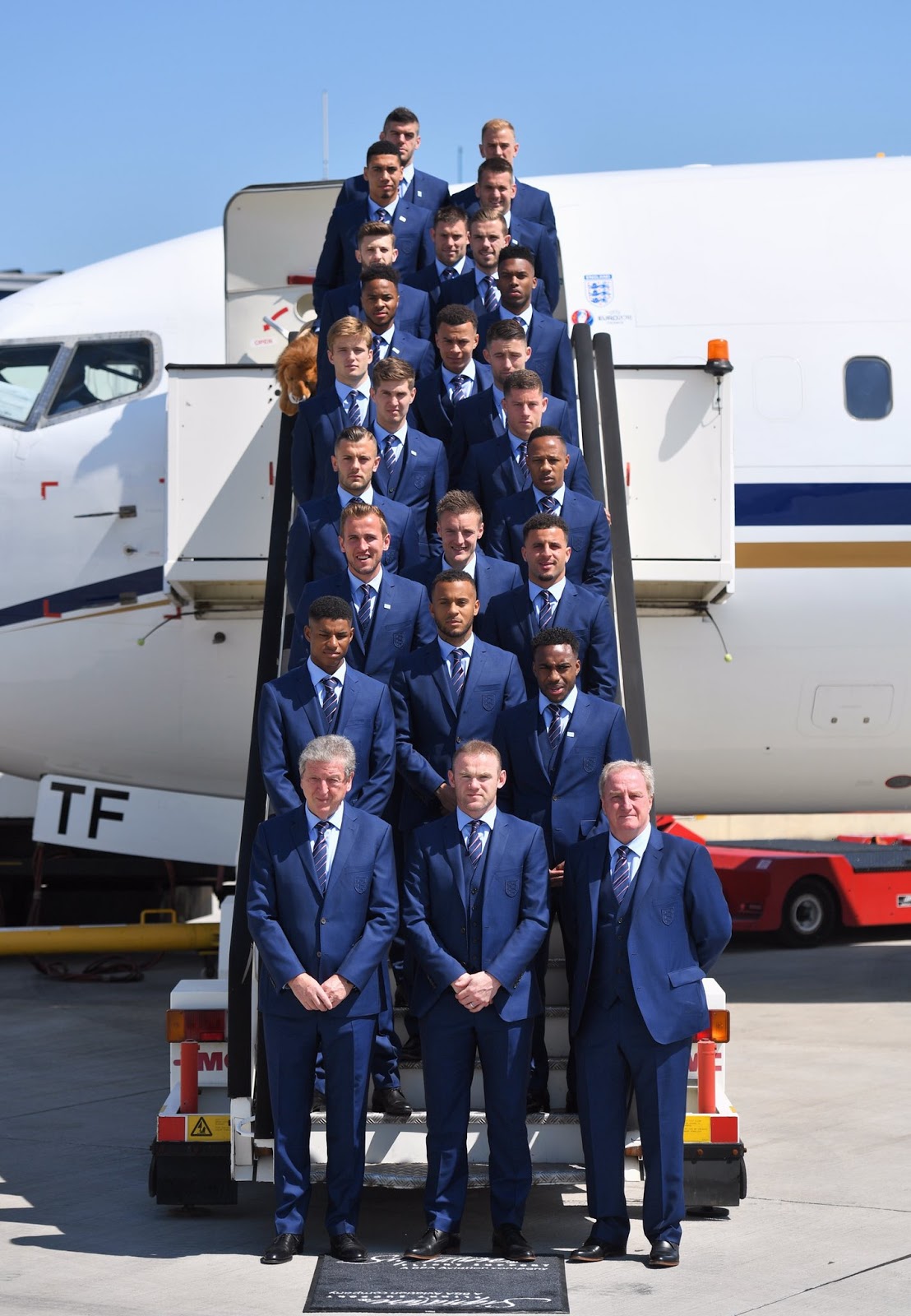
No one went into Euro 2016 with much expectation about England's prospects, but there was at least a modicum of excitement about the attacking options at Roy Hodgson's disposal - the it-shouldn't-work-but-it-does goal prowess of Jamie Vardy, Harry Kane's prolific season with Tottenham, Daniel Sturridge's return to hunger, the mercurial Raheem Stirling and even the untried but exciting prospect of Marcus Rashford. But there were also the same-old, same-old problems of midfield cohesiveness and the even bigger lack of real strength in defence.

We can analyse these points to death, of course, but the frustration we're all left with is that surely there was enough in the 23-man Hodgson took to squad to France that would have had some fighting chance of progress? But, no. A promising first half against Russia on the opening weekend was undermined by a dozy second half (and not helped by the savage hooliganism in and around Nice's Stade Vélodrome). A spirited win over Wales reminded us that luck can work for you at these competitions, but then it was back to usual against Slovakia with a forgettable 0-0 draw. And thus England just about progressed into the knockout stage, with little to be really proud of but, progress is progress, and bring on Iceland and a slew of corny jokes about Kerry Katona and Bejam supermarkets.

When I first took up blogging six years ago, almost to the day, it was to vent a considerable amount of froth at England's ejection from the World Cup in South Africa. Apart from a very valid complaint about a disallowed Frank Lampard goal against - guess who? - Germany, much of my fizzing was about the ever-present hubris that has followed England into these tournaments, pretty much ever since the penultimate day of July 1966. It's that sense of entitlement - because England invented association football, because it created the first national team, because it hosts the world's most lucrative domestic league, because it used to be the seat of an empire, and because England won the World Cup once in the competition's 86-year history. No wonder our soon-to-be former EU partners can't wait to see the back of us...

This time around the expectation may have been worse: a squad comprised of players like Kane and Vardy, who'd enjoyed remarkable domestic seasons, on top of a ten-out-of-ten record in England's somewhat soft qualifying group for Euro 2016 gave false hope. And with this Roy Hodgson, a decent enough journeyman of a manager, masked his inadequacies in being able to make the right decisions at this level.

Hodgson did the decent thing by resigning on the spot after last night's defeat to Iceland. The FA even dragged him back to face the press today, though it's hard to tell what they intended to achieve. "I don't really know what I'm doing here," he told reporters in his first answer, "but I was told it's important for me to appear as everyone is still smarting". On reflection, we didn't know what he was doing in France either. Certainly not adhering to the sporting adage about playing to your strengths, which he didn't with dozy substitutions and starting line-ups that undermined the entire 90 minutes' performance.

As for the "everyone still smarting", that will probably include Danny Baker, who launched into a Krakatoan tirade on Twitter during the Iceland game and was still going when I went to bed. Already flaming the dreary statements-of-the-obvious of ITV commentator Glenn Hoddle (sample: "Oh we are getting Glenn Hoddle's reaction now. Next up the reaction of a paving stone in Blackpool."), Baker went into a fury of tweets - almost all unrepeatable - about the state of England, its manager and the motiviation of its players, including "I simply do not buy that footballers feel bad after game like that when they will be back on £200k in a few weeks. Its impossible."

While it is right for Hodgson to take responsibility - and some blame - for England's performance, the players will need to take a long hard look at theselves. Baker, again: "Absolutely disgraceful, #England. You useless over paid, over indulged mollycoddled shits. You are beyond shame. Disgrace to working people" and even ex-England forward Chris Waddle on BBC Radio 5 Live: "We haven't got leaders. They're all pampered, they're all [listening to] headphones and you can't get anything out of them."

And there lies the real rub. An England squad populated by some of the highest paid young men on the planet, with a manager earning a salary of £3.5 million a year, who went about Iceland with a patent lack of respect that came back to bite them on the arse. It was plain for all to see. I've seen it at Chelsea, when lower-tier cup opposition comes along, and the arriviste millionaires in blue play with such palpable disdain you almost end up willing them to lose, not that, on last season's evidence, that would deliver the slap to the chops that was warranted.

Iceland may have been a team drawn from a national population of just 330,000, but they played with determination, discipline and a complete absence of fear when hitting England on the break. And look what happened when they did. But why should they have fear at all? Only in England do we have this view that our footballers are rarified beings, that somehow these young men have ascended the rest of us, simply because they are in their early 20s and driving cars that you or I wouldn't ever be able to afford in a lifetime. That's not a statement of material envy, but a reflection on how England's so-called elite managed to look worse than average against a team managed by a part-time dentist, who took the game to England and were rewarded for it.

So, the inevitable: what next? I've been here before. You've been here before. We've all been here before. We've tried different managers, different nationalities of managers, different coaching combinations, different 'grass roots' initiatives, you name it, England and the English FA have tried it to no avail. This lack of a plan is also informing the suggestions coming forth for Hodgson's replacement. It's a list that includes both the obvious and the just-thought-of random: Gareth Southgate (because he coached the Under 21s so...er...it's his turn); Alan Pardew (because it's his turn to); Steve Bruce (because he may be available); Arsène Wenger (because some people don't really take these things seriously).

Whoever gets the job - and I think I'm even on the list, given the number of possibilities so far explored - the one quality I implore them to apply to their charges is a little humility. England needs a manager prepared to tell the players "Look lads, face facts. They're just as good as you. They may not walk into games clutching their Louis Vuitton washbags like you, with an army of flunkies carrying their luggage for them, as yours do, but they'll match you out there, player for player. What's going to be your reaction to that?". Because up until now, I've not seen much evidence of any of that.