Showing posts with label Cameron Crowe. Show all posts

Sunday, 28 June 2020

When the mountains and canyons started to tremble and shake


Spent my days with a woman unkind
Smoked my stuff and drank all my wine.
Made up my mind to make a new start.
Going to California with an aching in my heart,
Someone told me there's a girl out there,
With love in her eyes and flowers in her hair.
Took my chances on a big jet plane
Never let them tell you that they're all the same.
The sea was red and the sky was grey,
Wondered how tomorrow could ever follow today.
The mountains and the canyons started to tremble and shake
As the children of the sun began to awake.
Led Zeppelin, Going To California


Has anyone ever asked you what period of history, if time travel was possible, you would want to visit? No, me neither. But if they did, my Tardis fantasy would be to return to the year of my birth, 1967. Not for that event, which would be just weird (“Paging Dr. Freud!”), but to a bucolic corner of California where a particular sub-culture of the free spirit flourished in the Summer Of Love. 

My interest was piqued when Barney Hoskyns, ertswhile rock scribe and founder of the Rock's Lost Pages website, brought out his wonderful (and lengthily titled) 2005 tome Hotel California: Singer-Songwriters & Cocaine Cowboys In The LA. It not only captured a remarkable time, but also a remarkable place - the seismic valleys of the Hollywood Hills, and the incredible body of music that nestled within amid a haze of drugs, bed-hopping and hippyish idealism. Covering the denim-clad years that were the first nine of my own existence, Hoskyns charted the fortunes of, frankly, an incredible group of musicians living, mainly, in and around Laurel Canyon, a semi-rustic community barely a ten-minute detour from the gaudiness of Sunset Boulevard. 

With Mulholland Drive running through it, the canyon has always attracted Hollywood royalty, seeking escape from the bright lights of Tinseltown, but in the period in question it became the epicentre of artistic idealism, exemplified by the presence of Joni Mitchell, David Crosby, Steven Stills, Graham Nash and Neil Young, James Taylor, and Jackson Browne (who shared a house with Glenn Frey, with the two of them writing early song for the Eagles, like Taking It Easy). Another figure in this internecine cauldron was Linda Ronstadt, who would run into the likes of Frey and Don Henley ‘down the hill’ at West Hollywood's Troubador, a legendary venue that played a huge part in the careers of Mitchell and Taylor (with whom she had a relationship, as did Crosby), the Eagles themselves and sometime member JD Souther, The Byrds, Elton John and Carole King. Another figure inextricably linked to this web was David Geffen, a prominent figure in Hoskyns’ book for his own colourful life, as well as the ambition that made him one of the most powerful figures in showbusiness.

Five years prior to Hoskyns’ book, Cameron Crowe stepped back into the same place and time with his semi-autobiographical Almost Famous, recalling his own experiences as a teenaged Rolling Stone writer, mixing with the likes of Poco, the Allman Brothers, Led Zeppelin and [again] the Eagles during their wildest period of LA hell-raising. This was clearly a time of arch decadence and louche behaviour, but it should never be forgotten that there was also some sweet, sweet music that came out of it. 

Which brings me to a new film (well, a new film in the UK), that celebrates the countrified rock (or folkified pop - take your pick) that poured out of LA’s canyons from the mid-60s onwards, becoming known, invariably, as ‘the California Sound’. Echo In The Canyon, directed by former music journalist and record executive Andrew Slater, captures the fertility of both the time and a locale that intoxified so many rock luminaries, many of whom came to stay and enjoy Laurel Canyon’s various pleasures.


The film features interviews with the late Tom Petty (in his last filmed interview), Brian Wilson, Eric Clapton and Graham Nash, all of whom fell under the canyon’s spell (a “legendary paradise,” - Petty, a “heavenly place,” - Clapton). Crucially, it examines the "avalanche" of music that poured down the mountainsides from the likes of Buffalo Springfield, the Mamas And The Papas and the various bands and artists they were associated with. "The music that came out of the Laurel Canyon scene was inspiring to my generation of songwriters," says Jakob Dylan - Bob’s son and both the film’s anchor and executive producer. "The best test of songwriting is that it transcends its moment in time," Dylan explains, "and there is no doubt that the songs we explore in this film are as powerful today as they were in 1965."

The documentary, which has finally appeared theatrically in the UK, two years after I first came across its US release, also includes interviews with Stills and Crosby, ex-Mama-and-Papa Michelle Phillips, The Byrds’ Roger McGuinn and even Ringo Starr, who became enamoured by the canyon scene’s romanticism himself. Indeed, critics have claimed that the film spends too much time in the company of the Beatle and Beach Boy Wilson, under-representing many of the names and actual residents of the LA canyons that contributed to the richness of its musical and artistic output. But, in fairness, it only takes the canyon story up until the year in which I popped into the world. In the process, it also revisits the richness of canyon’s musical output, with new recordings of Pete Seeger’s The Bells of Rhymney by Beck, Norah Jones’ interpretation of The Association’s Never My Love, Stephen Stills and Eric Clapton covering Buffalo Springfield’s Questions, and a couple from Canyonite, Neil Young. 

Plenty of distinct geographies have been responsible for musical genres - from New York to Liverpool, Nashville to Manchester - but there was something about Laurel Canyon and the bungalows and hippyish spirit that fermented there which led to some of the most interesting fusion of folk, rock and pop the 1960s and 1970s produced. And Echo In The Canyon captures it all, in highly entertaining form.

Saturday, 23 January 2016

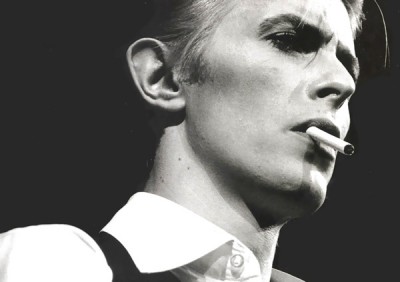
Calling all stations - David Bowie's Station To Station turns 40

© John Robert Rowlands.
It's started already. There are already grumblings on the interweb of Bowie Fatigue. Good God, the man has barely been gone 12 days and already social media's billious underbelly is carping.

Me, personally, I've done what any self-respecting music fan would do and have taken to what I call "positive wallowing" - scouring YouTube for Bowie interviews and TV appearances from, it would seem, largely around the time of his 'third age'. This was post-Let's Dance and post-Tin Machine, perhaps post-midlife crisis, too, but a period in which the albums Hours, Outside and Reality seemed to reflect a contented Bowie lacking any obvious desire to create yet another personality to project his songwriting through.

Looking at appearances on Jonathan Ross and Conan O'Brien's chat shows, even an interview on Newsnight with Jeremy Paxman, for heaven's sake, you see a Bowie you'd want to hang out with. Funny, relaxed, self-aware but not self-possessed. Unlike some of the great and the good who unloaded their own grief at the man's passing. "He had such a profound effect on my life, I don't know where to start," said Damon Albarn.

Tempting as it is to mock, he had a point. Where do you start? "Who else has left a mark like this?" asked Kate Bush, herself no slouch in the convention-busting department. "No one" was her rheotorical answer.

Elsewhere I've covered the enormity, the breadth and the depth of Bowie's canon, so I won't repeat myself. But this day, January 23, does possess considerable significance in Bowieology.

For it was this day in 1976 that Bowie released Station To Station, and album which - as it's title might suggest - represented yet another transition.

By the age of 29 he'd already produced nine studio albums and had been and gone through the musical theatre of his debut, invented space rock, midwifed glam rock, produced his own My Way and given it all up to try a hand at blue-eyed (or wonky blue-eyed) Philadelphia soul, quite well, as it happened.

With pop unsure whether to follow the disco boom (which, thanks Google, I've also discovered to be a questionable nightclub still going in Greece) or the chambray-shirted West Coast soft-rock movement, David Bowie entered LA's Cherokee Studios in September 1975 to work on an album that marked first steps towards a more industrial sound.

Bowie had always been an artistic kleptomaniac, acquiring influences and styles from wherever he went. Right up until Blackstar he was still hoovering up loose trinkets from across the cultural spectrum, Kendrick Lamar's To Pimp A Butterfly amongst them. But in the mid-1970s, Bowie's reception of cultural influences was also being impacted by his enthusiastic consumption of drugs, especially Los Angeles' confection of choice, cocaine.

Having spent the summer of 1975 making Nicholas Roeg's The Man Who Fell To Earth, an acclaimed but still baffling pyscho-sci-fi drama that seemed to have been about The Dame himself, Bowie's entry to Cherokee Studios was to follow-up the "plastic soul" as he later branded Young Americans.

The conventional wisdom is that Station To Station marked a musical shift towards the Europe that the Berlin trilogy, which followed, clearly embraced. But the truth is that Station To Station was still a highly soulful album - Golden Years and TVC15 especially, even if the acquired trinket since Young Americans was the synthesised industry of Kraftwerk, who'd released Autobahn in 1974.

The real European shift, however, was in Bowie's thinking: opening Station To Station, its title song announces the "The return of the thin white duke", at a stroke profering another persona, but one clearly ready to depart California: "Flashing no colour tall in this room overlooking the ocean" and, tellingly, later: "It's not the side effects of the cocaine, it's too late to be grateful, it's too late to be late again, it's too late to be hateful. The European canon is here."

Paul Tryka, who's biography Starman is without the definitive Bowie study, describes Station To Station as a "love letter to Europe" and a "remarkably coherent statement from a man whose grip on reality was intermittent", although in Cameron Crowe's seminal Rolling Stone feature on Bowie in February 1976, those around him claimed that Bowie was now drug-free. However, he was, so he told Crowe, "very, very bored".

Whether Bowie was clean or still using when he began recording Station To Station it was clear he was restlessness. Los Angeles will do that, whether you've succumbed to its temptations or not. Around this time, too, there were rumours of an interest in occultist Aleister Crowley. After Station To Station had come out, Bowie became embroiled in a series of incidents in which he appeared to flirt with facism - being quoted in Sweden that "Britain could benefit from a fascist leader", being caught in possesion of Nazi paraphernalia and then, in May 1976 being photographed at London's Victoria Station giving what many believed to have been a Nazi salute.

However abstaining, Bowie's previously Olympic taste for drugs had left him 'erratic', to put things mildly. Moving to Berlin to clean up with Iggy Pop was, he would later joke, a strange choice given that Berlin was, in 1977, Europe's drug gateway.

Perhaps, then, influenced by addiction's manias, or even by the experience of spending several weeks as Roeg's alien, Bowie's approach to Station To Station drew out themes of emotional attachment, madness, disillusionment or, simply, the doldrums he spoke of to Crowe. Golden Years, mind you, is both mysically and lyrically quite 'up', and in fact, the whole album delivers a warmth at odds with some of its lyrical themes, perhaps a consequence of the musicians who added colour to the record - stalwarts like Carlos Alomar and Earl Slick, and pianist Roy Bittan, now a fixture of Bruce Springsteen's E-Street Band.

There is, though, a simmering disquiet to Station To Station, manic flashes glinting through the apparent stability of the album's "funk on the edge" as Charles Shaar Murray described it in Melody Maker. And with Bowie edging towards Europe, both geographically and in the apparent nature of his suggested political interests, there are clues laid here and there as to his future (a trail of breadcrumbs similar, I supposed, to that laid on Blackstar), with Stay creating a sense of longing for something or someone long lost, and a cover of the Johnny Mathis theme tune to the 1957 film Wild Is The Wind asking "Let me fly away with you".

Despite official claims to the contrary, the David Bowie who commenced recording Station To Station in Septmber 1975 wasn't any more lucid than the Bowie who released it on January 23, 1976. "I was in a serious decline, emotionally and socially," he admitted 20 years later, recognising that he was living on a cliff edge then. "I was lucky enough to know somewhere within me that I really was killing myself, and I had to do something drastic to pull myself out of that." And so, after touring the album, he and Iggy took off for Europe, producing a year later Low and its grey, spartan contrast to the sunshine of Southern California, the cold turkey experience of "Pale blinds drawn all day, nothing to do, nothing to say" as Sound And Vision would describe.

Station To Station may have been the precursor to change, the album that Bowie needed to record to shed the fraudelence of LA and its painted-on sunshine, and get ready for something new, but it is far from being a gloomy album. Even if it is clear that Bowie was looking to get out of La-La Land and, in particular loose the chains of addictions, the line that defines the record in its entirety is right there in Golden Years: "Don't let me hear you say life's taking you nowhere - angel! Come get up my baby."