Showing posts with label Dee C Lee. Show all posts

Friday, 14 May 2021

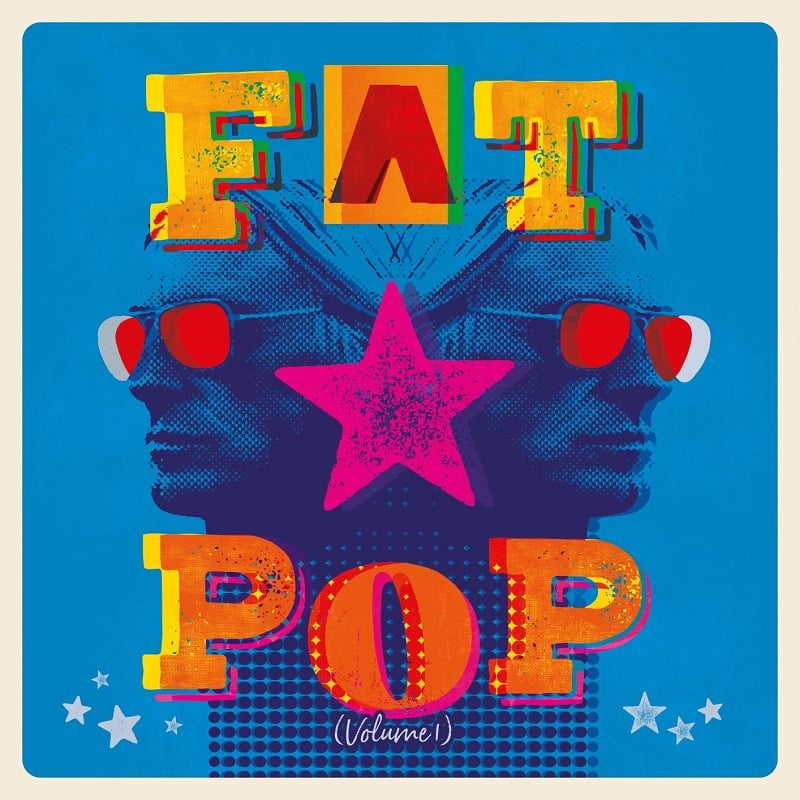
Toppermost of the poppermost: Paul Weller’s Fat Pop

Another year, another Paul Weller album. That might sound wan-with-care but is anything but. For today sees the arrival of Fat Pop (Volume 1), the Woking Wonder’s fourth album in as many years (and 16th solo release in 29 years) and you have to wonder how he does it. 

I could, easily, just rewrite my intro from just last July, when On Sunset, Album 15, came out: “It's actually become boring to talk about Paul Weller’s rich vein of form. Because, for a purple patch, it's been going on a mighty long time.” But I won’t. We can all cite musicians into their fifth decade of productivity churning out poor quality albums featuring lazy retreads, standards, ropey covers or half-baked collaborations with their chums, which they end up hawking on The One Show. Even so-called legends. Weller, on the other hand, continues to churn out records with the same rapidity as Nissan produces Qashqais in Sunderland, but without any breach whatsoever in standards. In fact, I can’t think of any one of his 16 studio albums as a solo artist that you could ask, timidly, “Was that wise, Paul?”

That Fat Pop (Volume 1) is an album of 12 songs is also testament to the restless creative soul that Paul Weller is. No sooner had he got On Sunset saved on the hard drive, he already had the basis of “four or five” new songs stored on his phone. With lockdown enforced, and his beloved touring off the cards for the foreseeable future, he took himself off to his Black Barn studio in Surrey to work on the basics of the new album on his own, gradually bringing in regular cohorts like guitarist Steve Cradock and bass player Andy Crofts to overlay their parts, effectively by e-mail. 

“It was a bit weird not being together,” says Weller, “but at least it kept the wheels rolling. I’d have gone potty otherwise.” By the time lockdown restrictions were easing last summer he was able to get everyone together at Black Barn to finish recording. This wasn’t, however, an exercise in T-crossing and I-dotting, but an opportunity to truly coalesce the concept that had emerged of a dozen “fat” pop songs. Such was their “strength and immediacy” that, at one point, there was the idea of progressively releasing each track as individual singles before putting out the album. The idea was eventually dropped due to practicalities but, says Weller, “I quite liked the idea and every song does stand up as a single, I think.”

Picture: Sandra Vijandi
On paper, it’s hard to know what to expect from that premise, but as you listen you quickly become accustomed to the abruptness of each track. Fat Pop? Fat-free more like: there’s no filler here. Each three-minute entry has a vibrancy, every one delivering a statement of Weller’s restless creativity, of his disparate tastes and application of it. It’s a veritable compendium of pop music, whatever that is (frankly, whatever you want it to be). It fizzes and scampers over stabs of pop, nu-funk and old soul, flitting from the Ian Dury-like synth punk of Cosmic Fringes to the summery, hand-clapping ease of the title track - Weller’s personal favourite on the album - which is reminiscent of Long Hot Summer, but refreshed with a Westway-flavoured dub beat. 

On Shades Of Blue - the single Weller premiered on The Jonathan Ross Show (with daughter Leah on backing vocals, spookily recreating the beauty of her mother, Dee C. Lee’s voice) - he mines his gift for concise, English soul. Its choppy piano and joyous chorus harks back to The Kinks and Small Faces - even the press release describes it as: “A classic three-minute English pop kitchen sink drama”, co-written with his daughter. It is probably one of my favourite of all the tracks he's produced during this run of albums.

Another gem is Testify, one of the tracks recorded in full and live at Black Barn and featuring the legendary Andy Fairweather Low. It’s a bright, boppy beat of a tune, possessing just the right amount of power to fit the album’s pop remit without straying into classic rock. “We had actually done it live two or three years ago,” says Weller, “but while I loved the groove I never really got a grip on the song.” Then, just before lockdown, he played a charity gig in Guildford, performing some Stax songs with Fairweather Low and they just gelled. “Our voices sound so good together and he’s such a lovely fellow, so I sent him the backing track. As soon as lockdown was lifted he came down to the studio for the afternoon. We cut it live and that was it.”

On Moving Canvas, a song about Iggy Pop, Weller gets choppy with a riffy stomper that he predicts will be a great track live, especially with the middle eight offering all sorts of potential for extended guitar and Hammond organ wigouts that would extend the song way beyond the album version’s run time of just under 180 seconds. The album’s final two tracks, which perfectly underscore the importance of good programming when doing a track listing, also bring out the gift Weller has for understated emotion. For a man so often depicted - still - as the stony-faced angry young mod of his Jam days, he has always been able to apply layers of texture to his songs. 

Picture: Universal Music

In Better Times is the perfect example. With its dreamscape chorus, it is Weller addressing anyone going through personal trauma: “It’s me talking to a young person who is going through something, addiction or mental health pressure, or whatever, and just saying ‘it’ll be alright’. Just get through this bit and there’ll be better times to come, you’ll look back and you’ll see it differently”. It is beautifully weighted.

As is the track that ends the album, Still Glides The Stream, a collaboration between Weller and Steve Cradock with a soaring chorus, orchestral strings and brass and a vague resemblance in the verse to the Stones’ Ruby Tuesday. Evolving initially via an e-mail back-and-forth between the two musicians, it evolved into an unintended, but still-heartfelt tribute to the unsung heroes of the last year. “In my mind, I was thinking about our road sweeper who’s a lovely fellow,” says Weller. “I started thinking that there’s so many people in this country who form the infrastructure of it and without whom we’d be fucked. But they’re looked down upon, not really noticed. So I was imagining their story.” It concludes an album conceived in lockdown, partially recorded out of it, and then released as we emerge from another, blinking into the daylight, slowly and gradually. 

There have been so many new releases recently made in much the same way, and perhaps with the same effect of providing the bright, sunny hope of normality and life returning. Paul Weller, canny lad that he has, has brilliantly tapped into that need, producing an album not of lengthy, chin-scratching complex noodling, but brisk, direct songs that put a smile on your face. Isn’t that what pop music should be about? 

Tuesday, 9 July 2019

Modz rool: Paul Weller at Greenwich Music Time

Picture: Simon Poulter © 2019
When your career has produced a current total of 26 original albums (14 as a solo artist, six each with The Jam and The Style Council), and you are Paul Weller, you’ve got a certain licence to do whatever the hell you want to. You could, for example, turn your gigs into a two-hour jukebox of hits and send your exclusively middle-aged punters home satisfied, blissfully karaoked-out with sore throats from reliving their youth club days singing along to The Eton Rifles, Going Underground or Beat Surrender. Or you could play to the political climate and revive the prescient Walls Come Tumbling Down, a song as relevant and needed today as it was during the era in which it was conceived.

But, if you are Paul Weller, you’re 61, you’ve been in bands since you were 14, recording since you were 19, and you have produced 26 studio albums, there’s nothing stopping you opening your set at an outdoor summer's evening show with I’m Where I Should Be, a low-key, somewhat obscure track off 2015’s Saturn’s Pattern. Because you can. And he did.

It's hard to truly tell whether the choice of opening song was Weller's little joke, simply as it's hard to tell if Weller ever does joke. I think he does, and the stony face cracked a number of times during Sunday night's closing show of the six-night Greenwich Music Time festival, delightfully staged in the stunning grounds of the Old Naval College next to the Thames (one of London's busiest filming locations, with episodes of The Queen shot there amid the pristine period surroundings). If the opening number caught the audience off guard, My Ever Changing Moods up next restored the crowd to the familiar.

Now, about the crowd. Unsurprisingly, for an act in the public eye for over 40 years, the crowd is default middle-aged. Dadwear is in copious evidence, along with a high propensity of close-cropped balding pates which, when queuing behind, makes you wonder whether you're standing behind a London cab driver you've ridden in and had to put up with his views on, well, everything. Then there are the Weller uberfans, replete in Ben Sherman and Fred Perry shirts, some sporting feather cuts (one even going the full distance with a magnificent mane of grey hair and a camelhair jacket that the Modfather himself would surely approve of. Or laugh at. Again, I'm not really sure).

Over the course of 27 songs, Weller and his band - which included trusted lieutenants Steve Craddock on guitar and Andy Crofts on bass, augmented on occasion by the brass section of Weller protégés The Stone Foundation (who'd opened for their mentor) - covered a wider gamut of the canon that perhaps many in the audience, especially those who'd come in costume, were expecting. There were the brusque, R'n'B rockers like Woo Sé Mama from 2017's A Kind Revolution and Peacock Suit from Heavy Soul, the fourth in Weller's extraordinary - and continuing - purple patch of solo outings, as well as the reminders of his soulfulness: the sublime Broken Stones appearing in the encore, along with an old live favourite, Curtis Mayfield's Move On Up. Earlier in the set, Weller brought out Leah, his daughter with Dee C Lee, to duet on You Do Something To Me, another perennial of the tender side to his songwriting (which also includes A Kind Revolution's standout, The Cranes Are Back - which I would have loved to have heard reproduced live). There was another surprise appearance with former Style Council compadre Mick Talbot coming out to tickle the ivories on Shout To The Top! A pity Merton's finest couldn't have stayed for more.

When The Style Council split, somewhat ignominiously, in 1989 when their record company blocked the release of their fifth and final album, Weller found himself at a crossroads. It was to be the making of him as a national music treasure. Despite having fronted two of the most successful and intrinsically British bands of the 1980s, his first solo album, Paul Weller set him on a path that would result in the 13 albums of rich variety that have followed, and which were heavily drawn from in Greenwich. Above The Clouds drifted dreamily under the partially leaden sky next to the Thames, while Into Tomorrow reminded of the Britpop template that Weller laid the foundation of. Wild Wood provided an early would-be cigarette-lighters-aloft moment, casting grey-haired memories back to the second solo album that really underlined the creativity that had pent up during Weller's brief sabbatical. Later in the set, that album's Can You Heal Us (Holy Man) provided an energetic example  of an album that contained such stompers as Sunflower, Foot Of The Mountain and Shadow Of The Sun, all of which would have been welcome in Greenwich.

Picture: Simon Poulter © 2019

Weller is nothing if not a prolific songwriter, and the number of albums recorded masks the shere scale of songs he's committed to tape: Mermaids and Brushed from Heavy Soul are performed as a brace, and even Strange Museum - co-written with Talbot - is resurrected from the debut solo album. There was even the rare moment of Weller fluffery, with Have You Ever Had It Blue throwing back to the Bass Weejun-wearing, carefree side of The Style Council and that period of mod revivalism that coincided with all things Soho and The Face magazine that occurred when Julien Temple decided to make a film out of Colin MacInnes' nod to 1950s teenage life in London, Absolute Beginners. Looking back, it was all rather naff, but I loved it at the time.

Weller is, and always has been intrinsically cool, and that's why the association with an era of supposed jazz-cool, revived in the mid-80s with the The Style Council's Cafe Bleu album (with sleevenotes from the legendary 'Cappuccino Kid', itself a nod to Bar Italia and that Soho scene), along with Sade and even Everything But The Girl's Eden album, was something of an affectation. After all, that's what mod culture has always been about, as opposed to rock's somewhat obsessive adherence to its earnest blues roots. Whatever culture Weller was hoping to channel in his younger self, manifests itself now, in his early 60s, as simply extraordinarily good songs. Earnestly performed, perhaps, but an encore that includes the soul classic Broken Stones, The Jam's Start!, the Mayfield cover and Town Called Malice, there is an unlikely communion with the 5,000-strong congregation, sitting in this quintessentially British environment. Apart from the more nailed-on devotees, who'd been able to recall the words to Jam songs like Precious and Man In The Corner Shop, the crowd on this Sunday evening in South-East London had been somewhat subdued, perhaps by a somewhat chillier climate than expected, forcing Weller at one point to enquire of his crowd if it was enjoying itself. Of course it was. This was a master at work. Why wouldn't they?