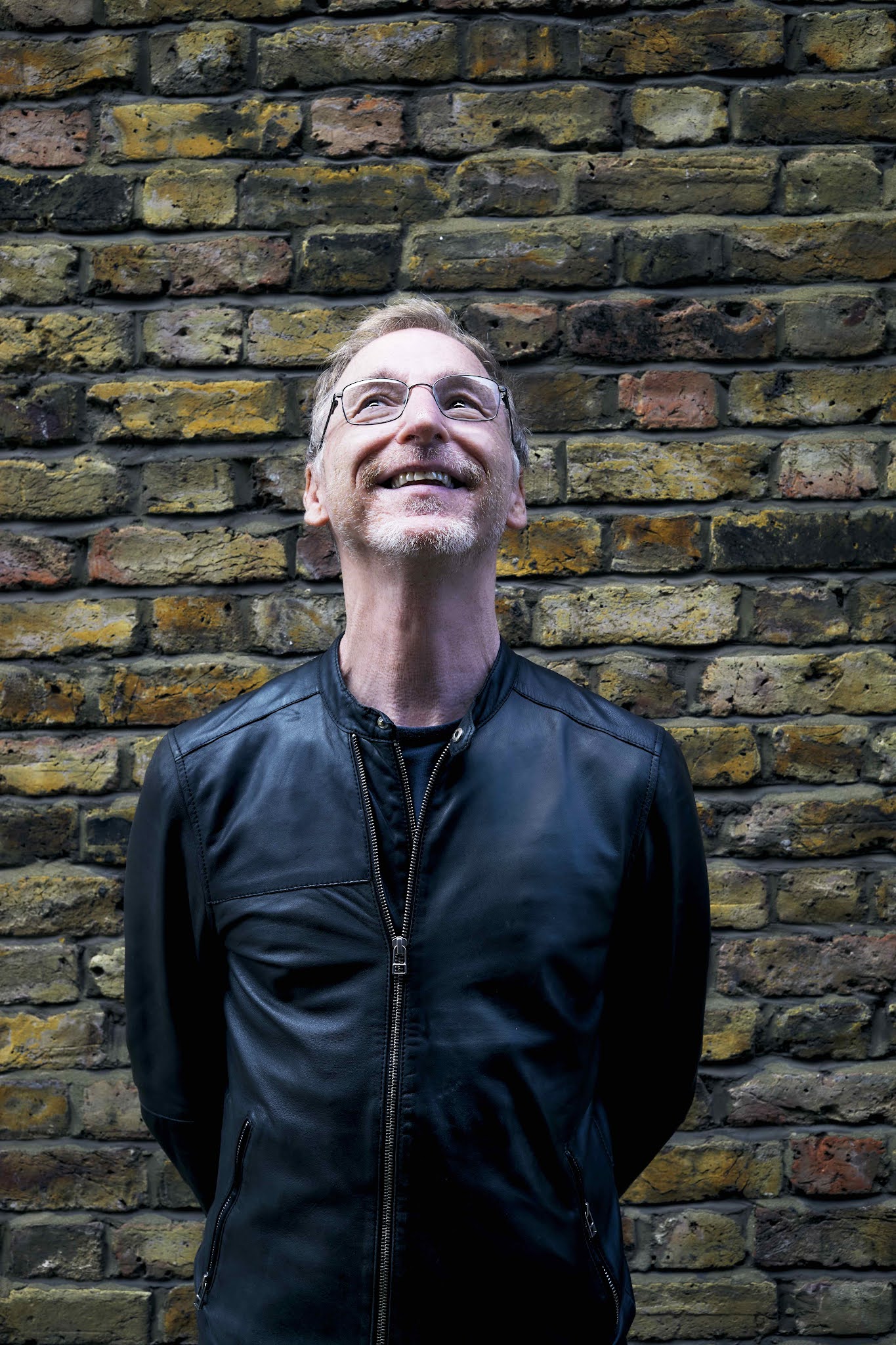
Showing posts with label Gary Crowley. Show all posts

Thursday, 10 August 2023

NME at the gate

From New Coke to Blockbuster’s return as a streaming service, brand reboots don’t always work out, but when a relaunch does, it’s often simply down to luck. 

For example, it’s hard to pinpoint exactly when the vinyl revival began, but once it was established that 12-inch records were cool again, an intersection occurred between middle-aged dads rediscovering album collections stashed in lofts and hipster teens encountering the medium for the first time. Vinyl’s new appeal, especially amongst its youngest consumers, had less to do with the music than ‘collectability’. As heartening as it was to see teens buying Rumours, London Calling or The Dark Side Of The Moon via £30 reissues bought from the few HMV stores that remain, it was their Instagram appeal and opportunities to post iconic sleeves on ubiquitous ‘Now Playing’ plinths.

Consider, then, the associated revival of the NME. I say “revival” but in truth the venerable organ, launched in 1952, never went away. It just ceased, in 2018, to be printed. But as of yesterday the once august weekly newspaper has returned in physical form, relaunched by the brand’s latest owners as a bi-monthly, limited edition magazine, and openly inspired by the resurgence of vinyl and even cassettes.

That’s the marketing pitch, but the NME’s print relaunch isn’t without a modern twist: you won’t be buying it from a newsagent, at least not straight away. NME Networks - part of the Caldecott Music Group (which also publishes Uncut) - will only be producing the new NME in very limited quantities, making them available through the Dawsons chain, which it owns. It’s a deliberate ploy to create exclusivity in much the same way as Nike creates hype (and the occasional riot) with “drops” of limited edition trainers. 

Thus last night at exactly 7.52pm (the original NME was launched in 1952…) those sitting in one of those dreaded online waiting rooms so hated by Taylor Swift fans were given their chance to get their hands on the new NME. Naturally, it sold out straight away.

No details have been given on the size of this NME’s print run, but with a £10 cover price and a promise of a thick, glossy, coffee table-friendly Vogue-like design, presumably they’ve done their homework on how to cover costs. What those of us unsuccessful in getting hold of a copy can’t yet gauge is whether it is any good. Moreover, how this NME stacks up to the NME’s 71-year-legacy.  

Having begun in March 1952 following the purchase, for the princely sum of £1000, of The Accordion Times and Musical Express by music promoter Maurice Kinn, the New Musical Express quickly established itself as the UK’s primary journal of record for contemporary music. Later that year it created the first British singles chart (copying the American magazine Billboard) with Al Martino’s Here In My Heart becoming the first ever British Number 1. 

By the 1960s the NME was selling 300,000 copies a week as the Beat Boom took off, with The Beatles, Rolling Stones and their ilk regularly featured on the cover and at the annual televised NME Poll Winners’ Concert, the Brit Awards of its day. 

In the ’70s the NME took on more of an underground approach to its journalism, with seminal writers like Nick Kent and Charles Shaar Murray joining the staff, with the magazine championing the broadening post-Beatles pop and rock revolution. With punk came further evolution, with cover features on the Sex Pistols and The Clash, and Tony Parsons and Julie Burchill making their names as a new generation of ‘angry young writers’, to use the hackneyed description. Many will consider this the start of a golden age for the NME and music journalism - as carefree and opinionated as punk itself.

The NME wasn’t alone: along with its closest (and, sometimes, bitterest) rival Melody Maker, plus the more heavy rock-orientated Sounds, they vied for the pocket money of spotty youths up and down the country. In 1978 another challenger appeared, Smash Hits, beginning as a poster magazine (and created by ex-NME editor Nick Logan), which would eventually go on to sell a staggering four million copies a fortnight. Around this time a new editor, Neil Spencer was promoted, overseeing a redesign of the NME and shifting the broadsheet further towards post-punk and New Wave, bringing in new blood like Danny Baker (a former NME receptionist and writer for the punk fanzine Sniffin’ Glue), along with the spiky likes of Paul Morley and Ian Penman.

As I began to develop my own interest in music at the start of the 1980s, the NME broadened further, reflecting wider youth interests in the Thatcher era, taking on a notably left-leaning complexion in the process. This chimed with the politics of many of the musicians it covered who, themselves, were capturing the dystopian gloom of young life in Britain in the first half of the decade, a period signified by inner city rioting, CND marches and a decidedly socialist strand to pop. Which, thinking about it now, makes my own debut in the NME more incongruous.

In 1984, my first year of Sixth Form, I decided that my future lay in music journalism. The NME, Melody Maker and, particularly, Smash Hits, had become bibles to me. At the same time, Gary Crowley’s evening show on Capital Radio was essential listening. Deciding that if my ambitions were to be taken seriously I’d need a portfolio of writing samples that weren’t solely made up of reports for the school magazine, I brazenly asked Gary for an interview. Incredibly, he agreed and I went up to the old Capital studios on London’s Euston Road one Tuesday evening. After the interview he asked if I was serious about becoming a music hack, to which I said yes, prompting him to suggest getting in touch with one of his pals at the NME, which I did. 

And so, in early January 1985, aged 17, I went to see the NME’s then live reviews editor: “Er…are you going to see anyone in the coming weeks?” he asked. All I could think of was that I tickets for Phil Collins at the Royal Albert Hall a few weeks later. “OK, do a couple of hundred words on that,” he asked. As the clipping below attests, I managed to get possibly the first Phil Collins live review published in punk’s once-angriest of papers. And possibly the last.

That alone, though, was enough to get me in. The following year, after my A-levels, I got an actual staff job with a new magazine, who liked the cut of my jib. I had the NME to thank for that. Although I only did a handful of things for the NME (I was, supposedly, also trying to get through Sixth Form at the time), it was the start I needed. However, the mid-’80s were a perilous time for the paper. Smash Hits (whom I later did work for) was cannibalising the NME’s pop-minded readership, while the paper itself was struggling to find its editorial identity. Traditionalists on the staff wanted it to continue driving a rock agenda, while more progressive voices championed alternative genres, like hip-hop, all while the magazine continued evolving beyond just music magazine to become a broader cultural barometer.

Music didn’t leave its core, however. In the ’90s, Britpop provided a totemic platform not seen since the ’60s (reaching its zenith with the landmark Blur-vs-Oasis cover in August 1995 marking the simultaneous release of the former’s Country House and the latter’s Roll With It). Music was in rude health again, at least from an editorial perspective, leading to copious coverage in the NME of Madchester and the decade’s mainstreaming of Indie, along with the emergence of American grunge. Into the mix came a further influx to the writing corps, with Steve Lamacq, Stuart Maconie, Mary Anne Hobbs and Andrew Collins joining the roster and giving the paper a new sense of zeitgeist vibrancy.

With the new Millennium came further change, and not all good, either. In 2000 publisher IPC folded Melody Maker into the NME in what many saw as the first death throe of the printed music weekly. Not that there wasn’t plenty for the medium to cover, with new British bands like Kaiser Chiefs, Libertines and, later, Arctic Monkeys. The march of time, though, continued to prove an impossible foe, and by 2014 the NME’s weekly circulation had fallen to 15,000. This prompted the now Time Inc.-owned title to be relaunched as a free magazine in an attempt to boost readership and the advertising the comes with it. The experiment, if it can be called that, lasted just three years before the NME became a digital-only site. While that retained the old paper’s musical news focus, it lacked the journalistic essence that had built its reputation in the heyday of Kent, Shaar Murray, Burchill, Parsons and later, Dannys Baker and Kelly, and the Britpop scribes.

Holly Bishop
Picture: NME Networks
It’s unlikely that their editorial spirit will be revived under the new print venture, so the question is, how will it be relevant? “Although the written word will always play a part in our journalism,” NME Networks chief operating and commercial officer Holly Bishop told the trade magazine UK Press Gazette, “it’s no longer front and centre and it’s naïve to think any different”. 

The 2023 version of the NME will have to appeal to Gen Z, an audience more attuned to consuming content via social media. New music, Bishop maintains, will still be paramount. “An artist can have a meteoric rise on a single track on TikTok, for example. But is there longevity there? It remains to be seen. And actually, what we do know is an artist making music that’s authentic to them, that is good music. It will find a way through, particularly when brands like ours are actively seeking it.”

“NME obviously boasts an incredible print legacy,” Bishop told UKPG. “It’s one of the most recognised titles on Earth in print. We’ve had the biggest icons across pop culture appear on our cover.” But, she adds, the exercise is not without its challenges - “not just in terms of audience engagement, but also production; rising costs, particularly in this economic climate.”

“We aren’t looking to [create] hundreds of thousands of readers out of this print product,” Bishop added. “We know that our trajectory remains firmly rooted in being a digitally-led brand and we are successful in that space. NME.com has got more users than ever before and we obviously can monetise those in the traditional ways with advertising and partnerships.” For that, she says, they’re taking “an atypical, unconventional approach to distribution too. We’re not printing masses of copies because we really believe in the inherent value of scarcity.”

If all this sounds like marketingspeak, and a world away from the 1977-spirit-of-punk NME, it’s because the title is as much a brand these days as a single, identifiable newspaper. NME.com continues to attract some 17 million visitors each month, covering the broad scope of genres as well as television, film, games and other branches of pop culture. Its proprietors have even launched editions in Australia and Asia. The new magazine, however, will be global, “curating the very best of NME,” according to Bishop, “championing emerging artists and bands, and serving as the definitive voice in pop culture”.

That will commence with a first edition featuring on its cover 18-year-old self-taught American singer-songwriter d4vd (David Burke), first profiled by the NME online last September as the “multi-genre visionary turning TikTok attention into major chart success”. It’s a bold opening statement from the latest evolution of a magazine now in its eighth decade. In editions to come, we can expect more interviews with similar cutting edge musicians, culture features and reviews.

It remains to be seen whether the new NME will be able to recreate the urgency it once had, but you have to admire its publishers for giving it a go. The incontrovertible truth is that the world of media has become almost exclusively digital. 

Print journalism has been in terminal decline since the advent of the Internet. Last month The Guardian reported that, as a measure of the state of publishing in the UK, six of the country’s biggest selling physical-format magazines - Heat, Economist, Grazia, GQ, Vogue and Private Eye, along with newspaper supplements - are now all printed by just one single print company, Walstead. 

Between 2010 and 2022, the total number of actual magazines sold in Britain declined by 70% from around a billion copies a year to 309 million, with print publishing revenues dropping accordingly over the same period - from £1.4 billion to less than £500 million, according to Enders Analysis. Those magazines that remain in print form struggle to compete with digital distractions: compare the £6.50 you pay for Mojo, one of the few remaining stalwarts of magazine-based music journalism, with the £4.99 that Netflix’s new monthly, advertising-supported package will cost for all the entertainment distraction that offers. It’s an an apples-and-oranges comparison, of course, given that the handful of quality music magazines still in print continue to represent a tactile experience other mediums will never replicate. That, by the way, is the same experience that got me into the music press to begin with, first as a reader and then as a writer.

The NME’s conversion to digital-only five years ago was clearly part of the decline in print. The eyeballs of young consumers - those between 18 and 30 most coveted by advertisers - are simply elsewhere. British magazine websites last year accounted for less than 1% of the time this demographic spent on YouTube, 4.7% on TikTok and 7.4% on Instagram, according to The Guardian. And that is a problem for online magazine advertising. By 2025 the platforms of just Google, Meta and TikTok will earn more than £20 billion in digital advertising revenues. Compare that to, according to GroupM, the £378 million that magazines in the UK will earn by 2027.

All of which makes the decision to bring back the NME in print format even more precarious. But maybe its new owners might just succeed in appealing to the hipster strand that willingly eschews modernity (like vinyl, old-fashioned film cameras have made a return amongst the same youth demographic). This is probably the target audience for the new NME - consumers more likely to buy an expensive print magazine for its collectability, rather than the journalism inside. That, I have to say, is sad.


Wednesday, 10 May 2023

How Nick Heyward almost ruined my marriage, and other stories

My wedding, last year, might not have happened at all, thanks to Nick Heyward. Four days after my first date with the woman who is now, thankfully, my wife, she invited me out for a drink. Unfortunately I had other plans: a ticket to see pop’s perennially boyish, melodically gifted, all-round nice guy at The 229 in London. 

Even though I’d only seen Heyward three weeks before, at the Water Rats launch of his Woodlands Echoes album, I chose another evening with him over, potentially, eternal happiness. Thankfully the correct order of things was restored the following Saturday night when Nic - yes, I recognise the confluence of names here… - and I went out for a splendid dinner.

This might sound obsessive - about both - but Heyward has long been one of pop’s most under-recognised giants. Perhaps he prefers it that way. But I know I’m not alone in my regard for both Heyward’s songwriting gifts (if you’ve never heard his solo song Kite, what’s wrong with you?), not to mention his everlasting charm, honed no doubt by his upbringing in Bowie’s Beckenham. 

“I think so many of us have that thought, ‘Why isn’t he right up there?’,” says DJ Gary Crowley, a fan since before Heyward with Haircut 100 made their debut, 41 years ago, with that extraordinary explosion of effusive pop, Pelican West. That record earned a rave review from Danny Baker in the-then punk bible the NME. David Hepworth in his Smash Hits review wrote that the album possessed “winning vocals”, “a sturdy, flexible rhythm section, creamy saxophone” and “poignant, exhilarating and thoroughly British songs”. It would, however, remain the only album by the Haircuts that Heyward would appear on, but it was enough to propel him - and them - to stratospheric levels of adulation...before the singer himself was dumped, seemingly inexplicably, by the band.

Haircut 100 were the perfect combination of music and image, not least of which their preppy Fair Isle sweaters and upbeat, choppy funk (the jumpers, by the way, were a happy accident: rehearsing for an episode of Top Of The Pops in a freezing studio at BBC Television Centre, the band wore them round their necks as scarves. According to Heyward, “our publisher said: ‘You looked fucking great on the monitors. Keep the jumpers.’” And they did).

But, then, the band’s golden-haired, dimple-cheeked focal point was ousted. Sudden fame had not been kind to Heyward, leading to mental health struggles. To boot, resentment had grown within the band over royalties and other legal matters. So he was fired (“I wasn’t in a strong enough place mentally to fight for my band,” Heyward told The Times’ Dan Cairns earlier this year), just as Haircut 100 were on the cusp of something truly enormous. There was even talk at the time of a Monkees-style TV show. 

A follow-up to Pelican West, Paint And Paint, featuring Fox as lead singer, disappeared without a trace. As, largely, did Haircut 100. Heyward didn’t, however. His debut solo album, North Of A Miracle - released in 1983 and produced by Beatles engineer Geoff Emerick, with singles Whistle Down The Wind, Take That Situation and Blue Hat For A Blue Day - commenced a career that has produced a series of gems, albeit on his own terms. 

“He works at his own pace,” says Gary Crowley. “He’s probably picked it up in the last 10 years or so, but personally I’d love it if he was releasing albums every year! You just have to wait really, but you know the quality is always good”. Back in 1985 Heyward himself told Smash Hits that his ambition is always “...to make the kind of LP you can wrap up and give to someone as a present. No duff tracks at all, just 12 shining wonderful singles”. It’s something he has never, since, strayed from.

Gary Crowley speaks to Nick Heyward at The Exchange in Twickenham, 1 May 2022
© Simon Poulter 

“I think he’s so happy with where he is [today], to be perfectly honest,” says Crowley, who interviewed Heyward just over a year ago in a very entertaining evening in Twickenham. “He gets the respect, he gets the adulation, from the ones who know - if you know what I mean.” He adds that while Heyward would get recognised walking down the street, it wouldn’t be to the same extent as a ’80s pop peer like, say George Michael did when he was alive. Plus, given Heyward’s state of mind when he left Haircut 100, you’d expect him to be just fine with that relative anonymity (and basing himself for part of the year in Key West probably helps, too).

4-CD 40th anniversary edition of Pelican West 
Haircut 100, and Pelican West, have never gone far, however. No Heyward gig can be allowed to conclude without at least Favourite Shirts and Fantastic Day, which he plays with crowd-pleasing relish. Perhaps, then, it was always inevitable that this Friday’s one-off show at the Shepherd’s Bush Empire, celebrating Pelican West’s 40 years-plus anniversary (marked earlier this year by a super-deluxe reissue box set), would happen. 

For a start it’s not their first gathering: the band first reunited in 2004 for a VH1 special, and Heyward, Jones, Nemes and Cunningham performed Pelican West in its entirety in 2011. But if Friday’s show goes well, could they be tempted out on the road for a longer tour? “There was a bit of a bunfight for tickets for [this] show,” Heyward told The Times, “which we weren’t expecting at all, and it sold out in just hours. The promoter is now saying: ‘Let’s see how it goes and then think about a tour.’ ”

While any so-called ‘heritage act’, reliving the glories of four decades ago, relies on those who adored them at the time for a fix of nostalgia, especially in these equally dismal times, Friday’s show and Heyward’s regular solo performances have afforded an opportunity to marvel at, for me, what their appeal was to begin with: songcraft. I would certainly put Heyward in the same category of melodic ease as arch pop tunesmiths like Paul McCartney, Elton John in his ’70s pomp, and Neil Finn, but there is so much more running through his musical veins.

Appearing earlier this year on Gary Kemp and Guy Pratt’s excellent Rockonteurs podcast, Heyward explained that like many of his contemporaries - including Kemp - he’d grown up listening to progressive rock and fellow Beckenham resident David Bowie. Punk, too, factored in their musical awareness (it’s a frequent theme - ’80s pop stars denouncing the notion that punk came along to do away with prog). In a 2017 interview with freelance journalist Malcolm Wyatt, Hayward revealed that Fantastic Day was inspired by a certain mod band from Woking: “I was pogoing to The Jam! I’d go home inspired by them and others around that time, ending up buying a practice amp and guitar. I locked myself in my bedroom and kept playing D major, C major and G. I had to sing something over those chords, which just happened to be, ‘It’s a fantastic day’. I then thought, ‘Actually, that sounds like a song.” He has also cited The Beatles as an obvious point of reference, and even A Trick Of The Tail, Phil Collins’ 1976 debut as Genesis frontman. 

Gary Crowley
“Nick had all these lovely influences going on with Haircut 100,” points out Gary Crowley, citing elements of Earth, Wind & Fire’s funk and The Monkees’ melodies (and, clearly, charm). You could probably throw in Chic, too. 

Heyward himself has also drawn on the emergence of suburban soulboy bands like Animal Nightlife, Blue Rondo A La Turk, Southern Freeze and even Spandau Ballet as part of what shaped Pelican West. Also, New Wave (Jones was a huge fan of The Clash) - an early single, released by Heyward and Nemes under the band name Moving England, could easily have come from a Talking Heads record. Little, though, is ever spoken about Haircut 100’s influences on others. 

“I’m not sure Wham! would have existed without them,” says Crowley, who knew George Michael and Andrew Ridgeley well, having DJ’d on their first UK tour. “Andrew talks about it in his book [2019’s Wham! George & Me]. They were big, big fans. I think Haircut 100 signposted for George and Andrew as to where they could go. Their influence on Wham! was immense.”

41 years on Pelican West, still sounds as fresh and as vibrant as it did when it was released in 1982. The 40th anniversary box set is worth every penny, even if you know the original album well, with that record given a delightful remastering, and additional discs containing B-sides, 12-inch mixes, a collection of previously unreleased tracks, as well as a stonking live recording of a 1982 Hammersmith Odeon gig. 

Remarkably, though, Pelican West didn’t make it to Number 1 on its original release, peaking at 2, but it remained in the upper reaches of the chart for 34 weeks. Listening to it today, it is still a stone-cold ’80s classic. In his 8½/10 Smash Hits review, David Hepworth also commented that “…you can dance to it. The fact is, you simply will dance to it.”. This Friday evening I’m looking forward to doing exactly the same. And you know what? My wife will be dancing right alongside me.


Sunday, 22 May 2022

Gathering round the wireless, like the olden days

Picture: BBC

Some years ago, someone coined the expression “appointment television” to describe the communal act of everyone everywhere settling in front of the gogglebox at the same time to watch the same show. Whether it was the Christmas EastEnders shocker, the big Dallas reveal or some similar ‘water cooler moment’ of eyeball-corralling inducement, it was, in itself, the evolution of a similar phenomenon that occurred during the golden days of radio.

My parents’ generation would huddle around the Marconi at the appointed hour to listen to The Goon Show, Educating Archie or Hancock’s Half Hour, while my own age group would religiously tune in to Radio 1 on a Tuesday lunchtime for the readout of the new Top 40. It is all, perhaps, a lost art in this age of on-demand digital immediacy, where entire box sets can be binged in one go, and radio has fragmented across a mass of online stations.

All of which made yesterday’s experience both nostalgic and exhilarating in a manner I’ve not experienced since my teens, and a DJ’s first play of a new record by someone like The Police or The Jam: my stepdaughter Ella’s Solent University band, Inbound, released their debut single on Friday, and it was lined up for a first play on three radio stations - Southampton’s community outlet Voice FM, the legendary Gary Crowley’s BBC Radio London show, and the local BBC Introducing show for the Solent area. This led to the faintly hilarious sight of my wife and I, sat in a suburban car park on a Saturday lunchtime, hoping that the 5G connection wouldn’t drop as we waited with apprehension for the very excellent indie banger Something To Lose to break the airwaves for the first time. Quite understandably, there was a moistening of the eye - for my other half, you understand.

Here’s where the weirdness applied: it’s one thing to be excited with expectation at the promise of a new release from a favourite band (years ago, I was in the studio control room of Channel 4’s The Tube when U2’s With Or Without You was played on TV for the first time - with literally everyone agreeing afterwards that it had been a genuine hairs-up-on-the-back-of-the-neck moment); it’s another thing when, despite having heard a sneak preview (it’s helpful when your wife is the mother of the band’s bass player and lyricist), you’ve yet to hear a record from a brand new act blast out from stereo speakers in all of it’s high fidelity glory. I’ve not told my wife this, but even I had a lump in the back my throat, though I had to keep my mouth shut as I recorded the moment on my phone - a slightly shaky handheld shot of a car’s entertainment screen.

As if the lunchtime experience wasn’t emotional enough, the evening consumption was overwhelming. Not to the extent of more tears, just the breakout of utterly goofy grins on our faces, as Crowley - whose status as an eminent London tastemaker, was established back in the early 1980s as Radio 1’s then-youngest ever presenter - introduced Something To Lose just after 7.30pm. “We’ve got new music now from a young five-piece, literally on the first rung of the ladder,” he began. “They’re called Inbound and they sent me a terrific tune this week.” Cue more beaming. 

Just under three minutes later it was done. “Wow!”, came Crowley’s follow-up as the single’s outro reverberated. “How good is that?!” before adding “Got a feeling we’re going to be playing that one again…”.

You’d forgive us for replacing the goofy grins with open mouths, silent gasps and, yes, more moisture around the eyes. I’m new to this parenting lark. Not having children of my own, acquiring a pair of step-daughters - Ella is 21, her younger sister Meg is 17 - has opened an entirely new chapter of experiences over the last five years, as they’ve grown from teens to young adults. In fact, yesterday was quite the day for it, with us driving Meg to the first day of her first ever proper part-time job, before going off in search of that car park to listen to Ella making her broadcast debut. 

Of course, given my own professional origins and lifelong love of music, it’s been a source of immense pride that Ella has found an interest in it herself. Time and fortune will tell whether it becomes her future (and our retirement pension…). Realism will kick in: my joint-oldest friend is a professional musician of some note and an extremely high industry reputation, but even he is someone most people in the mainstream will have never heard of, despite being capable of selling out the Royal Albert Hall for three consecutive nights.

I’ve been around the business long enough in my own career to know that fame, fortune, adulation, financial success - whatever new artists are ultimately seeking - can be a long haul or simply unattainable. But that, thankfully, is not what’s on the table right now. Ella and her band have to first graduate the university that brought them together, and then do boring things like securing first jobs or future studies. But let’s not dampen the moment: for two minutes and fifty seconds, we all had a communal moment that could never be repeated, and for many will never happen at all.

Gary Crowley’s first play of Inbound’s Something To Lose can be heard online for the next 29 days at https://www.bbc.co.uk/sounds/play/p0c3yvlr. For news and information about Inbound and where to stream the single, visit https://linktr.ee/Inbound.official.


Friday, 22 October 2021

If you remember the '80s, you probably were there

Dylan Jones (centre) with the Cookie Crew’s Cookie Pryce and Susie Q
Picture: BBC/Sebastian Barfield/Plimsoll Productions

There is some dispute as to who first quipped “If you remember the ‘60s you weren’t there”, but the prevailing view is that it was American comedian Charlie Fleischer. It’s a line that stands out because the decade in which I was born is revered for its cultural earthquakes - peace, love, The Beatles and all that - which then led to another decade that embraced rock, disco, funk and punk.

The ’60s/’70s sequence is nice and neat, and comes to a full stop with the start of a decade that still seems to be treated like the uncool, oddball member of an otherwise respectable family. But were the 1980s really that bad? I became a teenager in the ’80s, which means that it, more than any other decade, should have had the greatest cultural influence on me. It’s when I really discovered music for myself, and when I passed through all the rights of passage you’d expect, starting the decade as a 13-year-old and ending it at the age of 23, in the process progressing through puberty, school and the start of my career in the media, initially writing about music. Throughout this entire time there was a lot to absorb, culturally. I’m not going to attempt to precis the 1980s in one single blog post (actually, I don’t think an an entire book could capture the decade faithfully), but music does provide a frame with which to consider the period.

It has become fashionable to rubbish the 1980s, but that may be something to with the fact that it brings back dystopian memories of the Cold War, the Reagan/Thatcher love-in, and the very real risk of someone dropping a nuclear bomb on your home. That all tempered the seemingly confected frivolity of the era’s pop music, a point not helped by those BBC Four Top Of The Pops re-runs from the time featuring  cheesy (and disinterested) Radio 1 DJs introducing badly lip-synced performances. 

This was a theme that I expanded on back in July when I interviewed the eminent force of music radio that is Gary Crowley on the occasion of his sumptuous second Lost ’80s box set coming out. “It was an exciting time,” he told me, adding that “half of those artists [in the early ’80s] were all punks, anyway.” However, as we now put a 40-year distance between now and the start of the ’80s, there is room to reconsider the decade, Crowley’s two four-CD box sets have demonstrated, though relative obscurities from some of the era’s biggest pop acts, like Wham!, Depeche Mode, Prefab Sprout, Spandau Ballet, Culture Club and Bananarama, just how much good music came out of a period that hindsight hasn’t always been too kind to. 

This forms the central thesis of a new four-part BBC2 series commencing tomorrow night - The 80s - Music’s Greatest Decade? fronted by Dylan Jones the former editor of GQ, The Face and iD magazines, and author of several acclaimed music biographies. “Interminable television programmes still suggest the whole episode was nothing but a calamitous mistake, a cultural cul-de-sac full of rotten records by shameful individuals with orange skin and espadrilles,” Jones says of the decade. “I’m here to tell you this couldn’t be further off the mark.” 

He believes that the ‘80s were far more inventive, musically, than the tropes about drum machines and over-produced records relentlessly suggest, and in the series calls upon figures such as Nile Rodgers, Madonna, Eurythmics, Public Enemy, Gary Kemp, Jazzie B, Trevor Horn, Bronski Beat, Bananarama’s Sara and Keren Woodward, Spandau Ballet’s Gary Kemp, Primal Scream’s Bobby Gillespie, UB40’s Ali Campbell and others to prove the point. 

Key to this view is Jones’ belief that, unlike other eras, the 1980s weren’t anchored to one single genre, and the notorious tags that the music press, in particular, likes to label an artist. In fact, if you think about it, what is “’80s music”? Were Culture Club a reggae band because of Do You Really Want To Hurt Me? And what were Duran Duran, with their nodding references to Chic, Roxy Music and even the prog rock they were all fans of as teenagers? Gary Kemp - now touring as vocalist and lead guitarist with Pink Floyd founder Nick Mason's outfit Saucer Full Of Secrets readily admits to being a prog fan, and has said that even a band as symbolic of the '80s like Spandau Ballet pulled on references from previous decades. “We were influenced by Floyd,” he has said.

Dylan Jones believes that the 1980s were pop’s greatest decade, when pop became more adventurous than ever. He even thinks the decade gave the ’60s and ’70s a run for their money in terms of excitement. Pop culture, he argues, became even more inventive, “a kaleidoscopic display of musical experimentation,” he wrote in The Sun, “in which genres were born and evolved with dizzying rapidity. While music continues to fascinate to this day, it will never be as varied as it was back then.” I think he has a point.

But, then, every era has its good and its bad. “Whenever anyone tried to say the ‘70s was a period of great music - ­glam rock, disco, punk, soul etc - we had Bay City Rollers, Slik and David Cassidy thrown in our face,” Jones points out. The ’80s, by contrast, offered a “wild variety” of styles, from electro to the New Romantics, rap and hip-hop, and the early shoots of Acid House and Britpop. And that was on top of creating some of the biggest and most influential pop acts of all time, from Michael Jackson to Prince, George Michael to Madonna.

Jones’ BBC2 series explains that technology played a massive part in pop’s ’80s explosion. With the bare minimum of ability, bands could buy drum machines and synthesisers and, with the help of computers, make distinct sounds. At the same time, MTV gave a platform to pop’s third dimension: image. Image played, perhaps, an even bigger part - bigger than even during the glam rock era - with how bands identified themselves. “You’d hear something and think, ‘oh that’s Bananarama, that’s Culture Club, that’s Duran Duran’,” says Bananarama’s Keren Woodward. “Everyone looked their own way as well.”

‘Promos’, as they used to be called, had been pretty cheesy inserts for shows like Top Of The Pops and Nationwide when either the band couldn’t turn up or Pan’s People couldn’t come up with a dance routine in their place. But with MTV, record companies upped their promotional budgets, sending the likes of Duran Duran off to shoot their exotic yachting videos, and even turning Texan rockers ZZ Top turned into cable TV cowboys through slick promos that didn’t take themselves too seriously. And, then, right smack in the middle of the decade, pop reached its zenith with the “global jukebox” - Live Aid. 

Nile Rodgers, whose work on Bowie’s Let’s Dance made The Dame - and that album - one of the biggest things to happen in the 1980s - tells Jones in the series that the decade was, for many of his peers, the summit of a lot of work that had gone on before. “The ’80s was the pinnacle for a lot of us musicians who had come from the ’60s and the ’70s,” he says. “Reaching that place, you had this great explosion of artistry in the Eighties that ran the gamut.”

Jones says that one of the most surprising interviewees for the series was Iron Maiden’s Bruce Dickinson (who also doubles as a fully qualified airline pilot, when he’s not hanging out with the band’s gruesome zombie mascot Eddie). Asked how the headbanging band became so popular in the ’80s, Dickinson explains, simply: “We were very good at our job, the audience knew that we also had a sense of humour about what we did. We were proud of our music but we tried to keep our feet on the ground.” 

As with any era there were plenty who didn’t. As a journalist in the second half of the decade I encountered some of the more highfalutin’ aspects of ’80s pop stardom, which is why Smash Hits magazine did such a wonderful job in bursting any bubbles that became over-inflated (and do read my interview with “ver Hits”’ David Hepworth and Mark Ellen for their thoughts on this).

We are quick to jump on easy assumptions about anything, and the shorthand about the 1980s was that the decade was a bit naff. That, view, though is informed more by the frivolity, the shoulder pads, the lip gloss, the…er…drug taking (not me, but I can tell you a story or two…) the “gender-bending” and all the other cheap tropes that regularly get trotted out. More objectively, the decade should be regarded for its music. Gary Crowley’s characteristically effervescent curation of the decade has repeatedly underlined that there was plenty of truly great pop. Jones’s series, I hope, will expand on this further by reminding us that amid the puffball skirts and jackets with their sleeves pushed up to the elbows, there was a lot more breadth to the decade’s music than you and I faithfully remember.

The 80s – Music’s Greatest Decade? With Dylan Jones begins on BBC2 at 8.55pm on Saturday 23 October

Thursday, 22 July 2021

Fountain of youth: Gary Crowley's lost ’80s continue

An unwritten convention in music appreciation circles is that the 1980s are to be maligned. Probably something to do with Thatcherism, yuppies, conspicuous consumption and hair. I generalise horrendously, of course, but somewhere in the mix, in music terms at least, the ’80s remain perceived as weak by comparison with the foundational ’60s, or the inspirational early ’70s and that decade’s raucous end, and the #madforit ’90s (during which any band with a guitar dipped its toes into those previous decades for reference ) that came after the party balloons in between had been swept up. 

It’s an issue that mildly sticks in the craw of Gary Crowley, an undoubted ‘face’ of the 1980s, who’d gone from fronting the reception desk at the NME to fronting his own show on London’s Capital Radio and the early Channel 4 music magazine Ear Say while barely out of his teens. 

“It was an exciting time,” Gary says now. For all of its reputation for confected frivolity, the early ’80s had a surprising edge to it: “I mean, half of those artists were all punks anyway,” he adds. “One of the positive things about punk was this kind of have-a-go, DIY attitude that continued into the ’80s.” Many bands had progressed from art colleges and the punk scene, but rather than simply continue with the Angry Young Man schtick, they put on designer suits, scooped up handfuls of hair gel, and brought the punk philosophy to soul music. “Just look at old episodes of Top Of The Pops from the time,” says Gary. “You’d have Dexys [Midnight Runners], and Adam And The Ants and The Jam. Of course, you’d still get novelties like your Joe Dolces and There’s No One Quite Like Grandma popping up every now and then, but it was mostly an exciting time.” 

The dancefloor, in particular, was where some of that punk energy migrated to. “From Orange Juice to The Pale Fountains to Animal Nightlife - everybody started talking about the soul music they grew up with,” recalls Gary.  “Along with the excitement in soul you had the beginnings of what became rap, as well. I mean, The Adventures Of Grandmaster Flash On The Wheels of Steel in 1981 and Planet Rock by Afrika Bambaataa. It was just like, ‘Wow! Where is this going?’”. 

Crowley’s excitement was galvanised by the much-respected Tony Hale, then head of music at Capital. “He was the guy who gave me this chance. He said, ‘Listen, I want you to play what you want to play. I can promise that there won’t be any sort of restrictions’. And thankfully he really was a man to his word as well.” 

“I was never a musical snob,” Crowley reflects. “I mean, obviously I love punk and I loved new wave as a kid. But I was never an expert on soul or dance music. That was more of my sister’s kind of thing, really. But I would hear that stuff when she was playing it with her mates in the bedroom, so there was an awareness. Fast-forward to ’81, ’82, and I’d be buying Philadelphia or Motown compilation albums, just discovering that stuff for the first time.” Hip-hop was still an unknown. At a Camden Palace DJ gig on his 19th birthday, Crowley introduced ‘PAs’ from The Higsons (fronted by, no less, Charlie Higson of The Fast Show fame), Culture Club, Bananarama, Steve Strange and Spandau Ballet. When he played Planet Rock the crowd didn’t get it. “I played it on the radio show a couple of times but for most people it seemed to go over their heads. I thought it sounded great in the club, absolutely fantastic.”

It’s an approach to playing music on the radio that Crowley has never shied away from. His Wednesday night ‘People’s Choice’ slot on Capital would tie-up household phone lines as teenagers like me camped on (as one did in those days) to the only phone in the house, trying to get on a panel of listeners judging the week’s best new releases. I never did get through, but once I’d decided that music journalism would be my career, the 17-year-old me managed to secure an interview with Gary that I’d use to show potential employers what I was capable of. That led to him introducing me to the NME’s Mat Snow, who commissioned me to write some live reviews. 

My original approach was the same sort of chutzpah that Crowley himself had employed at a similar age, when he ran into Joe Strummer on the street and got himself invited to a Clash tour rehearsal (along with a gaggle of Lisson Grove schoolmates). That same MO landed him an interview with Paul Weller in 1977 for his fanzine, breathlessly contacting the Weller residence in Woking from a West London phone box, to be put through to the Modfather by his mother Ann. On leaving school Gary landed a job at Decca Records before moving to Carnaby Street and the NME, where he was put on reception duties after the previous receptionist - one Danny Baker - got promoted to a writing position. 

This was the time of punk, and that spirit was still in the air when the still-teenage Crowley broke into radio, embarking on a 40-year broadcasting career that continues today with his Saturday evening pleasurefest on BBC Radio London. There he enjoys much the same freedom afforded him at Capital and GLR [London’s BBC local radio station which took a proudly independent approach to music], unrestrained by playlists and algorithm-dictated scheduling.

Now an infuriatingly youthful 59, Crowley remains the effervescent music enthusiast he’s been throughout his adult life, and highly knowledgeable, too. His mental record library is as deep as his anecdotal archive of stories from myriad encounters with musical heroes like Paul McCartney (a supposed 20-minute TV interview was once extended to 40 - “He likes you,” explained a Macca aid).

Having been in the front row of the music scene in the early ’80,  Gary is perfectly placed to launch a second volume of Gary Crowley’s Lost ’80s, a sumptuous, 65-track, four-CD box set featuring a 32-page book with Crowley’s own notes detailing the frankly incredible track listing he compiled. A 21-track, clear vinyl, 180g double-LP is also available. Most ’80s compilations will be a predictable parade of the usual suspects but Crowley discovered a formula, with 2019’s Volume 1, to tread the path less followed. Relative obscurities from Wham!, Depeche Mode, Prefab Sprout, Spandau Ballet, Culture Club and Bananarama sat alongside truly lost acts like The Suede Crocodiles and Strawberry Switchblade. Volume 2 is equally stuffed with the familiar and the unfamiliar, such as the opening track of Disc 1, The Style Council’s instrumental Mick’s Up from their Introducing... EP. “Expect a selection of not only the bigger names, with some of their ‘lost’ gems, but also a raft of lesser-known artists,” says Gary. “Many of the latter came nowhere near the mainstream but most certainly - in my honest opinion - deserve another chance to shine under the spotlight.” 

So, along with staples of the 1980s’ first half, like Altered Images, Madness, Swing Out Sister, The Blow Monkeys, Elvis Costello, The Undertones and Nick Heyward (albeit with delightfully lesser-known examples of their work) - there are, again, ‘lost’ entries that made their impact on Gary at the time, like Pressure Point, Polecats, Stephen ’Tin Tin’ Duffy and Funkapolitan. There’s also a healthy nod to the early ’80s cod jazz-soul movement (which seemed to provide a Soho soundtrack that culminated in the flawed, but still cherished film adaption of Colin MacInnes’ coming-of-age novel Absolute Beginners) with Working Week, Marine Girls, Dee C. Lee, Sade and the very mighty Animal Nightlife.

“When I was compiling Volume 1, one of the things that really stood out for me was the influence of the ’60s and ’70s,” Gary recalls. “Whether it was George Michael or Paul Weller, or Mick Head from The Pale Fountains, they were aspiring to be Burt Bacharach or [the Small Faces’] Steve Marriott and Ronnie Lane.” Volume 1, he adds, somewhat suggested its follow-up: “I must be honest and say as soon as I delivered the track listing for the first compilation I already had a selection in mind for a sequel.” That first package came out of a similar compilation of punk and New Wave music he put together with his Soho Radio pal Jim Lahat. “I said to Demon Records - almost before the finished copies of GC’s Punk & New Wave were delivered - I’ve got a great idea for another box set: the music that I was playing on the radio show or a lot of the bands that were appearing on Ear Say.”  

“In a way,” he adds, “it’s trying to reclaim the ’80s, and take the decade away from that easy, lazy, naff version with the poodle hair. I hate slagging off bands, and you know what? If it works for somebody, fine. Not everything was my cup of tea back then - Nik Kershaw and Howard Jones were never my ’80s. The ’80s that I was into was this eclectic group of bands, like The Style Council, Everything But The Girl, The Pale Fountains and Grandmaster Flash. That period,” he stresses, “was my ’80s”.

Gary recognises that the decade can be compartmentalised into the period before and after Live Aid: “It did get a little naff in that middle part. I’ve said before, in a reverent way, that Live Aid had a little to do with that. Because with a lot of those sort of bands, those artists, the hair got bigger, the shoulder pads got wider, and they all started looking like Princess Diana - and started hanging out with her as well!” he quips. 

Even now, in the mind’s eye, the second half of the ’80s seems dominated by the rock chumocracy’s Prince’s Trust gigs and their Armani suits, and a somewhat slicker brand of music and pop star image. Again, a horrendous generalisation, but Gary says the period still had much going for it. “I think the mid-’80s did start to sound a little bit homogenised, but thankfully in ’87 and ’88 an edge started to come back.”

“It got good again towards the end of the ’80s, with Guns N’ Roses, The Happy Mondays and so on. A very important band for me at that time was The Wonder Staff. I always remember going to see them just after they’d signed to Polydor but hadn’t yet released anything. I was like, ‘Oh my God! This is amazing!’. They had this energy in the club that night. It was like a punk gig. Miles Hunt was a great front man. That was an exciting time, especially to be on air at GLR. It’s certainly an idea for another compilation...” he adds. Knowing Gary, he’s probably already put together the track listing. Someone at Demon Records should be getting a phone call any time soon.

Gary Crowley’s Lost ’80s Volume 2 is released on Friday 23 July.

Tuesday, 1 June 2021

Have a Word

Thanks to Zoom and its ilk, we have, over these last 14 lurgy-infected months, been given greater insight into people’s home decor than the combination of reading every interiors magazine ever produced, along with a channel showing Through The Keyhole 24 hours a day. Not a news bulletin or daytime TV show goes to air without guests coming “down the line” from home offices, kitchens, spare rooms, garden sheds and so on. Which is why there’s an uncanny familiarity to the screen in front of me: David Hepworth sat before his enviously assembled vinyl collection, Mark Ellen in his study - as they have been, seemingly constantly, over this mostly locked-down year or so, industrially pumping out their highly infectious music and culture conversations under the umbrella of their Word ‘brand’.

David and Mark have, of course, been something of a double act for the better part of 40 years, not only as mid-80s custodians of TV’s Whistle Test, but more significantly, as two of British music journalism’s most influential figures (even if they modestly don’t recognise it). While legendary scribes like Charles Shaar Murray, Nick Kent, Julie Burchill and Tony Parsons still command notoriety for the ‘golden age’ of music writing, it was Hepworth and Ellen who took the pop poster magazine format and made Smash Hits a publication that, at one point, sold more than half a million copies every fortnight, largely because it didn’t take itself too seriously, or the people it wrote about. More about that, and this writer’s brief stint writing for it, later.

We are here on Zoom to talk about how they’ve kept alive the flame of The Word, the monthly magazine they launched in 2003, having previously been responsible for Q, Empire, Mojo and Heat, as well as the Hits’ sister title, Just Seventeen. The Word ran for 114 issues, closing in 2012, but before it fell victim to the creeping erosion of quality periodical-based music journalism, they had enterprisingly branched out into the podosphere. Post-print, the Word ‘brand’ continues as Word In Your Ear and Word In Your Attic (and the forthcoming outdoor fest Word In The Park) - essential listening and viewing online, if nothing else, for the steamingly good time the duo serve up with their symbiotic pub chatter (sample: challenging each other to identify obscure members of hoary old bands based on their names, and distinguish them from other walks of life, such as driving for the Krays).

Anyone who has ever spent time in editorial offices such as those David and Mark have populated (and before Smash Hits, they were at the NME and Sounds in Hepworth’s case, the NME and Record Mirror in Ellen’s) will know that such banter is par for the highly amusing course. “Conversation unites!” declares David. “Word In Your Ear started as a music thing: we’d have live music and then we might have the occasional author, some of the spoken word. And what you found was that spoken words are more popular than music. Music divides people, whereas speech brings people together.” 

More importantly, though, it’s the light-hearted nature of pop that drives their podcasts. “A lot of what we do is just listening to chat, and people talking about their lives, and funny jokes and games,” David says. “If you suddenly came to it and there was somebody sitting down with an acoustic guitar, playing four songs off their new album, people would turn off very quickly. It wouldn't matter how good or bad or indifferent that act was because music divides. Conversation unites. And that's what we deliver.”

Since The Word as a print enterprise folded, and the online products have proliferated, both Ellen and Hepworth have applied their encyclopaedic histories as music journalists authoring various books: Mark produced the hugely entertaining memoir Rock Stars Stole My Life!, while David has been busy with an equally engaging series of tomes examining different aspects of rock music. These include 1971: Never A Dull Moment, an extended thesis on what made that year (as opposed to others, such as my own birth year, 1967) pivotal in rock’s evolution. It has just been adapted into an eight-episode documentary series for Apple TV+. Between them, their books apply the same wry brand of conversation that has made the podcasts such essential listening, diversifying into different flavours, and monetised over the Patreon platform (subscribers of one level of patronage can even receive a dedicated Word-branded Zoom intervention on their birthday). To date, they have produced 392 editions of Word In Your Ear, 115 Word In Your Attic sessions for YouTube (in which guests trawl through their lofts to discuss the records and ephemera collected therein), and have also staged some 60 Friday night Zoom quizzes.

“Good Lord,” exclaims Mark, bashfully, “Is there really a Word ‘brand’? It probably is, oddly enough, stronger now than at any stage. It’s a bit of everything really. When the magazine closed there was no particular thought of continuing to do this kind of thing, but it was Alex [Gold, their erstwhile producer] who said, ‘No, you should keep doing it.” 

I attended my first Word In Your Ear recording on a whim in 2016 whilst visiting London from Paris at the start of my process to move back to the UK. It was a double-bill featuring books about Harry Nilsson and Randy Newman, and I became hooked, to the extent that getting WIYE tickets became an obsession once I was permanently in London. Tickets sold out the minute they were announced on Twitter (and, I’ve noticed, snapped up by largely the same suspects each time). Punters crammed into the function room of an Islington pub to hear authors ranging from hard-core music writers to obscure record collectors discussing their interests. They’ve even had the odd musician, such as Kenney Jones of the Small Faces and The Who, Level 42’s Mark King, and the late Neil Innes.

“Because we love doing it,” says David, “it made sense because we wanted to talk to people. We were interested in their books. And actually, if you were given a room in a pub and you could charge a little bit on the door, pay for all the equipment and the website, and it breaks even, we are absolutely thrilled that it could support itself. We could just carry on doing it, which is a lot of fun to be honest.”

When lockdown occurred, The Word machine had to change tack. “We just thought, everybody’s in the same boat,” explains Mark. “Everybody’s sitting at home surrounded by their stuff. Nobody can claim that they haven’t got time or anything like that. Wouldn't that be kind of amusing [to get people on Zoom]. We started with writer Mark Billingham and carried on from there. And, you know, it just kind of all worked as a format.”

Picture: Twitter/Word In Your Ear

For the most part, Word In Your Ear has focused on music-themed topics and authors, as my bookshelf serves testament. Rarely has an in-person recording concluded without me buying from the trestle table at the main entrance. In the main, they’ve covered the bottomless mine that is rock and pop, but have even ventured into conversations about classical music. 

“Frankly, what we want are good talkers,” says David. “If you get good talkers, they talk about anything, and so that we’re always fishing for good talkers on all kinds of subjects really.” Mark picks up on this:“A lot of what we do is quite niche,” he says. “You know, really obscure books about certain aspects of music. What you need is an author who can make that book full of colourful characters, universally appealing, just a great big, you know, rollicking tale from start to finish. So even if you’re not wildly interested in artists they’ve written about, you still get something out of it, it’s what you want.”

This does, inevitably, raise the question about where the rollicking tales will come from in the future. Not wishing to get all middle-aged dad, the sort of rambunctious stories that began in the 60s and continued, to a point, up until the 90s, seem unlikely to emanate from the current crop of mainstream musicians. “Pop stars are extraordinarily well-behaved now,” David says. “They’re in terrible fear of doing anything that might be remotely considered ill-advised because it might cancel their career overnight. I’ve actually got a lot of sympathy for them.”

All of which brings us to Smash Hits. A week before our Zoom encounter, the duo devoted a tremendous hour to, specifically, the magazine’s 1981 Poll Winners edition, revealing such nuggets as Paul Weller’s favourite TV show that year (Minder), and that the first album Simon Le Bon bought was The Lamb Lies Down On Broadway by Genesis (also the subject of his very first gig). During my own, brief, spell in 1987 writing for “Ver Hits”, it had a well established, unique style. It was serious music journalism, but also required musicians to be less up themselves and not just interested in only talking about what brand of flanger pedal they’ve used on their latest album.

“Smash Hits was perfect for the dawning of the video age,” reflects Mark. “Before, you’d just go on stage and ‘be’ The Stranglers. Now the success of your single depended on a video, which meant an incredible pressure to look as flamboyant and fabulous, and exotic and bizarre as possible. And that just led to a lot of fun with Smash Hits.”

“One of the thinks Mark and I often say is that nowadays you couldn’t do Smash Hits, in this climate, regardless of the decline of print [magazines] and so forth,” adds David. “Smash Hits dealt with everybody as ‘Oh God, Boy George - he’s a funny lad, isn’t he?’ and then ‘Here’s Lou Reed or whoever - they’re a funny lot also.’ Well, nobody’s allowed to be funny any more, because we have identity pop music, like we have identity politics.” “You’d be corrupting the nation’s morals if you are [Depeche Mode’s] Martin Gore in 2021 going on national television in a rubber dress,” quips Mark.

This isn’t an issue of political correctness, either, but for all the variety that still exists amongst today’s pop - not to mention good music - there has been a blandification of the creed. Perhaps that’s because it’s all been done before. Perhaps, also, it’s because there’s fewer people around to report on it, even to gently take the piss. “David and I desperately miss the music press,” declares Mark. “We miss its contribution, we miss the way it coloured people’s view of pop stars. Without the music press there’s no kind of context. [Pop stars] aren’t quite as three dimensional. They’re not as funny.” 

By me: Then Jericho make their Hits debut

Smash Hits, he says, turned pop stars into cartoon characters. “We made them a lot more interesting than they were in real life, you know?”. David picks up on this theme, pointing out that one of pop’s biggest stars at present is Ed Sheeran, but that there’s nothing really that interesting about him. “I know very little about him,” continues Mark, “and I have no great urge to discover any more. But if the music press was around, they’d be constantly trying to come up with some kind of explanation or dimension as to who he is, which could be interesting.”

Even when the Hits was ribbing stars, it was done in a gentle, almost loving way. The nicknames it came up with have stuck with me since: David Bowie was always ‘The Dame’ (a monicker afforded him by Neil Tennant, pre-Pet Shop Boys, when he was an assistant editor); another was Paul McCartney’s ‘Sir Fab Macca Wacky Thumbs Aloft’. Many were the work of the now sadly departed Tom Hibbert. “Tom took over the ‘Black Type’ letters page from me,” recalls Mark, “and I think he just started to give everyone a name. He came up with ‘Lord Lucan of Mercury’ [for Freddie Mercury], which I thought was really brilliant. And that really took off.” 

The Smash Hits’ ‘Sir’ prefix found its way into other arenas: “I remember going to see Queens Park Rangers in 1991, and Les Ferdinand was the big striker at the time. Hearing 27,000 people shouting ‘Leslie Ferdinand, Sir Leslie Ferdinand’, I thought ‘that came from Smash Hits, that’s amazing!’” Bowie, on the other hand, is one of the few stars to have eluded the Hits’ pages as an interviewee. “I think he considered himself a little bit above it,” says Mark, ruefully. “It’s a little disappointing, actually, because he would have been really funny. But, I suppose, he took himself seriously, or at least gave the impression he did.” 

Smash Hits was certainly an antidote to the somewhat ‘worthy’, ponderous music journalism that the likes of Melody Maker and the NME purveyed, along with their sometimes violent aversion to mainstream pop. To the teenage me, typing up ‘pretend’ reviews of records I’d just bought, initially just for the fun of it, my aspirations veered more towards the Hits brand of writing than the NME’s. After a while, I decided that writing about music was where I wanted to be, and my bedroom-typed reviews started to build a portfolio of writing samples. 

Ironically, it was the NME where I earned my first paid gig, contributing the first (and, possibly the last) Phil Collins live review to the paper, all thanks to having a bit of enterprise about me, and asking DJ Gary Crowley for an interview to add to my portfolio of writing samples. Gary, then at London’s Capital Radio, had been at the NME himself, replacing Danny Baker on its front desk. He gave me the contacts, and my career began, even though I’d not yet sat my A-levels. The portfolio worked, and I landed a staff job at a short-lived magazine called LM, joining the month that David and Mark’s better resourced Q launched. LM lasted just a handful of issues, and my stint, nine months, but it was enough to get me into the business - and freelance work at the very magazine I’d been consuming since my early teens. I’d be lying if I said it was easy adapting to the magazine’s distinct style...much to the frustration of the deputy editor I worked with. But, then, I was still just 19.

Also by me: a Smash Hits “live” review
Mark agrees that Smash Hits changed the slightly po-faced approach to music journalism that had been the nature of the broadsheets he and David had come from. “They took everything terribly seriously,” he says. “Part of the absolute joy of Smash Hits was not having to feel that way. We could look at everyone with a combination of affection and a kind of curiosity. There was a kind of quizzical air to it. You know, you love them all [pop stars] but you very fondly sent them all up.”

It makes ua all wistful: “You know, it used to be the best part of a million people in the UK bought a music publication of some kind over the course of a month,” states David. “That simply doesn’t exist anymore - the great engines that drove them, reviews, news and information.” Times have changed, he adds: “That whole world was based around the idea that you had to feel a certain way at a certain time. You were in a constant rush to go out and find out about the big new thing, and to buy the record. It just doesn’t matter anymore. There’s no pressure on you to be first in the queue to discover something.”

The same could be said for music journalism itself. When David and Mark started it wasn’t something you could train for, even at journalism schools. The irony, says Mark, is that today, when there’s no work, there are tons of university courses. “I regularly get people saying, ‘I’m looking for advice on how I get into it’, and I say the same thing, because all of my advice would be ten or fifteen years out of date - go and talk to somebody who’s doing it now, and they’ll tell you it’s a very different thing. I’m simply not qualified.” He takes me back to my own origins in the trade: “You know, to encourage some 16-year-old to think they’re going to write a 3,000-word piece about whoever they particular admire and get paid for it, is deceiving themselves.”

David agrees. “I’ve got a very old fashioned view of all that, which is that you couldn’t - as we did - now just read the music papers and think ‘I can do that’. I can teach myself to write a 400-word review, I can teach myself to write a feature, I can teach myself to write a news story, but if you then have to go and spend three years at college doing a media studies course, then it’s likely you haven’t got the basic tool required to be able to do it in the first place.” And he adds: “I don’t think you need to be taught that kind of stuff - you either intuitively do it or don’t bother.” 

“If you’ve got the kind of nouse, the energy and the enthusiasm,” says Mark, “write your own magazine. If you’ve got a sensational blog, people find out about it.”  David says that the online world is where energy and enthusiasm for music permeates today. “The only difference is that you used to have to work with people who bought ink by the barrel, who had a fleet of lorries and a distribution network in order to express yourself, or get your opinion out there. Nowadays you don’t have to. You can go on Twitter, you can go on Facebook. You can write your own blog.” Now, there’s a thought.

All things Word-related can be found at wiyelondon.com, including tickets for the splendid Word In The Park extravaganza in July.

Saturday, 12 October 2019

Put the needle on the record...

(Picture: Naomi Davison)

In a week that began with the ever-youthful Gary Crowley talking about his 40 years listening to, playing and talking about music, one which continued with the premiere of a documentary about singer-songwriter Beatie Wolfe's idiosyncratic approach to making music tangible, Saturday arrives with a celebration of the album itself. For today is the second annual National Album Day, a combined UK initiative of the BPI, the Entertainment Retailers Association and the Association of Independent Music, designed to embrace all that is good, still, about the album as a complete body of musical work.

It comes at a time of continuing mixed emotions about how we consume our music. Just last week I reviewed Sheryl Crow’s album Threads which, she says, is likely to be her last due to the changing consumption model of consumers effectively sequencing their own listening via the pic’n’mix of streaming services. And, yet, at the same time, the 50th anniversary re-release of The Beatles’ Abbey Road went straight into the album chart at No.1 when it was released two weeks ago, something of a reaffirmation of the album format from the very band which, according to music journalist David Hepworth, invented the LP with Sgt. Pepper’s Lonely Hearts Club Band, 52 years ago.

According to National Album Day's organisers, the album as a packaged piece of music remains a robust proposition. 143 million albums, they say, were either streamed, downloaded or purchased in the UK in 2018, a 6% increase on 2017 and worth approximately £1.3 billion. A healthy state of affairs, it must be said, and made shinier by the 4.2 million vinyl LPs sold last year, although this must be still seen as just under 3% of the overall number of albums shifted, even if representing a 25-year high for the format.

Where all these sales are coming from is, actually, hard to identify: friends of mine who used to be dyed-in-the-wool record buyers are now just as likely to be listening to new albums via Spotify, unfussed by either the lack of tactile interaction or the reduced fidelity created by streaming compression. And, yet, the notion that young consumers are eschewing albums-whole for the selectivity of YouTube on mobile-friendly platforms could equally be a misnomer, if the experience of accompanying my 14-year-old step-daughter into Kingston’s Banquet Records recently was anything to go by. What may, though, be preventing today’s teenagers from replicating how I began my record collection at the same age may simply be economics. Paying more than £20 for a vinyl record is certainly beyond most pocket money budgets if serious collation is going to take place.

Visiting the HMV at Bluewater yesterday it was notable how much vinyl had crept back into a shop space that would, as recently as a couple of years ago been occupied by CDs. However, here lies the peculiarity of HMV’s continued survival strategy: the Bluewater shop's most prominent racks contained a strange mixture of new and old - Elbow’s brand new album Giants Of All Sizes sat next to ‘staff picks’ like Steely Dan’s Aja. Nothing wrong with either of those records (and stay tuned for my own review of the Elbow release), but there was an incongruity in what was prominent and what wasn’t. Elsewhere yesterday HMV - the chain that less than a year ago called in administrators for the second time in a decade, resulting in dozens of branch closures - opened its biggest ever retail space, ‘The Vault’ in Birmingham. Covering 25,000 square feet, it promises to be a “nirvana for music and film fans”, with dedicated spaces for vinyl, CDs, Blu-ray Discs and DVDs, as well as a stage for in-store performances. It is a brave move by the chain: even when musicians themselves are seeing their own incomes challenged by the relatively meagre returns from online music services (most make more money these days from touring than they do from releasing records), music retailing via so-called ‘bricks and mortar’ outlets is under threat from the twin terrors of high rents and the likes of Amazon.


In this mix lies the emotional act of buying a record. If you can buy an album for £1 less on Amazon and without the hassle of going out to buy it or the add-on costs of bus fares or car parking, plus that latte in Costa you weren’t planning but had anyway, record shops are heading for an even darker future. That places like Kingston’s Banquet and my favourite, Casbah Records in Greenwich, still appear to be thriving - if challenged by prevailing ‘market conditions’ - is a welcome throwback. HMV’s owner Doug Putnam still believes the need for a physical, tangible music consumption experience is driving their belief in opening a store like The Vault. “We know that people want to stream music when they're out, but also want to physically go in store and purchase something special, something they love, to add it to their collection at home,” he told the BBC.

"We all want human interaction but do we want to pay for it?", countered retail analyst Richard Hyman. "I think [The Vault] is a very courageous venture but it'll need more than courage to make the economics stack up." There is a view that I share that record shops are being kept open by two factors: firstly, old heads like me, clinging on to physical music ownership much as their hairlines recede and their waistlines expand, and secondly, younger consumers being drawn to the niche experience of buying ‘a vinyl’. Certainly a visit, the other Saturday, to Soho’s Sister Ray Records supported the first of these views, judging by the exclusively male, middle-aged clientele.

Their interest, I’m sure, is much like mine - the discovery of albums as complete experiences. It’s why this year’s National Album Day - which is being championed by Elbow themselves, Lewis Capaldi and Mark Ronson - is focusing on the theme of ‘Don’t Skip’, to encourage the discovery and enjoyment of albums as total bodies of work, to be consumed from first to last track as a single, arcing narrative. It’s the consumption experience that David Hepworth drew from with his brilliant tome A Fabulous Creation: How the LP Saved Our Lives, which traces the evolution of the LP through his own experience, his eyes being opened by 1967’s Sgt. Pepper, before seeing it disappear with the advent of the CD and its remote-controlled skipability. ‘Long playing records’ had existed way before The Beatles’ opus but, argued Hepworth, Pepper turned the LP into something other than a vestibule for songs, a package of listening and looking. It was probably the first concept album, launching a series of ‘themed’ records from ever more progressive artists, including The Beatles themselves, but also The Who with Pete Townshend’s rock operas, Tommy and Quadrophenia, Bowie and his recurring astronautical subplots, and of course the prog giants like King Crimson and Pink Floyd, each presenting music as theatrical suites.

Hepworth’s book got to the nub of the album buying experience. It may be considered a cliche to think of nerdish types in record shops pouring over the everlasting trope of gatefold sleeves and Storm Thorgerson cover art, but it was (and still is) part of the total act of ownership, right up to and including the moment the needle was placed on the intro groove, to flipping over to Side 2 and then watching the stylus go back and forth on the outro groove. Hepworth’s description of shared house ownership and the obsession of male housemates with speaker cables and hi-fi separates is certainly one I can appreciate. I’m still a hi-fi separates man to this day. Hepworth, however, saw the beginning of the end for this experience when he first encountered a Sony Walkman when interviewing Stewart Copeland in 1980. If he wasn’t all that enamoured by Sony’s miniaturised music experience, with its tinny headphones, the next few years, with CDs and the arrival of MTV, sounded the death knell for Hepworth for the album as that total, beginning-middle-end experience. Selective consumption had now arrived. Skip-play technology had done for the album. “You can fill your room with the very best loudspeakers,” Hepworth concluded in his book. “You can spend your money on a pristine new copy of your favourite album. It can be produced on the highest quality vinyl. It can feel reassuringly weighty in your hand,” he says of today’s ‘new’ vinyl experience. The really difficult bit, he says whimsically, “will be convincing yourself that for the next 40 minutes you have nothing better to do than listen to that record. Because that’s how it was back in the golden age of the LP. It seemed as though we had all the time in the world.”

Perhaps we have lost patience. Perhaps the instant reassurance some have from looking at their phones every ten seconds is a sign that we have become digitally restless. Strange, then, that the Netflix and Amazon model is largely catered towards those who can binge through hours of box sets in a single sitting. Why we can’t do that with albums, I can’t say, although I could very easily, given the opportunity. As I write this I’m currently on the second consecutive and complete listen to Elbow’s Giants Of All Sizes. Perhaps it’s a rare luxury to be able to do so on a Saturday afternoon, but it’s how I’ve always preferred to hear albums, even delaying getting out of the car to finish up the final track of a CD. From first to final, before repeating and listening all over again, that’s the correct way to do it.

“Some artists see the album as a collection of short stories,” Elbow themselves say in the official National Album Day press release. “We see the album as a novel. Songs are often included or omitted on account of the balance of the overall record rather than on their individual merits.” The band themselves see the television binge model as a parallel: “To suggest the album is under threat because of [streamed] playlists is to suggest that movies will disappear on account of television, they are two completely different things.” Geoff Taylor, the BPI chief executive, backs this view: “The album is where an artist gives the fullest expression to their creative vision at a given moment in time. It’s a musical novel, where multiple themes can intertwine to deliver a cultural experience deeper than a single song, the summit of a performer’s art.” Album ownership, like dogs being for more than Christmas, shouldn’t be about a single 24 hours, be it National Album Day, Record Store Day, or any other such industrial cause. But with some viewing this medium as continuing to hang by a thread, a little indulgence can’t do any harm.