Showing posts with label Elbow. Show all posts

Friday, 19 November 2021

Call the bank manager: it’s new release Friday!

I wouldn’t be the first and probably not the last to say the music industry is totally out of touch, but that this particular Friday falls shortly before most people’s monthly payday, means that many bank accounts are currently running on fumes. Which calls into question the scheduling of a whole slew today of blockbuster albums. I’ve counted at least ten, including the likes of Adele’s unimaginatively-titled 30 (for which vinyl pressing resources have reportedly been consumed, allegedly causing production problems for everyone else). 

I’ll spare you any further consideration of the Adele album - you’ll be hearing enough of it until she releases 35 or 40, or whatever will be her next maudlin confessional - and instead cock a learned ear to the new offerings from Elbow, Robert Plant and Alison Krauss, and Sting, simply because they’re the three of today’s release tsunami that actually interest me.

Elbow - Flying Dream 1

As regulars to this blog will hopefully recall, barely two months ago Elbow dished up an evening of sublime comfort food listening with what was, for many of us at the Hammersmith Apollo, the first gig in almost two years thanks to the pandemic. It was, in any case, the perfect return to gigging, delivered by one of the UK’s finest live acts, anchored by their avuncular lead singer and a set of trademark “soaring” singalong anthems that have brightened many an outdoor summer festival. The set included a cameo from this new album in the delightful What I Am Without You. It gave a glimpse of the somewhat album’s somewhat warmer direction than 2019’s Giants Of All Sizes  (and a song vaguely reminiscent of Clive Dunn’s Grandad…) Dream 1 completes this evolution with what can only be described as an absolutely gorgeous album, a cosy, comforting duvet in a winter’s morning that comprehensively taps into Elbow’s undoubted craft for tenderness, both musically and, inevitably, in Guy Garvey as principle lyricist.

Garvey is a core part of Elbow’s “value proposition”, to use an excruciatingly wanky marketing phrase. His immensely likeable persona pours forth from his words and those mellifluous Bury tones that adorn his delivery on radio and TV outings. But it would be wholly wrong to depict Elbow - and Garvey’s presence - as a schmaltz act. They’ve just come up with a formula that allows for melodicism, romantic escape and, yes, even a prog rock sensibility. Flying Dream 1 has the not original precept of being a lockdown album (as, it would appear, are most examples of the current slew), but comes from a performance premise, having been recorded live at Brighton’s Theatre Royal while it was shut to audiences during the pandemic. Of course, all recordings are “live”, but here is an old-fashioned approach, harking back to the days before endless overdubs and, latterly, the digital recording of entire albums on iPhones. Bruce Springsteen’s recent Letter To You was thusly done, and it gives an immediacy without any excess ambience due to the venue. Perhaps, though, it’s what makes Flying Dream 1 sound tight and efficient, genuine even, painting beautiful landscapes about love (The Only Road), hope (After The Eclipse), childhood (Calm And Happy) and the tenderness of the title track. Inveterate romantics might be, as I write, beating a path to their local record emporium/streaming site to wallow in Adele’s latest collection of mawkishness, but as I become ever more reflective myself and, just a little soppy as I prepare for marriage, I know which album I’d rather be immersing myself in. And Flying Dream 1 is its name.

Robert Plant & Alison Krauss - Raise The Roof

Like Peter Gabriel, it’s still impossible - annoyingly, perhaps - to separate Robert Plant from the band he fronted many years ago, despite both putting considerable distance between the outfits they once fronted more than 40 years ago. It shouldn’t be necessary, in both cases, considering the bodies of work they’ve generated in the decades since. In Gabriel’s case, singer and group parted company, albeit amicably, and in Plant’s, the entire enterprise ground to an abrupt halt in the wake of its drummer’s misadventure-fuelled death in 1980. But with an uptick in Led Zeppelin activity, as their seminal fourth album recently reached its 50th anniversary, with the obligatory box set reminding everyone of rock’s most archetypal viking marauders, it’s hard not to be drawn on Plant’s legacy as the honey-tressed stage god. 

If, though, I could be afforded further licence to compare Gabriel and Plant, their post-band careers have followed similar paths, with both finding their groove in music drawn from a more eclectic palette of cultures than the pop, blues, soul and rock that fuelled their youthful ambition. Plant, in particular, has tapped authentically, post-Zepp, into Americana, reaching a particularly credible, Grammy-hoovering high in 2007 with Raising Sand, his first collaboration with bluegrass singer Alison Krauss. Working with roots authenticity’s go-to producer T Bone Burnett, Raising Sand shifted in impressive quantities, demonstrating an audience acceptance of a music form that Plant has approached passionately and with credibility as a solo artist, digging deep into a version of the blues that his Earth-conquering old vehicle at their core. The formula is reapplied by Plant and Krauss on their follow-up, 14 years later. With Burnett once again overseeing things, Raise The Roof continues where its predecessor left off with a delightful stroll through covers of bluegrass, rockabilly and folk, each balanced by Plant’s gentler singing side (no screaming "Valhalla!" here) and the more arguably more authentic rural voice of his junior partner, raised in small-town Illinois. 

Aided by a cast of faithfull sessioneers, Plant and Kraus work through a terrific hour’s worth of rug-cutters, including a lively reworking of Lucinda Williams’ Can’t Let Go (on which Williams appears herself), and a somewhat darker interpretation of the Everly Brothers’ The Price Of Love. Americana has found its way into British folk in many forms over the years, and here the duo take on the late Scottish folkie Bert Jansch’s Don’t Bother Me, with Krauss rather than Plant taking point (he reciprocates on Go Your Way by Anne Briggs, one of the legion of British folk stars to emerge in the late ’60s and early ’70s (along with John Martyn and Sandy Denny) who became huge influences on early Led Zeppelin and Jimmy Page in particular. Speaking of which, a pleasantly courageous cover of Jimmy Reed’s High And Lonesome by Plant and Krauss has an almost prog rock feel, due to its use of a mellotron to add a string canvass very different from the original’s boogie. There’s always, in my mind at least, a thin line between the various American roots music forms, be it blues or bluegrass, country or western (“We got both kinds!” to quote Bob of Bob’s Country Bunker in The Blues Brothers), but what you get with Raise The Roof is a loving nod to these genres without ever falling into parody of cultural appropriation. As we come closer to this year’s end, it’s already a very strong candidate for inclusion in the end-of-annum lists.

Sting - The Bridge

Lastly, we come to an artist with whom I go back a long way. Not in any personal capacity, you understand, but the second album that I ever bought with my own money was Reggatta de Blanc by The Police. Come to think of it, Sting falls into the same category as Gabriel and Plant, having once been the focal point of a recording unit for only a handful of years, before going solo, in Sting’s case with the release of The Dream Of The Blue Turtles in 1985. I slavishly bought its follow-ups before the law of diminishing returns started to kick in. Like many a mainstream artist in the upper quartile of superstardom, Sting basically became boring, to me at least. I was never fussed by all that tabloid tattle about tantric activities, or the perma-smugness of a wealthy man with his own Tuscan vineyard and one of the most envious lifestyles in pop. It was just that his music stopped doing anything for me, which is not the case with those other two frontmen who went on to do equally interesting things with the longer branches of their careers.

Which is why The Bridge is a bit of a punt. Will it reconnect me with Sting’s songcraft? Will it provide me with something new and engaging? Actually, it does, with a breadth of styles encompassing pop and rock, the jazz his solo career has frequently embraced and even folk and electronica. Songs like the opener, Rushing Water, even hark back to The Police in their pomp, while the genuinely tender lyrics of the lively (if slightly MOR) If It’s Love and For Her Love (vaguely reminiscent of his Shape Of Your Heart from 1993’s Ten Summoner's Tales) draw on a reflective, romantic side that Sting has always been able to call on with heart, when not busy trying to demonstrate the contents of his bookshelf with pretentious references to Jungian philosophy and Shakespearian sonnets. The Book Of Numbers shows that Sting can still rock out, while the electronic beats of Loving You - arguably the album’s highlight - evokes a contemporary feel, with a distinctly dark soulfulness. He has, in the past, looked slightly twattish for his collaborations with hip-hop artists and the appropriation that entails, but here, Loving You gets the balance between modernity and intrigue absolutely right.

Amazingly, The Bridge is Sting’s 14th solo album, and while it lacks some of the edge of his earlier career, it’s entirely enjoyable, even if it falls, musically, into a category of records that will inevitably find their way into the Christmas stockings of grannies, bought for them at the Asda checkout. Yes, that puts The Bridge in a similar cadre as the likes of Coldplay and Ed Sheeran (and obviously Adele) but without wishing to sound ageist, you can’t help but feeling that Sting has earned the right to be so preeminent. As much as Sheehan, in particular, gets regularly feted, Sting has just fired off a warning reminder that he is still an absolute master of this stuff. As David Crosby demonstrated earlier this year with his masterful For Free, not all pop chops fade with age. Sting, who turned 70 in October, has shown, too, that age is not only just a number, but if you apply yourself, continuing to write and record new music long after the teenage posters have been torn down doesn’t have to be an exercise in mediocrity. Sting, consider me back! 


Tuesday, 21 September 2021

Good Evening, Hammersmith!

“It’s great to be here! It’s great to be anywhere!” is Keith Richards' customary wry introduction to Happy, the single song he gets to front at Rolling Stones gigs. It’s the phrase that entered my mind as soon as we exited the Tube station and saw people thronging to the grand old theatre that I still regard as the Hammersmith Odeon, but now goes by the commercial name Eventim Apollo (and, convolutedly, at various times in its 90-year history, the Gaumont Palace, Labatt’s Apollo, Hammersmith Apollo, Carling Apollo Hammersmith and the HMV Hammersmith Apollo). Because it was great to be out, for one, but also great to be at a gig again, my first since...God knows when. Actually, I can tell you: December 2019. Presumably, then, no one outside Wuhan had heard of  “the thing”, as Guy Garvey refers obliquely to it, drawing attention to the fact that, for the vast majority of the three-and-a-half thousand punters assembled for Elbow’s repeatedly-postponed return to the Hammersmith [Insert Name Here], this will be a unique occasion.

“Sorry we’re late,” he quips, once headline proceedings have commenced (as he probably begins every night of a tour already into its final third). He likes to get underway with an audience-softening zinger, and has used this gag before, but tonight there’s an obvious poignancy to it. Like every other UK venue Elbow are appearing at, the audience is tentative, cautiously stepping into the concert experience and its traditions with the added reserve of not fully knowing what the etiquette is - mask on or off? 

It is, for many, a first night out in months, with habitual gig-goers having to juggle suddenly clashing shows, with rescheduled dates appearing on calendars like planes in a holding pattern for Heathrow. Before Elbow take to the stage there is polite observance for the support, the Suzanne Vega-ish American, Jessica Hoop, followed by Peter Alexander Jobson of longstanding Elbow mates and fellow Lancastrians, I Am Kloot. Jobson is as jocular as Hoop is winsome, but it serves the correct purpose of a support set in these times to ease the audience into the gig experience once more. Even then, Elbow’s launching into Dexter + Sinister, from 2019’s Giants Of All Sizes, comes as an assault on the eyes as much as the ears, with bright, white staccato strobes pulsing, piercingly, shocking sensorial systems belonging to human pit ponies that have spent the better part of the last 18 months hunched over laptops and smartphones in the permanent half-light of WFH.

It is the start of a two-hour reminder that Elbow are one of the UK’s best live acts, but while they are clearly comfortable in the grand, but modestly-sized interior of the Apollo (a venue they have appeared at on many occasions), you are, very early, reminded of their appeal - the “soaring” anthems that have become associated with the warmth and wide-open communal singing of outdoor summer festivals, rather than a Depression-era cinema next to the M4 flyover in West London. 


Garvey is the focal point, but he performs with an avuncularity that is a rarity in rock, not consciously trying to outshine his bandmates, but applying his cuddly bear-like frame and warm humour, to immediately bring the crowd onside. He projects an everyman charm, the loveable mate you’d be just as happy in the company of down the pub as in front of you on stage. It’s an engaging nature that comes across regardless of whether he’s addressing a radio audience, guest starring in Peter Kay’s Car Share, or performing before tens of thousands at Pilton Farm. He is, obviously, Elbow’s vocal representation, but more than just its singer and co-songwriter, he maintains the geniality of a band that produces compelling heartfelt songs without the aggravating pretentiousness of Coldplay, a quartet of similar length of service (“We've been going almost 30 years,” Garvey declares to gasps).

There is, too, a distinctive northerness to Elbow’s music. It’s hard to properly describe, but it’s a north-western ambience accentuated by Garvey’s drawling Bury vowels, unsullied by life outside the region. Theirs is also a music that defies definition, which probably puts them in the “prog” category (Garvey is a noted fan of Peter Gabriel, and Elbow’s first album was cut at Gabriel’s Real World Studios), which is fine by me. You do, though, hear strains of other, equally indefinable influences, like Talk Talk and even the Velvet Underground (especially on Kindling, which appears midway through the set). Because, as these two hours in Hammersmith demonstrate, there’s an intricacy and complexity to Elbow’s music and lyrics, but also a hymn-like quality. Barely a song can’t be described as “anthemic”, a cliché I know, but this is why Elbow are so intrinsically suited to the open space of the festival. Here, you also acknowledge just how good Garvey’s voice is, always at the top of expellation without ever sounding strained. Their songs might bear a lyrical intricacy but the instrumentation of guitarist Mark Potter and his keyboard-playing brother Craig, along with bassist Pete Turner and touring drummer Alex Reeves, plus a couple of strings players (and, I should add, a stageside signer for the hearing impaired, Katie Fenwick - a first for me at a gig - who, to her credit, had learned the lyrics of all three acts) spreads economically across the scope of the band’s often emotionally wrought songs.

Alas, Katie was too far from my Row U eyrie to be of any benefit in articulating Garvey’s wonderfully poetic lyrics, but there was so much more going on in a 17-song set drawn from seven of Elbow’s eight albums released to date, plus the ‘bonus’ of the delightful What I Am Without You, a fairground Wurtlitzer joy of a number, reminiscent in places of Clive Dunn’s Grandad (and from the forthcoming ninth album Flying Dream 1), which was sandwiched by one of their earliest, The Loneliness of a Tower Crane Driver, and most recent, White Noise White Heat. There were the obligatory singalongs, an inescapable aspect of an Elbow show, starting early with Mirrorball, along with the arm-sailing Magnificent (She Says) and Grounds For Divorce (with Garvey orchestrating a three-part crowd harmony as warm-up to the song's “wooah-woah” chorus), all leading up to the festival behemoth that is One Day Like This. It is, always has, and forever will be a communal pile-in event in its own right, and even if you don’t know all the words, it’s impossible - even for the most ingrained curmudgeon - not to participate. One Day is one of those songs that other acts must be truly envious of, such is its emphatic closing-number nature, but it provides not only the show’s conclusion, but a final paragraph on the nature of the Elbow canon. The strings, too, made me wonder that it must surely only be a matter of time before Garvey & Co get the nod from the Bond producers to produce a theme.

The term ‘emotional’ when applied to pop music can often mean durge or, at risk of enraging those who feel otherwise, Adele’s first couple of albums, at least. Elbow transcend that with intelligence and music that commands the ear, all wrapped in the pleasing personality that is the easy-going frontman, so lacking in commonly-found rock star traits. As a return to gigging goes, we probably couldn't have done any better.

Thursday, 9 July 2020

Doves on day release

Picture: Ceri Levi

A flurry of gigs last year - including one at the Royal Albert Hall in April that I was at - gave hope of new material from the mighty Doves, after a 11-year break since their 2009 album Kingdom Of Rust. During that absence, brothers Andy and Jez Williams formed Black Rivers, while bassist and singer Jimi Goodwin released a solo album. But last year's live reformation seemed to galvanise the Oldham trio into getting back together on record, and thus it seemed to be the case in January when a tweet from a studio mixing desk appeared to confirm that new material would be in the offing.

Last month saw the release of the single Carousels, serving a taste of today's announcement of a new album, The Universal Want, to be released on 11 September, which will include the sprightly second single, Prisoners, issued today. "Everything on the album is an echo," Williams, J. said today. "It’s an echo of what we were going through at the time. Getting back together, the Royal Albert Hall and everything else."

Elbow's Guy Garvey - who, along with Doves and I Am Kloot - forms part of a north-west English clique responsible for some of the richest indie rock of the last decade or so - recently gave Q an insight into what he'd heard coming out of the Doves studio: "You don't hear records like they're about to make very often any more," he said, making clear he'd been sworn to secrecy. "The necessary economy of making music means it can be sparse and there's fewer signals per tune and that forced minimalism is turning out some amazing stuff," adding, "but sometimes you want something with the kitchen sink being swung around the head. It's gonna be massive."

Picture: Doves/Jon Shard

Back in June, when the first single was released, Goodwin told the NME of the new direction: "We’re still really excited about trying stuff that we’ve never done and going to places that we as a band have never been to." Carousels, he said, was "a good harbinger of the album and just a great mission statement. Without having any agenda or a backstory as to what the record is, it just shows off our love of sonic weirdness, atmosphere and energy. We unanimously knew that this would be great as the first thing that people hear of us coming out of the gate after all this time. It’s a mission statement."

As for returning after such a long break, Goodwin added: "We find ourselves in the middle of such strange world events. It’s still exciting to be releasing music, because I’m dead proud of what we’ve managed to pull together after 11 years." Speaking about the new album, Goodwin said: "I just know that we’ve made a really good Doves record that represents where we are and where we’ve been for the past 11 years. It’s probably the most organically-made Doves record," adding that it came out of the trio chatting via e-mail. "I was meant to be doing my next solo record and they were supposed to be doing a new Black Rivers album. We started pooling all our material and the material that we couldn’t work into shape on the last record Kingdom Of Rust."

As for the hiatus, Goodwin told the NME: "Time really does fly and I can’t believe it’s been 11 years. We’re friends at the end of the day, and we just clicked back into place like it was yesterday. It’s nice to have had that space between the records. It was starting to feel like punching the clock a little bit before we took a break."

The Universal Want tracklisting:
Carousels
I Will Not Hide
Broken Eyes
For Tomorrow
Cathedrals Of The Mind
Prisoners
Cycle Of Hurt
Mother Silver Lake
Universal Want
Forest House


Tuesday, 31 December 2019

2019 Albums Of The Year

© Simon Poulter 2019

2019. Quite literally, to paraphrase Mike Smash, 12 months which began on January 1st and come to an end today. As every year, one with plenty of ups and downs, arrivals and departures (not the least of which my dad, who left this world in August, just a few months after his 90th birthday, and the job I left barely two weeks after we'd said our final farewells to him). A year of change and personal reflection, then, while the world around us raged (in the UK, at least), pretty much from start to finish about Brexit. There was more lunacy from Trump, an angry Swedish teenager kicked up dust about climate change, Greggs launched a vegetarian sausage roll, and the British royal family found themselves up to their eyes in car accidents, fraternal discord, media bating and media avoidance.

As ever, music has been a constant soundtrack, and there has been no shortage of it - both live (Doves at the Albert Hall, Paul Weller in Greenwich, Richard Hawley in a church, Kaiser Chiefs in a sweaty old nightclub, a bizarre evening with Roy Harper, the mighty Second Sons in a Raynes Park pub) and on record. So, here goes with my albums of 2019, a list of ten that took some narrowing down to a line-up that has brought pleasure to my ears in a year of mixed blessings personally (happy and sad) and professionally, a year made all the more better by the following:

Album Of The Year 2019 - King Of Madrid by Peter Bruntnell


I was a slow convert to Bruntnell, which is another way of saying I’d missed out on an extensive body if work dating back to 1995, including albums like the acclaimed Normal For Bridgwater. And then, a couple of years ago, a friend of mine invited me up to Tufnell Park to see Bruntnell and his ‘full’ band squeezed onto a basement stage, and after a brilliant set of wry, Americana-tinged jangly guitar pop, I was sold. Only later did I discover that Bruntnell grew up near me and went to my junior and secondary schools, five years ahead of me. Only later still did I discover that his mum knows my my mum. While all of that are, ultimately, nice coincidences, it’s the music, man, that draws me to his brilliance. King Of Madrid, his tenth album in 24 years, encapsulates all that I admire, as well as all that frustrates me about him: from the opener, Broken Wing, Bruntnell expounds on the state of Britain from various perspectives via a collection of ten songs, co-scripted with Canadian writing partner Bill Ritchie. It’s understandable that Bruntnell should get earmarked as an Americana artist, or even 'alt-country', but the likes of National Museum and even the gently lilting title track lend more to the great roots of American guitar music, from Wilco to Tom Petty (with a noted nod to Beatle-esque melodicism, as on Dinosaur). It’s pithy, it’s invigorating, and it hasn’t been out of my car’s CD player since it was released in May. So what is it that frustrates me about Peter Bruntnell? Well, he’s another of my lost causes. Like my childhood friend Steven Wilson (more below on him...), Bruntnell is another local connection to my origins who I’ve come to discover writes and records my kind of music. And yet he is known largely to a cognoscenti of musos. Both Wilson and Bruntnell deserve far greater status than they currently occupy. Wilson is starting to get there, with a new record company (Caroline, part of the Universal Music Group) getting him ever greater exposure, driving ever greater attention including a forthcoming mega-arena tour. Bruntnell, on the other hand, remains resigned to something akin to a cult following, especially in the United States where he tours frequently. It’s a shame, but on the evidence of King Of Madrid he deserves to be better known and better heard. Much, much better. An outstanding album from an outstanding artist.

2. WHO - The Who

It's impossible for the surviving legends of '60s pop - Macca, the Stones, Ray Davies, et al - to maintain their brilliance six decades on without resorting to repetition, self-reference and nodding winks. If you’re Jagger & Co, you have the wealth of classic blues to retread or simply reapply their patent DNA to; Paul McCartney has done well, with his recent efforts, not to overdo the knowing fabness, even to the extent of being quite cool still; and Davies, rather than pursuing a confected version of his particular place in Britpop's original geolocation, has followed his instincts down the path of Americana with his most recent albums. Others from the era - Neil Young springs immediately to mind - continue to show the generation inspired by their era what longevity is about. Paul Weller shows no signs of slowing up, and if he did, he’d be shamed by The Who, who’s surviving members, Roger Daltrey and Pete Townshend shipped their 12th studio album, WHO in December. The band's first new album in 13 years, it took a decidedly nostalgic path, reflecting on where the 'Orrible 'Oo's surviving members have found themselves looking back, accepting their lack of relevance but also their place in cultural history (exemplified by the album's Peter Blake cover art). This might sound wistful, both lyrically and sonically, but for the most part, it is a wonderfully energetic record, not reliant too much on atypical Who flourishes, but with just enough guitar crashes from Pete Townshend and vocal gymnastics from Roger Daltrey to remind of what took you to the band to begin with. Daltrey himself rates WHO as one amongst their strongest ("our best album since Quadrophenia in 1973") and he's not at all far wrong. Townshend himself is still a fantastic writer, with the majority of WHO's strong songs being good enough to let the sappy I'll Be Back pass without further comment. Who knows if it'll be their last, but if it is, there would be no finer finale.

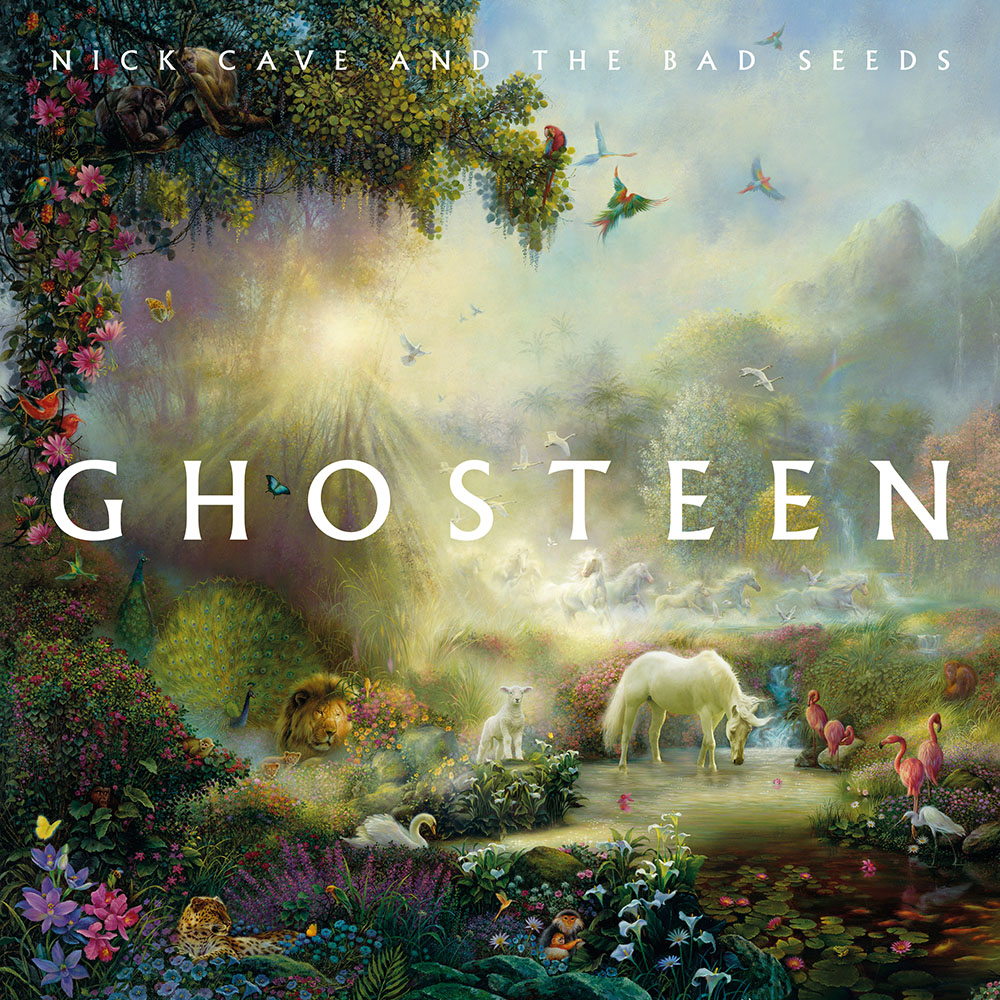
3. Ghosteen - Nick Cave & The Bad Seeds

Like many artists who've earned near-unconditional adoration throughout their careers, especially those who might be described as being of the left field, it took a punt on Ghosteen for me to be finally won over to the Antipodean with the distinct baritone. But here was an album, seeped in the grief of Cave's teenage son's accidental death in 2015, which appeared a month after my own dad's funeral, which provided a welcome, if moving accompaniment to my journeys around the M25 between south-east and south-west London. Ghosteen's catharsis comes in the form of ethereal landscapes, literally fog-like keyboard beds and sombre piano that underlay Cave's distinct vocals. There's rarely any reason to question who the songs are about, but there's no overt wailing either. If it was intended to be Cave's processing of his son's death, it is never self-indulgent. It is, however, breathtakingly beautiful.

4. Giants Of All Sizes - Elbow

Elbow's eighth album is, according to the band, anything but cuddly, contrary to the somewhat avuncular profile of its frontman, Guy Garvey. Don't, however, take that to mean it's a gloomfest - Giants Of All Sizes is still very much an Elbow album, replete with Garvey's cocoa-warm voice bound to a band experimenting with sounds and instrumentation without going too far - but contained within that experimentation is a darker tonality. From the off,  opener Dexter & Sinister and its disjointed time signatures and non-sequitur breaks addressing a number of things on Garvey's mind, from Brexit to bereavement (including the death of his father) and, in his own words, "the general sense of disaffection you see all-around at the moment". Musically, some might find Giants musically narrow, with a very similar range across its nine songs and a notable lack of a One Day Like This anthem, but this lack of width makes for a better album. It is one that places itself in the company of the more melodic reaches of prog rock (Garvey is a fan), which doesn't mean endless organ solos, but a rich variety of tone and layers, rhythms and storytelling. Like Cave's Ghosteen, Elbow's Giants Of All Sizes also addresses grief and loss, but with what I call "balanced grace", looks for light in the darkness by placing arrivals in the proper perspectively. Some reviewers have (quite rightly) claimed it to be Elbow's best yet and, on reflection, it probably is - brilliantly intriguing, musically, and obliquely reflective, lyrically. One I listened to on repeat for most of the Saturday afternoon after it was released, hearing something new each time, pulling it closer like a warm blanket on a cold, wet October afternoon, a comfort no Pumpkin Spice Latte from Starbucks will ever fulfil.

5. Kiwanuka - Michael Kiwanuka

A late entry in my albums of the year, on account of it being given to me for Christmas by my 18-year-old university student step-daughter, bought with her own money. What a wise young woman she is...and, notably, properly plugged in to what makes me tick, musically. I'm not, however, normally given over to hyperbole. I've habitually given anything a mighty swerve that's been raved about by the cool brigade. So, when Kiwanuka was received in November by The Guardian as "one of the greatest albums of the decade" I was naturally deflected. I'd heard, from reviews of Michael Kiwanuka's first two albums that here we had a musically literate, experimental lab scientist, a soulful Heston Blumenthal making clever musical cocktails, much like the last fusion hero to come along, Thundercat. As smart as all that was, Kiwanuka is way more rewarding. Through subtle textures, rather than brash pronouncements, it serves up reflective soul of the kind Otis Redding rarely got credit for, but with elements of gospel, orchestral grandeur and even shades of Hendrix. There have been plenty of soul pretenders over the decades, including those trying to do soul with a twist. This, finally, delivers all that. Sublime. And thanks Ella x.

6. Further - Richard Hawley

The same friend who introduced me to Peter Bruntnell was on a roll, then, having previously introduced me to Sheffield's pre-eminent crooner, Richard Hawley. A Sunday morning free stream of Hawley's Standing At The Sky's Edge, courtesy of The Observer, introduced me to an album of distortion-drenched psychedelic epics that I listened to exclusively for what seemed like weeks. Two weeks after the Bataclan attack in Paris, where I was living at the time, Hawley's gentle humour and mellifluous songs were, that night, just what Paris needed. A musical arm around the shoulder. Soothing reassurance. With this year's release Further, Hawley returned to the mellifluousness of his earlier, countrified releases, dreamily shimmering with songs like Emilina Says, Galley Girl and My Little Treasures, and the Beatle-esque Doors. Four years after those terrible events in Paris, and in a world more politically febrile than ever, Hawley's songs and engaging lyrics have been a soothing balm in troubled times, and none more so than on this album.

7. Western Stars - Bruce Springsteen

The Boss has been in a reflective mood of late. In the five years between Western Stars and his previous studio album, he released his excellent autobiography, Born To Run, and ran his one-man Springsteen On Broadway for more than a year. All of this became part of a narrative of reflection as Springsteen neared the end of his 60s, recalling in his work the blue collar New Jersey upbringing, the thunderclaps of seeing Elvis and The Beatles' debuts on The Ed Sullivan Show, and his own journey to become America's most earnest rock star. Western Stars, Springsteen's 19th studio album casts a winsome gaze over the cowboy culture of Roy Rogers and the early 1950s television the young Bruce Frederick Joseph Springsteen was exposed, framing further the America Springsteen has, in one way, shape or another, eulogised throughout his career, but seen now through the prism of it’s most dramatic, some might even say disturbing schism in several generations. Springsteen has been telling his own American Story since Born To Run "sprung from cages out on Highway 9", but in Western Stars he places his America in a context of the deserts and vast scrublands west of the Mississippi for the challenges they present now, and while this may be a reflection on his own, perhaps surprising struggles with mental health, the 'home on the range' expression on Western Stars provides an outlet for the desire for mental freedom as much as traditional American expressions of the frontier spirit.

8. The New Adventures Of...PP Arnold - PP Arnold

There are plenty of artists of a certain vintage whom you could call tardy for the distances that open up between recordings. Peter Gabriel comes straight to mind, for the dilettantism that sends him off in multiple directions without bringing him back to what he does best (his last album of original new songs was Up in 2002 - almost 18 years ago). Patricia Ann Cole - professionally known as PP Arnold - might have a greater claim. In the '60s she became part of the musical fabric: haling from LA's troubled Watts district, she joined Ike and Tina Turner's soul review as an Ikette before remaining in London after a tour with the Rolling Stones, establishing a solo career there that led to work with the Small Faces and other luminaries of late '60s swinging London. Around this time she recorded her standout hits, The First Cut Is the Deepest and Angel of the Morning, and the albums The First Lady Of Immediate in 1967 and Kafunta in 1968. A third album, The Turning Tide was recorded around the turn of that decade, with Barry Gibb and Eric Clapton producing, but it was never finished and the recordings lay dormant until 2017, when Arnold resurrected and released the album. The intervening years hadn't exactly rendered Arnold idle - as a singer-for-hire she worked with people like Clapton and Roger Waters, but the voice that enchanted so many with The First Cut Is The Deepest held a lasting fascination with Paul Weller and his guitarist (and Ocean Colour Scene co-founder) Steve Craddock, who offered Arnold a bunch of their songs. The New Adventures Of... PP Arnold is the product of that offering, produced by Craddock, it showcases the 72-year-old Arnold has still possessing a voice of some beauty, via a mix of the Weller/Craddock material, as well as engaging covers of Sandy Denny's I'm A Dreamer and Mike Nesmith's Different Drum. Coming more than 50 years since she last committed her amazing voice to original material, you can only wonder what we've missed out on in the intervening years.

9. Warm/Warmer - Jeff Tweedy

Wilco crept up on me as a band I should like. Again, put off by hype, there seemed to be just too much gushing about them. And then I came across their Star Wars album in 2015 and, a decade-and-a-half since their Yankee Foxtrot breakthrough, I was kicking myself at what I'd missed. Earlier this year I was kicking myself at having completely missed the release of frontman Jeff Tweedy's 2018 solo album Warm, so when the record was re-released as a double package with the subsequent Warmer I was determined not to make the same mistake again. Recorded together in the same Chicago session, these twin albums find Tweedy in a soothingly laid-back frame of mind, both lyrically and musically. The albums' titles give this away. With Wilco themselves also releasing this year Ode To Joy (see below), there has been a generous doling out of comfort food from Tweedy and his cohorts (which include son Spencer on drums of these two solo releases), applying his wry turn of phrase on tracks like Evergreen and Ten Sentences with his gently abrasive country-folk melodies and a voice that always reminds me of Eels' Mark Everett - slightly gravelly and delightfully claustrophobic without being weird. Warmer's highlight is the sign-of-the-times commentary of Family Ghost, a striking commentary on the divisions of Trump's America and the dangerous empowerment of the right by news outlets like Fox News. Comparing Tweedy with Bruce Springsteen, as some critics have attempted, is a redundant task, but there are more clear parallels between the two than you might at first realise. There is, of course, the liberal earnestness, and you'd even go as saying that they operate in different spheres of the same alt-folk universe. Warm/Warmer, however, prove that even with such deliberately understated material, released more for the fun of Record Store Day than any serious tilt at the charts, that Tweedy is a performer and writer of gifted proportions. And, thankfully, there's a lot more left in him to come.

10. Echo In The Canyon OST

One of my favourite eras of the pop age is the period towards the end of the 1960s and early 1970s when the wooded canyons north of Los Angeles effectively constituted a large commune of bed-hopping, dope-smoking hippies making love and sweet music at the same time. The definitive written guide to this era - and its principle characters - can be found in Barney Hoskyns' brilliant (if lengthily titled) Hotel California: Singer-Songwriters & Cocaine Cowboys In The L.A. Canyons. Hoskyns' book recounts the music and the inter-personal relationships of people like Joni Mitchell, Crosby Stills Nash & Young, The Eagles, James Taylor, Jackson Browne and the record executive David Geffen, as they indulged high in the Hollywood hills during the daytime and played hard in the clubs of Sunset Boulevard in the nights. It was the musical premise of this period that caught my attention when the documentary Echo In The Canyon came out in the US in late 2018, focusing on the extraordinary creativity that came out of LA's Laurel Canyon as folk music met pop and the green shoots of rock with bands like The Byrds, Buffalo Springfield, and The Mamas and the Papas, drawing on the The Beatles, partly, to create a Californian sound of its own. Drawn into this world were some of the figures covered in Hoskyns' book, but also the likes of Eric Clapton (as his meteoric career pinballed from one band to another, one style to another) as well as younger entrants to the scene, like the aforementioned Browne and Tom Petty. Andrew Slater's Echo In The Canyon delves into the figures that made the Canyon scene, with Bob's son Jakob Dylan fronting the documentary (which I've now managed to see on DVD). Inevitably, such a rich musical subject matter as this produces a fantastic soundtrack, centred around Dylan, and featuring recordings from many of those who feature in the film, including Josh Homme, Norah Jones, Fiona Apple, Clapton and Stephen Stills, and Beck, who covers Goin' Back, the Goffin/King song written for Dusty Springfield (and a regular feature in Peter Bruntnell's live sets). It's a celebration of songwriting craft at its best, but a craft that matured delightfully in a particular window in time.

Worthy of mention

  • Lost Girls - Bat For Lashes: Welcome return from Natasha Khan, AKA Bat For Lashes, with something of a concept album about a gang of biker women roaming a dystopian Los Angeles. I've probably not done the concept justice here, but the record is exquisite.
  • Free - Iggy Pop: Trailed by the delightfully kitsch (and radio-friendly) single James Bond, the Iggster's 18th studio album finds the so-called "Godfather of Punk" in contemplative mood (well, at 72 he had to start calming down sooner or later) as he considers life after the big tours have started to come to an end. With half its tracks written by LA-based guitar wizz Sarah Lipstate, others including one whose lyrics were written by Lou Reed in 1970 and another drawing on the Dylan Thomas poem Do Not Go Gentle Into That Good Night, it's a calmer Pop record than we've become used to, and with a somewhat improvised feel to it, too. None of which is a bad thing, either.  
  • Threads - Sheryl Crow: billed as Crow's final album (she decided that it was no longer worth competing in the age of single-track listens via streaming sites), Threads pairs Crow with a variety of partners from the legend end of rock's executive lounge, with a combination of covers and original songs. And it is mostly fabulous. Collaborations with Willie Nelson, Bonnie Raitt and Mavis Staples are sublime, although we could have done without the cover of George Harrison’s Beware Of Darkness featuring Sting and Brandi Carlisle. As an exercise in the application of professional friendships, Threads can’t be faulted, but it is at its best when Crow’s natural songwriting ability around with rock-blues roots comes to the fore and you don’t, actually, care all that much who she’s working with on the track.
  • Ode To Joy - Wilco: I've already waxed on above about Jeff Tweedy's twin contribution to the 2018/2019 album story, but at risk of presenting him as a greedy sod, he also managed to get the band together this year to produce Ode To Joy, which it is. It's a somewhat gentle album, but since I would probably, now, rate a Wilco album that was essentially 12 tracks of nails and screws being thrown into a bowl, I've got plenty of bandwidth for an album from them that doesn't tread expected routes. You could even look upon it as a romantic album. There, I said it.
  • Anima - Thom Yorke/Flowers At The Scene - Tim Bowness/Love You To Bits - No-Man: I've lumped together my final three new albums at risk of annoying the artists involved. No, they're not identical, but there are behavioural patterns behind those who've made them. Thom Yorke's Anima (a somewhat hoity-toity reference to Carl Jung) is a darkly layered collection of electronic music that, on my first listen while driving around the M25, left me underwhelmed. And slightly unfit to drive on account of its somnambulant dangers. Subsequent listens improved my appreciation considerably, especially tracks like the opener Traffic and the stunning The Axe. Truly a master at work. As is Tim Bowness, the Cheshire musician known perhaps best for his work with Steven Wilson in No-Man (see next), but who has worked with a range of musicians to produce brilliant albums seeped in ambience and depth that, thankfully, defy any definitive labelling. His latest, Flowers At The Scene brought him together with guests like 10cc's Kevin Godley, XTC's Andy Partridge, Peter Hammill and, as co-producer, that man Wilson again, like his compadre's own move towards greater mainstream accessibility, draws together bold strands of pop, soundscapes and confessional lyrics to create one of the year's most engaging records. Which brings us to No-Man's Love You To Bits. Long before Wilson was shifting significant critical acclaim with Porcupine Tree, he and Bowness were, starting in 1987, experimenting with whatever took their fancy with No-Man, first finding attention with their Flowermouth album in 1994 (featuring Robert Fripp, no less) and presenting to the world a showcase for their own hugely eclectic musical tastes - dance music, ambient music, acoustic, electronic. Love You To Bits is Bowness and Wilson's first full album together as No-Man since 2008, and dives headfirst into their mutual love of synth pop. Taking the quintessentially prog approach of spanning the album over, essentially, two tracks - Love You To Bits (Bits 1-5) and Love You To Pieces (Pieces 1-5), Bowness and Wilson resurrected an idea that had been around for a decade or two, of an album that nodded to their love of bands like New Order and Talk Talk, rich in synths and drum machines and the sort of electronic dance music - there, I've said it - that were a core part of their music consumption in the early 1990s. The cover image, of a glitter ball tees up the opening phase of the Love You To Bits side, proper 4-4 disco stomp that, actually goes beyond just guilty pleasure territory, but is genuinely infectious, as is the rest of the album, which, over its two sides, explores the breakup of a relationship from the perspectives of its two principals. The second side opens on a jazzier note - no surprise given its use of Wilson's touring keyboard player, Adam Holtzman, the last ivory tinkler to work for Miles Davis, but spreads out over its five sections into a wonderful stew of trance-like club music. For those who've followed Wilson's career in particular, and who have (wrongly) formed the view that he is a standard-bearer for prog rock, you must remember that the two albums that sparked his interest to begin with were Pink Floyd's The Dark Side Of The Moon (a Christmas present from his mother to his father) and Donna Summer's Love To Love You Baby (a Christmas present from his father to his mother). Both would shape the career of an extraordinary, if still criminally under-rated artist, a description he easily shares with Bowness. 

Back For More


  • Abbey Road - The Beatles: Re-released with all the bumper package options to celebrate its 50th anniversary, the basic album alone is worth a re-listen, let alone all the outtakes and curiosities that come with the 'super deluxe edition'. Of course, Abbey Road depicts The Fabs'  last hurrah (yes, yes, I know all about Let It Be...) but also a now-mature rock band seemingly comfortable in its skin and, at times, its own company. Doesn't matter how many copies you own, this is a retread worth every penny.
  • London Calling - The Clash: Another anniversary waltz, but even if you bought the 30th anniversary edition, adding another ten years hence, with the accompanying storybook package, is worth your hard-earned for, quite frankly, the best album of the punk era, largely because it wasn't punk at all.
  • VH1 Storytellers - David Bowie: Since The Dame's death in 2016 there has been a steady industry of releasing luxurious packages of his cannon, from the complete sequence of studio and live albums to the recent box of his early development. The VH1 Storytellers album originally came out in 2009, ten years after Bowie had actually appeared in VH1's live performance Storytellers series. Dipping into Bowie's career, as far back as Life On Mars, right up to material for the under-appreciated Hours album, the somewhat stripped back sample of the man's work actually serves to highlight just how good he was. Understatement, right?
  • Let It Bleed - Rolling Stones: Yes, another nice bone to throw the Stones' pension pots, but why not? Let It Bleed found the Stones at their louche best, with stonkers like Gimme Shelter, Midnight Rambler and You Can't Always Get What You Want standing out, even despite close-run gems like Country Honk and Monkey Man. Another 50th anniversary release, with all the trimmings that entails in the heritage market, it's one of those Stones albums you simply go out and buy again, and listen as if new.
  • Mark Hollis - Mark Hollis: Talk Talk frontman Hollis' death in February this year took the wind out of many's sails, not least of which mine. What compounded that emotion was that Hollis's work was as sparse as the songs he often recorded. And none more so than this, his only solo album, released in 1998 (and again in 2003 as an LP only), but still often forgotten, or even dismissed as being unlistenable due to its achingly hushed material, of the kind cynics might say could only have been heard of by mountain rescue dogs. This new vinyl re-release addresses many of the snarks and even complaints about the sonic dullness of the original, being slightly brightened up in the studio and released as a posthumous curiosity for those who loved all Hollis did with Talk Talk and, even with its obvious limitations, would find interest in now.


Monday, 14 October 2019

Size doesn't matter: Elbow's Giants Of All Sizes

With time on my hands, I've taken to perusing Elbow's press coverage on the occasion of their eighth and latest album, Giants Of All Sizes, finding its way into the world. And so, a casual Google galavant reveals a predilection for journalists to make reference to Guy Garvey's avuncular nature. "Cuddly", is an oft-repeated description, along with "bear-like", which all border on sizeist judgement of the bearded 45-year-old from Bury. Quite what Craig Potter, his brother Mark, and Pete Turner, the band's other members, feel about this is not known, but it's common for a band with a charismatic lead singer and chief lyricist, to attract most, if not all, of the attention. Peter Gabriel (one of Garvey's musical idols) built up similar internal resentment when lead singer of Genesis, to such extent that Phil Collins has been quoted as saying that they were in danger of being known as "Peter Gabriel and Genesis".

Why this is relevant is that despite Garvey's apparent ursine appeal, Elbow's eighth and latest album, Giants Of All Sizes is, according to the band, anything but cuddly. "It's certainly not an uplifting album," Garvey recently told a journalist, explaining that the band wanted to make an album reflective of both their mood, as well as the mood of the times. That doesn't mean a lot of ambient Thom Yorke-style droning in a minor key, however: at essence, Giants is still an Elbow album, with the warmth of Garvey's voice binding a band comfortable in its own musical skin, experimenting with sounds and instrumentation without going too far, mood without being too Enoesque. But within that experimentation and instrumentation there is certainly a darker tonality, even from the off, with opener Dexter & Sinister and its disjointed time signatures and non sequitur breaks addressing a number of things on Garvey's mind, from Brexit to bereavement (including the death of his father) and, in his own words, "the general sense of disaffection you see all-around at the moment". The track rings the keynote for the rest of the album, one which draws on a certain Lancastrian bleakness that has run through all their work, as it does with their great mates Doves and I Am Kloot. That's not a lazy southern trope, but think about it. I've never been entirely sure whether it is to do with geography, like the rain-soaked cobbles of Coronation Street, or something else, but it's there in almost everything coming out of the north-west, The Beatles' childlike acts of whimsy notwithstanding.

Musically, some might find Giants musically narrow, nine songs with a very similar range and notably lacking in the sort of anthemic bluster that made the nation fall in love with them via the album Seldom Seen Kid and their closing ceremony performance at the London Olympics in 2012, where One Day Like This seemed to supplant Land Of Hope And Glory in the nation's communal singing preferences. Frankly, though, this lack of width makes for a better album, one which accentuates the combination of Garvey's voice with Turner's at times McCartneyesque bass, Potter (C)'s keyboard washes and Potter (M)'s understated guitar work. Despite being more compressed and lyrically reflective than either Build A Rocket Boys! or The Take Off And Landing Of Everything, Elbow's last de facto albums, Giants is nonetheless immediately accessible, even when tackling some of its weightier subjects, such as the undertone of Brexit in Empires, with its fairground Wurlitzer stabs part of a layered fabric interwoven with such existential questions as "How can a bland unremarkable typical Tuesday be Day of the Dead?".  Others, like The Delayed 3.15, with its string section find melodic companionship with some of the less bonkers elements of prog rock, a musical genre often misunderstood and invariably mocked, but which had more in common with jazz as anything else. Doldrums even points back to prog's true origins, with a decidedly Beatles-like groove and Garvey's vocal treble-tracked to the extent it sounds like they were recorded in a broom cupboard. As a result, it's a track that, strangely enough, benefits from being listened to on headphones. The band's assertion that this is a bleak album is a bit of a misnomer, but paying close attention to the lyrics throughout reveals the true state of Garvey's mind. White Noise White Heat, for example, provides a stark reflection on the nightmare of Grenfell Tower and the injustices handed down to its victims, wrenching the song's emotional heft further with strings and brass. It is, perhaps, the closest Giants gets to a "soaring"™anthem like One Day Like This, should that be what you'd buy an Elbow album for.

If I might return to Garvey's avunicularity, it stems from his voice. With his Bury accent heavily inflected in the delivery, each song rings with autumnal comfort, no more so than the beautiful My Trouble, with the vocal perfectly mixed over a combination of bass, strings and the subtlest of drum machine rhythm tracks, building to a hymn-like chorus of "Come get me/Guide and check me/Sail and wreck me/Soak me to my skin." I defy anyone not to sing along at the top of their voice while driving along to it.

At the arrival of On Deronda Road, the penultimate song, I reached the point where I realised why I find Giants Of All Sizes so accessible. It's not because this particular song is notably catchy, there are no obvious hit-making hooks, and in some respects it's a somewhat brief interlude. No, it's the realisation that I'm listening to something from Trick Of The Tail-era Genesis. Now, don't baulk at that suggestion (trust me, naysayers, it's a quality album), but the vocal harmonies and textures hark back to that 1976 album's most beautiful moments, in particular, Steve Hackett and Mike Rutherford's 12-string guitars producing something ethereal on songs like Entangled and Ripples. In fact, this vibe continues with the closing track of Giants, Weightless, which takes inspiration from both the death of Garvey's father and the continuation of life with the birth of his son. It is a truly beautiful song and easily one of the best Elbow have committed over the course of their eight albums. Whether by design of sequencing or simply the way it fell out of the writing process, Weightless concludes an album written around gloomier themes with a sense of uplift, of hope and admission that, maybe, the world isn't all bad. Or, perhaps, Garvey is driving at a bleak future for his offspring. Either way, it's a song of balanced grace.

When not making Guy Garvey out to be some sort of Lancastrian Yogi Bear, media reaction to Giants Of All Sizes has been a little mixed. Some reviewers have (quite rightly) claimed it to be Elbow's best yet, while others are still just not sure. My view is that it is brilliantly intriguing, musically, and obliquely reflective, lyrically. If this is a key test to go by, I listened to it on repeat for most of Saturday afternoon, hearing something new each time, pulling it closer like a warm blanket on a cold, wet October afternoon, a comfort no Pumpkin Spice Latte from Starbucks will ever fulfil.

Saturday, 12 October 2019

Put the needle on the record...

(Picture: Naomi Davison)

In a week that began with the ever-youthful Gary Crowley talking about his 40 years listening to, playing and talking about music, one which continued with the premiere of a documentary about singer-songwriter Beatie Wolfe's idiosyncratic approach to making music tangible, Saturday arrives with a celebration of the album itself. For today is the second annual National Album Day, a combined UK initiative of the BPI, the Entertainment Retailers Association and the Association of Independent Music, designed to embrace all that is good, still, about the album as a complete body of musical work.

It comes at a time of continuing mixed emotions about how we consume our music. Just last week I reviewed Sheryl Crow’s album Threads which, she says, is likely to be her last due to the changing consumption model of consumers effectively sequencing their own listening via the pic’n’mix of streaming services. And, yet, at the same time, the 50th anniversary re-release of The Beatles’ Abbey Road went straight into the album chart at No.1 when it was released two weeks ago, something of a reaffirmation of the album format from the very band which, according to music journalist David Hepworth, invented the LP with Sgt. Pepper’s Lonely Hearts Club Band, 52 years ago.

According to National Album Day's organisers, the album as a packaged piece of music remains a robust proposition. 143 million albums, they say, were either streamed, downloaded or purchased in the UK in 2018, a 6% increase on 2017 and worth approximately £1.3 billion. A healthy state of affairs, it must be said, and made shinier by the 4.2 million vinyl LPs sold last year, although this must be still seen as just under 3% of the overall number of albums shifted, even if representing a 25-year high for the format.

Where all these sales are coming from is, actually, hard to identify: friends of mine who used to be dyed-in-the-wool record buyers are now just as likely to be listening to new albums via Spotify, unfussed by either the lack of tactile interaction or the reduced fidelity created by streaming compression. And, yet, the notion that young consumers are eschewing albums-whole for the selectivity of YouTube on mobile-friendly platforms could equally be a misnomer, if the experience of accompanying my 14-year-old step-daughter into Kingston’s Banquet Records recently was anything to go by. What may, though, be preventing today’s teenagers from replicating how I began my record collection at the same age may simply be economics. Paying more than £20 for a vinyl record is certainly beyond most pocket money budgets if serious collation is going to take place.

Visiting the HMV at Bluewater yesterday it was notable how much vinyl had crept back into a shop space that would, as recently as a couple of years ago been occupied by CDs. However, here lies the peculiarity of HMV’s continued survival strategy: the Bluewater shop's most prominent racks contained a strange mixture of new and old - Elbow’s brand new album Giants Of All Sizes sat next to ‘staff picks’ like Steely Dan’s Aja. Nothing wrong with either of those records (and stay tuned for my own review of the Elbow release), but there was an incongruity in what was prominent and what wasn’t. Elsewhere yesterday HMV - the chain that less than a year ago called in administrators for the second time in a decade, resulting in dozens of branch closures - opened its biggest ever retail space, ‘The Vault’ in Birmingham. Covering 25,000 square feet, it promises to be a “nirvana for music and film fans”, with dedicated spaces for vinyl, CDs, Blu-ray Discs and DVDs, as well as a stage for in-store performances. It is a brave move by the chain: even when musicians themselves are seeing their own incomes challenged by the relatively meagre returns from online music services (most make more money these days from touring than they do from releasing records), music retailing via so-called ‘bricks and mortar’ outlets is under threat from the twin terrors of high rents and the likes of Amazon.


In this mix lies the emotional act of buying a record. If you can buy an album for £1 less on Amazon and without the hassle of going out to buy it or the add-on costs of bus fares or car parking, plus that latte in Costa you weren’t planning but had anyway, record shops are heading for an even darker future. That places like Kingston’s Banquet and my favourite, Casbah Records in Greenwich, still appear to be thriving - if challenged by prevailing ‘market conditions’ - is a welcome throwback. HMV’s owner Doug Putnam still believes the need for a physical, tangible music consumption experience is driving their belief in opening a store like The Vault. “We know that people want to stream music when they're out, but also want to physically go in store and purchase something special, something they love, to add it to their collection at home,” he told the BBC.

"We all want human interaction but do we want to pay for it?", countered retail analyst Richard Hyman. "I think [The Vault] is a very courageous venture but it'll need more than courage to make the economics stack up." There is a view that I share that record shops are being kept open by two factors: firstly, old heads like me, clinging on to physical music ownership much as their hairlines recede and their waistlines expand, and secondly, younger consumers being drawn to the niche experience of buying ‘a vinyl’. Certainly a visit, the other Saturday, to Soho’s Sister Ray Records supported the first of these views, judging by the exclusively male, middle-aged clientele.

Their interest, I’m sure, is much like mine - the discovery of albums as complete experiences. It’s why this year’s National Album Day - which is being championed by Elbow themselves, Lewis Capaldi and Mark Ronson - is focusing on the theme of ‘Don’t Skip’, to encourage the discovery and enjoyment of albums as total bodies of work, to be consumed from first to last track as a single, arcing narrative. It’s the consumption experience that David Hepworth drew from with his brilliant tome A Fabulous Creation: How the LP Saved Our Lives, which traces the evolution of the LP through his own experience, his eyes being opened by 1967’s Sgt. Pepper, before seeing it disappear with the advent of the CD and its remote-controlled skipability. ‘Long playing records’ had existed way before The Beatles’ opus but, argued Hepworth, Pepper turned the LP into something other than a vestibule for songs, a package of listening and looking. It was probably the first concept album, launching a series of ‘themed’ records from ever more progressive artists, including The Beatles themselves, but also The Who with Pete Townshend’s rock operas, Tommy and Quadrophenia, Bowie and his recurring astronautical subplots, and of course the prog giants like King Crimson and Pink Floyd, each presenting music as theatrical suites.

Hepworth’s book got to the nub of the album buying experience. It may be considered a cliche to think of nerdish types in record shops pouring over the everlasting trope of gatefold sleeves and Storm Thorgerson cover art, but it was (and still is) part of the total act of ownership, right up to and including the moment the needle was placed on the intro groove, to flipping over to Side 2 and then watching the stylus go back and forth on the outro groove. Hepworth’s description of shared house ownership and the obsession of male housemates with speaker cables and hi-fi separates is certainly one I can appreciate. I’m still a hi-fi separates man to this day. Hepworth, however, saw the beginning of the end for this experience when he first encountered a Sony Walkman when interviewing Stewart Copeland in 1980. If he wasn’t all that enamoured by Sony’s miniaturised music experience, with its tinny headphones, the next few years, with CDs and the arrival of MTV, sounded the death knell for Hepworth for the album as that total, beginning-middle-end experience. Selective consumption had now arrived. Skip-play technology had done for the album. “You can fill your room with the very best loudspeakers,” Hepworth concluded in his book. “You can spend your money on a pristine new copy of your favourite album. It can be produced on the highest quality vinyl. It can feel reassuringly weighty in your hand,” he says of today’s ‘new’ vinyl experience. The really difficult bit, he says whimsically, “will be convincing yourself that for the next 40 minutes you have nothing better to do than listen to that record. Because that’s how it was back in the golden age of the LP. It seemed as though we had all the time in the world.”

Perhaps we have lost patience. Perhaps the instant reassurance some have from looking at their phones every ten seconds is a sign that we have become digitally restless. Strange, then, that the Netflix and Amazon model is largely catered towards those who can binge through hours of box sets in a single sitting. Why we can’t do that with albums, I can’t say, although I could very easily, given the opportunity. As I write this I’m currently on the second consecutive and complete listen to Elbow’s Giants Of All Sizes. Perhaps it’s a rare luxury to be able to do so on a Saturday afternoon, but it’s how I’ve always preferred to hear albums, even delaying getting out of the car to finish up the final track of a CD. From first to final, before repeating and listening all over again, that’s the correct way to do it.

“Some artists see the album as a collection of short stories,” Elbow themselves say in the official National Album Day press release. “We see the album as a novel. Songs are often included or omitted on account of the balance of the overall record rather than on their individual merits.” The band themselves see the television binge model as a parallel: “To suggest the album is under threat because of [streamed] playlists is to suggest that movies will disappear on account of television, they are two completely different things.” Geoff Taylor, the BPI chief executive, backs this view: “The album is where an artist gives the fullest expression to their creative vision at a given moment in time. It’s a musical novel, where multiple themes can intertwine to deliver a cultural experience deeper than a single song, the summit of a performer’s art.” Album ownership, like dogs being for more than Christmas, shouldn’t be about a single 24 hours, be it National Album Day, Record Store Day, or any other such industrial cause. But with some viewing this medium as continuing to hang by a thread, a little indulgence can’t do any harm.

Thursday, 4 January 2018

2017: that was the (music) year that was


So here it is - a shiny new year. We’ve rung out the old and are already getting on with the new. But to allow one last coquettish glance over the shoulder at 2017, there are a couple of reflections to note: because this was a year that commenced with the hangover of the prior annus horribilis and its morbid stream of departures, from Bowie to Prince to George Michael. We switched, then, from 2016's somewhat grim procession to 2017's irritating insanity, chiefly due to an elderly playboy with candy floss hair arriving at the White House in January and then on a daily - if not hourly - basis displaying all the characteristics of a petulant child in whatever first came to his mind while, clearly, carrying out his morning ablutions.

Thankfully, music intervened to provide a certain feelgood factor. In short, 2017 was a superb year for new music and live performances. Just cast your mind back to an unseasonally sunny June and Glastonbury: 12 months on from the Brexit referendum, a month after both the Manchester Arena bomb and a stuttering British government stuttering further with one of the most pointless general elections in history, three weeks after the London Bridge attack and two weeks after the Grenfell fire, music did its bit to perk up the nation, with Nile Rogers/Chic and the-now ‘Sir’ Barry Gibb cranking out guilty pleasures in the heritage slots, headliners Radiohead and Foo Fighters delivering unabashed crowd-pleasing enormity, and relative newcomers like The xx and Royal Blood proving that engaging live performances on a grand stage are far from over.

Further back, in April, there was a bonanza of consumption as Record Store Day generated treasures such as The The's first new music in an age (and an Elbow cover of one of their older songs), as well as sumptuous vinyl releases from the likes of Prince and T-Rex to make the brutally early start to queuing worthwhile. Throughout the year live music was equally as rich and rewarding for me personally, kicking off with Michele Stoddart in early January performing her beautiful Pieces album in its entirety at Camberwell’s Slaughtered Lamb. Later that month I made acquaintance with the brilliant Peter Bruntnell (and discovered that he's from both my home town and school); I saw Robert Howard, Matt Deighton and Chris Difford deliver a masterclass in songwriting and experienced Squeeze on their home patch for a communion of arguably the UK’s most prolific pop-rock band since The Beatles. And in the summer I celebrated the pure pop joy of Nick Heyward, not once but twice. Indeed, this year has been more about pop than rock for me…though thankfully without succumbing to the Faustian horror of Ed Sheeran and his guitar-looped wallpaper-drivel.

Sheeran, inevitably, features heavily in figures released yesterday by the BPI of how music was consumed in the UK during 2017. The numbers reveal that a total of 135.1 million albums were either streamed, purchased in a physical format, or downloaded - a 9.5% year-on-year rise and the third year of consecutive volume growth. Of significance is that streaming now accounts for over half of the UK's music consumption, with 68.1 billion audio streams served last year through Spotify, Apple Music, Deezer and other services, a 51.5% rise on the previous year.

That said, my acquisition of mostly vinyl albums last year maintained a steady pace, to the extent that I actually ended the year with a pile of unlistened-to records more than a pile of those I had played. Clearly I have personally contributed to the growth of vinyl over the last decade: according to the BPI 4.1 million LPs were bought last year - an increase of 26.8% on 2016. That said, it does remain a niche (and, some might say an expensive one, too) with just one in 10 of all physical purchases made in 2017 being vinyl copies. Even the ageing CD represented just under a third of all formats.

Streaming, however, continues to attract converts. In a New Year blog post, my friend Steven Wilson - whose fifth solo album To The Bone was one of the brightest highlights of the year - wrote about his own, somewhat reluctant adoption of streaming formats: "For years I resisted non-physical distribution of music, I just couldn’t relate to music if it didn’t come as a physical piece of art that I could hold in my hands." He acknowledges, however, that streaming services do act as a 'try-before-you-buy' gateway, pointing out that his own album has been streamed eight million times in the four months since it was released. "While those numbers aren’t going to trouble the likes of Kendrick Lamar," he adds, "they are an indication that there are a lot of people out there beginning to discover and hear my music for the first time", pointing out that they might then go on to buy from his back catalogue, or come and see his live shows.

When it was released, To The Bone made it to number three in the album charts. Not bad for an artist many still have never heard of, and even more impressive when you consider that he was pipped to No.2 by someone called Elvis Presley by a relative handful of copies of a greatest hits package. Ed Sheeran - inevitably - remained at No.1 that week by selling a further 15,000 copies of Divide, a relentless achievement helped in part by grannies buying it at supermarket and petrol station checkouts.

I shouldn't be too critical of Sheeran (though his bland, universal appeal does stagger me...meaning that I will). Thank God for more interesting British pop acts, from Rag’n’Bone Man and Stormzy to Paloma Faith, all making for a very good year. It would be impossible to critique everything that passed through my ears in 2017, but particular mention should be given to the following:

Liam Gallagher - As You Were: Liam's reinvention as the macrobiotic, Hampstead Heath-jogging renaissance man (albeit one still hilariously lobbing Twitter grenades at Frère Noel) coincided with him producing the feelgood album of the year. Yes, it was full of Oasis-like stadium stormers, but wasn't that exactly what we wanted? And even if he had help, As You Were also demonstrated that the songwriting genes in the Gallagher family weren't entirely monopolised by his elder sibling. Speaking of whom...

Noel Gallagher's High Flying Birds - Who Built The Moon?: News of a "psychedelic" third solo album from Gallagher proved unfounded. In fact, it took several listens to get any handle on what Who Built The Moon? actually was about. There were traces of Roxy/Sweet/Bolan glam, trademark NG irony, a scissor-playing French vocalist, a flirtation with the sort of Chemical Brothers sound Gallagher had experimented with earlier in his career, and some Britpop whimsy that harked back to prime Oasis. Collectively, and after several listens to be sure, Who Built The Moon? is up there with Liam's product as one of the best of 2017.

LCD Soundsystem - Anerican Dream: James Murphy's declaration that LCD Soundsystem had reached the end in 2011 seemed like a long goodbye when the sumptuous, five-LP live album of that description - The Long Goodbye: LCD Soundsystem Live At Madison Square Garden - made its appearance some years later (and was instantly added to my collection of the greatest live albums ever). So the appearance in 2017 of brand new material from Murphy and his collective, with its conscious and unconscious nods towards Bowie (who'd invited Murphy to work on the Blackstar album but declined citing a lack of worthiness), not to mention Talking Heads, was a surprise. And a welcome one, too. American Dream is a curious cocktail of the obscure and the enlightening, going beyond simply fan pleasing, although fans will be inevitably pleased by the sheer depth of what is dished up. Magnificent.

Thundercat - Drunk: I’m a lazy music connoisseur: I should have my finger pressed more tightly on the pulse of what’s going on. Indeed, if it wasn’t for a late night visit to the BBC Radio 6 Music Festival in March I might never have come across the splendidly batshit-mad funk of Stephen Bruner - Thundercat - and his mesmerising six-string bass guitar prowess. Drunk pulled all that together into a 23-track album of the weird mixed with the conventional, of Stanley Clark-style jazz funk blended with traces of hip-hop and even FM radio soft rock, courtesy of guest appearances by Kenny Loggins and Michael McDonald.

Father John Misty - Pure Comedy: Much is made of Josh Tillman’s wry takes on modern life and his somewhat capricious nature towards fans, rivals and indeed anyone who chooses to take him on, but there is no denying that if, like me, you’re a fan of ‘classic era’ Elton John (Tumbleweed Connection, Madman Across The Water, Honky Chateau et al), FJM’s unmistakably Elton-like vocal delivery is as comforting as a box of Quality Street comprised entirely of the green triangles. And that’s before you come to appreciate the smart lyrics that traverse between bittersweet and humour, while remaining smarter than most others out there. A masterpiece.

Portico Quartet - Art In The Age Of Automation: If every record went on its library classification, Portico Quartet’s four studio albums - including this one - would be hard to file. To some, it’s ambient noodling, to others jazz (“…just a series of mistakes without the 'oops’”, to quote Spinal Tap’s Nigel Tufnell), and to those more appreciative, clever, engaging electronica which thankfully stays clear of a suburban wine bar’s looped collection of Café del Mar compilations. Art In The Age Of Automation extensively explores over 11 tracks a variety of landscapes and textures, tinkering with the sparse grooves of trip-hop while applying varying thicknesses of layers with an orchestral approach that knows when to be sparing and when to be full on. This was my go-to record in 2017 for commuting or, simply, needing to come down after a more raucous night out on the tiles.

PP Arnold - The Turning Tide: Initiatives like Record Store Day deliver plenty of re-release treasures, but never something which has lain recorded but unreleased for close to half a century. PP Arnold - a former vocalist in the Ike & Tina Turner band and hit maker in her own right (First Cut Is The Deepest and Angel Of The Morning) - dusted off this hidden treasure, which had originally benefitted greatly from the significant involvement of Barry Gibb and the entertainment mogul Robert Stigwood, as well as Eric Clapton, members of his Delaney And Bonnie outfit, Steve Howe (of Yes) and others. The Turning Tide is a fascinating time capsule opened up, representing some of the best freewheeling pop-soul-rock of the late 1960s, including covers of material by Steve Winwood, Van Morrison, and the Glimmer Twins - Jagger and Richards. Bureaucracy, sadly, kept the recordings under lock and key, until Arnold and her manager, Sally Cradock (wife of Ocean Colour Scene/Paul Weller guitarist Steve) started picking at the strands of publishing complexity with an aim of finally getting the recordings released. With further mixing by Cradock's husband at Weller's Black Barn Studio, the resulting album sounds both fresh and a stunning snapshot of the time it was originally recorded, capped by the voice of one of the finest and under-appreciated soul singers ever.

Squeeze - The Knowledge: While not likely to win any prizes for sonic innovation, Squeeze's best album in more than two decades reinforced why, almost 40 years ago, we liked them to begin with: Chris Difford's lyrics, Glenn Tilbrook's uncannily accessible melodies. Wrapped up in an album loosely about the London they love (with specific reference to the south-east London of their youth - and my current dwelling), Squeeze produced a delightful compendium of observations about modern British life, from the state of the NHS to the ageing population, even including an edgy account of child abuse in youth football. National treasures, with a back catalogue - not just the singles - deserving of serious re-indulgence.

Paul Weller - A Kind Revolution: Arguably competing only with Neil Young for the shere rapidity of his output, Weller's umpteenth solo album since 1990 also set the tone for the summer of 2017. A Kind Revolution is chock-full of solid Weller ear-pleasers, although The Cranes Are Back must rank up there with You Do Something To Me for sheer soulful delightfulness.

Nick Heyward - Woodland Echoes: Weller's album may have set the tone for last summer, but the August release of Nick Heyward's first album in 18 years and only his seventh solo effort, proved to be one of the sunniest moments of the year, being a collection of pure bottled delight. That was, of course, the schtick of Haircut 100, back in the early 80s, but the precedents were good when, in the spring, Gary Crowley started playing the double-A side single Baby Blue Sky/Mountaintop, hinting at some breezy latent Britop to come, such as Perfect Sunday Sun, Beautiful Morning and Love Is The Key By The Sea. I saw Heyward live twice last year and on both occasions was left wondering how long it would be before he would be offered one of the feelgood spots at Glastonbury, such was the utterly infectious good time his canon delivers.

Elbow - Little Fictions: The release, just before Christmas, of Elbow's Best Of compilation, featuring their gorgeous cover of The Beatles' Golden Slumbers, gave timely reminder of the Mancunian quartet's status as arguably Britain’s favourite band. And with good reason: for all the festival singalong/wavealong favourites like One Day Like This and Mirrorball, Elbow have successfully retained enough indie credibility to save them from persecution by those curmudgeons who eschew such popular fare. In that respect, Elbow are like few other acts with such popularity (yes, you Sheeran), in producing vivid, layered (some might even say 'prog') rock, with instrumental curiosity and the genuine warmth of Guy Garvey's persona. Little Fictions is the album (their seventh) where you felt that Elbow were fully comfortable in their skins, kicking off with a sense of wellbeing as Magnificent (She Says) struck a resonant keynote of upbeat goodness, along with the lovely Gentle Storm, with its understated chords and unashamed, plaintive refrain "Fall in love with me - every day". From almost anyone else this might be schmaltz, but it sits amongst a collection embracing themes as varied as relationships, post-Brexit national isolation and Fleet Street's vampiric tendencies. As I wrote on Little Fictions' release, it's easy to declare a band's latest album their best, until you play it back in comparison with the previous work. And even though its six predecessors are mostly excellent, it was hard not to consider this Elbow's best yet.