Views expressed do not necessarily reflect those of any organisation with which the author is associated professionally.
Showing posts with label Michael Emenalo. Show all posts
Friday, 2 September 2016
Chelsea - the loan arranger
Like chronically untogether husbands raiding petrol station gift shops on Christmas Eve, the Premier League's clubs concluded their summer transfer business on Wednesday night. Some, like the smart shoppers who get their festive acquisitions done in July, will be well on the way to integrating their purchases. Others - and I gladly single out my own Chelsea here - will still be trying to figure out what actually happened on the final day of the window and where they go from here.
I was promising myself not to go into another rant about Chelsea's transfer policy, but it's a tide I'm struggling to hold back. Because as amusing as it was to hear on Tuesday that the club was actually putting in a bid for the clown prince of central defenders, David Luiz, whom Chelsea had cheekily offloaded to PSG for an eye-watering £50 million (a transaction akin to exchanging a cow for magic beans), the reality of seeing him smirk his way through St. Pancras on Wednesday evening was something else.
For all the praise Chelsea rightfully earned when they "did their business early" in snapping up Diego Costa and Cesc Fàbregas fresh off Spain's early exit from the 2014 World Cup, the derision at last summer's window-closing trolley dash was fully justified: having been turned down by Everton for John Stones, Chelsea squeaked in with the last-minute purchases of Senegalese defender Papy Djilobodji and Reading's Jamaican central half Michael Hector...who was promptly loaned back to Reading.
The July signings of Belgian striker Michy Batshuayi (£33 million from Marseille) and N'Golo Kante from Leicester City for £30 million showed early promise. But then? Nothing. Until Marcos Alonso was brought in on Wednesday to provide left back cover, and the baffling re-signing of Luiz, all the movement from Stamford Bridge was outbound.
The chant, usually levelled at referees, of "you don't know what you're doing!" could so easily be applicable to Chelsea's player acquisitions department, especially as last season, for all the incoming traffic, there were at one point 36 players out on loan. This season they've gone two better with 38. That's thirty-eight. Three entire teams, plus five subs which are deemed surplus to requirements and/or in need of extra "development", if development is actually what they'll receive at Vitesse Arnhem, Chelsea's "sister club" in the Dutch Eredivisie. And don't forget, these 38 are on top of the 'development squad' that will remain at Cobham, forming the Under 17, Under 18, Under 19 and Under 21 teams.
It makes you wonder what was going through the club when these 38 loanees were being signed. What was the strategy for Juan Cuadrado, who's been pinging around Italy like a loose pinball ever since the club "had" to buy him from Fiorentina in 2015 (and is now back at Juventus on loan)? Or Bertrand Traore, one of the more promising youngsters last season, and who is now at Ajax, on loan? And what of prospects like Tammy Abraham (on loan at Bristol City), Nathan Ake (Bournemouth), Christian Atsu (Newcastle), Baba Rahman (the other defender bought last summer and now on loan at Schalke), Lucas Piazon (Fulham) Lewis Baker (Arnhem), Patrick Bamford (Burnley), Jamal Blackman (Wycombe), Izzie Brown (Rotherham), Andreas Christensen (Monchengladbach), Jake Clarke-Salter (Bristol Rovers), Tomas Kalas (Fulham), Kenedy (Watford) Matt Miazga (Vitesse Arnhem) - all of whom have been feted or have tasted glimpses of first team football?
18 of this season's loanees are under the age of 21, with just 35 first team appearances between them, so it could be argued that these are young talents in need of frontline football. But with 38 in total playing elsewhere, you can't help feeling what a complete waste of talent and expectation.
Of course, no club can sustain a large squad, and as Mourinho himself has demonstrated at Manchester United, you sometimes have to be ruthless in deciding who you want, and freeing up the rest. And Chelsea aren't alone in the loaning business - Manchester City have 17 out on loan this season, Liverpool 12, West Ham 11, Tottenham seven and Arsenal and Manchester United both six.
But for Chelsea, it just looks like a transfer strategy one awry. Even with Antonio Conte coming in with a clear view of whom he wants, if David Luiz is the solution, the problem is bigger than we may have thought.
Wednesday, 13 April 2016
So we sold De Bruyne and Lukaku. Get over it.
![]() |
| Reuters |
At the end of last night's Champions League quarter-final tie between Manchester City and Paris Saint-Germain there were two sets of opposing schools of opinion at work on Twitter. And both involved, exclusively, Chelsea supporters.
The first concerned praise for City beating PSG and progressing to a semi-final, the only English club that will do so this season. For every Chelsea fan sportingly slapping City on the back, there was another, soaked in bile, branding any such individual as a traitor to the cause. This branch of football's tribalism has also manifested itself in the conflict of conscience Chelsea followers have at seeing Tottenham doing so well this season. Chelsea's dismal, trophyless term has rendered many in a state of catatonia, numbed by the failure to achieve any of the club's objectives, including retaining the Premier League title, but also accepting the mediocrity that will leave the club in or around mid-table on May 15.
The second movement concerned Kevin De Bruyne, Belgium's best known Prince Harry tribute act, who scored the scorching goal last night that made the ultimate difference between City and PSG. Chelsea, as you might recall, bought the-then 20-year-old from Genk for £7 million on the final day of the 2011-12 winter transfer window. But, being Chelsea, he remained at Genk for the rest of that season, before being loaned out to Werder Bremen the following August. A successful, goals-a-plenty season later, he returned to Chelsea, by then under the management of José Mourinho. Mourinho gave assurances that De Bruyne would play for him and, being a capable attacking midfielder, especially down the flanks, he certainly seemed to fit the Mourinho preference, previously seen with Arjen Robben, Damien Duff and Joe Cole during his first spell in charge, to title-winning effect.
However, the ginger winger somehow failed to convince the club that he was worth keeping. Mourinho himself explained that De Bruyne had "failed to compete" for a place, suggesting either an attitude issue or a reaction to Mourinho's training approach. And so, De Bruyne was offloaded in the January to Wolfsburg, where he spent the rest of the 2013-14 season, and the 2014-15 season, building up the solid reputation (including being voted by journalists the German league player of the season) that made City fork out a club record £55 million.
Which brings us to last night. Frankly, what little we saw of De Bruyne from the stand at Stamford Bridge didn't exactly convince us that he was the Chosen One. Like all the other attacking midfielders Chelsea have bought and sold - and that list runs the length of the Bayeux Tapestry - he showed plenty of running and endeavour, but certainly didn't display the sort of talent that justified City spending so heavily to acquire. So maybe Mourinho was right.
Former Chelsea striker Tony Cascarino doesn't think so. In his column in The Times today, he wrote: "I can't understand how [Chelsea] and José Mourinho decided to let him go. He may not have played that many games for them but surely he showed his potential in training every day?" adding "I don't know how Chelsea couldn't see his potential." Mourinho, like his mentor Sir Alex Ferguson, has never held back in showing short shrift to players that don't meet his requirements. Just look at Juan Mata, who went from Chelsea's player of the season to lucrative sale to Manchester United. Clearly, though, De Bruyne's results in Germany spoke for themselves, and even with their reputation for unwarranted largesse (a trait obviously shared with Chelsea), City saw in the Belgian something they needed. Last night, that investment may have singularly paid off.
But for Chelsea fans, however, to bemoan offloading De Bruyne to begin with is wasted energy. Likewise, Romelu Lukaku, whose own brief appearances for Chelsea were not particularly convincing, even if he disappeared on loan to West Brom and Everton for three seasons, where he scored like a demon.
It is galling to see, and can be likened to owning the winning lottery ticket that slips through your fingers on a windy day (or, as Danny Baker put it on Twitter, "Like seeing the girl you dumped at 17 go on to be Jennifer Aniston."). But what can you about it? Nothing. Absolutely nothing.
Chelsea's transfer policy leaves an enormous amount to be desired. As this blog has frequently commented on (actually, make that 'constantly'...), the club's husbandry of young talent, loaning them out, having them win tropies in the youth squads, but never letting them see the light of day in the first team, is an absolute disgrace, no matter what the footballing or even business rationale the club may put behind it. And, if Chelsea let De Bruyne and Lukaku go because their player development processes aren't sharp enough to recognise talent, or because they didn't fit the ethic of the manager, then the blame for that needs to fall squarely on the shoulders of Michael Emenalo, the club's technical director, or on Mourinho.
But then it is also possible that, like us in the stands, Mourinho just didn't see anything in either player to convince him. It was perplexing that Lukaku would go off on loan, score a decent number of goals, and then return to the Bridge to bumble about unconvincingly. The question is, was he a diamond in need of polishing? Was Mourinho the right manager to apply the polish? Or did the player simply not fit the manager?
The point of all this is that, there's not a lot of point in moaning about it. Chelsea moved on. They sold David Luiz and bought Diego Costa and Cesc Fàbregas with the proceeds, winning the Premier League on the back of their endeavour. Lukaku might, we read, still come back to Chelsea, as if to prove a point (and in the process, earn Everton a princely sum). De Bruyne may well turn out to be an expensive impulse buy for Manchester City. Chelsea may need to do something about improving their player development processes. Either that, or buy a better crystal ball. But to moan about decisions to sell average-looking players who go on to be above average, well that's just tough. Time to move on. As they did. Or at least as far as this coming Saturday, when City - including De Bruyne - come to Stamford Bridge.
Monday, 14 March 2016
Reality bites for Chelsea - so now its time to fix the problem for good
| © Simon Poulter 2016 |
At some point today, Barry Bright, an ex-estate agent and the former chief executive of both Sittingbourne FC and Gillingham FC, as well as a sitting member of the Kent Police Authority, sat down at his desk at the Football Association and, like Elliott Ness trying bring down Al Capone, looked at every angle that could have Diego Costa's automatic red card ban extended for his generally industrial behaviour against Everton in Saturday's FA Cup quarter-final.
Because, with the FA concluding that Costa didn't bite Gareth Barry - duh! - there was still a rabid desire by the body's Independent Regulatory Commission to make an example of the Brazilian-born Spaniard. Predictably, the media has already started their braying: "He had intent," they suggest. By that token, looking at the usual expression on the face of an enraged Diego Costa, the span of intent could range from a ritual disemboweling to a nuclear attack.
So what about: "He made a rude gesture to Everton fans"? Well, he was photographed making a horizontal V-sign, much as most rap stars and, now, all football players do when someone sticks a camera in front of them. It was hardly Harvey Smith.
And then: "He was about to bite Barry, but then decided not to" -- since disproven by Barry himself; Or: "He looked at the referee a bit funny": well who could blame the combustible Costa from not getting a tiny bit peeved with the out-of-his-depth Michael Oliver for the bruising attention his shins had been getting all afternoon from Everton's defenders.
In the end, the inevitable: a charge of improper conduct, for his alleged behaviour "after being shown a second yellow card in the game," according to the FA's official statement. In addition, Costa has been given until Wednesday "to provide his observations" over that "alleged gesture".
So, while Mr Bright and his chums do their best to keep Costa out of sight for what remains of this dismal season for Chelsea, there needs to be a similarly forensic and zealous investigation carried out by the club itself themselves as to why they will end 2015-2016 with nothing to show for it. That's unless, pathetically, they really, truly regard avoiding relegation as a trophy to be proud of.
Because with no more Champions League (perhaps for a long while) and no hope of a Wembley visit this year, Chelsea's season has run totally barren. True, Guus Hiddink has restored confidence and their league form since his arrival has been impressive, but this is still only by comparison to the abject moribundity that they'd allowed themselves to fall into under José Mourinho. Hiddink's salvaging of their league status is big, but put into the wider perspective, it's been one of survival.
And, so, Chelsea can now coast to May 15 when they play Leicester City - perhaps by then Chelsea's successors to the Premier League title - on the final day of the season. What circularity: a season that began on August 8 last year at Stamford Bridge with Mourinho losing the plot over the doctor, ending with Roman Abramovich having to watch Claudio Ranieri - the "dead man walking" he sacked in 2004 - walk through a guard of honour made up of Chelsea's players.
Perhaps it might wake the Russian into accepting how out of shape his club really is. How this club may have acquired an incredible haul of trophies since he took over, but for each of those trophies there is a discarded manager and the perception amongst the rest of the footballing world that Chelsea is a club lacking soul, humanity, class, respect and heritage. Those are all accusations you will hear a hundred times a day on Twitter from the trolls, but even I have to admit they're a tiny bit right.
When I was a child I had no real understanding of why I supported Chelsea. I just did. Liverpool and even Ipswich Town were in the ascendency of the old First Division. Chelsea had a perceived glamour, because they'd been moderately successful in the 60s and early 70s, and bizarrely had picked up a celebrity following that included, yes, Raquel Welch. But after winning the European Cup Winner's Cup in 1971, the next time their trophy cabinet would be opened was to receive the Full Members Cup in 1986, which is about as prestigious as listing a swimming certificate next to your degree.
So, when the away fans taunt us with their "shit club, no history" and "where were you when you were crap" jibes, I pretty much know exactly where I was. Which is why the arrival of Abramovich has been something we've all embraced. Because we have had success. Oodles of it. We've even played some exhilarating football, not just under Mourinho, but also under Ancelotti, Di Matteo, and - dare I say it - Benitez. Avram Grant even took us to a Champions League final. Yes, him.
This season, however, has proven just how tenuous success can be. Champions one minute, relegation candidates the next, while relegation candidates one December become champions-elect the next. Chelsea, have reminded us how, in general, English teams are mediocre in Europe. Arsenal will soon follow once Barcelona have done the inevitable in their Champions League second leg (and there's a club with a moribundity about it that makes the vibe at Chelsea look quite peppy).
Chelsea will always be my club, just as they always have been. My first visit to Stamford Bridge at the age of 10. There in 1983 when they almost were relegated to the Third Division. There in November 1991 when they were beaten 3-0 at home by Norwich in front of just 15,000, with Dave Beasant culpable for two of those goals. We ended that season, the last before the Premier League began, in 14th place.
Abramovich was supposed to have saved Chelsea from the turmoil of financial collapse, legal disputes and Ken Bates. His spectacular injection of funds was supposed to have bought us the best players and Europe's finest training facilities. Our academy system was supposed to have generated next generations of homegrown. Abramovich's own vision was for Chelsea to become the new Milan, challenging the likes of Bayern and Barcelona for the European cup each season. In fact, he wanted Chelsea to be the new Milan so much that he bought Andrei Schevchenko and eventually persuaded Carlo Ancelotti to become the manager. Although he sacked him the season after the Italian had delivered a league and cup double.
It's when you examine this relentlessly unending dysfunction that you have to admit, reluctantly as a Chelsea fan, that the success and the silverware - while nice to celebrate with open-top bus parades - have been achieved without any long-lasting foundation. 12 managers in 13 years is the sort of track record that we scoff at Newcastle for. We rightly pillory Mike Ashley for the poisonous atmosphere he has instilled on Tyneside, but we ignore the continuing ineptitude behind the scenes at our own club, one in which our Under-18 and Under-21 sides continue to win trophies, but see no progression to the first team. One in which 36 players end up on loan throughout Europe, with only very few of them showing any chances of getting a game for the club they signed for. One in which the answer to one crocked striker is to bring in an even more crocked striker, not play him, and then bring in a more crocked striker and not play him either. And just where are Papy Djilobodji, Marco Amelia, Matt Miazga and Danilo Pantic, transfer deadline signings? Nope, me neither.
In today's Daily Mail the excellent Martin Samuel accuses Chelsea of lacking a philosophy. He is totally right. What is the club philosophy? More importantly, what is the club's strategy? And did the two brilliantly executed goals by Romelu Lukaku on Saturday do anything to remind those who make decisions at the club that their player buying and selling strategy is a mess? As Danny Baker so eruditely tweeted: "Chelsea fans watching Lukaku. Like seeing the girl you dumped at 17 go on to be Jennifer Aniston." Ditto Kevin de Bruyne.
What was the long-term purpose of Abramovich turning a semi-fashionable but constantly under-achieving London club into one that came to regard itself as having a birthright to be in the European elite if that status eventually fizzled out through the club's own doing? Mourinho can't be blamed for the whole of Chelsea's malaise this season (though clearly a lot of it). And it would be wrong to go after scapegoats when it is obvious that the club's inconsistency and lack of stability is clubwide.
That said, much frustration or even anger should be generated by Michael Emenalo, the technical director. Not much is really known about Emenalo, or why he was appointed to such a pivotal position within the club - responsible for player development as well as talent acquisition, along with Abramovich acolyte Marina Granovskaia who handles transfer negotiations. I'm sure the latter has done a pretty good job in getting good deals from a financial point of view, but has this duo delivered anything much when it comes to players?
When I was a child I had no real understanding of why I supported Chelsea. I just did. Liverpool and even Ipswich Town were in the ascendency of the old First Division. Chelsea had a perceived glamour, because they'd been moderately successful in the 60s and early 70s, and bizarrely had picked up a celebrity following that included, yes, Raquel Welch. But after winning the European Cup Winner's Cup in 1971, the next time their trophy cabinet would be opened was to receive the Full Members Cup in 1986, which is about as prestigious as listing a swimming certificate next to your degree.
So, when the away fans taunt us with their "shit club, no history" and "where were you when you were crap" jibes, I pretty much know exactly where I was. Which is why the arrival of Abramovich has been something we've all embraced. Because we have had success. Oodles of it. We've even played some exhilarating football, not just under Mourinho, but also under Ancelotti, Di Matteo, and - dare I say it - Benitez. Avram Grant even took us to a Champions League final. Yes, him.
This season, however, has proven just how tenuous success can be. Champions one minute, relegation candidates the next, while relegation candidates one December become champions-elect the next. Chelsea, have reminded us how, in general, English teams are mediocre in Europe. Arsenal will soon follow once Barcelona have done the inevitable in their Champions League second leg (and there's a club with a moribundity about it that makes the vibe at Chelsea look quite peppy).
Chelsea will always be my club, just as they always have been. My first visit to Stamford Bridge at the age of 10. There in 1983 when they almost were relegated to the Third Division. There in November 1991 when they were beaten 3-0 at home by Norwich in front of just 15,000, with Dave Beasant culpable for two of those goals. We ended that season, the last before the Premier League began, in 14th place.
Abramovich was supposed to have saved Chelsea from the turmoil of financial collapse, legal disputes and Ken Bates. His spectacular injection of funds was supposed to have bought us the best players and Europe's finest training facilities. Our academy system was supposed to have generated next generations of homegrown. Abramovich's own vision was for Chelsea to become the new Milan, challenging the likes of Bayern and Barcelona for the European cup each season. In fact, he wanted Chelsea to be the new Milan so much that he bought Andrei Schevchenko and eventually persuaded Carlo Ancelotti to become the manager. Although he sacked him the season after the Italian had delivered a league and cup double.
It's when you examine this relentlessly unending dysfunction that you have to admit, reluctantly as a Chelsea fan, that the success and the silverware - while nice to celebrate with open-top bus parades - have been achieved without any long-lasting foundation. 12 managers in 13 years is the sort of track record that we scoff at Newcastle for. We rightly pillory Mike Ashley for the poisonous atmosphere he has instilled on Tyneside, but we ignore the continuing ineptitude behind the scenes at our own club, one in which our Under-18 and Under-21 sides continue to win trophies, but see no progression to the first team. One in which 36 players end up on loan throughout Europe, with only very few of them showing any chances of getting a game for the club they signed for. One in which the answer to one crocked striker is to bring in an even more crocked striker, not play him, and then bring in a more crocked striker and not play him either. And just where are Papy Djilobodji, Marco Amelia, Matt Miazga and Danilo Pantic, transfer deadline signings? Nope, me neither.
![]() |
| Tony McArdle/Everton FC |
In today's Daily Mail the excellent Martin Samuel accuses Chelsea of lacking a philosophy. He is totally right. What is the club philosophy? More importantly, what is the club's strategy? And did the two brilliantly executed goals by Romelu Lukaku on Saturday do anything to remind those who make decisions at the club that their player buying and selling strategy is a mess? As Danny Baker so eruditely tweeted: "Chelsea fans watching Lukaku. Like seeing the girl you dumped at 17 go on to be Jennifer Aniston." Ditto Kevin de Bruyne.
What was the long-term purpose of Abramovich turning a semi-fashionable but constantly under-achieving London club into one that came to regard itself as having a birthright to be in the European elite if that status eventually fizzled out through the club's own doing? Mourinho can't be blamed for the whole of Chelsea's malaise this season (though clearly a lot of it). And it would be wrong to go after scapegoats when it is obvious that the club's inconsistency and lack of stability is clubwide.
That said, much frustration or even anger should be generated by Michael Emenalo, the technical director. Not much is really known about Emenalo, or why he was appointed to such a pivotal position within the club - responsible for player development as well as talent acquisition, along with Abramovich acolyte Marina Granovskaia who handles transfer negotiations. I'm sure the latter has done a pretty good job in getting good deals from a financial point of view, but has this duo delivered anything much when it comes to players?
Antonio Conte (assuming it is he that becomes the 13th manager of Abramovich's reign) will no doubt demand new players. Indeed he's probably already handed in his shopping list. Fine. A new coach brings in fresh blood. But what about all the dead wood? Will he be able to reduce the ridiculously wasteful player loans? Will he make more of an effort to see youth promoted from the cup-winning 'development' sides?
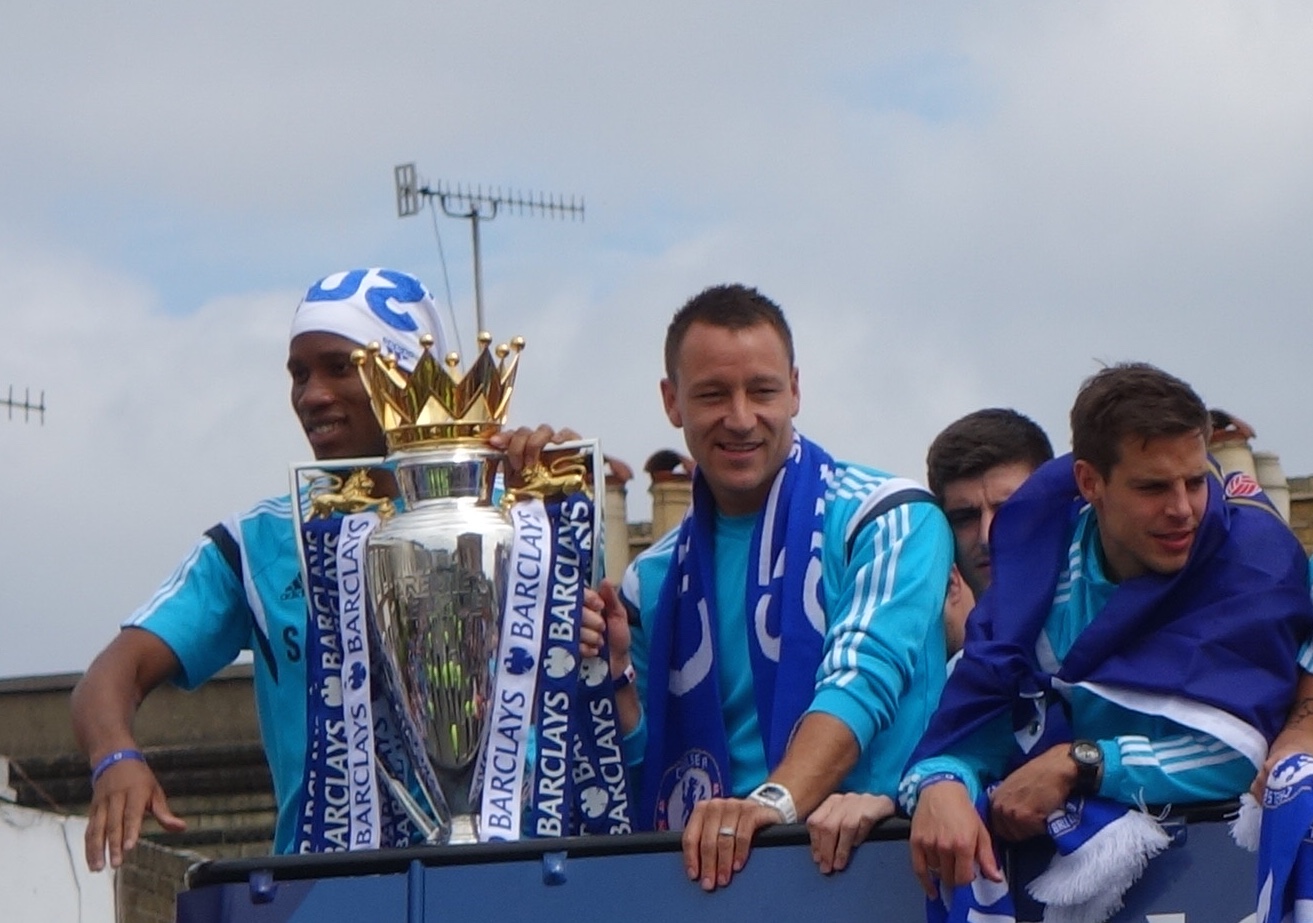
Cynics might scoff at terms like "rebuilding" and "transition" - and with some merit, too - but these are what Chelsea now needs. Accept that John Terry is no longer viable. Accept that Eden Hazard is no longer willing. Accept that Costa would rather be anywhere else. Accept that if you're going to buy players, you'd better have a vision for them, and play them. Unearth the talented 18, 19, 20 and 21-year-olds the club has about the place and discard the panic buys and acquisitions that were doing anyone else a favour but the club. Build up a new core, one that in principle can emulate the spine that Čech, Terry, Lampard and Drogba provided for so many of those successful Abramovich years.
If that responsibility does fall to Conte, it will be interesting to see just how far the 46-year-old gets. Though we never know anything of Abramovich's true ambitions, he had recognised in re-hiring Mourinho (mainly because he couldn't get Pep Guardiola and Mourinho couldn't get Old Trafford) that they would aim to establish a "dynasty" at Chelsea. This, despite the knowledge that 'long-term' for Mourinho never means more than three years. Within 24 hours of signing a lucrative contract extension last August, the Portuguese was jumping up and down at his club doctor. And the rest of the season, and indeed the dynasty building, would simply have to be put down to experience.
To look at this mess positively then, we must adopt the phrase "today is the first day of the rest of your life", an expression that is both simplistic and, yet, alive with positivity. Chelsea will stoicly chalk up the last seven or eight months as character building. But they will have to do more.
Bringing in a manager like Conte is not, in reality, any different than any of the 12 "permanent" managers they've brought in before. He'll be no more of a miracle worker than even The Special One. His reputation is good, but not especially impressive by comparison to any other elite manager.
The question is whether he'll be able to buck the trends that have thwarted others. He will need assurances that Chelsea is his to rebuild. Experience has taught us that is unlikely. For until Abramovich shakes himself free from the hangers-on who "advise" him, who convince him that the likes of Emenalo are qualified to make big strategic decisions, Chelsea could hire me for all the good that it will do.
Monday, 1 February 2016
For sale: one used Captain, Leader and Legend
For different reasons, and with varying degrees of emotion, yesterday became the day of two Terrys. In the morning, news that the broadcasting legend Terry Wogan had died, ending a 50-year radio and television career characterised by unparalleled wit, intelligence, charm and endearing self-awareness.
By the evening, it was news that John Terry, the most successful captain in Chelsea Football Club history and certainly the club's most successful homegrown talent in two decades, would be leaving at the end of the season after failing to secure a follow-on contract into his 36th year.
For the reasons we all know and don't require repeating, the contrast between these two people with Terry in their name couldn't be greater. But there is - or was - at least a common thread of loyalty. In the case of the footballer, there is mixed opinion, however, as to why Chelsea should extend his contract.
The club has made its position clear on over-30s, that they receive one-year extensions and no more, and ever since Roman Abramovic installed Andre Villas-Boas as manager in 2011, it was clear that the club wanted to ease out the old guard, players who, perhaps, had an unduly heavy influence over the dressing room.
JT has never been in posession of the fastest legs in football, and there's little requirement to point out the frailties that have been a part - though hardly responsible for - Chelsea's travails this season, but that is not the point. Terry may have been a dominant figure in the dressing room, but you got more than just a challenge to authority - you got the "Captain, Leader, Legend" so prominently proclaimed by the club's own banner strung across the tier divide of the Matthew Harding Stand.
To look at Chelsea's apparent reluctance - so far - to offer Terry a new contact is to look squarely through the restricting prism of the business mechanics of football. And, before we get on to the romance of football, which continues to overwhelmingly drive the sport - after all, isn't that what this weekend's FA Cup has been all about? - business mechanics have seen Chelsea sign players like Fernando Torres five years ago, Radamel Falcao last summer, and, now, Alexandre Pato - crocked strikers who continued to be a waste of money and the club's energy. And yet, with his lack of speed and public status as football's least-loved player outside of Stamford Bridge, John Terry continues to put more into the club than Torres, Falcao and Pato together ever would.
Before we get too carried away, however, the news of Terry's departure was just a statement he made himself, and may yet have been another act of emotional blackmail to bring Chelsea to its senses. The club have also issued a statement of their own today casting some ambiguity on the situation, to the effect of saying that Terry hasn't left yet, and things are still open.
John Terry has been an ever-present throughout the most successful period of Chelsea's history. You can easily question the ethics and morals behind Roman Abramovic's acquisition of the funds that have helped Chelsea to this success, but ask any supporter whether or not they'd go back to the ever-present threat of bankruptcy, of moribund seasons yo-yoing between the old first and second divisions, and even the old third division that once loomed ominously Chelsea. Yes, opposition fans, we do have history and, yes, I know exactly where I was when we were shit. Stamford Bridge. The answer will always be the same: we'd rather be where we are right now (well, a little higher in the Premier League, of course).
We all know those clichés about no player being bigger than the club, and that no player can go on forever. Terry probably believes that he can, but that is only symptomatic of the indestructable self belief that has regularly put his own head between a boot or a ball and the Chelsea goalmouth. What is truly sad, however, is that a club with 33 players out on loan (and probably more by midnight tonight) seems to have such an erratic player policy that it doesn't see the retinual value that Terry's huge presence in the squad can bring, especially to the younger players the club absolutely has to bring through.
Whether he has, as has been suggested, demanded a guarantee that he will be a future manager, he not only possesses a heritage beneficial to the players around him, but has a clear pedigree as a leader on the pitch. This leadership has diminished somewhat by the erosion of the spine that saw Petr Čech at is base, and then Terry, Frank Lampard, and Didier Drogba at its top, but the skipper continues to be an almighty presence on the pitch, in the dressing room and at the training ground.
"It's not going to be a fairytale ending," Terry said yesterday as he announced the ending of an 18-year run in the first team, which saw him replace no less a figure than Marcel Desailly and, as still a teenager, be bossing around more senior, more experienced figures with the authority and respect of a veteran. That was John Terry in 1998, and it's still not far off the John Terry of 2016.
So, is Chelsea making an almighty blunder, if indeed Terry does leave? Well, yes. Of course, much will depend on the incoming manager in the summer (assuming Guus Hiddink doesn't get permission from Mevrouw Hiddink to stay on). Given the range of options being rumoured - from old boys Mark Hughes and Didier Deschamps, Tottenham's Mauricio Pochettino and Antonio Conte, to Diego Simeone and even Claudio Ranieri - a new manager might not want Terry at all. Hopefully, any new manager will want to focus on the prodigious young talent Chelsea has floating about Europe, some in the squad, most out on loan.
But that should not mean that John Terry can't, shouldn't or wouldn't have a playing role at the club until the day really dawns when he has to pack it all up and become a coach. Kurt Zouma is learning more by playing alongside Terry in central defence than he would at any other club. Even Gary Cahill looks better when he has JT at his side. And New Jersey-born Matt Miazga - who signed for the club last Friday, somewhat suspiciously, too, given the timing of yesterday's news - could well be groomed to be Terry's successor by having Terry himself present to nurture him.
The upshot of this is that Chelsea still appear to be chronically naive and out of touch when it comes to what makes the club tick from its emotional centre. It should never have allowed Lampard or Drogba to go and, given the pounds it has wasted over the years on too many bad acquisitions to name here, it could easily have broken the bank to keep legends like these for the team's enduring benefit.
People like to pour scorn on the populist view that 'lifers' - the Gerrards, Giggs, Le Tissiers and Terrys of this world - are anachronisms, that football has long since moved on from being the community hub that made stars of local talent and built them from apprenticeship to retirement and beyond. And, yes, Terry - like Gerrard - has been tempted before by another club's silver, but they've been persuaded otherwise (or given in to fan power) and remained to be loved at the clubs they'd chosen to be associated with for all or most of their careers.
That is a powerful draw, but one which Chelsea's higher ups have regularly failed to recognise. Given that John Terry was the last homegrown talent to make a successful career in the first team - and that breakthrough was almost two decades ago - the myriad young players the club has now, winning title after title at Under-18 and Under-21 level, or farmed out to the four corners of Europe where, inevitably, the persist in being equally as successful - retaining Terry to help maximise these investments should be the business sense that Chelsea's executive management should appreciate.
It was then ironic that yesterday of all days Michael Emenalo, Chelsea's somewhat anonymous director of football and the man responsible for youth development and partially responsible for transfers, should appear for the first time on Twitter. Given the level of venting on Twitter over the Terry news, Emenalo is a brave man. It was he who went on Chelsea TV to talk of the "palpable" rift between José Mourinho and the players (which, given Guus Hiddink's obvious restoration of team confidence does seem viable).
But one wonders what role he has with the exhaustive husbanding of young players who end up on loan, while not being given a chance to breakthrough and create an exciting new dynasty of players at Chelsea. After all, John Terry was once given his chance - why shouldn't he be still there to do the same for another ambitious 18-year-old?
By the evening, it was news that John Terry, the most successful captain in Chelsea Football Club history and certainly the club's most successful homegrown talent in two decades, would be leaving at the end of the season after failing to secure a follow-on contract into his 36th year.
For the reasons we all know and don't require repeating, the contrast between these two people with Terry in their name couldn't be greater. But there is - or was - at least a common thread of loyalty. In the case of the footballer, there is mixed opinion, however, as to why Chelsea should extend his contract.
The club has made its position clear on over-30s, that they receive one-year extensions and no more, and ever since Roman Abramovic installed Andre Villas-Boas as manager in 2011, it was clear that the club wanted to ease out the old guard, players who, perhaps, had an unduly heavy influence over the dressing room.
JT has never been in posession of the fastest legs in football, and there's little requirement to point out the frailties that have been a part - though hardly responsible for - Chelsea's travails this season, but that is not the point. Terry may have been a dominant figure in the dressing room, but you got more than just a challenge to authority - you got the "Captain, Leader, Legend" so prominently proclaimed by the club's own banner strung across the tier divide of the Matthew Harding Stand.
To look at Chelsea's apparent reluctance - so far - to offer Terry a new contact is to look squarely through the restricting prism of the business mechanics of football. And, before we get on to the romance of football, which continues to overwhelmingly drive the sport - after all, isn't that what this weekend's FA Cup has been all about? - business mechanics have seen Chelsea sign players like Fernando Torres five years ago, Radamel Falcao last summer, and, now, Alexandre Pato - crocked strikers who continued to be a waste of money and the club's energy. And yet, with his lack of speed and public status as football's least-loved player outside of Stamford Bridge, John Terry continues to put more into the club than Torres, Falcao and Pato together ever would.
Before we get too carried away, however, the news of Terry's departure was just a statement he made himself, and may yet have been another act of emotional blackmail to bring Chelsea to its senses. The club have also issued a statement of their own today casting some ambiguity on the situation, to the effect of saying that Terry hasn't left yet, and things are still open.
John Terry has been an ever-present throughout the most successful period of Chelsea's history. You can easily question the ethics and morals behind Roman Abramovic's acquisition of the funds that have helped Chelsea to this success, but ask any supporter whether or not they'd go back to the ever-present threat of bankruptcy, of moribund seasons yo-yoing between the old first and second divisions, and even the old third division that once loomed ominously Chelsea. Yes, opposition fans, we do have history and, yes, I know exactly where I was when we were shit. Stamford Bridge. The answer will always be the same: we'd rather be where we are right now (well, a little higher in the Premier League, of course).
We all know those clichés about no player being bigger than the club, and that no player can go on forever. Terry probably believes that he can, but that is only symptomatic of the indestructable self belief that has regularly put his own head between a boot or a ball and the Chelsea goalmouth. What is truly sad, however, is that a club with 33 players out on loan (and probably more by midnight tonight) seems to have such an erratic player policy that it doesn't see the retinual value that Terry's huge presence in the squad can bring, especially to the younger players the club absolutely has to bring through.
Whether he has, as has been suggested, demanded a guarantee that he will be a future manager, he not only possesses a heritage beneficial to the players around him, but has a clear pedigree as a leader on the pitch. This leadership has diminished somewhat by the erosion of the spine that saw Petr Čech at is base, and then Terry, Frank Lampard, and Didier Drogba at its top, but the skipper continues to be an almighty presence on the pitch, in the dressing room and at the training ground.
| © Simon Poulter 2015 |
"It's not going to be a fairytale ending," Terry said yesterday as he announced the ending of an 18-year run in the first team, which saw him replace no less a figure than Marcel Desailly and, as still a teenager, be bossing around more senior, more experienced figures with the authority and respect of a veteran. That was John Terry in 1998, and it's still not far off the John Terry of 2016.
So, is Chelsea making an almighty blunder, if indeed Terry does leave? Well, yes. Of course, much will depend on the incoming manager in the summer (assuming Guus Hiddink doesn't get permission from Mevrouw Hiddink to stay on). Given the range of options being rumoured - from old boys Mark Hughes and Didier Deschamps, Tottenham's Mauricio Pochettino and Antonio Conte, to Diego Simeone and even Claudio Ranieri - a new manager might not want Terry at all. Hopefully, any new manager will want to focus on the prodigious young talent Chelsea has floating about Europe, some in the squad, most out on loan.
But that should not mean that John Terry can't, shouldn't or wouldn't have a playing role at the club until the day really dawns when he has to pack it all up and become a coach. Kurt Zouma is learning more by playing alongside Terry in central defence than he would at any other club. Even Gary Cahill looks better when he has JT at his side. And New Jersey-born Matt Miazga - who signed for the club last Friday, somewhat suspiciously, too, given the timing of yesterday's news - could well be groomed to be Terry's successor by having Terry himself present to nurture him.
The upshot of this is that Chelsea still appear to be chronically naive and out of touch when it comes to what makes the club tick from its emotional centre. It should never have allowed Lampard or Drogba to go and, given the pounds it has wasted over the years on too many bad acquisitions to name here, it could easily have broken the bank to keep legends like these for the team's enduring benefit.
People like to pour scorn on the populist view that 'lifers' - the Gerrards, Giggs, Le Tissiers and Terrys of this world - are anachronisms, that football has long since moved on from being the community hub that made stars of local talent and built them from apprenticeship to retirement and beyond. And, yes, Terry - like Gerrard - has been tempted before by another club's silver, but they've been persuaded otherwise (or given in to fan power) and remained to be loved at the clubs they'd chosen to be associated with for all or most of their careers.
That is a powerful draw, but one which Chelsea's higher ups have regularly failed to recognise. Given that John Terry was the last homegrown talent to make a successful career in the first team - and that breakthrough was almost two decades ago - the myriad young players the club has now, winning title after title at Under-18 and Under-21 level, or farmed out to the four corners of Europe where, inevitably, the persist in being equally as successful - retaining Terry to help maximise these investments should be the business sense that Chelsea's executive management should appreciate.
It was then ironic that yesterday of all days Michael Emenalo, Chelsea's somewhat anonymous director of football and the man responsible for youth development and partially responsible for transfers, should appear for the first time on Twitter. Given the level of venting on Twitter over the Terry news, Emenalo is a brave man. It was he who went on Chelsea TV to talk of the "palpable" rift between José Mourinho and the players (which, given Guus Hiddink's obvious restoration of team confidence does seem viable).
But one wonders what role he has with the exhaustive husbanding of young players who end up on loan, while not being given a chance to breakthrough and create an exciting new dynasty of players at Chelsea. After all, John Terry was once given his chance - why shouldn't he be still there to do the same for another ambitious 18-year-old?
Subscribe to:
Posts (Atom)