Showing posts with label Top Gear. Show all posts

Saturday, 21 January 2023

Clarkson!

Picture: Amazon

Sometimes in the culture wars, events contrive to create the perfect storm. In the case of the Duke and Duchess of Sussex - Harry and Meghan, to you and me - the storm is a permanent state of enragement, much like that giant red cyclone near the equator of Jupiter.

For one newspaper in particular - obviously, the Daily Mail - it is ever-present. On any given day there are four or five stories about Harry, or Meghan, or both. At the height of the furore over Harry’s memoir Spare, you’d be lucky to find coverage of anything else. In recent days, though, the Mail’s apparent obsession with the Sussexes has died down to just four or five new stories a day. That, though, is still tempered by an injection of beatific pieces about Harry’s brother and sister-in-law, the Prince and Princess of Wales. It has been a prominent feature of the British media's editorial polarity that picture stories of the ever-smiling Catherine, her heir-to-the-throne husband and their adorable children get prominence in contrast to the prevailingly negative coverage of Harry and Meghan. Don’t tell me there isn’t an agenda going on there…

Back in December, before Spare came out, and in the wake of the royal couple’s exorcising Netflix series, Jeremy Clarkson stuck his size 14s in by writing a wholly offensive column for The Sun in which he suggested that Meghan should be paraded naked through the streets of Britain while having excrement flung at her by the public. He wasn't, to the best of anyone's knowledge, being literal, but in that oh-so Clarksonesque way, it was a clumsy reference to a scene from Game Of Thrones with which to emphasise the “hate” - his word – he had for the duchess “on a cellular level”. To hammer home his disdain, Clarkson placed the duchess above Scotland’s First Minister Nicola Sturgeon and even serial killer Rose West. Needless to say, the shit-slinging idea went down well with people on Twitter called “Daz” or “Barry” who suffix their handles with Cross of St. George flags, and whose timelines are regularly peppered with sentiment supportive of topics such as Brexit, defunding the BBC and bringing back Boris. Basically, anything starting with the letter b. 

This is the Clarkson fan base: ‘real blokes’ who like cars, football and probably still bemoan the disappearance of The Sun’s Page Three “stunnah”, which was, of course, always only “a bit of fun” and in no way a daily dose of sexist titillation (with the emphasis on “tit” – phwoar!). These are the self-styled anti-woke warriors, who feed - and feed off - the Daily Mail’s constant chuntering about anything remotely liberal, contriving a culture war angle out of anything. So, far from merely tolerating his occasional sexism and casual racism on Top Gear, Clarkson’s core demographic have fully bought into his reactionary schtick. Which means the egregious column he wrote in December was probably regarded by most of his following as grist to the mill.

Not so, everyone else. Within a matter of days the column had attracted a record 25,000 complaints to the press regulator Ipso. As a pile-on ensued, an apparently chastened Clarkson tweeted: “Oh dear. I’ve rather put my foot in it. In a column I wrote about Meghan, I made a clumsy reference to a scene in Game Of Thrones and this has gone down badly with a great many people. I’m horrified to have caused so much hurt and I shall be more careful in future.” 

It wasn’t enough. Even to his daughter Emily. “My views are and have always been clear when it comes to misogyny, bullying and the treatment of women by the media,” she wrote in an Instagram post. “I want to make it very clear that I stand against everything that my dad wrote about Meghan Markle and I remain standing in support of those that are targeted with online hatred.”

The broad view agreed. Clarkson senior had been deeply misogynist. Questions were asked of the editorial governance at The Sun to have allowed the column to have run in the first place, with former Sun editor Neil Wallis calling it a “dreadful failure of editing.” Immediately, questions arose as to the reputational damage Clarkson had done to the broadcasters who employ him, although while Kevin Lygo, ITV’s media and entertainment boss, described the column as “awful”, he said there were no plans to replace him as presenter of Who Wants To Be A Millionaire?. Amazon, which has paid Clarkson several millions to front the son-of-Top Gear, The Grand Tour, and the reality series Clarkson’s Farm, was less ambiguous. Described by Clarkson himself as “incandescent” over The Sun piece, the streaming service was reported by entertainment industry trade rag Variety as “cutting their ties” with the controversial presenter. This, in turn, set off the likes of the Daily Mail and its readers who predictably accused those offended by Clarkson of ‘cancelling’ the 62-year-old manchild. Except that he hasn’t, yet.

In fact, the Variety story said that it was only “likely” that Amazon would part ways with Clarkson, and following “the conclusion of existing agreements.” Those include one more series of The Grand Tour and two of Clarkson’s Farm. That will mean Clarkson remains onscreen with Amazon for at least the next two years. But, as we know with the tabloids’ obsession with woke-bashing, don’t let such practicalities get in the way of a good story.

Amazon has remained quiet on Clarkson’s future, although a “senior figure” connected with the company told the Telegraph that such talk of the presenter being cancelled because of his column in The Sun was “nonsense”. Another pointed out that Clarkson’s brand of gobshite controversy was hardly in the same league of offence-causing as some of the books Amazon sells, like Mein Kampf, or documentary series on Prime about serial killers. Actually, the storm only emboldens Clarkson’s brand. Ever since he started using strained metaphors in the ‘old’ Top Gear about cars “snapping knicker elastic”, he knowingly self-cultivated an image of being television’s actual Alan B’Stard, who comes out with mildly reactionary things just to get a rise. Boo!

It worked. Top Gear 2.0, with Clarkson, Richard Hammond and James May, became a juvenile version of Last Of The Summer Wine, pushing the tolerance envelope with obviously scripted routines that portrayed the trio as a group of overgrown schoolboys, rather than middle-aged motoring journalists. That was until the “slope” reference in a film the trio made in Thailand which was, we were assured, a statement about a camera angle. I don’t think the Thai gentleman in shot would have been amusedThe last straw, for the BBC, at least, came with Clarkson being sacked for punching a Top Gear producer while on location after being told that the crew’s hotel couldn’t prepare a late night steak for him.


Picture: Amazon

Thus, Amazon spent £160 million on luring Clarkson & Co over to Prime to develop The Grand Tour which was, blatantly, Top Gear 2.5. Same presenters, same schtick, same demographic. Except – and this gets to the bottom of Amazon’s possible tie-cutting - the blokeish Clarkson/May/Hammond humour is intrinsically British and, even then, quite narrow. The Telegraph revealed this week that Prime has around 200 million viewers worldwide, with three-quarters of them in America. In Britain, where The Grand Tour and Clarkson’s Farm will more or less exclusively resonate, Amazon can only command 12 million subscribers. All of a sudden, £160 million seems an awful lot of money. As the GT trio found with old-TG, their form of irony doesn’t always work in America. Clarkson’s Farm, too, is probably regarded as parochial (even though it is, actually, genuinely entertaining), but US ratings for it have been particularly poor. And with any poorly performing TV property, if it doesn’t rate, it gets the chop.

The beginning-of-the end for Clarkson on Amazon is, then, pure coincidence. But that won’t keep him out of the headlines. Last week it was revealed that he e-mailed Prince Harry on Christmas Day to apologise for his Sun column, saying that his language had been “disgraceful” and he was “profoundly sorry”. A spokesperson for Harry and Meghan were less than impressed: “While a new public apology has been issued today by Mr. Clarkson, what remains to be addressed is his long-standing pattern of writing articles that spread hate rhetoric, dangerous conspiracy theories and misogyny. Unless each of his other pieces were also written ‘in a hurry’ [as he apparently stated] it is clear that this is not an isolated incident shared in haste, but rather a series of articles shared in hate.”

Clarkson has, of course, not been cancelled. He will continue presenting Who Wants To Be A Millionaire? on ITV - for now - though the network has not confirmed anything more than another series. The Sun still employs him, though his columns have been conspicuously absent, and he still has a weekly appearance in The Sunday Times. So, no, the enfante terrible hasn’t succumbed to the tofu-eating wokerati. But maybe a period of abstinence - not just by Clarkson but the rest of the reactionary commentariat constantly searching for a new club to break over Harry and Meghan’s heads - might do us all some good.

Tuesday, 11 February 2020

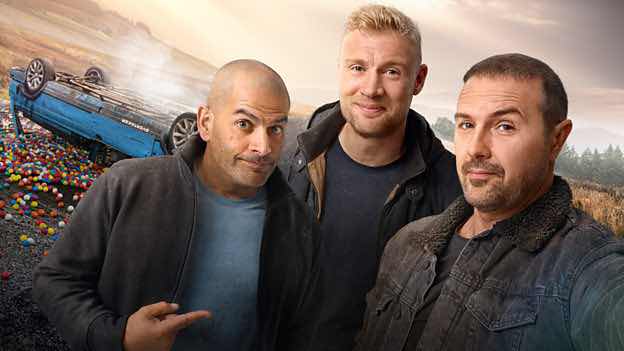
Why it might be time to give Top Gear another go

Picture: BBC

I’d hardly say I was a petrolhead, but there was a time when Top Gear was required bloke telly. In its classic line-up (a phrase akin to describing Genesis in terms of the Peter Gabriel era) - and some incarnations on from William Woollard’s inch-of-ankle-revealing, foot up on a bumper, explaining how camrods work - there is little doubt that the triumvirate of Jeremy Clarkson, James May and Richard Hammond successfully transcended oily-fingered motoring journalism to produce, until it started getting tired and predictably scripted, a genuinely entertaining and enjoyable hour of Sunday evening television. True, it relied on laddishness and barely one dimensional humour, but only the most prudish would deny that the chemistry between Clarkson, May and Hammond was real and one of those rare examples of presenters not only drawing the viewer into their world without too much self-indulgence, but also drawing the viewer into the exquisitely filmed pieces they produced.

Clarkson and producer Andy Wilman deserve the credit for that, transforming the original Thursday evening BBC2 ‘magazine’, with helpful items about sensible cars, into something by turns entertaining and aspirational. And then they ruined it. The ‘steak dinner’ incident that led to Clarkson’s departure in 2015, with May and Hammond (and Wilman) rapidly following him out the door, probably came at the right time. By then the jokes were getting old, the stunts corny, and the three-way chemistry starting to appear over-confected. Then they took the same formula to Amazon, where their The Grand Tour (managing to work the ‘TG’ initials into their new venture) felt equally as contrived, and rarely, if ever, worth the Prime Video subscription. Meanwhile, as you may recall, the BBC soldiered on, with a bloated Top Gear reboot presented by Chris Evans, with sundry others including Friends’ Matt Le Blanc and former Formula 1 boss Eddie Jordan, and then reinvented again with just Le Blanc flanked by motoring journalists Chris Harris and Rory Reid (who at least had some industry chops to draw on). And then I switched off. I’d seen it all, to be quite honest. The feature-length films to Africa, Vietnam, across the US and elsewhere in the Clarkson era were, even when veering into pubescent political incorrectness that wasn’t funny at all, brilliant television. Proper travel documentaries that just happened to have motoring as their foundation. But, towards the end of the C/C/H era, they’d run their course.

Fast forward, then, to 2020. Top Gear has not only survived further invention that rendered it of little interest, but as of its 29th series, later this year, it is being moved to BBC One. 43 years after the first edition on BBC Two (commencing a nine-episode series commissioned by the BBC’s Midlands organisation and presented by newsreader Angela Rippon and local news presenter Tom Coyne), a show that has been one of the BBC’s most biggest money and audience spinners, via overseas franchises, DVDs, branded bubble bath and all of that, is transferring to true primetime. Cynics - including yesterday’s Guardian - might conclude that this is as much to do with the BBC shoring up its audience numbers as it goes into the next round of discussions about its long-term future funded by the licence fee. It wouldn’t be the first BBC Two-BBC One transfer either: Line Of Duty, Peaky Blinders and Bake Off all made the transition to the bigger viewing potential of the ‘senior’ channel. It may, though, also be recognition of the fact that Top Gear has finally been brought back from the dead by the latest presenter line-up of comedian Paddy McGuinness, ex-cricketer Freddie Flintoff, and the aforementioned Harris. That may come as a surprise if you haven’t seen the latest series, which began in December: a comedian, an ex-cricketer and a motoring journalist doesn’t necessarily sound like the instant formula for reviving a long-standing, much loved but somewhat derided television franchise. But in the shows that I’ve seen, I’ve been warmed by the natural chemistry between the three disparate presenters. And while some of the content has been a little familiar to stunts and capers in the past (the recent race between a McLaren Speedtail and a RAF F-35 Lightning fighter jet copied verbatim the 2007 race between Hammond in a Bugatti Veyron and a RAF Typhoon), everything else has made for enjoyable Sunday evening viewing. Top Gear has zip once more. It is no longer trying too hard to be anything. No wonder it has been reaching viewing figures as high as 4.3 million (though still a way off the seven million peak the show achieved during the Clarkson era). That audience growth is crucial to the BBC One move. The new presenter line-up helped make Top Gear BBC Two’s highest-rated show in 2019, crucially placing it amongs the top four shows for 16-34-year-olds. That demographic is crucial for the BBC as it deals with the existential challenge of losing younger viewers to Netflix, Amazon, YouTube and other online platforms.

Maintaining those figures, with the expectation of taking them even higher, will be crucial for the Top Gear team and for BBC One management. It’s not known, yet, whether the new series will again be on a Sunday night, but scheduling will be critical. Top Gear is in a category of its own: Countryfile on a Sunday evening appeals to those (like me) in search of gentle, bucolic viewing, even with a factual base. A Sunday night drama will work differently again. So quite how three blokes - and there’s a clear emphasis here on blokes - larking around in and with cars remains to be seen where it would fit. That said, the renewed presenter chemistry is one the BBC will not want to mess with again.

Fans have generally rated the show as being “back to its best”, with the presenting line-up drawing most of this favour. Clearly it has proven to be a struggle to get it right since the golden trio left. “People often look at the past through the rose-tinted glass,” Chris Harris recently told the online newspaper Metro. “But if you go back to Top Gear 2000/2002 the chemistry wasn’t there [in the early reboot period], it took time to grow.” The editorial content, however, will also be crucial if the show is to retain its loyal fanbase, judging by some of the online backlash to the recent fighter jet rematch (“All been done before. No new ideas?”, was one remark on Twitter). McGuinness has, though, hit on why the BBC One move makes sense: "The beauty of it is that it's an entertainment show which the whole family can watch - we're not just doing straight car reviews every week,” he told BBC News. Maintaining that entertainment factor, as a factual show at heart, will be key. The show’s current executive producer, Alex Renton, has said that the show is now “less scripted” than in previous incarnations, relying more on the natural interaction between McGuinness, Flintoff and Harris. "I think it's well-known that in Matt [LeBlanc]'s day it was quite heavily scripted because of how we used to work, and now there's just the freedom,” Renton recently said. “They know each other better and the chemistry grows more and more. A huge amount of the backroom stuff is the same, we've had the same crew for years, but there's something about when Chris, Paddy and Freddie are on set together, and it just goes off."

"Top Gear might have miles on the clock,” Renton added, “but this trio has injected some va-va-voom. Their chemistry was immediate, their camaraderie warm." Be that as it may, they are still reliant on the editorial team keeping things fresh. "We like to be involved vaguely in the creative process so we know what's going on and we have some input," Harris told BBC News, "but actually, Top Gear is at its best when the producers spring something on you and we respond naturally to it. The more you know, the less realistic your reactions. So we're in that weird position of encouraging things to happen that we don't know about."

That also feeds the undoubted chemistry between the current trio of presenters. No wonder Charlotte Moore, Director of BBC Content, gushed at the announcement on Monday of the move to BBC One: "Freddie, Paddy and Chris have revitalised the hit series with their escapades and banter; and we couldn't have asked for a better response to their series so far and the impact it's had with young audiences." The challenge, now, is to keep that going whilst in the undoubted spotlight of a prime time slot on BBC One. At 43 years old, it’s time for Top Gear to grow up. A bit.

Monday, 24 April 2017

Why Top Gear is still Sunday night mind candy

Picture: BBC


When I departed British shores in 1999 the nation was still getting used to the idea of 'multi-channel television'. Until 1982, there had only been three terrestrial offerings, and with Sky launching in 1989, bringing with it five satellite stations, the choice extended only so far. Last October, however, when I returned to the UK, the number had spread into the 500s, with all manner of reality TV crap and a rotating curriculum of sharks, killer snakes, air crashes, Nazis and Alaskan truckers populating the myriad digital platforms on offer.

However, amongst all of that is the televisual comfort food that is the channel Dave. On any given evening I can now indulge several years of missed episodes of Mock The Week, QI and Have I Got News For You. Regardless of their place in the actual chronology, seeing such shows out of sequence is a baffling, but entertaining exercise in watching the ageing process, as hairlines recede and what's left goes progressively grey. No show, though, is as acute a exhibition of the ageing process than repeats on Dave of Top Gear - the Clarkson, May and Hammond years. As we all now agree, its 2002 reboot turned out to be a masterstroke, transforming a worthy-but-dull magazine show (which began 40 years ago last Saturday) into an infotainment format that borrowed heavily from TFI Friday's mix of banter and recurring gags in front of a studio audience.

Via Dave we can see many things: Jeremy Clarkson's expanding paunch and gradually shrinking "pubic" haircut, James May's blind ignorance of fashion, and Richard Hammond's almost slavish fashion victimhood. But mostly we can see what unique chemistry developed between the three of them. No matter how stereotypical public school-boorish you find Clarkson or how over-exaggerated both May's shirts and Hammond's mannerisms can be, rarely can you say that a presentation team can combine such a brilliant combination of humour, enthusiasm for the subject and a form of camaraderie.

Some of the Clarkson, May and Hammond filmed challenges - especially anything in Italy but also the specials from Vietnam, Africa, India and even the controversial Burma and Patagonia films - have been amongst the best factual television I've seen. Beautifully filmed, cleverly edited and, obviously, smartly written. And all bearing very little resemblance to the original Top Gear, with its public service dreariness about pushrods and fan belt timings.

So, when Clarkson's contretemps with a producer led to the trio leaving the BBC and setting up shop at Amazon, the BBC's task, in retaining the 'new' Top Gear format with a new presenting team, was always going to be a tall order. And thus it proved: realistically speaking, the relaunch - with Chris Evans, Matt Le Blanc, Eddy Jordan, motoring journalists Chris Harris and Rory Reid, and German racing driver Sabine Schmitz - was a let-down. No fault, perhaps, of their own, given the intense brand created by their predecessors, but the end execution looked as clumsy and forced as the previous incarnation had appeared relatively natural.

Picture: BBC

With Evans stepping down, and the show focusing on Le Blanc, Harris and Reid for the second series of the 'new-new' Top Gear - which came to a close last night - the BBC had clearly listened to the criticism. Well, mostly. Fan reaction over the course of the seven-show season has progressively warmed, with sentiment - if Twitter is anything to go by - suggesting that giving Le Blanc the proverbial Clarkson 'lead' role has "saved" Top Gear.

There is no doubt that Top Gear has unproved vastly over this second series, and Le Blanc has indeed been a major part of that, despite his American pronunciations of "Jag-wah" and "Nee-san". Like his Hollywood compatriot Jay Leno, Le Blanc is a bona fide petrolhead (sorry, "gearhead") who clearly put his stratospheric income from Friends to good use in owning a series of high-end motors over the years. Indeed, the common denominator between all three main presenters is their knowledge. Harris - who bafflingly continues to divide fans - is a clear expert, while Rory Reid - when he gets screen time... - shows a similarly engaging enthusiasm for the subject.

In the absence of Clarkson, May and Hammond, whose chemistry and individual personalities became quickly evident as their incarnation got going, Le Blanc, Harris and Reid are still somewhat disparate, but not far off. Individually, Reid's race around the Nürburgring with Schmitz, lapping supercars in a Volkswagen Golf, was wonderful, with Reid's boyish excitement palpable. Likewise, Harris's race against Le Blanc through the Middle East in a £2 million Bugatti Chiron was terrific fun, even it was just a variation on previous supercar challenges.

Picture: BBC


Thankfully there have also been some extremely entertaining and inventive features. Harris and Le Blanc's 'four seasons' challenge with a Lamborghini Huracán Spyder and a Porsche 911 Turbo S Cabriolet up in the Sierra Nevada mountains, ending in one of my favourite places - California's Mammoth Lakes - had just the right mix of Top Gear stupidity, risk and banter, combined with two beautiful-looking cars. Reid's giant arcade game, pitting a Renault Twingo GT against two similar-size city cars in an automotive version of PacMan, may have been a redux of Clarkson and May playing rugby with Kia hatchbacks, but it was nonetheless entertainingly exciting. This, at the end of the day, is what Top Gear viewers want.

Top Gear does, though, still have plenty of work to do. It's single biggest problem continues to be the studio segments, where the banter seems forced and celebrity appearances have also been particularly awkward. The previous Star In A Reasonably Priced Car format was tight and to the point, even with stars as huge as Tom Cruise and Cameron Diaz as guests. Now, the star is brought out for what seems like forever, supporting little more than a chat show format built around a timed lap in a not-so reasonably priced Toyota GT86.

David Tennant gushed like a luvvie throughout his appearance, while there was a sense of recycling in bringing back Ross Noble for no obvious reason and, last night, Jamiroquai's Jay Kay, who proved himself to be an even bigger cock than usual, with his dark glasses and nothing particular to say (apart from an encyclopedic knowledge of supercars).

At least, though, Le Blanc ended the 24th 'new' Top Gear series looking forward to a 25th, so seemingly the BBC is happy to continue with its lucrative merchandise-spinning asset. If anything, continued improvement to the format will reaffirm Top Gear as a car show, first, and a vehicular version of Last Of The Summer Wine a distant second (and which Clarkson, May and Hammond have almost removed the need for by taking their antics to Amazon with The Grand Tour).

What Top Gear's producers must take on board (and I can't that they haven't already) is that the previous presenting triumvirate was unique, a rare piece of onscreen combination that played on the individual personas of Clarkson's oafishness, May's fuddyness and Hammond's boyish charm. Le Blanc, Harris and Reid's personalities have yet to come to the fore, especially the latter, and they must be allowed to develop their own, more polished style. But on the evidence of these seven shows - even last night's, which was the weakest of the run, it's clear that Top Gear is putting behind it the egomaniacal mess of its Chris Evans-fronted relaunch. More importantly, this second series under new management has started to restore Top Gear to what it had become until that unfortunate incident involving an absent steak dinner - the perfect mind candy to wind down the weekend with on a Sunday afternoon. Or every weekday afternoon on Dave, if you're reading this in the future.

Picture: BBC

Friday, 18 November 2016

With an air of familiarity, the holy trinity returns

Facebook/Amazon Prime

Not since Clarkson, Hammond and May unceremoniously left the old Top Gear (henceforth known as "the show we shall not mention"), and Chris Evans was charged with reviving it to much expectation - somewhat unfulfilled, as it turned out - has there been, er, as much expectation about a TV show making its debut.

However, we should identify exactly what the expectations were for The Grand Tour, CH&M's vehicle for Amazon Prime, which was streamed for the first time last night. Because this was, essentially, the show-we-shall-not-mention in a different location, replete with daft blokeish banter between the presenting trio, gloriously photographed filmed sequences made even better by 4K ultra-HD technology, and exotic cars tyre-screeching their way around race tracks, accompanied by yet more daft, blokeish banter.

Despite the BBC retaining certain intellectual elements of the show-we-shall-not-mention, there was little attempt in the first Grand Tour show to compensate with anything different: the Dunsfold Aerodrome hangar studio was replaced by a giant military field hospital-style tent, pitched for the first show in the Mojave Desert; James May appeared to have received a partial makeover - well, a jacket and a new pair of suede shoes, and...um...that's it.

Clarkson remained bumptious and risk-taking with a near-the-knuckle joke early on about gypsies, Hammond remains impish and slightly irritatingly full of himself (and still with that porn star goatee), and May continues to be the fogeyish maiden aunt of the trio. Which meant that it simply worked. What the BBC failed, horrendously, to address with its continuation of the show-we-shall-not-mention is that it made no real attempt to offer anything different, presenters aside. 

Because it was this particular triumvirate of presenters who made it work. They are the holy trinity of the first show's title (even if it was meant to refer to the Porsche, McClaren and Ferrari which featured in the main film of the episode). Under CH&M, the show-we-shall-not-mention was an excuse to tune in on a Sunday evening to. It was, essentially, three oafs in a pub, like that other Sunday evening tradition, Last Of The Summer Wine - three man-children doing silly things, except with expensive cars rather than bathtubs and Nora Batty's stockinged calves. 

Whatever they say in press interviews about not actually getting on, CH&M's chemistry is rare in TV land, and this proved all the more endearing over the 12 years of the old show. No wonder Amazon wrote such a substantial cheque to secure their services. It did, though, take The Grand Tour a considerable amount of time to get to air. Early on, some cleverly made social media promos suggested that they were taking ages to even come up with a name for he new show, eventually settling on what is obviously a cunning play on both GT cars and the initials of the-show-we-shall-not-mention. 

While the revived show-we-shall-not-mention was soldiering on in the face of clear critical and audience resistance, CH&M including Clarkson's old schoolmate and producer Andy Wilman, were developing the concept for The Grand Tour. For all that time, however, the end result us overwhelmingly more of the same, which makes it all the more entertaining. This is only a mild tinkering with the format, a change to the can design rather than New Coke.

Opening with grey, melancholy footage of Clarkson handing in his security pass at a grim, rainy London institution (yes, we get it...), before taking off for Los Angeles, whereopon colour returned in the form of a vivid blue Ford Mustang Rocket, which Clarkson powered out of LA and into the desert, where, in a moment of faux soppiness, he is reunited with May and Hammond in similar vehicles. In Hollywood terms, the scene was an extended 'establishing shot', presumably for Amazon Prime's new audiences, but also a reminder to devotees of the old show-we-shall-not-mention of what they had missed after CH&M left the BBC.

Facebook/Amazon Prime
It's clear, though, what power they have. All three of them - even May - seem to harbour rock star aspirations, judging by the show's live musical opening, with the Hothouse Flowers doing Johnny Nash's I Can See Clearly Now before CH&M joined them on stage like a reforming supergroup to introduce each other amid bantz about the various institutions each had been fired from (though obviously not Clarkson, who merely had his contract at the BBC not renewed...).

Facebook/Amazon Prime
It was, though, then clear, from the preview compilation introduced by Clarkson that what lay ahead in terms of films, japes and larks would be remarkably similar to the tonality of their lengthy incarnation on the-show-we-shall-not-mention. In what must be a challenge for both the BBC and Amazon's copyright lawyers, there were in fact plenty of familiarities: a test track at an old military faciilty in England, a news segment (jokingly called 'Conversation Street'), and a celebrity participation segment (albeit one that turned out quite badly for the celebrities involved).

These were, however, simple mechanics to make CH&M's fanbase feel at home in a different setting. The filmed sequences were hilarious but also visually stunning (almost worth the purchase of a 4K television alone), and while retaining the innate depth of petrolheadedness of the trio's previous show, were still as much about one of television's most unique presenting chemistries. 

Whatever you might think about Clarkson, his past demeanours, lack of political correctness and his teeth (which look horrendous in ultra-HD...), about Hammond and his exaggerated delivery or May and his near-narcoleptic presence at times, theirs is a formula that Amazon has cleverly exploited. Because it looks like The Grand Tour is going to be worth the subscription price alone.

Monday, 11 July 2016

Why I'm resigning. From politics, that is.


July. The time of year we all look forward to for a holiday. My Finnish colleagues have already been enjoying theirs, taking their traditional summer solstice escape to absorb as much Vitamin D as they can before darkness returns. Last week my American friends had their annual summer break, celebrating the colonial uprising of 1776 with barbecues and road trips. Soon it will be my French neighbours, disappearing south so fast on the last day of the month that their portals are left swinging like saloon doors in a Western bar.

I, too, am looking forward to a holiday this month. A holiday from politics. I'm done with it. I've had enough of it. In a year that started unconsolably with the death of David Bowie, and became steadily worse with a never-ending parade of celebrity deaths, we seem to be stuck in a Somme-like, unmoving frontline of hand-to-hand political combat which shows no signs of abating.

Incredibly, the Brexit referendum result only became known two and a half weeks ago. Since then, British political life has imploded, consuming all of us who watch or read the news with it. As if the Brexit result wasn't bad enough, the Prime Minister of the United Kingdom - who'd rolled the dice to begin with - announced his resignation, waking up Her Majesty's Opposition, whose front bench suddenly realised that the physics teacher leading them was no good. This was followed by a gathering of leading Tory Brexiters to vie for the vacating leadership of their own party (oh, and prime minister, too), only to gradually drop off the contest by either Machiavellian knifing or realisation of their sheer inadequacy (and that must also include the hideous, gurning, casual racist Nigel Farage). And now we have the prospect of a leadership contest in the Labour Party, dragging this dull Westminster summer on further. And don't get me going about Euro 2016 or even Chris Evans doing the decent thing and walking the plank from his lousy Top Gear reboot.

I can at least afford a break from all things football, at least for the five weeks until the Premier League gets going again. And I've got enough episodes of 'old' new Top Gear on DVD and Netflix to not particularly bother missing Evans at all. But the one thing I really - really - need a break from is politics.

As I posted on the eve of the Brexit vote, I have little time for politicians at the best of times. And although I recognise that the murdered MP Jo Cox was that exception - a politician with integrity and a genuine concern for her constituency - what has followed since June 23 has left me exhausted. Exhausted by the naked ambition, the step-over-your-dead-grandmother egomaniacism and the fawning inconsistencies (viz Jacob Rees-Mogg, who first backed Boris, then backed Gove, then backed Leadsom - "all the horses", in his words - only to then throw his weight behind Theresa May as the anointed new Tory leader and PM). 

In 2002 May herself asked the Conservative Party conference in Bournemouth: "Why has the public become so cynical about politics and politicians? If we're being honest I think we know the answer. In recent years a number of politicians have behaved disgracefully and then compounded their offences by trying to evade responsibility. We all know who they are." These last few weeks in the UK - and, to some extent, the US too - have given fullsome answer to that proposition.

I wouldn't care less if I didn't hear another word from the political class again. That might sound like I'm sticking my head in the sand but, to be honest, the only thing I want to do with sand right now is to flop out on it with a good book and the entire John Martyn catalogue on-loop on my iPod.

Thursday, 4 February 2016

How you doin? A star in a reasonably priced motoring show


We are told that the 'new' series of Top Gear will be a disaster, before it has even launched. If we read the Daily Mail - and I encourage you not to - we hear that it has lurched from one calamity to another.

First, the Compo, Clegg and Foggy of motoring journalism - Hammond, May and Clarkson - took themselves off to Amazon Prime in the wake of 'Steakgate', and will continue their middle-aged mirth, "bantz" and casual racism/sexism/nameyourismhere-based automotive entertainment online.

Chris Evans was then named as the eventual new presenter of the BBC's lucrative programme-come-brand, prompting inevitable hrmphing about his suitability..or his likeability...or his knowledgeability. Amid gleeful rumours of things not going to plan in preparing for the show's return this May, it was announced before Christmas that executive producer Lisa Clark - an Evans cohort from his Big Breakfast days - was leaving the show after only a few months.

Since then, we've seen possible co-presenter David Coulthard take up a job with Channel 4 for its F1 coverage, with German racing driver Sabine Schmitz and unknown auto hack Chris Harris being described as poor replacements for the chemistry that the previous terrible trio developed during 12 years of "old-new" Top Gear. And then to cap it all we had pictures of Evans heaving up his guts after a spin in an Audi R8 while filming in California for the new series, with the BBC-loving Mail providing overt wink-winking that this is not up to Top Gear bloke standards (which the paper should know about, as it has spent long enough stalking Clarkson's every move...).

For those who have been almost willing new Top Gear to fail, the publicity so far has been manna from heaven. So, today, the BBC pulled a mastestroke by announcing that the first 'official' co-presenter will be Matt LeBlanc - Friends' Joey. Having appeared on old-new TG a couple of times, LeBlanc had properly demonstrated his petrolhead credentials, not to mention his ability to not get all actorly and take himself too seriously (a quality that netted him a Golden Globe for playing himself in the brilliant Episodes).

The masterstroke, though, is not simply the appointment of a suitable personality: Top Gear is one of the BBC's most valuable properties, and its old-new form, built up a global audience of 350 milllion viewers, a quite extraordinary feat in modern broadcasting, and a viewership any TV show would go to great lengths to protect.

Twitter/Matt LeBlanc
Hiring LeBlanc makes very good sense. For a start, he's as likeable as himself as he is in character. But from a business point of view, it makes even more sense - despite Friends ending 12 years ago, it remains ever-present on TV around the world, and is regularly mainlined during wet weekends via box sets and 24/7 Netflix availability.

Friends was, for what it's worth, one of the greatest sitcoms ever. Whatever claptrap gets spouted about its lack of ethnic or social diversity, few comedies on TV have ever boasted the same rate of gags-per-minute, which make it a joy to watch over and over again. And in LeBlanc and his on-screen relationship with Matthew Perry, a pairing as good as any comic partnership I've seen.

Unless he stinks the place up, LeBlanc will pull in the international audience the BBC needs. Already, his appointment has made headline news worldwide, with it even becoming the second lead story on CNN, behind the latest on the Democrat presidential nominations.While the other presenters are yet to be formally announced, with LeBlanc the BBC can calm the nerves of those in its distribution chain, who've been eagerly waiting Top Gear to return, and may have been spooked by some of the turbulance the new show has already encountered.

Whatever view you took of Clarkson, May and Hammond's antics, there's no denying that they created a phenomenally successful show, and set the bar extremely high, especially for a weekly "magazine", to use old-fashioned BBC language. Broadcast in its home country on BBC2, and seemingly targeted at the middle-aged men the presenting trio clearly reflected, it still drew a strong female following, not to mention being one of the few reasons anyone under 30 watched television at all. That is a powerful combination.

Bringing in an actor like LeBlanc, whose appeal crosses almost all ages and demographics (there can't be many people on the planet who haven't seen an episode of Friends), elevates the proposition, but obviously with it, expectations. We shall find out in May whether that expectation will be met.