Tuesday, 11 February 2020

Why it might be time to give Top Gear another go

Picture: BBC

I’d hardly say I was a petrolhead, but there was a time when Top Gear was required bloke telly. In its classic line-up (a phrase akin to describing Genesis in terms of the Peter Gabriel era) - and some incarnations on from William Woollard’s inch-of-ankle-revealing, foot up on a bumper, explaining how camrods work - there is little doubt that the triumvirate of Jeremy Clarkson, James May and Richard Hammond successfully transcended oily-fingered motoring journalism to produce, until it started getting tired and predictably scripted, a genuinely entertaining and enjoyable hour of Sunday evening television. True, it relied on laddishness and barely one dimensional humour, but only the most prudish would deny that the chemistry between Clarkson, May and Hammond was real and one of those rare examples of presenters not only drawing the viewer into their world without too much self-indulgence, but also drawing the viewer into the exquisitely filmed pieces they produced.

Clarkson and producer Andy Wilman deserve the credit for that, transforming the original Thursday evening BBC2 ‘magazine’, with helpful items about sensible cars, into something by turns entertaining and aspirational. And then they ruined it. The ‘steak dinner’ incident that led to Clarkson’s departure in 2015, with May and Hammond (and Wilman) rapidly following him out the door, probably came at the right time. By then the jokes were getting old, the stunts corny, and the three-way chemistry starting to appear over-confected. Then they took the same formula to Amazon, where their The Grand Tour (managing to work the ‘TG’ initials into their new venture) felt equally as contrived, and rarely, if ever, worth the Prime Video subscription. Meanwhile, as you may recall, the BBC soldiered on, with a bloated Top Gear reboot presented by Chris Evans, with sundry others including Friends’ Matt Le Blanc and former Formula 1 boss Eddie Jordan, and then reinvented again with just Le Blanc flanked by motoring journalists Chris Harris and Rory Reid (who at least had some industry chops to draw on). And then I switched off. I’d seen it all, to be quite honest. The feature-length films to Africa, Vietnam, across the US and elsewhere in the Clarkson era were, even when veering into pubescent political incorrectness that wasn’t funny at all, brilliant television. Proper travel documentaries that just happened to have motoring as their foundation. But, towards the end of the C/C/H era, they’d run their course.

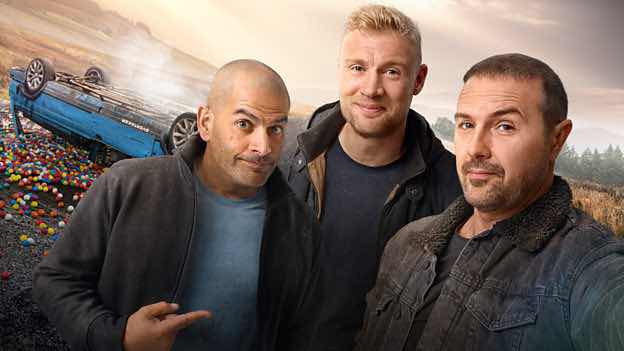
Fast forward, then, to 2020. Top Gear has not only survived further invention that rendered it of little interest, but as of its 29th series, later this year, it is being moved to BBC One. 43 years after the first edition on BBC Two (commencing a nine-episode series commissioned by the BBC’s Midlands organisation and presented by newsreader Angela Rippon and local news presenter Tom Coyne), a show that has been one of the BBC’s most biggest money and audience spinners, via overseas franchises, DVDs, branded bubble bath and all of that, is transferring to true primetime. Cynics - including yesterday’s Guardian - might conclude that this is as much to do with the BBC shoring up its audience numbers as it goes into the next round of discussions about its long-term future funded by the licence fee. It wouldn’t be the first BBC Two-BBC One transfer either: Line Of Duty, Peaky Blinders and Bake Off all made the transition to the bigger viewing potential of the ‘senior’ channel. It may, though, also be recognition of the fact that Top Gear has finally been brought back from the dead by the latest presenter line-up of comedian Paddy McGuinness, ex-cricketer Freddie Flintoff, and the aforementioned Harris. That may come as a surprise if you haven’t seen the latest series, which began in December: a comedian, an ex-cricketer and a motoring journalist doesn’t necessarily sound like the instant formula for reviving a long-standing, much loved but somewhat derided television franchise. But in the shows that I’ve seen, I’ve been warmed by the natural chemistry between the three disparate presenters. And while some of the content has been a little familiar to stunts and capers in the past (the recent race between a McLaren Speedtail and a RAF F-35 Lightning fighter jet copied verbatim the 2007 race between Hammond in a Bugatti Veyron and a RAF Typhoon), everything else has made for enjoyable Sunday evening viewing. Top Gear has zip once more. It is no longer trying too hard to be anything. No wonder it has been reaching viewing figures as high as 4.3 million (though still a way off the seven million peak the show achieved during the Clarkson era). That audience growth is crucial to the BBC One move. The new presenter line-up helped make Top Gear BBC Two’s highest-rated show in 2019, crucially placing it amongs the top four shows for 16-34-year-olds. That demographic is crucial for the BBC as it deals with the existential challenge of losing younger viewers to Netflix, Amazon, YouTube and other online platforms.

Maintaining those figures, with the expectation of taking them even higher, will be crucial for the Top Gear team and for BBC One management. It’s not known, yet, whether the new series will again be on a Sunday night, but scheduling will be critical. Top Gear is in a category of its own: Countryfile on a Sunday evening appeals to those (like me) in search of gentle, bucolic viewing, even with a factual base. A Sunday night drama will work differently again. So quite how three blokes - and there’s a clear emphasis here on blokes - larking around in and with cars remains to be seen where it would fit. That said, the renewed presenter chemistry is one the BBC will not want to mess with again.

Fans have generally rated the show as being “back to its best”, with the presenting line-up drawing most of this favour. Clearly it has proven to be a struggle to get it right since the golden trio left. “People often look at the past through the rose-tinted glass,” Chris Harris recently told the online newspaper Metro. “But if you go back to Top Gear 2000/2002 the chemistry wasn’t there [in the early reboot period], it took time to grow.” The editorial content, however, will also be crucial if the show is to retain its loyal fanbase, judging by some of the online backlash to the recent fighter jet rematch (“All been done before. No new ideas?”, was one remark on Twitter). McGuinness has, though, hit on why the BBC One move makes sense: "The beauty of it is that it's an entertainment show which the whole family can watch - we're not just doing straight car reviews every week,” he told BBC News. Maintaining that entertainment factor, as a factual show at heart, will be key. The show’s current executive producer, Alex Renton, has said that the show is now “less scripted” than in previous incarnations, relying more on the natural interaction between McGuinness, Flintoff and Harris. "I think it's well-known that in Matt [LeBlanc]'s day it was quite heavily scripted because of how we used to work, and now there's just the freedom,” Renton recently said. “They know each other better and the chemistry grows more and more. A huge amount of the backroom stuff is the same, we've had the same crew for years, but there's something about when Chris, Paddy and Freddie are on set together, and it just goes off."

"Top Gear might have miles on the clock,” Renton added, “but this trio has injected some va-va-voom. Their chemistry was immediate, their camaraderie warm." Be that as it may, they are still reliant on the editorial team keeping things fresh. "We like to be involved vaguely in the creative process so we know what's going on and we have some input," Harris told BBC News, "but actually, Top Gear is at its best when the producers spring something on you and we respond naturally to it. The more you know, the less realistic your reactions. So we're in that weird position of encouraging things to happen that we don't know about."

That also feeds the undoubted chemistry between the current trio of presenters. No wonder Charlotte Moore, Director of BBC Content, gushed at the announcement on Monday of the move to BBC One: "Freddie, Paddy and Chris have revitalised the hit series with their escapades and banter; and we couldn't have asked for a better response to their series so far and the impact it's had with young audiences." The challenge, now, is to keep that going whilst in the undoubted spotlight of a prime time slot on BBC One. At 43 years old, it’s time for Top Gear to grow up. A bit.

Saturday, 8 February 2020

I'd love to be in Barcelona...but is it worth it?


It's more than possible that until the brouhaha surrounding the Chinese telecoms vendor Huawei blew up a couple of weeks ago, you'd never have heard of 5G. But all of a sudden, a telecommunications technology that had previously been discussed only in the trade press was front page news, albeit for political reasons rather than industrial. In the days leading up to and including the UK's controversial decision to allow Huawei to potentially supply equipment to the likes of Vodafone, Telefónica/O2, Three and EE, I'd been seething. With the news being reported in the mainstream media by mostly political correspondents, each weighing up the pros and cons from within the British body politic, as well as objections from the White House (which, we are told, led to a furious row between Boris Johnson and Donald Trump), I was constantly reading about the "UK's 5G network" [singular], despite the fact that anyone with a basic knowledge of the situation would say they should be reading about "networks", given that the 'Big Four' commercial mobile services, plus providers of private networks, would be the main actors in any ruling on who they could or couldn't buy 5G kit from.

Then there was the assumption that 5G could only be referred to in terms of conventional mobile functionality. Many in the telecoms industry agree that downloading Game Of Thrones in a fraction of the time you can on a 4G phone is not going to drive 5G. The bigger opportunity will be applications you'll probably never be aware of, like enabling surgeons to carry out operations remotely or making freight ports significantly more efficient. And, yes, there's always the possibility of driverless cars, although I wouldn't hold your breath for that appearing any time soon. But it's this point of what 5G will be able to do, beyond just making your mobile whizzier, that makes the whole row over Huawei more serious. And not just because of  'trust' concerns. 5G will, potentially, become an all-pervasive communications technology, one which, via a number of varieties (in other words, frequencies and wavelengths), will offer different means of access for different types of access need, including 'machine-to-machine' communications and the so-called 'Internet of Things', where devices and sensors talk to each other, speeding up everything from urban traffic to managing factories remotely from the other side of the world.

While the Huawei row rumbles on even further this weekend, a new twist to China's involvement in the development of 5G has occurred, inadvertently. Later this month Barcelona is to host an event that can actually be measured in terms of the city's annual revenue: Mobile World Congress, a gargantuan trade show for the telecoms industry, and an event on the same scale as CES, the monster techfest in Las Vegas each January. Over the last ten years, MWC has become increasingly about 5G, to such extent that the last one I attended, in 2018, was only about the fifth generation technology. Trade shows like MWC are sometimes seen by attendees and observers alike as bloated beanfeasts, wherein tens of thousands of sales people descend to schmooze. In most companies, the sales process is year-round, though contracts are still signed on stands at MWC, an arcane throwback to the days when account managers would attend their company's booths holding clipboards with blank paperwork at the ready. It's an expensive business for exhibitors - for most major vendors, MWC is their single biggest annual marketing expenditure. At Alcatel-Lucent and Nokia, employee attendance was always rigorously controlled, wisely when you consider that a major stand, plus 500 employees taking part, all staying for four or five days in hotels that clearly up their room rates for the week, adding more expense in Barcelona's tapas bars and restaurants, would run to millions.

Which brings me to yesterday's news that Ericsson, the Swedish vendor and nominally one of the three anchors of MWC (along with Huawei and Nokia), has decided to pull out of the show over concerns for the welfare of its employees and customers caused by the spread of the coronavirus. Other companies, including Korea's LG, the chip company Nvidia and China's other telecom technology vendor, ZTE, have also either pulled out of MWC altogether or announced a reduced presence, again due to concerns about the increasing coronavirus spread. These may only be a few of the 2500 exhibitors each year at MWC, but there are genuine fears that Ericsson's departure will be the straw that breaks the camel's back and that others will pullout in the coming days. Nokia could be one of them, with a spokesperson yesterday saying, somewhat inappropriately given the nature of disease, that "the situation is fluid". Like many MWC exhibitors, Nokia also has a substantial footprint in China, with that country being the supply chain base for much of the technology industry. Many Chinese nationals and expats will be travelling from China to Barcelona.

In all seriousness, however, can the major brands really afford to be absent from what is, arguably, the most important industry event this year for the telecoms industry, in the year that 5G is nominally supposed to arrive? I'm sure, too, that some companies' marketing executives are viewing a pullout, even this late in the day, as an opportunity to save money for other projects, again tapping into some of the cynicism that exists over whether these shows are worth it at all. My personal view is somewhat conflicted: MWC is an unbeatable platform for the sharing of news, views and ideas, for networking and for engaging customers and other 'stakeholders', like journalists and industry analysts. Annually, MWC gives everyone a boost. But it comes at a price. By the time everyone gets to Barcelona, they will have experienced the most intense few weeks of the new year, with many companies also having to report their annual financial results in the run up to the show. I, regularly when I attended, would get to the penultimate show day, the Wednesday, and then succumb to terminal man flu. Getting run down and then sick from all those germs travelling in to Barcelona from across the world was a constant hazard for those working at the show, and often compounded by the late nights and early starts (not complaining, but these shows are punishing). Companies are right to question whether the health risks - weighing above financial concerns by a high margin - really are worth it this year, given how the coronavirus spread seems to be getting worse, with cases now being a long way away from Wuhan where the outbreak began. The next few days could prove crucial, both for an event you've never heard of, and for a technology you probably hadn't heard of, either, until a few weeks ago.


Friday, 24 January 2020

Heating up the soup - the Pet Shop Boys’ Hotspot

In my mum’s kitchen lurks a book which, I suspect, can be found lurking in many a British kitchen. It is The Dairy Book Of Home Management, a hefty tome containing all sorts of practical guidance on home life - from cookery tips to DIY. Its ‘general editor’ is one Neil Tennant, pre-Smash Hits, and better known to the rest of us for almost the last 40 years as one half of the Pet Shop Boys. Now, I’m not suggesting that Tennant, as the duo's chief lyricist, has taken the banality of domestic living into his pop career, but for all the giant silver hats, circus dancers and other emblems of arch ironic camp that the PSBs have displayed over the years, there has always been a marked understatement about them.

Indeed, think of the Pet Shop Boys and immediately you have a profile image of the tall, languid Tennant, standing in front of the shorter Chris Lowe, “the quiet one”, who has seemingly and quite happily taken a step back from his elder bandmate, stabbing away at a keyboard. And thus, 39 years after Tennant met Lowe in a Chelsea hi-fi shop and decided to make electronic music together, the Pet Shop Boys are back with their 14th album, Hotspot, and from one perspective you could argue that it’s more of the same: pulsating rhythms, a couple of cosy synth ballads, and Tennant’s distinctive vocals, set some way back in the mix, almost acting as a keyboard layer in themselves (and don’t just think of PSB material for this - Tennant’s voice was instrumental in Electronic’s Getting Away With It and Robbie Williams’ No Regrets). But such a statement belies two things: one, Tennant’s gift for lyrics that can be as matter-of-fact as guidance on putting up shelves earlier in his career, but at the same time convey wit, emotion and pathos; and two, Lowe’s gift for creating a vibe, be it a HiNRGhe club pulse or the soothing washes that first drew me to West End Girls.

With any music genre - be it rock, funk, R&B, whatever - repetition is inevitable. Signature cues, once established, come easily. It would be hard to receive a new album by the Rolling Stones anonymously and not know who you were listening too. Thus, the Pet Shop Boys provide the same familiarity with Hotspot, opening with Will O The Wisp’s immediately recognisable Euro disco and mildly saucy lyric. To be honest, I could do with fewer of these electronic anthems from the PSBs. They’ve done them for years and today musically they bring little new to their canon, even as perfectly good as they are, and as lyrically sharp. More interesting, more appealing, even, are the subtle shifts to something else. Burning The Heather - a song, simply, about a summer heath blaze Tennant witnessed - adds Bernard Butler’s guitars to give it a folky treatment; You Are The One is a ballad as lush as Rent, in which Tennant and Lowe apply their best combination of assets, Tennant’s voice as an instrument and Lowe’s orchestrated keyboard pads.

With Tennant now almost 66 and Lowe 60, there is a temptation to view some of Hotspot as nostalgic, but given the duo's historic anger at perceived ageism, lyrically, there is plenty on the album to be considered forward looking and fresh. Dreamland, a collaboration with Years & Years, is a bright and breezy piece of sumptuous pop music, while Monkey Business takes an electronic turn into Nile Rodgers territory. Irony, a word that surprises me has never been used in the PSBs’ history of single-word album titles, continues to run lasciviously through this album, with wry (and subtle) statements about the state of things, from Brexit to same-sex marriage. Indeed, now I think of it, much of this band’s 35 years of recorded music has been notably ironic. Ever-so gently, they’ve not taken themselves too seriously while producing some joyous music. Hotspot may not be their best, but on the other hand, there’s plenty on it to slot nicely into the overall library of 14 studio albums, most of which contribute justifiably to Tennant and Lowe being afforded national treasure status. And, while it might appear incongruous to see two men in their 60s still, effectively, mounting further celebration of the dancefloor, a brief aside: last week the 79-year-old ‘Godfather of Disco’, Georgio Moroder, was pictured DJing at a corporate event in Las Vegas. You’re never too old to boogie.

Tuesday, 14 January 2020

The clock is ticking, Mr. Bond

Facebook/James Bond 007/Eon Productions

Prior to a screening, the other night, of Sir Sam Mendes’ breathtaking and thoroughly deserving Oscar contender, 1917, we were treated to the full-screen, full-length IMAX trailer for No Time To Die, the 25th ‘official’ Bond film and starring Daniel Craig in his final outing as 007. As good trailers should do, it only whetted my appetite for a film I'd been pretty well whetted for already, but in doing so it simply cranked up the expectation even further.

The release date for No Time To Die is 2 April which, by my reckoning, is just 11 weeks away. Principal photography wrapped in October, and judging by the extent of scenes in the trailer, much of the editing has been done too. Which just leaves - eek! - the music. US composer Dan Romer was supposed to have scored the film, but owing to that old chestnut “creative differences” (he was said to be going in too experimental a direction), he's been replaced by Hans Zimmer (I’ll spare you any “who’d been in the frame” jokes), the Oscar-winning film composer with blockbusters like the Dark Knight trilogy, Dunkirk, The Lion King (the animated original), the Pirates Of The Caribbean series, Gladiator and Crimson Tide to his name.

So, with No Time To Die’s premiere less than three months away (and February’s extra day this year doesn’t help much), the clock is ticking for Zimmer in a rectum-squeezing fashion not dissimilar to the perils Bond himself gets into. The German composer is the second key figure to be parachuted in, 007-style, to the production, following director Cary Joji Fukunaga who was brought in after original helmer Danny Boyle stepped down, also citing creative differences. All of this suggests underlying turbulence, especially as there were earlier departures from the writing team. In fact development of No Time To Die began in early 2016, only a few months after the previous Bond film, Spectre, had come out, but it took another two years and the courting of several directorial options before Boyle was hired. Boyle, not exactly known for Bond-style action films (though Skyfall and Spectre’s Mendes had a largely theatre background), was something of a left-field choice, and according to rumours had some bold - some might even say challenging - ideas for the film, including the idea of killing off Bond altogether (which would have created an interesting problem for Eon Productions whenever they came to making a Bond 26).

With Fukunaga on board, and Fleabag writer Phoebe Waller-Bridge fashionably drafted in to help with the script (supposedly to give it a sharper wit), filming of No Time To Die barrelled through from April to October last year, having previously been scheduled to commence the previous December but delayed by Boyle’s departure. Tick-tock. The trailer's slick scenes notwithstanding, much rests on the final cut being nothing less than excellent. The James Bond franchise is the longest in cinema history, having begun almost 60 years ago with Dr. No. Craig himself will have been the longest-serving actor, by years, to have played Bond, having been in the role since Casino Royale introduced a new style of 007 (namely shortish, blond and with emotional issues) in 2006. Craig has admitted that after Spectre he was pretty much finished with the character (“I think I was ready to go,” he tells the latest edition of Empire magazine), mostly due to the punishing filming regime and the fact he’d suffered a broken leg early in production. But, after a lot of speculation, he wasn’t quite finished yet. “Somehow it felt like we needed to finish something off,” he revealed to Empire. “If I’d have left it at Spectre, something at the back of my head would have been going, ‘I wish I’d done one more’.” And so he has. The four Craig films have, hitherto, been fantastic (yes, even the bizarrely-maligned Quantum Of Solace and Spectre), bringing a welcome modernity to the franchise, together with a more steely approach to the Bond narrative than the era of Craig’s predecessor, Pierce Brosnan. This was necessary, given that when Casino Royale came out it was already having to compete with the Jason Bourne franchise and Tom Cruise’s Mission Impossible series, with their gritty, handheld-camera fight scenes, and be notably less camp than Brosnan’s Bond outings brought to the table.

Facebook/James Bond 007/Eon Productions

Bond films are never just about one thing. They are not just about 007 and not just about the actor playing him, though that is crucial. They are also about the supporting cast - the actors playing M, Q and Moneypenny, the villain, the villain’s principal henchperson - the filming locations, the cars and, yes, the Bond Girls, as ridiculously out of date as that is. The film's music must be added to this list - both the score and, always the source of great argument, the theme tune. Yesterday I was engaged in a social media discussion with a couple of chums as to who’d make a good choice for the theme tune: there is much love for the John Barry ‘sweeping strings’ approach of You Only Live Twice, From Russia With Love and Goldfinger, with a Matt Monro croon or Shirley Bassey blast over the top. Oddly enough, this wasn’t far off Adele’s approach to the Skyfall theme, but the end result fell flat with a dreariness only topped, so to speak, by Sam Smith’s almost suicidal (and forgettable) Writing's On The Wall for Spectre. Amazing that both songs won Oscars. One obvious choice, to me at least, that came up in the discussion was Sheffield's finest, Richard Hawley, though sadly he just doesn’t have the sort of audience appeal that the Bond producers like to go for (though that wouldn’t rule out Robbie Williams recreating his John Barry-pastiche Millennium and its clearly Bond-spoofing video...). Bond films have attempted some Top 40 vogueishness down the years, such as Lulu’s wah-wah pedal-heavy, sub-70s porn Man With The Golden Gun, Duran Duran’s Barry-collaboration A View To A Kill and even A-Ha’s excellent The Living Daylights. And then there was Madonna’s execrable Die Another Day. But let’s leave it right there.

The matter, however, is now closed: just as this blog post was about to go on air, 18-year-old Billie Eilish was confirmed to be recording the theme song for No Time To Die, making her the youngest artist in history to get the Bond gig. "It feels crazy to be a part of this in every way," she wrote in an Instagram post. "To be able to score the theme song to a film that is part of such a legendary series is a huge honour. James Bond is the coolest film franchise ever to exist. I’m still in shock". The song has been co-written with Eilish's brother and regular collaborator Finneas. The news has also been confirmed by Bond producers Barbara Broccoli and Michael G.Wilson, who said in a social media post: "We are excited to announce that Billie and Finneas have written an incredibly powerful and moving song for No Time To Die, which has been impeccably crafted to work within the emotional story of the film." From a credibility point of view, the American teenager couldn’t be closer to the mark, but the Bond title song is a precious commodity that woke doesn’t always favour, even if Eilish already has eight gold and four platinum singles to her name and last year picked up six Grammy Award nominations, including nods in the four main categories. The song Eilish and her brother have recorded will have to deliver and deliver well for No Time To Die. Daniel Craig will want to leave the franchise behind with all guns blazing. And that includes the theme song of his final film as Bond, James Bond. No pressure, then.

Monday, 13 January 2020

I remember when this was all Fields

It seems so long ago that I can’t actually remember exactly when it was. But somewhere in the second half of last year I was driving back from my girlfriend’s one Monday morning, listening to Mary Anne Hobbs’ BBC 6 Music show, when I thought I'd stumbled across a new single from Talking Heads, or at least David Byrne. The slightly awkward white funk was there, the somewhat strangulated vocal too, and most of all, an absolutely compelling rhythm. Rarely have I made note of the release date of a parent album on the basis of one single track, and so far ahead of time, but Hobbs’ declaration that Field Music’s Only In A Man’s World would be out on a full album in early 2020 was enough to chalk it up in anticipation.

So, here in the present, the album Making A New World has arrived, and it is a genuine delight, heard from a certain perspective. There’s a concept behind it, too, but I’ll come on to that later. My starting point, however, is as always the music: here the brothers Brewis have tapped into a veritable suitcase of influences, a subtle evolution of their last fifteen years making music with a discernibly old head on it. Whether the influences I’m about to come on to were conscious in the Brewis brothers’ thinking is not clear, but from the beginning of Making A New World there are some exceedingly comforting (to these ears at least) nods to the late '70s and early '80s. The aforementioned Only In A Man’s World is one of two songs which could have been companion tracks to the Heads’ Once In A Lifetime. Talking Heads were often regarded by sniffy critics as one of those ‘clever-clever’ bands, professional smartarses who produced songs with complex themes, complex structures, or complex instrumentation. Bands like Steely Dan, Supertramp, Genesis (in the post-Gabriel, pre-MTV days) and XTC, bands that wouldn’t fit any one categorisation - neither pop nor rock, New Wave, prog or anything else, even if the music press tried to pin labels on them. Well, guess what? There’s no shame in that. Which is why, lazily, I’ll end up resorting to comparisons when it comes to Field Music’s latest effort.

Making A New World is, according to the band themselves, “pretty much a concept album about the aftermath of the First World War”, which sounds ominously like another Roger Waters exorcism of the father he lost to German guns at Anzio but in fact, lyrically, the record is about the social impact of The Great War. Indeed, the album wasn’t meant to be an album at all, but instrumental elements of an Imperial War Museum exhibition about the conflict. That original staging plays a key role in the sequencing of Making A New World which, in the traditions of prog rock’s great concept albums, is a 19-song continuous cycle of tracks of varying lengths (from one coming in at just 41 seconds to the longest at just over four minutes), with a varying topography of time signatures driving the entire 42-minute album through a variety of tempos and timbres. This concept is not, however, what warms me to it, as clever a narrative as it offers up. No, it’s the musical return to the music I was listening to as I entered teenage that makes Making A New World so enjoyable. While it may be set in 1919, the musical tonality is set in 1979. From the outset, dark stabs of Yamaha CP80 piano recall Talk Talk, or Peter Gabriel’s glorious third album, while the vocals on Coffee Or Wine, Best Kept Garden and Between Nations immediately resonate 10cc (a band, by the way, deserving of far greater reflection - and, as an aside, I’m excited to hear that Liam Newton’s long-out of print book, 10cc: The Worst Band In The World, is getting a re-release next month). XTC’s Sgt. Rock appears, in spirit, on Nikon Pt.2, a 55-second coda to Nikon Pt.1, a brace of tracks which reflect on what happened to those who came back from the war in France. In fact, everywhere there are nods and ticks of familiarity. Whether by accident or by design, I don’t care, as the entire piece is just so satisfying.

Of course, if you naturally loathe concept albums, or the era of music I’ve referred to and the bands therein, then Making A New World, is not for you. But since I was schooled in exactly that music, this album didn’t just serve up a plate of piping hot comfort food nostalgia, but restored my faith that bands do still exist who can produce instrumentally rich albums that warrant a complete listen from start to finish, and can maintain the listener’s interest no matter what tangents it might indulge itself in.

Friday, 10 January 2020

Is it any wonder?


And so the anniversary of David Bowie's death comes around again. A properly balanced individual would simply get over it, as they would the deaths of any figure they'd held in high regard but never knew personally. Bowie is, though, one of only two artists I’ve properly mourned for, the other being John Martyn. And when I say “mourn”, I don’t mean the lowering of flags and wearing a black veil for a month, but a profound reflection on - as irrational as this sounds - the loss. In the case of Bowie, it was the loss of a creative soul who’s music, and all the different phases of that music - the winsome folk, the glam, the soul, the post-punk, the pop, the grunge...the endless reinvention, basically - captured my interest almost inadvertently. 

But in the wake of Bowie dying, on this day four years ago and just 48 hours after releasing his final album, Blackstar, I discovered another Bowie, one that I have also come to miss as much as a personal and now absent friend. In the flood of archive video clips that started surfacing on social media, documenting both live performances as well as the few on-camera interviews he did, I encountered a Bowie brimming with warmth and a distinct south London charm. Unencumbered by the addictions and foibles of the 1970s, the 1990s Bowie was funny and relaxed. Indeed, backstage footage of The Dame on what would be his final tour saw not a rock deity but a bloke you would willingly want to spent time with, down the pub, in a restaurant, out on the town. 
Somehow this not only completed my picture of Bowie, but also my appreciation of him, as if the incredible body of music and the bold artistic adventure hadn’t been enough. The cap of it all was a train journey back to Paris from the Montreux Jazz Festival when I watched the entire concert film of Bowie’s Reality Tour. Recorded in Dublin in 2003, and running to almost two-and-a-half hours, over 30 songs it not only captured Bowie at his best and captured Bowie’s best, but faithfully portrayed the relaxed, funny, easy-going Bowie that bandmates like Gail Ann Dorsey and Earl Slick would later tell a BBC documentary was what typified him on that tour. 

Sad, then, that health issues ended his live career in 2004, and until the bombshell of 2013, when the single Where Are We Now and, later, The Next Day album, appeared out of the blue, his public appearances were limited to a few guest slots, such as performing Pink Floyd’s Comfortably Numb with David Gilmour at the Royal Albert Hall in 2006, and his hilarious cameo in Ricky Gervais’s Extras (“Chubby little loser!”).

Since his death there has been no shortage of posthumous releases of archive material and rarities, all of which this fan has been more than willing to Hoover up. Yes, I’m the record company’s dream punter, buying super deluxe editions without question, but just as I will defend most live albums (if recorded well enough and capture a genuinely great performance), the Bowie box sets have provided new opportunity to appreciate the music, the charisma and the artist anew.


And, there seems, plenty more to come. On what would have been Bowie’s 73rd birthday two days ago, Parlophone announced the next set of baubles to prise open the fan’s wallet. Over the next six weeks an EP, David Bowie: Is It Any Wonder?, will be released online in six increments, starting with - and available now - a previously unreleased version of The Man Who Sold The World. The EP’s following five tracks will be released on a weekly basis from 17 January onwards. Then, on this year’s Record Store Day, 18 April, Parlophone will release ChangesNowBowie, effectively a recording of studio rehearsals for Bowie’s 50th birthday concert at Madison Square Garden on 8 January, 1997. Track listings have not yet been released, but the concert featured classics like Space Oddity, The Jean Genie, Queen Bitch, Scary Monsters (And Supercreeps) and other more obscure gems and a cover - with Lou Reed - of The Velvet Underground’s I'm Waiting for the Man. And, of course, I’ll be in the queue at 6am to buy it.

Thursday, 9 January 2020

Can't wait for Season 21 of The Crown!

Picture: Instagram/@sussexroyal

Finally, we plunged in. After two complete seasons of the media raving about The Crown, with even me living down the road from the Old Naval College in Greenwich (where exterior scenes of Buckingham Palace for it were filmed), my girlfriend and I started bingeing the Netflix series over Christmas. As a battle-hardened veteran of The Sopranos and Breaking Bad box sets, I’ve always been somewhat averse to soapy shows that might appeal more to Hello! readers rather than gritty drama. Even more, I've always been wary of dramatisations of contemporary stories, especially involving actors playing real people who are still alive (they never seem to get the casting right). On top of this, most previous attempts at portraying the royals in film and television have invariably been awful, Helen Mirren in The Queen being a noted exception.

But in we went - and I’ve been pleasantly surprised by what we’ve watched so far. The casting has been almost exclusively terrific (standout performances by Claire Foy as the younger Queen Elizabeth and John Lithgow mesmerising as Winston Churchill), but more importantly, there has been less of a soap opera about it all and more an insightful depiction of British and global history in the second half of the 20th century. Episodes in the first two seasons have covered the Second World War, Suez, the Kennedy assassination, the complexities of royal heritage and duty, Churchill’s demise and the prescient scramble to succeed him within the Tory party, and even the suggested Nazi associations of the Duke of Windsor, the abdicated king. Like The Sopranos - and with clear parallels to an established family structure being challenged by modernity and its own moral ambiguities - The Crown has thus far been rip-roaring entertainment and thoroughly addictive. So, given last night’s blockbuster news that the Duke and Duchess of Sussex - Harry and Meghan, to you and me - are to "step back as 'senior' members of the Royal Family" and "work to become financially independent", you wonder how, in future seasons of The Crown, the royal soap opera that has periodically spilled into public life over the last 30 years will be portrayed by the show.

I don’t wish to be flippant. Every family has its rifts, and the Royal Family - while essentially being also a ‘firm’ - is not immune to them. As The Crown has depicted (and, so I’m informed, faithfully), the frustrations Prince Philip had as royal consort and Princess Margaret endured as the Queen’s sole sibling are possibly no different to those Harry and Meghan have now brought to a head. I’m no staunch royalist, but then again, I have no strong feelings about the royal family’s existence. For the most part, they’re good for the nation. It's not defensive PR spin to say that the royals contribute positively to the British tourist economy - you only have to listen to the gushing coming from coachloads of Chinese tourists as they press their noses up to the railings of Buckingham Palace and Windsor Castle - even if there is an increasing sense of republican scorn (on Twitter, obviously, but also in the readers' comments of the discreetly anti-royal Mail Online). Here, Harry and Meghan have run themselves into trouble. Flying on private jets while preaching about climate change is downright provocative, making the flak they're now facing over living rent-free in Frogmore Cottage (for now) which was renovated at a cost to the taxpayer of £2.4 million, understandable.

However, their very public and, it would appear, premature, flounce from the Royal Family has been coming. Harry has never been a fan of media scrutiny, both because it cost him his mother but also because it encroached on him personally, and by marrying a successful American actress, whose career thrived on publicity, fault lines were increasingly being exposed as he grew further into his 30s, especially with no clear royal role for himself. That the couple chose to spend six weeks out of the spotlight as what has been termed "a break" from royal life, should have been seen as a precursor to last night's announcement, modishly issued via Instagram. Rumours had been circling for a while that they might be considering relocating to Canada, and the sight of the couple on Tuesday visiting Canada House in London to thank the country for its "hospitality" during their Christmas holidays with Meghan's mother should have been a clue as to their mindset. The big shock, however, is that their announcement came without the knowledge of Buckingham Palace. Royal insiders have expressed genuine dismay, suggesting that the Queen herself was blindsided. Perhaps worse, still, not even Prince Charles was aware, a strange situation since you'd have thought his youngest son would have at least floated the plan in advance. The Palace's official statement, carefully written but full of nuance, said that discussions with Harry and Meghan on their decision to step back were "at an early stage" and that: "We understand their desire to take a different approach, but these are complicated issues that will take time to work through." Not only a signal that the Sussexes had jumped the gun, but that their cry for freedom was not going to be relieved easily.


These are, then troubling times for the Royal Family. Not quite existential-troubling, but not far off. 2019 was, in the history of royal anni horribiles, a peach: Prince Philip's actual car crash last January was eclipsed by his second son's metaphorical car crash on Newsnight in November; an apparent rift appeared between Princes William and Harry as the latter broke away from the Cambridge's foundation in June; and, then, there have been continuing attacks on the tabloid press by Harry and Meghan suing the Mail On Sunday over the publication of a handwritten letter she had sent her estranged father. As someone who has spent most of his working life in corporate PR, I know that nothing ever happens publically without good reason. It's normally just a good idea to be in full control. For the most part, Buckingham Palace is normally in control. The Crown has faithfully depicted many of these episodes. The Queen's 2019 Christmas speech, accompanied by carefully arranged and deliberately selected pictures of members of her family - but notably sans Harry and Meghan - was no accident. The Sussexes are said to be less than happy about that. And then the release on Instagram of a staged portrait of the Queen, Prince Charles, Prince William and Prince George, was a very clear statement of succession, even with Charles standing on a step and appearing taller than his lanky eldest son (Charles is not tall - I know, I've met him). This is being interpreted as part of the inevitable succession of the crown: Charles is said to be thinking of restructuring the family firm, slimming it down and giving it greater social relevance in the 21st century as one of the last functioning monarchies in the world. That process has already begun, effectively, with Prince Philip officially retiring from royal duties last August at the age of 96, and his second son, Andrew, being retired involuntarily following that Newsnight interview. Harry following suit, "while 'continuing to honour our duty to the Queen, the Commonwealth, and our patronages'," reduces the First Team squad even further, though this is a little like Chelsea shedding one ageing player, losing another to a failed drug test, and Eden Hazard moving to Real Madrid.

Few can blame Harry and Meghan for wanting a different life for themselves and their son Archie. Harry, in particular, has had to bear the burden of unwanted attention since birth, inflamed by his mother’s death, and then having to endure living in his brother’s shadow as a young adult. His brief tours of duty in Afghanistan may have given him an outlet for fraternal company, but he was merely following royal tradition (his uncle, Andrew, spent the Falklands War piloting Sea King helicopters as decoys for Argentinian Exocet missiles). What gets under the public skin, however, is money. We pay for the royals whether we like them or not. Choosing to just not be one should be something that is discussed, discreetly. No wonder it has caused the Queen "disappointment and hurt", according to sources. Princess Margaret's portrayal as a younger woman in The Crown as a society player struggling to find purpose as the monarch's sister, holds many parallels for Harry today. The press obsession with his mother (which, incredibly, continues today in the UK's mid-market tabloids) has inevitably and tragically informed his view of how the media has treated his own wife. With, now, a baby son in their midst, it would appear that this particular redhead has conformed to stereotype and gone rogue. Good luck to him, I say. It does make the prospect of future episodes of The Crown even more enticing. Just don't expect Meghan to play herself.

Tuesday, 7 January 2020

Tech me back to all that magic

Picture: CES®

Along with vain attempts at going meat-free and alcohol-dry, one of the hardy perennials of the first full week of the new year is the gargantuan technology fest that is CES (note: not the "Consumer Electronics Show" or "International CES", as the organisers don't like either...). Every January, news feeds and column inches are filled with gadgets and gizmos getting showcased for the first time in Las Vegas that the tech industry hopes might catch on and, you know, even sell. In my day in the business, it was about launching the latest TVs, hi-fi systems and new media formats like DVD, Super Audio CD and Blu-ray Disc. As much as everyone involved would kvetch vigorously about having to give up part of the Christmas holiday to write press releases and CEO keynote speeches, then put up with Las Vegas in general and 4am visits to the Kinko's drive-through copy shop (which I once did in a limo, handing over an entire press kit through the sun roof), there is still something magical about the show, even if now viewed from afar.

Firstly, for those who've never been, Las Vegas is far from the glamour harbour it is portrayed as being. True, once it started to clean up its grubby reputation in the 1980s, and the first mega-“resort” hotels installed minibars and large screen TVs in their rooms (allegedly, against the wishes of the Mob, who wanted punters down on the gambling floors, getting rid of their life savings at the blackjack tables and slot machines), Vegas became something of an anodised version of its former self. Fun for all the family and, initially, of great appeal to the conventioneers who poured into the city in the ‘high desert’ all year round. For those visiting in January for CES, it was usual to recognise rookies as those arriving without overcoats, freezing in the endless early morning taxi queues. Just because it’s set in the vast western desert does not make Las Vegas warm in winter. But once inside the Las Vegas Convention Center, warmth of a million watts of electricity takes over, as the vast venue dazzles the visitor with its endless aisles of new toys.

My involvement, as part of Philips’ PR team, was a combination of accompanying senior executives and facilitating the journalists who rush about the place, breathlessly attending press conferences and keynote speeches, desperate not to miss the next big thing or some CEO’s visionary statement about the future. When the chance allowed, however, it was fun to go off-stand and peruse the dazzling array of what the industry, then, had to offer. This was, however, a long, long time ago. When we launched the first hi-fi system to connect to the Internet, we were given much the same rebuke as the Wright Brothers being told that planes will never take off, so to speak. Now look at it: everything is connected.

Picture: CES®

Reassuringly, this year’s CES hasn’t gone short of traditional introductions like TVs, with the big beasts like Panasonic, Samsung and Sony pushing the boundaries of both screen sizes and picture quality. This was pretty much the story in my day, 20 years ago, but then, when we thought we’d brought about the end of days by launching a 42-inch plasma TV, now we’re seeing 75-inch QLED sets offering 8K picture quality. Which I’m told is very good indeed. We've also seen a $60,000 TV from LG that rolls up and down like a blind. Indeed, thin displays are all the rage this year, with a glut of laptops at CES with foldable displays, the new groovy thing in screen-based devices.

I’m actually quite excited to see such developments. ‘Traditional’ consumer electronics, we keep being told, are supposed to be dying, as kids prefer to stay glued to TikTok on their mobile phones, Millennials opt for YouTube and even older punters prefer Spotify to actually owning their home entertainment. This sounds Luddite, I know, but I accept that as someone who still buys LPs and CDs, and is clinging desperately to the notion of owning hi-fi separates when my iPad, loosely, offers the same thing, entertainment consumption has shifted. I’m currently in the process of moving out of my flat and into my girlfriend’s house, which means making some choices - some hard, some easy - as to what I declutter. Apart from some dodgy record company promo copies, the vinyl LPs stay; the CDs can be reduced somewhat (I don’t really need two copies of the Heat soundtrack...); and the DVDs - some ‘first generation’ transfers - can go straight to the charity shop. Only a small handful of box sets and Blu-ray collections (Bond, The Sopranos, The Godfather, natch) need remain as everything else is mostly available to stream without taking up cupboard space. There will still be a market for the gear to play all this media on, but even the consumer electronics industry has wisely embraced online distribution, progressively and seamlessly incorporating streaming services into their audio and video boxes over the last decade or so (reminding me what pioneers Philips were with that first ‘Streamium’ hi-fi system in 2002...).

In fact, while home entertainment has long been the primary reason for consumer electronics shows to exist, other tech industries have moved in. Just like the IFA, the venerable Internationale Funkausstellung in Berlin (translated - “International Radio Exhibition”), which converted into a hybrid event of the domestic appliances and CE industry several years ago, CES has, too, brought together traditional home entertainment devices with the likes of 'connected' toothbrushes and - yawn - fridges (that are still not in widespread use, despite being relentlessly featured at such shows for what seems like years). In Las Vegas this week, there are other new tech trends to challenge the show’s traditional interests. Motor manufacturers have seen CES as an opportunity to showcase their in-car tech for a while now, but whereas this used to be largely about entertainment and navigation technology, the car itself, thanks to Tesla, is now more gadget than vehicle. Thus, this year we’ve seen Mercedes-Benz introduce a futuristic ‘pod car’, inspired by the world of James Cameron's Avatar, while Sony - along with traditional launches like its new PlayStation and new TVs - delivered one of the first big surprises of CES by unveiling a car, the Vision-S. Now, this doesn’t mean the Japanese giant is about to take on the increasingly consolidated car industry, but the Vision-S is an electric concept car designed to showcase what Sony is still capable of in diverse applications, from in-car information and entertainment through to battery technologies, imaging and sensors.


Health technology has been a growing part of CES for some time, too, with large tech companies shoe-horning Internet-enabled personal care this-and-thats into the Convention Center, but even cosmetics brands are getting in on the act. This year L’Oréal, Oral-B, Gillette and Neutrogena have been demonstrating gadgets. I’m not sure if, yet, the world needs lipstick that connects via Bluetooth to a mobile phone, or artificial intelligence that looks for imperfections in facial skin (my mirror does that job quite adequately), but they’re on display if that’s your thing. The spin is that this is innovation, and fair play to the wonks in these companies’ labs for ‘pushing the envelope’, as such wonks like to say. Of course, it’s almost a cliché to point out that many of these concepts will never see the commercial light of day, much like Homer Simpson-style car designs at motor events and pilotless passenger helicopters at air shows, but it’s this heady mix of the rational and irrational that maintains the 175,000 people who descend on Las Vegas every year, along with 4,500 exhibitors from 160 countries for the self-styled “global stage for innovation”. And, secretly, I’m a tiny bit jealous I’m not amongst them. Even if it would mean losing measurable years of my life in taxi queues.


Tuesday, 31 December 2019

2019 Albums Of The Year

© Simon Poulter 2019

2019. Quite literally, to paraphrase Mike Smash, 12 months which began on January 1st and come to an end today. As every year, one with plenty of ups and downs, arrivals and departures (not the least of which my dad, who left this world in August, just a few months after his 90th birthday, and the job I left barely two weeks after we'd said our final farewells to him). A year of change and personal reflection, then, while the world around us raged (in the UK, at least), pretty much from start to finish about Brexit. There was more lunacy from Trump, an angry Swedish teenager kicked up dust about climate change, Greggs launched a vegetarian sausage roll, and the British royal family found themselves up to their eyes in car accidents, fraternal discord, media bating and media avoidance.

As ever, music has been a constant soundtrack, and there has been no shortage of it - both live (Doves at the Albert Hall, Paul Weller in Greenwich, Richard Hawley in a church, Kaiser Chiefs in a sweaty old nightclub, a bizarre evening with Roy Harper, the mighty Second Sons in a Raynes Park pub) and on record. So, here goes with my albums of 2019, a list of ten that took some narrowing down to a line-up that has brought pleasure to my ears in a year of mixed blessings personally (happy and sad) and professionally, a year made all the more better by the following:

Album Of The Year 2019 - King Of Madrid by Peter Bruntnell


I was a slow convert to Bruntnell, which is another way of saying I’d missed out on an extensive body if work dating back to 1995, including albums like the acclaimed Normal For Bridgwater. And then, a couple of years ago, a friend of mine invited me up to Tufnell Park to see Bruntnell and his ‘full’ band squeezed onto a basement stage, and after a brilliant set of wry, Americana-tinged jangly guitar pop, I was sold. Only later did I discover that Bruntnell grew up near me and went to my junior and secondary schools, five years ahead of me. Only later still did I discover that his mum knows my my mum. While all of that are, ultimately, nice coincidences, it’s the music, man, that draws me to his brilliance. King Of Madrid, his tenth album in 24 years, encapsulates all that I admire, as well as all that frustrates me about him: from the opener, Broken Wing, Bruntnell expounds on the state of Britain from various perspectives via a collection of ten songs, co-scripted with Canadian writing partner Bill Ritchie. It’s understandable that Bruntnell should get earmarked as an Americana artist, or even 'alt-country', but the likes of National Museum and even the gently lilting title track lend more to the great roots of American guitar music, from Wilco to Tom Petty (with a noted nod to Beatle-esque melodicism, as on Dinosaur). It’s pithy, it’s invigorating, and it hasn’t been out of my car’s CD player since it was released in May. So what is it that frustrates me about Peter Bruntnell? Well, he’s another of my lost causes. Like my childhood friend Steven Wilson (more below on him...), Bruntnell is another local connection to my origins who I’ve come to discover writes and records my kind of music. And yet he is known largely to a cognoscenti of musos. Both Wilson and Bruntnell deserve far greater status than they currently occupy. Wilson is starting to get there, with a new record company (Caroline, part of the Universal Music Group) getting him ever greater exposure, driving ever greater attention including a forthcoming mega-arena tour. Bruntnell, on the other hand, remains resigned to something akin to a cult following, especially in the United States where he tours frequently. It’s a shame, but on the evidence of King Of Madrid he deserves to be better known and better heard. Much, much better. An outstanding album from an outstanding artist.

2. WHO - The Who

It's impossible for the surviving legends of '60s pop - Macca, the Stones, Ray Davies, et al - to maintain their brilliance six decades on without resorting to repetition, self-reference and nodding winks. If you’re Jagger & Co, you have the wealth of classic blues to retread or simply reapply their patent DNA to; Paul McCartney has done well, with his recent efforts, not to overdo the knowing fabness, even to the extent of being quite cool still; and Davies, rather than pursuing a confected version of his particular place in Britpop's original geolocation, has followed his instincts down the path of Americana with his most recent albums. Others from the era - Neil Young springs immediately to mind - continue to show the generation inspired by their era what longevity is about. Paul Weller shows no signs of slowing up, and if he did, he’d be shamed by The Who, who’s surviving members, Roger Daltrey and Pete Townshend shipped their 12th studio album, WHO in December. The band's first new album in 13 years, it took a decidedly nostalgic path, reflecting on where the 'Orrible 'Oo's surviving members have found themselves looking back, accepting their lack of relevance but also their place in cultural history (exemplified by the album's Peter Blake cover art). This might sound wistful, both lyrically and sonically, but for the most part, it is a wonderfully energetic record, not reliant too much on atypical Who flourishes, but with just enough guitar crashes from Pete Townshend and vocal gymnastics from Roger Daltrey to remind of what took you to the band to begin with. Daltrey himself rates WHO as one amongst their strongest ("our best album since Quadrophenia in 1973") and he's not at all far wrong. Townshend himself is still a fantastic writer, with the majority of WHO's strong songs being good enough to let the sappy I'll Be Back pass without further comment. Who knows if it'll be their last, but if it is, there would be no finer finale.

3. Ghosteen - Nick Cave & The Bad Seeds

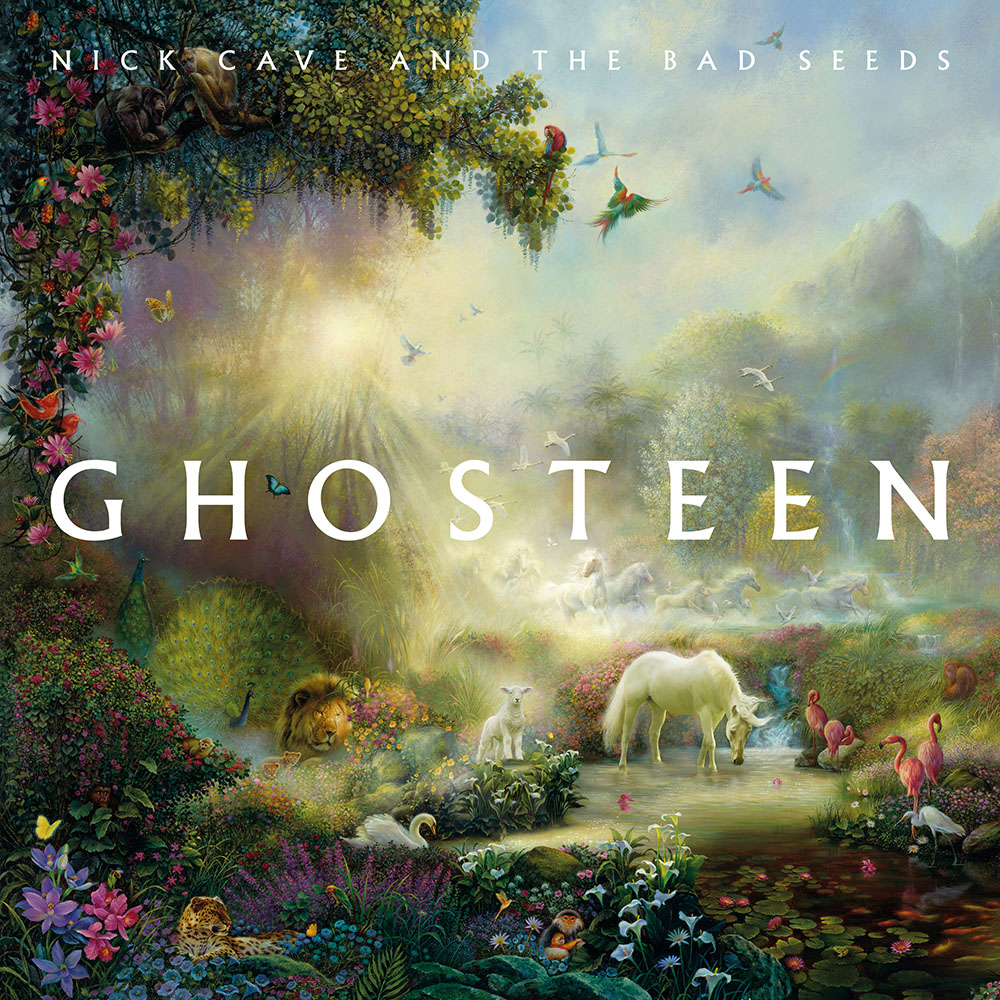
Like many artists who've earned near-unconditional adoration throughout their careers, especially those who might be described as being of the left field, it took a punt on Ghosteen for me to be finally won over to the Antipodean with the distinct baritone. But here was an album, seeped in the grief of Cave's teenage son's accidental death in 2015, which appeared a month after my own dad's funeral, which provided a welcome, if moving accompaniment to my journeys around the M25 between south-east and south-west London. Ghosteen's catharsis comes in the form of ethereal landscapes, literally fog-like keyboard beds and sombre piano that underlay Cave's distinct vocals. There's rarely any reason to question who the songs are about, but there's no overt wailing either. If it was intended to be Cave's processing of his son's death, it is never self-indulgent. It is, however, breathtakingly beautiful.

4. Giants Of All Sizes - Elbow

Elbow's eighth album is, according to the band, anything but cuddly, contrary to the somewhat avuncular profile of its frontman, Guy Garvey. Don't, however, take that to mean it's a gloomfest - Giants Of All Sizes is still very much an Elbow album, replete with Garvey's cocoa-warm voice bound to a band experimenting with sounds and instrumentation without going too far - but contained within that experimentation is a darker tonality. From the off,  opener Dexter & Sinister and its disjointed time signatures and non-sequitur breaks addressing a number of things on Garvey's mind, from Brexit to bereavement (including the death of his father) and, in his own words, "the general sense of disaffection you see all-around at the moment". Musically, some might find Giants musically narrow, with a very similar range across its nine songs and a notable lack of a One Day Like This anthem, but this lack of width makes for a better album. It is one that places itself in the company of the more melodic reaches of prog rock (Garvey is a fan), which doesn't mean endless organ solos, but a rich variety of tone and layers, rhythms and storytelling. Like Cave's Ghosteen, Elbow's Giants Of All Sizes also addresses grief and loss, but with what I call "balanced grace", looks for light in the darkness by placing arrivals in the proper perspectively. Some reviewers have (quite rightly) claimed it to be Elbow's best yet and, on reflection, it probably is - brilliantly intriguing, musically, and obliquely reflective, lyrically. One I listened to on repeat for most of the Saturday afternoon after it was released, hearing something new each time, pulling it closer like a warm blanket on a cold, wet October afternoon, a comfort no Pumpkin Spice Latte from Starbucks will ever fulfil.

5. Kiwanuka - Michael Kiwanuka

A late entry in my albums of the year, on account of it being given to me for Christmas by my 18-year-old university student step-daughter, bought with her own money. What a wise young woman she is...and, notably, properly plugged in to what makes me tick, musically. I'm not, however, normally given over to hyperbole. I've habitually given anything a mighty swerve that's been raved about by the cool brigade. So, when Kiwanuka was received in November by The Guardian as "one of the greatest albums of the decade" I was naturally deflected. I'd heard, from reviews of Michael Kiwanuka's first two albums that here we had a musically literate, experimental lab scientist, a soulful Heston Blumenthal making clever musical cocktails, much like the last fusion hero to come along, Thundercat. As smart as all that was, Kiwanuka is way more rewarding. Through subtle textures, rather than brash pronouncements, it serves up reflective soul of the kind Otis Redding rarely got credit for, but with elements of gospel, orchestral grandeur and even shades of Hendrix. There have been plenty of soul pretenders over the decades, including those trying to do soul with a twist. This, finally, delivers all that. Sublime. And thanks Ella x.

6. Further - Richard Hawley

The same friend who introduced me to Peter Bruntnell was on a roll, then, having previously introduced me to Sheffield's pre-eminent crooner, Richard Hawley. A Sunday morning free stream of Hawley's Standing At The Sky's Edge, courtesy of The Observer, introduced me to an album of distortion-drenched psychedelic epics that I listened to exclusively for what seemed like weeks. Two weeks after the Bataclan attack in Paris, where I was living at the time, Hawley's gentle humour and mellifluous songs were, that night, just what Paris needed. A musical arm around the shoulder. Soothing reassurance. With this year's release Further, Hawley returned to the mellifluousness of his earlier, countrified releases, dreamily shimmering with songs like Emilina Says, Galley Girl and My Little Treasures, and the Beatle-esque Doors. Four years after those terrible events in Paris, and in a world more politically febrile than ever, Hawley's songs and engaging lyrics have been a soothing balm in troubled times, and none more so than on this album.

7. Western Stars - Bruce Springsteen

The Boss has been in a reflective mood of late. In the five years between Western Stars and his previous studio album, he released his excellent autobiography, Born To Run, and ran his one-man Springsteen On Broadway for more than a year. All of this became part of a narrative of reflection as Springsteen neared the end of his 60s, recalling in his work the blue collar New Jersey upbringing, the thunderclaps of seeing Elvis and The Beatles' debuts on The Ed Sullivan Show, and his own journey to become America's most earnest rock star. Western Stars, Springsteen's 19th studio album casts a winsome gaze over the cowboy culture of Roy Rogers and the early 1950s television the young Bruce Frederick Joseph Springsteen was exposed, framing further the America Springsteen has, in one way, shape or another, eulogised throughout his career, but seen now through the prism of it’s most dramatic, some might even say disturbing schism in several generations. Springsteen has been telling his own American Story since Born To Run "sprung from cages out on Highway 9", but in Western Stars he places his America in a context of the deserts and vast scrublands west of the Mississippi for the challenges they present now, and while this may be a reflection on his own, perhaps surprising struggles with mental health, the 'home on the range' expression on Western Stars provides an outlet for the desire for mental freedom as much as traditional American expressions of the frontier spirit.

8. The New Adventures Of...PP Arnold - PP Arnold

There are plenty of artists of a certain vintage whom you could call tardy for the distances that open up between recordings. Peter Gabriel comes straight to mind, for the dilettantism that sends him off in multiple directions without bringing him back to what he does best (his last album of original new songs was Up in 2002 - almost 18 years ago). Patricia Ann Cole - professionally known as PP Arnold - might have a greater claim. In the '60s she became part of the musical fabric: haling from LA's troubled Watts district, she joined Ike and Tina Turner's soul review as an Ikette before remaining in London after a tour with the Rolling Stones, establishing a solo career there that led to work with the Small Faces and other luminaries of late '60s swinging London. Around this time she recorded her standout hits, The First Cut Is the Deepest and Angel of the Morning, and the albums The First Lady Of Immediate in 1967 and Kafunta in 1968. A third album, The Turning Tide was recorded around the turn of that decade, with Barry Gibb and Eric Clapton producing, but it was never finished and the recordings lay dormant until 2017, when Arnold resurrected and released the album. The intervening years hadn't exactly rendered Arnold idle - as a singer-for-hire she worked with people like Clapton and Roger Waters, but the voice that enchanted so many with The First Cut Is The Deepest held a lasting fascination with Paul Weller and his guitarist (and Ocean Colour Scene co-founder) Steve Craddock, who offered Arnold a bunch of their songs. The New Adventures Of... PP Arnold is the product of that offering, produced by Craddock, it showcases the 72-year-old Arnold has still possessing a voice of some beauty, via a mix of the Weller/Craddock material, as well as engaging covers of Sandy Denny's I'm A Dreamer and Mike Nesmith's Different Drum. Coming more than 50 years since she last committed her amazing voice to original material, you can only wonder what we've missed out on in the intervening years.

9. Warm/Warmer - Jeff Tweedy

Wilco crept up on me as a band I should like. Again, put off by hype, there seemed to be just too much gushing about them. And then I came across their Star Wars album in 2015 and, a decade-and-a-half since their Yankee Foxtrot breakthrough, I was kicking myself at what I'd missed. Earlier this year I was kicking myself at having completely missed the release of frontman Jeff Tweedy's 2018 solo album Warm, so when the record was re-released as a double package with the subsequent Warmer I was determined not to make the same mistake again. Recorded together in the same Chicago session, these twin albums find Tweedy in a soothingly laid-back frame of mind, both lyrically and musically. The albums' titles give this away. With Wilco themselves also releasing this year Ode To Joy (see below), there has been a generous doling out of comfort food from Tweedy and his cohorts (which include son Spencer on drums of these two solo releases), applying his wry turn of phrase on tracks like Evergreen and Ten Sentences with his gently abrasive country-folk melodies and a voice that always reminds me of Eels' Mark Everett - slightly gravelly and delightfully claustrophobic without being weird. Warmer's highlight is the sign-of-the-times commentary of Family Ghost, a striking commentary on the divisions of Trump's America and the dangerous empowerment of the right by news outlets like Fox News. Comparing Tweedy with Bruce Springsteen, as some critics have attempted, is a redundant task, but there are more clear parallels between the two than you might at first realise. There is, of course, the liberal earnestness, and you'd even go as saying that they operate in different spheres of the same alt-folk universe. Warm/Warmer, however, prove that even with such deliberately understated material, released more for the fun of Record Store Day than any serious tilt at the charts, that Tweedy is a performer and writer of gifted proportions. And, thankfully, there's a lot more left in him to come.

10. Echo In The Canyon OST

One of my favourite eras of the pop age is the period towards the end of the 1960s and early 1970s when the wooded canyons north of Los Angeles effectively constituted a large commune of bed-hopping, dope-smoking hippies making love and sweet music at the same time. The definitive written guide to this era - and its principle characters - can be found in Barney Hoskyns' brilliant (if lengthily titled) Hotel California: Singer-Songwriters & Cocaine Cowboys In The L.A. Canyons. Hoskyns' book recounts the music and the inter-personal relationships of people like Joni Mitchell, Crosby Stills Nash & Young, The Eagles, James Taylor, Jackson Browne and the record executive David Geffen, as they indulged high in the Hollywood hills during the daytime and played hard in the clubs of Sunset Boulevard in the nights. It was the musical premise of this period that caught my attention when the documentary Echo In The Canyon came out in the US in late 2018, focusing on the extraordinary creativity that came out of LA's Laurel Canyon as folk music met pop and the green shoots of rock with bands like The Byrds, Buffalo Springfield, and The Mamas and the Papas, drawing on the The Beatles, partly, to create a Californian sound of its own. Drawn into this world were some of the figures covered in Hoskyns' book, but also the likes of Eric Clapton (as his meteoric career pinballed from one band to another, one style to another) as well as younger entrants to the scene, like the aforementioned Browne and Tom Petty. Andrew Slater's Echo In The Canyon delves into the figures that made the Canyon scene, with Bob's son Jakob Dylan fronting the documentary (which I've now managed to see on DVD). Inevitably, such a rich musical subject matter as this produces a fantastic soundtrack, centred around Dylan, and featuring recordings from many of those who feature in the film, including Josh Homme, Norah Jones, Fiona Apple, Clapton and Stephen Stills, and Beck, who covers Goin' Back, the Goffin/King song written for Dusty Springfield (and a regular feature in Peter Bruntnell's live sets). It's a celebration of songwriting craft at its best, but a craft that matured delightfully in a particular window in time.

Worthy of mention

  • Lost Girls - Bat For Lashes: Welcome return from Natasha Khan, AKA Bat For Lashes, with something of a concept album about a gang of biker women roaming a dystopian Los Angeles. I've probably not done the concept justice here, but the record is exquisite.
  • Free - Iggy Pop: Trailed by the delightfully kitsch (and radio-friendly) single James Bond, the Iggster's 18th studio album finds the so-called "Godfather of Punk" in contemplative mood (well, at 72 he had to start calming down sooner or later) as he considers life after the big tours have started to come to an end. With half its tracks written by LA-based guitar wizz Sarah Lipstate, others including one whose lyrics were written by Lou Reed in 1970 and another drawing on the Dylan Thomas poem Do Not Go Gentle Into That Good Night, it's a calmer Pop record than we've become used to, and with a somewhat improvised feel to it, too. None of which is a bad thing, either.  
  • Threads - Sheryl Crow: billed as Crow's final album (she decided that it was no longer worth competing in the age of single-track listens via streaming sites), Threads pairs Crow with a variety of partners from the legend end of rock's executive lounge, with a combination of covers and original songs. And it is mostly fabulous. Collaborations with Willie Nelson, Bonnie Raitt and Mavis Staples are sublime, although we could have done without the cover of George Harrison’s Beware Of Darkness featuring Sting and Brandi Carlisle. As an exercise in the application of professional friendships, Threads can’t be faulted, but it is at its best when Crow’s natural songwriting ability around with rock-blues roots comes to the fore and you don’t, actually, care all that much who she’s working with on the track.
  • Ode To Joy - Wilco: I've already waxed on above about Jeff Tweedy's twin contribution to the 2018/2019 album story, but at risk of presenting him as a greedy sod, he also managed to get the band together this year to produce Ode To Joy, which it is. It's a somewhat gentle album, but since I would probably, now, rate a Wilco album that was essentially 12 tracks of nails and screws being thrown into a bowl, I've got plenty of bandwidth for an album from them that doesn't tread expected routes. You could even look upon it as a romantic album. There, I said it.
  • Anima - Thom Yorke/Flowers At The Scene - Tim Bowness/Love You To Bits - No-Man: I've lumped together my final three new albums at risk of annoying the artists involved. No, they're not identical, but there are behavioural patterns behind those who've made them. Thom Yorke's Anima (a somewhat hoity-toity reference to Carl Jung) is a darkly layered collection of electronic music that, on my first listen while driving around the M25, left me underwhelmed. And slightly unfit to drive on account of its somnambulant dangers. Subsequent listens improved my appreciation considerably, especially tracks like the opener Traffic and the stunning The Axe. Truly a master at work. As is Tim Bowness, the Cheshire musician known perhaps best for his work with Steven Wilson in No-Man (see next), but who has worked with a range of musicians to produce brilliant albums seeped in ambience and depth that, thankfully, defy any definitive labelling. His latest, Flowers At The Scene brought him together with guests like 10cc's Kevin Godley, XTC's Andy Partridge, Peter Hammill and, as co-producer, that man Wilson again, like his compadre's own move towards greater mainstream accessibility, draws together bold strands of pop, soundscapes and confessional lyrics to create one of the year's most engaging records. Which brings us to No-Man's Love You To Bits. Long before Wilson was shifting significant critical acclaim with Porcupine Tree, he and Bowness were, starting in 1987, experimenting with whatever took their fancy with No-Man, first finding attention with their Flowermouth album in 1994 (featuring Robert Fripp, no less) and presenting to the world a showcase for their own hugely eclectic musical tastes - dance music, ambient music, acoustic, electronic. Love You To Bits is Bowness and Wilson's first full album together as No-Man since 2008, and dives headfirst into their mutual love of synth pop. Taking the quintessentially prog approach of spanning the album over, essentially, two tracks - Love You To Bits (Bits 1-5) and Love You To Pieces (Pieces 1-5), Bowness and Wilson resurrected an idea that had been around for a decade or two, of an album that nodded to their love of bands like New Order and Talk Talk, rich in synths and drum machines and the sort of electronic dance music - there, I've said it - that were a core part of their music consumption in the early 1990s. The cover image, of a glitter ball tees up the opening phase of the Love You To Bits side, proper 4-4 disco stomp that, actually goes beyond just guilty pleasure territory, but is genuinely infectious, as is the rest of the album, which, over its two sides, explores the breakup of a relationship from the perspectives of its two principals. The second side opens on a jazzier note - no surprise given its use of Wilson's touring keyboard player, Adam Holtzman, the last ivory tinkler to work for Miles Davis, but spreads out over its five sections into a wonderful stew of trance-like club music. For those who've followed Wilson's career in particular, and who have (wrongly) formed the view that he is a standard-bearer for prog rock, you must remember that the two albums that sparked his interest to begin with were Pink Floyd's The Dark Side Of The Moon (a Christmas present from his mother to his father) and Donna Summer's Love To Love You Baby (a Christmas present from his father to his mother). Both would shape the career of an extraordinary, if still criminally under-rated artist, a description he easily shares with Bowness. 

Back For More


  • Abbey Road - The Beatles: Re-released with all the bumper package options to celebrate its 50th anniversary, the basic album alone is worth a re-listen, let alone all the outtakes and curiosities that come with the 'super deluxe edition'. Of course, Abbey Road depicts The Fabs'  last hurrah (yes, yes, I know all about Let It Be...) but also a now-mature rock band seemingly comfortable in its skin and, at times, its own company. Doesn't matter how many copies you own, this is a retread worth every penny.
  • London Calling - The Clash: Another anniversary waltz, but even if you bought the 30th anniversary edition, adding another ten years hence, with the accompanying storybook package, is worth your hard-earned for, quite frankly, the best album of the punk era, largely because it wasn't punk at all.
  • VH1 Storytellers - David Bowie: Since The Dame's death in 2016 there has been a steady industry of releasing luxurious packages of his cannon, from the complete sequence of studio and live albums to the recent box of his early development. The VH1 Storytellers album originally came out in 2009, ten years after Bowie had actually appeared in VH1's live performance Storytellers series. Dipping into Bowie's career, as far back as Life On Mars, right up to material for the under-appreciated Hours album, the somewhat stripped back sample of the man's work actually serves to highlight just how good he was. Understatement, right?
  • Let It Bleed - Rolling Stones: Yes, another nice bone to throw the Stones' pension pots, but why not? Let It Bleed found the Stones at their louche best, with stonkers like Gimme Shelter, Midnight Rambler and You Can't Always Get What You Want standing out, even despite close-run gems like Country Honk and Monkey Man. Another 50th anniversary release, with all the trimmings that entails in the heritage market, it's one of those Stones albums you simply go out and buy again, and listen as if new.
  • Mark Hollis - Mark Hollis: Talk Talk frontman Hollis' death in February this year took the wind out of many's sails, not least of which mine. What compounded that emotion was that Hollis's work was as sparse as the songs he often recorded. And none more so than this, his only solo album, released in 1998 (and again in 2003 as an LP only), but still often forgotten, or even dismissed as being unlistenable due to its achingly hushed material, of the kind cynics might say could only have been heard of by mountain rescue dogs. This new vinyl re-release addresses many of the snarks and even complaints about the sonic dullness of the original, being slightly brightened up in the studio and released as a posthumous curiosity for those who loved all Hollis did with Talk Talk and, even with its obvious limitations, would find interest in now.