Showing posts with label Nokia. Show all posts

Wednesday, 12 May 2021

The 21st Century Model T Ford

Picture: Apple

The date when, arguably, face-to-face conversation ended was 9 January, 2007. It was the date when the television set, as the “electronic hearth” of collective family engagement, ground to a halt. It was when the morning commute (remember that?) became a head-hunched, spinal strain-inducing exercise in what we British islanders, in particular, do better than anyone else - social avoidance. Because that was the day Steve Jobs introduced, with customary understatement, “a revolutionary and magical product" that he claimed was "literally five years ahead" of any rival: the iPhone. 

Apple’s press release on the day said that it combined three products: the aforementioned phone plus “a widescreen iPod with touch controls, and a breakthrough Internet communications device with desktop-class email, Web browsing, searching and maps.” There was also an “entirely new user interface based on a large multi-touch display and pioneering new software, letting users control [it] with just their fingers,” adding that it ushered in “an era of software power and sophistication never before seen in a mobile device, which completely redefines what users can do on their mobile phones.”

This was peak dream-weaving Jobs. As Apple had done with the iMac in the previous decade and indeed the iPod in 2001, they’d taken an existing concept and made it desirable and cool. The iPhone was certainly not the first smartphone (anyone working in the corporate world would have already endured years of BlackBerry envy as they were provided to more anointed colleagues), nor was it the first touchscreen-enabled gadget. But, Jobs’ spin notwithstanding, for once, the tech marketing cliché “revolutionary” was broadly applicable. 

In addition to cellular connectivity and the music player, what really drove the revolution was the iPhone’s ability to carry a vast array of native software applications, a statement in itself, given how “app” has established itself in the common lexicon. In fact, those colourful app icons we tap on our smartphones are as significant as the expensive hardware they're downloaded onto. In old(ish) money, Uber or Deliveroo would be regarded as online destinations, but we all use them as physical services that just happen to be accessed through an app on our phones. 

Today, nearly 90% of British adults own a smartphone, with ownership in older demographics notably increasing during 2020, most likely because of lockdown necessitating connectivity. Despite their upfront cost - a full-specced iPhone 12, bought outright, will set you back just under £1000 - they have become indispensable, but they can, too, be easily be taken for granted. They are, despite their form factor, highly sophisticated computing devices equipped, invariably, with camera technology to rival that from the big names in photography. One common trope, however, is that the smartphone in your pocket is more powerful than the technology that landed Apollo 11 on the moon, which is a fallacious comparison, given that NASA was working with beyond-state of the art capabilities in 1969. But it’s not a bad way of looking at the sheer power today’s smartphones represent, and the - still - unprecedented functions they perform.

This forms the core of Always On: Hope And Fear In The Social Smartphone Era, a new book by Rory Cellan-Jones, the BBC’s technology editor, and someone who was there where it all began. In fact, when it began. Recalling that Jobs press event early in 2007, Rory went on to compare, on the BBC, the new Apple phone to the Model T Ford in terms of its potential impact. Viewers complained that he’d given a commercial launch too much prominence on the BBC’s ad-free airwaves, and even Rory himself was initially worried that he’d gone “over the top”. But on later reflection, he felt totally vindicated, writing on the tenth anniversary of the launch that it had truly been a “moment in history”, heralding “the key transformative technology of the last decade, putting powerful computers in the hands of more than two billion people and disrupting all sorts of industries.” Rory expounds on this shift in the book, discussing how Apple's effective invention of the smartphone founded entire industries and economic ecosystems. I was working at Philips at the time of the iPhone launch, and as its evolution began, it became apparent that it wouldn’t just eclipse the predominant handsets from Nokia, Motorola and others, but posed an existential threat to PC manufacturers and consumer electronics brands as well. Over time, the smartphone would become your TV set, your home cinema, you music system and its content library, and - crucially in its development, Rory points out - your camera (a moot point with me, given the forest of phones you have to peer through at gigs…). 

But, Always On also argues, the smartphone didn’t just become a replacement for a multitude of devices. It also turned “software” into “app”, the word even your granny is now familiar with. How many times a day do you interact with an app, or hear the word? Even freedom to travel might soon be facilitated by the NHS app, acting as a Covid passport. So, when you combine the hardware, the software, the functionality, the connectivity, the rise of social media and the innovation of app developers (even the term “swipe right” has entered popular convention thanks to Tinder), you can begin to appreciate the enormity of what that rectangular box in your pocket represents.

Always On delves deeply into the smartphone's social impact, not just focusing on the consolidation of consumer electronics into a single device, but on the global impact of digital engagement facilitated by it, as our “hyperconnected” society lives and breathes on social media, elects governments, supports economies, finds people jobs (and loses them through misuse…) and more. Rory even draws on the role the smartphone plays in healthcare, given how the NHS app was placed front-and-centre in the fight against COVID-19. My own company, Vodafone, helped develop an app called DreamLab, which enables Imperial College London to effectively crowd source the immense computing power of dormant smartphones at night to dramatically shorten the number of thousands of hours required by human research into developing therapies for cancer and the coronavirus. 

Rory Cellan-Jones

Rory, however, has an even more personal health connection with the smartphone: a couple of years ago, while doing a live demonstration of 5G technology on BBC Breakfast News, viewers noted a tremor in his right hand. Unbeknownst to all but a few friends and colleagues, he’d been diagnosed with Parkinson’s Disease some months before. Shortly afterwards he revealed on Twitter what he’d been going through: “It was a vivid example of the positive side of what this book describes as the social smartphone era,” he writes. He says we’re now immersed in an era in which technology has become personal, in which these devices enable us to connect with “friends, strangers, celebrities and even Presidents and Prime Ministers via new networks which appeared to democratise communication.” There is, though, a negative side to this - an acute example being the recent football boycott of social media, the result of the repugnant racist, sexist and homophobic abuse that some players of both genders have had to endure - but Rory hopes that his book faithfully examines the positives of what smartphone technology has done for individuals and society in general, as much as its dark side.

To return, though, to my introduction to this post, there is still a residue of old farts who look upon the revolution that Jobs’ heralded as the start of a societal breakdown that will never be repaired. The response to such arguments is always ‘do you want to go back to how it was?’ (i.e. outdoor toilets, steam trains, ‘the wireless’, etc). “We have a slightly problematic nostalgia that romanticises the past,” Professor Daniel Miller, leader of a 16-month international anthropology study into smartphone use told The Times recently. “TV was way more passive,” he added. “Smartphones are far more interactive and far more social. So why is that a loss?”. Miller and his colleagues argue that the Internet has, rather than creating digital zombies, brought society together. The problem, they say, is that digital connectivity has also brought down divisions within individual households. We’ve all done it: we’ve all sat there as families, idly thumbing through our phones while half watching something on TV.

Rory Cellan-Jones’ original thesis that Steve Jobs produced a Model T Ford for the 21st century with the iPhone shouldn’t be in any doubt. But, says Miller, it comes at a social price. “At any point, whether over a meal, a meeting or other shared activity, a person we’re with can just disappear, having ‘gone home’ to their smartphone,” he said in The Times interview. It’s almost, he believes, as if the smartphone has become too ubiquitous. “We have become human snails carrying our home in our pockets,” Miller and his colleagues write in their study, going so far as saying that we spend more time ‘in’ our phones than in our own homes. Moreover, they contest, the smartphone now plays such a fundamental role in how we engage with our families, friends, colleagues, celebrities, politicians and anyone else we can just ping on WhatsApp, the technology has virtually become as basic a form of human communication as talking. That, though, is nothing new. Almost every form of technology communication is accused of supplanting something else.

Which is what makes Rory’s book so engrossing. As the BBC’s primary technology correspondent since January 2007, and indeed the week when Jobs strode the Moscone Center stage, replete in trademark polo neck, stonewashed Levi’s and New Balance trainers, he has reported on every gadget, trend, startup, collapse, innovation and outbreak of industry hyperbole since. And when you put it all into perspective, you’d struggle to disagree with the central belief that Always On entertainingly proffers, that most of those “breakthroughs” my peers in technology PR peddle don’t even come close to the smartphone. 

The telephone is generally regarded as one of humankind's greatest creations, after the printing press, the electric light and industrial manufacturing. I’d argue that, given that it is more than just a mobile phone, the smartphone might one day find itself up there in the same pantheon of achievement.

Always On: Hope And Fear In The Social Smartphone Era by Rory Cellan-Jones is published tomorrow,  13 May, by Bloomsbury

Saturday, 8 February 2020

I'd love to be in Barcelona...but is it worth it?


It's more than possible that until the brouhaha surrounding the Chinese telecoms vendor Huawei blew up a couple of weeks ago, you'd never have heard of 5G. But all of a sudden, a telecommunications technology that had previously been discussed only in the trade press was front page news, albeit for political reasons rather than industrial. In the days leading up to and including the UK's controversial decision to allow Huawei to potentially supply equipment to the likes of Vodafone, Telefónica/O2, Three and EE, I'd been seething. With the news being reported in the mainstream media by mostly political correspondents, each weighing up the pros and cons from within the British body politic, as well as objections from the White House (which, we are told, led to a furious row between Boris Johnson and Donald Trump), I was constantly reading about the "UK's 5G network" [singular], despite the fact that anyone with a basic knowledge of the situation would say they should be reading about "networks", given that the 'Big Four' commercial mobile services, plus providers of private networks, would be the main actors in any ruling on who they could or couldn't buy 5G kit from.

Then there was the assumption that 5G could only be referred to in terms of conventional mobile functionality. Many in the telecoms industry agree that downloading Game Of Thrones in a fraction of the time you can on a 4G phone is not going to drive 5G. The bigger opportunity will be applications you'll probably never be aware of, like enabling surgeons to carry out operations remotely or making freight ports significantly more efficient. And, yes, there's always the possibility of driverless cars, although I wouldn't hold your breath for that appearing any time soon. But it's this point of what 5G will be able to do, beyond just making your mobile whizzier, that makes the whole row over Huawei more serious. And not just because of  'trust' concerns. 5G will, potentially, become an all-pervasive communications technology, one which, via a number of varieties (in other words, frequencies and wavelengths), will offer different means of access for different types of access need, including 'machine-to-machine' communications and the so-called 'Internet of Things', where devices and sensors talk to each other, speeding up everything from urban traffic to managing factories remotely from the other side of the world.

While the Huawei row rumbles on even further this weekend, a new twist to China's involvement in the development of 5G has occurred, inadvertently. Later this month Barcelona is to host an event that can actually be measured in terms of the city's annual revenue: Mobile World Congress, a gargantuan trade show for the telecoms industry, and an event on the same scale as CES, the monster techfest in Las Vegas each January. Over the last ten years, MWC has become increasingly about 5G, to such extent that the last one I attended, in 2018, was only about the fifth generation technology. Trade shows like MWC are sometimes seen by attendees and observers alike as bloated beanfeasts, wherein tens of thousands of sales people descend to schmooze. In most companies, the sales process is year-round, though contracts are still signed on stands at MWC, an arcane throwback to the days when account managers would attend their company's booths holding clipboards with blank paperwork at the ready. It's an expensive business for exhibitors - for most major vendors, MWC is their single biggest annual marketing expenditure. At Alcatel-Lucent and Nokia, employee attendance was always rigorously controlled, wisely when you consider that a major stand, plus 500 employees taking part, all staying for four or five days in hotels that clearly up their room rates for the week, adding more expense in Barcelona's tapas bars and restaurants, would run to millions.

Which brings me to yesterday's news that Ericsson, the Swedish vendor and nominally one of the three anchors of MWC (along with Huawei and Nokia), has decided to pull out of the show over concerns for the welfare of its employees and customers caused by the spread of the coronavirus. Other companies, including Korea's LG, the chip company Nvidia and China's other telecom technology vendor, ZTE, have also either pulled out of MWC altogether or announced a reduced presence, again due to concerns about the increasing coronavirus spread. These may only be a few of the 2500 exhibitors each year at MWC, but there are genuine fears that Ericsson's departure will be the straw that breaks the camel's back and that others will pullout in the coming days. Nokia could be one of them, with a spokesperson yesterday saying, somewhat inappropriately given the nature of disease, that "the situation is fluid". Like many MWC exhibitors, Nokia also has a substantial footprint in China, with that country being the supply chain base for much of the technology industry. Many Chinese nationals and expats will be travelling from China to Barcelona.

In all seriousness, however, can the major brands really afford to be absent from what is, arguably, the most important industry event this year for the telecoms industry, in the year that 5G is nominally supposed to arrive? I'm sure, too, that some companies' marketing executives are viewing a pullout, even this late in the day, as an opportunity to save money for other projects, again tapping into some of the cynicism that exists over whether these shows are worth it at all. My personal view is somewhat conflicted: MWC is an unbeatable platform for the sharing of news, views and ideas, for networking and for engaging customers and other 'stakeholders', like journalists and industry analysts. Annually, MWC gives everyone a boost. But it comes at a price. By the time everyone gets to Barcelona, they will have experienced the most intense few weeks of the new year, with many companies also having to report their annual financial results in the run up to the show. I, regularly when I attended, would get to the penultimate show day, the Wednesday, and then succumb to terminal man flu. Getting run down and then sick from all those germs travelling in to Barcelona from across the world was a constant hazard for those working at the show, and often compounded by the late nights and early starts (not complaining, but these shows are punishing). Companies are right to question whether the health risks - weighing above financial concerns by a high margin - really are worth it this year, given how the coronavirus spread seems to be getting worse, with cases now being a long way away from Wuhan where the outbreak began. The next few days could prove crucial, both for an event you've never heard of, and for a technology you probably hadn't heard of, either, until a few weeks ago.


Friday, 31 August 2018

Where have all the workers gone?

© Simon Poulter 2018

I’m looking out on the Westway, that grim stretch of tarmac and concrete eulogised, somewhat, by The Clash as a totem of the West London they emerged from. It’s 8am on a Friday morning and something is strange: there’s hardly any traffic coming into the capital, despite what should be bumper-to-bumper rush hour. It may be the last day of August, but that’s not to say people aren’t back at work as, if the Tube is anything to go by this week, they are. It is, though, the last day of the school holidays, which might mean frantic parents are shipping bored teenagers out to Thorpe Park or Chessington World of Adventures for one last outing in the dog days of the summer holiday.

Taxi drivers have commented on this Friday phenomenon: one told me that he doesn’t bother coming in to London on Fridays as there’s just so little business. He blamed flexible working (or, in other words, “working from home”). In fact, so many of us are commuting only as far as the sofa or home office on a Friday that cabbies feel it’s just not worth the trouble. Now, I’m sure this is just an extreme view, but if I look at how my current employer has, to a point, tolerated home working, it may not be a surprise.

When I started my career, 32 years ago, there was no such thing for most industries. Journalism was a little different, as with a typewriter most freelancers worked at home and either brought their copy in by hand or posted it. But then came the digital revolution. I remember borrowing an early laptop my first magazine had purloined in 1987: for the 30 minutes that the battery lasted, it was quite a novelty sitting out in the garden bashing out album reviews. It was, however, the mobile phone that truly transformed workplace mobility. Suddenly you were in when you were out (something I loathed as I always considered the mobile ringing to be an interruption. Mind you, I had the same opinion when someone called me on my deskphone, too...). Today we have all of these devices in one - our smartphone. There is seemingly no productivity activity you can’t do on one. And with us bound to our phones like life support systems, we are never going to be able to switch off.

Commuting is hardly one of the most enjoyable duties, and on Britain’s overcrowded, delayed, strike-hit, standing-room-only trains, it is positively purgatorial. Which is what alarms me about the sight of people on public transport with their laptops, tablets and phones, feverishly working away on e-mails, presentations and reports. It begs the question - do they have unreasonable bosses, expecting them to be connected 24/7, constantly in crisis mode as ludicrously short deadlines keep coming up? Or are people simply spacing their days out to suit their own working style? (Another theory is that workers spend so much of their office time and IT resources on Facebook that they need the extra hours to do their work…).

Picture: TFL
The University of the West of England has just published a study which found that increasing numbers of commuters are now using their travel time to and from work to deal with the mountains of e-mail that corporate life, in particular, generates. This should not surprise: next time you’re on a train before 9am, look around and count how many are stooped over their mobiles. Some will be playing Candy Crush, sure, but others - and I’d suggest those with the most furrowed brows - will be frantically catching up with the overnight missives from other timezones…or insomniac bosses.

So, asks the university’s report, should all this pro bono e-mail be considered part of an employee’s contracted hours? When I used to commute daily from Amsterdam to Eindhoven in a former life, Philips paid for me to have a first class seat on the four-hour round trip, providing me with the perfect environment to work and even leave the office early to carry on working on the train home. It never occurred to me that this was ‘free’ work - it was just work, and I was able to do it in a convenient way, even without (in those days) onboard WiFi. The bigger issue, however, is how much work continues when you get home. In my line of work (PR), there are inevitable periods of ‘wartime’ when there’s a crisis to attend to, or a major launch that simply needs the hours put in, which could be done in the soul-destroying environment of an empty office at night, or in the comfort of home with warm food and a cold beer to assist.

Problems, however, begin when wartime becomes permanent, and expectations arise of being constantly ‘on’, day and night, at weekends and during holidays (I was once on a conference call where one of the participants had taken his laptop on holiday and we could all audibly hear the sounds of a busy Côte d'Azur in the midst of the August grande vacances). Here is where flexible working needs to be just that. Work/life balance is something major modern employers like to promote as part of their commitment to employee wellbeing, but how many proactively enforce it? Workplace stress and mental health issues have definitely seen a marked increase in the era of e-mail and digital connectivity, and far too many companies pay only lip service to enabling employees to keep their work life and home life in correct balance.

So step up accountancy firm PwC which has launched a scheme for new recruits in which they can specify (well, “suggest”) the hours they would like to work per week. The idea is to try and attract employees who may not - or cannot - be tied to the traditional 9-to-5 workday. PWC says that the scheme is in response to their own study which found that almost half of respondents would prioritise flexible hours when looking for the ideal on.

"People assume that to work at a big firm they need to follow traditional working patterns. We want to make it clear that this isn't the case,” says PwC's chief people officer, Laura Hinton. “In order to recruit the best people, we recognise that we need to offer greater flexibility, different working options and a route back in for those looking to restart their careers." Flexible working hours are not only good for staff, Hinton says, but also the economy, business and society. “We're likely to see a rise in people transitioning in and out of work throughout their careers and those organisations who responsibly support their people to do this will ultimately gain a competitive advantage”.

Which neatly brings me to some news of my own: today is my last day as an employee of Nokia, and I’m leaving after almost eight years at Nokia and the acquired Alcatel-Lucent combined. It’s been an amazing journey, taking in the ups and downs of corporate life, changes of CEOs and other executives, a lot of not commenting on rumours or speculation, and some major shifts in technology, as 4G/LTE arrived, the cloud and virtualisation began to replace hardware, and 5G popped its head above the parapet. And now it’s almost here for real. And, yes, working in corporate communications during this time has meant a lot of e-mails and conference calls around the clock, and at weekends, too. I’ll admit, it goes with the territory, but on the other hand, the tools are there and, to a greater or lesser agree, the freedom, too, to manage your own time appropriately.

I’ll have news next week of where I go next (and trust me, I’m extremely excited at the prospect). Strangely, it will involve technology that enables companies and their employees to work flexibly. And I’m sure they’ll practice what they preach.

Friday, 5 May 2017

Augmenting reality - Beatie Wolfe's Raw Space

There was a time, in my deep, dark and ever-so-slightly dank past when I regularly attended the launch of a new album. Over on-trend bottled beers and record company vol-au-vents, scribes would be entertained by the artist or artists in question, followed by an opportunity to mix and mingle, invariably accompanied by a ferocious record company press officer doing their level best to prevent any awkward questions (you know, about drug busts, tour "larks" and inter-band creative differences).

So today I enjoyed a somewhat circular return to this world with my 'attendance' of an album launch with a difference - a very big difference, in fact - which could easily be described as truly post-modern. Beatie Wolfe, the London-born singer-songwriter who, with her first two albums built a very credible reputation for both her melodic dexterity and use of digital art in combination, today launched her record Raw Space with an event that combined a novel convergence of digital and physical music with an augmented reality experience.

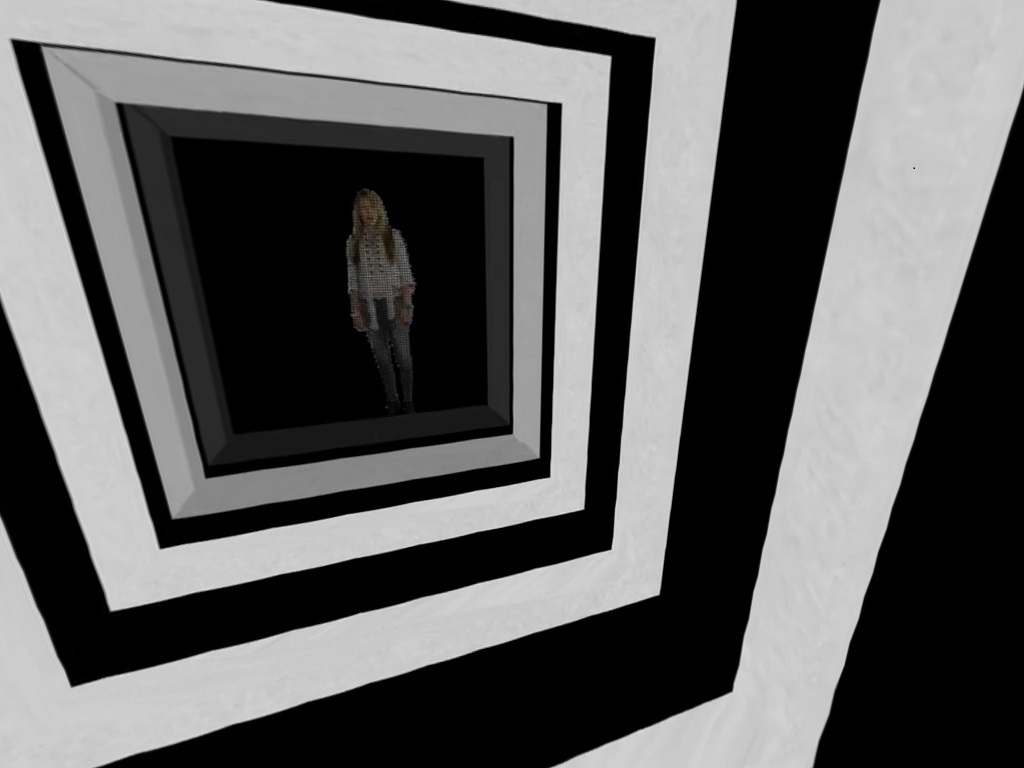
Wolfe and Nokia Bell Labs, the storied research institution now owned by my Finnish employer, hosted a vinyl playback of the album from an anechoic chamber (essentially a sound-absorbing room), combined with 360-degree augmented reality content and streamed over YouTube. Now, if this sounds like just a promotional gimmick (and in my day I experienced some intensely wacky stunts...) there was technological merit to the exercise: Wolfe says that she wanted to challenge the current streaming experience, which audiophiles, particularly, will concur might be convenient but from a listening point of view, quite flat. Noting that streamed music is "somewhat compressed both sonically and creatively", Wolfe wanted to celebrate the album form - "its artwork, arc, narrative, music", the things that still count for those of us queuing at dawn the other Saturday to get our grubbies on Record Store Day releases.

Picture: Beatie Wolfe/Instagram

It's not the first time Bell Labs has collaborated with the art world - over the 50 years of its E.A.T. (Experiments in Art and Technology) initiative it has worked with the likes of John Cage and Andy Warhol. Today's Bell Labs president, Marcus Weldon, says this latest meeting of music and science is particularly novel. "This collaboration with Beatie looks at the intersection of art and tech in a truly inspired way," he says. "I couldn't think of a better project or artistic collaborator to champion the next phase of this defining exploration of the human possibilities of technology."

It's fair to say that musicians have enjoyed a mixed relationship with technology. There has been, of course, the tacit acceptance of commercial streaming services as distribution platforms, even if the vast majority would still prefer you to buy their albums in a physical form. My friend Steven Wilson famously drove a car repeatedly over an MP3 player in his Insurgentes documentary, part in protest at the sound quality of compressed music and part in protest over the download culture killing off the art of the long-form album. Peter Gabriel - a pioneer of studio innovations and whose father was an inventor and engineer - has warmly embraced digital audio with a considerable emphasis on promoting higher sound quality formats like lossless compression, while at the same time re-releasing his albums on audiophile-grade half-speed vinyl. And, yes, you can hear the difference.

In Wolfe's case, it's been about melding music, technology and art, something she's been doing from the very beginning of her recording career. Her 2013 debut Eight was the first album released as a hologram (it required an iPhone and a projection accessory to play it), while its 2015 follow-up Montagu Square (respectfully named after the onetime abode of John and Yoko where it was recorded) was made available on NFC-enabled business cards. That, Wolfe explained to Wired magazine, was "a synthesis of music and history", something you could say today's event -given its marriage of the resurgent vinyl album with the emerging canvass of virtual and augmented reality - was a vigorous example of.

As for the album itself, Raw Space embraces all of the ingredients I enjoy in the current generation of guitar-based singer-songwriters, in particular The Magic Numbers' Michele Stodart: a strong influence of Americana, brooding without being morose, romantic without being soppy, upbeat without being over-poppy. Songs range from the refined West Village coffee shop soul-bearing of The Man Who and the deliciously drawling Pure Being, to the countrified warmth of Gimme Some Love and the rootsy vibe of Broken Bird. For a big, ballsy rocker like Oh Darling there is the contrasting intimacy of As You, while the piano-and-strings ballad How Can I brings out the rich timbre of Wolfe's voice, as well as the pleasing balance of her writing - neither overwrought or underwrought.

There is a pleasing resonance to Raw Space but not so familiar as to be predictable. Far from it. It's launch, however, opened up a very different realm, one which I'm pretty certain we haven't heard the last of. Just when you think you've seen it all, someone like Beatie Wolfe comes along at opens up a completely new dimension. More power to her.