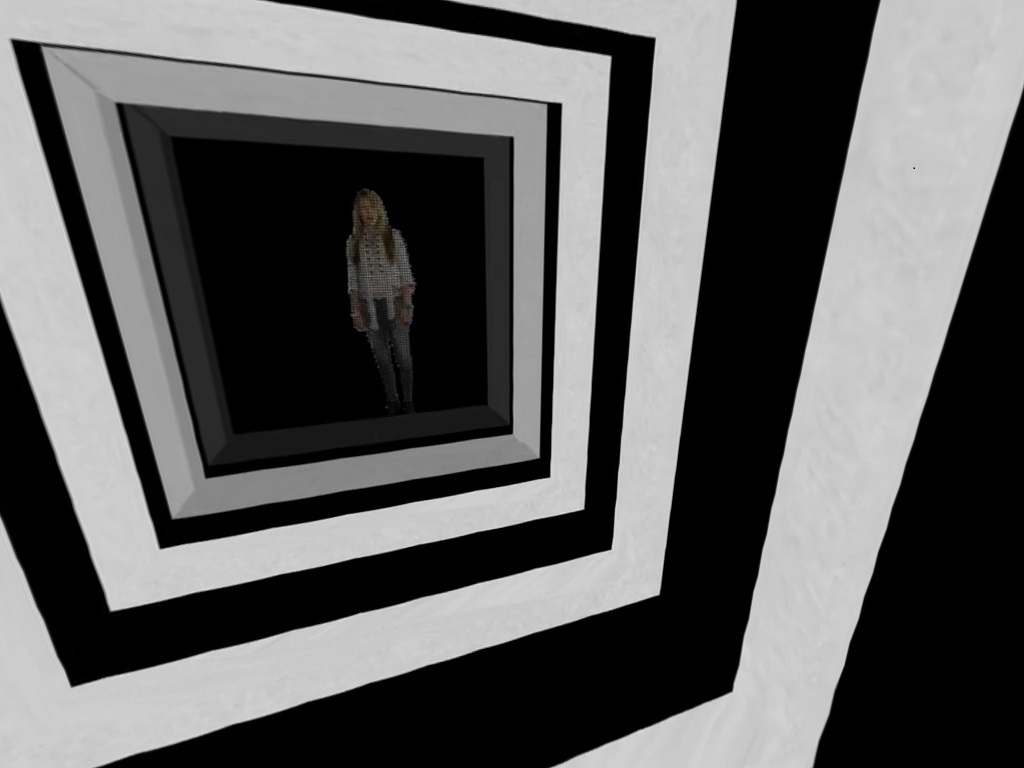
In a previous job I had the great privilege to arrive at a crossroads in my personal interests when the legendary Bell Labs, now owned by Nokia, staged a unique event that brought me into contact with Beatie Wolfe. Once named by Wired magazine as “one of 22 people changing the world”, Wolfe is the Los Angeles-based, Anglo-American singer-songwriter who, when she’s not composing beguiling acoustic guitar music, has taken a keen interest in science, technology and innovation, a legacy, she reveals in a new documentary about her, stemming from the discovery that her grandfather worked for NASA’s Jet Propulsion Laboratory.
The “JPL”, for the uninitiated, is NASA’s R&D department, responsible for everything from the Mars Rover to deep space exploration. Clearly the curiosity gene has been passed down to Wolfe. Like pop’s original spaceman, the artist who gives this blog its name, David Bowie, Brian Eno or another hero of mine, Peter Gabriel (whose dilettante nature has taken him off into a multitude of directions, also, perhaps, a result of his inventor father), Wolfe’s work has come out of an innate curiosity with the world. As a child she would look at her parents’ records, not just listening to them but examining how they were packaged and presented. Her debut album 8ight was released as a palm-sized ‘3D theatre’, literally a box that opened up and played audio and visual content associated with the songs.

As if that wasn’t left-field enough, her second album, Montagu Square was released as a piece of clothing. Conceived at 34 Montagu Square - the former home and studio, at various times, of Jimi Hendrix, Ringo Starr, Paul McCartney, John Lennon and Yoko Ono (and where the notorious Two Virgins cover photograph was shot) - the album continued Wolfe’s interest in making music “tangible”, as well as stretching notions of what a recording artist should be about. The album was literally woven into a jacket made for her by the tailor (not weatherman) Michael Fish, who has dressed the likes of Bowie and Jagger. Using NFC wireless technology, songs could be played back on a mobile phone simply by tapping the jacket. The same NFC technology was used to enable the album to be heard via a pack of cards, with each card containing the album’s tracks individually, as well as multimedia content including the lyrics.
Perhaps this apparent eccentricity is what drew me to Wolfe’s work when, in 2017 she released her third album Raw Space from the quietest room on the planet, the Anechoic Chamber at Bell Labs’ sprawling campus in New Providence, New Jersey. It’s a room where literally all ambient sound is sucked out, rendering visitors at risk of nausea and disorientation. Raw Space was something of a reaction to the streaming age and, again, another attempt to find new forms of tangibility, as well as the narratives that the greatest records have presented in the album age, the story arcs of Sgt. Pepper or Dark Side Of The Moon. Working with Bell Labs and designer Theo Watson, Raw Space was released as a true multimedia stream, combining 360-degree video and artificial reality visuals with the music being played, apparently, off a turntable inside the anechoic room in New Providence, streaming it continuously for seven days in a row. There was more to come when Raw Space was beamed out of the so-called Horn Antenna, the giant listening device in Holmdel - close to New Jersey’s Springsteen country - where Bell Labs scientists first discovered confirming cosmic evidence of The Big Bang. The album became the first piece of music to escape Earth’s atmosphere. It is estimated to have travelled more than 12 trillion miles since.
Earlier this week I was at a Q&A session with the DJ Gary Crowley, during which a member of the audience somewhat showed his age by questioning the interest in music consumption of kids in the streaming age, and the playlist mentality that is supposed to have been adopted in place of listening to albums with a beginning, middle and an end; in my last post I reviewed Sheryl Crow’s new album Threads as, possibly, her last, her interest in recording complete albums diminished by the pic’n’mix streaming culture. To Beatie Wolfe, I suspect, this might smack of Ludditism, which is probably why she is the subject of a brilliant new documentary, Orange Juice For The Ears: From Space Beams To Anti-Streams. Director Ross Harris’s fascinating profile follows Wolfe around her adopted Los Angeles, as she looks for new technologies with which to release music. Poignantly, for me, at least, following the death of my own father from Alzheimer’s Disease in August, Harris accompanies her to a care home in the UK where she performs for dementia patients, part of an initiative she co-founded, The Power of Music And Dementia, to demonstrate how music can have a profoundly positive effect on people living with these cruel conditions. It’s a highly moving segment of the film, but a powerful demonstration, as you see the dementia patients responding to Wolfe’s performance, of just how music is capable of moving anyone. Frankly, it’s why I still care about it.

Listened to without the context of her technology interests, Wolfe’s music is acoustic and simple, matching bittersweet indie lyrics with the kind of folkie guitar you might hear in a West Village coffee shop. That, by the way, isn’t a bad thing. Her solo performance of the utterly beguiling Little Moth, after a preview screening of Orange Juice For The Ears at London’s Barbican Centre on Tuesday, was a pin-drop moment of uncomplicated musical beauty. It was also a reminder of how, there can be so much more to music than just notes, chords and lyrics. If you get a chance to see this remarkable film, you’ll experience for yourself just why.