Monday, 28 March 2022

Fading lights - Genesis at the O2 Arena

Picture: Instagram/Genesis-band


Clearly, I’m a devotee of unfashionable causes. When news broke that my football club’s owner was being sanctioned for his association with Vladimir Putin, and the club itself was to be put through the ringer as a consequence, there was little sympathy from across football’s tribal communities. Likewise, I knew that I wouldn’t enjoy all that much admiration (or is it empathy?) for going to see Genesis on Friday night, on what would turn out to be their penultimate live performance, 54 years after forming.

I’ve long accepted that Genesis are a Marmite band. A guilty pleasure, even. Amid the devotees from their origins as one of ’70s progressive rock’s pre-eminent acts, and those drawn to their catchy, mid-’80s MTV dominance, are those who just never got them (or saw them as just another outlet for Phil Collins’ ubiquity). Then there’s another group - those, like me, who’ve seen good in all their guises. Over the course of three nights at London’s O2 Arena, 60,000 fans of, mostly, a similar venerability, were of the same view. 

These were the final performances of a tour that had been truncated by the coronavirus (the first scheduled dates were delayed by lockdowns and then the London shows got postponed again by a band member testing positive for Covid), which started to feel like a stay of execution. The tour itself had been named ‘The Last Domino?’ - an intentionally ambiguous in-joke but not without its inevitability, given that an increasingly immobile Collins, robbed of his truly unique ability to drum by a congenital back problem and other health issues, had indicated that this would have to be it. Compared with other still-touring bands of a certain vintage (the Rolling Stones come immediately to mind, and Paul McCartney), the core surviving members of Genesis - Collins, keyboardist Tony Banks and guitarist/bassist Mike Rutherford  - were all 71 as they took to the stage on Friday (the still youthful-looking Banks turned 72 yesterday), so there’s nothing materially requiring them to bring the band to a halt. But from the moment Collins walked on stage, slowly and assisted by a stick, to take the seat he would occupy for the next two hours, it was clear that this Genesis would be different. 

Picture: Instagram/Genesis-band

With his stage school training, Collins was always an impishly lively frontman, ever since he came forward from the drum stool in 1976 to replace the outgoing Peter Gabriel. Live reviews frequently referred to his end-of-pier schtick, a change of tone from Gabriel’s eccentric but hesitantly-delivered fantastical stories which he used to tell between songs as the band retuned their notoriously fussy 12-string guitars. For the live version of their minor 1973 hit I Know What I Like (In Your Wardrobe), Collins developed a remarkable tambourine tarantella, colourfully extending the percussive agility that easily made him a peer of other thunderous drummers of his time, like Bonham, Moon and Rush’s Neil Peart. But no more. Knowing this, some expectation management would be required. 

This was to be a farewell performance, not just a wallow in nostalgia. Not that there was an obvious air of mourning in the air. Opening with Behind The Lines, the song I first saw them open with 41 years ago at Wembley Arena, the hair on the back of my neck raised a little. From that first moment of hearing and ‘seeing’ that song performed live, it has always struck me as the way to open any gig. “Brrrrang!” chimes the opening chord, followed by a fanfare-like keyboard riff. If I ever formed a band myself, I’d want to kick-off a gig like that. 

Long before the video hits, and throughout the years when they weren’t seen as ‘commercial’, Genesis were always a live band. Despite Gabriel, Banks and Rutherford (along with original guitarist Anthony Phillips) regarding themselves more as songwriters than rock stars when they started out, their shows never lacked impact, visually or musically. That has largely been down to the material, songs which - even in the band’s more pop-orientated era - have lent themselves to entertaining engagement live. I may not be a huge fan of the hits that came out of the ’80s, but the albums they were written for didn’t lack the more epic grandeur Genesis established as their stock in trade in the ’70s. 1986’s Invisible Touch album netted five hit singles, more from one album than the band had enjoyed in, then, 20 years of existance. It’s title track is still one of my least favourites, but others - performed on Friday like Throwing It All Away, Tonight, Tonight, Tonight and Land Of Confusion (whose Spitting Image-based video was tweaked to reflect the chaos of Covid), still stand up strongly live.

Picture: Instagram/Genesis-band

In 1977 Genesis released the live album Seconds Out, recorded on the tour for only Collins’ second album as lead singer. As a result, the double release comprised songs from the Gabriel era as well as the new stuff with Collins as singer. Tellingly, it contained only one song that had been released as a single - I Know What I Like, and yet it represents my favourite era of Genesis, with even complex, meandering, multi-part songs like Supper’s Ready found new life by Collins’ stagecraft. Their next release, ...And Then There Were Three, which followed guitarist Steve Hackett’s departure, included the single Follow You, Follow Me, which was the first Genesis track I ever heard on the radio. It’s a simple love song, set to a slowed down samba-like rhythm, and it reached No.4 in the charts. It’s popularity, especially in America, changed the band’s fortunes. The concert demographic started to change: whereas ’70s gigs were mostly attended by earnest young men with long hair, beards and army-surplus greatcoats, making notes on the songs they heard for discussion later over a half of mild, all of sudden there were women at Genesis concerts. 

The Duke album followed, and two more radio hits - Turn It On Again and Misunderstanding, competing with contemporary rock acts like Rainbow or Toto for FM radio airplay in the US. It marked a deliberate shift away from the fantasy stories to more immediacy in their songwriting. Collins inevitably took the blame, but Rutherford and Banks were still the main songwriters. Collins had always been the class clown to puncture the band’s public school loftiness, but he was gradually able to bring more of his own personality into the music. Good Lord, they even recorded a track featuring the Earth Wind & Fire horn section!

Which brings me back to the O2. Sadly, Collins has lost some of his vocal spectrum. It happens with age, but here, there were notable moments where his range was kept low, while - for the first time in Genesis history - two dedicated backing singers filled in some of the gaps in which Collins was struggling. But rather than feeling in any way let down, the band collectively played on. Collins himself, in the concert programme, admitted to his deficiencies. It wasn’t anything the crowd was going to complain about, either. This was an audience who had come to pay their respects to a band that had been a part of their lives for a very long time. They were rapturous when Genesis dipped into their deepest history, with the aforementioned I Know What I Like and the epic instrumental part of Firth Of Fifth from 1973 and even an excerpt from a 1970 track, Stagnation

Picture: Instagram/Genesis-band

Midway through the set, Rutherford, Banks, long-standing touring guitarist Daryl Stuermer and Collins’ uncannily talented 20-year-old son Nic on drums, repositioned around the seated singer to perform somewhat ‘unplugged’ versions of Follow You, Follow MeThat’s All and - to my delight - The Lamb Lies Down On Broadway. This was the title track of an album that, bizarrely, pre-dated punk, being a concept work built around the fantasy disappearance of a Puerto Rican street tough, Rael, into an imagined New York underworld (lyrically, it was Gabriel’s swansong). Here, though, stripped-down, it worked incredibly, suiting Collins Snr’s vocal limitations but sounding like it was always meant to be stripped back.

There were further treats from the past to close the show: after the almost obligatory performance of I Can’t Dance (which epitomised the band’s MTV dominance with its ZZ Top-aping video) - representing the band’s late-stage pre-eminence, there was an excerpt of Dancing With The Moonlit Knight, the opening track of 1973’s satirical Selling England By The Pound album, with its pastorality and references to “Green Shield Stamps”. In 41 years of seeing Genesis live, I’d never heard this track - an obscure entry in their canon at best - performed live. It was delightful. After the stomping pop, an example of the lyrical and musical individuality that, arguably, only this band could have ever produced, steeped in English tradition. 

For those who shunned the knowing commerciality that became Genesis’s hallmark, Moonlit Knight provided a reminder of how this band came into the world, around the time that The Beatles were inventing prog with the narrative concept of Sgt. Pepper’s Lonely Hearts Club Band, onto which David Bowie combined pop, rock and other artistic styles. Those early albums, Trespass, Nursery Cryme and Foxtrot may only have scratched the surface in places like Belgium and Italy, where the Gabriel-led Genesis enjoyed fanatical following, and now are politely “of their time”, but they contain many gems (even an early taste of Collins’ vocal beauty, the love song More Fool Me, along with Hackett’s truly innovative guitar virtuosity). There was, then, one more jewel from that first phase on Friday night: The Carpet Crawlers, one of the few real highlights from the sprawling Lamb Lies Down On Broadway record, its low-key vocal recreated perfectly by Collins, its musical subtleties providing a tender moment to end on.

With that, it was over. Literally (save for one final show the following night). As the full stage band dwindled to just Banks, Collins and Rutherford, who took a poignant final bow, it was time to reflect. All good things come to an end, and with rock bands you tend to want them to stop when they can and while they can. Banks and Rutherford could, probably continue (as they did in 1996 when Collins first decided to put his solo career first, and they brought in Stiltskin’s Ray Wilson in for one album and an ill-advised tour). But it seems unlikely. I would, sadly, even say it was unwise. Collins’ original departure was meant to give the other two an opportunity to prove that they are more than the sum of parts, but that denies the point that much of Genesis’s appeal for the greater part of their existence has been the knowledge that, since 1978, these three men were the band’s beating heart. Gabriel’s six albums defined the band in one way, while the eight with Collins brought with them hit singles. But it would be wrong to divide the band solely by their lead singers. The thread running through all 15 studio records is a style of songwriting that can be compared to no one else, not even the other stalwarts of the prog era, like King Crimson, Supertramp, 10cc, Yes or Pink Floyd. 

Of course, Genesis have never been to everyone’s taste, but for anyone prone to dismissing them for whatever prejudice or perceived prejudice they hold, they have always maintained a tradition of songwriting and song delivery established by A Day In The Life, Is There Life On Mars? or even Good Vibrations. Drama, narrative and, if you can excuse the record label pun, a unique charisma.If you had gone to see them on Friday night having never heard of The Return Of The Giant Hogweed, Squonk or Cinema Show, you would have heard a band of consummate musicians and songwriters, who for the better part of 54 years have made every note, every drumbeat, every chord, every riff and every vocal line count. 

At the start of this post I wrote about Genesis being a guilty pleasure. The trouble with that statement is that it places them in a similar category to, say, a Jason Donovan or a Rick Astley. But, then, to partition based on personal taste is to commit a facet of musical partition that I get very weary of. Taste might divide people, but talent shouldn’t. Genesis may have never been the most fashionable band, but the notion that fashion alone is the only diktat of popularity cuts no ice with me. Guilty pleasure, they may be, Marmite, even, but this band has been an unashamed part of my soundtrack since I was 11 or 12. My first forays with a guitar were to learn the solos and arpeggios of the early work, the infectious riffs of their later efforts. And in unsettling, troubling times like these, comfort is most welcome. On Friday night, in an O2 Arena still missing vast panels from its storm-wrecked roof, I found comfort, for the last time from a band that has been a part of my life for four-fifths of it. 

Marmite, they may be, but you know, I’m quite partial to it.

Picture: Instagram/Genesis-band


Friday, 11 March 2022

Putting the existential threat facing Chelsea into perspective

© Simon Poulter

When it was looking likely that Russia would invade Ukraine, and discussion began as to how the world would react, we Chelsea fans started shifting uneasily in our seats. Elephants can remain disproportionately hidden in a room: for 19 years we’ve enjoyed unprecedented success with our club owned by Roman Abramovich, into which he has poured his personal millions. We just didn’t question how those millions had been arrived at. Ignorance is bliss, and geo-politics is rarely a topic of debate on the terraces. 

Under the Russian’s ownership, open-top bus parades down the King’s Road have become regularity. “We’ve won it all!” we cockily bate our rivals. And we have: 21 trophies in all, including, most recently, the European Cup (for a second time) and the World Club Cup, plus five FA Cups and five Premier League titles in the Abramovich era. It was never always thus: when Chelsea went to Wembley in 1990 for the somewhat Mickey Mouse ‘Zenith Data Systems Cup’ it was the first time in my conscious lifetime that the club had competed for even a minor honour, let alone one of the big ones. Even 1994’s 4-0 FA Cup Final humiliation by Manchester United felt like Chelsea was finally moving into a higher echelon. Three years later we actually won it, but even then we couldn’t have imagined where, since Abramovich’s arrival in 2003, we would have gone next. 

When the away end at Stamford Bridge trolls us with choruses of “Where were you when you were shit?” I always mutter “right here”. I know exactly where I was: standing in the Shed, watching no more than 7,000 loyal, if deluded fans each match watching the Blues struggle in the old Second Division. So when Jesper Grønkjær scored his spectacular volleyed goal against Liverpool on the final day of the 2003-2004 season, securing fourth spot in the Premier League and a place in Europe, the club’s fortunes changed forever. Abramovich, who had apparently been choosing which out of Chelsea and Liverpool he would buy, acquired the club in blue. Success, not survival, became the currency at Stamford Bridge. Relentless silverware, and when there was no silverware, managerial change to fix the deficit.

In the early days of Abramovich’s ownership you could buy Cossack-style hats with the club badge on them - novelties that I doubt purchasers gave any thought to the cultural appropriation involved. It was just a good gag, the kind of irony football fans are renown. ‘Roman’s a Russian, ergo...’. I’m surprised there wasn’t a commensurate uptick of Lada ownership amongst the fanbase. As season followed season, and success followed success, we celebrated - quietly, it must be said - the oligarch whose personal largesse was making it all possible. We sang the name of the shy, seemingly reticent proprietor who’d bought our glamorous but serially under-achieving football club, turning football itself on its head in the process. And now it is the club itself that has been turned on its head. 

As Putin’s army rolled into Ukraine on 24 February there wouldn’t have been a single Chelsea fan - with their priorities and world perspective skewed as always - who didn’t sense that something existential might result. As the last two weeks of Russia’s increasingly genocidal “special military operation” has ensued, football - as it did during the height of the pandemic - has taken a deserved second place. How could anything matter more than the millions of fellow human beings being bombed, shot and displaced, whose lives and livelihoods have been destroyed forever? 

Even when Abramovich announced, out of the blue, on the eve of the Carabao Cup final between Chelsea and Liverpool, that he was placing control of the club into a trust, many speculated about the timing. It wasn’t lost on anyone that as the world looked to punish Putin, Abramovich would surely come within the scope of sanctions against the Russian oligarchy, looking for any opportunity to tighten the economic grip on Putin. Boris Johnson even let slip, in error, that Abramovich had already been sanctioned. MPs like Chris Bryant kept up the pressure; newspapers started to dig into the money trail that led Abramovich to owning Chelsea, linking him to the Kremlin through suggestions of influence and the toxic relationship that Russia’s oligarchs have with the country’s autocratic, expansionist and possibly deranged president.

Yesterday that pressure came to a head, with Abramovich sanctioned along with six others. With his assets frozen, it means the sale of Chelsea - which was looking like a fire sale when it was abruptly announced on 2 March -  is now on hold. Effectively, the club is now in government hands. For political reasons it holds the keys to the club’s future - and its survival. It is, apparently, open to a sale if a buyer comes along,  but with Abramovich apparently wanting £3 billion, an actual buyer might not be forthcoming. And then even if one is found, the government will need assurances that no proceeds will go to Abramovich. Meanwhile, commercial operations have been suspended, the club shop closed, and prospective player sales and acquisitions have been halted for the foreseeable future. 

Home Premier League games will now only be attended by season ticket holders, no new tickets will be sold for fixtures including cup ties, and while the club will continue to pay the wages of its staff (including players), the outlook, for a club in existence since 1905, seems uncertain. 

In the short term, play will continue. I’ll be at the Bridge on Sunday for Chelsea-v-Newcastle, which will surely be an emotionally charged game. “As long as we have enough shirts and a bus to drive to the games, we’ll be there and will compete hard,” head coach Thomas Tuchel said after last night’s fixture at Norwich. As he has been called upon to do in recent weeks, in the absence of anyone else from the club making themselves available to the media, Tuchel added: “Of course the [sanctions] subject is there, the talks are going on, so there is a certain distraction. The level of impact it has - the news of today is big - in time we don't know how big. We cannot influence it.” His Chelsea Women counterpart Emma Hayes, whose side was also playing last night, took a similarly stoic view, adding some necessary perspective: “I can’t get too wrapped up in it when there’s a war going on in Ukraine. We are Chelsea and we will prevail. There will be solutions, we just need to be patient.”

As ever, a source of rationality in all matters Chelsea has been Pat Nevin, the club’s cultured former winger who was yesterday speaking on a BBC podcast: “It is quite shocking for any Chelsea fan out there, all around the world. We are in uncharted water,” he said, adding that the future of Chelsea Football Club was serious. Of course, put into perspective, with maternity hospitals being obliterated and Mariupol being starved of water, food and electricity, “The only place to be/Every other Saturday” pales deeply into insignificance. But that doesn’t ease the discomfort we ordinary fans have with why Abramovich is being sanctioned now. It’s not like his association with Vladimir Putin is new.

The threat now facing Chelsea is without doubt existential. If - as is now possible - the club collapses, the big-name players will simply ply their trade elsewhere, continuing to draw the same mad wages from another benefactor. Those players already know it and won’t be worried. They younger players, the academy group and those less fancied by Thomas Tuchel (and, it should be said, Hayes) might have more to be concerned about. And, of course, the club’s employees - the physios, caterers, bar workers, matchday hospitality workers, grounds staff, medical, administrative, security, the list goes on - face the bleakest future of all.

“You are in different circumstances now,” Nevin told the BBC. “I can't say ‘everything will be OK’. There is a valuable asset there, long term [in Chelsea FC]. It would be stupid for the government to drive it into administration or liquidation. That doesn’t make any sense.” Nevin thinks the club will survive, but in what form he couldn’t say. “You can have a full recovery. Say if you sell it to another businessman or conglomerate, that’s fine. If they get lucky they could co on very well.”  The question, Nevin says, is who the club gets sold to, assuming the Government allows it. “[Abramovich] shouldn’t sell it to the biggest offer but the best offer, to the right people,” adding “The temptation will be to sell it to the biggest bidder if it is government owned within these sanctions. As a Chelsea fan you want it sold to someone you can trust to take it forward.”

There is a mix of emotion amongst Chelsea fans. Anger, sadness, bafflement, confusion, fear. For some, it’s the end of the world, while others have been more sanguine, concluding that the last 19 years, with its 21 trophies, has been a great run and nothing lasts forever. But to take that disposable view belies a club that we have supported through thick and thin. I’ve been a regular attendee at Stamford Bridge for over 40 years, and a season ticket holder for more than 20. I’ve not spent several thousand pounds in that time for a seat (not to mention all the TV subscriptions and merchandise) to just see it all disappear for the sake of political expediency.

Here, though, is where I can’t deny I’m not conflicted. The source of Abramovich’s money has been an inconvenient truth every single one of us who supports Chelsea has chosen to ignore, going right back to 2003. Did we ask what made him an oligarch in the first place? No, we just continued to froth with excitement with every new player acquisition, even in the inflationary environment that Abramovich’s ownership has led to. £98 million for Romalu Lukaku? Yeah, we’ll have some of that! A nailed-on centre forward in the ranks again, banging them in week after week! Not once would we have given a second thought to the fact that Abramovich allegedly controls Evraz, a company providing the steel for Russian tanks. 

But what is frustrating is the amount of faux indignation now streaming out of Fleet Street. The sanctions imposed yesterday have prompted a flood of “Why-oh-why?” pieces today, belatedly drawing attention to the moral ambiguities of Abramovich having been allowed to own and fund Chelsea for the last 19 years. I suppose, much like this blog post, something has to be written about the story, but it is ludicrous that sports writers who’ve freely gorged on the gifts that Chelsea have kept on giving - player acquisitions, managers being hired and fired, the ‘Chelsea-buying-titles’ memes - are now criticising the Russian’s ownership from the very beginning. One or two more dogged journalists have, to be fair, called out Abramovich’s associations (as they have done with the controversial Saudi-funded takeover at Newcastle), but for the most part, the media has simply gone with the Abramovich story. And what about the football authorities who seek to over-regulate the sport? As we know, from FIFA on down to local league associations, there’s little moral steerage at the game’s administration level. Money talks and that’s alright. If it’s OK to stage a World Cup in a country like Qatar, it’s clearly OK for a Russian oligarch with, apparently close ties to a dictator now trying to eradicate an entire nation of 44 million people to own a football club loved by Londoners for 117 years. 

Last week, The Times’ Matt Dickinson wrote that Abramovich’s arrival in English football got us hooked on money in the game, and that it had become a drug. Football has always been something of an opiate for the masses, but in the Abramovich era, it has changed out of all recognition, especially in the UK. Generations ago there were always remarks about the ‘Chairman’s Roller’ but then football owners were invariably local industrialists, self-made proprietors who pumped their relatively meagre fortunes, by today’s standards, into the town’s club as a community gesture. 

Football, irrespective of Roman Abramovich, has become a multi-billion pound/dollar/euro industry. Money from whatever source - Russian oil, Middle Eastern oil, name your lucrative commodity - has transformed the game in just about every dimension. It’s wishful thinking to expect football to return to the muddy pitches and players indulging in Saturday morning fry-ups that was the custom when I first started going to Chelsea at the end of the 1970s. 

As for what happens now, I genuinely don’t know what to expect, or what I want to happen now. I obviously don’t want my club to collapse - I hold a season ticket at Stamford Bridge because I derive enormous pleasure and entertainment out of going there, for good or for bad, for the pantomime traditions of fan banter, for the outrage at refereeing decisions and bafflement at substitutions. But if the worst was to happen, life would move on in a way it cannot for the 2.5 million Ukrainians who have streamed out of their homeland in the last two weeks, their homes bombed, their livelihoods destroyed. There really can be no equivalence.

Sunday, 6 March 2022

Albums ahoy!

What ghastly times. “Dystopian” doesn't even cover it. Existential anxieties notwithstanding, I've been burying myself in new music. That might sound trite, but it's my release, my escape chamber in normal times, let alone when there’s a genocidal maniac bombing an otherwise peace-loving democracy into the Middle Ages. I know it seems wrong, with that context, to divert your attention to entertainment, but given the topic that dominates every conversation, every minute of television airtime, every Tweet, some relief has to be found.

First up, then, has been a diversion of unbridled guitar rock. That will be the Soho Dukes, a combo formed in the Surrey/Sussex borderlands and whose debut album, Bar Fights & Tuppenny Uprights, was recorded in Woking, the commuter-belt town best known for raising Paul Weller, the Pizza Express used in a dubious alibi, and where HG Wells’ Martians  landed first in War Of The Worlds before tearing up the place, a chilling foreshadow of events taking place right now in eastern Europe. 

From the outset, the Dukes’ don’t set out to be overly sophisticated, and that’s what works so entertainingly well. Having seen them live, in a small suburban pub where the enjoyably raucous boogie goes down well with a pint, their debut album takes the brakes off. There’s a sumptuous production to it, one that belies its suburban foundations. In fact, it’s a sound that would - I’m genuinely convinced - find a natural home on American rock radio and in truckstop jukeboxes. None more so than opening track Angel Walk, with its superbly polished sax break, and 5,000 Channels, Weekend Millionaire and Murdertown, with the kind of slick shifts of rhythm and lead guitar that wouldn’t be out of place in the canon of any classic rock outfit from the last 50 years. 

There is the odd misstep, such as the comically theatrical Bovver Boys, on which lead singer Johnny Barracuda strays into punkish cod-Cockney, but as Bar Fights & Tuppenny Uprights progresses, the ears warm to a superbly sophisticated sequence of grown-up guitar rock. For an act that, on paper is - and I hope they won’t mind me saying this - ostensibly a bar band, their recorded debut not only projects polished competence but also the sheer joy of playing this kind of music. Name your band - AC/DC, Pearl Jam, Van Halen, the Chilli Peppers, even Guns N’ Roses (Barracuda does bear an uncanny vocal similarity to Axl Rose...) - and you get some sense of where the Dukes are pitched musically, but moreover, it’s the degree of professional production and arrangement that makes the album work so well. The Dukes are not new - they’ve been gigging around southern London since the ’90s, honing their stage craft - but in the process, they’ve fine-tuned their songwriting, too, and the net effect of this album underlines it. COVID may have prolonged its production, but it’s been wholeheartedly worth the extra time and effort.
The Soho Dukes play London’s legendary Troubadour on Saturday 7 May - details at SohoDukes.com

Seven years in the making and an incredible 18 years after their last outing, which saw a tentative reunion (or was it reconciliation?) between Roland Orzabal and Curt Smith, Tears For Fears have returned with an album that provides the soothing tincture these ears needed as the world winces at the actual shooting war taking place in Europe. And, as an album title, The Tipping Point couldn't have any greater irony, given that the album was released the day after Putin’s tanks rolled into Ukraine. But in spite of that unfortunate timing, the record itself is a consummate pleasurefest, especially for those of my vintage. 

TFF were part of my teenage soundtrack, from the synthpop gloom of Pale Shelter and Mad World to the hits-a-go-go of the Songs From The Big Chair era. What I hadn't always appreciated, until I spoke to Steven Wilson about his surround sound remixes of that blockbuster album and its follow-up, The Seeds Of Love, was just how much Orzabal and Smith had a shared DNA with the progressive rock giants I grew up listening to. It’s what has always made their songwriting multi-layered: considered - epic even, in places (think of a song as topographically expansive as Woman In Chains, for example). 

Like the Soho Dukes’ effort in my previous review, protracted time may have helped Orzabal and Smith create a better product, one of assured songwriting, luscious studio work and perfectly balanced arrangements. That doesn’t mean an overly-slick throwback to the ’80s, but an album of exemplary songcraft. There’s a reflective maturity to it, too - not just the inevitable passing of time, but also Orzabal’s own widowerhood as he came to terms with the tragic 2017 death of his wife Caroline. There are other themes: “We felt the world was very much at a tipping point,” Smith recently told the BBC. “The rise of the right wing, Trump being elected, the Black Lives Matter movement, the pandemic, the climate crisis…”. Inevitably, though, the primary source of the album is Orzabal and Smith finding their own relationship again. 

Opening with the understated, Americana-tinged No Small Thing, the nine tracks that follow span the textural range of Tears For Fears records past (with lyrics informed by Orzabal’s mental struggles in mourning). This isn’t, though, a mournful album in sprit - even if the title track’s words are dark, direct references to death, the song’s bouncing rhythm drawing comparison to the similar uplift of Everybody Wants To Rule The World. “The ‘tipping point’ in the title track is a little bit more private and a bit morbid,” Orzabal revealed to the BBC. “The narrator is in a hospital ward looking at someone they've loved for a long time, knowing that they're going to die, watching their breath, looking at them and just wondering at what point are they going to pass from life into death.” Please Be Happy is equally as direct, addressing the alcohol abuse that tragically led to Caroline’s descent into premature dementia, while My Demons - with its semi-intentional Depeche Mode hooks - addresses surveillance society, though it, too could be a bleak appraisal of watching someone succumb to weakness. Gloomy as the lyrical premise of these songs might sound, the actual music itself paints a brighter background, one that ensures the album, from start to finish, is more than just comfort food, but one that warrants repeated listening to unlock the myriad layers encased within. 

The pre-publicity for Johnny Marr’s fourth de facto solo album goes back so far, it seems like I’ve had the release of Fever Dreams Pts 1-4 in my calendar for months. In fact, the Mancunian jangler has been  drip-feeding extracts from this ambitious double album since late last year, not that anyone’s appetites needed whetting. 

His previous solo release, Call The Comet was a triumphant exercise in guitar-based, electronic-enhanced indie rock by one of the masters of the art. Even now, I’ll never claim to be a massive fan of The Smiths, but the bits I did like were the result of Marr’s singular guitar playing. It’s a reputation that has quite rightly rendered him the last true British guitar hero. He might not share the blues-rock heritage of veteran axe-swingers like Clapton, Beck, Page and Gilmour, but Marr has what every teenage guitarist yearns for (and never achieves) - a signature sound. That has populated some of my favourite records of the last 40 years, namely The The’s Mind Bomb and Dusk, the 7 Worlds Collide supergroup project, and Electronic’s debut, not to mention a vast catalogue of guest appearances on everything from albums by Roxy Music and Tom Jones to Hans Zimmer’s No Time To Die soundtrack.

Marr is a musician’s musician, and despite the stratospheric adulation he commands - justifiably - lets the music do the talking. Thus, Fever Dreams Pts 1-4 represents a whopping hour-and-ten-minutes of mind-blowing electro-rock, cantering between guitar-stomping fare like Night And Day and the epic closer Human, and a more industrial wall of sound, such as The Speed Of Love. There is groove on Tenement Time and the relative bright pop of Counter Clock World. But it is to the most ‘Marr-esque’ songs, like Sensory Street and The Whirl, that bring the energy out of the Mancunian’s spirit most strongly. With such an expansive CV covering four decades, it seems weird to think of Marr as just hitting his stride with his solo career, but Fever Dreams Pts 1-4 is an epic product in every sense, and utterly enjoyable for it.

Tuesday, 22 February 2022

Pulling the plug

Picture: Reuters

I dabble in politics at my peril with this blog. Worse, dabbling in geo-politics. I’m just not intellectually equipped to process any sort of cogent argument, either to present as my own or replay that of others. But I do know, as if anyone else needed convincing, that the situation in Ukraine stinks. There: hardly the most sophisticated statement you'll read on the subject, but it does.

Amid the back-and-forth on the international reaction, with a consensus of world leaders condemning Russia’s menaces towards its independent democratic neighbour saying “this is a disgrace - we should definitely do something” (or “down with this sort of thing”, to quote from Father Ted), the response has so far been somewhat tentative, even if stern words and some actions have been proffered. As is the glacial progress of these things, Russia’s toes in south-east Ukraine have been met by initial sanctions by the US, the UK and the EU, but there is also a sense of things not too far too soon 

There is, though, an ominous sense that Vladimir Putin has only just got started. Ever since he annexed Crimea in 2014, and continued to invest in his military capabilities at a staggering rate, it is increasingly apparent that he has set his mind on reshaping Russia, petulantly repositioning himself on the world stage as a man who should not be ignored, or both. Some observers say that the events playing out now have been in his game plan for years. Of course, at time of writing, the official line is that Russian forces are merely “peace-keeping” in the so-called ‘breakaway republics’ of Donetsk and Luhansk, but with every public proclamation Putin makes, it is pointing towards the possibility that he has the entirety of Ukraine in his sights.And then what? Or, rather, and then who?

This afternoon Putin secured the permission of the Russian parliament to use force abroad, an ominous procedural development that merely seemed to confirm the inevitable. In a press conference, he once more referred to Ukraine’s potential NATO membership, pontificating on the country’s nuclear ambitions, not that I - or anyone in Ukraine - had any idea that it had any. Ah, the nuclear spectre. Believe it or not, there are actually people within Putin’s sphere of influence who believe that it would win a nuclear confrontation with the West. I’ll return to that shuddering thought later in this post.

It all ladders up to an increasingly isolated and even paranoid president. Which is a worrying flag to his state of mind. His rambling speech on Monday night to a rooted, rictus-grin collection of Kremlin apparatchiks provided sinister. apparent riffing on Ukraine’s cultural heritage. This had some equivalence to the Nazis dehumanising Jews and other minorities at the outset of the Holocaust, denying them an identity, later re-enacted throughout an occupied Europe. Effectively, Putin has now denied an entire nation its identity, effectively branding Ukraine a non-state and, effectively, an extension of Russia itself, rather than a separate, independent democracy which is the eighth most populous in Europe and the continent’s second largest after Russia itself. CIA reports that Putin's thugs have already drawn up a ‘kill list’ of Ukrainians incompatible with Russian state values, like homosexuals and political activists, is a frightening echo, not just of the Soviet past but of fascist Germany’s darkest days.

Whether Putin follows through with a full occupation of Ukraine or not, there was enough in his Kremlin unloading on Monday to suggest more of his inner psyche. Some have hinted at mental instability, of a paranoid loner increasingly isolated by COVID-19 (the ridiculous long table and cavernous meeting room for his security council was no posture - this was social distancing on an irrational scale). There is the suggestion, too, of the “ticking of time”, as the Ukrainian ambassador to the UK mentioned on the BBC’s Newsnight, hinting at Putin facing up to advancing age (he turns 70 in October) and, perhaps, a sense of impotent unfulfilment in the 22 years since he first became president. We know he’s a macho narcissist, with his preposterous bareback, shirt-free horse riding publicity pictures from holidays in the Russian wild, depicting a rugged huntin’-shootin’-fishin’ outdoors type (and, curiously, always pictured alone) rather than the more wholesome custom of world leaders being photographed with wives, children and pets, or pointing at fish in Cornish markets.

This raises the prospect of Ukraine being Putin’s last hurrah. After two decades quietly (or not so quietly) seething about Mother Russia being deprived of its empire, he has possibly been building to this. It’s hard not to meander off into trivialisation by comparing him to a fictional Bond villain: but while 007’s last onscreen adversary, Saffin, who hatches a maniacal plan to kill everyone with nanobots, was a somewhat underdeveloped character in No Time To Die, the parallels with a seemingly insecure figure like Putin can be easily drawn. At the end of the day, most despots resemble cartoons in some way, shape or form. Which makes our acceptance of them as entertainment ever-so-slightly worrying.

So what's the solution? Hawks are pushing for direct confrontation, but that can be interpreted in one of two ways: economic sanctions being one, pushing NATO to its extreme eastern edges being the other. For the first to work, analysts say, they need to be comprehensive and punitive. Here in the UK, that means Boris Johnson finally tackling the Russian money swilling around London. But will he act? Will he address the Russian donors to his own party, who supported his election in 2019, and who are rumoured to have been involved in the Vote Leave campaign before it? Will he clamp down on the City of London being used, quite blatantly, as a money laundering market for Putin's chums? 

I have to declare an interest here: my football club, Chelsea, has enjoyed unprecedented success since 2004 when Roman Abramovich bought it and invested millions of his fortune into the club. And while no one, least of whom me, has ever questioned his motives (and certainly not the outcome), should all of the oligarchs operating in the UK not be punished to send a signal back to the Kremlin? Boris Johnson mistakenly told the House of Commons that Abramovich was “already facing sanctions”, a point later clarified as incorrect. But more forensic examination of other Russian millionaires with business and political interests in London certainly provides a platform which politicians on all sides of the debate want to see cracked down on.

Then there’s the second scenario: NATO building up its forces in the Baltic states, in Poland, Romania, the Czech Republic and Hungary, all of which could soon sit on a border with the redrawn Greater Russia. Too provocative, say some, especially with Putin flexing his nuclear muscles with “missile exercises” in Belarus at the weekend and further rambling today about Ukraine which, of course, gave up it’s Soviet-era nuclear arsenal 30 years ago as it became independent. In exchange, Russia, the US and the UK guaranteed Ukraine’s security in the 1994 Budapest Memorandum. That, like the Minsk Agreement, now appears to have been torn up or, at least, is hovering over the shredder. For now, the consensus that Putin is not prepared for a hot war with the West, either philosophically or strategically. But if a cold war returns, we go back to a state of being that I grew up in fear of - the Cold War becoming hot.

In the film The Hunt For Red October, the former submarine commander Skip Tyler tells Jack Ryan: “When I was twelve, I helped my daddy build a bomb shelter in our basement because some fool parked a dozen warheads 90 miles off the coast of Florida. Well, this thing [the Red October] could park a couple of hundred warheads off Washington and New York and no one would know anything about it till it was all over.” It’s a line that has been brought abruptly back to me, along with the anxiety I had as a teenager. When my brother got married and moved out, I moved into the back bedroom of our house. Its window faced west, and in the distance I could see planes coming in to land at Heathrow. Although, 15 miles away from the airport and the planes still tiny specs, I knew that Heathrow’s proximity put me and my family in the direct path of any conflagration caused by a direct nuclear strike on it. It gave me recurring nightmares. A resurgent, belligerent Russia might just bring those nightmares back.

Wednesday, 9 February 2022

When Ziggy played...Tolworth

Picture: Tim Harrison

It is more than likely that you will never have heard of Tolworth. And why would you? It is, mostly, a roundabout on the Kingston Bypass as the A3 heads south-west out of London. It is not the adjacent Surbiton, best known for The Good Life and a million comfortable middle class memes. Nor is it Kingston-upon-Thames, anchor of the royal borough in which it is located. Down the road is Chessington, once best known for a zoo and now for its theme park. Further east is Epsom, north-east is Wimbledon.

Like much of this corner of London, where I was born, grew up and have returned to, Tolworth is part of a seamless conurbation, where towns once made distinct in the Domesday Book blur into each other, separated only by postcodes and school catchment areas. This is the suburbia of Betjeman, the aspirational outer boroughs where 1930s ribbon development brought rows of tree-lined avenues filled with semi-detached houses, bowler-hatted commuters and Austin Maxis getting washed on Sundays.

Tolworth’s primary landmark is a gargantuan concrete tower block built in 1963, with a glamorous-sounding ‘Broadway’ of shops attached to it. If you squint, the tower is visible from the air on the westerly approach as you come in to land at Heathrow. The tower’s exterior was once scaled by Terry Scott in an “amusing” Terry And June jape involving Scott and a window cleaning cradle. That was, pretty much, the extent of Tolworth’s glory, for me at least, coming from two miles up the A3 in New Malden. Until, a few years ago, when a caller to Danny Baker’s then-Saturday morning show on BBC Radio London revealed that he’d seen David Bowie perform in a Tolworth pub one Thursday night in 1972. 

The story, which blew everyone listening away (not least, Baker himself) was that the caller, then a teenager, had actually seen Ziggy Stardust & The Spiders From Mars make their live debut at The Toby Jug, a pub that, until the spring of 2002 , sat next to the A3 at the Tolworth roundabout. Pubs like the Toby Jug were staples of the suburbs, a neighbourhood boozer, with engraved pewter tankards hanging above the bar and regulars like my grandad (who frequented the Toby Jug’s closest rival, the Red Lion), nursing halves of Charrington's Toby Ale. 

But that Saturday morning, when I heard the story of Ziggy’s arrival on Earth in a pub almost walking distance from the house I was born in, my fascination with the area’s musical heritage took on a new and unexpected twist. As I’ve chronicled on these pages before, I’d long known about the Kingston area’s connections with rock’s formative years (see myriad posts-passim on the likes of John Martyn, Eric Clapton and my childhood friend Steven Wilson), but Bowie… 

He was, of course, an adopted son of suburbia himself. Brixton-born, at the age of 6 Bowie and his family migrated out to another leafy borough, Bromley. On 10 February, 1972 he was living in nearby Beckenham, at Haddon Hall, the glorified commune he’d come to occupy with then-wife Angie (a marketing graduate of what used to be Kingston Polytechnic) and their infant son Duncan. Guitarist Mick Ronson, bass player Trevor Bolder and drummer Woody Woodmansey were there too. That afternoon they piled into a Transit van and drove west, through the outskirts of Croydon, Banstead and Sutton, to the pub that, as Surbiton-based writer Tim Harrison describes would play an integral and unlikely part of musical history. 

Not that it was meant to be: having run through most of the songs at a rehearsal gig on 29 January at the legendary Friars of Aylesbury, a planned launch on 3 February at the Lanchester Arts Festival in Coventry had been cancelled by Bowie’s manager, Tony Defries, making Tolworth the first port of call on a string of dates that the band would play throughout the spring and early summer of 1972. The tour would present material from the album that would be released that June - The Rise And Fall Of Ziggy Stardust And The Spiders From Mars. But it wouldn’t just be a showcase for new work - it was the commencement of a new guise for Bowie, one which combined conventional rock music with a somewhat avant garde costumed glam rock theatricality, within the notional concept of a sentient alien arriving on Earth. 

Tim Harrison

Tim Harrison chronicles that evening, 50 years ago, in his remarkable book, Hello Tolworth, I’m Ziggy. In many respects it is the tome I’ve always wanted to write myself, charting the phenomenal galaxy of musical talent that came from and through south-west London in the ’60s and ’70s. In particular, it focuses on the acts who played the function room of one suburban pub in its heyday, on their circuitous, industrial routes to greater glories. It’s the result of five years - yes, Five Years! - of extensive research by Harrison, revealing a rich list of bands who performed at the Toby Jug until its demolition - a catalogue of classic rock, with Led Zeppelin, Fleetwood Mac, Howlin’ Wolf and even Muddy Waters during the ’60s blues boom, King Crimson, Yes, Jethro Tull and Genesis in the prog era, and the likes of Squeeze, The Damned, Ultravox and The Stranglers in the punk and New Wave years. It is, though, the copiously researched chapter at the book’s outset of the night when David Bowie reinvented himself again (and not for the last time), that provides Harrison’s premise. 

Without wishing to recount in full Bowie’s story up until that Thursday night in February 1972, his arrival on stage at the Toby Jug, wearing bright red wrestling boots and supported by three “unreconstructed white English blokes” from Hull dressed in “stretch silver satinette”, to quote one witness, lit the touch paper on the cultural phenomenon that Bowie would become throughout the 1970s. 

Fame - to use a word - had hitherto been fleeting: his pop debut with his self-titled, debut album led to the career reset of his second, self-titled solo album, known mostly as “the one with Space Oddity on it”. That may have been a hit single, but over the course of 1970 and 1971, and the albums The Man Who Sold The World and Hunky Dory, Bowie was still searching for his place. It’s almost a cliche now to refer back to him as a shape-shifting magpie, collecting whatever styles and genres took his fancy, but over the course of these four records he’d embraced Anthony Newley-style vaudeville, pastoral folk and blues rock. Hunky Dory was barely in the can when Bowie and the three Yorkshiremen entered London’s Trident studios to record the Ziggy Stardust album.

Two nights before Tolworth became Ziggy Ground Zero, the band - with no mention of the moniker they would adopt for much of 1972 and 1973 - appeared on The Old Grey Whistle Test, the BBC’s venerable music show which was, then, a late night refuge for the progressive and the eclectic. The set included Five Years, Queen Bitch and Oh! You Pretty Things and was, technically, the debut of Ziggy and the Spiders. But that wouldn’t happen, officially, until 9pm 48 hours later, when the quartet took to the stage at the Toby Jug.

Actually, Ziggy appeared about an hour before the band went on. Harrison tells the story of 19-year-old Alan Stevens, the landlord’s grandson, who brought a brown ale to Bowie in the makeshift dressing room before showtime. Offering it to “Mr. Bowie”, he was quickly corrected: it was for “Ziggy”. An hour later, in front of 60 punters scattered around the pub function room’s wooden flooring, Bowie made his introduction: “These are the Spiders From Mars”, he said, matter-of-factly, and then promptly introduced each Spider by name. Harrison’s extensive research tracked down the predominantly then-teenage punters there that night - 16 and 17-year-olds from surrounding areas like Worcester Park, Thames Ditton and Ewell, from the flats across the road and the housing estate around the corner. Their recollections are fascinating snapshots in time: “No one was really sure if it was brilliant, or if it was madness,” said one, adding: “They [the band] were all up there; tarted up in make-up. It wasn’t androgynous…it was just weird.”

This was the outset of glam, something you wouldn’t find much subscription - yet - to in the suburbs of the early 1970s. “I’m not sure 1972 was ready for it”, the punter told Harrison. Another admitted: “My first thought, when the band came on, was ‘What a bunch of weirdos!’”. He’d gone to the gig somewhat sight unseen of Bowie’s work. “I thought the band were weird and camp,” he said. “I’m not homophobic…but it was men in shiny gear - it was a homoerotic display, and I’d no experience of that, no terms of reference.” 

Like most of Bowie’s guises, Ziggy was part pantomime, part theatre, and even though such comments seem archaic now, it’s just possible, with the squinted eye of half a century’s elapse, to understand what a culture shock the quartet must have caused that night in Tolworth (later that year, in a now infamous appearance on Top Of The Pops, Bowie/Ziggy would drape his arm around Ronson’s shoulder while performing Starman, prompting much conservative frothing, coinciding as it did with Bowie claiming to Melody Maker that he was gay).

Over the course of two hours, and performances of most of the Ziggy Stardust album, along with tracks like Life On Mars?, Changes, Space Oddity, Rock’n’ Roll Suicide and Suffragette City, those 60 gig-goers at the Toby Jug witnessed yet another Bowie rebirth. It was a pattern that would repeat itself with almost every new album, every new persona, every new haircut, right up to and including the release of his final album, Blackstar and his subsequent death in January 2016. Even the death mask he carried at the end, with the visual nods to Major Tom, Ziggy and outer space in the video for the title song’s single release, appeared to be a very considered theatrical exit.

Picture: DavidBowie.com

The 50th anniversary of the live debut of Ziggy Stardust & The Spiders From Mars may, in the grand scheme of things, be a relatively minor moment in pop’s greater panoply. Perhaps not as significant as, say, the young Elvis Presley calling in to a recording studio on Union Avenue in Memphis to cut a disc for his mother’s birthday, or John Lennon bumping into Paul McCartney at the St.Peter’s Church village fete in Woolton. But round these parts, it’s a moment for celebration still today, hence the string of events taking place to commemorate the events of 10 February, 1972 - including a Bowie-themed ‘silent disco’ at Waterloo Station and an open-air music festival 30 minutes down the branch line from the London terminus at Tolworth’s own station, a short walk from the site of the Toby Jug. It’s all the idea of local community figure Robin Hutchinson: “We’re celebrating Tolworth as a place of firsts and discovery,” he says, adding that Bowie's launch of the Ziggy tour was an important moment for the history of pop. “And it happened in Tolworth!”. Hutchinson makes the point that the suburbs have long been the font of musical history: “Yet, fifty years on from the Ziggy gig, you’ll be hard-pressed to find a venue in the town for live music. It’s something the local community has been after for a while. Where would an artist like Bowie play today?”.

That night, fifty years ago, sits prominently on a professional timeline that, itself, spans half a century’s worth of recording, half a century’s worth of music without much comparison for its variety, experimentation and, at times, daring. It’s a career that had been in play for several years when Ziggy and The Spiders rocked up in Tolworth. As a coda to this, the Toby Jug gig provided the opening night of what would be a run of 191 performances before Bowie artfully ‘retired’ Ziggy at the Hammersmith Odeon the following year. You used to be able to get to Hammersmith from Tolworth on the 72 bus - the “phantom 72”, as my late father used to call it when he had to take it to work.

Tim Harrison’s book, Hello Tolworth, I’m Ziggy - including copies signed by the author - can be ordered via this link.


Sunday, 23 January 2022

40 years of the CD - and it’s not dead yet

“Will Smith, Willennium?!”, scoffs Ricky Gervais’s misanthropic widower Tony Johnson in the latest series of After Life, as he’s trawling through his somewhat retentive brother-in-law’s in-car CD collection. “Yes,” Matt replies, “as in the Millennium.” “Yeah,” Tony retorts, “about the last time someone bought a CD.” 

Well, actually, not, according to new figures from the UK record labels’ association, the BPI, which revealed that after a 17-year decline, CD sales have picked up again. I should point out that this reverse was the result of blockbuster albums last year by Adele, Ed Sheeran and ABBA and, presumably, shifting in vast quantities from supermarket checkouts (take an educated guess as to who bought them). But as someone who still buys physical media, and has largely eschewed streaming, I do take a somewhat Luddite pleasure in knowing that CDs - in the format’s 40th year - are still selling. I like to think that it’s the result of the same sense of tactility that keeps me hanging on to physical music formats, more so than any considerations of sonic fidelity. It’s this thinking that CDs, like vinyl records and even cassettes, appeal to a combination of the newly middle-aged, the baby boomers and younger hipsters who’ve bought into the kitsch appeal of the older formats. 

The CD was an evolution of the clunky LaserDisc format that appeared at the end of the 1970s. Philips, one of the companies involved in its development then joined forces with Sony to develop an audio-only optical disc, which appeared in the summer of 1982. The first CD player went on the market that October, with the promise of a format offering “perfect sound forever”. For my part, I was a relatively late convert: I was still a teenager in 1982 with little awareness of this new hi-fi Eldorado. On top of that, the first player  was well outside my economic scope, given that my meagre paper round wages were mostly spent on vinyl and cassettes at Our Price. 

“The first player cost $1,000 – a lot of money in 1982,” Philips research scientist Jacques Heemskerk told The Guardian a few years ago. “We developed the discs and the players at the same time, then licensed the technology to other companies to make their own. Once we convinced Panasonic, all the others followed.” The price of players would soon start to come down. Philips and Sony invested heavily in marketing the CD. “We needed to do a lot of advertising and knew pop music would be the largest market, but we couldn't start with anything extreme, like punk,” explained Heemskerk. “So we made a deal with Dire Straits to promote it: their music was all put on CD, and they appeared in posters and advertisements. When Brothers In Arms became the first million-selling Compact Disc, we knew we’d underestimated how quickly it would become the dominant format. The vinyl album was so established, and in the US it seemed unthinkable that the cassette would disappear. But after that, things changed very, very quickly. Despite this, it would be a full 13 years before I took the plunge and bought my first CD, the result of taking a PR job at Philips, having access at last to a player. But even by 1995, when I came to work for the company, there were new challengers on the horizon, including Philips' own ill-fated Digital Compact Cassette format, and Sony’s MiniDisc.

27 years on, my CD collection continues to grow, as does my vinyl library, with the decision as to which format seemingly arbitrary. Before I moved in with my wife-to-be, I chose CDs to listen to in the car on the drive between South-East and South-West London, and vinyl for the at-home experience. Since moving in, a month before lockdown, I’ve worked almost exclusively from home, with a CD-only system in the living room where I work, and the turntable elsewhere, making the purchase decision even more random and based on choosing the format to match the ‘mood’ of how I want to consume the music - i.e. partially on in the background, or fully muso-style with no distraction. Yes, I’m a nerd. But even experts can’t make up their minds which is best. “When CDs first came in, I was decorating my house,” recalled Philips’ Heemskerk. “So I decided to get rid of all my vinyl albums, and get my old Rolling Stones and Beatles records on CD. It still hurts. Even though I worked on the CD, and it’s technically the best, I’m not sure people will have the same warm, emotional feeling towards them as I did with the vinyl album, with the beautiful 12in artwork.”

Of course the Compact Disc, being just that, does have its significant ergonomic advantage over vinyl, but the audiophile view is that vinyl is better. There’s a degree of fetishism to that, but as my teenage step-daughters will attest, having asked for and receiving only vinyl for Christmas, records will always be cooler than CDs, which are not and have never been cool to them. 

For a product born of the 1980s, the decade of somewhat sterile modernity, a music format that was as perfect as digital technology could enable seemed appropriate. It was also simple to use and totally portable, which led to the commoditisation of CD drives appearing in any electrical appliance that could fit one. It also contributed partly to the obesity crisis, because once inserted in the player, a CD would, unlike a record, not require getting up out of the chair to turn over, and could even be manipulated using a remote control.

I’ve actually lost count of the number of CDs I’ve accumulated since my first foray into the format, 27 years ago. Much of this is the result of rampant consumerism on my part, as the acquisition of a CD player coincided with my first visits to the United States when, in the days of two dollars to the pound (yeah, cheers Brexit…) I’d start any holiday or business trip to the US with a trolley dash around the nearest branch of Tower Records. I once took a 12-hour round trip from Mammoth Lakes in California to Fresno - via Yosemite National Park - just to buy a Red Hot Chilli Peppers CD, before returning to Mammoth via a giant loop around the bottom of the Sierra Nevada mountains and then back up north on the near-mythical Highway 395. 

On another occasion, I went to visit a former executive of Sky TV at her new palatial office in The Helmsley Building in New York after another trolley dash around a nearby branch of Tower. Before we could properly catch up, her waste bin was full of cellophane wrappings, stripped from new purchases in the hope of not drawing attention at customs in London. That, in itself, highlighted one of the most annoying things about the CD - the so-called ‘jewel case’ (itself the subject of a lucrative and vigorously defended patent owned by Philips), which was a pain to open, with the spindle thingy in the middle often losing teeth. Buying in the US was even more trepidatious thanks to a near-impregnable wrap that required a surgical scalpel to get open, thanks to a pull tab that NEVER worked.

I can’t even remember what my first CD was: I know it wasn’t Brothers In Arms, which became most associated with the format’s acceptance in the mainstream thanks to Philips’ marketing tie-up with Dire Straits (the CD’s earliest appeal seemed to veer towards classical music enthusiasts). My collection grew to around 1200 CDs at one point, infused by hundreds of cover-mount discs from monthly music magazines. In 2010 I decided to downsize, taking a good half of that library to a specialist ripping service in Arnhem (I was living in the Netherlands at the time) to have it industrially transferred to a hard drive, covering the cost by selling the discs to a record shop in Amsterdam for a euro each. A decent deal. What was left were the albums I couldn’t bear to part with, albums like all true music obsessives I’ve probably owned on different format over the years, and have been sucked into the marketing hype of remastered special editions. This duality has been perpetuated most expensively by the purchase of the posthumous Bowie box sets as CD packages, in addition to the odd fetish vinyl acquisition.

The CD isn’t, however, perfect. It is just a little bit…uh…dull. Industry experts I worked with would refer to it as a “carrier”, which is about as anodyne a description as you could come up with. No wonder the CD always used to lose out in the NME’s regular ‘Vinyl, CD or MP3?’ questionnaire. But what it lacks in cool it makes up for in convenience. When I first started buying CDs, the game changer was the ability to take what seemed like hundreds of albums on holiday in one of those clear-sleeve cases. But then the iPod came along. And Napster, and with it the seismic shift from physical media ownership to digitisation. Some will say that this was a linear development: just as the digital CD was meant to kill off analogue formats, the ripping of CDs to playback on iPods and then phones opened the door to the removal of physical media altogether, in the process denuding the record industry and artists of the wheelbarrows of cash they’d earned for decades.

I accept that streaming is cheaper. It also allows an album to be auditioned before making a longer-term commitment. And what better convenience than storing all your music in the cloud, freeing up shelving for…whatever. I, however, will still maintain, delusional perhaps, that there is nothing quite like a physical music library. When we first bunkered at home for lockdown we became used to Zoom calls with colleagues and friends carefully framed in front of well-stuffed bookshelves to make them look erudite and well read. Interviewees for TV news bulletins appeared to compete with each other to see who had the most exotic book collection. But a record library - different matter. And when you think about it, you can cram more CDs into one than vinyl. At risk of sounding intrinsically shallow, I’ll take that. Long live the CD.

Saturday, 8 January 2022

Fascination: the enduring legacy of David Bowie

We’re barely eight days into 2022 and I’m already blogging about David Bowie. Sue me. But with today being what would have been The Dame’s 75th birthday, and Monday the sixth anniversary of his death, the propensity for Bowie to still surprise and provide compelling cultural fascination shows little signs of abating.

Just this week Variety revealed that the Bowie estate has sold his entire publishing catalogue - more than 400 songs (including 111 singles and 26 studio albums) - to Warner Chappell Music, the Warner entertainment conglomerate’s music publishing division - for figure estimated to be “upwards of $250 million” (it hasn’t been officially disclosed). The deal drives on the current boom in rock’s biggest names monetising their recordings, following Bruce Springsteen selling his catalogue to Sony for an eye-watering $550 million, and Bob Dylan’s similar agreement with Universal for an equally colossal $400 million.

With the Bowie deal WCM has got its hands on some of the most revered albums of the rock era, encompassing Bowie’s studio output from 1968 right up to Blackstar, released just two days before his death. It also includes both the less well received Tin Machine releases and the ‘lost’ album Toy, which was released in full yesterday as a three-disc package (a single-disc version appeared in November as part of the Brilliant Adventure box set). 

“All of us at Warner Chappell are immensely proud that the David Bowie estate has chosen us to be the caretakers of one of the most groundbreaking, influential, and enduring catalogues in music history,” WCM’s CEO Guy Moot said in a statement. “These are not only extraordinary songs, but milestones that have changed the course of modern music forever. Bowie’s vision and creative genius drove him to push the envelope, lyrically and musically - writing songs that challenged convention, changed the conversation, and have become part of the canon of global culture.”. 

For its part, a representative of the Bowie estate hailed Warner as “capable hands” adding: “We are sure they will cherish [the catalogue] and take care of it with the greatest level of dignity.” That, though, comes with some risk. The entertainment industry has a history of precious bodies of work transferring to corporate ownership with mixed critical results. Disney’s assumption of the Star Wars brand, expanding its universe with myriad spinoffs is still to win over the audience beyond the established fanbase of George Lucas’s 1977 creation. Likewise, there are concerns that Amazon’s acquisition of MGM, and with it the James Bond films, will see the imperious cinema property diluted into a similar sprawl as the Star Wars and Marvel franchises.

What might, to some, be surprising about the Bowie deal is that he was, in life, very particular about his work, maintaining tight control over it. Curiously, what isn’t included in the agreement with WCM is the ‘first’ album titled David Bowie, the record released in 1967 which appeared on Decca’s Deram imprint. That album firmly reflected his then-interest in theatrical, Anthony Newley-style whimsy, rather than either the prevailing beat pop of the early ’60s or the emerging progressive sound that manifested itself that year most profoundly with The Beatles’ Sgt. Pepper’s Lonely Hearts Club Band

One of the songs recorded for Deram was The Laughing Gnome, a still-divisive song amongst fans, with purists refusing to accept it is a ‘true’ Bowie song. They prefer to regard it as a childish novelty beloved of Ed ‘Stewpot’ Stewart’s Junior Choice, along with The Runaway Train, Ernie (The Fastest Milkman In The West) and Tubby The Tuba. That, though, simply defines it by association. It is something of a novelty, for sure, but deserves its place in the total Bowie canon, something I know that rock star Steven Wilson wouldn’t disagree with. In his forthcoming autobiography Wilson claims that receiving the 1973 reissue of The Laughing Gnome for his sixth birthday inadvertently planted the seed of his own Bowie fandom. I would agree, especially as Wilson and I received a copy each for our respective birthdays, courtesy of my parents (we were born a week apart, were neighbours and childhood best friends). You can read more about this in March when Steven Wilson: Limited Edition Of One is published by Little Brown.

Part of what Wilson and I absorbed about Bowie, subliminally at first, was his breathless, relentless, restless search for something new, something different, something else. That’s what Warner Music has bought into. Not one of those 26 album is a replication. Not even the Tin Machine entries lack something adventurous. Amongst the many valid superlatives used to describe Bowie’s career, “visionary” crops up again and again, along with a profound sense of individualism. “He spent his whole life trying to empower people, and I think that’s what he would have continued to do,” the V&A’s Geoff Marsh told Dylan Jones for a posthumous gathering of Bowie’s friends, recounted in September in The Times. “He once said in an interview that ‘I’m doing this for me’, i.e. he was doing what he was doing because that’s precisely what he wanted to do. And he spent his entire life encouraging other people, especially the young, to do the same.”

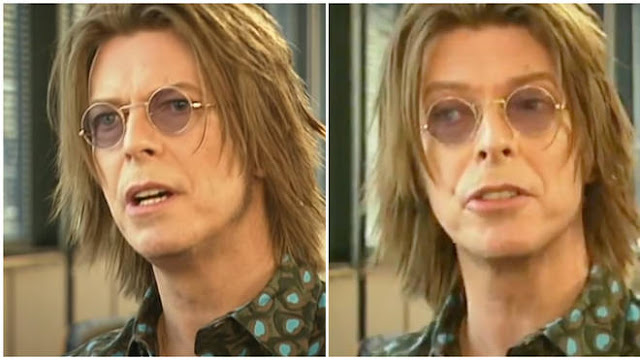
Bowie was, of course, rightly lauded for “pushing the envelope”, to reuse that horrendous cliche. WCM’s Moot is correct in describing Bowie as inspiring those “not only in music, but across all the arts, fashion, and media”. To that add technology: in 1999 Jeremy Paxman interviewed Bowie for the BBC’s Newsnight, asking him about digital technology. “The potential of what the Internet is going to do to society - both good and bad - is unimaginable,” Bowie told a visibly sceptical Paxo, who responded: “It’s just a tool though isn’t it?” “No,” Bowie replied, with wry disdain, “it’s an alien life form [laughs]. Is there life on Mars? Yes, it’s just landed here.” He then continued, presciently: “I don’t think we’ve even seen the tip of the iceberg. I think we’re actually on the cusp of something exhilarating and terrifying. The actual context and state of content is going to be so different to anything we envisage at the moment. Where the interplay between the user and the provider will be so in simpatico it’s going to crush our ideas of what mediums are all about.  It’s happening in every form. That grey space in the middle is what the 21st century is going to be about.”

Picture: BBC Newsnight

The year before, Bowie launched his own Internet service, BowieNet. It was, at the time, ground-breaking: for a monthly fee, members got their own davidbowie.com email address as well as  exclusive access to audio and video recordings. They could also participate in chat rooms, which Bowie himself often popped up in. At the time most other stars’ websites were pretty dry affairs, but not Bowie. It was, one user recalled, the first attempt to create an Internet community around an artist. He even used it to crowd-source ideas for new music, with the track What's Really Happening? later appearing on the Hours album. 1995’s Outside drew on a bespoke software application called Verbasizer, into which Bowie typed in different sentence which were then randomly selected and turned into the source of new songs. Four years later Bowie participated in Netaid, a streamed concert that drew an online audience of more than two million, then a record. His enthusiasm for his own online venture waned as the 21st century dawned, and Bowie’s much publicised health issues in 2004 saw him effectively withdraw from public life.

This week’s Warner deal is not, though, the first time that Bowie’s music has been monetised. In the mid-1990s a scheme was devised by his financial manager to sell asset-backed securities, nicknamed ‘Bowie bonds’, which paid out a share in future royalties for 10 years. Another deal, with EMI, saw Bowie sell bonds on the back of royalties from the albums he’d released between 1969 and 1990, but the venture suffered from the music industry downturn in the early 2000s. Even that was something Bowie had predicted in 2002, when he told the New York Times that music would become “like running water or electricity”. He’d foreseen the rise of streaming, with the meagre returns for artists we now know about, and its impact on physical media sales.

All of these exercises serve as a reminder that pop music is rarely as altruistic as either art or ‘just’ an entertainment medium. Business, as The Beatles found to their cost, often gets in the way. But while the Bowie estate’s deal with Warner Music is another chapter in the posthumous commercialisation of his career (which has generated a steady stream of box sets and special editions over the last few years), it shouldn’t do anything to fundamentally change either the Bowie legacy, or this fan’s fascination with it. 

There will also be plenty more to come from it, too, in the weeks and months ahead: later this month the 2022 Sundance Festival is expected to premiere a new Bowie film by Brett Morgan (whose credits include The Rolling Stones’ Crossfire Hurricane and Kurt Cobain: Montage of Heck) which pulls together previously unseen live performance recordings, with Bowie’s longtime producer Tony Visconti providing music direction. And then, next month, we will celebrate the 50th anniversary of Ziggy Stardust & The Spiders From Mars making their live debut, at a long-defunct pub which once sat less than three miles from the house I was born in. Kismet, again. 2022 promises to be another busy year in the enduring legacy of the late David Robert Jones from Brixton - and me and my wallet can’t wait.