Showing posts with label Netherlands. Show all posts

Thursday, 9 November 2023

No more messy nights - the Amsterdam party is over

© Simon Poulter

When I moved to Amsterdam, 24 years ago, there were innumerable comments along the lines of: “Oh yeah... Amsterdam, eh?! EH?!! Nudge-nudge, wink-wink, EH?!!”. 

To the uninformed I was relocating to a cesspit of iniquity, a European Gomorrah of rampant drug taking and prostitutes for sale in the windows of every street. Everything, people supposed, a single man in his early thirties could desire. Except it wasn’t. Because Amsterdam wasn’t - and isn’t - like that at all. 

Yes, the notorious red light zone de Wallen (“the walls”) exists, with its women – most probably sex-trafficked - sat in illuminated windows looking bored while awkward men leer at them from the outside. And, as you walk through quaint backstreets, the barely disguised whiff of weed tickles the nostrils as it pours out of semi-legal coffee shops. However, this is just a tiny slice of Amsterdam, one of the jewels of Europe, with its Instagramable canals, medieval architecture, vibrant culture and a history and charm matched only by the likes of Paris, Seville or Prague.

I am naturally biased, having once lived in or near Amsterdam for the better part of a decade, as well as being a frequent visitor for almost 30 years. To some extent, too, the seedier side isn’t as bad as it could be (ditto, Hamburg and its somewhat cartoon-like Reeperbahn), but I get where the city authorities, and indeed the Dutch government, are coming from in wanting to clean it up. 

Conscious of this reputation, tourists are even being discouraged from visiting the de facto Dutch capital, though this was initially a measure to cut down on overcrowding. An environmental measure was also introduced to cap flights arriving at Schiphol, Amsterdam’s massive, seven-runway international air hub, which this year alone has reduced the number of flights from the UK by 22% compared with pre-Covid travel. The Netherlands Tourism Board has even been actively promoting places alternatives like Eindhoven - a city I know well from my career at Philips, which was founded there. 

But with the exception of football nerds wishing to see the PSV Stadion, or the even more niche interest of the Philips lightbulb museum, Eindhoven is largely a ‘company town’ with little to offer tourists compared to the cultural riches of Amsterdam’s Rijksmuseum and Van Gogh Museum, the Anne Frank House, the canals or the Negen Straatjes (‘nine streets’), not to mention its wealth of cross-culture cuisines.

Amsterdam has always been one of the most welcoming cities in Europe, in one of the world’s happiest nations, according to research by the Organisation for Economic Co-operation and Development. But those same people are understandably tired of the stag-weekenders who spend their time in the city getting drunk, fighting outside bars and urinating in canals (before then falling in), or swaggering about the red light zone leering at its most unfortunate residents. 

This has now been reflected by an online campaign specifically targeting 18-35-year-old British men, with one ad showing a young man being arrested and put in a cell with the atypically Dutch-blunt caption: “So coming to Amsterdam for a messy night? Stay away.”

In recent years the city has made efforts to combat the vice industry (believed to be controlled by a combination of rival Turkish and Albanian organised crime), both to cut down on the sex tourism as well as the exploitation of vulnerable women. The drugs trade, run by the same gangs, has long been associated with this, with politicians arguing that the liberal experiment, dating back to the 1970s, which legitimised cannabis use as long as it is sold in limited quantities in coffee shops, has failed. Weed sales have been regarded as a gateway to sales of harder narcotics, all with associated criminality invariably leading to violence.

When I moved to Amsterdam in 1999 moves were already in place to tackle drug tourism, prompting a national ban on the sale of magic mushrooms and an increased regulation of cannabis sales, and aimed at striking a balance between tourism and public safety. Simultaneously, concerns about sex tourism and human trafficking prompted initiatives to regulate prostitution and improve the working conditions of sex workers. There were also measures to reduce the visibility of the red light district, with an effort to redevelop Amsterdam’s central neighbourhoods by encouraging new businesses to move into streets previously dominated by the sex and drug industry.

Sustainable tourism has also been promoted, with a campaign calling for tourists to “Enjoy & Respect” Amsterdam, and embrace its rich cultural artistic heritage rather than its seedier attractions. However, in also addressing both ‘over-tourism’ and sex/drug visitors, businesses relying on tourist euros have expressed their concerns at any effort to drive down undesirabled, especially in the wake of Amsterdam’s post-pandemic recovery.

It is, then, a dilemma. Amsterdam – like everywhere else – suffered greatly from Covid travel bans and lockdowns, as the city’s hotels, bars, restaurants and shops saw business plummet. The campaign against young male Brits is targeted, but it is hard yet to gauge whether it will be either effective in achieving its aims, or detrimental to the local economy.

© Simon Poulter
As a champion of Amsterdam, however, anything which can successfully eradicate city’s “nudge-nudge, wink-wink” association, and works to enhance and embrace its unique identity is a good thing.

The city is more than simply a living museum, but its heritage - dating back to the 13th century when a small fishing village was established along the Amstel River - is more than worthy of protection. This is the city that was at the heart of the Dutch Golden Age in the 18th century, becoming a trading hub, with the construction of its famous ring of canals earning it the “Venice of the North” nickname. Its commercial and artistic foundations are still to be celebrated, either in the traditions established by the Dutch East India Company, one of the world’s earliest multinationals (and the genetic origin of the Netherlands’ global business outlook), the foundation of one of the world’s first stock exchanges – the “Beurs” (although Belgium’s Bruges lays claim to the oldest, its bourse), not to mention the work of Rembrandt and Vermeer during that same era.

There are those who see the see the discouragement of tourists looking to have the wrong kind of good time as being to Amsterdam’s financial detriment, not to mention to the detriment of its charm. But, just as New York – established as New Amsterdam – cleaned itself up in the early 1990s to its immeasurable benefit as a tourist destination, Amsterdam’s crackdown on Brits seeking to exploit its underbelly will go a long way to lessen the profile of that reputation. It will surely only enhance what those like me who know it, know it to be the real Amsterdam.

Wednesday, 14 September 2022

How ARE you?! Selling Sunset, Dutch style

Picture: Netflix

Bored, one Sunday afternoon in early 2004, I drove out of Amsterdam in the direction of Hilversum, a name you’ll know if you’ve ever owned a transistor radio as it was one of the pre-marked positions embossed on tuning dials (the town being the Netherlands’ self-styled ‘media city’ as home to most of the country’s broadcasters due to its hilly position above a mostly below-sea level landscape.

Dutch afternoons in February tend to close in early, so not fancying navigating uncharted waters in the wintry half light, I decided not to make the tour too long and navigated out of Hilversum in a looping direction back to Amsterdam. An arrow-straight tree-lined road took me through a picturesque, wooded area known as t’Gooi, passing bucolic communities which, judging by their properties, were home to the well to-do (media folk and Amsterdam financiers, no doubt) along with working farms. 

Somewhere before the road connected with the A2 spinal motorway that would take me back to the Dutch cultural capital, I made a decision that would prove to be fateful: I turned off the provincieweg and detoured into a cute village containing historic looking chalets, elegantly architectured townhouses and a windmill, with a river running right through it. 

© Simon Poulter 2022

Driving gingerly through minuscule streets I eventually squeezed across a bridge that seemed barely wide enough for a bicycle, let alone my car, and onto the opposing bank, passing through a neighbourhood of modern post-war housing. Eventually I found myself back on the main road and heading home to my one-bedroom shoe box in Amsterdam’s Oud Zuid (Old South). By the following spring, I’d decided that this apartment - which had only meant to be temporary refuge after I relocated from California - had become claustrophobic. 

I asked the relocation agent who’d helped find it what the housing market was like in Amsterdam’s outer suburbs, having in mind something with a bit of space to house my America-fattened library of CDs and DVDs, and my modest collection of guitars and other musical accoutrements that had been in storage since arriving in the country. A shortlist of six houses was drawn up, with visits planned to all of them in the space of a single Tuesday. The sixth and final property was in the village I’d taken a detour through just a few months before. This was the house that I made my home that July.

Last week, after 18 years of ownership, I said goodbye to it. Circumstances have prevailed in the intervening years, eventually returning to London after 17 years abroad and, now, with a wife and a home of our own to maintain. My little bolthole in the Dutch countryside had become superfluous to requirements. That’s life.

Now, don’t get me wrong: selling up was bittersweet. I’d never owned an actual house before, just a flat in Surbiton (and various rentals and flatshares), so there was something satisfying about coming home each night to my own front door, my own living room, kitchen, upstairs bedroom and a converted attic that was my home office and imaginary music studio. In the spring, summer and even early autumn, the house had an Italian-style garden at the back in which to chill out, especially after coming home from work. And then there were the neighbours: I can’t speak highly enough of the families who lived around me, who welcomed this lone Englishman into their midst in the summer of 2004 (and put up with his English-speaking ignorance and occasional, futile attempts to converse in Dutch). Even towards the end of the selling process, they were of enormous help, taking care of things I was unable to do from London. If there was one downside, it was that - as rural villages go - it could be a little cut off. Amsterdam was only 20km away (the skycrapers of the city’s south-eastern business district could be seen in the distance across billiard table-flat fields), but unless you had a car, you may as well have been living on the moon. With a car, commuting and socialising was easier than it is here in London, with its nose-to-nose packed morning trains and choked city streets. 

© Simon Poulter 2022
Still, though, handing over the keys to the house’s new owners brought a mixture of emotions. I was delighted, first, to have sold the house in a steadily flattening market, but secondly to a young couple just starting out on the property ladder. They, too, were moving out of the city. But even on the morning of the handover, I was reminded acutely of how life in the area was just so unrushed, despite being close to one of Europe’s liveliest cities - buying champagne for my neighbours in the picturesque village of Abcoude or stopping for a coffee in the timeless marketplace of Breukelen, just down the road (and the town from which New York’s Brooklyn gets its name).

I grew up in a village, albeit a London suburb (where I live again today) which the locals call ‘The Village’. It isn’t one, of course - just another piece in the jigsaw puzzle that is conurbated London - but you see what they mean. In our street there is a similar sense of the neighbourliness I experienced in my Dutch village, wherein neighbours both know your business, but also would do anything for you when called upon. It’s almost from another time.

The process to sell the house was as accelerated as it was to buy it in the first place. With the Dutch summer break fast approaching, not to mention the cost-of-living crisis threatening to deflate the country’s property market, I needed to move quickly. Here’s where my force-of-nature estate agent Gwen came to the fore. We’d been in touch for several years, dating back to a time when - as these cycles go - Dutch property was undergoing another of its capricious periods. I kept my patience. When the time came to get on with selling, Gwen connected me with all the decorators, repairmen, gardeners and cleaners I would need to ensure it was in tip-top condition, operating at a remote distance from the UK to get the house ready for sale. Simply put, it just happened. 

For a profession as maligned as estate agents, Gwen was diligent to the core. Mine may not have been the biggest house sale she’ll ever preside over, particularly in an area containing million euro mansions, but even with my modest little drum, I felt like I was being given top priority. Even more so, given that much of the process was being handled in a language different to mine (though the Dutch gift for linguistics meant that my laziness was tolerated throughout).

Contrast my experience with the disturbingly addictive Selling Sunset reality shows on Netflix. They have become a fixture in our house. I would like to say that it is my wife and step-daughter who watch them, with me occasionally looking up from my iPad and harumphing, but that would be a bare-faced lie. 

For the uninitiated, Selling Sunset, and its new sibling Selling Sunset OC, are fly-on-the-wall shows about the Oppenheim Group, a high-end estate agency operating in the rarified echelons of Los Angeles’ priciest neighbourhoods and, latterly, the equally expensive coastal cities of Orange County, to LA’s south. Looking at these trash TV series from one viewpoint, I know LA very well and we recently had the final component of our honeymoon in the OC’s Huntington Beach (dining out in places like Laguna Beach and Balboa Island, which feature in the show), so seeing familiar sights is a draw. But those who’ve seen the shows will know that’s not what draws in the viewers: it’s the absolute bitchfest that ensues each episode as they focus as much on the interpersonal chaos between the ‘cast’ of estate agents (and, evidently, wannabe actors), with their obvious cosmetic enhancements, as they gouge each others eyes out (metaphorically, but I wouldn’t put it past them actually gouging a rival’s eyes) in pursuit of their cut of a mult-million dollar house sale. And seeing as one house in Selling Sunset OC went for over $106,000,000 you can understand the blood thirsty ambition. My eyes are still watering from that.

Sunday, 31 October 2021

It’s very nice to go trav'ling

© Simon Poulter 2021
The last time I set foot in another country - unless Scotland counts as one - was almost two years ago to the week: a cheeky trip to Palma for a dose of autumnal Majorcan sun. The trip also provided welcome respite from a mad 12 months in which I flew 52 times for a job that I ultimately walked away from. I hate to think what my carbon footprint was for the return on that time and professional investment. 

So, apart from our four days in Edinburgh in August, that’s been it for two years. No Air Miles Andy me - until this week, when I spent a few hours in Amsterdam to sort out some personal finance admin put on hold by COVID-19 travel restrictions. You see, while we’ve all been raving about WFH enabled by technology, some things still require face-to-face contact. In my case, a Dutch bank account requiring in-person attention because, even in the age of fintech, it couldn’t be sorted out over the phone. After 18 months, then, of being unable to do anything about it, I grabbed the opportunity of the current, potentially brief window in travel and burned off some of the Avios points accrued during my insane year of travel and popped over to the Dutch capital. As you do. 

Now, I know what you’re thinking: not very green flying to Amsterdam for just two appointments and then fly straight back again. Well, no it wasn’t, but it was also unavoidable. And, I like to think, unlike the hapless Manchester United squad who recently flew to an away fixture with Leicester City, a journey of 100 miles that could have just as easily been taken by train or coach (except, apparently, they wanted to avoid traffic on the motorway). I, too, could have driven to Amsterdam, or even taken the Eurostar, now the city has been added to its services from St. Pancras. But even with a relatively reasonable journey time of just under four hours each way, the logistics wouldn’t have worked without requiring an overnight stay, with more expense and unnecessary absence.

During that year of near-constant business travel I made frequent day trips to places like Paris, Munich, Madrid and Zurich, invariably taking advantage of London City Airport being only a short DLR ride away from Greenwich, where I was living at the time. The airport was built in the 1980s as part of London’s Docklands regeneration, transforming one of the old Royal Docks wharfs into a gateway for City bankers to jet off to Europe’s financial centres and return within the day. Like all airports, London City has been impacted by the dramatic turndown in air travel over the last year, but this week there was no shortage of young, thrusting types who have barely started shaving, wearing polished shoes and sharp suits, furiously tapping away at laptops as they prepared to fly off to meetings at the big accounting houses like E&Y and PWC. That said, you could hardly say that the airport was bustling at seven in the morning as it once would have been. Travel has understandably taken a back seat, and even though it is gradually being allowed to return - this latest half-term holiday has been the first opportunity for many families to take advantage of the relative easing of restrictions - it is still far from ‘frictionless’. 

Before the pandemic, my day trip to Amsterdam would have been almost as easy as catching a bus to go shopping at Westfield. But even just to visit the city for a few hours I had to go through a lot of rigmarole: first, a ‘fit to fly’ COVID test (£39 - ker-ching!) and pre-book a ‘Day 2’ PCR test for my return (£69 - ker-ching again!), upload my NHS COVID vaccination certification to the British Airways website, along with the fit-to-fly result, plus a completed health declaration form for the Dutch government and a Passenger Locator Form for the UK government. All of this so that someone could check that I’d completed the protocols. So far, no one has been in touch, £110 worth of testing later… 

I must admit, once I’d gone through the stress of securing all these tests and paperwork, the actual business of getting on the plane was quite easy. After satisfying BA that I complied with all requirements, my boarding pass was sent to my phone, allowing me to breeze through the electronic gates at the airport, and then on through the now considerably lighter-touch security screening than it used to be, thanks to the installation of advanced scanners that no longer require you to remove laptops, shoes and belts. Arrival at Amsterdam’s Schiphol Airport was just as easy, save for the fact that we Brits can no longer wave an EU passport through the ‘e-gates’, now we’re outside the Schengen Zone (a bit like the Twilight Zone only less fun). Once passport control was happy with my reasons for visiting, I was on my way for the 15-minute train ride to Centraal Station in the heart of the city. The return journey was a little more arduous as BA’s app and self-service check-in kiosks refused to give me my boarding pass. Evidently not all the paperwork uploaded for the outbound flight had been replicated for the home journey, requiring a torturous wait for the check-in desk to open. I suppose this is the price to pay for any kind of foreign travel at the moment and, possibly, for the foreseeable future.

Perhaps, though, we in the UK have been lulled into a false sense of security by the relative lack of health enforcement compared to elsewhere. The travel experience notwithstanding, my brief trip afforded an opportunity to see life outside the UK for the first time since the pandemic took over the world. Although the British media has kept pace with COVID-19 developments around the world, for most of us the intensity has been in our own back yard. Seeing another city, another country, another people and how they took to, for example, mask wearing, was fascinating, almost from the minute I exited the aircraft walking through the airport and then travelling on the transport system it was notably reassuring to see that masks were de rigueur. There was similar obedience in Edinburgh, come to think of it. Just not on London’s public transport network, where COVidiocy remains stubbornly high. That said, the Dutch haven’t been immune to the virus. In a country of just 17 million people there have been 2.12 million cases to date and an estimated 18,000 deaths, though many believe that number could be higher. While I was in Amsterdam news emerged that the Dutch government is considering reintroducing local restrictions amid some of the fastest rising infection rates in Europe, an increase that was “faster and sooner than expected,” according to the country’s health minister, Hugo De Jonge. 

The Netherlands declared its own ‘freedom day’ at the end of September, ending all restrictions with the introduction of a smartphone app-based pass system, requiring proof of vaccination and a negative test to be shown before entering bars, restaurants, cinemas and other public venues. A month on, there wasn’t any noticeable skittishness in Amsterdam, and in restaurants and cafes customers of all ages and demographics dutifully showed their digital passes to gain entry. It was actually quite reassuring to see such apparent civil compliance. 

“After some early consternation, the majority of pragmatic Dutch accepted the [COVID app] pass as a means of resurrecting their social lives while shrugging off social distancing,” wrote the BBC’s Netherlands correspondent Anna Holligan this week on the BBC News website, in a feature in which the corporation’s journalists in Europe reported on the local approach to curbing the spread of the coronavirus. “When I've asked waiters or box-office workers if they want to see the QR code proving my vaccination the answers vary from ‘no, it’s okay, we trust you’ [which was my experience] to ‘we don't actually have the technology’,” Holligan added, pointing out that a recent study had found that around a third of Dutch cafes and restaurants are not scanning the local corona pass at all. 

My experience was mixed: one cafe made the pass voluntary, another asked to see mine, which I didn’t have, but did have both the NHS Travel Pass and another ‘health passport’ resulting from my expensive pre-flight test. Although not officially recognised abroad (though, since Friday, they should be now), the waitress who greeted me at one cafe in Leidseplein decided that she’d seen enough and had better things to do.

In France, the passe sanitaire has become part of daily life, and is essential to do anything, from entering a bar or cinema to getting on a train. COVidiocy, however, also varies across the continent. The BBC’s Hugh Schofield says that traditional French libertarianism has reared up in response to virus measures: “Of course there are people in France who object on principle to having to prove their credentials at every turn.” he wrote. “Every Saturday there are demonstrations in Paris and other cities, bringing together anti-vaxxers with libertarians and protesters against ’health discrimination’. Contrary to what some expected, though, these have not turned into a mass movement, and are dwindling in strength.” Schofield explained that implementation of the passe sanitaire has seen a rapid uptake of vaccinations, regarding it as the key to returning to some form of French social normality. More than 50 million French people have been totally vaccinated, including a large majority of those over the age of 12. Jabs have been incentivised further by an ending of free tests for the virus, meaning that for the passe sanitaire to allow entry to the bars and cafes that are central to French living, people have to show either proof of vaccination or a recent negative (and paid-for) test.

Compare all this with the United States, for many years my go-to choice for holidays. Next week the US opens up again to foreign visitors, but the Land of the Free won’t be quite as open as it once was. In New York, for example, proof of vaccination is required to get into hospitality settings, theatres, museums and other attractions. Masks aren’t required, but it is strongly advised by the city’s mayor. Chicago is different, with masks mandatory in all indoor spaces. In Los Angeles, proof of vaccination is required to enter bars and restaurants, and masks are even required for anyone over the age of two “in all indoor public settings, venues, gatherings, public and private businesses”, according to the local public health authority with rules covering all outdoor events and public transit. Masks are mandatory in Washington DC, and several states including Nevada, Hawaii and Oregon. Ultra-conservative Florida, perhaps not surprisingly, has gone in the opposite direction, with the state’s governor Ron DeSantis even threatening to fine businesses demanding proof of vaccination from customers. All thus in a country where only 57% of the national population has been vaccinated, although the rate of infection in the US is just 225 cases per million of population. Compare that to the UK’s 621 per million, in a country with 67% vaccination.

© Simon Poulter 2021

Back to my trip this week: perhaps the reality of life during COVID elsewhere were at their most stark at Schiphol Airport. In the 30-plus years that I’ve been travelling through it, it has always been a bustling hub, reflecting the historic internationalist Dutch outlook on trade and, therefore, world travel, but also the fact that it has always been a superior shopping experience. I used to joke that Schiphol was essentially a shopping mall with a runway, but last week, as I returned to its airside walkways in the late afternoon, I was shocked by how many shops were already closed for the day. Even some of the airport’s coffee bars - coffee being the lifeblood of Dutch existence - were closed. It was here that I saw for myself just how the pandemic has impacted travel. Like many other places, the Netherlands has suffered a sharp fall in tourists, with the national tourist board revealing that only seven million foreigners took up hotel accommodation in 2020, a drop of 13 million compared with 2019. Inbound tourism from traditional points of origin like the US and Asia decreased by 83%, but even numbers of tourists entering via the country’s open EU borders fell, with visitors from its southern neighbour Belgium dropping by 58%.

The statement-of-the-bleedin’-obvious conclusion from all this is that the pandemic has affected so many aspects of daily life that we used to take for granted. I won’t deny that the amount of business travel I used to endure was something of a privilege, but if one good thing comes out of this global crisis, it’s that digital communications really is a substitute for the expense and environmental impact of air travel in particular. But we can’t not travel at all. As the world debates climate change in Glasgow this week, aviation in particular will come under scrutiny again, especially given the fact that world leaders have all flown to Prestwick to talk about it. 

The world would be a worse place if we couldn’t move around it. Travel really does broaden the mind. We’ve missed having a week or two on a beach somewhere for the last two summers, the simplest of pleasures to provide escape from the mundanities of everyday life. Yes, there are plenty of beautiful places to explore here at home, but taking a plane somewhere should, also, be possible. For me, this week felt like a start.

Sunday, 2 October 2016

Frexit, stage left

© Simon Poulter 2016
So that's it. Seventeen-and-a-half years after I moved to Amsterdam, and embarked on a journey that took me to California, back to the Netherlands and then, since New Year's Day 2011, Paris, I'm back "home". Yeah, London, baby!

Well, I say home, but it really is where the heart is. And mine has been enchanted by Amsterdam's canal-lined streets, the perma-sunshine of the Golden State, the quaint, rural Dutch village where I 'settled' for six years, and then on to Paris. Of course, I've never been that far from the old country: Amsterdam and Paris are barely an hour by plane, five hours by road, and with family and a Chelsea season ticket to return to, not to mention business commitments, it does sometimes feel like I've never been away. But in reality, there’s a big difference to actually living back here again and the frequent commando raids I’ve made over the last 17 years to stock up on Shreddies and deodorant, or to buy suits from Marks & Spencer that properly fit (France doesn’t do suits for someone of my…er…shape - more so short-arsed men who stay stick thin through chain-smoking and thimbles of weapons-grade coffee that renders them nervous energy-burning furnaces).

Returning to Britain after the better part of two decades as an ex-pat brings many new things to get one's head around. When I left in 1999 there was no broadband, no WiFi, and the Internet - which I accessed on a company-provided laptop - was connected to via a tectonically-slow dial-up connection. On top of that, everyone was running around like Chicken Licken predicting that the sky would fall in because of the Millennium Bug. This also reminds me that I left the UK in the 20th century and have now 'returned’ in the 21st. Of itself, this is not a particularly breathtaking fact - as it's been the 21st century everywhere else I've been - but it does shed daylight in on how Britain has changed.

Immigration may have been the extreme sunburn-sensitive topic that dominated the Brexit debate, but it has made for an enriching character shift to many British communities. There's not a café or coffee outlet in London now not exclusively staffed by eastern Europeans (and more power to them - at least they are happy to serve your cappuccino without giving off the sense of the job being beneath them...). A few Christmases ago I took a bus into Kingston-upon-Thames and was struck by the variety of accents and languages being spoken on the top deck. Here, in the area in which I was born and grew up in, were now conversations in Polish or Czech (working in an international community tunes the ears to foreign tongues), as well as Korean, the result of New Malden (my hometown) hosting Europe's largest Korean community, a legacy of Samsung basing its European HQ there a few years ago. And you know what? The Korean supermarkets and street signs, Polish delis, and Lithuanian-run tea shops have brought a new vibrancy to the area.

The other thing I've noticed is how risk-averse Britain has become and how bossy it is as a result. Such is the health and safety culture here that there is barely a trade not required to wear high-visibility attire (including, even, police horses). Viewed from space, I'm fairly sure that the United Kingdom shows up as a fluorescent yellow triangle in the North Sea. In France there is no such paranoia. In fact, health and safety just doesn’t exist. You can walk under construction cranes shifting heavy loads without so much as a “look up” sign to warn you, let alone a 100-metre safety perimeter and mandatory hard hat wearing. As with many things in France, workers are merely an inconvenience to be shrugged at in that inherently insouciant French manner.

Travelling by public transport in Britain is to be subjected to a never-ending babble of reminders and instructions. Actually, orders. Recently I was in a rush to catch the Heathrow Express into London, and I got barked at over the tannoy by the platform guard: “No need to run! Plenty of time!", in a voice not dissimilar to the schoolteacher on Pink Floyd's The Wall ("YOU! Yes, you laddie! Stand STILL!"). This was the same guard who’d shouted at everyone not to board the train until vital security checks were carried out, and then barked at everyone to board quickly. You can’t win.

Once on board a moving train, Bossy Britain subjects you to a running commentary, telling you which station you’ve just left, what station comes up next, what line you’re on, who runs that line, what terminus you’ll end up in. On the London Underground it’s even worse: “The next station is Bank.” “We are now at Bank.” “Mind the gap as you get off.” “Please allow people to get off before you get on.” “Move down inside the carriage please.” “Move RIGHT down inside the carriage please.” “Stand clear of the doors.” “The doors are closing - stand clear of the doors.” “The doors have now closed”. “The next station is Holborn”. I’m sure some public transport workers in Britain are failed wedding DJs - the type who just won’t shut up.

When I left the UK in 1999 I had a mobile phone that made calls and sent text messages. And that was it. Apple was regarded somewhat dismissively as a niche company with overpriced products designed for creative professionals and no one else. I used to drool over Apple Powerbooks in shop windows like Mike Myers drooling over that white Stratocaster in Wayne’s World. And then the original iMac came out, and all of a sudden the idea of an affordable and cool-looking computer at home seemed viable and attractive. I bought one in Amsterdam in 1999, commencing an addiction to the Apple brand as powerful and as financially destructive as an acute crystal-meth habit. Apple cleverly marketed the digital lifestyle, and I have enthusiastically bought into it.

While I'm trawling through the annals of an already-distancing past, let me also mention my football club. In 1999 Chelsea were still flirting with financial near-death, but since Glenn Hoddle had become manager in 1994, and players like Ruud Gullit, Gianfranco Zola, Gianluca Vialli and Frank Leboeuf had been added, the club’s stock had steadily risen.

© Simon Poulter 2016
By the time I set off for Holland, Vialli had replaced Gullit as player-manager, but they were still perennial sixth place contenders. Their 1995 run in the old Cup Winners’ Cup was their only foray into Europe since 1971. I made the decision to keep my season ticket when I moved abroad. Such was the growing popularity of the club, fuelled by the stars now playing in blue, seats for home games at Stamford Bridge were already becoming scarce. Even when I moved to California I decided not to give up the ticket, knowing that a three-year waiting list would be too painful to endure if I had to start all over again. In 2004 the Abramovich era began, bringing with it José Mourinho, and trophies and titles like I’d never seen in my lifetime. It’s going to be nice going to Stamford Bridge more often again, especially midweek games (I’ve only been able to attend one in 17 years), where the jeans-and-sweatshirt uniform of a Saturday afternoon matches is replaced by those who’ve just rushed from the office, wearing a suit and an overcoat, the Evening Standard stuffed in a pocket.

So what have I gained from these years abroad? It’s a chronic cliché to say that travel broadens the mind, but living abroad - especially on "the continent” - has highlighted just how much of an island nation Britain can be. Europeans are different, but not in a physical way. When I first moved to Amsterdam I seemed to be under the impression I was relocating to a developing country lacking supermarkets, flushing toilets or breakfast cereal. I was instantly wrong. The Netherlands is one of the smartest, modern countries in the world, full of people who learn languages in seconds and enjoy a sense of contentment known locally as “gezelligheid”. It’s an almost-impossible word to define, but imagine very tall, healthy-looking people, sitting outside a café with a glass of rosé on a warm summer’s evening, looking smug, and you’ve come close to understanding what gezelligheid means.

© Simon Poulter 2016

And, then, France (I'll skip my two years in the US - a nation you probably know of too well). The opportunity to live and work in Paris was the fulfilment of a romantic ideal I’d coveted over many years, the result of watching too many Alain Delon films and The Day Of The Jackal, and seeing Paris as somewhere stuck resolutely, defiantly, nobly in the 1960s. I dreamed of living in a traditional Paris apartment, like Inspector Clouseau, with a view of the Eiffel Tower from my window. I achieved that, and then some. And the fact is, Paris is still stuck in the 1960s: I recently watched The Day Of The Jackal again and, now familiar with many of the locations (the hotel at the film’s denouement is right opposite a regular meeting point for a friend of mine and I), I saw how the city really doesn’t look any different 45 years on. And I love it for it. When I moved there I wrote a love letter to it (A Paris Love Affair) on my old blog. That love hasn’t dimmed. Yesterday - my last morning as a Parisian - I went out for breakfast and walked part of the way back in brilliant blue-sky sunshine, soaking up the Haussmann architecture near the Sorbonne. A modern, progressive city but one which hasn’t lost touch with its aesthetic charm. Or its passion.

On this I’m conflicted about London. Yes, there’s plenty of ‘the old’ in London to remind you of its history, even its pre-Roman history, but there’s almost too much of the new. 17 years ago I would take the bus to work across Waterloo Bridge and look east to a skyline dominated by St. Paul’s Cathedral. Now, the skyline is dominated by vast monuments to glass and steel, an architect’s wet dream, in which they compete to out-design each other. Over the next few years, it is reported, there will be as many as 250 new skyscrapers going up in central London. On the one hand, it’s a sign of the city’s vibrancy as a place to do business, and even post-Brexit, an indication that things will be fine, after all. But on the other hand, it reminds me of just how architectural conservatism in Paris has ensured the city remains both liveable and effective, but also eye-wateringly attractive every time you step outside the front door.

When I moved to Paris I was warned by lazy British tabloid tropes that my life was going to be blighted by stereotypes. My day would be brought to a crawling pace by slow and indifferent waiters; strikes would impede any form of travel; and I would drown under an ocean of bureaucracy. Well, the last one proved to be fact. France appears to exist purely to provide employment for office workers processing pieces of paper. But the rest? Not really.

© Simon Poulter 2016
There hasn't, even, been much of the legendary French militancy, the spirit of the Bastille and rioting students at the Sorbonne in '68. Apart from aggressive taxi drivers (and outbreaks of riots this summer), I've seen little of this aspect of French expression. With one exception: being a part of the "unity" march on January 11 last year, in the wake of the Charlie Hebdo shootings, was one of the most profound experiences of my life, a tidal wave of more than a million and half people setting off from Place de la Republique. If only it had had the desired effect in warning off those who believe in the Kalashnikov and the suicide vest as the only means of making a statement. Ten months later, I was dealing with the news that two wonderful friends had been caught up in the attack on Le Bataclan. Thankfully, they got out safely. But this was an attack on the freedom you enjoy in Paris. Ultimately, it was an attack on a lifestyle I enjoyed more than anything else in Paris - the cafés and music venues. I won't dwell further on it - there'll be plenty of that from the media next month when the anniversary comes up - but the era of terrorism (including 9/11 - when I was living in California - and indeed July 7, 2005 in London), has become one of the darker undercurrents of the years I've been abroad.

Paris and London are comparable in size and, to some extent, economic influence over the rest of the nation. But while I am overwhelmingly excited to be back in London, there are many things I’ll miss from the last few years in the French capital. Firstly, the people. I’ve made lifelong friends there, but the fact that the city is only two hours away by Eurostar (well, 13 hours, given the number of breakdowns it experiences…) means they will never be far at all. But secondly, the way of living. Small things that make a big difference, like getting to see gigs by Robert Plant, the Stone Roses, Richard Hawley, Johnny Marr, Paul Weller and many others in small, intimate theatres where you’re only a few feet from the stage, as opposed to the cavernous venues these same acts would play on British tours (tip to self: stay tuned to the Paris gig listings, especially given how easy it is to get from London to Paris).

Then there’s the relative ease of getting about. Yes, Paris is still a choked madhouse of drivers riding their car horns, but that’s for those who still insist on driving. Two years ago I sold my car (which had been stuck in a garage, unused, for the previous two years). Owning a car in Paris is an utter waste of time and money. When public transport is subsidised, and your employer pays for your €70, five-zone monthly Navigo card (compare this to the £212 it costs you to travel the same distance each week in London), and there’s a Métro train every two minutes, there’s every incentive to get rid of the wheels. Getting used to this - and things like shopping every couple of days at the local supermarket rather loading up a car once a week at some giant out-of-town aircraft hangar - has brought an enjoyable simplicity to city living, one which I will replicate readily in London by living close to the centre and not going back to car ownership. That sense of simplicity is one of the many things I’ve acquired living abroad. I grew up in London’s suburbs, where car ownership is a near-necessity, but also a status symbol. In the days when a new number plate letter appeared on August 1, net curtains really would rustle avariciously when a shiny new motor appeared on the driveway across the road. I can do without that. Plus, thanks to being a frequent car hire patron over my years abroad, it’s nice to get an upgrade to something fancy on the few occasions I need to rent one.

17 years, out of almost 49, is a large chunk of my life. For example, I’ve spent more time, since passing my driving test, living in countries where you drive on the right as opposed to driving on the left. For 13 years my salary has been paid in Euros, and I’ve loved being able to visit friends in Germany or go on holiday to Italy without having to go near a bureau de change. These are, though, merely material differences.

Over 17 years I’ve seen two nephews grow from children into successful adults, one with a wife and daughter, the other with a self-made career as a personal trainer. A third came along in 2002 and is now a teenager. I’ve seen my brother and sister-in-law become grandparents, and witnessed, periodically, my own parents go from retirees in their late sixties to proud, but increasingly frail pensioners in their mid-eighties, my dad gradually (though slowly) succumbing to that cruellest thief of dignity, Alzheimer’s.

I’ve never been all that far away from my family over the last 17 years, but now I’m going to be even closer. My visits will not be dictated to by the need to get to an airport, phone calls won’t be scheduled around time zones, spare rooms won’t need to be reserved, and Hertz at Heathrow won’t be seeing so much of me. Everything I love about London will be a Tube ride’s away - the museums, the culture, Covent Garden, gigs, HMV in Oxford Street, the theatre, the diversity, an energy matched (or even eclipsed) only by New York. Over the last three years I’ve spent more time for business reasons in London, during which time I came to feel that there was something I was missing out on. Couldn’t quite put my finger on it, but it was there. One way or another I knew I’d be back, and through the good fortune of a job move, I am. I’m back. London, baby! Yeah.


Thursday, 9 June 2016

Are we in or out of Europe?


So this is the eve of an event that could have a profound effect on Europe, that will place the continent in sharp focus, make and break careers, and will have a measurable impact on the economy.

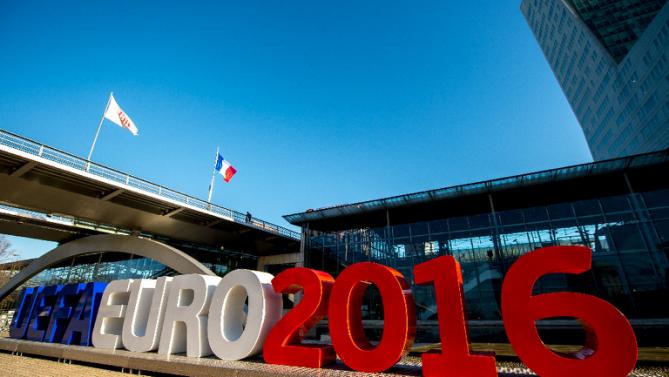
But enough about the Brexit debate, tomorrow night Euro 2016 kicks off, here in France. This will be the third time I've been living in a European Championships host nation - the previous two being Euro '96 (England) and Euro 2000 (the northern half of Netherlands & Belgium). The contrast, however, couldn't be any different.

In 1996, England was awash with the Cool Britannia spirit and fuelled by Britpop. We English were beside ourselves with excitement at hosting the first major football tournament since the 1966 World Cup, and we all knew how that turned out for us. However, if we needed a reminder, there was Three Lions, the song written by David Baddiel and Frank Skinner with Ian Broudie of The Lightning Seeds, with its bittersweet refrain of "Thirty years of hurt".

Everywhere you went, people were singing "It's coming home, it's coming home - football's coming home!". A new national anthem was born, a replacement for God Save The Queen (not the Pistols' version) and an alternative to Land Of Hope And Glory and all those blood-pumpers by Elgar at The Proms. And it fitted right into the cadence of intrinsically English sounds at the time by Blur, Oasis, Pulp and others.


Euro '96 was a magical time. As magical as the 1990 World Cup in Italy had been - even with a similar outcome for the Lions. In 1996 the sun shone and England were on a high. Though their opening game against Switzerland was an unexpected 1-1 stumble, there was that piece of Paul Gascoigne magic in the 2-0 win over Scotland that followed. Then came the 4-1 demolition of the Dutch which came next, along with the abiding memory of away fans clad in their customary luminous orange attire partying throughout London with home fans. There was a lot of love going on. And then England's quarter-final with Spain, one of the fancied teams, which ended 0-0 and had to be decided on penalties, not England's strongest point. Except they won it by four strikes to two and went on to yet another semi-final with Germany. Which they lost on penalties, obviously.

The reason I drag all this up is that the contrast between England in 1996 and France 20 years later couldn't be greater. Well, I say France, but I can only really speak for Paris. But if the French capital is anything to go by, I'm not seeing much excitement here. Yes, there are official flags and banners hanging from lamposts and the enormous Fan Zone is up in the Champ de Mars park behind the Eiffel Tower, but there is no obvious fervour, no cars driving around bearing patriotic penants - nothing to really indicate that Europe's 24 top teams (which, surely, must be almost all of them...) are here for at least the next two weeks, if not the tournament's duration.


Maybe it is a consequence of the gloom I posted about on Monday: the Seine floodwaters may have receded, but the strikes go on, including industrial action by refuse workers leading to piles of uncollected rubbish on the streets of Paris. Coupled with the very real threat of a terror attack or attacks (with fears nuanced heavily by the fact that the national stadium, the Stade De France, was targeted by suicide bombers on November 13), people just don't seem to be enthusing about arguably the world's second most prestigious international football tournament taking place on home soil.

Perhaps it's simply nonchalance, the local sangfroid you grow used to, rubbing off on me. Perhaps it's the weariness we all feel after months of scandal and the foul taste international football administration has left in our mouths. But, either way, Iam yet to succumb to the child-on-Christmas-Eve giddyness I would normally possess the day befor a big tournament. I haven't spent hours studying a free newspaper wallchart, and dutifully transplanting all the dates into my calendar; I'm not au fait with all ten venues; and given that a staggering quarter of the total players at Euro 2016 play in the Premier League, I've failed to be that bothered by the traditional mystique of not knowing who-is-who that accompanies watching nationalities compete with each other.

The sense of local malaise notwithstanding, perhaps my jadedness comes from the fact that, as an Englishman, I've grown used to disappointment. "30 years of hurt" was achingly brutal 20 years ago. When the 50th anniversary of Bobby Moore lifting the gleaming Jules Rimet trophy comes around on July 30 this year, it will be even more painful that, potentially, half a century will have passed without England progressing further than a semi-final in either the Euros or a World Cup.

The closest we've come are two semi-final penalty shootouts. We have, to be honest, and to borrow from José Mourinho, become a specialist in failure. Even that damn brass band accompanying every England match still insists on playing the theme from The Great Escape, which may have been one of the finest films made about the Second World War, but also depicts a brave but ultimately doomed attempt to break out of a German POW camp (76 escaped, 73 were captured or which 50 were shot...). Stirring as the music is, there's a heavy irony to its use in getting crowds going.

It is regularly pointed out that the primary source of our angst may be that we're just not as good as we'd like to think we are, that just because the Premier League is the world's most popular - and lucrative - football league doesn't mean that the English national team can match it. Not for nothing the current European champions, Spain, have such a player foothold in the English top-tier. The debates rage on message boards and in radio phone-ins about the impact of foreign players and coaches on England's chances at a national level (and not just England - it's a debate in other national leagues too).

When you look at England's tournament history since 1966, it really isn't that good. For the nation that invented association football and is, along with Scotland, the joint oldest national team in the world, for every euphoric Italia '90 and Euro '96 there are the ignominious appearances, disappearances and even no-shows at World Cups and Euros. Compare this to the Germans, who've reached 13 finals at either World Cup or European level. Compare this, too, with Spain who've won the European title three times, France twice, and even the Italians, Czechs, Dutch, Danish and Greeks have each won one European Championship trophy since England last touched silverware.

We've been there before, too, with talk of a "golden generation". Even when that illustrious club of gifted young pups from Manchester United were forming the core of the England side, success was elusive. So what this time? No one is going to overdo it. Roy Hodgson does have in his squad an emerging force of prospects - like Kane, Alli, Sterling and Rashford, along with Jamie Vardy, fresh from his Player of the Year exploits at Leicester. But will these relative lion cubs be good enough on the European stage? Talent they have, but not the experience. And, perhaps the stamina, after another gruelling domestic season, though that is too often an excuse rather than an explanation. England might have some enticing options up front, but there's a thinness to their defensive capabilities that only suggests vulnerability.

In the end, the jaded England fan will take it as it comes. We've been disappointed before and we'll be disappointed again, so there's no point pinning even the most optimistic patriotism on this time. Even if we're all surprised but what actually transpires.