Showing posts with label SPECTRE. Show all posts

Thursday, 30 September 2021

You know my name: Bond, James Bond

I may be speaking from an extremely partisan position, but for my entire lifetime - and certainly my culturally-aware lifetime - there has never been anything in cinema quite like James Bond. Even giving a pass to the weaker entries in the now-25-strong ‘official’ series (and you’ll have to read my post from earlier this week to see how the first 24 stack up), the films have, for 59 years, provided a scale and scope of escapism that many rivals have attempted to surpass, but none ever have. No wonder the cinema industry has been hanging on to the opening of No Time To Die with grim determination - and relief that, finally, the film is being released.

This is, after all, Hollywood’s longest-running franchise (anything featuring Godzilla or Sherlock Holmes not withstanding), in an era when bankable repeat business driven by definitive movie brands is what keeps the multiplexes going. To date, the series launched by Albert “Cubby” Broccoli and Harry Saltzman in 1962 with Dr. No has earned a collective $16.3 billion in global ticket sales, according to a calculation by Forbes in 2018. That stat alone underlines just what the almost two-year delay to No Time To Die means to the film industry. As it is, MGM and Eon Productions, the company Broccoli and Saltzman founded in 1961, have spent $250 million making the film (the highest budget ever for a Bond production) and $66 million on promoting it, though no doubt the myriad product placement deals - from the usual watch and car brands to, bizarrely, a limited edition pair of Adidas trainers - will have offset some of that cost.

Nevertheless, while 007 has endured plenty of save-the-world scrapes in his time, the stakes couldn’t be higher for an industry deadened by the global pandemic. Yes, there have been other priorities and, yes, there’s been television and a tsunami of everyone-has-a-favourite streaming recommendations, but there is nothing - repeat, nothing - like the big screen experience. And there is nothing like a new Bond film to experience it through. What the series might lack in Oscar-worthy artistic integrity it more than makes up for in areas that popcorn-munching paying punters actually enjoy, namely a stupidly good time, with the right cocktail of action, confected glamour, a little bit of knowing humour, and a window opened on the world though spectacular locations. Which is why the arrival, at last, of No Time To Die fills me with both unbridled excitement and just a little worry.

The worry comes from the obvious: is it any good? Ever since the ‘Bond 25’ project was announced in 2016, a year after Spectre appeared, expectation has mounted. Of course it did. It always does. The first issue was whether Daniel Craig, who had rebooted Bond when receiving his double-o status with 2006’s Casino Royale, would return. He’d been quoted saying, rashly, that he’d “rather slash his wrists” than play 007 again, but in fairness, he was asked the question not long after Spectre had wrapped. As he has subsequently said in interviews, it was like asking a marathon runner if they’d run another just after passing the finishing line on the first. 

However, getting Craig to sign on for a fifth outing turned out to be the easiest challenge for Bond 25 to surmount: first, Danny Boyle, who was brought in to replace the equally auteurist Sam Mendes (who’d directed Craig's third and fourth, Skyfall and Spectre), walked away amid “creative differences” (allegedly trying to change Bond too much). In came Cary Fukunaga, a relatively unknown director in the genre, but whose work on TV series like True Detective had marked him out as an innovator. In, too, came Phoebe Waller-Bridge at Daniel Craig’s behest, to add a little of her own magic to a script already written by longtime Bond writers Neal Purvis and Robert Wade. All of this further pushed back a release date of what was, for certain, Craig’s final Bond film. But then a global calamity as deadly as 007 had ever faced down forced the opening of No Time To Die to be rescheduled not once, not twice, but three times. 

Now, almost two years after it was supposed to be on our cinema screens, it’s here. Expectation levels are off the charts. Enticingly, the producers have been feeding us delicious scraps of No Time To Die through trailers. From these we’ve pieced together that Craig is joined for a second time by Léa Seydoux as love interest Madeleine Swann, that Christoph Waltz returns, cryptically, as perennial nemesis Ernst Stavro Blofeld, and there is the usual supporting gang of M (Ralph Fiennes), Miss. Moneypenny (Naomie Harris) and Q (Ben Whishaw). And we know that principal villain this time is Remi Malik as Lyutsifer Safin, while Lashana Lynch has kept people guessing as to whether she’s being teed up to play a female Bond (she’s not) as the fellow 00, Nomi. There are gadgets, car chases and shootouts, obviously.

For subscribers to the Bond mythology, No Time To Die also, we’re promised, resolves an arc commenced by Casino Royale. That film wasn’t just a reset of the character’s “sexist, misogynist, dinosaur” ways, as Judi Dench’s M accused Brosnan’s Bond of in GoldenEye, but the introduction of themes that made the character decidedly more vulnerable, emotional even. It wasn’t, however, the dramatic reboot some seem to think it was. But in everything from the cinematography to the characterisations, the Daniel Craig Bond films have marked a tonal shift from the cartoon-like self parody they were, at one stage, in danger of becoming. The Bond producers have acknowledged that 007 had to reflect a post-9/11 reality, in which spies didn’t drink vodka-martinis and drive exotic (and highly conspicuous) sports cars, but actually operated in the shadows, cyphers for governments with a genuine need for secret agents to be just that, secret. This was key to the critical and commercial success of the Jason Bourne films, which redefined the spy-action genre as more dystopian than Bond’s encounters with deranged super-villains. It was a realism that 007 had to shift towards to remain audience-credible.

We don’t, however, want Bond to be another Bourne. We want “Bond, James Bond” with all the Bond traditions, tropes and cliches. And, it would appear, we get plenty of that with No Time To Die. Now that it's opened I’ll spare you any plot spoilers if you’re planning to go and see it in the coming days, but we do already know that it centres around Bond being forced out of retirement after his CIA friend Felix tells him about the kidnap of scientist by the sinister Safin who has seriously dangerous intentions for the world. As they usually do. You’re welcome, of course, to read any of the first reviews that have appeared since Tuesday night’s premiere.

The one hope, going into No Time To Die’s general opening today in the UK, is that it will break the supposed curse of Last Bond Appearance Syndrome. This is the slightly flimsy supposition that the five Bond actors until Craig have all made final appearances in underwhelming 007 outings. I’d dispute that assessment for Sean Connery (Diamonds Are Forever - No.5 on my ranking, posted earlier this week), and George Lazenby only made the one film, On Her Majesty’s Secret Service, which was pretty good (No.7), but it is true that with Roger Moore’s A View To A Kill, Timothy Dalton’s Licence To Kill, and Pierce Brosnan’s Die Another Day, their tenures ended disappointingly. The Den Of Geek website correctly pointed out that No Time To Die brings an end to Craig’s time as Bond after a largely acclaimed run of films, with directors Martin Campbell, Marc Foster and Sam Mendes (twice) taking the franchise into new territory, character and narrative-wise. And now it is Fukunaga who has been given the keys to cinema's most famous and enduring screen property.

Daniel Craig has undoubtedly moved the needle as far as Bond goes, in his 15 years in the role - itself a landmark, albeit one determined by the circumstance of the extended gap between Spectre and now. He caused shock and even denial when first cast for being blond and of a somewhat stockier physical stature than the image first cast by Sean Connery in Dr. No (to the extent that the CraigNotBond movement emerged online amongst those with clearly too much time on their hands). Now it would be hard to imagine anyone else. “I’m in total denial,” co-producer Barbara Broccoli - Cubby's daughter - recently told Variety of the end of the Craig era. “I’ve accepted what Daniel has said, but I’m still in denial. It’s too traumatic for me.” 

It is certainly going to be strange: I grew up in the era of Roger Moore, and accepted the transition to Timothy Dalton and then Pierce Brosnan, but the Daniel Craig films have reinvigorated my love of the entire franchise. This, then, raises the stakes of how Broccoli and her step-brother Michael G. Wilson go about a potential Bond 26. Casting the lead will be the first challenge, given that the media has, since Craig first suggested his time was over, been tripping over themselves with names, from Idris Elba, Tom Hardy and Henry Cavill to Richard Madden, James Norton and, most recently, Bridgerton’s Rege-Jean Page all tipped to replace him. Even Lynch has been suggested as the first female Bond, purely for playing the double-0 Nomi in No Time To Die. However, Broccoli insists that the process to find the next James Bond has not started yet. “Oh, God no. We’re not thinking about it at all,” she told BBC Radio 4’s Today programme on Monday. “We want Daniel to have his time of celebration. Next year we’ll start thinking about the future.” “He’s been such a great Bond,” Wilson added. “Those are big shoes to fill.”

What is certain is that Bond, in Broccoli and Wilson’s eyes, wouldn’t necessarily have to be white and dark-haired in the Connery image. “You think of him as being from Britain or the Commonwealth, but Britain is a very diverse place,” Wilson said to Variety, with his step-sister underlining the seriousness with which they regard the key process of finding their next Bond first, before a 26th film commences development. “For better or worse, we are the custodians of this character. We take that responsibility seriously,” Broccoli said. “He can be of any color,” she added, but stressed the following point: “but he is male. I believe we should be creating new characters for women - strong female characters. I’m not particularly interested in taking a male character and having a woman play it. I think women are far more interesting than that.”

That, in itself, is a key statement, given that political attitudes have shifted with the #MeToo movement. “Bond’s been evolving along with all the other men in the world,” Broccoli told Variety, and to some extent that’s true. In Vesper Lynd and Madeline Swann, Craig’s Bond has been virtually monogamous. That doesn’t mean to say that glamorous women don’t still play a part in 007's lifestyle, but there has been a shift - arguably begun during the Brosnan era - towards less simpering female characters serving more than just lazy eye candy and perpetuating that horrendously anachronistic tabloid term ‘Bond girls’.

The other assurance the Bond team have given is that 007 will remain a cinema proposition. Despite fears (and, surely, the studio’s temptation) that COVID-19 would lead to No Time To Die being released on streaming platforms first, even the acquisition of Eon’s production partner MGM by Amazon has brought pledges by all parties that Bond will remain a big screen attraction first and foremost. Or at least for now. “We make these films for the audiences,” Broccoli has said. “We like to think that they’re going to be seen primarily on the big screen. But having said that, we have to look to the future. Our fans are the ones who dictate how they want to consume their entertainment. I don’t think we can rule anything out, because it’s the audience that will make those decisions. Not us.”

The Amazon buyout has accelerated the discussion. In July, Wilson and Broccoli issued a statement to The New York Times for a piece about MGM bosses Michael De Luca and Pamela Abdy in which they referred to “the continuing success” of the Bond films as being at a “critical juncture”, with its future “dependent on us getting the next iteration right”. They looked to De Luca and Abdy to be allowed to run the studio “unencumbered”, a possibly veiled remark about Amazon as a streaming giant. In the immediate term, fears about parental meddling would be unfounded, especially given that the acquisition is yet to pass regulatory approval, but also, Amazon didn’t acquire the Bond franchise outright, as it is a partnership between MGM and Eon. But still, the spectre, so to speak, of Bond being developed as some sort of television spinoff rarely disappears from view. “I think we’re in denial!” Wilson quipped to Total Film during a conversation about the franchise’s future, and the possibility of 007 appearing in a TV series. “We make films. We make films for the cinema. That’s what we do,” They had resisted the temptation of television “for 60 years”.

Clearly, though, the expectation and excitement generated by the prolonged release of No Time To Die, coupled with the critical and public success it is now generating, will only accelerate the need for Wilson and Broccoli to sit down, soon, and decide where they take their Bond custody next’. “It’s tough to think about the future until this film [No Time To Die] has its moment,” Broccoli told Total Film. “I think we just really want to celebrate this and celebrate Daniel, and then when the dust settles, look at the landscape and figure out what the future is. Although I think one thing we’ve certainly learned in the last 18 months is you never know what the future is.” One thing’s for certain: “James Bond will return”.


Thursday, 20 September 2018

Bond will be back…eventually

Coming out of the shadows...at some point: Daniel Craig as James Bond

So Bond 25 is back on track, sort of. A month after Danny Boyle walked away from the project amid “creative differences” (supposedly, killing off Daniel Craig’s Bond to have the character regenerate, Doctor Who-style, as the next Bond, or something like that…), Bond supremos Michael G. Wilson and Barbara Broccoli - together with Craig - have this morning announced the appointment of up and coming director Cary Joji Fukunaga to helm the much delayed next instalment in the franchise.

While it’s good to know that Bond 25 has a director again, filming won’t commence until 4 March next year, with a worldwide release date of Valentine’s Day in 2020, according to the official tweet, thus breaking the recent production and release cycle of Bond films opening before Christmas.

While this is unlikely to affect audience interest, the delay in appointing Boyle’s replacement and, rumoured, significant rewrites on the script Boyle had favoured, which reportedly had a strong reflection of current global relations with Russia, will mean that it will be more than four years between the new outing and the last, Spectre.

With Daniel Craig already agitating to leave the role after the last film and its physical demands on him, the fact that today’s announcement is jointly from Craig, Wilson and Broccoli is somewhat significant. Craig will turn 50 just two days before filming begins at Pinewood - 31 years older than the youngest Bond on his opening day (George Lazenby).

41-year-old Fukunaga made his name as director of Season 1 of True Detective, brilliantly working with Matthew McConaughey and Woody Harrelson as they investigated an occultist murder in the American Deep South. How that translates to James Bond will, obviously, remain to be seen. Plenty of Bond fans have hoped for a return to a director like Martin Campbell, the New Zealander in charge of Pierce Brosnan’s GoldenEye and Craig’s 007 debut, Casino Royale. Others - namely me - had hoped that Sam Mendes could have been persuaded to direct Craig one last time, after his triumphant work on Skyfall and the sadly under-appreciated Spectre.

Mendes was something of a gamble as a Bond director, being steeped in the theatre and with cerebral films like Road To Perdition and American Beauty to his name, rather than a back catalogue of action-adventures. But as he proved, with the Bond franchise having to adjust to competition from both the Mission: Impossible series and the darker Jason Bourne films, Mendes’ approach was perfect. And, with him stepping away after Spectre, he left the door open for a director of similar tone, Christopher Nolan. The mind only boggles as to what a Nolan-directed Bond would be like, if his Batman trilogy is anything to go by.

So, we wait with interest. 14 February, 2020 seems an awful long way away…

Thursday, 13 October 2016

Your move, Mr. Bond


As friends and family will attest, I have a ridiculous affinity for pop trivia. This only worsens when I find myself in, or perilously close to, a location with a strong pop culture connection. For example, I once spent an afternoon in Los Angeles getting shots of street signs on Mulholland Avenue and Ventura Boulevard just to make a short video set to Tom Petty’s Freefallin’. Later in that same LA trip I risked arrest for 'doing a Hugh Grant' by driving repeatedly through the ‘No Cruise’ zone on Sunset Boulevard, purely - and obsessively - to get the perfect shot of the sun setting in order to match it to Steely Dan’s Hey Nineteen (which begins with the line: “Drive west on Sunset to the sea. Turn that jungle music down, just until you’re out of town”).

In the Seattle suburb of Renton - principle attraction, the factory that makes the Boeing 737 - I spent a wet Sunday morning trying to find Jimi Hendrix’s grave. When I did I was astonished to discover that, at the time (1998), there was nothing more to mark the final resting place of rock’s greatest guitarist than a slab with the outline of a Stratocaster on it and the inscription “James Marshall Hendrix - 1942-1970”. I'm pleased to report that since then the grave has been appropriately ‘upgraded’ with a gazebo that now draws in fans to pay proper respect.

More recently in Paris, on discovering I was living right across the road from an apartment which featured in a pivotal scene in The Bourne Identity, I launched a tour of other locations from the film, mostly to satisfy myself that they were as seen. I’d already set a precedent for such film-nerdishness when I first moved to Paris, realising that I was just around the corner from Avenue d’Eylau, which appears in Thunderball as the HQ of SPECTRE.

Here in Florida this week I am equally doused in film and television trivia, especially due to how much the state has appeared in the Bond films, most notably Licence To Kill and Daniel Craig’s first outing, Casino Royale. Which leads me neatly - if highly tenuously - on to the prospect of whether Craig himself will put in another appearance as 007.


“I'd rather slash my wrists than do another one,” was the somewhat nihilistic statement Craig gave Time Out last year when asked. Even taking a little actorly petulance into account, Craig was reacting to the fact he'd taken such a physical punishing making Spectre. Perhaps, at the time, the prospect of a fifth outing as Bond was too much. Cue a flurry of rumouring and theorising as to who could take over, with Tom Hiddleston instantly installed as lead favourite, purely, it should be noted, on the back of The Night Manager (and despite the fact he would be too fey and too posh). In the same frame came Idris Elba (a good shout, actually), the bloke off Poldark who takes his shirt off a lot, Tom Hardy and Damian Lewis, and sundry other himbos on the Equity register. There were even some creditable attempts by the likes of Gillian Anderson and Emilia Clark to throw their respective hats into the ring.

But, while a female Bond or a black Bond might make for interesting change of direction for the 54-year-old series, it would still be regarded as tampering with the DNA of the most longest-running and lucrative franchise in film history, something producers Barbara Broccoli and her half-brother Michael G. Wilson have had little room to play about with. Whether they or anyone else likes it or not, the mould for the screen James Bond was set by Sean Connery, and Craig apart, the Bonds that have followed - George Lazenby, Roger Moore (to some degree...), Timothy Dalton and Pierce Brosnan, have been more or less the same type.


Craig, of course, was the “wrong” Bond, when he was announced: five-feet-ten-inches and blond. And, yet, he has revitalised the franchise. Some would even say that he has finally unlocked the hold Connery’s legacy had over the character. For those of us - and there are many - who found the final Brosnan outing, Die Another Day an overblown and, frankly, ridiculous mess of CGI and ludicrous plot devices, the Craig films have restored Bond to the gripping spy adventures that Connery established in the first place.

“I got the best job in the world doing Bond,” Craig said on Saturday at the New Yorker Festival, sporting blond hair for a new film which recalled Robert Shaw in From Russia With Love. “The things I get to do on a Bond movie, there’s no other job like it,” Craig said. “If I were to stop doing it I’d miss it terribly. I get a massive kick out of it. And if I can keep getting a kick out of it, I will.”

So, is this a change of heart? Well, for one thing, Craig is believed to be contracted to do a fifth Bond film, but such arrangements are never absolute. However, when challenged about his wrist-slitting remarks, Craig joked: “They say that shit sticks, and that definitely stuck,” adding that: “It was the day after filming [had ended on Spectre]. I'd been away from home for a year,” adding that the physical strains of one of film’s most physically demanding roles had taken its toll.” But, not wishing to appear ungrateful, said: “Boo-hoo. It's a good gig. I enjoy it.”

Even if his comments to Time Out were somewhat in the heat - or the pain - of the moment, his quip about “It would only be for the money” may have a ring of truth about it, being reportedly offered up to £120 million to play Bond again. Officially there are no plans for ‘Bond 25’, but given the way these films are made, don’t be surprised if, next month or in December EON productions calls a press conference at Pinewood Studios.

“A Bond movie is by the skin of your teeth,” Craig explained in New York on Saturday. “You get it shot and six months later it’s released. There’s no time for focus groups. You make the movie and then you put it out. It’s one of the most thrilling things as an actor you can do. It’s the way Barbara likes to shoot.”

Ultimately, Broccoli will make the decision on Craig being offered the role again, or whether they move on. “There’s this constant debate about who's going to be the next Bond,” Skyfall and Spectre director Sam Mendes has said recently. “The truth is – and here’s the headline: it’s not a democracy, it's not The X Factor, it's not the EU referendum, and it's not a public vote. Barbara Broccoli chooses who's going to be the next Bond: end of story.”

Craig himself has confessed to being ambivalent about who might take over the Walther PPK if he did decide not to do a fifth Bond film, but has also suggested that the calibre of replacement needs to be high. “You’ve got to step up. People do not make movies like this any more. This is really rare now. So don’t be shit.” One thing is certain, there’s little chance that Bond 25 won’t get made - this is Hollywood, after all, and if anything, the four Craig Bonds have revitalised the series. Anyone taking over now would be stepping in to a golden opportunity. And for Craig himself? He’s only 48. Roger Moore was 58 when he ‘retired’ from the role, although by then it had become preposterous. Craig clearly has a strong sense of his own ability to play he role. It would be nice to think he’s got one more in him.

Saturday, 16 January 2016

And the winner is...Black Tie, White Noise

Picture: JMEnternational

After a week of truly gloomy news in the entertainment industry, which has seen the deaths of David Bowie and Alan Rickman and, this morning, an announcement that Dame Barbara Windsor will leave EastEnders - for good!!! (I realise that this does sit at one end of the scale...) - it's time to allow regular sniping of the business of show to recommence.

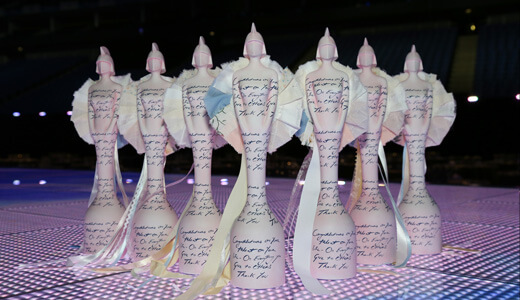
Pop culture is, we must acknowledge without question, what it is. Almost by definition, there is little room for the eclectic and the obscure, and in an ideal world, elitist interests too. The Brit Awards, for example, began as a patriotic nod to HRH The Queen in her silver jubilee year with the appropriately stuffy British sobriquet, the 'British Phonographic Institute Awards', a celebration of the nation's music industry.

Over time, and via disastrous Mick Fleetwood/Sam Fox presenting combos, Chumbawumba tipping ice buckets over ministers of the crown and Jarvis Cocker goofing up Michael Jackson's grandiosity, it has evolved into a giant, paid ticket-only beanfeast at the 02 Arena.

No harm in that: in the 1960s, the annual NME Poll Winner's Party was the must-attend celebration of pop. And, as with all good awards ceremonies, the Brits always feature plenty to get annoyed about. No-one has a monopoly of opinion on what makes good and what makes bad, and taste is 90% subjectivity an probably less than 10% objectivity. But there are times when these awards dos - and I'll come to the Oscars and BAFTAs in a moment - and the nominations therein are just plain baffling.

For many years, the Brits were, as a celebration of the British music industry, less about artistic endeavour and more about recognising the number of "units" shifted. Personally I loathe those industry awards evenings where a load of predominantly male salesmen in hired Moss Bros dinner suits quaff wine, smoke cigars and behave boorishly, and then get the chance to stand on the stage of a London hotel ballroom to receive a trophy from some regional BBC news presenter. That, though, is the sort of environment where record company accountants would best enjoy acknowledgement.

The Brits, though, should be the Oscars of British music, where creative excellence is rewarded, where artistic daring is lauded and, more importantly, rock, pop and all the other genres get to be celebrated for giving those of us who love our music a damn good time. So, what about this year's Brits, nominations for which were announced this week? What sign is there of it being a superb festival of the last 12 month's grooviest choons?

Let's start with one of the perennial clangers, Best British Female. For years, this would feature almost exclusively Kate Bush, Annie Lennox, Yazz, Sade and, possibly, Clodagh Rodgers, even when they hadn't been near a recording studio in centuries. This year's BFF includes a nomination for the definitely dead Amy Winehouse, purely, it would seem, for having appeared on the soundtrack of an admittedly breathtaking film about her ill-fated life.

Inevitably Adele features prominently this year, the living embodiment of both irresistible force and unstoppable object. Depressingly, I don't see there to be any other winner, and although it's good to see the likes of Florence Welch, Jess Glynne and Laura Marling, where are Ellie Goulding and Lianne La Havas?

The nods for British Male Solo Artist - ​Aphex Twin, Calvin Harris, James Bay, Jamie xx and Mark Ronson - just depress on account of the fact Britain is currently lacking any bloke making anything truly interesting. And this in the week that we lost one of its greatest exponents.

Blur lead the odds for Best British Group, ​but with the exception of Foals, the appearance of Coldplay and One Direction, for God's sake, are all too predictable. Would it have killed the Brits committee to have included Noel Gallagher and his High Flying Birds in one of these two categories? Johnny Marr? They are quite good, if you weren't aware...

The Best International Group category has traditionally been a platform for either U2 or Foo Fighters, or Foo Fighters and U2. I may be wrong, but in truly lean years I'm sure U2 have also appeared in the Best British Group category on account of Adam Clayton being born in Oxfordshire. This year the list includes Eagles of Death Metal. As noble as this entry is for representing rock'n'roll defiance (and I'm not going to tread on the sensitivities of those - including two friends - who were caught up in the bloodbath in Paris), surely EoDM could have received a special award? Are they really one of the international groups of the year? Good, though, that the category also includes Alabama Shakes and Tame Impala.

I'm not going to go through every category, otherwise I will end up very angry indeed at the inclusion of Adele's suicidally dreary Hello as single of the year and, worse, Sam Smith's truly abject Bond theme Writing's On The Wall (yeah, I'll say...) for British Artist Video of the Year.

I know that, at 48, I have ascended to that life stage where I can legitimately be a curmudgeonly old fart, but the Brits just seem to lack a certain excitement, true pioneers. They were always meant to be a corporate event, but since getting the Smash Hits treatment, The Brits should at least amp it up and celebrate the actually good things about the British music industry.

I'm not going to re-engage the argument that music was better in the 70s, because it was and it wasn't, and there is no shortage of adventurous, exciting, music coming through now, as there has always been and always will. But for a trade association representing a national music industry that, arguably, has had more impact around the world than any others (face facts America), it should reflect the still-burning furnace of British musical invention with a bit more than Coldplay in any category that will have them.


However, there are greater crimes being committed in this, the season of black tie showbiz piss-ups. This week we've seen the 2016 nominations for the Oscars and their slightly lesser (in the mind of the rest of the world...) British cousin, the BAFTAs.

Whereas the Brits seem too populist and predictable, the film awards have, to some degree, been less so. I'm not so naive that I don't realise how film business politics plays a big part in nominations for the Oscars in particular, but there is something cringingly dismal that, yet again, diversity gets such a poor showing this year.

It should, of course, never be about tokenism, but were this last year's films so bereft of strong performances from black actors and women that the main categories this year shouldn't have a more diverse profile? Creed, Straight Outta Compton anyone...? No. This year's Academy Awards will be the whitest, straightest Oscars in living memory.

But it's not just ethnic or cultural diversity that have been badly served by the Oscars and, indeed, the BAFTAs. What about populism? Sure, The Martian is a big, balls-out bucket o'popcorn blockbuster, and it's actually quite refreshing to see a film like Mad Max: Fury Road get a look-in on gongs (though surely someone's having a laugh putting a post-apocalyptic Mad Max film up for an Oscar in the Make-up & Hair Styling category...).

But where are two of the year's biggest films - SPECTRE and Star Wars: The Force Awakens? It's possible that the latter failed to appear in time for consideration but, still, the lack of properly good, properly popular films - action, sci-fi or broad comedy - in these awards is a frustration as annually predictable as waking up on Christmas morning and not finding the keys to a Porsche under the tree.

Even with its flaws SPECTRE was exceptionally entertaining, and the Bond franchise is continuing to show every other action series how to do it. Likewise The Force Awakens, a staggeringly good romp and one that will appeal to sci-fi obsessives and regular film-goers with equal measure - damn good fun for a couple of hours on a Saturday night, with plenty of humour and pathos.

OK, neither might have, like, 'heavy, themes; neither might have the heft of human emotion stretched to its limits by survival in bear-infested forests or transgender acceptance, but does that make them any less worthy?

For the BAFTAs not to recognise either SPECTRE or The Force Awakens is even more shocking. As an awards ceremony that bigs up its Britishness (and you don't get more cut-him-open-and-he-bleeds-pure-tweed than Stephen Fry as co-host), and yet doesn't recognise two of the biggest commercial hits of the year, which were made on British soil, mostly, and which represent the very best of British acting and production talent, is just embarrassing.

Did I mention daylight snobbery? Of course I didn't. That would be terribly naughty of me...