Wednesday, 25 March 2020

Not going out

So, here we all are. Day 3 of a lockdown (well, partial lockdown). The sun is streaming in through the window to make the living room midwinter toasty. The occasional neighbour scurries past outside, on their way to the supermarket as if popping out for a pint of milk before it pours with rain. Except the forecast is for more spring sunshine. So they'll be making lightning raids on Waitrose, distanced at the front door from fellow desperate shoppers by the two-metre rule, still not knowing whether once inside there will be toilet roll, or anything. Viewed from one angle, there's a post-apocalyptic mood taking over. From another, it's business as usual. Weird times.

Face facts, world, we're in a new reality, something unprecedented in most of our lifetimes. Whereas, once, we may have scoffed at dystopian depictions of contagious invasions, like Danny Boyle's scarily prescient 28 Days Later, Outbreak or even the preposterously watchable Independence Day (conceptually not a million miles from HG Wells' The War Of The Worlds), now we are in it for real. In some respects, this doesn't even compare to the world war my 90-year-old mum lived through, though her humour remains undimmed by the virtual house arrest she now finds herself under. "I keep my stick by the door," she joked when I warned her of a couple of conmen prowling the area claiming to offer doorstep coronavirus tests. It's humour like that that got Britain through the Blitz, albeit with rationing, gas masks, Andersen shelters in the back garden and front gates being melted down to build Spitfires. COVID-19 is testing any national cultural stoicism. And so it should. Barrage balloons and Vera Lynn won't work this time around. Not even a Churchillian prime minister.

To the paranoid and even mildly hypochondriac - me, for example - every contact with the outside world is a potential encounter with the coronavirus, that nasty, spherical bug with the protruding antennae we've seen magnified in the media. Mingling with others in the outside world is one thing, but I'm now looking at objects indoors with suspicion. I'm just counting down the days before Hazmat suits can be bought from Amazon (for vastly inflated prices, obviously). Trust me, fashion followers, the American term "leisurewear" is about to get a radical redefinition. Yesterday I started assembling a home exercise bike with the intention of maintaining my existing health, and came to an abrupt, spine-chilling halt when I'd already removed all the components for assembly, handling the packaging without gloves, and then seeing the sign 'Made In China'. It's a paranoid, borderline racist thought, I know, but I started fretting about where the bike had been packaged, its parts manufactured, and how recently? Irrational, I know, but that's where I am, increasingly.

It's why I now baulk at newspaper pictures of gym bunnies still exercising next to each other at public recreation grounds, or cyclists congregating in Richmond Park to swap stories about rogue gear changes and how motorists are the Devil's work, or whatever it is these Lycra lovers do when they get together. What little micro-biological knowledge I possess (i.e. nothing), I do know that COVID-19 is a tricky little bugger, capable of hiding away in places you wouldn't necessarily find other viruses. We know it can last up to 72 hours on hard surfaces, such as handrails and the poles you find on buses and Tube trains, but precious little understanding on how it lives on fabrics and cardboard boxes. The packaging for that exercise bike is so going up in an almighty pyre, once rules on garden bonfires are relaxed. And they will, as local waste disposal facilities run out of capacity.

You see, COVID-19 is already impacting rational behaviour and thinking. But, then, it is also making normality irrelevant. Crises - and existential crises at that - force everything into the background, but now more than ever. Taken to an extreme, nothing - in the words of Metallica - else matters. The other day Chelsea announced a new player for its women's team and I just thought, 'who cares?'. Why do they even think this is worth tugging our chain for? Good news to otherwise cheer us up? In the space of a month since the coronavirus became so globally prevalent I've become totally disengaged with almost everything, football included, that doesn't involve the health and wellbeing of my family and myself. I really couldn't care less about either the lack of football, when it will start again, who might be playing it and for whom. Indeed, whenever I see tra-la-la tweets from companies puffing what they're still up to, as if the chronically sick elephant in the room doesn't even exist and 'normal' commercial life hasn't changed, I wonder whether reality has actually set in.

Evidence does, however, suggest that the new reality has. We live very close to a major commuter railway station. Street parking spaces start filling up from 6am as people from more expensive rail zones leave their cars here for free before returning to collect them later in the day. Last week, there were one or two spaces left vacant. This week could be the middle of August, and a particularly good August for the travel industry at that. And, yet, still we see images of crowded Tube trains. I'm a tad claustrophobic at the best of times, but the sight of human sardines on the Central Line travelling to construction jobs out of sheer economic necessity fills me with dread, especially when you see the infection models various epidemiological institutes have published, depicting both the virulence of COVID-19 and how even the simplest removals of human moments of content can impair its progress. The sight of those poor workers on the Tube reminds me of one of the grimmest stories of 'normal' life in Britain during World War Two: even as Goering's Luftwaffe was bombing Britain's towns and cities people went to work. The buses and trains ran on time and milkmen delivered the daily pint. Amidst the bombsite rubble, life carried on. Indeed, one of the more horrible illustrations of normality occurred barely a four-minute walk from the sofa where I write these words. On 16 August, 1940, a German aircraft that had been bombing the London-Portsmouth railway that runs through this town, returned to strafe commuters as they disgorged from a train from Waterloo. That didn't stop people going back to work the next day, or for the following five years.

Brits are reputed to thrive on an unflappable stoicism, and humour. The "Keep calm and..." meme you see on this page is based on a motivational poster produced in 1939 Britain as the storm clouds of war gathered over Europe. COVID-19 is no less deadly than the war that was brought to these very streets, but is proving even more indiscriminate. Whereas at first we feared for those over 70 or with the ambiguous "underlying health conditions", now it is taking the young, even those with no known existing health issues. Tin hats and even gas masks won't protect us this time (though a bomb shelter in the garden might). The message is clear: stay at home. Just stay at home. When I read in The Times on Monday of three middle-aged men who met up in Richmond Park on Sunday for "a lunchtime sprint" on their bikes, I actually flinched. "In many ways it's the best time to be out," said one who asked to remain anonymous. "I'm very aware that we're all supposed to be social distancing," he added, "but we're on our bikes, wearing Lycra and pollution masks. I think we'd have to be incredibly unlucky to catch it." That's not carrying on as normal. That's carrying on as one of the most lethal contagions in human history is on the loose, and infecting people with alarming rigour and equally alarming spread before anyone's even realised they've got it.


I've spent the last few months on virtual lockdown, myself, having left my last place of employment in September. Staying in and not going out has been pretty much the norm for me, so perhaps I'm better prepared, psychologically, for the conditions we're all now being forced to adopt. Not that I've lived hermit-like, of course. In those months I've managed to move in with my other half and work on a few projects to keep me busy and my noggin active. That will be the challenge facing everyone now. When my girlfriend's 15-year-old daughter was sent home from school last week due to a teacher shortage, she inevitably treated it as what Americans call a 'snow day'. Others must be treating their first week - possibly ever - of 'working from home' as a bit of a holiday. Some will be bunkered in, worrying about how their mortgage will be paid, or even their grocery bills. If that doesn't highlight the existential nature of this crisis, then hopefully the starker warnings from almost every authority figure that public compliance with the lockdown is only about one thing: saving lives.

"Life," Nicola Sturgeon, the Scottish First Minister, said the other day, "should not be going on as normal". Normality was so last month. Normal, now, is staying indoors, venturing out only when there is a supermarket to visit, briefly, or perhaps for a brisk walk on your own. Normal is remaining within our familial caves. Strange as it may seem, as winter finally gives way to spring, there's a nuclear winter going on out there. The stuff of my childhood nightmares, when I was told that Heathrow Airport would be a target for Soviet nuclear missiles in the event of World War Three, and with a westward-facing bedroom window, I'd struggle to get sleep at night for fear of seeing a mushroom cloud. Now, I'm looking out of our living room window, wondering - no, worrying - what lies beyond it. And when it's going to get me. For now, lockdown means wading through that mountain of music biographies and those DVD box sets put into storage almost immediately after getting unwrapped at Christmas. My compulsive record buying disorder will continue to be served as I crack through the crates of still-in-their-packaging LPs while engaging the good people of my local music shop who've now fully converted to a home delivery service (by bike). Even if I use that exercise bike wearing surgical scrubs, I'll need it to work off the demons of social distancing. Who knows how long this will go on for, or how bad it will get. We're only even now at the start. See you on the other side.

Friday, 13 March 2020

Giving this thing a sporting chance


The first case of Covid-19, The Guardian reported today, citing a South China Morning Post story, can be traced back to 17 November. Evidently, a 55-year-old from Hubei province is believed to have been the first in China to contract the coronavirus, with five new cases being registered daily thereafter in the following month. In the four months since almost 130,000 people around the world have contracted it. At the time of writing it has killed 4,702. It has been classified by the World Health Organization as a pandemic. But you didn’t need to know that, since Covid-19 is now unavoidable as a news story or on your social media timelines. It is the only thing people are talking about when they meet - should they meet - and, frankly, it’s got everyone spooked. As it should be.

Britain, being the island that we love identifying as, is perhaps behind the curve when it comes to responding to the global crisis. As infection rates and deaths have spiralled elsewhere - most notably in Italy - the UK has appeared to have fallen into its default Blitz spirit. “My grandparents lived through two world wars, and we’re not going to let this get us now.” Admirably stoic, but utterly pointless. Not even Herman Goering’s Luftwaffe had a weapon as dangerous, as unpredictable and as undetectable as Covid-19. And yet. At risk of falling into my own default, I can’t help looking at this pandemic through the lens of football. Last Saturday at Stamford Bridge the usual gallows humour was in play. Week-in, week-out neighbours still greeted each other with handshakes, and even Frank Lampard awkwardly opted for an embrace of former boss Carlo Ancelotti rather than an elbow bump - or nothing - as they met at the beginning of proceedings between Chelsea and Everton. Up in the East Stand, the row in front of us was half empty, a whole swathe of seats unoccupied. This could be, of course, just coincidence, but with other gaps visible around the ground, the inevitable conclusion was that a few of the usual 42,000 gave it a swerve due to the outbreak.

Football support is notorious for its machismo. “Come and have a go if you think you’re hard enough” was the confrontational refrain in the days when football violence was conducted with mob force. You’ll recall that during the London Bridge terror attack of June 2017, football fan Roy Larner, who was drinking in the Black & Blue pub when knife-wielding terrorists burst in, decided to have a go, apparently declaring “I’m Millwall!”. Sadly, such bravado will not work against Covid-19. It’s a nasty, sneaky disease, infecting people long before they know it and long after it has been passed on. Which means that since last Saturday, I’ve been just waiting for that first dry cough, that spike in temperature, that unexplained ache.

My paranoia, however, is not being helped by the apparent house of cards that Covid-19 is turning sport into. At first there were mere adjustments: in January, the IOC rescheduled and relocated Olympic boxing and football qualifiers that had been due to take place in China’s outbreak epicentre, Wuhan. By the end of the month China had suspended all domestic football. As February unfolded, sporting events throughout Asia came to be cancelled or postponed, while towards the end of the month, a virus outbreak in northern Italy led to selected Serie-A games being postponed. Almost a month on, and things are dramatically different. Italy is now under national lockdown, and the list of sporting events being cancelled or postponed throughout the world is growing daily. Well, until today, mostly throughout the world. Just not here.

On Wednesday night I saw the stark contrast of approaches. One BT Sport channel was carrying the Champions League round-of-16 second leg between Liverpool and Atlético Madrid. Another BT channel was showing Paris Saint-Germain versus Borussia Dortmund. The difference between the two was startling: Anfield in full voice, the Parc des Princes, where the game was being played behind closed doors, absolutely sterile. The $64,000 question, then, is at what risk were those 52,000 spectators at Anfield put at? Even if the 3,000 Madrid fans went home happy after their dramatic 3-2 win on the night, what else did they go home with? And, given that Spain is starting to show a similar Covid-19 trajectory as Italy, what did they leave behind?

Two days on, and the coronavirus juggernaut has been ploughing through world sport. In the last 48 hours, further Champions League games have been postponed (Manchester City's last-16 second leg tie with Real Madrid being one after the Real first team was quarantined); Spain’s premier league, La Liga has been suspended for at least the next two rounds; three Leicester City players are now self-isolating; Juventus has revealed that 121 members of staff, including players, are now self-isolating after defender Daniele Rugani tested positive for the virus; Manchester City’s Benjamin Mendy is self-isolating after one of his family members was taken ill showing signs of the virus; and now Chelsea have revealed that Callum Hudson-Odoi "displayed symptoms similar to a mild cold on Monday morning" and stayed away from the club’s Cobham training ground in Surrey. Since then, other players have been sent home as a precaution while the club carries out a deep clean of the Cobham facility. Last night, at around 9.30pm, the Premier League announced that this weekend's fixtures would go ahead as planned. 45 minutes later Arsenal revealed that its manager Mikel Arteta had tested positive for Covid-19. 15 minutes after that, the league announced that it would hold an "emergency club meeting" this morning to discuss the crisis further. The outcome of that meeting is now known - the suspension of all “elite” professional football in England (Premier League, EFL, Women's Super League, Women's Championship) until 3 April at the earliest. At the same time, the remainder of the Scottish football season has been postponed indefinitely, and domestic football at all levels in Wales suspended until at least 4 April. Too little too late? Or simply, too late? Hard to tell. Some might say that all remains in the stable is a steaming pile of manure being wafted by a swinging stable door. Football, though, can't be blamed for any further spread of Covid-19, but given that, along with rock concerts, it represents one of the largest institutions in the UK where tens of thousands of people congregate, it surely must - unwittingly - have been playing its part.

Here, then, is where leadership comes in. I’m no medical expert. Indeed, the extent of my medical knowledge is firmly limited to keeping an eye on things that might kill me. So I'm not going to question, for now, the Government’s expert view that the second-phase "delay" strategy is the best to ensure the tail of this contagion doesn't reach into the later part of the year, or even resurface next autumn. But the delay in making decisions on things like sporting events troubles me. There are other scientific considerations. This morning, the UK government’s chief scientific adviser, Sir Patrick Vallance, told Sky News that 60% of the population would need to become infected with Covid-19 in order for the UK to control its recurring impact, applying the principle of “herd immunity” is to create resistance.  to a contagious disease within a population because enough people have become immune, and so it is harder for it to spread. Covid-19 is, Vallance said, a “nasty disease” but was at pains to stress that most victims would only experience a "mild" illness. Tell that, then, to those who will die due to their age, underlying health conditions. He also admitted that the UK is "a little bit behind" other countries. “We’re trying to keep ahead of it,” he said. “We’re trying to lay out the path so people can see what the actions are that are being advised." Banning mass gatherings - like sporting events -  and isolating entire households were merely the next steps being considered by the government, Vallance revealed. Contrast this with comments this afternoon from the World Health Organization’s plain-speaking executive director, Dr. Michael Ryan. Drawing on his past experience with Ebola, he made a sharply-worded comment on the dangers of slow decision making: "The fear of making a mistake is the greatest error in an emergency like Covid-19. The virus will always get you if you don’t move quickly. If you need to be right before you move, you will never win."

Cancelling or postponing any commercial enterprise en masse will always be financially painful and practically challenging. Pausing the football season temporarily will have a knock-on effect, pushing fixtures further into the early summer, shortening the summer break and preparations for the next season. This year's European Championships might have to be moved to next year. EFL clubs already teetering on the financial brink, who need every last cheeseburger sale for their very survival, might go under. But if football - or any of the other sports that are increasingly announcing cancellations or postponements - has to play its part and pay its part, it is, sadly, something we have to accept. Not wishing to be flippant, but invoking wartime sentiment is, perhaps, necessary. In that, Boris Johnson’s comments yesterday actually, for once, counted. I’m no fan of the prime minister, but his stark - and carefully worded - statement that "many more families are going to lose loved ones before their time" was an important piece of expectation management. Just as in a real war - the kind we haven't experienced in my generation - Covid-19 will kill people. Life will have to adjust. And sport will have to play its part in that adustment.

Tuesday, 10 March 2020

"I'll be working from home today..."

Picture: Microsoft

There was a time when “I’m working from home” was a euphemism for “It’s Friday, it’s a lovely day, and I’m off to the park”. Not me, though, quite obviously. But then we went through a phase of “flexible working”, where technology, corporate economics, a pinch of concern for the environment, and an enlightened approach to work/life balance made the option of working from home a desirable company policy. Companies needing to downsize their palatial corporate offices in pricey parts of capital cities found that by encouraging, enabling or merely tolerating people to make use of their own home broadband connections, if you threw in a laptop and a mobile phone, employees could be engaged, connected and productive, while happy that they’d won back an extra hour or two’s work that they would have otherwise spent on the commute.

It should, however, be noted that this apparent utopia is not for everyone. For a start, you can never work from home if that home is cluttered and full of other people. Including pets. Especially cute ones, like cats, which hog your attention without reciprocating the love. Secondly, hogging a table at Caffè Nero while occasionally ordering a basic Americano and topping up the free tap water is both cheapskate and equally not conducive to productivity, because you'll be staring out the window or at other customers, especially those annoying you with a FaceTime conversation sans headphones. The advice, then, is that you should only work from home if you have a quiet, dedicated space in which to work, as if you were in the office. This point assumes two things: one, that you are suitably well off to own a house with a spare room for such an environment, and two, your job allows for it.

Picture: Slack
Now the Covid-19 coronavirus is taking a hold, more and more companies - especially in the US and particularly in California's Silicon Valley - are telling their employees to work from home in a bid to prevent the contagion from wreaking havoc on corporate campuses. These companies and, indeed, employees, are then the lucky ones. Collaboration technologies like video conferencing and workplace social media apps will enable them to function almost like normal. I speak, here, from personal experience of companies where ‘virtual’ working means that only rarely do you sit in the same space as your teammates. In Silicon Valley, for example, where insane property prices spread workers far and wide into the region's ever-expanding hinterland, avoiding the clogged freeways by not having to commute every day is enormously popular. At my last company, when visiting the HQ in San Jose, there was very little pattern to who would be occupying a desk from one day to the next, such was the spread of people throughout the region, from family members living in rural areas south of the city, to younger colleagues living in San Francisco, more than 50 miles to the north.

Closing down such campuses, then, in the face of Covid-19, might well be beneficial in limiting the spread of the virus, while at the same time enabling the giants of technology to continue functioning. That is, of course, unless functions like R&D and engineering are reliant on workspaces, labs and face-to-face collaboration. Here in the UK, we’ve not yet reached the stage of companies telling their employees to work from home, but it will surely come. Clearly, digital technologies have evolved to the extent that productivity and collaboration is almost like the real thing. And companies cutting down on the insane waste of unnecessary business travel is surely sensible, for the environment, for costs and the individual wellbeing of the employees concerned. However - medical advice encouraging homeworking is all well and good if employees can ‘telework’, to use an arcane expression, but plenty will not.

Bus drivers, supermarket workers, warehouse employees, delivery drivers - the list is endless - don't have the luxury of firing up a laptop while still in their pyjamas. Other companies, who don't yet have widespread teleworking practices, won't suddenly be able to dish out laptops or tablets just like that, especially if it requires a fundamental rethink of IT strategy (including concerns about cybersecurity). Which begs the question (and I’m no medical expert), if some employers adopt homeworking while others can't, will that mean Covid-19 still spreads amongst those who can't stay at home and continue working? And are we condemning those who will still have to take trains and buses to their places of work, or who work in jobs where interaction with the public is unavoidable to exposure to the virus and all its potential consequences? I don't want to be flippant here, and suggest that we're heading for some zombie nightmare, with the streets filled with the sick and Ocado drivers wearing full hazmat suits, but I am struggling to get my head around what the increasingly dystopian world is looking like with this virus. It's bad enough that people have been panic buying toilet paper for a condition not known to have any unpleasant symptoms in the lower reaches of the alimentary canal.

What we do know, it would seem, is that it will get worse. The British government's deputy Chief Medical Officer, Dr. Jenny Harries, told Sky News this morning that the UK should be bracing for a major increase in Covid-19 infections over the next couple of weeks. "We will see many thousands of people infected by coronavirus," she told Kay Burley. "That’s what we’re seeing in other countries and the important thing for us is to make sure that we manage those infections." That will probably involve people staying at home for seven days, even with relatively minor symptoms like a runny nose, all with the intention of minimising the epidemic's expected peak (if Italy is anything to go by), and drive the coronavirus into the summer when it could ease up in milder weather.

A shift - even if temporary and only partial in terms of the national workforce - to greater homeworking might well have some impact on the spread of the virus, especially it eases the horror of overcrowded trains and buses at peak hours. "Everyone who can work from home should work from home," William Hanage of the Harvard TH Chan School of Public Health in Bosto told The Guardian yesterday. "The most important thing is that even if it won’t protect you entirely, it will delay you getting infected. And if we can 'flatten the curve' we will avoid the worst consequences for healthcare services." That won't come as much comfort for those who still have to get out there. In that respect, it's not unreasonable to conclude that we'll be creating two classes of people - those who can work from home and those who can't. And godspeed to those in that second camp.

Wednesday, 4 March 2020

And Then There Were Three...again

Picture: Genesis/Patrick Balls
It's the weirdest of coincidences that, on the day that it was announced that Spitting Image is to return, Genesis announce a comeback tour. Phil Collins was, arguably, a deserved target of the show's ribbing back in the mid 1980s when he was, even by his own admission, everywhere. The show's puppeteers even returned the back-handed complement when they provided rubber versions of the band for their Land Of Confusion single's 1986 video. This period was peak Genesis. Peak Collins, too. Even Mike Rutherford was also getting in on the ubiquity with his side project, Mike + The Mechanics, enjoying a string of hits. Former lead singer Peter Gabriel was also in the midst of his own purple patch with the global success of the So album and its hits like Sledgehammer and Don't Give Up, adding to the visibility of the band he co-formed in 1967 and left in 1975.

That, however, Collins, Rutherford and Tony Banks should have, today, announced a tour of the UK and Ireland, 13 years after what appeared to be their farewell tour, is curious. Rumours have been circulating since January of the trio reforming after they were spotted together at a New York Knicks match, a somewhat random event seeing as neither band member had exactly been seen as fans of American basketball. Moreover, a Genesis reunion - even from lifelong fans like me - is hardly something we'd been counting on. Since their 2007 Turn It On Again Tour it had widely been assumed that the band had wound themselves up. Their studio, The Farm, near Dunsfold in Surrey was shut down, Rutherford appeared to be focusing more on his work with the Mechanics, Banks was focusing on his acclaimed classical music work, and Collins...well, he seemed to have been enduring an endless run of ill-health, including his admission of a near-death experience as he succumbed to excessive drinking. Since then, he has appeared increasingly frail, the result of surgery in 2009 on his back, and continued issues with his vertebrae that has rendered him confined to singing from a chair while performing in solo shows as part of his personal own comeback. Sadly, in his most recent TV appearances, he has looked a painful shadow of his impish former self, coming across as increasingly elderly, despite being the younger of the trio (Banks turns 70 later this month, Rutherford catches up in October, Collins next February).


That places questions on the veracity of the tour announced today. For his solo live performances, Collins has drafted in his teenage son, Nicholas, for drumming duties and with eerily authentic effect, too. Collins' haters, while perhaps justifiably knocking his ubiquity in the 80s and 90s, usually forget what an incredible drummer he was, with a unique melodic ability (his signature In The Air Tonight drum fill actually belies his broader talent, first honed in his early days in Genesis, with its influences of jazz and R'n'B drumming). Thankfully, his son has inherited the drum gene, but a Genesis show without Collins Senior and longterm second drummer Chester Thompson doing their mesmerising duets will be somewhat lacking. It's sad, but I guess not everyone goes on forever.

I should, at this point, declare why I'm so defensive of the band, even in the face of whatever music cred I might profess to have. Genesis, to me, are more than some guilty pleasure. They were the first band I saw live (Wembley Arena, 1981); their 1978 album ...And Then There Were Three was the first LP I bought with my own money (MJM Records, New Malden, inevitably no longer there). I even earned my first writing fee reviewing a 1985 Collins gig at the Royal Albert Hall for the NME. They were, along with The Police, Rush, Bowie and Elvis Costello, amongst the first acts I obsessed over, prompting the teenage me to invest in their back catalogue - albums like Nursery Cryme, Selling England By The Pound and Trick Of The Tail, records which would be defined as quintessential prog rock, without anyone - then or still - fully understanding what that term meant. True, some of their songs, like Return Of The Giant Hogweed and Harold The Barrell, were somewhat outré, but in their first true hit, I Know What I Like (In Your Wardrobe), they presented a soulful groove more reflective of Gabriel's R'n'B leanings than of the art rock movement they were seen to be at the vanguard of, along with King Crimson, Yes and Pink Floyd. With The Lamb Lies Down On Broadway, Gabriel's swansong as lead singer, they even introduced a punk element, with the double concept album charting the journey of Puerto Rican street tough Rael's journey into a bizarre New York underworld. The appeal of music like that of Genesis in the 1970s was the combination of storytelling and engrossing music that drew you in to another world. This wasn't trite pop, a moment's entertainment, but something more involving. No wonder their core audience was, for many years, intense, long-haired young men wearing army-surplus greatcoats and a noted lack of female company. Here, though, is where people lose Genesis. Until Gabriel and guitarist Steve Hackett left the band, they were characterised by wonderful but sometimes meandering fantasy songs. That said, Seconds Out, their 1977 tour album, remains my favourite live album of all, eclipsing even The Who's Live At Leeds and Humble Pie's legendary Performance - Rockin' The Fillmore for energy.

...And Then There Were Three marked the start of a move away from quintessential prog. The single Follow You, Follow Me brought them a new, pop audience. Notably it also marked a greater prominence of women at their concerts. And this was 1978, when punk was supposed to have done away with such bands (a myth - John Lennon was said to be a fan of The Lamb Lies Down On Broadway, while The Clash's Topper Headon once rushed up to Phil Collins at an airport to declare his appreciation). With their next album, Duke, they were still storytelling, but Collins' increasing pop influence was already notable, with hits (especially in the US) like Turn It On Again and Misunderstanding sitting alongside distinctly Collins-penned love songs like Please Don't Ask, material that had come out of the same writing for his divorce-inspired breakthrough, Face Value. What followed was the band's transition into a fully-fledged pop band, much like The Police or Madness, I suppose, enjoying hit after hit supported by witty videos that brought them to a global audience in a way they'd never really managed during the 1970s when they were, arguably, at their most interesting.

Here, though, marks the dividing line between diehard fans and those brought to the band via the heavily-rotated MTV hits. Some maintain that Genesis lost their soul when Gabriel left in 1975. I'll maintain that they became enriched by the departure. A Trick Of The Tail, which introduced a reluctant Collins as lead singer in 1976, is arguably their best. But the Gabriel era still hangs heavily over the band's legacy. Even reports today about the 2020 reunion tour couldn't help themselves from mentioning that Gabriel would not be taking part. "Peter left the band 45 years ago and he's been trying to live it down ever since," joked Tony Banks this morning about his former schoolfriend. "When they put his birthday in The Times, they always say, 'Peter Gabriel - Genesis singer.' And I think, 'What's the guy been doing since then, for God's sake?'". Taking a more serious tone, however, Banks pointed out that even if they could persuade Gabriel to join them (unlikely as he turned down the idea in 2005), most of the songs people know came after his departure. Fair point.

Picture: Facebook/Genesis/Stephanie Pistel

There are, then, two testaments to Genesis. The band formed at Charterhouse in the late 1960s, and won their first record deal with Jonathan King by emulating the Bee Gees' sound at the time (pre-disco - think Massachusetts) as he was a fan. They spent their first few albums eschewing the blues-based rock prevalent at the time by fusing pop, rock, classical and even jazz sentiments into something truly unique. I'm never going to win over the haters, here, but the 70s Genesis albums still hold a magic, even in some of their unashamedly less cool moments. I suppose you had to be there.

So, will I be there in November when they tour the UK? I'll be honest, my thoughts are mixed: I've always regretted only seeing Bowie the once (the horrendous Glass Spider show in 1997), same with Pink Floyd. I've seen the Rolling Stones five times now, and would readily go for a sixth, even as they age gracefully/disgracefully. Indeed, the Stones are still the benchmark for venerated acts remaining out on the road. Having seen footage of Collins' recent solo shows I'd be lying if I thought he will be anything like the last time I saw Genesis, at Twickenham in 2007. But here's the thing: despite their live prowess, they have always been about the songs. Indeed, when it looked like their recording career wouldn't take off, they considered themselves songwriters first, writing for others. Tony Banks still exemplifies this, being the least comfortable in the spotlight. The stage school-educated, former child actor Collins was always the more natural performer as a result of his upbringing, although even he was initially reluctant to step forward from the drum riser after Gabriel left.

Of all of the Genesis line-up, past and present, still certainly worth watching live, it is guitarist Steve Hackett. He has been successfully touring the classic albums he played on in their entirety in recent years, highlighting the guitar solos that - not always recognised - were as much signature of the Genesis sound as anything else. Hackett's shows, which have included complete renditions of Selling England By The Pound and his final studio appearance, Wind And Wuthering, have brilliantly fulfilled the 'older' fans' needs, even supplanting Gabriel's voice with the wonderfully eccentric Swedish singer Nad Sylvan. Wisely, Hackett hasn't pushed into the band's catalogue after he left, which saw them move away from the "prog" tag, mixing longer and shorter songs and generally being more accessible (in other words, 'commercial'). The hits that followed will, I'm sure, comprise the bulk of their sets in November, much as they were on their supposed final tour in 2007 ("There are a few old dogs that won't be running," Collins said today, pointing out that what they will perform wouldn't include songs powered by his drumming). With Collins himself no longer able to drum, and if still confined to a chair on stage, part of the energy that made Genesis a genuinely exhilarating live act will be lost. Though reluctant to be the frontman at first, his charisma was core to the band's overall entertainment value, often taking a less than reverent tone to songs which, from a certain angle, could be described as somewhat rarified.

What is certainly not the case is that this tour is one last boost to the pension fund. Having sold more than 100 million records over their 52-year career, what's brought them back to the road is the recreation of something they've missed personally. You can be cynical about that, but having followed Genesis for 42 years, what they do together - like it or not - is something special to them. "We all felt, 'Why not?'" Collins told BBC News. "It sounds a bit of a lame reason - but we enjoy each other's company, we enjoy playing together." Rutherford added that with Phil touring again in the last couple of years "it seemed the natural moment to have a conversation about it." And, he added, it's not like they had been overstaying their welcome in recent years. "I worked it out and we've only done two shows in the UK in the last 28 years, so we haven't over-worked it." I'm sure the shows will sell out - Genesis have proven over their five decades-plus to be impervious to fashion - it's just a debate as to whether the magic will be there again.

Wednesday, 26 February 2020

Sweet birds of youth

Picture: Facebook/Chelsea FC

Many words have, over the decades, been expended on the involvement of English (and Scottish) clubs in European football. I’m neither an archivist or an inveterate Statto, so I won’t bore you with fancy-pants recollections of the giants of the game, past and present, and their exploits (although into that category you still must include Nottingham Forest and Leeds United, even if they’ve lost their way, domestically, since). European football nights have changed, somewhat, in the Champions League era, with its TV rights-hiked, inflationary stadium ticket racketeering, but I think to childhood TV broadcasts featuring the likes of Borussia Mönchengladbach and a Brian Moore TV commentary coming over a telephone line. It was rather exotic, wasn’t it? Players you’d never heard of and probably would never again, scoring wonder goals. Now, you see them once, and expect to see them again within the next transfer window at your own club. These were the days when “the Continent” seemed mystical: you could get away with subtle xenophobia about players with ‘amusing’ names in much the same way as Stuart Hall did during the Jeux Sans Frontières international stages of It’s A Knockout.

Having lived in continental Europe for the better part of two decades, travelling throughout for work and pleasure, some of the exoticism of foreign football has dissipated. Last night, however, I received a sharp reminder that such mystique still existed, when Chelsea entertained Bayern Munich at Stamford Bridge. Chelsea’s European history, in my conscious lifetime, has been something of a Curate’s Egg. For example, there was that Cup Winners Cup run in 1995, which took us to Club Brugge on a night when Glenn Hoddle was in charge and played David Rocastle up front on his own to no discernible impact. It was my first and only European away fixture experience, too and, now I think of it, it was quite surreal: dawn departure from the Fulham Road in what looked like a D-Day column of numbered buses (“Orange 5, Orange 5, Orange 5!!!”, we taunted Purple 7 at a convenience stop), being marched past overly aggressive Belgian riot police, their horses and their dogs, before heading back down the E40 to Calais and a return roughly 24 hours after we departed, suitably chastened by having lost to the single Gert Verheyen goal. Since then, Chelsea have motored through numerous managers of eclectic European origin, and have established themselves - questionably, in some people’s minds - as one of the European elite. Well, we did win it in 2012, in Munich, which I watched from my local pub in Paris. One of the best nights of my life. Period. Last night, Chelsea suspended that status as Bayern took revenge on 2012 and were punished 3-0 on home turf, leaving them without Jorginho and the red carded Marcus Alonso for the return leg. It’s unlikely that there will be a further round for the Blues, even if miracles have happened before.

Perhaps unusually, I’m quite sanguine about it. Head coach Frank Lampard might, as is his duty, be fuming (“They outclassed us in pretty much every department, so it was quite sobering,” he said afterwards), but Chelsea fans should be philosophical. Bayern were, frankly, scintillating, as they were in their 7-2 demolition of Spurs last Autumn. Chelsea are a work in progress. That’s not an excuse, but when you’re comprised of still-developing youngsters and veterans over 30 eying last payday-ahoy opportunities elsewhere, you don’t have to look too far for reasons. It’s just one of those things. Learn from it and move on. God knows what the reverse fixture will be like next month in Bavaria, but I sincerely hope that Bayern don’t take their foot off the pedal, even if the other foot is currently on the windpipe of my beloved football club. Sometimes you just want to see European class, even at your own expense. As I blogged on Sunday, Chelsea weren’t meant to get higher than the bottom half of the Premier League’s top ten this season, so as long as they remain focused on staying in next season’s European places, it will only serve their youngsters’ progress well.

That, still, won’t prevent the boo boys from having their say. The “#LampardOut” tweets are depressingly predictable, even if they come from a myopic minority. Some have even suggested that the club should never have discarded Maurizio Sarri, God help us (though in mitigation he did win a European trophy in his single season at Chelsea). Few football fans are suitably patient when it comes to their beloved clubs. Win handsomely one week and the insistence is that a consecutive win will follow. When it doesn’t, the grumbling breaks out. I’ve seen that this season at Chelsea. After that opening day disaster against Manchester United, things started to look up, and youngsters like Tammy Abraham, Mason Mount, Christian Pulicic and Fikayo Tomori were giving our jaded eyes hope that, maybe, this wouldn’t be a fallow season, after all. But that was delusional. These talented players have tremendous potential (and great prospect for the national side), but to expect them to just step into gear in their debut seasons in the Premier League is asking a lot. Even more so, in their European debuts. That’s not an excuse, just a statement of reality. What Frank Lampard and his coaching staff have to ensure, however, is that it doesn’t become an excuse for them, either. Lampard might be a club legend, rightly revered, even more so than his ‘Captain, Leader, Legend’ teammate John Terry, but that still doesn’t immunise him from Roman Abramovich’s all-seeing eye. Just look at the treatment of the late, great Ray Wilkins.

Taking last night’s Round-of-16 first leg tie into account, Lampard’s job is and shouldn’t be at risk. Genuinely, Chelsea have a golden opportunity to learn from the experience without recourse. Rarely does that happen in football, even rarer at Chelsea, but if Abramovich and his directors have any amount of common sense, they will treat this season in the correct context. Yes, the loss of Eden Hazard has been painful; yes, the FIFA transfer ban has been significantly restricting; yes, the need to draw on Academy players has been both challenge and opportunity. These aren’t excuses but unavoidable points of mitigation. Losing 3-0 at home to this Bayern Munich is nothing to be ashamed of, even if the goals came in a negative sequence that began with Jorginho’s needless booking. Chelsea had actually played quite well before that point, even if there were early signs of Bayern’s ruthlessness, and the class of Robert Lewandowski and the forgotten capabilities of former Arsenal player Serge Gnabry. It would, though, be remiss to just dismiss the defeat as a combination of unavoidable factors. Alonso - redeemed against Spurs on Saturday - let himself down with two equally avoidable bookings, while Jorginho’s discipline let him down by mouthing off to the French referee to receive a next-match suspension. Stupid. Abraham and Mount both showed their inexperience with wasted chances late on that could have restored some pride had they been properly converted, while Barkley’s inability to complete passes cost dearly. Things to work on? Of course. Things that might improve in the next leg? Unlikely. That’s just where Chelsea are. Like the marathon runner running out of puff, sometimes you can only give so much. These Chelsea youngsters, in particular, still have a lot to give, and in seasons to come will do so. For now, they are where they are. Playing Bayern Munich - already being talked up as European champions-elect - will only serve them well.

Monday, 24 February 2020

Dizzy in the head

Picture: 20th Century Fox
Life, eh? Waking up last Friday morning, I was contemplating a sombre day ahead, taking my mother to the funeral of a neighbour who’d died just a few months shy of her 100th birthday. It was a contrast to the previous evening when I received potentially good news on the employment front (details soon!), but as I affixed my black tie, adjusted my black raincoat and tightened the laces of my jet black shoes, I found myself ‘getting in to part’.

By early afternoon, however, I was wobbling about at the wake, unable to walk straight or even drive my mum home. The obvious conclusion here - and, no doubt, the observation of fellow mourners - was that I was ‘the one’ who always goes a bit too far on the free booze at these affairs and was making a tit of himself.

With my girlfriend, who just happened to be on half term school holiday (she’s a teacher), able to pick us up, I returned home and, after a brief stop to make a colourful and quite loud call on the great white telephone, went to bed. And stayed there. Out cold. For several hours. Even managed to miss my other half go off to the O2 with her daughter to see The 1975, a gig I’d been looking forward to myself. Worse was to come on Saturday morning when it was clear I wasn’t well enough to go to Stamford Bridge for Chelsea’s encounter with Spurs, a fixture I never miss and have even flown halfway around the world to attend in the past. I ended up watching from the sofa through the one eye that could maintain focus (and still did better than VAR...) thanks to whatever had rendered me not only vertiginous but also boss-eyed. What a state.

So, Monday morning (let’s write off Sunday as a day of exclusively pyjama-clad telly watching via the Cyclops eye). Uber to the rescue to take me the 0.4 miles to the doctor’s surgery I only joined two weeks ago. Paging Mr. H.P. Chondriac! I joke, but I had an over-dependence on the medical profession once before: 14 years ago, when I lived in the Netherlands, I was diagnosed with a condition that made me paranoid. Not in the strictest, psychological sense, but to the extent that the slightest heartbeat louder than it should have been, cough that felt richer than normal, or blurred vision (i.e. just waking up), had me down the local quack faster than you could say “Call the midwife”. Thus, I’ve been wary since of tugging any Sawbones’ chain since for fear of unnecessarily declaring the sky to be falling.


On this particular Monday morning, however, I thought there was no other option. Sudden dizziness in a 52 year old is not something to be taken lightly, even if my outward mood didn’t seem to have been affected by whatever lurgy I’d succumbed to. This was probably much to my girlfriend’s annoyance as I was still capable of making awful jokes with lucid judgement. I just wasn’t capable of hauling myself off the sofa all day yesterday for fear of falling over. You can see her point of view.

Anyway, to the doc’s I went this morning, to be diagnosed with BPPV - benign paroxysmal positional vertigo - a temporary condition involving the inner ear suddenly getting confused and making one dizzy and unsteady. Causes are vague, but lack of sleep or stress can be a factor. I was, he said, absolutely right to come in and get checked out. Obviously, I am mightily relieved that it was nothing more serious (Larry David-style, I’d assumed it was a stroke or the sudden onset of a brain tumour - guess that’s why GPs train for 10 years before entering practice...). It’s going to be an interesting week while it works itself out, especially convincing the neighbours that the giddy clot not leaving the house until mid-morning and then wobbling down the street like one of the Geordie Shore cast on a night out is not, as might appear, already Brahms and Liszt, but is just heading, trepidatiously, to Nero’s for a latte.

Sunday, 23 February 2020

A Bridge too VAR


So, possibly the most satisfying Chelsea result at Stamford Bridge in ages, and I’m laid up on the sofa with only one eye open, vertigo sending the room spinning somewhat, and an adjacent bucket reminding me that I might be soon relieved again of what little I’ve eaten in the last 24 hours. Sorry for that image, dear readers, but that’s where I was, yesterday lunchtime. Even in my semi-delirious state (some viral thing, thanks for asking), I was still able to both appreciate the significance of Frank Lampard’s second win over his former master, but also the absolute state of Premier League football at the magic eye of VAR.

Chelsea’s players have cut frustrating figures in recent weeks. I’ve avoided blogging about it as it really should be put into the correct perspective. At the beginning of the season few would have expected Lampard, in only his second season as a manager, in charge of a team comprising youngsters unproven at this level, alongside ageing figures and those who left fans indifferent last season, to be competing at anything above mid-level in the table. Throw in the FIFA transfer ban and the phrase “expectation management” was getting bandied about a fair bit. So, to be still clinging to fourth place and Champions League qualification for next season at this stage of the campaign could be quite rightly considered ahead of plan.

Yesterday’s win over José Mourinho’s Tottenham can be considered a major chalk mark in Lampard’s embryonic managerial career, especially as two months ago he achieved the same in the reverse fixture. Perhaps, though, he was fortunate, that Spurs were without Kane and Son, and the petulant Alli has been benched in punishment for his tantrum in midweek. But Chelsea, too, were forced into their own changes due to the curse of mid-season injuries. It happens, and Lampard, at least, managed to motivate his side to go out there and do a job. I’m not going to gloat, though. Terrific goals from Giroud and Alonso - hitherto virtually unused by Lampard but, hats off, rose to the challenge yesterday - were highlights in a game dominated by both sides losing possession too often in midfield, and the match becoming frustratingly scrappy, even with my diminished vision.

That said, with one eye open and the living room spinning somewhat, I saw Giovani lo Celso’s stamp on the prone César Azpilicueta’s calf as clear as anything, and was amazed that referee Michael Oliver did nothing more about it. The commentary that followed, as a VAR check took another look at the incident, made all the right rational observations. Viewed from most angles it was hard to detect malice. But anyone who knows football knows that these things rarely just happen. And VAR should have concluded differently at the time. For Stockley Park to later admit - admit!!! - that lo Celso probably did stamp on Azpilicueta and they got the decision wrong was an astonishing admission. Especially after Chelsea had been rightly aggrieved by two dodgy VAR decisions on Monday night against Manchester United. 

Margins being what they are in professional football, it’s easy to whinge about decisions going the wrong way, especially when things probably even out the right way as much as not. And, who knows - a red card for Maguire on Monday and the same for lo Celso yesterday might not have made the slightest bit of difference to the respective results. Red cards sometimes have little or no effect on the offending team’s ability. But, still, margins being what they are, who knows? Technology will always improve and evolve. In 1996 I was involved in the launch of the world’s first flat-panel television and it was, frankly, terrible. We still sold every single one, with record companies, advertising agencies and even Chris Evans all wanting to be first to own a TV you could hang on the wall like a painting. 24 years later, you can buy an OLED TV of unfathomable, almost unreal picture quality. It's reasonable, then, to assume that the science behind VAR will only improve, like any other technology. It’s just that currently it’s not fit for purpose. 

Yesterday was, in the words today of The Sunday Times' Jonathan Northcroft, "Another dubious day for the Video Assistant Referee." In addition to the lo Celso incident at Stamford Bridge, Manchester City's 1-0 win over Leicester at the King Power Stadium was marked by more questions over VAR's inconsistencies. Likewise in Bournemouth’s defeat at Burnley, where the south coast team's Harry Wilson appeared to have scored only for VAR to identify a debatable handball beforehand. Football has always been about referees having to make marginal calls with their own eyes. That, though, is what assistant referees, fourth and fifth officials, and eventually VAR were meant to alleviate. VAR was never meant to be a panacea, however, but in its first full season in the Premier League, there has been a tendency for it to be the default decision-making apparatus, not the man in the middle who should still be. What happened yesterday with lo Celso might aggrieve me as a Chelsea fan, but what happened later, with Stockley Park’s admission that they’d got it wrong, should aggrieve every football fan. Pundits, quite rightly, question why the referee Michael Oliver wasn’t just invited to immediately review the Azpilicueta incident on a pitchside monitor. Even that might not have resolved things to anyone’s satisfaction. At the end of the day, even if margins are so tight, and the risk to titles and the millions that can be reaped from Champions League places is so grave, we may have to accept that no technology - not even artificial intelligence - and no human eye can be guaranteed to make the right decision every time. 

Monday, 17 February 2020

A modern tragedy

Fans blame the press. The press blames social media. Social media blames the press. Everyone is blaming everyone else for Caroline Flack’s suicide. It’s an unholy mess. And, yet, at the centre of it all is a life expended prematurely and voluntarily at the age of just 40. A life that, viewed through the television camera, the paparazzo’s lens and even her own Instagram account, was full of fun, laughter and vivacity, the very traits that made her career.

While there is, inevitably, now a lot of whataboutery over what went on when the laughter stopped, you don’t, either, have to be an amateur Freud to suspect that demons lurked beneath Flack's “bubbly” exterior. Posthumous accounts now suggest that all was never perfect in her world. We shall probably never know, however, and nor should we need to or want to. A public figure who contributed to the viewing pleasure of millions is no longer with us. 

Whatever edge it was that she was pushed over on Saturday, we can’t tell. You can’t tell. Suicide might be contemplated as one of a number of solutions to whatever the predicament might be, but I can’t begin to imagine what that final, ultimate decision must have been like to take. And none of us should. All we’ll ever know about Flack’s final hours - even her final minutes - can only ever be circumstantial. We can speculate all we like about the Crown Prosecution Service’s notification of its pursuit of a trial for the alleged assault of her 27-year-old boyfriend, Lewis Burton; or of his Valentine’s Day message, sent in defiance of legal restrictions on contact between the two. We can speculate on Flack’s underlying mental health, or on what triggered the alleged incident. We can speculate, too, on whether the 'tragic clown' syndrome had struck again - an infectious personality masking deep-seated issues. The bottom line is we don’t know. 

It doesn’t matter whether we knew Caroline Flack intimately, whether we knew her only as that giggly presenter of Love Island and The X Factor, or whether our knowledge of her came simply from images of a glamourous woman. I’m not going there myself, and I would strongly recommend no one else does, either, but I dare say coverage of her death in the tabloids, and especially the Mail’s website, is a fetid cesspit of the ignorant, illiterate trollery that could potentially have contributed to her state of mind. I only hope that those around her steered her away from it. The same with social media, a platform she regularly used as a means of connecting with her fans. But this has proven to be a double-edged sword, and even raising the role of social media in her life, especially the ending of it, sends me down the same path as all the finger-pointing at the top of this post. To that apparent Mexican Standoff, the bottom line is that everyone and no one can be blamed for Caroline Flack’s death, even if revelations of bullying and even death threats posted to her on social media will have weighed heavily.

Here, though, is the struggle point. I'm not doubting that Flack was a victim of unwarranted and unsolicited public commentary. That, sadly, is par for the course these days. In this digital age, the public eye is all-seeing, like the giant Eye of Sauron in The Lord Of The Rings. I don’t mean to be flippant by suggesting that. My point is that there is a malevolence to the delicate relationship between celebrities and the public. While, I'm sure, most of those who followed Flack on social media did so with good intentions, social media doesn't legislate for the vile, the stupid and those who simply have no empathy or sympathy for those they troll. Keyboard warriors fire off offensive tweets without any thought for where they land. The issue, though, is whether the famous will now pull back from social platforms: before Twitter and Instagram they were protected by their PR people, agents and managers. When I worked as a showbiz journalist, everything was strictly controlled. Now, a celebrity - should they choose to do so - can control what people see and know about them, and when, simply by apps they carry around on their phones. But that also means those who follow and comment on them have nothing to rein them in. Even Donald Trump seems undeterred by his own Attorney General strongly advising abstinence from Twitter all the while legal proceedings are ongoing for fear of - said politely - making his job harder.

But here I am veering down the very path we should avoid when considering Caroline Flack’s tragic death. Nothing can and would be admissible as a cause. Not even a note, should one ever be found. No one can ever be sure of exactly what was her state of mind or her decision making process at the moment she decided to take her own life. Even if she left a note, it might not even be a reflection of where she stood on the final precipice. Premature celebrity deaths affect us differently to those of people we actually knew and loved. Largely because we’re detached from them. They are mostly abstract in our lives because they exist on a screen or in our ears. I still grieve for the pop stars whose work brought (and brings still) the most pleasure to my life. People like Bowie and John Martyn. Even John Lennon and George Harrison. You can think of Jimi Hendrix or Amy Winehouse, nominally victims of their own weaknesses and taken too young through misadventure. Their legacies live longer than their often fleeting lives. Dying at 40 meant that Caroline Flack wouldn’t be admitted into the ‘27 Club’, but her life in the public eye was just as short as the Morrisons and Joplins of this world, which adds to the overwhelming sense of the tragedy of what happened at the weekend. 

I’ll admit, as I near the end of this post, that I’d never really watched anything Flack presented. I was abroad in the first few years of her TV career, and not being a fan of reality shows, didn’t watch her in Strictly or The X Factor. And I’m firmly not Love Island demographic. So why should I care? I care simply because someone whose life was rapidly born out in public, indeed, whose life was building to a tumult thanks to sudden and very public collapse in her fortunes, ended suddenly and deeply tragically on Saturday. And, full disclosure, it’s a life I only know through the very tabloid press now under scrutiny, who studiously reported on her personal and professional life. Without wishing to be cruel, she courted publicity, to a degree. I’ve been around enough celebrities to know that even when engaging the press through gritted teeth, it’s still a professional necessity, albeit a necessary evil for some. So whether I like it or not, I could be very well part of the blame now being appointed for Caroline’s death. I’m a “media type” - my background in journalism means reading newspapers I might find abhorrent as much as those I like, simply because there’s a need to be ‘across’ the news. But that doesn’t make those papers right - or, indeed, me right for reading them - when it comes to the factors that led to Caroline Flack’s death. Then again, all these circumstances that appeared to have conspired may just be that - circumstances but not necessarily contributing causes. At the end, Caroline Flack’s death may just be a horrendous, ghoulish tragedy, the blame for which could - and, perhaps, should - remain unattributable. And that, sadly, is where it should be left. There are family members, friends and colleagues who now need to grieve and, hopefully, out of the spotlight.

Tuesday, 11 February 2020

Why it might be time to give Top Gear another go

Picture: BBC

I’d hardly say I was a petrolhead, but there was a time when Top Gear was required bloke telly. In its classic line-up (a phrase akin to describing Genesis in terms of the Peter Gabriel era) - and some incarnations on from William Woollard’s inch-of-ankle-revealing, foot up on a bumper, explaining how camrods work - there is little doubt that the triumvirate of Jeremy Clarkson, James May and Richard Hammond successfully transcended oily-fingered motoring journalism to produce, until it started getting tired and predictably scripted, a genuinely entertaining and enjoyable hour of Sunday evening television. True, it relied on laddishness and barely one dimensional humour, but only the most prudish would deny that the chemistry between Clarkson, May and Hammond was real and one of those rare examples of presenters not only drawing the viewer into their world without too much self-indulgence, but also drawing the viewer into the exquisitely filmed pieces they produced.

Clarkson and producer Andy Wilman deserve the credit for that, transforming the original Thursday evening BBC2 ‘magazine’, with helpful items about sensible cars, into something by turns entertaining and aspirational. And then they ruined it. The ‘steak dinner’ incident that led to Clarkson’s departure in 2015, with May and Hammond (and Wilman) rapidly following him out the door, probably came at the right time. By then the jokes were getting old, the stunts corny, and the three-way chemistry starting to appear over-confected. Then they took the same formula to Amazon, where their The Grand Tour (managing to work the ‘TG’ initials into their new venture) felt equally as contrived, and rarely, if ever, worth the Prime Video subscription. Meanwhile, as you may recall, the BBC soldiered on, with a bloated Top Gear reboot presented by Chris Evans, with sundry others including Friends’ Matt Le Blanc and former Formula 1 boss Eddie Jordan, and then reinvented again with just Le Blanc flanked by motoring journalists Chris Harris and Rory Reid (who at least had some industry chops to draw on). And then I switched off. I’d seen it all, to be quite honest. The feature-length films to Africa, Vietnam, across the US and elsewhere in the Clarkson era were, even when veering into pubescent political incorrectness that wasn’t funny at all, brilliant television. Proper travel documentaries that just happened to have motoring as their foundation. But, towards the end of the C/C/H era, they’d run their course.

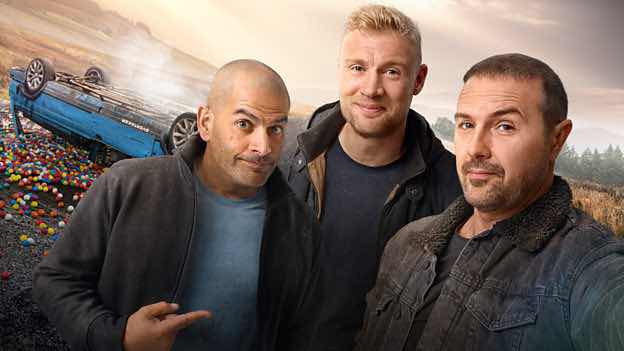
Fast forward, then, to 2020. Top Gear has not only survived further invention that rendered it of little interest, but as of its 29th series, later this year, it is being moved to BBC One. 43 years after the first edition on BBC Two (commencing a nine-episode series commissioned by the BBC’s Midlands organisation and presented by newsreader Angela Rippon and local news presenter Tom Coyne), a show that has been one of the BBC’s most biggest money and audience spinners, via overseas franchises, DVDs, branded bubble bath and all of that, is transferring to true primetime. Cynics - including yesterday’s Guardian - might conclude that this is as much to do with the BBC shoring up its audience numbers as it goes into the next round of discussions about its long-term future funded by the licence fee. It wouldn’t be the first BBC Two-BBC One transfer either: Line Of Duty, Peaky Blinders and Bake Off all made the transition to the bigger viewing potential of the ‘senior’ channel. It may, though, also be recognition of the fact that Top Gear has finally been brought back from the dead by the latest presenter line-up of comedian Paddy McGuinness, ex-cricketer Freddie Flintoff, and the aforementioned Harris. That may come as a surprise if you haven’t seen the latest series, which began in December: a comedian, an ex-cricketer and a motoring journalist doesn’t necessarily sound like the instant formula for reviving a long-standing, much loved but somewhat derided television franchise. But in the shows that I’ve seen, I’ve been warmed by the natural chemistry between the three disparate presenters. And while some of the content has been a little familiar to stunts and capers in the past (the recent race between a McLaren Speedtail and a RAF F-35 Lightning fighter jet copied verbatim the 2007 race between Hammond in a Bugatti Veyron and a RAF Typhoon), everything else has made for enjoyable Sunday evening viewing. Top Gear has zip once more. It is no longer trying too hard to be anything. No wonder it has been reaching viewing figures as high as 4.3 million (though still a way off the seven million peak the show achieved during the Clarkson era). That audience growth is crucial to the BBC One move. The new presenter line-up helped make Top Gear BBC Two’s highest-rated show in 2019, crucially placing it amongs the top four shows for 16-34-year-olds. That demographic is crucial for the BBC as it deals with the existential challenge of losing younger viewers to Netflix, Amazon, YouTube and other online platforms.

Maintaining those figures, with the expectation of taking them even higher, will be crucial for the Top Gear team and for BBC One management. It’s not known, yet, whether the new series will again be on a Sunday night, but scheduling will be critical. Top Gear is in a category of its own: Countryfile on a Sunday evening appeals to those (like me) in search of gentle, bucolic viewing, even with a factual base. A Sunday night drama will work differently again. So quite how three blokes - and there’s a clear emphasis here on blokes - larking around in and with cars remains to be seen where it would fit. That said, the renewed presenter chemistry is one the BBC will not want to mess with again.

Fans have generally rated the show as being “back to its best”, with the presenting line-up drawing most of this favour. Clearly it has proven to be a struggle to get it right since the golden trio left. “People often look at the past through the rose-tinted glass,” Chris Harris recently told the online newspaper Metro. “But if you go back to Top Gear 2000/2002 the chemistry wasn’t there [in the early reboot period], it took time to grow.” The editorial content, however, will also be crucial if the show is to retain its loyal fanbase, judging by some of the online backlash to the recent fighter jet rematch (“All been done before. No new ideas?”, was one remark on Twitter). McGuinness has, though, hit on why the BBC One move makes sense: "The beauty of it is that it's an entertainment show which the whole family can watch - we're not just doing straight car reviews every week,” he told BBC News. Maintaining that entertainment factor, as a factual show at heart, will be key. The show’s current executive producer, Alex Renton, has said that the show is now “less scripted” than in previous incarnations, relying more on the natural interaction between McGuinness, Flintoff and Harris. "I think it's well-known that in Matt [LeBlanc]'s day it was quite heavily scripted because of how we used to work, and now there's just the freedom,” Renton recently said. “They know each other better and the chemistry grows more and more. A huge amount of the backroom stuff is the same, we've had the same crew for years, but there's something about when Chris, Paddy and Freddie are on set together, and it just goes off."

"Top Gear might have miles on the clock,” Renton added, “but this trio has injected some va-va-voom. Their chemistry was immediate, their camaraderie warm." Be that as it may, they are still reliant on the editorial team keeping things fresh. "We like to be involved vaguely in the creative process so we know what's going on and we have some input," Harris told BBC News, "but actually, Top Gear is at its best when the producers spring something on you and we respond naturally to it. The more you know, the less realistic your reactions. So we're in that weird position of encouraging things to happen that we don't know about."

That also feeds the undoubted chemistry between the current trio of presenters. No wonder Charlotte Moore, Director of BBC Content, gushed at the announcement on Monday of the move to BBC One: "Freddie, Paddy and Chris have revitalised the hit series with their escapades and banter; and we couldn't have asked for a better response to their series so far and the impact it's had with young audiences." The challenge, now, is to keep that going whilst in the undoubted spotlight of a prime time slot on BBC One. At 43 years old, it’s time for Top Gear to grow up. A bit.

Saturday, 8 February 2020

I'd love to be in Barcelona...but is it worth it?


It's more than possible that until the brouhaha surrounding the Chinese telecoms vendor Huawei blew up a couple of weeks ago, you'd never have heard of 5G. But all of a sudden, a telecommunications technology that had previously been discussed only in the trade press was front page news, albeit for political reasons rather than industrial. In the days leading up to and including the UK's controversial decision to allow Huawei to potentially supply equipment to the likes of Vodafone, Telefónica/O2, Three and EE, I'd been seething. With the news being reported in the mainstream media by mostly political correspondents, each weighing up the pros and cons from within the British body politic, as well as objections from the White House (which, we are told, led to a furious row between Boris Johnson and Donald Trump), I was constantly reading about the "UK's 5G network" [singular], despite the fact that anyone with a basic knowledge of the situation would say they should be reading about "networks", given that the 'Big Four' commercial mobile services, plus providers of private networks, would be the main actors in any ruling on who they could or couldn't buy 5G kit from.

Then there was the assumption that 5G could only be referred to in terms of conventional mobile functionality. Many in the telecoms industry agree that downloading Game Of Thrones in a fraction of the time you can on a 4G phone is not going to drive 5G. The bigger opportunity will be applications you'll probably never be aware of, like enabling surgeons to carry out operations remotely or making freight ports significantly more efficient. And, yes, there's always the possibility of driverless cars, although I wouldn't hold your breath for that appearing any time soon. But it's this point of what 5G will be able to do, beyond just making your mobile whizzier, that makes the whole row over Huawei more serious. And not just because of  'trust' concerns. 5G will, potentially, become an all-pervasive communications technology, one which, via a number of varieties (in other words, frequencies and wavelengths), will offer different means of access for different types of access need, including 'machine-to-machine' communications and the so-called 'Internet of Things', where devices and sensors talk to each other, speeding up everything from urban traffic to managing factories remotely from the other side of the world.

While the Huawei row rumbles on even further this weekend, a new twist to China's involvement in the development of 5G has occurred, inadvertently. Later this month Barcelona is to host an event that can actually be measured in terms of the city's annual revenue: Mobile World Congress, a gargantuan trade show for the telecoms industry, and an event on the same scale as CES, the monster techfest in Las Vegas each January. Over the last ten years, MWC has become increasingly about 5G, to such extent that the last one I attended, in 2018, was only about the fifth generation technology. Trade shows like MWC are sometimes seen by attendees and observers alike as bloated beanfeasts, wherein tens of thousands of sales people descend to schmooze. In most companies, the sales process is year-round, though contracts are still signed on stands at MWC, an arcane throwback to the days when account managers would attend their company's booths holding clipboards with blank paperwork at the ready. It's an expensive business for exhibitors - for most major vendors, MWC is their single biggest annual marketing expenditure. At Alcatel-Lucent and Nokia, employee attendance was always rigorously controlled, wisely when you consider that a major stand, plus 500 employees taking part, all staying for four or five days in hotels that clearly up their room rates for the week, adding more expense in Barcelona's tapas bars and restaurants, would run to millions.

Which brings me to yesterday's news that Ericsson, the Swedish vendor and nominally one of the three anchors of MWC (along with Huawei and Nokia), has decided to pull out of the show over concerns for the welfare of its employees and customers caused by the spread of the coronavirus. Other companies, including Korea's LG, the chip company Nvidia and China's other telecom technology vendor, ZTE, have also either pulled out of MWC altogether or announced a reduced presence, again due to concerns about the increasing coronavirus spread. These may only be a few of the 2500 exhibitors each year at MWC, but there are genuine fears that Ericsson's departure will be the straw that breaks the camel's back and that others will pullout in the coming days. Nokia could be one of them, with a spokesperson yesterday saying, somewhat inappropriately given the nature of disease, that "the situation is fluid". Like many MWC exhibitors, Nokia also has a substantial footprint in China, with that country being the supply chain base for much of the technology industry. Many Chinese nationals and expats will be travelling from China to Barcelona.

In all seriousness, however, can the major brands really afford to be absent from what is, arguably, the most important industry event this year for the telecoms industry, in the year that 5G is nominally supposed to arrive? I'm sure, too, that some companies' marketing executives are viewing a pullout, even this late in the day, as an opportunity to save money for other projects, again tapping into some of the cynicism that exists over whether these shows are worth it at all. My personal view is somewhat conflicted: MWC is an unbeatable platform for the sharing of news, views and ideas, for networking and for engaging customers and other 'stakeholders', like journalists and industry analysts. Annually, MWC gives everyone a boost. But it comes at a price. By the time everyone gets to Barcelona, they will have experienced the most intense few weeks of the new year, with many companies also having to report their annual financial results in the run up to the show. I, regularly when I attended, would get to the penultimate show day, the Wednesday, and then succumb to terminal man flu. Getting run down and then sick from all those germs travelling in to Barcelona from across the world was a constant hazard for those working at the show, and often compounded by the late nights and early starts (not complaining, but these shows are punishing). Companies are right to question whether the health risks - weighing above financial concerns by a high margin - really are worth it this year, given how the coronavirus spread seems to be getting worse, with cases now being a long way away from Wuhan where the outbreak began. The next few days could prove crucial, both for an event you've never heard of, and for a technology you probably hadn't heard of, either, until a few weeks ago.