Saturday, 2 September 2023

Shutting the window...£1 billion later

Picture: Chelsea FC

It still strikes me as absurd that the new Premier League season is almost a month old and yet, even as late as last night, teams were still doing business before the transfer window shut. This summer’s spend has exceeded £2 billion, and it doesn’t fill me with that much pride that my own club has contributed significantly to that outlay.

Since the Boehly-Clearlake consortium took over Chelsea last summer, it has spent around a billion pounds on new players, some of whom haven’t even made it to a second season, drawing question marks over the scattergun strategy of purchases that certainly marked the 2022 summer window, and continued in January this year.

With Mauricio Pochettino taking over as head coach in July (having been closely consulted in the weeks leading up to him starting work), Chelsea’s summer transfer activity has, at first glance, looked more purposeful, with many of the badly needed positions filled. Looked at from a higher level – with 10 players coming in, and 21 senior squad members offloaded, the club has undergone a complete oil change, to the extent that the only players remaining from the pre-takeover Abramovich era are Thiago Silva, Ben Chilwell, newly installed club captain Reece James, Trevoh Chalobah and reserve goalkeeper Marcus Bettinelli. Oh, and Malang Sarr who, embarrassingly, Pochettino didn’t seem to be aware of when asked about by journalists this week.

If it wasn’t clear before, it should be abundantly apparent now that the player transfusion has been deliberate: capitalise on the net-loss sale of homegrown players like Mason Mount, Ruben Loftus-Cheek and, last night, Callum Hudson-Odoi, and focus on rebuilding around youth – on which Pochettino’s reputation has been built – with players signed for six, seven and even eight-year contracts, with the costs amortised over those periods to lower Financial Fair Play exposure as rules currently apply. 

That, though, is the positive spin: the negative is that somehow Boehly’s spending – which in buying Enzo Fernández and Moisés Caicedo has twice broken British transfer records – Chelsea’s seemingly limitless spree on the brightest young talents around has seen little limit.

Moisés Caicedo
Picture: Chelsea FC

Whether it has been to any good remains to be seen: since 12 August, Chelsea have won one, drawn one and lost one in the Premier League with their expensively assembled squad, while at the same time seen their injury list pile up to 11 – effectively a complete team – with the need for further reinforcements as a result. The latest is 21-year-old Cole Palmer from Manchester City, something of a fringe player under Pep Guardiola but seemingly highly regarded by Chelsea’s talent acquisition experts looking to augment Pochettino’s attacking options further.

The logic to most of the acquisitions is not in doubt, nor the decision to part company with academy-developed and therefore marketable players. Getting rid of ineffective and expensive overheads like Kai Havertz, Romelu Lukaku, Hakim Zyech and Christian Pulisic will have lowered the wage bill, allowing the club to bring in players in their late teens and early twenties on smaller salaries, their exorbitant transfer fees spread over the longer period of their extended contracts.

Graphic: Sky Sports

Whether, though, this approach will keep Premier League and UEFA investigators happy is another matter entirely. In the aftermath of Roman Abramovich’s sanctioning there was a very real chance that Chelsea could have folded, especially as negotiations between the Government and the consortium ran into issues at the 11th hour. The Fair Play aspect does mean that the £1 billion spend since is a calculated risk by Todd Boehly and his partners.

Some will say the risk is worth it, given how phase two of the “project” – this summer’s clearout and subsequent refresh – has brought in players like Caicedo and Romeo Lavia, Christopher Nkunku and Nicolas Jackson. Pochettino’s new broom approach has also appeared to restore last summer’s marquee signing Raheem Sterling to his best, with Caicedo’s arrival freeing up Fernández to look more like the £107 million he was bought for.

With no European football this season and expectations around a largely entirely new squad taking time to bed in alleviating some of the pressure on Pochettino, he has a unique platform on which to build. It’s hard to judge which has been the more beneficial development – new blood or the expulsion of those whose number had grown to create a bloated and largely unresponsive squad under Thomas Tuchel, Graham Potter and Frank Lampard last season.

Of course, with the visit today of Nottingham Forest, Poch will only have four competitive games behind him – three in the league and a narrow, blush-sparing win over Wimbledon in the Carabao Cup on Wednesday night – which means judgement must be reserved in the short-term. But if the club line that this is a long-term project is to be believed, questions will be asked on what measure of success will be an acceptable return for the eye-watering outlay. 

Is, even, a cup this season ambitious for a club that has this year spent £222 million on two midfielders alone? Is a European finish to be expected and if so, are we talking about a Top Four place next May, or a Europa League or even a Europa Conference League place? Note, no one is talking about Chelsea challenging for the Premier League title itself this season, but surely the target must be to match or get close to Manchester City amid renewed challenges from Arsenal, Liverpool, Manchester United, Newcastle and Tottenham.

Nothing is guaranteed, and as Pochettino’s injury woes have piled up, the rug has, if not been pulled from beneath him, certainly shown signs of slipping. On paper he has a wealth of talent at his disposal, but on paper is never a guarantee, as Mykhailo Mudryk has demonstrated following his £88.5 million transfer from Shakhtar Donetsk and a decidedly unimpressive opening spell in the Premier League, which is now curtailed by injury. As we’ve seen so often in football, the heavier the price tag the heavier the weight of expectation, and that may well have been the cause of the young Ukrainian’s decidedly underwhelming displays so far. He, perhaps more than any other squad player, will be Pochettino’s primary target for improvement.

While the astronomical amount of money Chelsea has spent over the last three windows will always be a lighting rod for critics and rival fans alike, the harsh reality is that if it doesn’t result in sustained success, it will only be seen as one of the most profligate billionaire’s folly in football’s most recent history of inflationary excess.

“We need to be careful with the young guys because they need time to settle,” Pochettino said during his press conference yesterday ahead of today’s home fixture against Forest. “We need to settle all the players who have arrived late, create spaces and build a solid structure to perform after.” 

Cole Palmer
Picture: Chelsea FC
He was addressing questions about the £42.5 million arrival of Palmer, the final purchase of this extraordinary window. “He is from Manchester and is going to move to London. London is different, the club is different, the culture is different. He needs to - first of all, before he starts to perform - settle and feel his space. We are not going to put pressure on him to perform. He needs to be happy and calm and find space in this team.”

“He fits the project and he is a young and talented player. Of course, he also decided to come because he expected to play more and be important here. That’s not the most important thing, the most important thing is that he wanted to come because he sees Chelsea as a project for him to improve his game and to maybe be more involved in every single game. But, yes, I think the quality is there. He has great potential.”

Pochettino appeared to suggest that with Palmer his 13th new player this summer the spree will slow down. “We need to explain the reality in the same way - we sign players, we sell players. It is more about net spending than really the money you spend because that’s the balance the club is now trying to get.” Crucially he addded: “This is a very special situation for the club from the beginning but, for sure, the club won’t keep doing for years what they have done in the past.”

For me, the summer transfer window is usually a time of excitement. At Chelsea in the modern era, it’s been one long Christmas Day, lasting from June to September each year. This time around, following the randomness of the Boehly-Clearlake spree last summer and again this January, it’s easy to feel brittle if, for nothing else, the risk to pride if the influx of new players goes tits up. 

Just once it would be nice for Chelsea to be the club people don’t talk about until they’ve achieved something. Tribality normally prevents that, as the barely-acknowledged successes in the Abramovich era serve testament to (amid the near universal deification of the two Manchesters). But the club doesn’t help itself. I’ve always bridled at the suggestion that Chelsea has, for the last 20 years, bought success, as almost every club at the top of the pyramid is guilty of the very same. I just hope that the price tags we’ve seen this summer can be justified on the pitch, and the new intake give us up in the stands something to be genuinely excited about.

Friday, 1 September 2023

Now that is Fighting Talk!


It is a mild and slightly damp Saturday morning at the beginning of October, 2003. I’m in my car negotiating the tramlines that run along the streets of Amsterdam while touring neighbourhoods in the search for somewhere permanent to live following my return from a two-year sojourn in California. Being the typical Brit abroad, I’m listening to the BBC on the radio, but given the trams’ overhead power lines interfering with reception, the best I can hear is a very crackly 5 Live on AM. 

Through the signal that fades in and out, I realise that I’m listening to the rat-a-tat-tat schtick of Johnny Vaughan, the former Big Breakfast co-host, who appears to be presenting some sort of sports quiz. The panelists are footballer Stan Collymore, the now ubiquitous comedian/actor/game show host Bradley Walsh (who is also an ex-professional footballer), sports writer Will Buckley, and Canadian DJ and sports nut Greg Brady, dialing in from Toronto. From what I can tell through the electrical interference, it’s a high-bantz experience.

It transpires that I’m listening to a brand new show called Fighting Talk, which zips along breathlessly under Vaughan as I try to remember the protocols of Amsterdam driving (basically, don’t, but if you do, give cyclists priority, then pedestrians, and then, if you’re lucky, you). The show ends with a win for Collymore before Vaughan hands over to 5 Live’s afternoon sports anchor and I go about my business of apartment hunting. 

20 years and four permanent hosts on, FT remains a weekend fixture (or, in my case, the Monday morning commute as I catch up with the podcast version) for the duration of any football season when it is on. Its premise is punditry, but not the monotone of Match Of The Day analysis. Instead it is a combination of knowledge and more subjective, often provocative and invariably damn funny opinion, triggered by left-field questions that sometimes only have a passing connection to sport (sample: “Sports people as biscuits”.

Points are awarded - somewhat arbitrarily it seems - for answers and it doesn’t make any difference whether the recipient is a Sport Billy with a Panini sticker book’s worth of trivia in their head, or a professional comedian possessing the sharpness of wit that comes from surviving the comedy club bearpits. And unlike, say, the occasionally po-faced A Question Of Sport, whose sports personalities are invariably anything but, FT works around the absurdities of competitive endeavour. Sport is merely a vessel for the ever-changing panel drawn mostly from sport, broadcasting and the comedy circuit to be quizzed on.

Greg Brady
“So much of sports talk is not interesting,” says Greg Brady, a regular on every FT season since 2003. “With Fighting Talk, though, you get pinned down into actually having an opinion.” Two US radio shows, Pardon The Interruption and Round The Horn provided something of the show’s template when producer Simon Crosse - who’d known Greg for a few years - invited him to be on the very first show. “In 2003, living in Detroit, I sort of knew the format, but radio hadn’t really done the arguing-in-a-pub thing, where you’re rewarded with points. Simon thought there had never been anything like it on UK radio – punditry then wasn’t very pointed.” 

“Everyone on it takes it very seriously,” Greg adds. “No one shows up unprepared. We do know the questions in advance, but not the answers, and it’s not scripted. We’re often surprised with what the other panelists have to say, and that makes for a more entertaining and unpredictable show. Knowing everyone’s answers in advance wouldn’t be the right thing to do. The show should get a lot of credit for the way it has evolved as topics in society have evolved. There are things from 20 years ago we wouldn’t cover now.”

What has kept FT fresh for the last 20 years has been the combinations of panelists, some of whom can be considered regulars (Brady says he’ll do five or six shows in any season) while others have come and gone as other work commitments have permitted. One early fixture was Tom Watt, better known as Lofty in EastEnders, who regularly demonstrated a propensity for being a proper football Statto. The Fast Show’s Simon Day has been another, along with sports journalists like Steve Bunce, Des Kelly and Martin Kelner, athletes Kath Merry and Gail Emms, and comedians like Tom Davis, Neil Delamere, Elis James, Eddie Kadi, Mark Watson and Henning Wehn. 

FT has created a legend out of football manager Phil Brown, coined a catchphrase in Bob Mills’ “I didn’t come here for a lesson on communism!”, and made the final round of ‘Defend The Indefensible’ (DTI as FTers know it) a source of controversy every bit as sour as any VAR decision. It has championed women with all-female panels, and has its own self-styled First Lady, sports presenter Eleanor Oldroyd. It’s topical, but doesn’t try to be Mock The Week/Have I Got News For You topical, even with the wild card of the ‘AOB’ round. And you don't have to be a Top Trumps-collecting obsessive to get the sporting references.

“You won’t hear the same four people every week,” points out Greg. “At the beginning it would have taken a little time to establish its rhythm – ‘Have we got the right mix?’ ‘Have we got people who know their stuff, can talk about their sport, about other sports, and if they’re not from the sporting world, contribute as entertainingly as possible?’” Over time, he says, the panels have broadened out, but there remains a cadre of panelists who’ve returned regularly, simply because they enjoy it. “The only reason panelists give up FT is when they have other things in their career to take up their time,” Greg adds.

That sort of longevity - and the support of a hardcore fanbase (who are also members of an enthusiastically-engaged Facebook group), is down to the chemistry woven by producers Crosse, Mike Holt and Charlie Copsey. “The balance of guests is usually really good,” says another FT veteran, comedian, author and hotelier Ian Moore, now in his 14th year on the show. “That’s down to the three of them - Simon, Mike and Charlie,” he adds, pointing out that they get the best out of the competitive mix of comedy and sporting professionals, each with their own knowledge, preparation and style of banter.

Former Fighting Talk host Colin Murray with producers Simon Crosse and Charlie Copsey
Picture: BBC/Facebook

For Greg Brady, interacting with the panel presents an interesting challenge: with a few exceptions of when he is London, for most editions of FT he dials at six in the morning from Toronto, where he presents the breakfast show on the city’s Global News Radio 640 station. “A Fighting Talk for me will start at 6am Eastern Time, which being a Saturday means it will have been the sixth day in a row of being up at that time.” But that’s not the greatest hurdle - when he dials in, he’s up against a host and three other panelists he can’t see. “It’s the ultimate blind date, sparring over who is the most promising golfer on the Ryder Cup Team, or a Robbie Williams song as a car – a typical Fighting Talk curve.” He wouldn’t have it any other way, however. “Over here [in North America], talk shows are like arranged marriages, but with Fighting Talk there is so much freedom to go with the flow of the fun or opinion. The mix of the people you get with FT is what makes it.”

Colin Murray in the FT driving seat
Picture: BBC/Facebook
Johnny Vaughan cast the dye in his single season as FT’s inaugural presenter, bringing the gently laddish charm that made The Big Breakfast required viewing in the 1990s. He was followed by Christian O’Connell, then Colin Murray in his first stint, Josh Widdicombe and Georgie Thompson alternating, and then Murray again for a second run between 2016 and this summer, and the end of the 22-23 football season. Guest presenters over the last 20 years have included Sir Terry Wogan, World Of Sport legend Dickie Davies, Jimmy Tarbuck, football commentator Jonathan Pearce and comedian Justin Moorhouse (who won the 2014 season as a panelist). 

For the start of its 21st year tomorrow, the show has a new host: 5 Live breakfast presenter Rick Edwards who, he says, has been a huge fan of FT since that first season with Vaughan at the helm, a fact, he says, “does age me.” Having begun his career as a stand-up, Edwards should be a snappy host, though as a former panelist, he knows the pitfalls. “Over the years my performance as a guest has been patchy, and I am really looking forward to bringing that inconsistency to the host’s chair. I can already feel the power going to my head. The bosses will regret giving me the keys to that sound effects box.”

Although he won't be on the first show of the new season, Greg Brady is looking forward to an early opportunity to be on FT with Edwards. “It might take a couple of episodes to get in tune with the ad-libs, the mockery and the opinion, but he’ll get there. It’s a little like the Rolling Stones saying that it’s only rock and roll – you’re born to be wrong a lot of the time in sport, so Rick will have to balance the possession time, who is the funniest – even if they’re not obviously funny people – who has the best knowledge, what would make good radio, what will draw out the punditry.”

Rick Edwards
Picture: BBC

Johnny Vaughan, whose production company World’s End makes the show for 5 Live, said: “The Fighting Talk team are thrilled to have Rick at the helm for the next part of the journey. Over the years we have been so lucky that each host has brought with them their own unique style, passion and humour and that is what has helped make Fighting Talk Britain’s longest running, favourite sporting entertainment show. We are delighted that Rick is now part of a glorious Saturday tradition!”

Fighting Talk returns to BBC 5 Live at 11am on Saturday 2 September. An extended podcast version will be available via BBC Sounds

Thursday, 17 August 2023

So it’s not just me then

As if you needed another reason not to buy The Sun, it managed to vicariously troll me last week with the headline you see to the left.

“Nears” 60? WTAF?! Gallagher only turned 56 at the end of May - and I will do the same in November. Speaking on our joint behalf, we are not near 60 at all. Just not as near 50 as either of us, I’m sure, would prefer.

That said, Gallagher has previously spoken about ageing in a manner that resonated alarmingly readily with me. He told DJ Ken Bruce last year that his 50s had been “one thing after another”, healthwise: “The slightest knock stays with you for ages. And then once that’s cleared up it’s something else, and then once that’s cleared up it’s something else. I can’t wait to get my mobility scooter if I’m being honest.”

With one or two health-related aggravations I can empathise with Gallagher’s kvetching. Two years ago I was hospitalised by a foot blister that nearly led to me losing a toe, I’m now ultra-paranoid: a simple insect bite on holiday had me thinking I’d developed a leg ulcer; mild indigestion will have my thumb hovering over the number 9 on my phone. Hypochondria, maybe, but the odds are stacked against me. I may be only 55, and not 85, but “the march of time”, as Gallagher recently described it, shows itself far too easily. 

Talking to Matt Morgan on his Patreon podcast, Gallagher revealed that he’s beginning to forget words to his own songs on the current High Flying Birds tour. “I’ve found myself on this tour consciously thinking ‘What’s the next line to this song?’,” Gallagher told Morgan. “It’s like, you’ve just got to think about it.” 

When asked if he needed to use a teleprompter he said that: “I’m sure, eventually, I’ll need one”. He wouldn’t be alone if he did: Bruce Springsteen (73) now uses one as does Sir Elton John (76). Three years ago Sir Paul McCartney - now 81 and still performing songs first recorded by The Beatles almost 60 years ago - confessed to using a prompter, blaming age for his distractible mind: “Sometimes I’ll be doing a song, like Eleanor Rigby or something, and I’m on autopilot. And I’m starting to think, ‘Oh, what am I gonna have for dinner?’ Then I go, ‘Stop!’ because I’m singing Eleanor Rigby! I’ve separated myself not only from Paul and fame, but a couple of bits in my head are going in different places.“

Noel Gallagher might be renown for his dry humour but there’s a fair chance his admission is genuine. And it would be a relief, too. I’m only four months Gallagher’s junior, and like him, I’m increasingly experiencing complete blanks, mostly when trying to remember names. It’s an increasing source of frustration, especially given that my head is - or at least used to be - crammed full of useless trivia. 

Bands, albums, films, TV shows, actors and other inconsequential cultural obscurities. Some things do remain hardwired - I can still reel off lyrics from 1971 Genesis songs (Return Of The Giant Hogweed, anyone?), but occasionally struggle to remember the name of someone I’ve been recently introduced to. Thank God for the Internet: an actor’s name is only a few IMDB clicks away, an album title retrievable from Wikipedia. I do, though, worry that I’m simply not using my brain enough, and given in to the iPad I seem to nurse throughout any evening spent in front of the TV. 

For some part, I’ve accepted all of this as a normal part of ageing, that my head is so full of stuff there’s no more space for any more. Some degree of memory decline is a normal part of getting older. For the most part it’s just forgetfulness - walking into a room and then asking what you’re dong there, or misplacing reading glasses (another symbol of age). Even momentarily forgetting a name. 

Medical professionals will reassure you that such events are not unusual - the brain undergoes numerous structural changes over time, with even certain regions of the organ shrinking. This can affect communication between brain cells, leading to slower information processing and memory recall. Hormonal changes, too, play a crucial role in memory and cognitive function, so that as hormone levels evolve with age, so too can memory processes. Another factor is changes to neurotransmitters, the chemicals that transmit signals between nerve cells, which can also affect memory formation and retrieval.

However, the unavoidable elephant in the room, if I can apply a metaphor citing an animal with a reputation for a solid memory: dementia. My father had Alzheimer’s (he died from it four years ago tomorrow at the age of 90) and my grandfather had it too. You’ll understand my inherent sense of dread at being condemned to the same fate, especially as I also have Type 2 diabetes, which has been suggested as an accelerant, along with other forms of cardiovascular impairment.

Experts strive to make clear distinction between normal age-related memory changes and such severe cognitive disorders as Alzheimer’s and dementia, and the vascular factors that can lead to such conditions. Mitigating these factors means being as active - mentally and physically as possible. Reading, doing puzzles, learning new skills will help, as well regular exercise (my biggest downfall). Since I was diagnosed with diabetes, my diet has improved out of all recognition, but that still means I need to consume plenty of antioxidants, omega-3 fatty acids and nutrients like vitamin E can contribute to brain health. And exercise is still a challenge.

Less obvious measures include maintaining strong social connections, which have been linked to better cognitive outcomes in older adults, as well as applying stress management techniques. Arguably, though, one of the hardest mitigations is getting a good, quality night’s sleep, which is essential for memory consolidation and overall brain function.

The bottom line is that, as we journey through life, our bodies and minds inevitably undergo changes. Some - like putting on weight - can be somewhat self-inflicted. Some of it is down to genetics. But much is simply down to the very march of time Noel Gallagher invoked. If only all that entailed was hair sprouting from places that didn’t previously host it.

Saturday, 12 August 2023

Once more into the breach…


How has your summer been? Time to relax and switch off? Read a book or two on the beach? I hope so. For me, it’s been about trying to mute anything and everything about Chelsea Football Club. Until now, at least. 

Last season, as some may have noticed, was a bin fire from kick-off to final whistle. Three managers (four if you include a one-match caretaker), a £600 million trolley dash to bring in new players in the the aftermath of a protracted and complicated takeover, all resulting in a 12th place Premier League finish, the club’s lowest season end in 29 years.

As politicians say when forced to resign for foul and unpleasant affairs of the bedroom kind, this summer has been a time for quiet reflection for all concerned with the football club. For me, it’s meant avoiding the self-appointed ‘experts’ on social media claiming to have the inside track on everything going on at Chelsea. Because for the most part, much of what I have seen has been speculative at best, utter bollocks at most. Only occasionally has some kernel of reality come through. 

Take the example of Moisés Caicedo, the Equadorian midfielder Chelsea have been pursuing all summer from Brighton & Hove Albion. At the time of writing this, it’s not entirely sure where he will be playing his football this season. Yesterday Chelsea appeared to have been gazumped at the 11th hour by Liverpool (conveniently, Chelsea’s opening day opponents tomorrow) with a bid Brighton accepted of £111 million. However, the player himself has expressed a preference of playing in London. Chelsea’s pursuit of Caicedo has, apparently, taken much of the last two months, with co-sporting directors Paul Winstanley and Laurence Stewart managing a process that saw three or four bids of up to £80 million knocked back by Brighton insisting that the player is worth £100 million. As it now stands, Chelsea chairman Todd Boehly and co-controlling owner Behdad Eghbali have taken personal charge of the discussions - not a good look for either Winstanley or Stewart - in the hope of rescuing a deal for the one player Chelsea really want this summer. A new bid of £115 million might be on the table by the time you read this.  

It is, though, quite possible that Chelsea were never going to land Caicedo, given the south coast club’s insistence of his valuation. Plus the two clubs have enjoyed a weird relationship of late, with Chelsea having taken Graham Potter and his entire coaching staff off their hands last season, after the Londoners had been rinsed for the signature of Marc Cucurella for an inexplicable initial fee of £55 million. This season, in parallel to the Caicedo deal, Brighton appeared to make it very clear that they wanted to retain Chelsea loanee defender Levi Colwill, possibly as a makeweight in a deal for the midfielder. Colwill has now signed a lucrative six-year contract with Chelsea, with whom he’s been on the books since childhood. Oh, and by the way, Chelsea have taken second-choice goalkeeper Robert Sánchez off Brighton in recent weeks. What was that about all’s fair in love and war?

While other names will no doubt continue to be bandied about by the aforementioned experts in the remaining days of the summer transfer window, given the importance of tomorrow’s season opener, it’s probably time to focus energies on other matters. As one fan commented on Twitter (or X or whatever the hell Space Karen calls it now), “it seems people are more bothered about who we sign than how we play”.

Picture: Chelsea FC

So what are Chelsea’s prospects for Season 23-24? Fresh beginnings, for a start, including a new head coach, Mauricio Pochettino. The former Spurs manager officially arrived on 1 July, having been under consideration by Chelsea since at least Thomas Tuchel’s departure, and with Frank Lampard appointed only temporarily as Graham Potter’s replacement (who, in turn, replaced Tuchel, who’d also replaced Lampard – hope you’re keeping up), the Argentinian has had plenty of time to run the rule over what the job would entail.

Before even a whiteboard had been scribbled on with team tactics, Pochettino’s first job has been to oversee the transformation of a bloated squad that, last season, grew so large there weren’t enough places in the training ground changing room for everyone. Since the end of May, 13 senior players have left in the current transfer window, including Mason Mount (to Manchester United), Kai Havertz (to Arsenal) and Mateo Kovacic (to Manchester City) – three key individuals to direct league rivals – along with captain César Azpilicueta, Christian Pulisic, N'Golo Kante and Kalidou Koulibay. Exit solutions are still to be found for at least Romelu Lukaku and Hakim Zyech, if not others. 

Most fans had grown comfortable with these departures, even that of Mount, who’d been at the club since he was eight and was largely thought of as a future captain. However, over the course of last season he’d looked increasingly disinterested, while it was well known that his contract was running down. Most fans were resigned to losing him on the basis that no player is bigger than the club. Kai Havertz was a slightly different case: though capable of scoring important goals (his Champions League winner against City in Porto being the most prominent), he seemed to struggle in his own shadow.

Picture: Chelsea FC
While dramatic, this summer’s player exits have all been justified, even if seeing players move to rivals has been tough to comprehend. By contrast, the appointment of Pochettino took some time to bed in with a section of the fan base. 

There was predictable knuckle dragging over his history as Spurs’ manager when he was first announced, but thankfully most right-minded individuals saw the opportunity Poch represents – a coach with a history of bringing on young players. Admittedly, a lack of silverware at Spurs might have dimmed some people’s view of him, but that may have simply had more to do with the limitations of that club. With, possibly, disingenuity, Pochettino described Chelsea as “a different club, different period, different process, different project”, when he arrived, adding: “For me, football is about to win”. Make of that what you will.

Not unlike Spurs, or indeed anywhere else, expectations are high and timescales are short. “It’s a parallel line,” he told The Athletic’s Liam Twomey, saying that he has to simultaneously think short-, medium- and long-term. “Our plan first of all is one year and then we go and cut into six months, three months, one month, one week and then day by day. But that doesn’t mean we aren’t thinking to win. My idea and message to the players, the fans and everyone is that we are Chelsea and we need to win. Today, yesterday, not tomorrow. At the same time we need to be working hard and being clever in how we are going to prepare next month, next six months and the year.”

Whatever the timeline, Pochettino has been somewhat forced to start his tenure at Chelsea by getting established with the smaller squad he prefers. For those players who haven’t left, he will have had to pick up an inevitably demoralised group following last season’s travails. In his first week in charge, Pochettino hosted a barbecue for players and staff as a welcome gesture. Reports from the pre-season tour of the United States have suggested a well-motivated and happy group, despite being put through Pochettino’s notoriously gruelling fitness regime (particularly needed given how sluggish Chelsea looked last season, although that may also have been due to disinterest).

Any manager will tell you that pre-season is never long enough to prepare for the exhaustive rigours of elite club football – especially in England with two domestic cups to play for on top of the league and, if qualified, Europe. Endurance not withstanding, Pochettino’s new charges will also need to adapt to his tactical thinking, favouring an asymmetrical 4-2-3-1 formation. How that works out may well depend on how balanced a squad the club finally provide him with - one of the key drawbacks for last season’s managers when the new owners’ spending spree delivered players for various parts of the pitch (and not always where they were needed, either).

The Chelsea squad jets off for pre-season in the USA
Picture: Chelsea FC

In terms of ambition, Chelsea start this season from a low base. After last season’s moribundity, even Champions League qualification seems like a hill to climb, especially with a strong Manchester City, a rejuvenated Arsenal and a revamped Manchester United in the way, not to mention Liverpool getting its mojo back, and even Aston Villa and Newcastle competing for top places. A cup is always possible, too, but perhaps Chelsea fans will have to accept a fallow season as Pochettino establishes his leaner, younger squad and builds back up for the future. He’s only been given a two-year contract, with a one-year extension, so he knows that time is not unlimited. As last season’s revolving managerial door demonstrated, the schismatic approach to managerial job security, established over decades but made more ruthless under, first, Ken Bates, then Roman Abramovich and latterly the Boehly-Clearlake consortium, means that Pochettino will still have to chalk up victories quite quickly.

Goals would be a start. The early part of Graham Potter’s spell in charge gave Chelsea some headroom when their league position started tumbling towards Christmas and continued afterwards. Without those results it’s conceivable that a club that had spent close to £600 million on new players could have been relegated. 

For the average fan – and I count myself as one – it was the lack of goals last season that proved the most disappointing. Blame what you want – lack of a striker, disinterested forwards, VAR, Anthony Taylor, changing managers, global warming – we go to football matches to watch our teams score more times than the opponent does. It’s that simple. And, yet, despite the eye-watering amount of money represented by those on the pitch (yes, you Raheem Sterling), even that seemed beyond their grasp.

Christopher Nkunku 
Picture: Chelsea FC
In Christopher Nkunku, signed in-principle from RB Leipzig in January but not released until the end of last season, we thought we’d acquired a recognisable centre forward. In pre-season, that looked very much the case, until an Ed Sheeran concert messed up Chicago’s Soldier Field ahead of Chelsea playing Borussia Dortmund in a friendly, and the Frenchman was relieved of a functioning knee until December. Back, then, to the drawing board. 

The £31 million acquisition of Senegal national Nicolas Jackson could offset Nkunku’s loss, looking very useful indeed during pre-season, scoring two goals in two games and contributing four assists. As any Chelsea fan will tell you, however, we’ve all been let down before by the prospect of an out-and-out striker who has failed to live up to expectations. The Number 9 shirt is widely considered to be a curse. 

Chelsea’s transfer business this summer has been one of both practical need and fiscal provenance. After last season’s ridiculous outlay, acquisitions have been more considered, with a view to getting the wage bill down and complying with Financial Fair Play (even with, now, a Premier League investigation hanging over the club as a result of allegedly murky deals during the Abramovich era).

“What we cannot have is a massive squad - players not be involved and then it’s going to create a mess in the squad,” Pochettino told journalists in Atlanta during the US tour. “Maybe less is more and more is less. It is not mathematic. That is why I need to make clear we don’t need a big squad. We need 22, 23, 24 players, with some younger and that’s it. I am so sorry because maybe the decision will be tough but we need to build a good and a balanced team who want to compete for things.”

As it stands, that balance is still not there. Missing out on Caicedo still leaves a hole in midfield. Buying Enzo Fernandez last season for a then-record £107 million for a midfielder (and therefore setting a precedent for the likes of Caicedo and Declan Rice) was an investment in the future, but he can’t be expected to cover every midfield need. With longtime target Rice going to Arsenal, Fernandez needs a dynamic midfield partner. Caicedo or Southampton’s Roméo Lavia could fulfil that role. Conor Gallagher, who by default has now become one of the squad’s senior players, should also look the part – and ticks another box for fans as a homegrown player - but still needs some convincing to do. Much expectation will fall on the shoulders of Mykhailo Mudryk, the Ukrainian wunderkind bought from under Arsenal’s noses for £62 million but yet to demonstrate fully what all the excitement about. There will also be increased pressure on Sterling – himself acquired in last year’s summer madness and currently the club’s top wage earner, without so far showing anything to justify that largesse.

Supporters will, for this season at least, have to be consigned to hope over reality. Pre-season has been fascinating, if only to see what Pochettino can achieve with youngsters – his stock-in-trade. Young Brazilian signing Andrey Santos has been one, as has 21-year-old Ian Maatsen, another product of Chelsea’s legendary academy. Both were noted for having outperformed more senior, more seasoned, and more expensive members of the squad during the US tour. Securing Colwill, too, will give the player an opportunity to demonstrate why Brighton was so keen to keep him, especially given Wesley Fofana’s latest injury setback, and the fact that Thiago Silva – bless him – can’t, at 39, be expected to anchor the defence with his mastery week in week out. With Fofana out for an unspecified period for the start of a second season running, Chelsea have brought in Axel Disasi from Monaco for £38 million. We can only hope that he doesn’t turn out to be another disaster like Kalidou Koulibaly last time out.

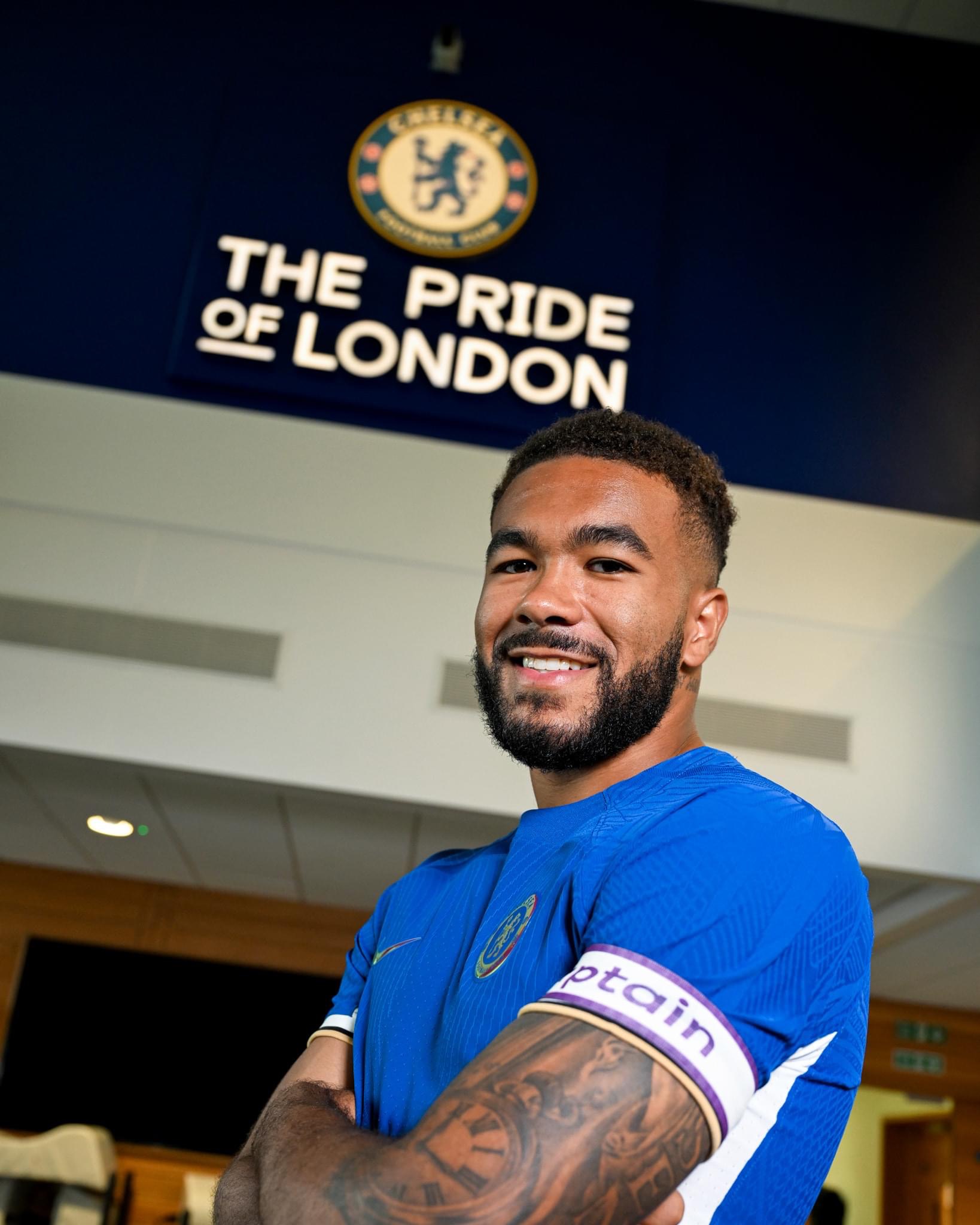
Captain Reece James
Picture: Chelsea FC
Responsibility will fall inevitably on Chelsea’s newly appointed captain, Reece James. Like Mount, Gallagher and indeed Colwill, James is a club product, having joined the club as a six-year-old. But whereas Mount’s head was turned – quite noticeably, it has to be said - by the possibility of football elsewhere, James has shown relatively unwavering commitment to the club that also has his sister Lauren on the books. The right wingback has long looked like captaincy material but with a caveat: when fit. Most fans will be pleased to see the likeable 23-year-old take on the mantle, but his injury will raise questions about consistency. 

Ben Chilwell, James’ left-sided counterpart has been appointed vice-captain, another sensible move for one of the most under-rated grown-ups in the Chelsea squad. He, too, has had a troubled history with injuries, so Pochettino must hope that his captain and his deputy won’t need another backup option. 

Leadership wasn’t always in evidence last season, with some games descending into farce as players started making things up for themselves on the pitch. “He’s a player that is a leader,” Pochettino said of his new skipper during Friday’s press conference. “He’s the present and he’s going to be the future of the club. He’s a perfect player for me and the club to be a captain.”

Viewed from one angle, Chelsea still look somewhat dysfunctional, both on the pitch and behind the scenes (for their opening game tomorrow against Liverpool they still don’t have a primary shirtfront sponsor). That said, the seismic upheavals that characterised 2022 for the club are still reverberating. 19 years of mostly relentless success under the Abramovich regime left fans with an inflated sense of expectation that the Boehly-Clearlake takeover would ensure continuity. It didn’t, although if the new owners would admit it, they didn’t get everything right themselves.

For his part, Pochettino’s job will be to not only rebuild the squad, tactically and spiritually, but rebuild some of the damaged goodwill towards the fans, who turned up at Stamford Bridge, or travelled to away fixtures, irrespective of how poor the games turned out to be. “We are building something special, I think,” he told journalists in America during the pre-season tour.

He qualified that statement by saying: “It’s a process and we need time. But in football, you cannot ask for time and you need to deliver from now. We know that we are in Chelsea and even if we have young players that will be involved against Liverpool [in the opening fixture], the mentality is to win. We are preparing ourselves to know the first game will be tough and then the next game also but we need to arrive with a good mentality.”

Chelsea, as a club, has liked to talk about “projects” for a while. The Boehly-Clearlake takeover has been one. When Tuchel, Potter and then Lampard used the phrase last season it sounded somewhat hollow, a PR phrase drummed up to excuse a work-in-progress. The fact is, every football season is a work in progress. Every team selection an experiment. A 4-3-3 formation at the start of a match can very easily change shape several times in the course of proceedings. It is, as Danny Baker once shrewdly observed, “chaos”. Thus, too much store is placed on the speculative summer weeks, which is why I tuned out in the first place. Tomorrow is the start of the period in which matters really count.

Thursday, 10 August 2023

NME at the gate

From New Coke to Blockbuster’s return as a streaming service, brand reboots don’t always work out, but when a relaunch does, it’s often simply down to luck. 

For example, it’s hard to pinpoint exactly when the vinyl revival began, but once it was established that 12-inch records were cool again, an intersection occurred between middle-aged dads rediscovering album collections stashed in lofts and hipster teens encountering the medium for the first time. Vinyl’s new appeal, especially amongst its youngest consumers, had less to do with the music than ‘collectability’. As heartening as it was to see teens buying Rumours, London Calling or The Dark Side Of The Moon via £30 reissues bought from the few HMV stores that remain, it was their Instagram appeal and opportunities to post iconic sleeves on ubiquitous ‘Now Playing’ plinths.

Consider, then, the associated revival of the NME. I say “revival” but in truth the venerable organ, launched in 1952, never went away. It just ceased, in 2018, to be printed. But as of yesterday the once august weekly newspaper has returned in physical form, relaunched by the brand’s latest owners as a bi-monthly, limited edition magazine, and openly inspired by the resurgence of vinyl and even cassettes.

That’s the marketing pitch, but the NME’s print relaunch isn’t without a modern twist: you won’t be buying it from a newsagent, at least not straight away. NME Networks - part of the Caldecott Music Group (which also publishes Uncut) - will only be producing the new NME in very limited quantities, making them available through the Dawsons chain, which it owns. It’s a deliberate ploy to create exclusivity in much the same way as Nike creates hype (and the occasional riot) with “drops” of limited edition trainers. 

Thus last night at exactly 7.52pm (the original NME was launched in 1952…) those sitting in one of those dreaded online waiting rooms so hated by Taylor Swift fans were given their chance to get their hands on the new NME. Naturally, it sold out straight away.

No details have been given on the size of this NME’s print run, but with a £10 cover price and a promise of a thick, glossy, coffee table-friendly Vogue-like design, presumably they’ve done their homework on how to cover costs. What those of us unsuccessful in getting hold of a copy can’t yet gauge is whether it is any good. Moreover, how this NME stacks up to the NME’s 71-year-legacy.  

Having begun in March 1952 following the purchase, for the princely sum of £1000, of The Accordion Times and Musical Express by music promoter Maurice Kinn, the New Musical Express quickly established itself as the UK’s primary journal of record for contemporary music. Later that year it created the first British singles chart (copying the American magazine Billboard) with Al Martino’s Here In My Heart becoming the first ever British Number 1. 

By the 1960s the NME was selling 300,000 copies a week as the Beat Boom took off, with The Beatles, Rolling Stones and their ilk regularly featured on the cover and at the annual televised NME Poll Winners’ Concert, the Brit Awards of its day. 

In the ’70s the NME took on more of an underground approach to its journalism, with seminal writers like Nick Kent and Charles Shaar Murray joining the staff, with the magazine championing the broadening post-Beatles pop and rock revolution. With punk came further evolution, with cover features on the Sex Pistols and The Clash, and Tony Parsons and Julie Burchill making their names as a new generation of ‘angry young writers’, to use the hackneyed description. Many will consider this the start of a golden age for the NME and music journalism - as carefree and opinionated as punk itself.

The NME wasn’t alone: along with its closest (and, sometimes, bitterest) rival Melody Maker, plus the more heavy rock-orientated Sounds, they vied for the pocket money of spotty youths up and down the country. In 1978 another challenger appeared, Smash Hits, beginning as a poster magazine (and created by ex-NME editor Nick Logan), which would eventually go on to sell a staggering four million copies a fortnight. Around this time a new editor, Neil Spencer was promoted, overseeing a redesign of the NME and shifting the broadsheet further towards post-punk and New Wave, bringing in new blood like Danny Baker (a former NME receptionist and writer for the punk fanzine Sniffin’ Glue), along with the spiky likes of Paul Morley and Ian Penman.

As I began to develop my own interest in music at the start of the 1980s, the NME broadened further, reflecting wider youth interests in the Thatcher era, taking on a notably left-leaning complexion in the process. This chimed with the politics of many of the musicians it covered who, themselves, were capturing the dystopian gloom of young life in Britain in the first half of the decade, a period signified by inner city rioting, CND marches and a decidedly socialist strand to pop. Which, thinking about it now, makes my own debut in the NME more incongruous.

In 1984, my first year of Sixth Form, I decided that my future lay in music journalism. The NME, Melody Maker and, particularly, Smash Hits, had become bibles to me. At the same time, Gary Crowley’s evening show on Capital Radio was essential listening. Deciding that if my ambitions were to be taken seriously I’d need a portfolio of writing samples that weren’t solely made up of reports for the school magazine, I brazenly asked Gary for an interview. Incredibly, he agreed and I went up to the old Capital studios on London’s Euston Road one Tuesday evening. After the interview he asked if I was serious about becoming a music hack, to which I said yes, prompting him to suggest getting in touch with one of his pals at the NME, which I did. 

And so, in early January 1985, aged 17, I went to see the NME’s then live reviews editor: “Er…are you going to see anyone in the coming weeks?” he asked. All I could think of was that I tickets for Phil Collins at the Royal Albert Hall a few weeks later. “OK, do a couple of hundred words on that,” he asked. As the clipping below attests, I managed to get possibly the first Phil Collins live review published in punk’s once-angriest of papers. And possibly the last.

That alone, though, was enough to get me in. The following year, after my A-levels, I got an actual staff job with a new magazine, who liked the cut of my jib. I had the NME to thank for that. Although I only did a handful of things for the NME (I was, supposedly, also trying to get through Sixth Form at the time), it was the start I needed. However, the mid-’80s were a perilous time for the paper. Smash Hits (whom I later did work for) was cannibalising the NME’s pop-minded readership, while the paper itself was struggling to find its editorial identity. Traditionalists on the staff wanted it to continue driving a rock agenda, while more progressive voices championed alternative genres, like hip-hop, all while the magazine continued evolving beyond just music magazine to become a broader cultural barometer.

Music didn’t leave its core, however. In the ’90s, Britpop provided a totemic platform not seen since the ’60s (reaching its zenith with the landmark Blur-vs-Oasis cover in August 1995 marking the simultaneous release of the former’s Country House and the latter’s Roll With It). Music was in rude health again, at least from an editorial perspective, leading to copious coverage in the NME of Madchester and the decade’s mainstreaming of Indie, along with the emergence of American grunge. Into the mix came a further influx to the writing corps, with Steve Lamacq, Stuart Maconie, Mary Anne Hobbs and Andrew Collins joining the roster and giving the paper a new sense of zeitgeist vibrancy.

With the new Millennium came further change, and not all good, either. In 2000 publisher IPC folded Melody Maker into the NME in what many saw as the first death throe of the printed music weekly. Not that there wasn’t plenty for the medium to cover, with new British bands like Kaiser Chiefs, Libertines and, later, Arctic Monkeys. The march of time, though, continued to prove an impossible foe, and by 2014 the NME’s weekly circulation had fallen to 15,000. This prompted the now Time Inc.-owned title to be relaunched as a free magazine in an attempt to boost readership and the advertising the comes with it. The experiment, if it can be called that, lasted just three years before the NME became a digital-only site. While that retained the old paper’s musical news focus, it lacked the journalistic essence that had built its reputation in the heyday of Kent, Shaar Murray, Burchill, Parsons and later, Dannys Baker and Kelly, and the Britpop scribes.

Holly Bishop
Picture: NME Networks
It’s unlikely that their editorial spirit will be revived under the new print venture, so the question is, how will it be relevant? “Although the written word will always play a part in our journalism,” NME Networks chief operating and commercial officer Holly Bishop told the trade magazine UK Press Gazette, “it’s no longer front and centre and it’s naïve to think any different”. 

The 2023 version of the NME will have to appeal to Gen Z, an audience more attuned to consuming content via social media. New music, Bishop maintains, will still be paramount. “An artist can have a meteoric rise on a single track on TikTok, for example. But is there longevity there? It remains to be seen. And actually, what we do know is an artist making music that’s authentic to them, that is good music. It will find a way through, particularly when brands like ours are actively seeking it.”

“NME obviously boasts an incredible print legacy,” Bishop told UKPG. “It’s one of the most recognised titles on Earth in print. We’ve had the biggest icons across pop culture appear on our cover.” But, she adds, the exercise is not without its challenges - “not just in terms of audience engagement, but also production; rising costs, particularly in this economic climate.”

“We aren’t looking to [create] hundreds of thousands of readers out of this print product,” Bishop added. “We know that our trajectory remains firmly rooted in being a digitally-led brand and we are successful in that space. NME.com has got more users than ever before and we obviously can monetise those in the traditional ways with advertising and partnerships.” For that, she says, they’re taking “an atypical, unconventional approach to distribution too. We’re not printing masses of copies because we really believe in the inherent value of scarcity.”

If all this sounds like marketingspeak, and a world away from the 1977-spirit-of-punk NME, it’s because the title is as much a brand these days as a single, identifiable newspaper. NME.com continues to attract some 17 million visitors each month, covering the broad scope of genres as well as television, film, games and other branches of pop culture. Its proprietors have even launched editions in Australia and Asia. The new magazine, however, will be global, “curating the very best of NME,” according to Bishop, “championing emerging artists and bands, and serving as the definitive voice in pop culture”.

That will commence with a first edition featuring on its cover 18-year-old self-taught American singer-songwriter d4vd (David Burke), first profiled by the NME online last September as the “multi-genre visionary turning TikTok attention into major chart success”. It’s a bold opening statement from the latest evolution of a magazine now in its eighth decade. In editions to come, we can expect more interviews with similar cutting edge musicians, culture features and reviews.

It remains to be seen whether the new NME will be able to recreate the urgency it once had, but you have to admire its publishers for giving it a go. The incontrovertible truth is that the world of media has become almost exclusively digital. 

Print journalism has been in terminal decline since the advent of the Internet. Last month The Guardian reported that, as a measure of the state of publishing in the UK, six of the country’s biggest selling physical-format magazines - Heat, Economist, Grazia, GQ, Vogue and Private Eye, along with newspaper supplements - are now all printed by just one single print company, Walstead. 

Between 2010 and 2022, the total number of actual magazines sold in Britain declined by 70% from around a billion copies a year to 309 million, with print publishing revenues dropping accordingly over the same period - from £1.4 billion to less than £500 million, according to Enders Analysis. Those magazines that remain in print form struggle to compete with digital distractions: compare the £6.50 you pay for Mojo, one of the few remaining stalwarts of magazine-based music journalism, with the £4.99 that Netflix’s new monthly, advertising-supported package will cost for all the entertainment distraction that offers. It’s an an apples-and-oranges comparison, of course, given that the handful of quality music magazines still in print continue to represent a tactile experience other mediums will never replicate. That, by the way, is the same experience that got me into the music press to begin with, first as a reader and then as a writer.

The NME’s conversion to digital-only five years ago was clearly part of the decline in print. The eyeballs of young consumers - those between 18 and 30 most coveted by advertisers - are simply elsewhere. British magazine websites last year accounted for less than 1% of the time this demographic spent on YouTube, 4.7% on TikTok and 7.4% on Instagram, according to The Guardian. And that is a problem for online magazine advertising. By 2025 the platforms of just Google, Meta and TikTok will earn more than £20 billion in digital advertising revenues. Compare that to, according to GroupM, the £378 million that magazines in the UK will earn by 2027.

All of which makes the decision to bring back the NME in print format even more precarious. But maybe its new owners might just succeed in appealing to the hipster strand that willingly eschews modernity (like vinyl, old-fashioned film cameras have made a return amongst the same youth demographic). This is probably the target audience for the new NME - consumers more likely to buy an expensive print magazine for its collectability, rather than the journalism inside. That, I have to say, is sad.


Friday, 28 July 2023

The other Quiet One

In the greater regard for Pink Floyd, a couple of things overshadow everything: firstly, The Dark Side Of The Moon and its enduring legacy, but secondly, Roger Waters’ relationships with guitarist David Gilmour, drummer Nick Mason and keyboard player Richard Wright.

The dynamic between Waters and Gilmour, in particular, has become something of a pyschodrama, with the pair (and Gilmour’s wife, the writer Polly Samson) trading barbs via social media over, mostly, Waters’ politics. But while Waters has been courting the wrong kind of publicity for his provocative world view, Gilmour has edged into what feels like semi-retirement, and Mason has sought to protect the band’s heritage through his Saucerful Of Secrets outfit (playing the music of the early, pre-Dark Side Floyd albums), Wright has largely been forgotten. 

Today, his debut solo album, Wet Dream - recorded and released between the Floyd’s Animals in 1977 and The Wall in 1979 (and in the context of a band dynamic that was starting to collapse) - is being re-released, remixed by Steven Wilson and repackaged with a load of extras, providing an opportunity to reassess The Quiet One of Pink Floyd, whose influence on the band from its very beginning can often be forgotten under the weight of the egos and internecine battles that raged increasingly as commercial success in the 1970s gave way to Waters’ dramatic exit in 1985. 

When he succumbed to lung cancer in 2008 at the age of 65, Rick Wright was eulogised by Waters, Gilmour and Mason for having had a bigger part in their musical canon than he was ever given credit for when alive. “In the welter of arguments about who or what was Pink Floyd, Rick's enormous input was frequently forgotten,” David Gilmour wrote in an online tribute. “He was gentle, unassuming and private but his soulful voice and playing were vital, magical components of our most recognised Pink Floyd sound.” Wright was irreplaceable, Gilmour wrote of his “musical partner and my friend.”

While these words might read like a carefully constructed ‘corporate’ statement, Gilmour had certainly remained close to Wright, having him play on his solo tour for the On An Island album. The Floyd-heavy set lists reminded audiences that Floyd hadn’t been just about Waters’ lyrical vision (or, in the early days, Syd Barrett’s flights of psychedelic fancy) or indeed Gilmour’s distinctly soaring guitar solos, but also of the melodic foundation that Wright brought to many of their songs from the off.

Richard Wright
Keyboard players tend to be cerebral introspectives, but also the most pivotal figures in a band, especially in the 1970s when guitar-based beat pop gave way to intricate, complex progressive rock. Tony Banks of Genesis, springs to mind here: hunched over his Mellotron, playing elaborate, classically-inspired solos, he was never the focal point (especially with Peter Gabriel charging about in his various costumes). Banks and Wright considered themselves songwriters first, and pop stars a very distant second. “Shy and unassuming” are also the mutually exclusive adjectives that sit before the words “keyboard player”, but if you were to analyse the contribution Wright and Banks’ multi-layered keyboard compositions made to the overall canons of their respective bands, I’d wager  they would outstrip the limelight chasers who sang or played the guitar solos. 

Wright’s “spacious, sombre, enveloping keyboards, backing vocals and eerie effects” were, in the words of the New York Times’ obituary, “an essential part of [Pink Floyd’s] musical identity. ” He was certainly responsible for some of the band’s signature moments: the epic Echoes, on the Meddle album, for example, but also the ambient, G-minor keyboard chord that heralds Shine On You Crazy Diamond at the beginning of Wish You Were Here. More significantly are two songs on The Dark Side Of The Moon: amid the album’s wiggy space rock and Waters’s jaded rumination about the human condition, the sonorous Us And Them and the mesmerising Great Gig In The Sky highlight Wright’s exquisite composition and piano work. 

“The blend of his and my voices and our musical telepathy reached their first major flowering in 1971 on Echoes,” Gilmour wrote in his tribute. “In my view all the greatest PF moments are the ones where he is in full flow. After all, without Us And Them and The Great Gig In The Sky, both of which he wrote, what would The Dark Side Of The Moon have been? Without his quiet touch the album Wish You Were Here would not quite have worked.” 

Despite his indelible stamp on the canon, Wright was fired by Waters during the making of The Wall album in 1979. Despite having been college friends, tension had built over the preceding decade. “There has always been friction between me and Roger,” Wright once reflected. In 2000 he revealed to Classic Rock magazine how unhappy he’d been during The Wall sessions: “Both myself and Dave [Gilmour] had little to offer, through laziness or whatever. Looking back, although I didn’t realise it, I was depressed.” At the time, he was in the throes of divorce from his first wife, Juliette. 

With some sort of divine retribution, however, Wright was rehired – on wages – to play keyboards on The Wall’s outlandish, theatrical tour. Ironically, as a jobbing musician, he was the only original member of the Floyd to profit from The Wall Tour, such was its extravagant staging. 

Wright’s exile from the band was, though, relatively short-lived. After Waters himself formerly quit in 1982, Gilmour and Mason reconvened to record 1987’s A Momentary Lapse Of Reason, with Wright effectively working as a session player. By 1994 he was fully back on board for Pink Floyd’s de facto final album, The Division Bell, on which Wright co-wrote several songs as well as contributed his own composition, the contemplative Wearing The Inside Out, a reflection of his experience of the band’s tensions prior to his original departure: “From morning to night, I stayed out of sight. Didn’t recognise what I’d become. No more than alive I’d barely survived. In a word – overrun”.

Rick Wright in David Gilmour's Remember That Night

In Mark Blake’s Pink Floyd biography Pigs Might Fly, Division Bell producer Bob Erin said of Wright’s composition: “There’s a lot of emotional honesty there. Fans pick up on the sad, vulnerable side to Rick.” In reality, the words came from former Slapp Happy keyboard player Anthony Moore, working with Wright, but there’s no doubt they came from a very personal place. Moore “had to climb inside Rick’s head to get the words out”, a band insider told Blake.

Pink Floyd’s first album, The Piper At The Gates Of Dawn, was released in August 1967. While Syd Barrett was seen as the band’s prime creative force, he and Wright, in particular, had formed a particularly fruitful partnership - Wright’s melodicism acting as a counterweight to Barrett’s eccentric whimsy (they co-wrote Astronomy Domine and both provided vocals for the track Mathilda Mother). But as Barrett’s use of LSD intensified towards the end of 1967, leading to increasing psychosis and his firing, the band’s centre of gravity started to shift. Gilmour - an old cohort of the band from their teenage years in Cambridge - was brought in to, initially, augment Barrett, before his eventual exit. Gilmour’s appointment as the band’s lead guitarist set in train the band’s imperious phase, evolving from London underground darlings to the stadium behemoths that The Wall somewhat self-satirised a full decade later. 

This period also became the creative arena for Waters’ concepts, with Gilmour and Wright, in particular, providing the instrumental flourishes. However, Wright’s clearly more diffident personality would never get a look in as the band became an increasing power struggle between Waters and Gilmour. As so often is the case (Steve Hackett, again of Genesis, comes to mind), solo projects become an outlet when breaking open an established hierarchy proves impossible, Hence 1978’s Wet Dream and Broken China in 1986. Both were well received, but commercially underwhelming. Wright was said to be working on a new project at the time of his death, though there is no known plan for them ever to be released posthumously. 


Today, however, on what would have been Wright’s 80th birthday, Wet Dream is being reissued as an expanded edition, with Wilson - now the go-to-master of classic album reinventions - producing new stereo and multi-channel remixes. “Most people know that Pink Floyd have always been my favourite band,” he tweeted, “so it was a real honour to be commissioned by Richard’s children Gala and Jamie Wright to remix this relatively underrated and beautiful entry in the Floyd canon. For anyone hearing the album for the first time it will become apparent just how much of Richard’s DNA runs through Pink Floyd. His distinctive rhythm patterns, signature keyboard sounds, vocals, jazz influences, and style of play exude throughout.” A vinyl version of the reissue along with a Blu-ray Disc package will be released later in the summer.

At the time of its original release Wet Dream - self-produced by Wright and featuring all of his own songs - largely flew under the radar, a symbolic reflection of his under-appreciation within Pink Floyd. Roger Waters has somewhat vacillated over his former friend’s legacy: “It is hard to overstate the importance of his musical voice in the Pink Floyd of the ’60s and ’70s,” he said in a similar statement to Gilmour’s after Wright’s death in 2008. But in an interview with the Telegraph earlier this year, Waters in more vituperative form said: “David Gilmour and Rick Wright? They can’t write songs, they’ve nothing to say,” maintaining that his self-ascribed role as Pink Floyd’s creative centre after Barrett “went loopy” was that none of the others had any ideas. “Nick [Mason] never pretended,” he said adding that Gilmour and Wright weren’t artists. ”They have no ideas, not a single one between them. They never have had, and that drives them crazy.”No wonder Wright once said: “I think, ‘Why do you have to say these things?’”.  

When Pink Floyd reformed for the one-off Live 8 charity concert in 2005 there was a visible unease on stage between Waters and Gilmour, in particular. That, though, didn’t stop the clamour for the band to fully get back together. “Everyone who loves Pink Floyd wants it to happen,” said Wright at the time. “But I don’t feel I need it, not musically and not personally,” adding, cuttingly, “Maybe if Roger comes back as a different person – charming and nice, with really good ideas.”  

While Live 8 marked the final time all four members of Pink Floyd’s ‘classic’ line-up would share a stage. Wright’s role would be further extended by the release of their final record, The Endless River, which featured unused music from the Division Bell sessions. Released in November 2014, it was positioned as a tribute to Wright, featuring Gilmour, Wright and Mason seemingly improvising on what could be described as archetypal Pink Floyd songs – in particular built-out blues jams – that all featured Rick’s hallmark keyboard infusion. “I think this record is a good way of recognising a lot of what [Rick] does and how his playing was at the heart of the Pink Floyd sound,” Mason said at the time of the album’s release. “Listening back to the sessions, it really brought home to me what a special player he was.” 

In September 2007, a year before he died, Wright performed for the last time, joining Gilmour for an unexpected jam at a cinema in London’s Leicester Square at the premiere of Gilmour’s Remember That Night film, recorded at the Royal Albert Hall during the tour for his On An Island album. The tour had, in Wright’s own words, been the “happiest” he’d “ever been on”. 

A couple of months before he died, on 15 September 2008, there was talk of Pink Floyd reforming to play Glastonbury. It had transpired that Gilmour had enquired about the possibility of playing as an opportunity for one last show with Wright, knowing that he was ill. The idea never came off. Glastonbury founder was edging towards acts with a younger profile and appeal. Pink Floyd - easily, in the context of contemporary Glastos, would have been perfect for the ‘heritage slot’.

You could argue that without Rick Wright I might never have found Pink Floyd. Like many of my contemporaries, Another Brick In The Wall (Part 3) was probably my first conscious exposure, appearing at the end of my first term of secondary school, with that grammar police-baiting “we don’t need no education” refrain offering a note of pre-pubescent revolution. It would be later in my school career when my curiosity would be fully triggered. During an English Literature lesson, we were forced to listen to a Richard Burton-narrated BBC radio production of Samuel Taylor Coleridge’s Rime Of The Ancient Mariner. It began with that opening to Shine On You Crazy Diamond before the Welshman intones: “It is an ancient mariner, and he stoppeth one of three…”. 

I was captured. I asked my English teacher if he knew what the music was. “It’s Pink Floyd,” he told me. “Opening track of the Wish You Were Here album.” By chance, my brother had a copy, which I feverishly taped as soon as I got home from school. Inevitably, my interest would be piqued by Gilmour’s signature four-note motif two minutes into Shine On. But as I replayed that tape over and over again, before exploring Wish You Were Here’s more venerated predecessor, The Dark Side Of The Moon, it became apparent there was a lot more to Pink Floyd than their lyrical narratives, soundscapes and iconic guitar solos, but also the textures and colour palettes their classically-trained keyboard player was responsible for. Quiet, he may have been, but sometimes loudness isn’t just a matter of volume.