Tuesday, 2 November 2021

Be careful of what you wish for

There’s a tale - apocryphal or not - about Eden Hazard’s relationship with Antonio Conte when they were both at Chelsea. Such was the eardrum-bothering volume with which the Italian coach would bellow instructions from the touchline, the mercurial winger would arbitrarily switch wings if Conte’s seal-like barking got too much. I must admit, from way up in my East Stand Upper eyrie at Stamford Bridge, Conte’s vociferous chuntering - with Tannoy-strength projection - could be equally as irritating.

There’s no question that the new Spurs coach is effective, decisive even, and may just be the thing that chairman Daniel Levy needs to shock his embittered, lethargic and indifferent players into performing. Nice guy as Nuno Espírito Santo is, he came across as too casual in his authority at Tottenham, running into the perfect storm of Harry Kane angling for a move to Manchester City, impacting his previously symbiotic relationship with the otherwise dependable Son Heung-min, while allowing the ego-on-legs that is Dele Alli to retreat even further into his own agenda, which seemed to be as much about having a good time as knuckling down with the job he gets paid handsomely for.

Should I care about any of this? Well, obviously not. Football’s laws of tribalism ensure that not only do I not care about any team other my own, but also that the ongoing existential drama of what it is to be seemingly permanently “Spursy” is only to be laughed at. Which I do. I also don’t care about the idea of Conte taking charge in N17. He won Chelsea the Premier League in his first season in charge, and then the FA Cup in a somewhat insipid final at Wembley, before parting company with the club (and then taking it to court). The same was the case when José Mourinho joined Tottenham (and, indeed, Manchester United) - we had the best out of him, won titles and enjoyed the psychodramas that come with his involvement in a club, but moved on with gratitude. 

Conte is, by turns, likeable and charismatic, but also by reputation, difficult to handle. And, let’s face it, Chelsea get through managers with a higher frequency than I buy underwear, so it’s hard to get too attached to any of them, even a club legend like Frank Lampard. Thomas Tuchel will, I’m sure, at some point, fall out with the club hierarchy, and the revolving door will spin again. So we enjoy things while we can. Conte, on the other hand, has a different challenge at Spurs, namely to deliver success to a club that has spent longer than I care to remember believing it should be hoovering silverware, but consistently falling short. Unlike Liverpool or Manchester United, who have the Shankly and Ferguson legacies to draw on, Spurs have never had an imperious phase, even if their fans believe - from what and where, I have no idea - that they do. 

The agreement to appoint Conte as new head coach, on an 18-month contract worth up to £15 million a year, will need to deliver. Unlike Nuno, Conte has a somewhat more substantial track record, having won five league titles as a club manager (and over seven campaigns). Even if his last appointment, at Inter Milan, ended with the sack, he still managed to take the nerazzurri to their first Serie A title in more than a decade. He therefore arrives in north London with his work cut out, and even though the opening overtures from the club hierarchy have been positive, it won’t be lost on many that Spurs’ original approach for Conte in the summer, to replace Mourinho, ended after Conte allegedly expressed concerns about the club’s strategy and funding for recruitment. Tottenham suggested that they didn’t see eye-to-eye with Conte on squad strengthening, and a perception that he wasn’t interested in working with youth players (a hangover from his Chelsea days). Clearly, then, these red lines have been removed. 

Conte has since made a statement that the summer was “too soon” to take over at Spurs, but that doesn’t bely the fact that, wherever he goes, he has high expectations of clubs spending to match their ambitions. Daniel Levy is not known for his largesse (especially as he’s going to be paying for the Tottenham Hotspur Stadium for many years to come).

“The terms must have changed,” Chris Sutton said last night on BBC Radio 5 Live. “[Conte] isn't going to go to Spurs unless he feels he can win something or come close because he is not that type of manager. He is not coming to the end of his career. He wants to come in and transform the club.” In that, Sutton said, Conte will be doing Spurs a favour, rather than the other way around, helping out an unemployed top-tier coach. It won’t, though, be an easy ride. 

From Day 1, Conte faces plenty of challenges. Principal of those will be getting Harry Kane scoring goals again, which also means restoring the 28-year-old’s love for the club badge. No mean feat, that, when his head was so publicly turned by the prospect of City. The second challenge will be to restore a sense of team unity. It was notable that no player gave any statement of sympathy for Nuno, not even a patronising “wishing the gaffer well”. Rumours spilled out from Tottenham that team spirit had been allowed to fray by a head coach who was not a great interpersonal communicator, whose vision wasn’t well translated to the 11 on the pitch, and for those players not considered to be in Nuno’s immediate thoughts, a sense of being frozen out or ignored. 

Football management is about squad engagement as well as managing disappointment - just look at what happened to Frank Lampard when he started to work with a core of younger players at the expense of older heads. I hate the notion of player power: the manager should be respected otherwise discipline breaks down, but it’s worth noting that so far, Thomas Tuchel has been able to keep a large squad happy with tactical rotations to cope with the various competitions Chelsea are currently in without any obvious disquiet in the ranks.

There is, though, also a tactical challenge that Conte will face. Spurs fans have a tradition of expecting their team to play a certain way, and while this isn’t as bad as it sounds (i.e. coaching from the terraces), it does play into the club culture, one that has become ever so slightly entitled. If there’s one aspect of this I’d say, as objectively as I can as a supporter of a despised rival (and, therefore, what do I care?), is that Spurs need to get back into a more attacking frame of mind. That doesn’t just lean on Kane’s shoulders (though he could help), but on the entire formation. So far this season they’ve been far too tentative - and the results have shown. That might come through the physical intensity Conte will put the team through. At Chelsea he was notorious for the punishing training routines at Cobham, and during his single full pre-season put the squad through the kind of ‘beasting’ ordeal that SAS recruits might baulk at. Conte is also a disciplinarian (just look at his fractious relationship with Diego Costa), and that will come into sharp focus with Alli, who’d been all but abandoned by both Mourinho and Nuno, and even Mauricio Pochettino, suggesting that it wasn’t them, but Alli himself who has been the problem.

Another challenge Conte will encounter is longevity. No one is naive enough to think that any job in football is for life, and the fact that the Italian has only been signed until the summer of 2023 suggests that his appointment is more of a project than the start of a legacy. From a Spurs perspective, there is also Conte’s reputation for managing for the short term, not always through choice. “He left Inter [at the end of last season] because they couldn't invest money and they sold his best players,” points out football writer Gabriele Marcotti. “He left Chelsea because he couldn't get owner Roman Abramovich to spend more money on players he wanted.” Marcotti says Conte has form in this area, recalling a tale about him leaving Juventus saying that “they wanted me to eat out in a 100 euros restaurant with 10 euros in my pocket”. Marcotti believes that Spurs, with its notoriously profligate attitude to buying players, might leave Conte short-changed.

For his part, Conte has spun the inevitable PR line about why things didn’t work out between him and Spurs just four months ago. “Last summer our union did not happen because the end of my relationship with Inter was still too recent and emotionally too involved with the end of the season,” he said in a statement. “So I felt that it wasn't yet the right time to return to coaching.” But added: “The contagious enthusiasm and determination of Daniel Levy in wanting to entrust me with this task had already hit the mark. Now that the opportunity has returned, I have chosen to take it with great conviction.” Just as well, then, that Nuno sleep-walked into his P45.

The managerial merry-go-round is a constantly baffling thing. The minute a manager is fired, a list of runners and riders tipped to replace him is quickly assembled, even if you can’t help feeling that they’re all red shirt-wearing crew members of the Starship Enterprise being summoned to the transporter room (you might need to look that reference up). Managers like to talk of “relishing the challenge” and “opportunities too good to miss” when they sign up for the most poisoned of football’s chalices. Conte is far from cannon fodder, but it’s hard to imagine that Spurs will be any happier an environment to work in than anywhere else he’s been and subsequently walked away from. You kind of wish him luck, but then that wouldn’t be a rival football club fan’s sentiment, now would it?

Monday, 1 November 2021

Lost and found: tomb raiding or celebration of a legacy?

© Simon Poulter 2021

My entry to the blogosphere happened by accident: a foul mood one Monday morning resulting from England’s latest humiliating exit from a football tournament led to a 1,000-word rant written on a train and in need of an outlet. Thus, this blog’s predecessor, What Would David Bowie Do? was born. It was never meant to be about The Dame (it’s title came from a throwaway remark by a former girlfriend) but over the course of its lifetime, my love of David Bowie’s music was progressively rekindled as I found myself dipping into the extraordinary body of work he had recorded. His death on 10 January, 2016, brought that blog to an abrupt halt. It just didn’t seem right to continue with that title, which was simply a nod to a throwaway, Jägermeister-fuelled quip in a Yosemite boozer. So I wrote my own obituary and WWDBD? ended there. 

Of course, I wouldn’t stop blogging, and there was only going to be one source for the new one’s name, hence the reference you see at the top of this page. Even now, people think I’m a Bowie blogger, but I haven’t actually written anything specifically about him for a couple of years. Today might change that, as I kick off what I’ve presumptively declared David Bowie Month, for no other reason than the 26th will see the release of the latest box set of Bowie reissues, Brilliant Adventure (1992-2001). The package will feature remasters of output in a period where Bowie may have struggled, remarkably, to fit into the Britpop wave that was going on at the time, but in Black Tie White Noise, The Buddha Of Suburbia soundtrack, Outside, Earthling and Hours, still produced utterly compelling material. 

The period also covers a phase of live performances, where Bowie had a white-hot band and was seemingly comfortable in his skin performing all the old classics. Thus, a BBC Radio live recording from 2000 (originally released as part of the limited-edition three-disc Bowie At The Beeb) - a warm-up for his legendary Glastonbury headline performance - is included in the set, along with a collection of odds and sods called Re:Call 5. The true draw to the package, however, is Toy, the semi-mythical record featuring new versions of Bowie songs from the very beginning of his career, but which wasn’t deemed by the record company to be releasable in 2001. I can assure you there will be more on Brilliant Adventure nearer its release date.

© Simon Poulter 2021
Last week I indulged my fandom with a visit to the new ‘Bowie 75’ pop-up shop in London’s Heddon Street, opened (along with a sister branch in New York) to provide an outlet for devotees to gorge themselves on merchandise, music and other paraphernalia (such as a Stylophone with which to recreate the iconic middle-eight of Space Odyssey). I won’t deny that purchases were made (high-quality vinyl reissues of the ‘second’ David Bowie album and The Man Who Fell To Earth, plus the scintillating Live Nassau Coliseum ’76 recorded on the Station To Station tour - Bowie in his absolute ’70s pomp). 

In the shop’s basement you can listen to vintage songs spruced up with ‘360 Reality Audio’ (Sony’s new ‘spatial’ audio technology), as well as play around with magnetic lyrics stuck to a pillar, composing songs as Bowie once did with cut up newspaper headlines. There’s also a red telephone box in which you can have your picture taken, a hat-tip to the shop being located across the road from the building featured in the cover art for The Rise And Fall Of Ziggy Stardust & The Spiders From Mars, setting the scene for the alien Ziggy’s arrival on Earth.

If people think all this is fan gouging, then that’s up to them. After all, people appear to be paying significantly north of £80 for Adele tickets next summer, so no one has the right to judge what people spend their money on when it comes to pop music. Most of the merchandise on sale in the shops is available on the official Bowie website, but there’s more to it than simply a couple of glorified souvenir kiosks. The London and New York stores (the latter located close to Bowie’s SoHo home of 20 years) have been opened for a strictly limited period, leading up to what would have been the artist’s 75th birthday, on 8 January next year. 

“I’m really emotional,” 35-year-old fan Nikky Smart told The Times the other day while visiting the Heddon Street store. “It’s kind of like they’ve brought him back again.” I can’t say that it was really like that for me, but it was all very tasteful. And seeing most of a back catalogue of 27 studio albums, live sets and compilations on sale, alongside the T-shirts (yep, I bought one), baseball hats, jigsaw puzzles and all the rest, was a poignant reminder of the sheer body of work Bowie left behind when he succumbed to cancer in 2016.

Picture: The Rolling Stones/Bravado

The Bowie 75 shops are just the latest retail ventures opened by heritage acts to interact with fans. The Rolling Stones opened their own ‘Official UK Store’ in London’s Carnaby Street in September last year - a brave move given that it was that brief period of 2020 when normality resumed and people went shopping again, albeit tentatively. The Stones previously had a limited-period concession at Selfridges in Oxford Street to provide the template for the Carnaby Street shop, making it largely a platform to flog somewhat expensive T-shirts bearing the legendary ‘lips’ logo and various pieces of Stones album art. The Bowie shops also arrive a few weeks after Queen opened their own store, also in Carnaby Street, and dedicated to the band’s five-decade career, selling limited edition music releases, fashion collaborations with brands like Champion and Wrangler, Johnny Hoxton jewellery and other ‘lifestyle products’, whatever that means. 

All these band-based retail concepts appear to have two types of punter in mind: tourists that (in theory) throng to London’s West End, and in particular, social media-savvy youngsters looking to post their visits to Instagram and TikTok (that said, the Bowie shop seemed to be mostly customised by middle-aged blokes…er…like me). “We’re really looking at two things,” entertainment consultant Lawrence Peryer explained to The Times last week when talking about how the Bowie shops came about. “We wanted to create a place for the long-term Bowie fan to come in and find out something about Bowie that they didn’t know before, and have an experience they’d not had before, but also to connect with a young audience. David was always ahead of his time, always changing to connect with the younger crowd, and we’re hoping this will carry on the tradition.” 

Bowie certainly was ahead of his time: many will have seen on YouTube his highly prescient interview in 1999 with the BBC’s Newsnight in which he told a sceptical Jeremy Paxman that the Internet - then in relative infancy - would affect society beyond all recognition. “The potential of what the Internet is going to do to society, both good and bad, is unimaginable,” he declared. The year before, Laurence Peryer had helped Bowie create his BowieNet website, widely considered one of the earliest pioneers of online music. It’s just one facet of Bowie that makes him still fascinating today, even before you start delving into the myriad characters and guises he quite consciously invented as avatars for his music. That was something he effectively did up to his dying day, with the morbid, out-of-body experience that was Blackstar, with its conscious references to impending death, which eventually occurred, uncannily, two days after his 69th birthday and the album’s release.

Bowie had a history of prescience. Invariably depicted as an inveterate Mod magpie throughout his life, appropriating music and fashion from wherever and whatever took his fancy, he also kept an unearthly beady eye on technology trends. In 1997 Bowie hatched a plan to monetise the master tapes of his recordings, foreseeing the rise of online streaming services that, as we now know, would only generate paltry revenues for artists compared to what they were used to with sales of physical formats. In the end, Bowie struck a deal with insurer Prudential to issue ‘Bowie bonds’ which used future royalties from his material as collateral, effectively enabling him to borrow against his back catalogue. The deal raised $55 million - shortly before Napster and the file-sharing boom came along, heralding the online music revolution that the industry has been coming to terms with ever since.

Today, as the online platforms Bowie predicted in his Paxman interview have eaten dramatically into sales of physical music formats, many artists have turned to striking deals with companies like the investment vehicle Hipgnosis. In the last year it has bought the rights to the catalogues of artists as diverse as Neil Young, Beyoncé and Blondie. Bob Dylan and Paul Simon have also sold their songwriting for eye-watering sums. Now, the Bowie estate is looking to get in on the act, with the Financial Times reporting last week that it is negotiating a deal for the artist’s albums that could raise anything up to $200 million, to be distributed between the artist’s widow Iman, son Duncan Jones and daughter Lexi, an agreement that would complement another signed recently with Warner Music for the recorded music catalogue.

Posthumously, Bowie continues to merchandise his work with a steady stream of reissues and deluxe packages, including the compilation box sets Five Years (1969-1973), Who Can I Be Now? (1974-1976), A New Career In A New Town (1977-1982) and Loving The Alien (1983-1988), each containing respectfully tarted-up versions of original studio albums along with recordings that encapsulated Bowie’s stage magic. There has also been a series of live albums, released one by one to build up a box set of their own, Brilliant Live Adventures, and drawn from Bowie’s so-called ‘wilderness years’ in the 1990s when he was, incredibly, not in vogue (all these recordings had been officially available online previously, but lucratively making the available physically, with a limited edition slip case drew in the likes of me - and I haven’t been disappointed, either). Indeed, I’ve had no problem buying any of the these Bowie packages, even if they mean owning the same albums over and over again. Each - as will the forthcoming Brilliant Adventure - contain enough trinkets of genuine appeal to the fan and, if bizarrely, such people exist, provide an entry point to the work of one of popular music’s most richly artistic and charismatic figures. Yep, I know: I’m a record company marketing manager’s dream. Sue me.


Sunday, 31 October 2021

It’s very nice to go trav'ling

© Simon Poulter 2021
The last time I set foot in another country - unless Scotland counts as one - was almost two years ago to the week: a cheeky trip to Palma for a dose of autumnal Majorcan sun. The trip also provided welcome respite from a mad 12 months in which I flew 52 times for a job that I ultimately walked away from. I hate to think what my carbon footprint was for the return on that time and professional investment. 

So, apart from our four days in Edinburgh in August, that’s been it for two years. No Air Miles Andy me - until this week, when I spent a few hours in Amsterdam to sort out some personal finance admin put on hold by COVID-19 travel restrictions. You see, while we’ve all been raving about WFH enabled by technology, some things still require face-to-face contact. In my case, a Dutch bank account requiring in-person attention because, even in the age of fintech, it couldn’t be sorted out over the phone. After 18 months, then, of being unable to do anything about it, I grabbed the opportunity of the current, potentially brief window in travel and burned off some of the Avios points accrued during my insane year of travel and popped over to the Dutch capital. As you do. 

Now, I know what you’re thinking: not very green flying to Amsterdam for just two appointments and then fly straight back again. Well, no it wasn’t, but it was also unavoidable. And, I like to think, unlike the hapless Manchester United squad who recently flew to an away fixture with Leicester City, a journey of 100 miles that could have just as easily been taken by train or coach (except, apparently, they wanted to avoid traffic on the motorway). I, too, could have driven to Amsterdam, or even taken the Eurostar, now the city has been added to its services from St. Pancras. But even with a relatively reasonable journey time of just under four hours each way, the logistics wouldn’t have worked without requiring an overnight stay, with more expense and unnecessary absence.

During that year of near-constant business travel I made frequent day trips to places like Paris, Munich, Madrid and Zurich, invariably taking advantage of London City Airport being only a short DLR ride away from Greenwich, where I was living at the time. The airport was built in the 1980s as part of London’s Docklands regeneration, transforming one of the old Royal Docks wharfs into a gateway for City bankers to jet off to Europe’s financial centres and return within the day. Like all airports, London City has been impacted by the dramatic turndown in air travel over the last year, but this week there was no shortage of young, thrusting types who have barely started shaving, wearing polished shoes and sharp suits, furiously tapping away at laptops as they prepared to fly off to meetings at the big accounting houses like E&Y and PWC. That said, you could hardly say that the airport was bustling at seven in the morning as it once would have been. Travel has understandably taken a back seat, and even though it is gradually being allowed to return - this latest half-term holiday has been the first opportunity for many families to take advantage of the relative easing of restrictions - it is still far from ‘frictionless’. 

Before the pandemic, my day trip to Amsterdam would have been almost as easy as catching a bus to go shopping at Westfield. But even just to visit the city for a few hours I had to go through a lot of rigmarole: first, a ‘fit to fly’ COVID test (£39 - ker-ching!) and pre-book a ‘Day 2’ PCR test for my return (£69 - ker-ching again!), upload my NHS COVID vaccination certification to the British Airways website, along with the fit-to-fly result, plus a completed health declaration form for the Dutch government and a Passenger Locator Form for the UK government. All of this so that someone could check that I’d completed the protocols. So far, no one has been in touch, £110 worth of testing later… 

I must admit, once I’d gone through the stress of securing all these tests and paperwork, the actual business of getting on the plane was quite easy. After satisfying BA that I complied with all requirements, my boarding pass was sent to my phone, allowing me to breeze through the electronic gates at the airport, and then on through the now considerably lighter-touch security screening than it used to be, thanks to the installation of advanced scanners that no longer require you to remove laptops, shoes and belts. Arrival at Amsterdam’s Schiphol Airport was just as easy, save for the fact that we Brits can no longer wave an EU passport through the ‘e-gates’, now we’re outside the Schengen Zone (a bit like the Twilight Zone only less fun). Once passport control was happy with my reasons for visiting, I was on my way for the 15-minute train ride to Centraal Station in the heart of the city. The return journey was a little more arduous as BA’s app and self-service check-in kiosks refused to give me my boarding pass. Evidently not all the paperwork uploaded for the outbound flight had been replicated for the home journey, requiring a torturous wait for the check-in desk to open. I suppose this is the price to pay for any kind of foreign travel at the moment and, possibly, for the foreseeable future.

Perhaps, though, we in the UK have been lulled into a false sense of security by the relative lack of health enforcement compared to elsewhere. The travel experience notwithstanding, my brief trip afforded an opportunity to see life outside the UK for the first time since the pandemic took over the world. Although the British media has kept pace with COVID-19 developments around the world, for most of us the intensity has been in our own back yard. Seeing another city, another country, another people and how they took to, for example, mask wearing, was fascinating, almost from the minute I exited the aircraft walking through the airport and then travelling on the transport system it was notably reassuring to see that masks were de rigueur. There was similar obedience in Edinburgh, come to think of it. Just not on London’s public transport network, where COVidiocy remains stubbornly high. That said, the Dutch haven’t been immune to the virus. In a country of just 17 million people there have been 2.12 million cases to date and an estimated 18,000 deaths, though many believe that number could be higher. While I was in Amsterdam news emerged that the Dutch government is considering reintroducing local restrictions amid some of the fastest rising infection rates in Europe, an increase that was “faster and sooner than expected,” according to the country’s health minister, Hugo De Jonge. 

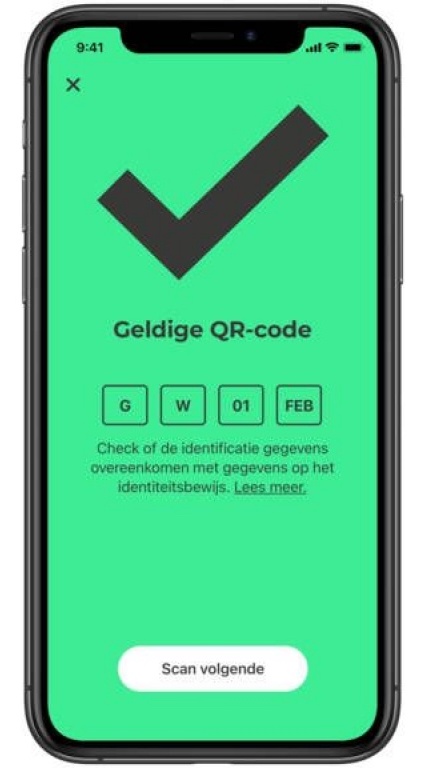
The Netherlands declared its own ‘freedom day’ at the end of September, ending all restrictions with the introduction of a smartphone app-based pass system, requiring proof of vaccination and a negative test to be shown before entering bars, restaurants, cinemas and other public venues. A month on, there wasn’t any noticeable skittishness in Amsterdam, and in restaurants and cafes customers of all ages and demographics dutifully showed their digital passes to gain entry. It was actually quite reassuring to see such apparent civil compliance. 

“After some early consternation, the majority of pragmatic Dutch accepted the [COVID app] pass as a means of resurrecting their social lives while shrugging off social distancing,” wrote the BBC’s Netherlands correspondent Anna Holligan this week on the BBC News website, in a feature in which the corporation’s journalists in Europe reported on the local approach to curbing the spread of the coronavirus. “When I've asked waiters or box-office workers if they want to see the QR code proving my vaccination the answers vary from ‘no, it’s okay, we trust you’ [which was my experience] to ‘we don't actually have the technology’,” Holligan added, pointing out that a recent study had found that around a third of Dutch cafes and restaurants are not scanning the local corona pass at all. 

My experience was mixed: one cafe made the pass voluntary, another asked to see mine, which I didn’t have, but did have both the NHS Travel Pass and another ‘health passport’ resulting from my expensive pre-flight test. Although not officially recognised abroad (though, since Friday, they should be now), the waitress who greeted me at one cafe in Leidseplein decided that she’d seen enough and had better things to do.

In France, the passe sanitaire has become part of daily life, and is essential to do anything, from entering a bar or cinema to getting on a train. COVidiocy, however, also varies across the continent. The BBC’s Hugh Schofield says that traditional French libertarianism has reared up in response to virus measures: “Of course there are people in France who object on principle to having to prove their credentials at every turn.” he wrote. “Every Saturday there are demonstrations in Paris and other cities, bringing together anti-vaxxers with libertarians and protesters against ’health discrimination’. Contrary to what some expected, though, these have not turned into a mass movement, and are dwindling in strength.” Schofield explained that implementation of the passe sanitaire has seen a rapid uptake of vaccinations, regarding it as the key to returning to some form of French social normality. More than 50 million French people have been totally vaccinated, including a large majority of those over the age of 12. Jabs have been incentivised further by an ending of free tests for the virus, meaning that for the passe sanitaire to allow entry to the bars and cafes that are central to French living, people have to show either proof of vaccination or a recent negative (and paid-for) test.

Compare all this with the United States, for many years my go-to choice for holidays. Next week the US opens up again to foreign visitors, but the Land of the Free won’t be quite as open as it once was. In New York, for example, proof of vaccination is required to get into hospitality settings, theatres, museums and other attractions. Masks aren’t required, but it is strongly advised by the city’s mayor. Chicago is different, with masks mandatory in all indoor spaces. In Los Angeles, proof of vaccination is required to enter bars and restaurants, and masks are even required for anyone over the age of two “in all indoor public settings, venues, gatherings, public and private businesses”, according to the local public health authority with rules covering all outdoor events and public transit. Masks are mandatory in Washington DC, and several states including Nevada, Hawaii and Oregon. Ultra-conservative Florida, perhaps not surprisingly, has gone in the opposite direction, with the state’s governor Ron DeSantis even threatening to fine businesses demanding proof of vaccination from customers. All thus in a country where only 57% of the national population has been vaccinated, although the rate of infection in the US is just 225 cases per million of population. Compare that to the UK’s 621 per million, in a country with 67% vaccination.

© Simon Poulter 2021

Back to my trip this week: perhaps the reality of life during COVID elsewhere were at their most stark at Schiphol Airport. In the 30-plus years that I’ve been travelling through it, it has always been a bustling hub, reflecting the historic internationalist Dutch outlook on trade and, therefore, world travel, but also the fact that it has always been a superior shopping experience. I used to joke that Schiphol was essentially a shopping mall with a runway, but last week, as I returned to its airside walkways in the late afternoon, I was shocked by how many shops were already closed for the day. Even some of the airport’s coffee bars - coffee being the lifeblood of Dutch existence - were closed. It was here that I saw for myself just how the pandemic has impacted travel. Like many other places, the Netherlands has suffered a sharp fall in tourists, with the national tourist board revealing that only seven million foreigners took up hotel accommodation in 2020, a drop of 13 million compared with 2019. Inbound tourism from traditional points of origin like the US and Asia decreased by 83%, but even numbers of tourists entering via the country’s open EU borders fell, with visitors from its southern neighbour Belgium dropping by 58%.

The statement-of-the-bleedin’-obvious conclusion from all this is that the pandemic has affected so many aspects of daily life that we used to take for granted. I won’t deny that the amount of business travel I used to endure was something of a privilege, but if one good thing comes out of this global crisis, it’s that digital communications really is a substitute for the expense and environmental impact of air travel in particular. But we can’t not travel at all. As the world debates climate change in Glasgow this week, aviation in particular will come under scrutiny again, especially given the fact that world leaders have all flown to Prestwick to talk about it. 

The world would be a worse place if we couldn’t move around it. Travel really does broaden the mind. We’ve missed having a week or two on a beach somewhere for the last two summers, the simplest of pleasures to provide escape from the mundanities of everyday life. Yes, there are plenty of beautiful places to explore here at home, but taking a plane somewhere should, also, be possible. For me, this week felt like a start.

Saturday, 23 October 2021

The iPod at 20: the one that started it all

Apple provided an unsolicited reminder on Monday of just how much disposable income I’ve channeled its way over the last 20 years. It wasn’t pretty. The company’s latest Event (grandiose capital E intended) opened with a slick video of a bespectacled youth in his garage (Silicon Valley, we presume) firing up old Apple devices to sample their start-up chimes, thumbwheel clicks and even the snap of an AirPods case being closed. The samples were then combined into a piece of vibrant groove music with which to fanfare CEO Tim Cook, apparently standing in a field outside the Apple campus in Cupertino, for his introduction to the company’s presentation of new MacBooks for, mostly, creatives.

As the 90-second clip spun past, I caught sight of an original ‘jelly-coloured’ iMac, and the first iPod, which was launched 20 years ago today. These were the gateway drugs that hooked me on Apple, committing me to at least three generations of iMac, four iPods and their natural successor, the iPhone, along with iPads, MacBooks-numerous, a MacMini, and an entire drawer full of accessories for all of them. All in the space of 20 years. I shudder to think how much it has all cost.

To go back a little further, I started using Apple products professionally in the early 1990s, learning the art of desktop publishing and layout work for magazines and print advertising on the job thanks to intuitive hardware and software that made it so easy. On my first morning in Sky TV’s Creative Services department I was sat in front of a Mac, shown how to use QuarkXPress and Adobe Illustrator, and six weeks later I was driving past a 96-sheet billboard for The Simpsons on the A3 that I’d designed myself. I would subsequently spend hours drooling at Apple laptops in the window of a high-end computer dealer in Chiswick, like Mike Myers coveting the white Stratocaster in Wayne’s World. Alas, they were all well beyond my pay packet. Then, in 1998, Apple launched the iMac, and instantly made home computer ownership fun, accessible and, to a certain extent, affordable. I eventually bought one in early 2001 when I moved to Silicon Valley myself. My apartment was a 10-minute straight-line drive from the Apple HQ in Cupertino, which meant that I was soon drinking the local Kool-Aid. 

Armed with a relocation allowance, I bought an iMac from the local Fry’s Electronics toy shed, the very first PC I’d ever owned that hadn’t been provided for me by an employer. By acquiring that iMac I’d bought into the “digital lifestyle” that Steve Jobs had started pitching. “Rather than just hear about megahertz and megabytes,” an Apple press release for the iMac trilled at the time, “customers can now learn and experience the things they can actually do with a computer, like make movies, burn custom music CDs, and publish their digital photos on a personal website.” In other words, a ‘digital hub’. All these things were still embryonic (especially the idea of uploading anything to this new-fangled thing called ‘the Internet’), but Jobs had the uncanny ability of envisaging the technology people needed - or didn’t know they needed yet - and unlike most major figures in the tech world, had the charisma to sell it to them. 

Even in 2001, some time after the Dot Com bubble had burst, Jobs was able to apply his quasi-rock star appeal (well, as close to rock star as a technology leader could resemble) to turning the functional business tool that most PCs were into a desirable piece of a consumer electronics. Key to this was a shift in connectivity that Jobs had foreseen, particularly enabled by the emergence of FireWire technology that could attach digital cameras and other peripherals to PCs, enabling content to be quickly extracted and then, with easy-to-use software, turned into something creative. Thus, he commenced the ‘consumerisation’ of professional applications, turning applications like Final Cut Pro into iMovie, which enabled anyone to make something polished of their holiday videos (the same philosophy was applied to making music with GarageBand, launched in 2004, providing anyone with a Mac - and, now, even an iPhone and an iPad - with the means to record their own compositions).

2001 was a significant year in many ways. Whether it was the arrival of the actual year of Stanley Kubrick’s Space Odyssey, or the first year-proper of the 21st century, in technology terms, it was the year that Apple moved into fifth gear. When I arrived in California in March that year, the previous decades consumer tech boom was already giving way to other things, like biotech and healthtech (“Tech of all kinds – we already sound like 15th century Mexico,”, if I can borrow Boris Johnson’s dad joke the other day…). Apple, however, was laying the foundations of the imperiousness that, by 2020, made it the first US company to exceed a market cap of $2 trillion. Today it has a higher value than the GDP of Russia, Canada, South Korea and Italy.

On 9 January, 2001, Jobs announced iTunes, an app partly purloined from elsewhere (SoundJam) which, in a music industry-baiting move, enabled CDs to be ripped using the latest version of the iMac’s optical drive, making it easy to build-up a personal digital music library, eventually allowing it to burn compilation CDs like mix tapes. I’d previously seen music stored digitally on a PC at former Skids frontman and TV presenter Richard Jobson’s house, and was enamoured by the idea of a digital jukebox. I didn’t care, particularly, about any perceived loss of sound quality from listening to compressed digital music as I just loved the simplicity of clickable access to music. 

What was missing, however, was portability. By the mid-1990s, the travelling music fan still had to pack CDs and even cassettes to listen to on clunky portable players. Sony’s MiniDisc at least attempted to miniaturise music into a smaller form factor, while Philips’ failed Digital Compact Cassette was merely a means of extending patent revenue from the humble magnetic tape with the addition of digital recording. Audiophiles gave both DCC and MiniDisc a notable swerve. The advent of the MP3 digital audio standard in 1994 led to various companies launching players, like Diamond’s Rio in 1998. Most, Steve Jobs told his executive team, according to biographer Walter Isaacson, “truly sucked”, and tasked Apple to produce one of its own. 

Jobs pulled together a team that included former Philips manager Tony Fadell (who’d worked on the Velo and Nino Windows CE devices I helped launch in the UK) and Apple’s hardware engineering lead, Jon Rubinstein, to come up with something better, challenging them to have something ready for an October unveiling ahead of the Christmas sales season. Isaacson’s seminal (and substantial) authorised biography Steve Jobs explains in forensic detail the process that saw the product take shape, with Jobs himself giving - as was his tendency - fastidious daily feedback on what he, as a music fan, wanted from the device, prescribing his desire to make the product simple to use, with navigation restricted to a “three clicks” maximum. Another of Jobs’ insights was that the device had to work with the iTunes app on the iMac, making the computer the primary interface for music library management. Further discussions were held, with Jobs now adding his views on the minutiae of things like the colour of the accompanying headphones, with Apple design chief Jonny Ive throwing in his thoughts on the product’s white-and-polished stainless steel colour scheme. Then came a back-and-forth about the device’s marketing, with the eventual execution of “1,000 songs in your pocket” emanating from one of the Apple CEO’s encounters with Toshiba in Japan, who first flagged the idea of a 5-gigabyte hard drive that could store such an amount of music.

On 23 October 2001, the result of all this rapid endeavour was revealed. Barely a month after 9/11, a world numbed by the atrocity was introduced to the iPod. This would be the device which, arguably, set in train Apple’s evolution and light the touch paper of a technology-led transformation of cultural life and even social behaviour. Journalists had been invited to Cupertino for what was, by today’s standards, a relatively modest Apple event, but one in which they’d been teased cryptically - “Hint: it’s not a Mac.” On stage, Jobs theatrically produced from his jeans a small white device to which he  declared: “This amazing little device holds a thousand songs, and it goes right in my pocket.” 

Compared to the 160GB capacity iPods Apple would later offer, the 5GB hard drive of that first model seems modest now, but surely a music player capable of storing 1,000 songs had instant appeal? Not, according to some critics, who branded the device too expensive at $399 and limited in what it could do. Some even went as far as suggesting that Jobs and Apple had, once again, bitten off more than the brand could chew, the last time being the failed Newton PDA. But Jobs stuck to his conviction: “Music is a part of everyone’s life,” he said, “and because it’s a part of everyone’s life, it’s a very large target market all around the world. It knows no boundaries.” 

We didn’t know it at the time, but this was a very loaded statement about where Apple would go as it broadened out of being just the ‘cool’ computer brand. Sales of that first iPod, and the quickly added second, 10GB, model weren’t stellar, but in the months after 9/11 the world understandably had other things on its mind. Apple, though, had done it again, introducing something that already existed and created a category out of it. History has been more kind to the first iPods, with many believing that it was the first truly great MP3 player. Jobs’ instincts about the digital music player field had been right. The iPod was a milestone in portable audio, but more importantly, it sparked Apple’s transformation from relatively esoteric computer brand, somewhat secretly - and smugly - coveted by creative professionals, to become one of the biggest companies on the planet. 

That first iPod and its many descendants would ultimately give way to the iPhone (the iPod Touch is even a hybrid of both), in which Apple repeated the principle all over again and reinvented the nascent smartphone category which, in turn, would turbocharge the digital lifestyle Jobs had imagined with the iMac to begin with. It’s worth remembering that in October 2001 there was no social media as we know it today, and Napster had been a relatively momentary irritation to the music industry, so the idea of a pocket device that could connect to always-on streaming services over super-fast, low-latency mobile networks was a long, long way off. Facebook was, back then, just a college dorm idea, so people weren’t uploading their holiday photographs to the Internet as they do now. Television was still linear, so in 2001, the notion of binge-watching an entire season of, say, The Sopranos, while sitting on the top deck of a bus was, frankly, not even a concept.

The iPhone has, of course, coalesced many functionalities into one platform - music, camera, television, cinema, e-mail, Web browsing and so on - but without the iPod to begin with, Apple might not have gone anywhere near phones, AirPods, iPads, TV set-top boxes or any one of the myriad product lines that I seem to have spent a stupid amount of my hard-earned on over 20 years. And you know what? I don’t regret a single penny of it. At one point in time I had the crazy idea of buying several iPod Shuffles, the inch-square music players with a 2GB capacity that were available in six colours. The idea was to have different genres of music on each of them, to be chosen per occasion or mood, like Thunderbirds’ Virgil Tracy choosing a pod (that word again) for Thunderbird 2 to fit the mission. Ludicrous, I know, but this is Apple’s marketing strength for you. While I resisted that idea, I’ve certainly succumbed to the iPod’s appeal, owning four. 

© Simon Poulter 2021

At the beginning of September I was digging around in that drawer of Apple bits-and-pieces and found the second iPod I owned - a third-generation, 30GB model from 2003, a fifth-generation model with a whopping 80GB capacity, a 16GB fourth-generation iPod Nano bought, on a whim, in Los Angeles, and a even cuter seventh-generation Nano bought, again, on a US trip in 2012. While hardly Indiana Jones stumbling across the Lost Ark, the discovery of that later Nano found its way into my pocket for the start of my return to office commuting. The firmware or the Bluetooth or some such aspect of its performance needs upgrading, but it still works. That, though, wasn’t the attraction of reviving it: it was the fact that the neat little music player, just 9cm long and weighing little more than a stack of credit cards, was such a sexy piece of technology, with its anodised aluminium casing and flash memory replacing the weighty hard drive of the original iPod.

When the definitive history of Apple Computer gets written, it will no doubt be the iPhone that commands the most attention, but the iPod deserves its place. In fact, more than that - it deserves acknowledgement for its singular contribution to culture. It has become, according to Leander Kahney, who wrote The Cult Of Mac, “the signature technology of the digital music era” and “profoundly” changed music culture. While Apple’s appeal until the iPod and certainly the iMac had certainly been amongst professional creatives, the iPod had a universal appeal. The Queen, it is claimed, has owned one, and the late German fashion designer Karl Lagerfeld reportedly possessed more than 70 containing his entire CD collection, transporting them around the world in their own suitcase. “We had no idea this thing would get this huge,” Apple marketing executive Phil Schiller once told USA Today. 

In his book, Kahney draws attention to how the iPod would impact music listening in general, arguing that it ripped up the decades-old custom of listening to entire albums from start to finish and (even if ageing hipsters like me have embraced the vinyl revival), and that record ownership could only be visualised by shelved libraries of albums on various formats. Apart from anything else, Kahney says, with those white headphones plugged in, and the library stored on that hard drive, no-one needed to know what you were listening to, though as we all know, aggravating sound leakage from headphones readily gives away someone’s musical tastes, especially on public transport. Kaheny does, though, make the interesting point that the iPod may have even opened up musical tastes as people started experimenting with genres they’d previously not dipped into. The iPod also became a replacement for radio programming; ‘podcasts’ derived their name from the device, becoming an online sub-culture in their own right, with professional and amateur productions of all kinds covering every possible niche and mainstream interest; DJs took iPods into clubs to play tracks from them instead of turntables, mixing between multiple devices; and you could say that the iPod proliferated the entire business of music being available legally online. 

Whether Steve Jobs’ intention, in 1998 when he unveiled the iMac, was to turn Apple into the giant it is today is not fully known. The iPod, though, gave that process a significant kick, although compared with today’s marketing expenditure for Apple products, the company only spent $25 million on launching the first player in 2001, building its market share largely through word of mouth. Experts agree that the iPod’s appeal grew somewhat organically - an incongruous point given how Apple markets its products today. But whether by instinct or design, Jobs revelled in the “disruption” that technology wizards like talking about. 

Apple started out challenging the notion that computers could only be beige, and that managing them had to be clunky. Steve Jobs saw that technology offered something more rewarding in people’s lives - ironically, a vision that has proven stupendously rewarding for Apple itself.  The iPod was, perhaps, the point of origin for that vision, and I don’t think it hyperbolic to say that has directly influenced much of Apple’s product development history over the last 20 years. I don’t think it hyperbolic, either, to claim that the iPod and its lineage has contributed to a single-handed transformation of modern life. Which, I know, is quite a claim.

Friday, 22 October 2021

If you remember the '80s, you probably were there

Dylan Jones (centre) with the Cookie Crew’s Cookie Pryce and Susie Q
Picture: BBC/Sebastian Barfield/Plimsoll Productions

There is some dispute as to who first quipped “If you remember the ‘60s you weren’t there”, but the prevailing view is that it was American comedian Charlie Fleischer. It’s a line that stands out because the decade in which I was born is revered for its cultural earthquakes - peace, love, The Beatles and all that - which then led to another decade that embraced rock, disco, funk and punk.

The ’60s/’70s sequence is nice and neat, and comes to a full stop with the start of a decade that still seems to be treated like the uncool, oddball member of an otherwise respectable family. But were the 1980s really that bad? I became a teenager in the ’80s, which means that it, more than any other decade, should have had the greatest cultural influence on me. It’s when I really discovered music for myself, and when I passed through all the rights of passage you’d expect, starting the decade as a 13-year-old and ending it at the age of 23, in the process progressing through puberty, school and the start of my career in the media, initially writing about music. Throughout this entire time there was a lot to absorb, culturally. I’m not going to attempt to precis the 1980s in one single blog post (actually, I don’t think an an entire book could capture the decade faithfully), but music does provide a frame with which to consider the period.

It has become fashionable to rubbish the 1980s, but that may be something to with the fact that it brings back dystopian memories of the Cold War, the Reagan/Thatcher love-in, and the very real risk of someone dropping a nuclear bomb on your home. That all tempered the seemingly confected frivolity of the era’s pop music, a point not helped by those BBC Four Top Of The Pops re-runs from the time featuring  cheesy (and disinterested) Radio 1 DJs introducing badly lip-synced performances. 

This was a theme that I expanded on back in July when I interviewed the eminent force of music radio that is Gary Crowley on the occasion of his sumptuous second Lost ’80s box set coming out. “It was an exciting time,” he told me, adding that “half of those artists [in the early ’80s] were all punks, anyway.” However, as we now put a 40-year distance between now and the start of the ’80s, there is room to reconsider the decade, Crowley’s two four-CD box sets have demonstrated, though relative obscurities from some of the era’s biggest pop acts, like Wham!, Depeche Mode, Prefab Sprout, Spandau Ballet, Culture Club and Bananarama, just how much good music came out of a period that hindsight hasn’t always been too kind to. 

This forms the central thesis of a new four-part BBC2 series commencing tomorrow night - The 80s - Music’s Greatest Decade? fronted by Dylan Jones the former editor of GQ, The Face and iD magazines, and author of several acclaimed music biographies. “Interminable television programmes still suggest the whole episode was nothing but a calamitous mistake, a cultural cul-de-sac full of rotten records by shameful individuals with orange skin and espadrilles,” Jones says of the decade. “I’m here to tell you this couldn’t be further off the mark.” 

He believes that the ‘80s were far more inventive, musically, than the tropes about drum machines and over-produced records relentlessly suggest, and in the series calls upon figures such as Nile Rodgers, Madonna, Eurythmics, Public Enemy, Gary Kemp, Jazzie B, Trevor Horn, Bronski Beat, Bananarama’s Sara and Keren Woodward, Spandau Ballet’s Gary Kemp, Primal Scream’s Bobby Gillespie, UB40’s Ali Campbell and others to prove the point. 

Key to this view is Jones’ belief that, unlike other eras, the 1980s weren’t anchored to one single genre, and the notorious tags that the music press, in particular, likes to label an artist. In fact, if you think about it, what is “’80s music”? Were Culture Club a reggae band because of Do You Really Want To Hurt Me? And what were Duran Duran, with their nodding references to Chic, Roxy Music and even the prog rock they were all fans of as teenagers? Gary Kemp - now touring as vocalist and lead guitarist with Pink Floyd founder Nick Mason's outfit Saucer Full Of Secrets readily admits to being a prog fan, and has said that even a band as symbolic of the '80s like Spandau Ballet pulled on references from previous decades. “We were influenced by Floyd,” he has said.

Dylan Jones believes that the 1980s were pop’s greatest decade, when pop became more adventurous than ever. He even thinks the decade gave the ’60s and ’70s a run for their money in terms of excitement. Pop culture, he argues, became even more inventive, “a kaleidoscopic display of musical experimentation,” he wrote in The Sun, “in which genres were born and evolved with dizzying rapidity. While music continues to fascinate to this day, it will never be as varied as it was back then.” I think he has a point.

But, then, every era has its good and its bad. “Whenever anyone tried to say the ‘70s was a period of great music - ­glam rock, disco, punk, soul etc - we had Bay City Rollers, Slik and David Cassidy thrown in our face,” Jones points out. The ’80s, by contrast, offered a “wild variety” of styles, from electro to the New Romantics, rap and hip-hop, and the early shoots of Acid House and Britpop. And that was on top of creating some of the biggest and most influential pop acts of all time, from Michael Jackson to Prince, George Michael to Madonna.

Jones’ BBC2 series explains that technology played a massive part in pop’s ’80s explosion. With the bare minimum of ability, bands could buy drum machines and synthesisers and, with the help of computers, make distinct sounds. At the same time, MTV gave a platform to pop’s third dimension: image. Image played, perhaps, an even bigger part - bigger than even during the glam rock era - with how bands identified themselves. “You’d hear something and think, ‘oh that’s Bananarama, that’s Culture Club, that’s Duran Duran’,” says Bananarama’s Keren Woodward. “Everyone looked their own way as well.”

‘Promos’, as they used to be called, had been pretty cheesy inserts for shows like Top Of The Pops and Nationwide when either the band couldn’t turn up or Pan’s People couldn’t come up with a dance routine in their place. But with MTV, record companies upped their promotional budgets, sending the likes of Duran Duran off to shoot their exotic yachting videos, and even turning Texan rockers ZZ Top turned into cable TV cowboys through slick promos that didn’t take themselves too seriously. And, then, right smack in the middle of the decade, pop reached its zenith with the “global jukebox” - Live Aid. 

Nile Rodgers, whose work on Bowie’s Let’s Dance made The Dame - and that album - one of the biggest things to happen in the 1980s - tells Jones in the series that the decade was, for many of his peers, the summit of a lot of work that had gone on before. “The ’80s was the pinnacle for a lot of us musicians who had come from the ’60s and the ’70s,” he says. “Reaching that place, you had this great explosion of artistry in the Eighties that ran the gamut.”

Jones says that one of the most surprising interviewees for the series was Iron Maiden’s Bruce Dickinson (who also doubles as a fully qualified airline pilot, when he’s not hanging out with the band’s gruesome zombie mascot Eddie). Asked how the headbanging band became so popular in the ’80s, Dickinson explains, simply: “We were very good at our job, the audience knew that we also had a sense of humour about what we did. We were proud of our music but we tried to keep our feet on the ground.” 

As with any era there were plenty who didn’t. As a journalist in the second half of the decade I encountered some of the more highfalutin’ aspects of ’80s pop stardom, which is why Smash Hits magazine did such a wonderful job in bursting any bubbles that became over-inflated (and do read my interview with “ver Hits”’ David Hepworth and Mark Ellen for their thoughts on this).

We are quick to jump on easy assumptions about anything, and the shorthand about the 1980s was that the decade was a bit naff. That, view, though is informed more by the frivolity, the shoulder pads, the lip gloss, the…er…drug taking (not me, but I can tell you a story or two…) the “gender-bending” and all the other cheap tropes that regularly get trotted out. More objectively, the decade should be regarded for its music. Gary Crowley’s characteristically effervescent curation of the decade has repeatedly underlined that there was plenty of truly great pop. Jones’s series, I hope, will expand on this further by reminding us that amid the puffball skirts and jackets with their sleeves pushed up to the elbows, there was a lot more breadth to the decade’s music than you and I faithfully remember.

The 80s – Music’s Greatest Decade? With Dylan Jones begins on BBC2 at 8.55pm on Saturday 23 October

Saturday, 16 October 2021

I don't want to change the world but I am looking for New England

Picture: Massachusetts Office Of Travel & Tourism

The news this week that the United States will finally open itself up to fully vaccinated travellers from the UK and Europe from 8 November means that, were I able to, I could return to the one country I’ve visited more than any other over the last three decades.

In fact, I’ve lost count of how often I’ve crossed the Atlantic since my maiden trip, to the West Coast in 1992. Since then I’ve been back countless times for work and pleasure, and even lived in Silicon Valley for a couple of years. California has been my main destination but I’ve progressively seen New York whenever I’ve been able to, and more recently have had a series of holidays in Florida, a state I’d hitherto avoided in the mistaken belief that it was just a giant theme park. 

In fact I can proudly boast to have visited 22 of the 50 states in the Union (eight alone on my 2,400-mile drive along Route 66). That, though, does leave 28 as-yet untouched. Some offer little appeal: the barren northern states, mainly, including both Dakotas, Nebraska (despite its Springsteen connection), Wyoming and Idaho. Basically, anywhere with nuclear missile silos. But there are still plenty of places with virgin appeal to me (and that’s not a plug for Mr. Branson’s airline to offer me carriage). Hawaii is one, largely out of the curiosity of seeing an American state that’s closer to Asia than its parent nation, and to experience a “tropical Pacific paradise™” with all the trappings and conveniences of the economy it is anchored to (drive-throughs, chain motels and all the other tropes that have made the US such an effortless destination).

Massachusetts State House, Boston
Picture: Tim Grafft/MOTT

But if there’s one place I really should visit, it’s New England, that collection of states so named by the British explorer John Smith in 1616 after he’d scoped out what is now Massachusetts. Four years later the Pilgrims arrived in Plymouth, unimaginatively named after the Devon city from which they’d come, and promptly started settling there. What I have seen of Massachusetts (and I’ll admit, Murder She Wrote is my principle source) does look remarkably like parts of south Devon, so perhaps some forgiveness can be afforded the colonials for their lack of invention when naming their new home, but it would be just the start of a trail of colonies spreading west that will forever be connected to England by name, with place names like Portsmouth, Bristol, Bath, Andover, Manchester and Newbury just in New England alone.

Sadly, the opening up of US travel next month means that arguably the primary reason to visit New England - its “fall” autumnal colours - will be ending, but that doesn’t mean that Massachusetts, Connecticut, Vermont, New Hampshire (yep, another shocker for originality), Maine and the micro-state of Rhode Island are not attractive at any other time of year. Like it’s namesake, New England has become a byword for rustic charm, a cliche I know, especially as it’s a much a region of modern America as anywhere else. There is also more to it than leafy photo opportunities, seafood restaurants and villages that look like they were created just to provide backdrops for ‘country cottage’ furniture catalogues. 

For a country often mocked (usually by us Brits) for lacking history - well, any history created before its indigenous people were so rudely displaced by Europeans… - New England boasts some of the most interesting historic attractions in America. No surprise as, arguably, the nation’s birthplace. Boston is the birthplace of American independence and at one point the country’s biggest city. It is, however, arguably one of America’s most attractive ‘pick’n’mix’ regions to explore by road, that great American tradition.

Critics of American culture might argue that dating back to ‘just’ 1492 doesn’t give it any right to history, but New England provides more than most, whether the tourist is looking to savour the Ivy League college towns, walk in Mark Twain’s footsteps, or explore dramatic, windswept beaches and coves that bear more than an uncanny resemblance to those in the South Hams of Devon. And, yes, there’s a Dartmouth, too.

Picture: Tim Grafft/MOTT

I suppose it’s this perceived lack of modernity that is the attraction, though this is a relative term. It’s far from a picturesque backwater. Boston, for example, is one of America’s most vibrant financial services centres, while the region is home to high tech industries, major defence contractors and healthcare corporations, contributing to a GDP of more than $1 trillion for New England as a whole.

Like everywhere else in the comprehensively curated United States, New England has plenty to offer the tourist, be it Boston’s harbour and the location of that teacup-rattling contretemps that launched the Revolution, but also all the fascinating nods to the Europe that uprising was meant to free itself from.

But perhaps the other appeal is that it seems to offer a gentler version of the United States. I’m sure it’s no different to anywhere else I’ve been in the country, which means I’ve probably succumbed to intoxicating marketing. If, though, that simply means that the appeal is a tree-lined, more liberal part of America, full of cosy guest houses and smalltown country grocery stores selling local produce, that will do me just fine.

Wednesday, 13 October 2021

Slowburn

Peter Gabriel at Real World Studios
Picture: Peter Gabriel/Arnold Newman

There is no statute on how frequently musicians should release new material, either to satisfy their own creativity, stay relevant or just to pay the bills. Paul Weller’s Fat Pop (Volume 1), released back in May, was his fourth album in as many years. As I wrote at the time, you could hardly call that a purple patch, as over three decades he’s produced a prolific 16 solo releases, roughly one new album every two years.

So whisper it quietly, but at the other extreme of this creativity, Peter Gabriel is working on a new solo album. The shocker here is that his last full collection of new material was, Up, released in 2002. That was only followed by his Scratch My Back project of cover songs set to orchestral arrangements, and the New Blood reworking of his own older songs, again with orchestral backing. That, a couple of compilations, one or two soundtrack contributions and the largely forgettable 2016 single I’m Amazing with Sting (mainly to promote their double-header tour), has been it. For those who follow Gabriel closely, the absence of any new work for the better part of 20 years has been accepted as simply part and parcel of his glacially slow recording process, combined with dilettante interests in the myriad causes that activate him. 

No-one could ever accuse Gabriel of not upholding the less-is-more approach. His seven studio albums released over 44 years are all as distinct as each other, never derivative and always inventive. It’s just that you wish an artist as creatively vivid as Gabriel would step it up a bit. Work on that last album, Up, began some seven years before it appeared, and its predecessor, Us, came out in 1992, though there were soundtrack projects and the Millennium Dome show Ovo, in the middle of that. 

So now Gabriel has apparently told the Italian magazine SPECCHIO that a brand spanking new album is “happening” and that “it's closer than you think", confirming that he’d been working with his usual coterie of musicians over the last few weeks in the studio on “at least” 17 new songs. That said, it’s safe to assume the album will not be out before 2022, making it exactly 20 years since Up. Thankfully the 71-year-old Gabriel is regarded as that much of fixture in the rock firmament that few would ask “Peter, who?” when said release finally dropped. You wouldn’t, either, want to pre-empt it: you’d hope that with a gestation period as epically long as this next one has had, it would be expected that the wait is worth it.

Back in May - not long after the latest Weller album appeared - I blogged about the 35th anniversary of Gabriel’s seminal pop album So being released, noting that it was a commercial peak for a musician who, despite being an early devotee of The Beatles and Otis Redding, has always been seen as being on the fringes of the mainstream. Until So came along, with its slew of hits like Sledgehammer, Don’t Give Up (with Kate Bush), Big Time and In Your Eyes, Gabriel had been a well regarded but sporadic commercial success. Tracks like Solsbury Hill and Games Without Frontiers were moderate chart hits, but singles were not really his thing until So, ironically at the same time as his former band, Genesis, commenced their period of imperial MTV rotation in the mid-80s (and were it not for a bout of COVID-19 in the camp, I would have been seeing them for one last time this week at the O2 Arena...). 

Gabriel even seemed to enjoy his fame, but it often became seen as a platform for his non-musical interests, especially human rights and environmental causes. I’ve never had a problem with Gabriel pursuing those interests, but as with so many of his generation, it’s the music that drives the appeal, and always has done. So news of new material - finally - is by parts pleasing and anxiety-inducing. You hope it will be good (and given the body of Gabriel’s work over 54 years as a recording artist, it should be), but just like the Bond film No Time To Die’s protracted delays, you hope that the established standard is maintained. My guess is that Gabriel will deliver something customarily intriguing and intelligent. And you can certainly bet that it won’t be like anything any of his peers have continued to produce. 

Wednesday, 6 October 2021

Feeding the squirrel

Picture: Microsoft

Tomorrow is, apparently, ‘Thirsty Thursday’. Such is the shift of old Monday-Friday working patterns that, since the notional return to offices in the last month, Thursdays have become the new Fridays as workers cram pubs for a convivial livener before heading home to start the weekend a day early (since the once former end to the working week has now become de facto WFH). 

The pattern is borne out further by Transport for London data from a couple of Thursdays ago which recorded one of the busiest days this year at Tube stations in the City of London, with more than 90,000 individual exits through the gates at Bank and Monument. Canary Wharf , serving the City’s spillover financial district, recorded 80,000 barrier activations on the same day. My own office has been considerably busier on Thursdays over the last month in which, finally, I’ve been going in regularly since workplaces started opening up again (and I don’t think it’s the draw of an after-work pint nearby that is bringing teams together on the same day). There is, though, no mandatory requirement at my company to be in a designated office on any day of the week, which is a massive tick for progressive, flexible employment brought about by the pandemic. Perhaps it’s the sector I work in, telecoms, and influenced by the global technology industry, which appears to have adopted flexible working en masse. 

The London Chamber of Commerce & Industry recently reported that 83% of businesses that could work from home were expecting staff to do so on at least one day a week, which ultimately means that numbers are unlikely to return to anything like pre-pandemic levels. What is clear is that patterns are at least showing a discernible rise in people on Tuesdays, Wednesdays and Thursdays, with offices - in London at least - up to 20% busier on  those days. Regardless of the professional sector, the evidence is that things are creeping getting back to normal, or at least a version of normal. I wouldn’t say that from anything more than the anecdotal observation of commuting on two or three days, but even when I do, apart from overground trains in south-west London being somewhat full between 7 and 8am (a mixture of workers and private school pupils), once I switch to the Tube for my journey into Paddington, carriages are a lot quieter. 

Passenger numbers in London remain down on pre-pandemic levels, even if the City is receiving more workers again. In and around the West End, central London is suffering the double-whammy of both commuters and tourists staying away, defying national trends. Footfall across UK cities increased by 17% between June and August, according to a Centre For Cities report, but London only saw a 9% increase, and didn't improve by any great margin last month when things were supposed to be getting back to some kind of normal. The end of furlough, the Centre said, added another challenge.

Picture: TFL

Businesses that rely on office workers in London are managing to paint a rosy picture of the apparent recovery: “The Square Mile is buzzing again,” the City of London Corporation’s Catherine McGuinness recently told The Times, noting how the hospitality sector propped up by all the banks and investment houses in the City is enjoying some return to good times. “Getting City employees back to the workplace is vital to street-level recovery after many months of difficult trading,” she added. “While the virus may not have gone, we are learning to live with it, and are beginning to see a renewed, vibrant and thriving City ecosystem.”

The City, however, is not London, and London is not the UK, clearly, but some of this commentary provides a useful barometer for the post-COVID recovery. But the cold hard truth is that we’ve all become so used to working from home (if we work in a sector that enables it, of course), that we’re unlikely to go back to the traditional 9-to-5. Work-life balance, which was always an issue before the pandemic, has been thrust into the spotlight, as companies acknowledge that modern, digital working is so relentless. Few of us are truly off duty, thanks to smartphones and cloud-based apps that allow us to connect to corporate e-mail on any kind of Internet connection. That is only if you allow it to.

My own experience of the last month canvassing my fellow office returnees has delivered a mixed picture. Some colleagues say they were more productive at home, enjoying being uninterrupted by office bantz, unsolicited conversations and that person who doesn’t realise that using a headset only makes them louder. I, on the other hand, have found the office more productive, perhaps a result of having spent 35 years in these environments. I have enjoyed the separation of home and work, even regarding the occasional perils of commuting in London as a small price to pay for a couple of hours a day to read a book or tune out.

What is nice, though, is to have the choice. One thing is consistent across both types of colleagues: hybrid working has made them more content, more trusted and even more valued, which might be something particular to my employer. Some, however, aren’t so forward looking: recruitment company boss James Cox branded job candidates asking about WFH policies to be “lazy, spoilt and entitled”. “I’ve done this job for 15 years,” the 35-year-old railed on LinkedIn. “Before COVID I had never heard anyone ever say to me that they want to work from home.” And so he ranted further: “You want to work from home so you don’t have to get dressed at 6am? So you can save money on travel? So that you can watch Loose Women on your lunch break? Working from home so that you can feed the squirrels at 11am in the garden!” Unsurprisingly, Cox has been royally trolled for his comments, with one HR manager branding them “possibly the most offensive, small-minded” post she’d ever seen.

Picture: WeWork

Regardless of CoxI’s archaic opinions, clearly the tide has shifted the employees’ way. New employment reforms will allow new recruits to request the right to work at home, a change particularly aimed at women, the disabled, parents and carers to better balance  professional and personal commitments.

If there’s an incentive to get people back into offices, it might be a healthier lifestyle (unless employers adopt the Silicon Valley fad for free snacks). Researchers from University College London last week revealed that travelling to a place of work has benefits for mental health, fitness and work-life balance, not to mention the waistline. According to UCL neuroscientists, nearly half of 3,000 people they surveyed said that being in the office put them in a better work mindset, improved productivity and made a positive difference to their work through face-to-face collaboration. “The commute delineates boundaries between home and work life and can be used to switch one off and transition to the other, UCL professor Joseph Devlin said. “Just going to work generates more diverse experiences than working from home, especially through interactions with other people.” Half of those surveyed said they snacked more when working at home, with 43% saying they were much more easily distracted by things like home shopping deliveries, household chores, pets and even taking longer lunch breaks. More significantly, over half reported the benefits of a change of scenery - something I’ll attest to having been forced to spend 18 months looking out of the living room window with a high hedge beyond it and…er…that’s it. 

More concerning, perhaps, is that continued WFH has the potential to hit people in the wallet in the long run. While commuters have all pocketed the benefits of not paying exorbitant travel costs to get to work, government data shows that, pre-pandemic, people who worked from home were far less likely to get a promotion or a bonus compared with their office-based colleagues, a drop-off of as much as 38%. Before COVID-19, WFJ employees were paid almost 7% less. Another pitfall being talked about is that the move to hybrid working, or even freedom to choose the working model that suits best, could be the thin end of a wedge, with companies also making job location more flexible, leading to fears of companies off-shoring positions to cheaper employment markets.

One month in to my own return to office life, it’s still too soon to conclude what the future holds. We could, of course, face another winter of COVID and lockdowns, or we could, as a society, learn to live with it, accepting the grave risks that come from sharing commuter carriages and desk space. It’s a dilemma for someone like me who, despite being double-jabbed, is considerably clinically vulnerable (and just last week received a jolly e-mail from Sajid Javid reminding me of the fact). The frustration is that I have loved going back to an office, of dressing that little bit smarter, of seeing a bit more of the world as I travel about. Even my anxiety caused by maskless morons on the train and Tube has eased to some extent. 

Perhaps my third jab, when it comes, will ease my anxiety further. It’s just that weighing up the odds of being out ‘there’ with that thing still on the lose, cannot be equated with the old risks of just catching a cold. And that is a proper conundrum for my own mental wellbeing to try and resolve.